

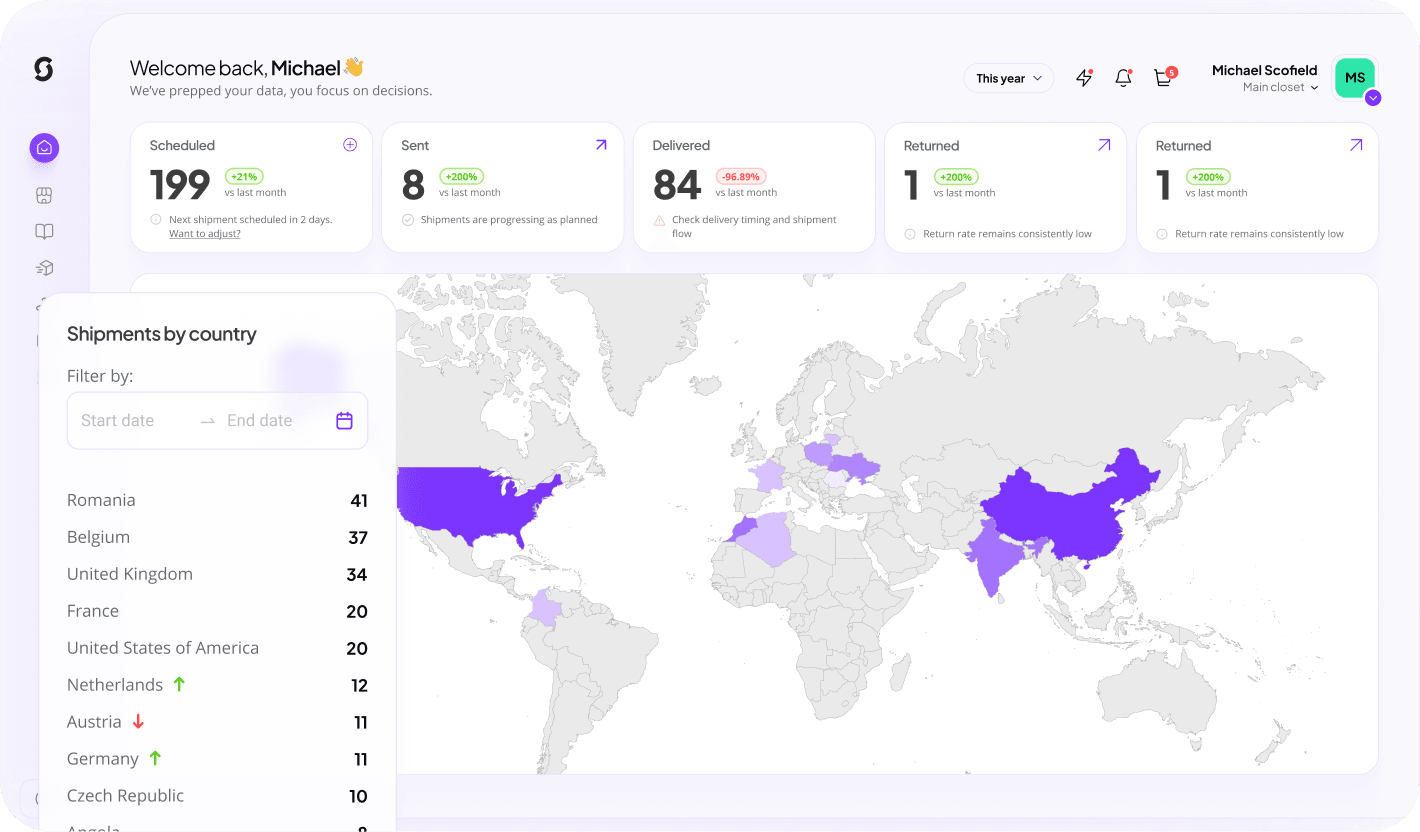


Definition
Virtual stock is a system that allows you to manage inventory across multiple locations by digitally tracking product quantities rather than physically stocking items. This enables you to efficiently oversee your merchandise operations and quickly adapt to the demands of your production cycle.
“Virtual stock is the practice of managing inventory digitally across multiple locations. It eliminates the need to physically stock items, streamlining operations.”
Imagine running a textile production company where you’re dealing with fabric rolls stored in warehouses across the country. With a virtual stock system, you can view and manage inventory levels from a central location without physically visiting each warehouse. If a particular fabric is low at one location but plentiful at another, you can seamlessly facilitate stock transfers or place orders with suppliers to ensure production never hits a bottleneck.
The Principles of Effective Virtual Stock
Virtual stock management is a groundbreaking concept in inventory control that offers significant advantages over traditional methods. At its core, it revolves around the integration of advanced software solutions to monitor and manage stock levels digitally. This system not only improves the accuracy of inventory data but also provides real-time insights, enabling quicker and more informed decision-making processes.
By adopting the principles of virtual stock management, your company can transform its approach to handling inventory. The digital framework allows you to capture every interaction with your stock, from ordering raw materials to dispatching finished products. With comprehensive tracking capabilities, you can predict demand and adjust your inventory accordingly, minimizing waste and maximizing efficiency. Virtual stock systems often integrate with existing ERP and SCM platforms, providing a cohesive ecosystem where every department from production to sales is on the same page. This holistic vision of your supply chain reduces the risk of overstocking or stockouts, preserving resources and maintaining an uninterrupted flow of merchandise to customers.
In addition, virtual stock impressively lowers operational costs as it significantly curtails the need for physical storage spaces and redundant stock checks, allowing businesses to manage inventory at no cost beyond the digital framework. This lean approach not only conserves valuable capital but also garners a competitive edge by ensuring that your products are available when and where they’re needed.
Implementing virtual stock management is not just an option; it’s a strategic imperative for any forward-thinking business in the textile industry.
4 examples of powerful Virtual Stock strategies
Custom Apparel Company
: This company uses virtual stock management to track fabric availability and production timelines accurately. By integrating their digital system with supplier databases, they can forecast trends and adjust inventory levels to meet seasonal demands without overstocking, optimizing resource allocation.
Global Fashion Brand
: With operations across multiple continents, this brand utilizes virtual stock solutions to coordinate shipments between international warehouses. The centralized system ensures that regional stores are adequately supplied during high-demand periods, enhancing customer satisfaction and reducing shipping costs through strategic stock positioning.
Online Textile Retailer
: By leveraging virtual stock management, this retailer maintains an agile inventory that adapitates to real-time sales data. This allows them to offer a wide array of customizable options to customers without the need to house extensive physical stock, resulting in lower overhead expenses and increased profitability.
Local Boutique
: Utilizing virtual stock solutions, this boutique focuses on niche markets with specialized collections. The digital platform they adopted enables precise tracking of limited-edition items, ensuring exclusivity and optimal inventory levels, reducing excess and enhancing product appeal.
7 tips to elevate your Virtual Stock strategy
| Tip | Steps |
|---|---|
| Embrace Automation | Invest in inventory software |
| Analyze Sales Data Regularly | Conduct monthly sales reviews |
| Build Strong Supplier Relationships | Maintain open communication |
| Implement Cybersecurity Measures | Update security protocols |
| Train Staff Thoroughly | Organize training sessions |
| Utilize Data Analytics | Apply predictive analytics tools |
| Focus on Customer Feedback | Gather regular feedback |
Key Terminologies
Frequently Asked Questions
How does virtual stock benefit my business?
Virtual stock systems streamline inventory management, reduce holding costs, and improve customer satisfaction by ensuring product availability.
What are the primary challenges with virtual stock implementation?
Challenges include technological investment, data integration with existing systems, and training for both staff and students to fully utilize the tools.
How do I ensure data security with virtual stock?
Implement robust cybersecurity measures like encryption and regular security audits to protect sensitive inventory data.
What if my business is too small for virtual stock systems?
Virtual stock solutions can scale to fit any business size, offering customizable options for efficient stock management even in small operations.
How does virtual stock affect my supply chain?
It enhances supply chain visibility and coordination, ensuring timely order fulfillment and reducing stockouts or overstock situations.
Will my team need special training for virtual stock systems?
Yes, comprehensive training is essential for maximizing the potential of virtual stock solutions and ensuring seamless integration with current processes.