
We took a nine square metre booth to one of the most competitive fintech exhibitions in Europe. Around us sat banks, payment giants and technology brands with booth budgets larger than our entire annual marketing spend. Visitor access to the event costs roughly €3,000 per head. The audience is senior, sceptical and short on time.
We spent about €40,000 in total. We left with 753 captured leads, 240 of them matching our ideal customer profile on both company and role, 42 confirmed meetings and a signed customer. A separate existing customer placed a €37,000 reorder off the back of the show.
This is not a list of trade-show tips. It is a teardown of exactly how we did it, including the parts that did not work and the parts we got lucky on. If you run events for a company with more than 250 people, attend several exhibitions a year and are tired of spending heavily to be ignored, this is written for you.
A note before we start. Sunday is a merch infrastructure platform. We help brands design, produce, warehouse and ship merchandise globally, and we run the campaign and follow-up technology around it. So yes, this is our own playbook for our own category. But the framework underneath it works for any company exhibiting at a premium event, whatever you sell. Take the system, ignore the merch.
The results, before the story
Let us put the numbers on the table first, because the rest of the article only matters if the outcome justifies it.
| Metric | Result |
|---|---|
| Total leads captured | 753 |
| Qualified contacts (ICP company and role) | 240 |
| Urgent leads with an active project | 81 |
| Meetings booked before the event | 10 |
| Meetings booked during the event | 23 |
| Meetings booked through post-event follow-up | 9 |
| Total confirmed meetings so far | 42 |
| Concrete sales opportunities | 3 |
| Global enterprise opportunities | 1 |
| Identified open pipeline | ~€40,000 |
| New customers signed | 1 |
| Existing-customer reorder | €37,000 |
Three things to be honest about. First, the 42 meetings figure was measured 1.5 weeks after the event. It is an early snapshot and we expect it to keep growing as follow-up continues. We are not claiming fifty-plus confirmed meetings, because that is not what the data says today. Second, the roughly €40,000 in open pipeline is identified, qualified and still open. It is not closed revenue. Third, the signed customer and the €37,000 reorder are separate from that pipeline figure and from each other. We keep them separate on purpose, because conflating early-stage pipeline with booked revenue is how event ROI gets quietly inflated.
With that framing in place, here is how the campaign was built.
Why we chose Money20/20
We did not choose Money20/20 because it is famous. Prestige is a poor reason to spend €40,000. We chose it for four specific reasons.
The companies on the exhibitor and attendee list matched our ideal customer profile. Fintech and financial-services brands run a lot of events, ship a lot of merchandise and have the budgets to do both properly. The right buyers were physically present, including CMOs, heads of brand, field marketing leaders and EMEA event managers. These are exactly the roles that struggle to manage merch across markets, and exactly the roles that rarely reply to cold outbound. The sector also still had real commercial momentum and live event budgets, which is not true of every industry right now. And we already had relevant customers, references and credibility in the space, which makes every booth conversation shorter and warmer.
This was our second year at the show. The first year we ran a smaller startup booth and got encouraging results, enough to justify coming back with a far more ambitious campaign. The decision to return was not a gamble. It was a considered bet on an audience we had already tested.
The event-selection framework
Most teams choose events backwards. They pick the show with the biggest name or the most footfall, then hope the right people walk past the booth. That is how you end up with a thousand badge scans and no pipeline.
Here is the question we ask before committing to any event:
If not a single visitor came to our booth, could we still generate enough commercial value from the other exhibitors alone?
If the answer is no, we do not book. This single test reframes the whole decision. It forces you to treat the exhibitor list, not the visitor footfall, as the primary asset. Footfall is unpredictable. The exhibitor list is published in advance and does not change.
For Money20/20 the answer was clearly yes. The other exhibitors were full of our ICP, staffed by senior marketing and event people, which meant we could walk the floor and create value even if our own booth had been empty.
We apply four checks to any event:
- Are the right companies present? We want roughly 50 ICP companies in attendance before we take an event seriously. A relevant industry is not enough on its own.
- Are the right roles present? A developer-heavy tech conference might contain perfect target companies but none of the buyers who own merch or events. Right company, wrong room.
- Will the booth teams contain buyers or influencers? The people staffing competitor and exhibitor stands are often exactly the marketing and event practitioners you want to meet.
- Could one or two customers alone justify the spend? If a single signed account would cover the cost of the event, the downside is capped and the maths gets a lot easier.
Money20/20 passed all four. We built a list of 75 priority ICP exhibitors and assigned ownership before we had designed a single thing.
The strategic objective
The goal was not "raise awareness". Awareness is not a target you can manage against. Our objective was concrete: stand out in a crowded hall, attract the right people, start real commercial conversations, capture relevant contacts and book follow-up meetings about event merchandise across EMEA.
The deeper logic is about access. Many of the decision-makers at Money20/20 are almost impossible to reach through conventional digital outbound. They do not open cold emails and they do not take cold calls. An event buys you something outbound cannot: physical proximity to a senior buyer who is, for once, willing to have a conversation. We were paying €40,000 for access, not for a stand.
We set our targets up front: around 250 captured prospects, at least 25 meetings, and a six-month pipeline of at least five times the total event investment. We then split the 75 priority accounts so that each commercial team member owned about 25. Ownership matters. A target account that belongs to everyone belongs to no one.
The Amalfi concept
The campaign idea was Amalfi. Italian summer, lemons, beaches, colour, travel, premium hospitality. We landed on it in January, roughly five months before the show in early June.
We started with a Pinterest board and a mood board that defined the whole world: colours, patterns, lemons, beaches, the feeling of an Italian summer, travel, premium hospitality. From there it extended into merchandise, booth furniture, team apparel and digital design. Everything pointed back to one recognisable theme.
Amalfi worked for a simple reason. It is instantly visualisable. Say the word and most people can already picture the colours, the coastline and the light. That shared mental image does a lot of design work for you, and it makes the booth feel like a place rather than a stand. We wanted visitors to feel they were stepping out of a fintech trade hall and into a holiday for thirty seconds.
The bigger strategic choice was contrast. We deliberately avoided the visual language of fintech and SaaS. No dark software screens. No financial imagery. No conventional technology messaging. No standard merchandise-supplier display. In a hall where almost every booth looked like the same product screenshot rendered in blue, the cost of looking different was low and the payoff was high.
So we leaned the other way entirely, into colour, fashion, physical products, summer, hospitality, playfulness and lifestyle. And we kept the booth slightly mysterious on purpose. We did not want senior buyers to glance over, file us as "another promotional-products supplier" and walk on before they had seen what we can actually do. One of our best booth openers was simply:
"Can you guess what we do?"
That question turns a passer-by into a participant. It also buys you the thirty seconds you need to show, rather than tell.
Why we started five months early
The campaign was built in roughly this order:
- Amalfi concept and mood board
- Merchandise collection
- Digital experience and redeem pages
- Booth concept
- Spinning-wheel activation
- Trip-to-Amalfi competition
- Team apparel
- Outreach and follow-up system
Merchandise came first, deliberately, even before the booth. Genuinely custom merchandise needs production lead time, and good production cannot be rushed without compromising on quality or cost. Starting the merch early also meant the collection could be reused in other campaigns later, so the investment was not locked to a single event.
The point of the sequence is integration. Each element fed the next, and every piece was designed to belong to the same recognisable campaign world. By the time we got to apparel and outreach, the visual system was already set, so everything matched without anyone having to force it.
Booth design and category contrast
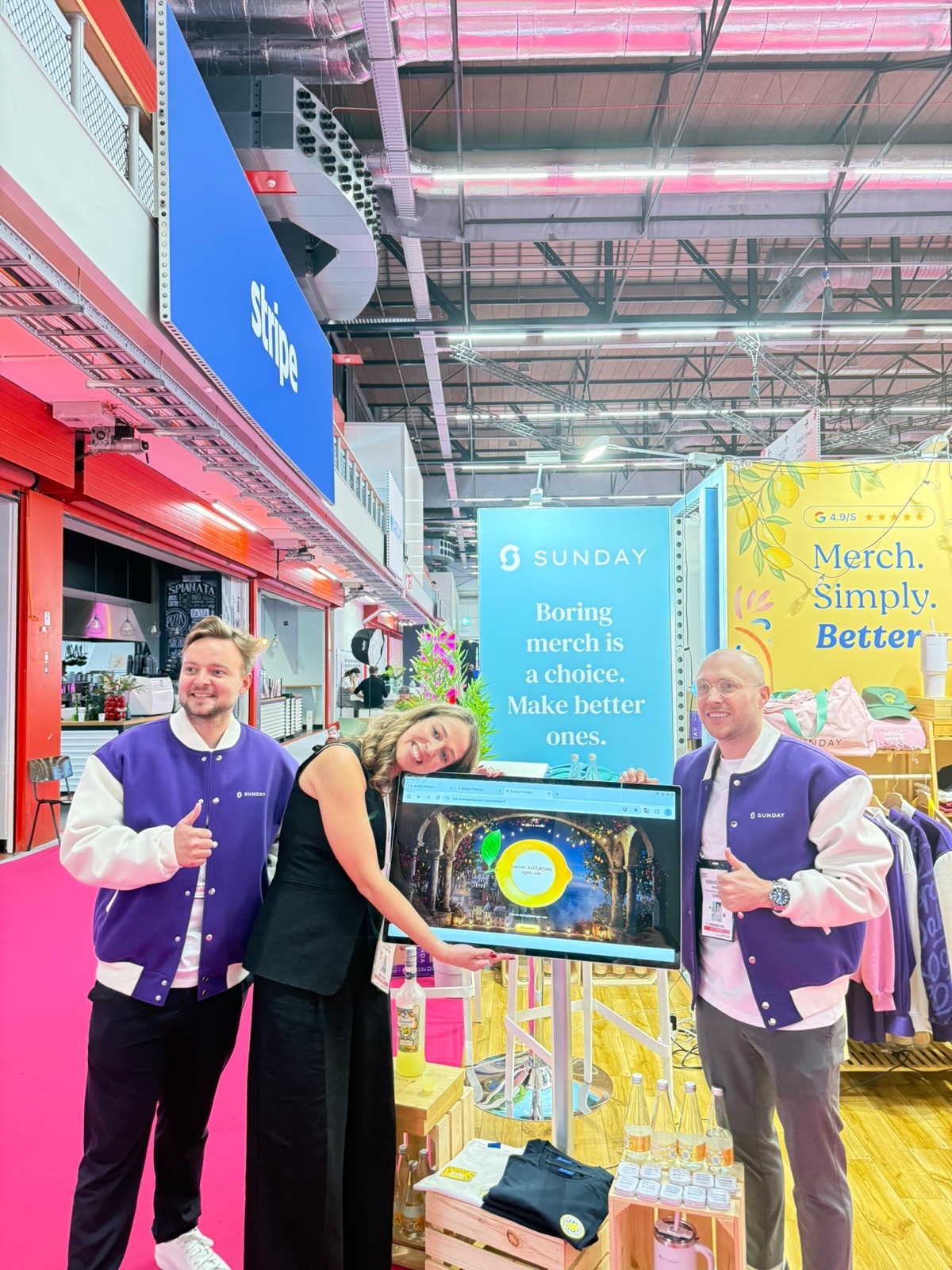
Bright colour, fresh lemons and an open corner format, built to stop people in the aisle.
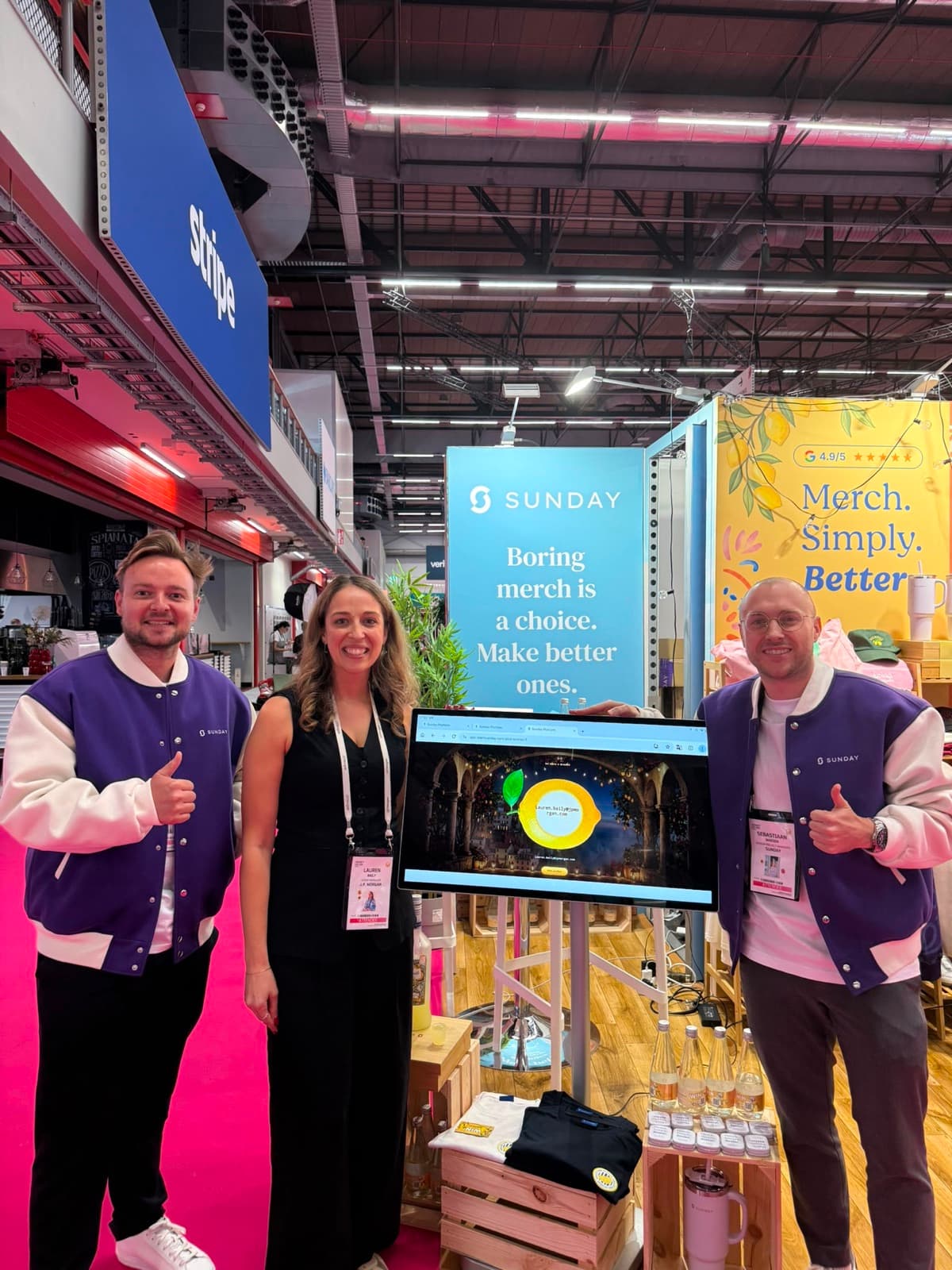
From the aisle, here is what a visitor saw: bright Amalfi colours, fresh lemons, an open booth, premium merchandise, distinctive team apparel and a large branded digital spinning wheel.
The booth was about nine square metres. We could not compete on size, so we competed on position and openness. We secured a high-traffic spot with an open corner format, visible from several directions at once. A small booth on a great corner beats a large booth in a dead aisle. The exhibition space alone cost almost €30,000, and the position was the single most important thing that money bought.
The open format mattered as much as the colour. There was no booth wall to hide behind and no desk to stand behind. The whole stand was an invitation to step in.
Merchandise as media
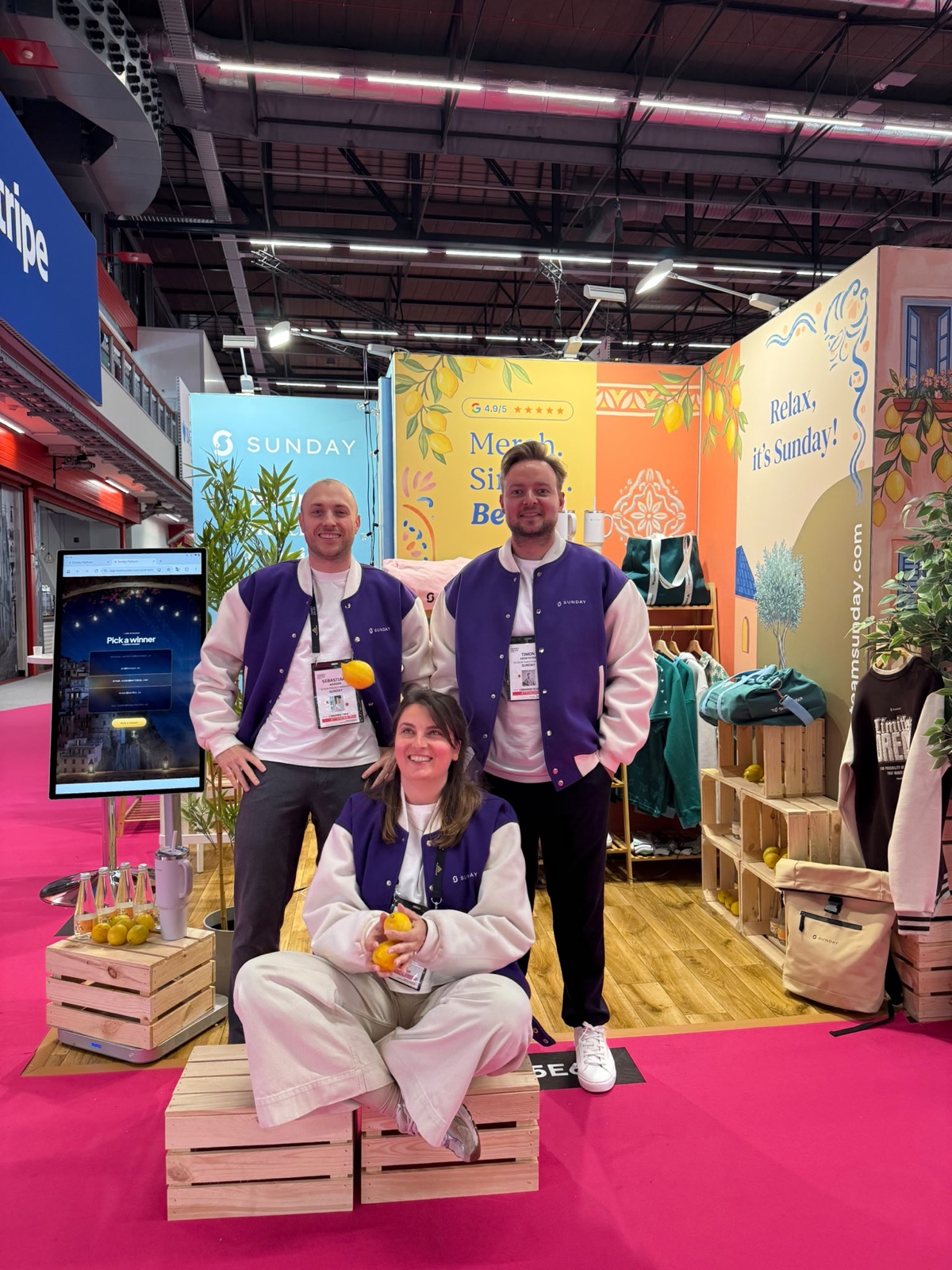
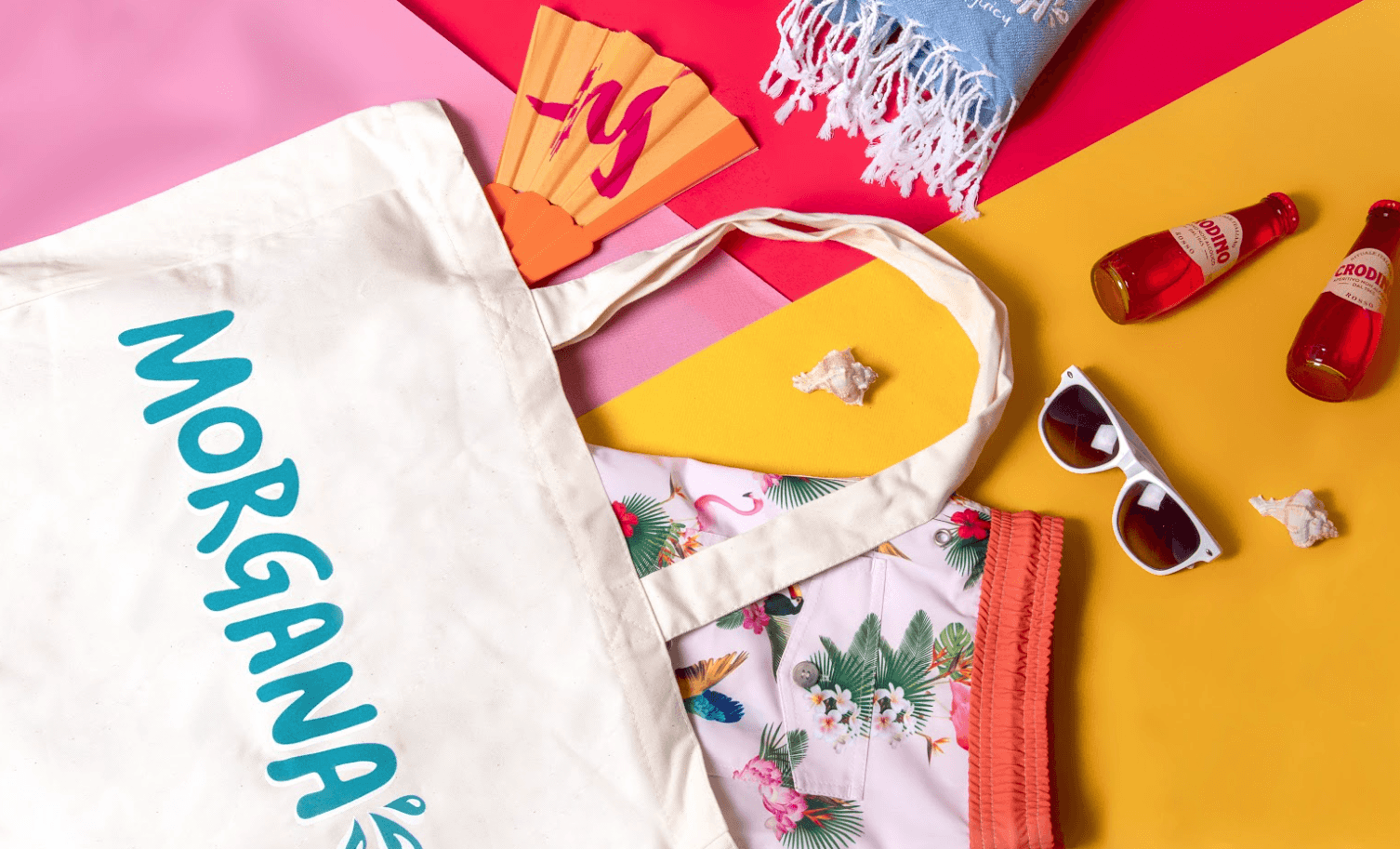
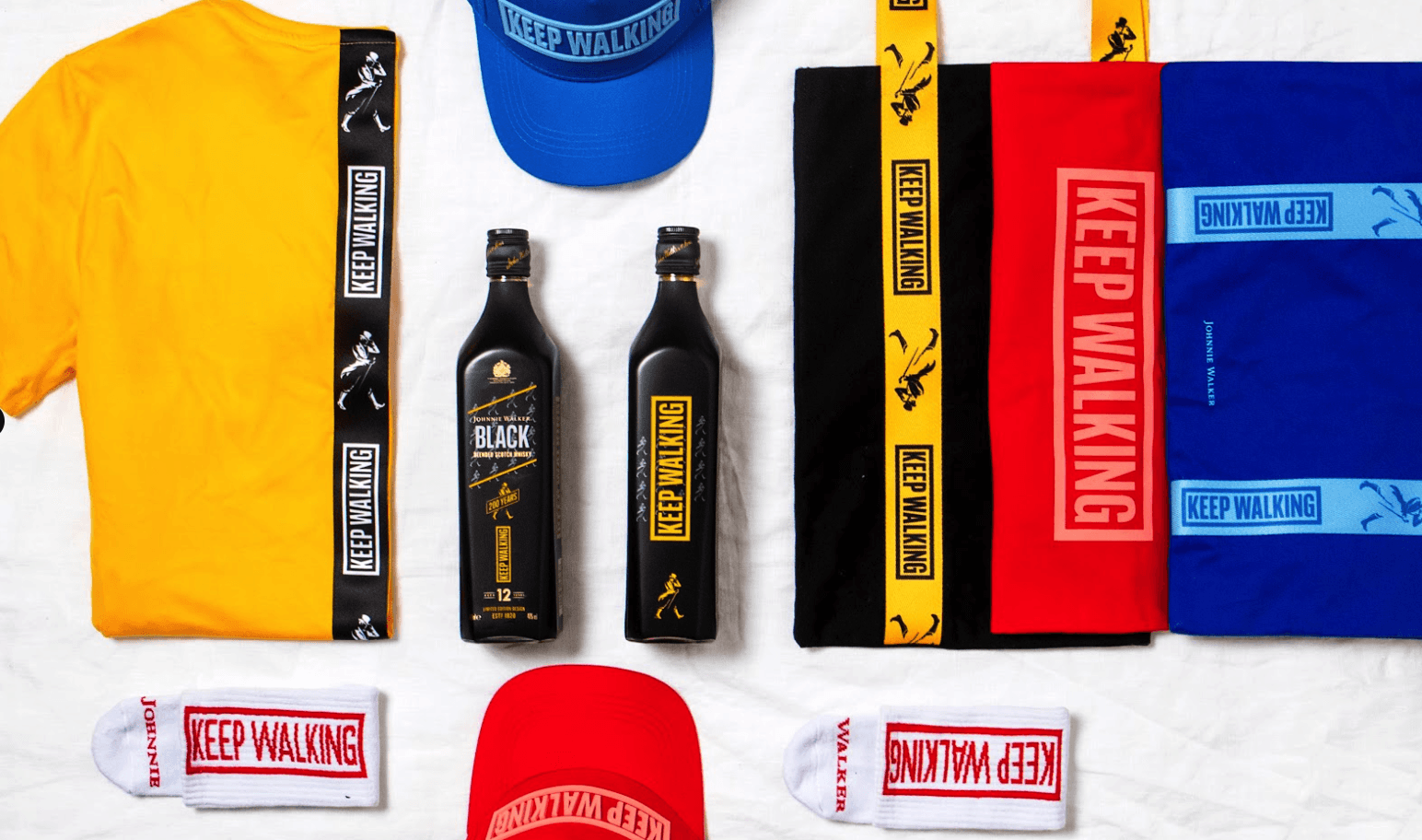
The custom Amalfi collection. The beach bag was engineered to be the most-won prize so it would travel the venue.
This is the idea that most teams miss. Merchandise is not a giveaway. It is media you pay for once and that then walks around the building advertising you for three days.
We distributed around 600 items and used all of our stock. The hero product was a custom Amalfi beach bag, costing roughly €15 to €20 per unit. It was premium, functional, highly visible, fully custom-designed, strongly Amalfi-branded and subtly Sunday-branded. We made it the most frequently won prize on purpose.
The result was exactly what we hoped. The bags became mobile media across the whole exhibition. People carried them around the venue, other attendees asked where they came from, and some of those people walked back to our booth specifically to try to win one. A €15 bag generated booth traffic that no €15 of paid media could have bought at that event.
The contrast with a normal swag table is the whole point. A cheap pen with a logo on it gets binned. A genuinely desirable, well-designed bag gets carried, photographed and asked about. Spend more per item on fewer, better things, and design them so people want to be seen with them.
The spinning wheel and the live brand-store activation
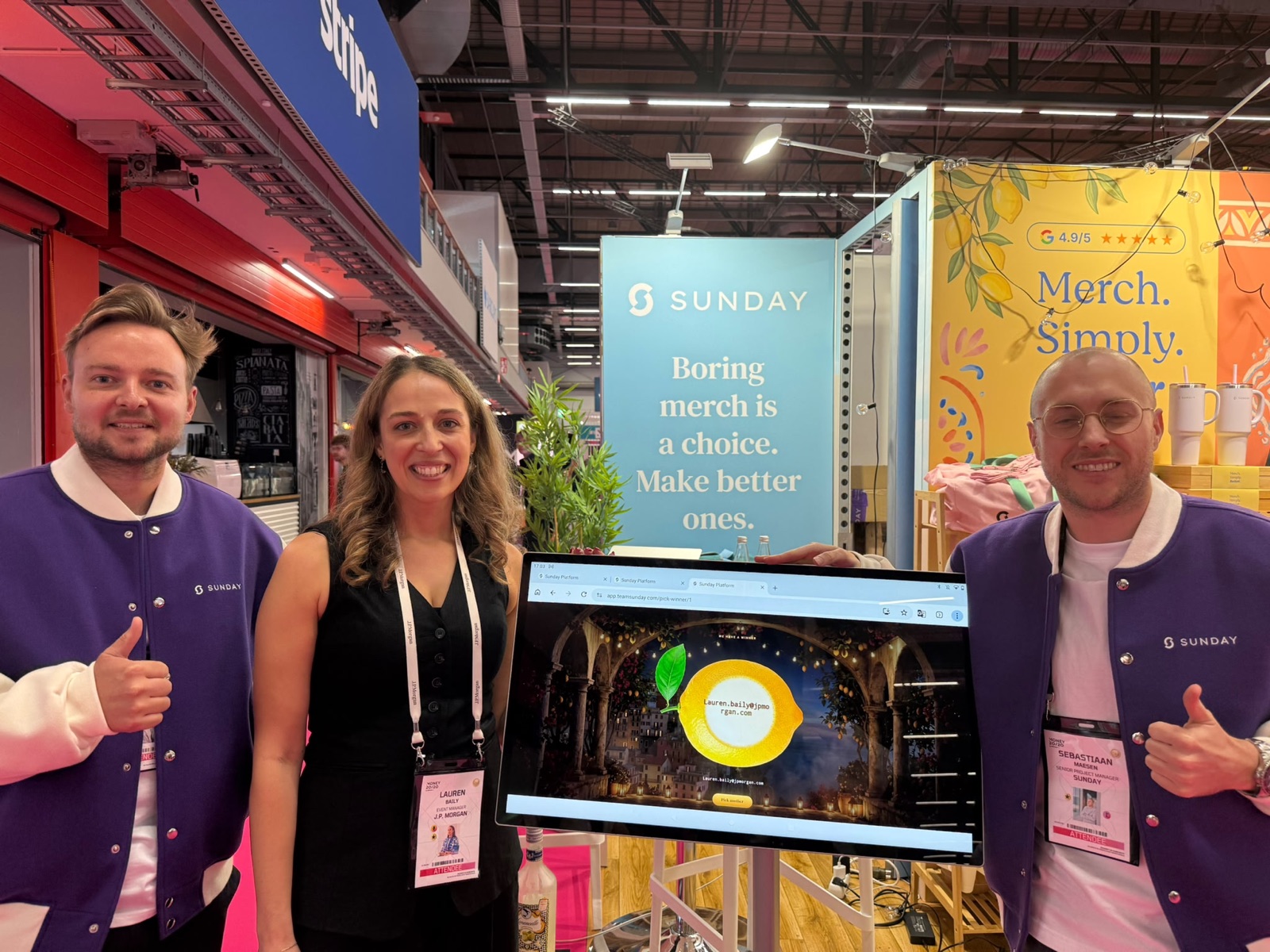
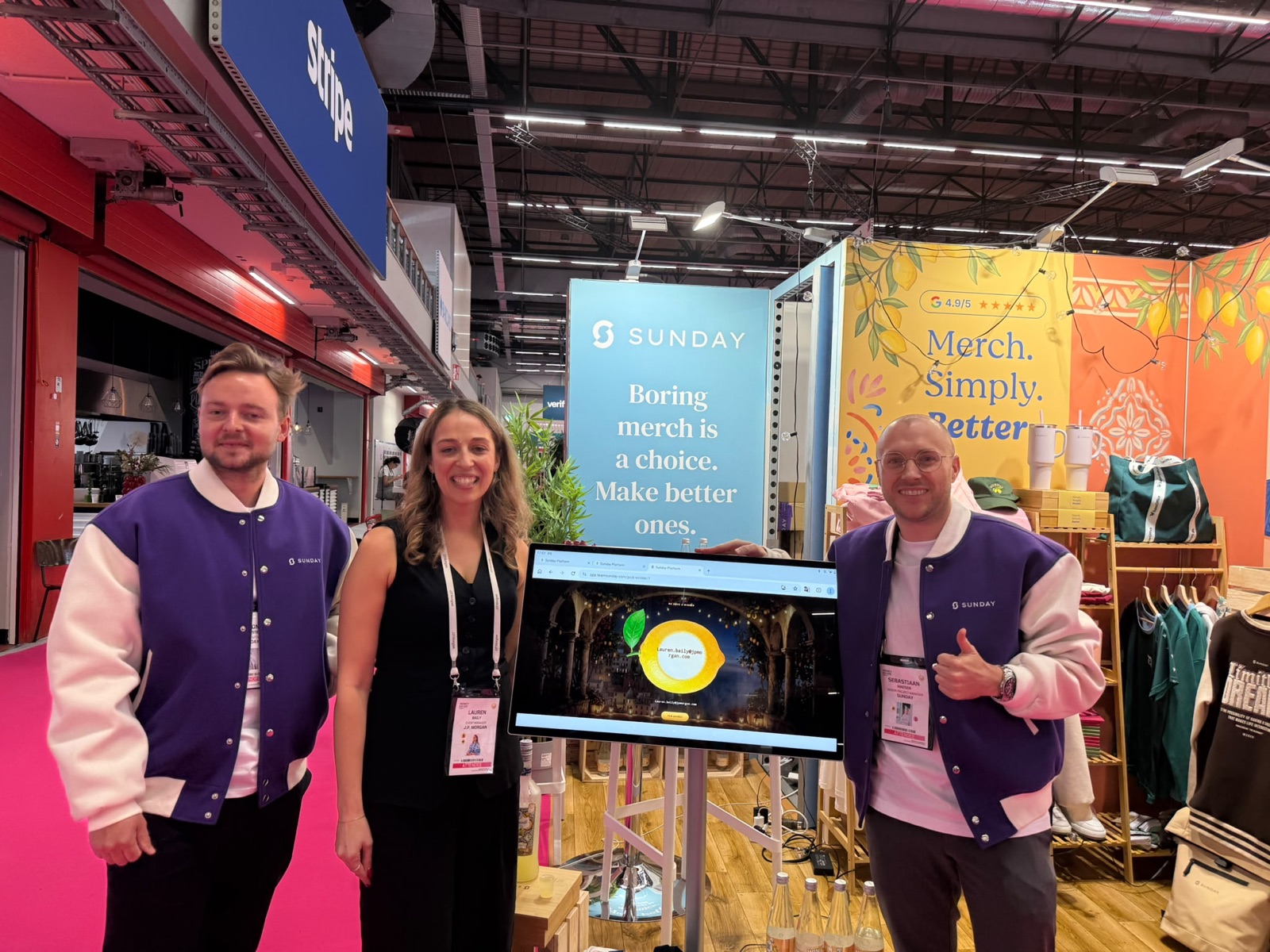
The activation in action. After the spin, the platform generated a live merch store in the visitor's own branding — here for a JP Morgan visitor.
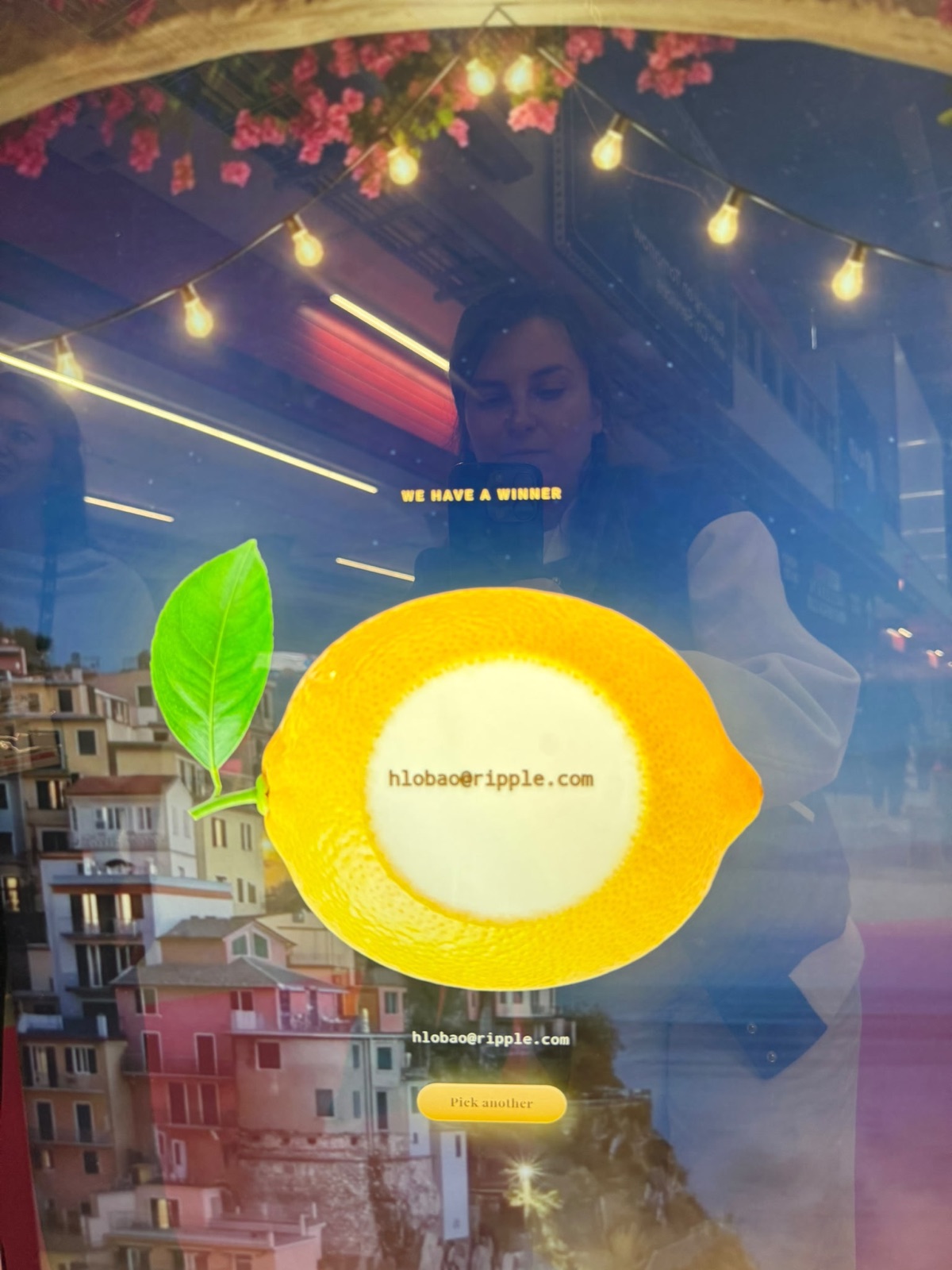
The activation was the engine of the whole campaign. The call to action was "Spin to win a trip to Amalfi."
Here is how it worked. The main wheel ran on a large Sunday tablet, with two smaller tablets for extra capacity during peak traffic. Crucially, visitors did not need to scan a QR code to take part in the main experience. They typed a business email address directly into the Sunday tablet. We then automatically enriched the company data behind that email. The visitor spun the wheel and saw their prize.
Then came the moment that did the real work. Immediately after the spin, our platform generated a live merchandise store using the visitor's own company branding and products. In front of them. In seconds.
The whole registration and spin took about thirty seconds. The wow moment stacked several things on top of each other: the anticipation of the spin, the win, the physical prize in hand, and then a branded merch store for their own company appearing live on screen. That last beat is what separated us from every other booth. We were not describing what Sunday does. We were doing it, live, with their logo.
The generated store stayed available after the event and could be shared with colleagues. So the demo did not end when they walked away. They left holding a working example of the product, addressed to their own brand.
This is lesson number one for any activation. Design it so the mechanic itself demonstrates what you sell. A spinning wheel is fun. A spinning wheel that ends with a personalised, working version of your product is a sales conversation.
Qualification and the conversation flow
While the company data enriched and the wheel spun, there was a natural thirty to forty second window. We used every second of it to qualify.
The team asked questions like these, conversationally, never as an interrogation: are you involved in merchandise; what is your role; do you manage events, and how many do you run a year; how do you currently handle merch; what is going wrong with it; and do you have an active project right now.
This is the second activation lesson. Use the unavoidable waiting time to qualify. The visitor is already standing there, already engaged, already waiting for a result. The qualification feels like conversation, not a form.
Every participant gave an email address, which is how we reached 753 leads. But we did not treat all leads equally. High-quality prospects were also badge-scanned, and we used the badge scan deliberately as a human signal. A scan meant "this is someone I personally need to follow up." It was a flag set by a person who had just had the conversation, not an automatic capture. The team logged extra context in a shared Excel sheet and in phone notes.
When someone showed real potential, we moved them away from the wheel for a deeper conversation. This is the third lesson, and it is the one most teams get wrong. Separate the high-volume activation from the deep commercial conversation. If your best prospect is stuck behind a queue of people spinning a wheel, you lose them. Pull them aside.
And we often suggested booking the follow-up meeting on the spot. The event was busy, calendars were filling, summer holidays were approaching and the real conversation needed more than a booth could give. Booking there and then, while the interest was hot, converted far better than "I'll email you next week."
The prize structure
Everyone won something. That was a design decision, not generosity. A guaranteed prize removes hesitation and keeps the queue moving.
There were five prize tiers: a T-shirt, a cap, the Amalfi beach bag, branded water and a charging kit. Probabilities were tied to available stock, and we distributed around 600 items in total with nothing left over.
The beach bag was engineered to be the most-won item, for the mobile-media reasons above. The custom cap and the bag were fully custom products. The T-shirts and charging kits were decorated stock items, which is a useful distinction: not everything has to be bespoke, but your hero item should be. The charging kit was popular for a boring and brilliant reason. It solved a real event problem, a dying phone, so people genuinely wanted it.
The trip-to-Amalfi mechanic
The headline prize was a trip to Amalfi, one per day, three in total. The mechanic was where it got clever.
To win the daily trip, you had to come back to the booth at 5:00 pm. A large screen then selected a winner at random, and the selected person had to be physically present to claim it. Each draw pulled a crowd of roughly 50 to 100 people back to the stand at the same time every afternoon.
On the early days, some selected winners were not present and lost the trip. Word of that spread, and it sharpened the urgency. Attendance at the later draws went up because people had seen someone miss out.
This turned a one-time activation into repeat booth traffic. Instead of capturing a visitor once, we had a reason for them to return at a fixed time, and a reason for a crowd to gather around our stand in the busiest part of the afternoon. The daily draw was free booth traffic, manufactured on purpose.
Supporting QR activation
The Amalfi water bottles carried a QR code so colleagues or other visitors could enter independently, without being at the booth. It worked as a supporting mechanic, not a main channel, mostly because event catering already provided water so the bottles did not travel as far as the bags. Worth doing, not worth leaning on.
VIP outreach and redeem pages
For our most strategic ICP prospects, we created something separate: a custom wine kit.
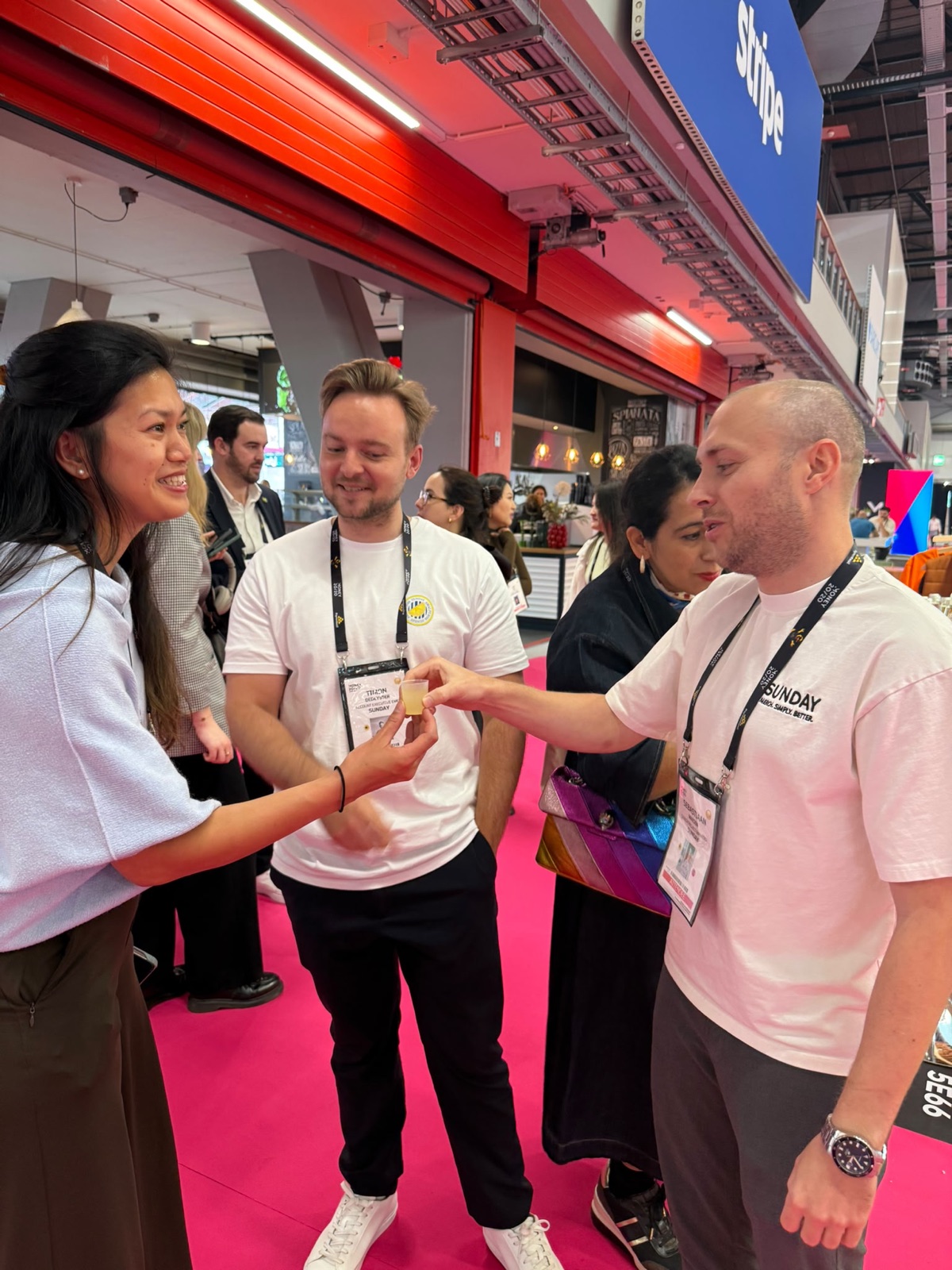
The team walked the floor and visited target exhibitors carrying three things, the Amalfi beach bag, the wine kit and a tablet. The pitch was a gift. The prospect could claim a personalised, branded wine kit through a redeem page, and we would ship it to them afterwards.
The redeem page was doing a lot of quiet work. In one small interaction it demonstrated redeem-page technology, address collection, personalisation, international fulfilment and post-event gifting, all the things that matter for a premium end-of-year campaign. Several companies started thinking about Christmas and year-end gifting on the spot, because we had just shown them the exact mechanism they would use for it.
This is the same principle as the wheel. The gift was not really a gift. It was a working demo that the prospect got to keep.
Team apparel and mobile visibility
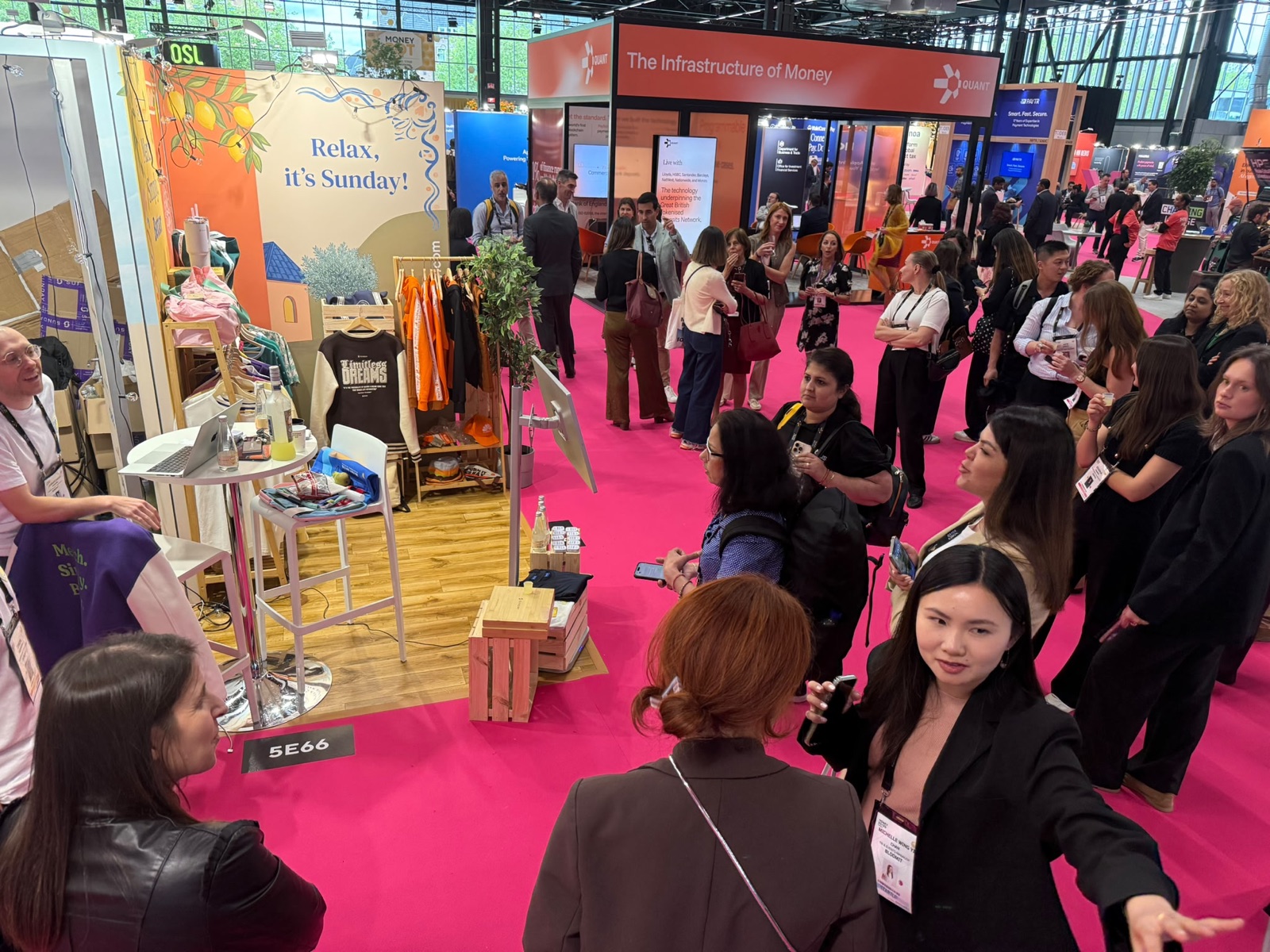
The commercial team in the Amalfi collection. The purple varsity jacket read "Merch. Simply. Better." across the back.
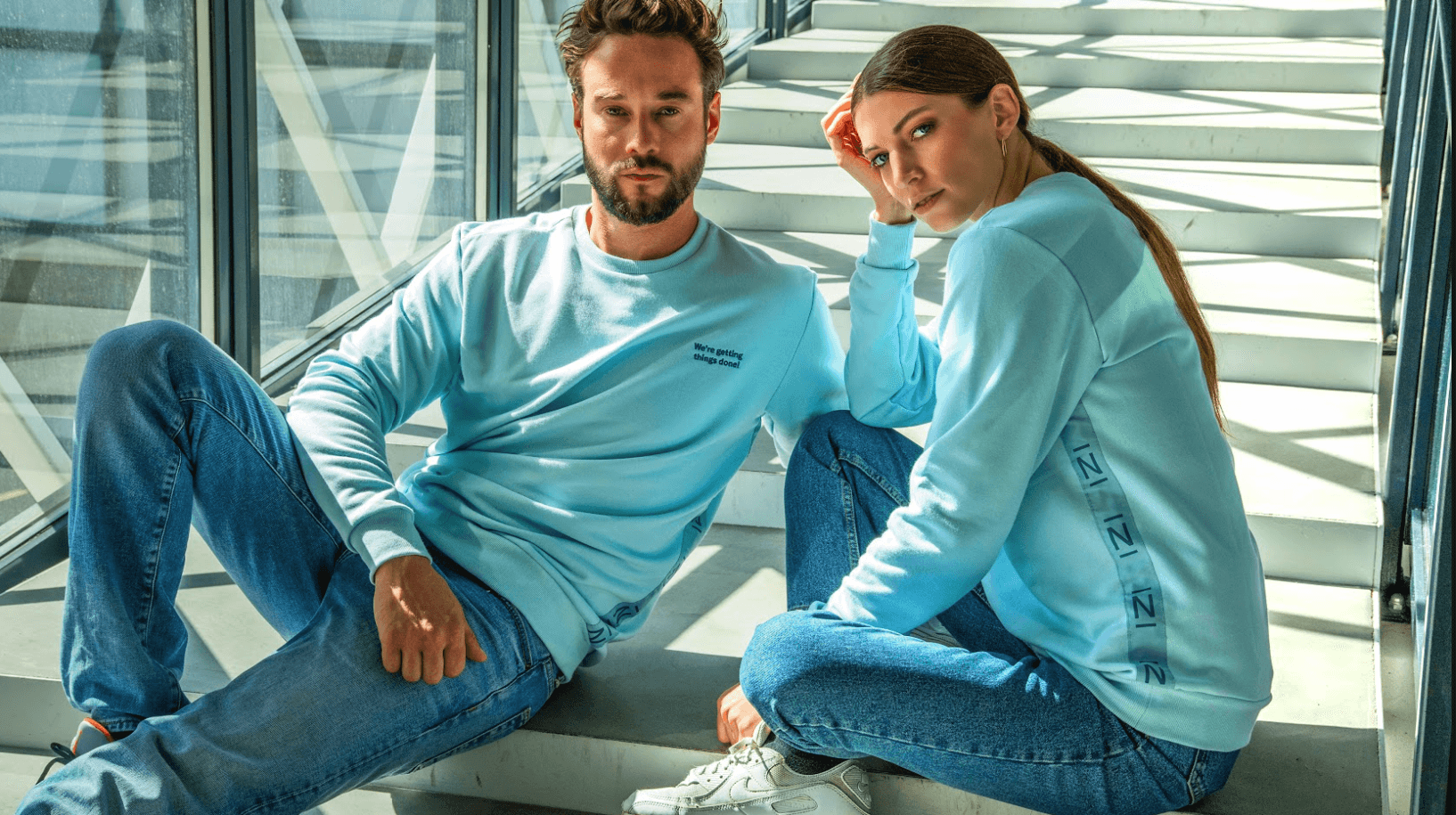
The commercial team received the full Amalfi collection before travelling and wore different pieces each day. The standout item was a bright purple varsity jacket with "Merch. Simply. Better." printed large across the back.
The jacket made the team recognisable everywhere, not just at the booth. Walking the floor, visiting customer stands, in meetings, moving between halls. Every team member became a piece of mobile event media and a walking conversation starter. Someone reading "Merch. Simply. Better." off the back of a jacket in a coffee queue is a warm intro you did not have to engineer.
Apparel is often an afterthought. It should be treated as part of the media plan, because that is what it is.
Staffing and training
Four people travelled. Three worked the event commercially, and one supported the setup and then left.
The original plan was lighter: one or two people on the booth and one person out visiting target exhibitors. The activation became popular enough that all three commercial people were needed at the stand. One ran the main wheel and two worked the smaller tablets. Roles rotated through the day to keep energy up and avoid the deadening effect of repeating the same pitch for eight hours.
Honestly, a fourth commercial person would have helped. It would have freed up capacity for deeper conversations, more target-account visits, better note-taking, more meeting bookings and more resilience at peak times. If we ran it again, we would staff for the activation we actually got, not the quieter one we planned for. That is the staffing lesson: if your activation works, it will demand more bodies than your spreadsheet assumed.
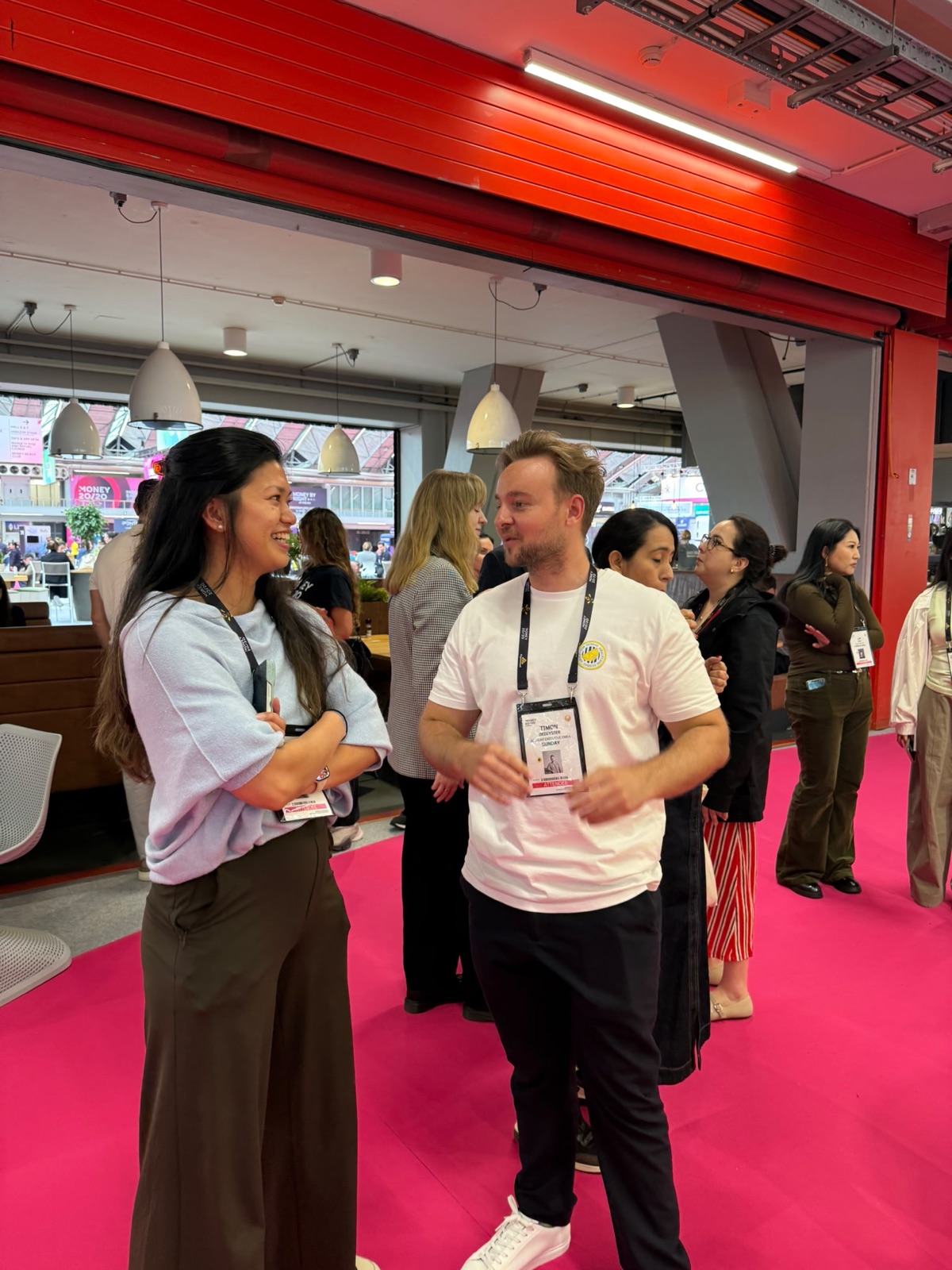
We also sent experienced people. Two of the team had worked the previous year's show, and all had multiple years at the company. At a senior event, the quality of the person on the booth is part of the product. Junior staff reading a script do not convert CMOs.
On preparation, the team was involved in planning and feedback meetings throughout. Formal training covered the concept, the activation mechanics, the prizes and their probabilities, the daily draws, the merchandise, the target accounts, the pitch, the qualification questions, the follow-up process and the likely visitor questions. Nobody walked onto the floor improvising.
The target-account strategy
This is the part that turns an event from a lead-capture exercise into a sales motion.
Each commercial team member owned roughly 25 of the 75 priority accounts. They visited five to ten per day, mostly early in the morning before our own booth got too busy to leave. That timing is deliberate. The first hour or two of the day is when senior people are on their own stands and reachable, and before your activation needs all hands.
Across the show we had real conversations with about 50 of the 75 priority exhibitors. That is a 67 percent hit rate on a hand-picked target list, achieved by walking to them rather than waiting for them. The exhibitor list, again, was the asset. The booth was the magnet, but the target-account walking was the sales engine.
Pre-event outreach
We started selling before anyone arrived in Amsterdam. We contacted roughly 475 relevant companies through email, LinkedIn and the Money20/20 app. The app was particularly useful, because it told us exactly who was planning to attend, so we were not guessing. The 75 priority accounts got deeper personalisation by company and role.
The outreach ran in three phases.
About 60 days out. We asked exhibitors a simple, useful question: did they still need merchandise for Money20/20 itself? This was not a pitch, it was a service. It generated several merchandise orders before the event had even started.
About one month out. The message shifted to meeting up. The angle was low-pressure and peer-to-peer: "We're both going to Money20/20. Let's say hello and have a quick chat." That phase booked around 10 meetings before the show.
Two or three days out. The final push promoted the Amalfi booth, the trip competition and the strategic event-merchandise conversation. By then the goal was to make sure the people we wanted already knew where to find us.
The lesson is that a meeting booked before the event is worth several captured at it. Pre-booked meetings are calmer, longer and further down the funnel. The booth then becomes a place to deepen relationships you already started, not just to start cold ones.
Daily and post-event follow-up
Most events are won or lost in the follow-up, and most follow-up is too slow and too generic. We ran ours daily, during the show.
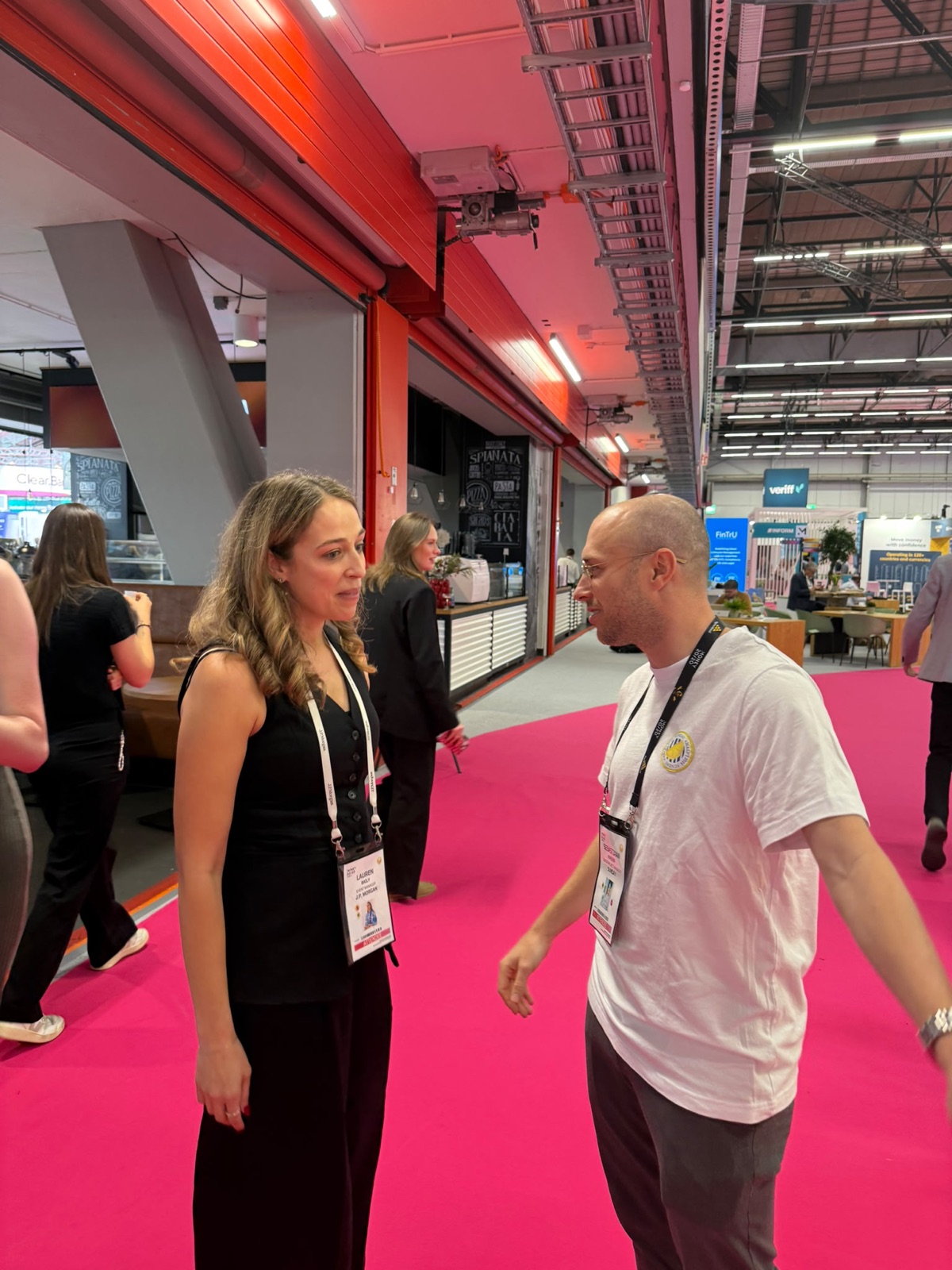
Each evening, around 5:00 to 6:00 pm, selected high-value contacts got a personal message. It included a photo of the Amalfi booth and team, a reminder of the specific interaction, sometimes the prize, the link to the brand store we had generated for them, and an invitation to keep talking.
The photo mattered more than you would think. A senior buyer has fifty booth conversations in three days, and by the evening they blur together. A picture of our booth and team pulled the specific memory back. "Oh, the lemons, the wheel, the bag." That recall is the difference between a reply and silence.
We split follow-up by value. Broad event participants went into automated marketing follow-up. The sales team manually worked the high-value badge scans, the target accounts, the active projects, the urgent leads and the most promising opportunities. After the event, a larger follow-up went to everyone who had not received a daily personal message.
That is the follow-up lesson in one line: automate the breadth, personalise the depth, and do the depth fast, while you are still in the building.
Logistics and stock management
Logistics is not glamorous and it is where events quietly fall apart, so we kept tight control of it.
Money20/20 was in Amsterdam, and we transported all merchandise, technology and booth materials directly to the venue in a small truck the day before. We wanted full control rather than relying on third-party handling. Anna, our event manager, coordinated the delivery and the venue logistics, which at a venue like this is a real job. It required pre-declared vehicle access, an approved delivery time, parking and loading slots, correct labelling and compliance with strict loading rules. Get one of those wrong and your stock sits outside while the show opens.
We also assembled the booth ourselves. A small storage space, roughly two metres by one, held boxes, backup stock, packaging and operational materials, and the team replenished the visible merchandise from it through the day.
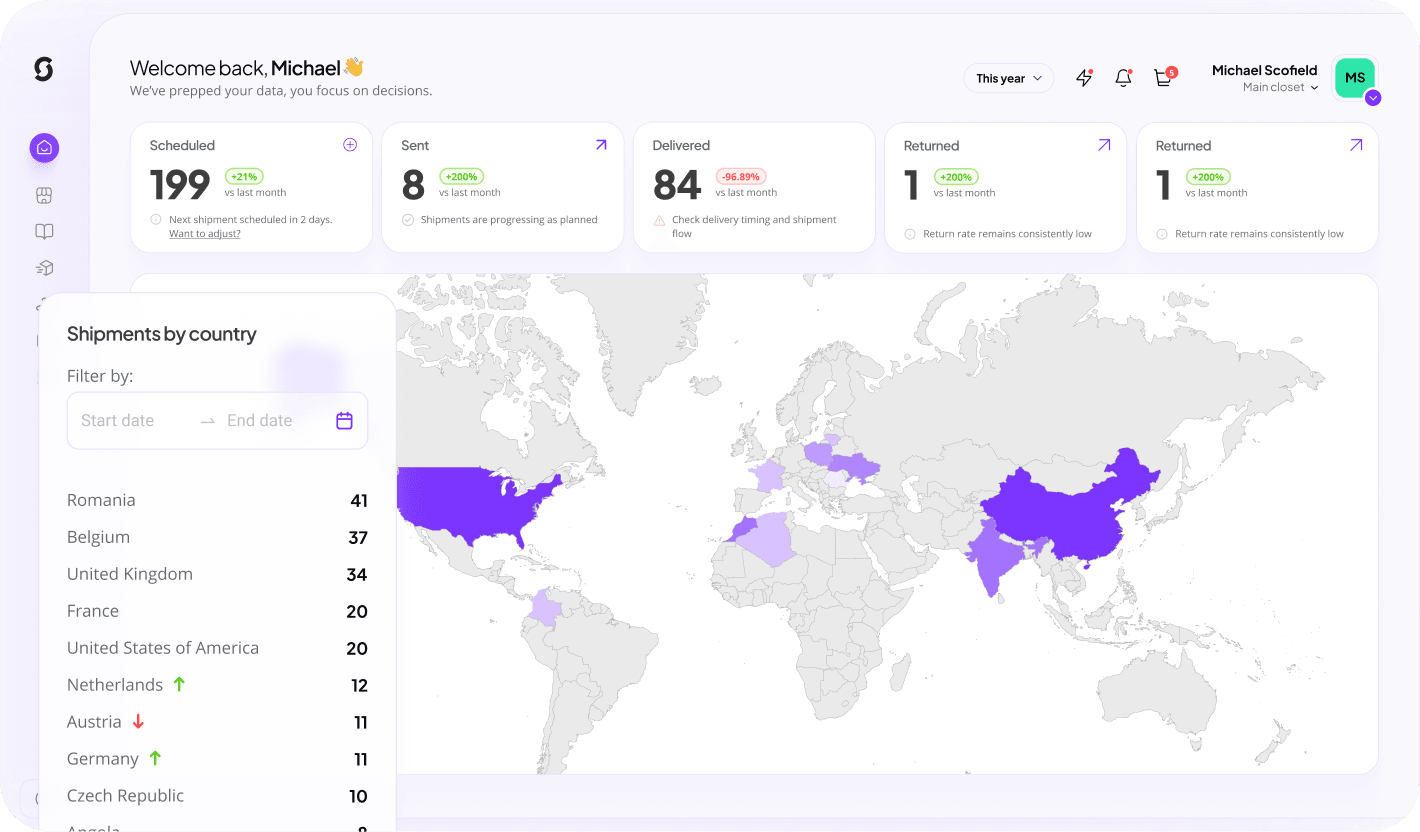
Stock itself was managed live in the Sunday platform. We could see when an item was running low or had sold out, which is what let us distribute around 600 items cleanly with nothing left over. No dead stock to ship home, no popular item running out unnoticed at 2pm on day one. Treat venue logistics as part of the campaign, not an afterthought handed to whoever is free.
Content creation
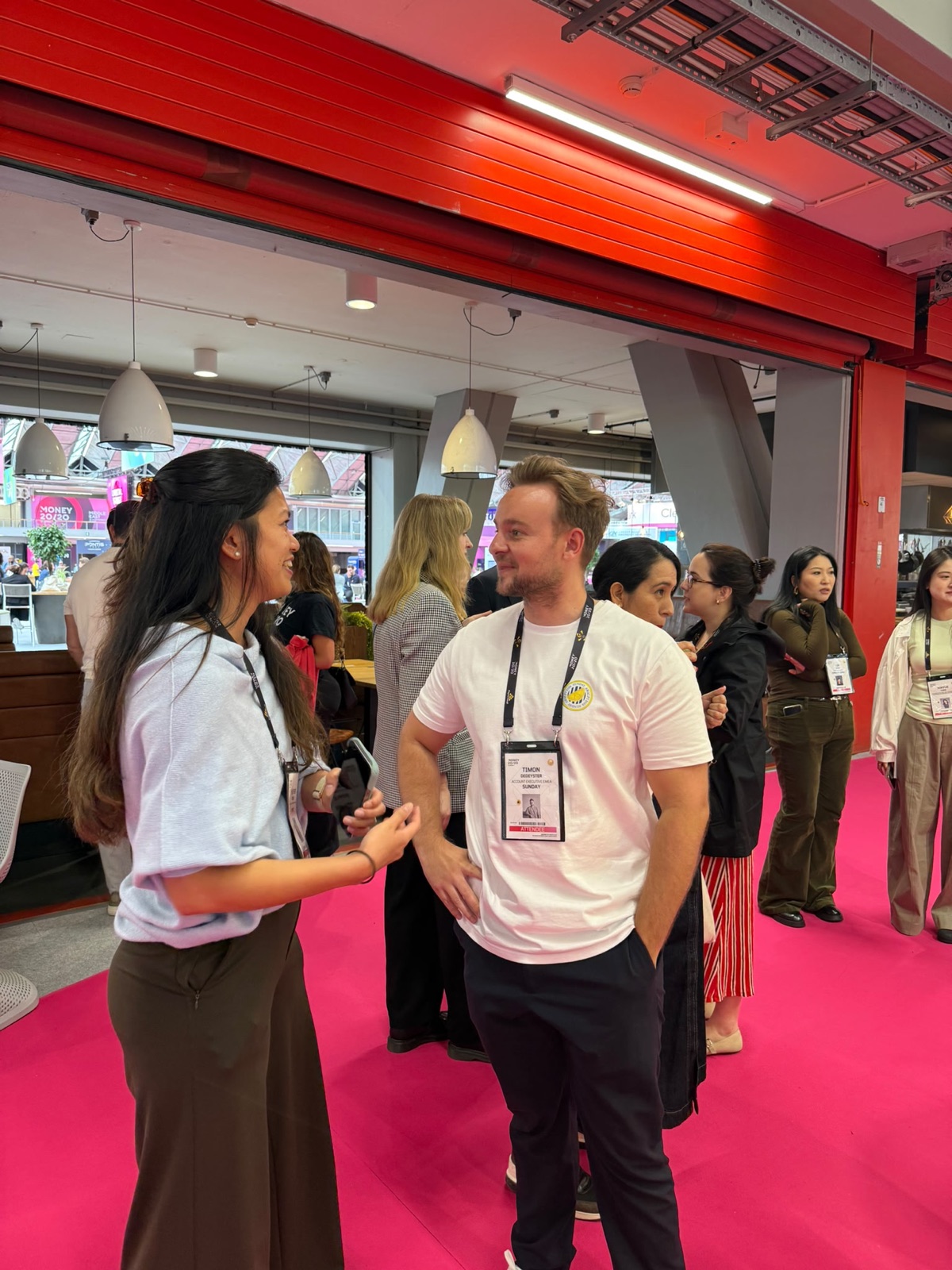
Content was planned before the event, not scrambled together during it. Anna and Sander handled photography and video against a prepared shot list that covered team content, booth footage, merchandise, the activation, customer visits, testimonials and general event atmosphere.
The best material, predictably, was the real stuff: the team, real people, customer visits, actual conversations and merchandise in use. Staged content reads as staged. We published some of it during and between the event days, and kept the majority to repurpose afterwards, including customer testimonials filmed on site.
The lesson is to plan content like a shoot, with a list and named owners, before you are tired and busy on the floor. Nobody captures good content reactively at the end of a twelve-hour event day.
The full commercial results
Here is the complete picture again, measured 1.5 weeks after the event, with the caveats that matter.
We captured 753 total leads. Of those, 240 were qualified contacts matching both our ICP and the right role, and 81 were urgent leads with an active project already underway. That qualification layer is the number we actually care about, far more than the headline 753.
On meetings, we pre-booked 10 before the event, booked 23 during it and added 9 through post-event follow-up, for 42 confirmed meetings so far. We are deliberately not rounding that up or claiming more. It was 42 at the 1.5-week mark and we expect it to keep climbing as follow-up continues over the coming weeks.
Commercially, the show produced 3 concrete sales opportunities, including 1 global enterprise opportunity, and roughly €40,000 in identified open pipeline. That pipeline is open and qualified, not closed. Separately, we signed 1 new customer, and separately again, an existing customer placed a reorder worth €37,000. We report those three things separately on purpose. The €40,000 pipeline, the new signing and the €37,000 reorder are distinct, and bundling them into one big number would misrepresent what actually happened.
Against our original targets of around 250 captured prospects, at least 25 meetings and a pipeline of five times the investment, the lead capture and meeting numbers are comfortably ahead. The pipeline picture is still developing and we will know the true multiple in a few months, not in 1.5 weeks.
What did not work
Two honest weaknesses.
Too much last-minute execution. The concept started five months early, which was right, but too many operational details were still being finalised late. Next time we want to lock far earlier: merchandise quantities, activation details, technology testing, staffing, outreach, account ownership, follow-up, content planning, logistics and contingency planning. An early concept does not save you if execution still bunches up in the final fortnight.
The low-friction activation depends on audience quality. This is the important one for anyone copying the playbook. The single-field, everyone-wins, spin-the-wheel mechanic worked at Money20/20 precisely because the audience was unusually senior and relevant. The cost of capturing a non-ICP lead was low, because there were so few of them. At a broader or less qualified event, that same low-friction mechanic would flood you with low-value leads and bury the good ones.
So do not copy the mechanic blindly. At a less targeted event, add qualification: company size, job role, number of annual events, geographic scope, active-project timing, different prize tiers, and premium rewards reserved only for qualified prospects. Match the friction of your activation to the quality of the room.
The repeatable playbook
If you strip this teardown down to a system you can run at your next exhibition, here it is.
- Choose events on ICP and buyer concentration, not prestige. A famous event with the wrong room is a €40,000 mistake.
- Study the exhibitor list before you rely on visitor traffic. Ask whether the other exhibitors alone could justify the spend. If not, walk away.
- Build one integrated campaign concept. Every element, from merch to apparel to digital, should belong to the same recognisable world.
- Start early enough to make genuinely custom merchandise. Lead time is not a constraint to work around, it is the reason to start with merch first.
- Use contrast instead of imitating the category. In a hall of blue software screens, lemons and colour win attention cheaply.
- Treat merchandise as media, not a giveaway. Make your hero item desirable enough that people carry it, and it advertises you all day.
- Design the activation to demonstrate the product. The mechanic itself should show what you sell, not just entertain.
- Use natural waiting time to qualify. The seconds a visitor spends waiting are the best qualification window you will get.
- Separate high-volume activation from deep conversation. Pull your best prospects out of the queue and talk properly.
- Assign ownership of target accounts. Split the priority list so every account has one owner, and visit them early in the day.
- Combine pre-event, on-site and post-event meeting generation. A meeting booked before the show is worth more than one scrambled at it.
- Automate broad follow-up, keep high-value follow-up personal, and do it fast. Daily, during the event, with a photo to jog memory.
- Plan content production in advance. Work to a shot list with named owners, not reactive grabs at the end of the day.
- Treat venue logistics as part of the campaign. Vehicle access, slots, labels and live stock control are not admin, they are risk.
- Measure qualification, urgency, meetings and pipeline, not raw lead volume. 240 qualified contacts tells you more than 753 leads ever will.
Conclusion
A nine square metre booth beat brands ten times our size at Money20/20 because we refused to compete on the dimension they were winning on. We could not buy a bigger stand, so we did not try. We out-prepared, out-designed and out-followed-up instead.
None of it was luck, with one exception we are honest about: the low-friction activation worked partly because the room was so well chosen. That was a decision, not an accident, but it is the part that would not transfer to a worse event. Everything else, the integrated concept, the merch-as-media thinking, the activation that demos the product, the target-account walking, the layered outreach and the fast personal follow-up, is a repeatable system. You can run it at any premium exhibition, selling anything.
If there is one idea to keep, it is this. Stop measuring events by how many people visited your booth. Measure them by how many of the right people you started a real commercial conversation with, and how fast you followed up. We captured 753 leads. The 240 that mattered, the 42 meetings and the deals behind them are what made the €40,000 worth spending.
More from the floor
Related reading
- Custom socks: the complete guide for 2026
- Custom mugs: the complete guide for 2026
- Custom hoodies: the complete guide for 2026
- 9 ways companies use custom socks
- How to automate gifting and follow-up with your CRM
- How to measure gifting ROI
Want to run a campaign like this?
Sunday is the merch infrastructure behind campaigns like this one. We handle design, production, merchandise collections, storage, international logistics, redeem pages, live brand stores, stock and the follow-up experience, so your team can focus on the conversations instead of the boxes. We are not a supplier you brief once. We are the platform that runs your event merch end to end.
Two simple next steps. Create a free Sunday account and generate a branded merchandise environment for your own company in minutes — the same experience we put in front of buyers at the booth, and the fastest way to see what "live in 30 seconds" actually means. Or book a conversation with a Sunday event specialist to plan the merchandise, activation and logistics for your next exhibition. Bring the event, the audience and the goal, and we will help you build the system around it.