
Custom beanies are knitted hats made and branded in your colours, ordered at volume for teams, events, customers and partners. A good corporate beanie goes in one of two directions: deliberately bold for activations and outdoor events, or subtle and premium for people who will wear it for years. The mistake is the middle. Keep the logo small, decorate with embroidery, a woven label or a patch rather than knitting a detailed logo into the rib, and choose acrylic for almost everything, merino for genuinely premium gifts, cotton only where safety demands it. Order from around 10 pieces, or 100 for fully knitted designs. Distribute in October or November so people wear them all winter. Never in summer.
One note before we start: this guide is for companies branding beanies with a logo, for team kits, events, customer gifting, partner collections and full employee sets. Beanies sit in a crowded, low-cost category, which is exactly why so many teams default to a basic promo hat and send something nobody chooses to wear. A good beanie is the opposite. It feels intentional. It is designed around the recipient, not just the logo, and it lands in the right month. Get those two things right, design and timing, and a beanie becomes one of the highest-value items in merch: warm, cosy, worn for months, and seen everywhere it goes.
Why companies use custom beanies
A beanie does something most merch cannot. At an outdoor event it solves an immediate problem, warmth, the same way a cap solves sun in summer. It carries a friendly, cosy association that few products match. And because people genuinely like a good beanie, it gets worn all winter on the commute, the dog walk and the ski slope, which turns one low unit cost into months of visible brand impressions.
The catch is the same thing that makes it popular. Beanies are cheap and easy to order, so most companies treat them as throwaway promo and underestimate the category. The value is not in the hat itself. It is in designing it like a fashion product, branding it with restraint, packaging it well, and timing it so it lands before the cold. Do that and the beanie is one of the strongest practical items in the catalog. Treat it as basic swag and you have paid for another hat nobody wears.
What makes a corporate beanie good: pick one of two directions
This is the part most guides skip and the part that decides whether your beanie works. A good corporate beanie is design first, and the design goes in one of two clear directions. The fatal error is landing between them.
- Deliberately bold. Loud colours, oversized branding, patterns, pom-poms. This is the right call for ski trips, festivals, outdoor activations and playful brands. Think of how a brand like Jagermeister uses headwear: the beanie is the statement, and it is meant to be seen.
- Subtle and premium. Restrained branding, wearable colours, something that resembles a beanie people would buy for themselves. This is the right call for employees, customers, partners and any long-term use. The logo is small. The hat does the work.
The mistake is the middle: too branded to feel fashionable, not bold enough to feel intentional. A conservative beanie with an aggressive logo pleases nobody. Commit to one direction and the rest of the decisions get easy. Quality still matters underneath both, the fit, the comfort, whether it holds its shape, but the direction comes first.
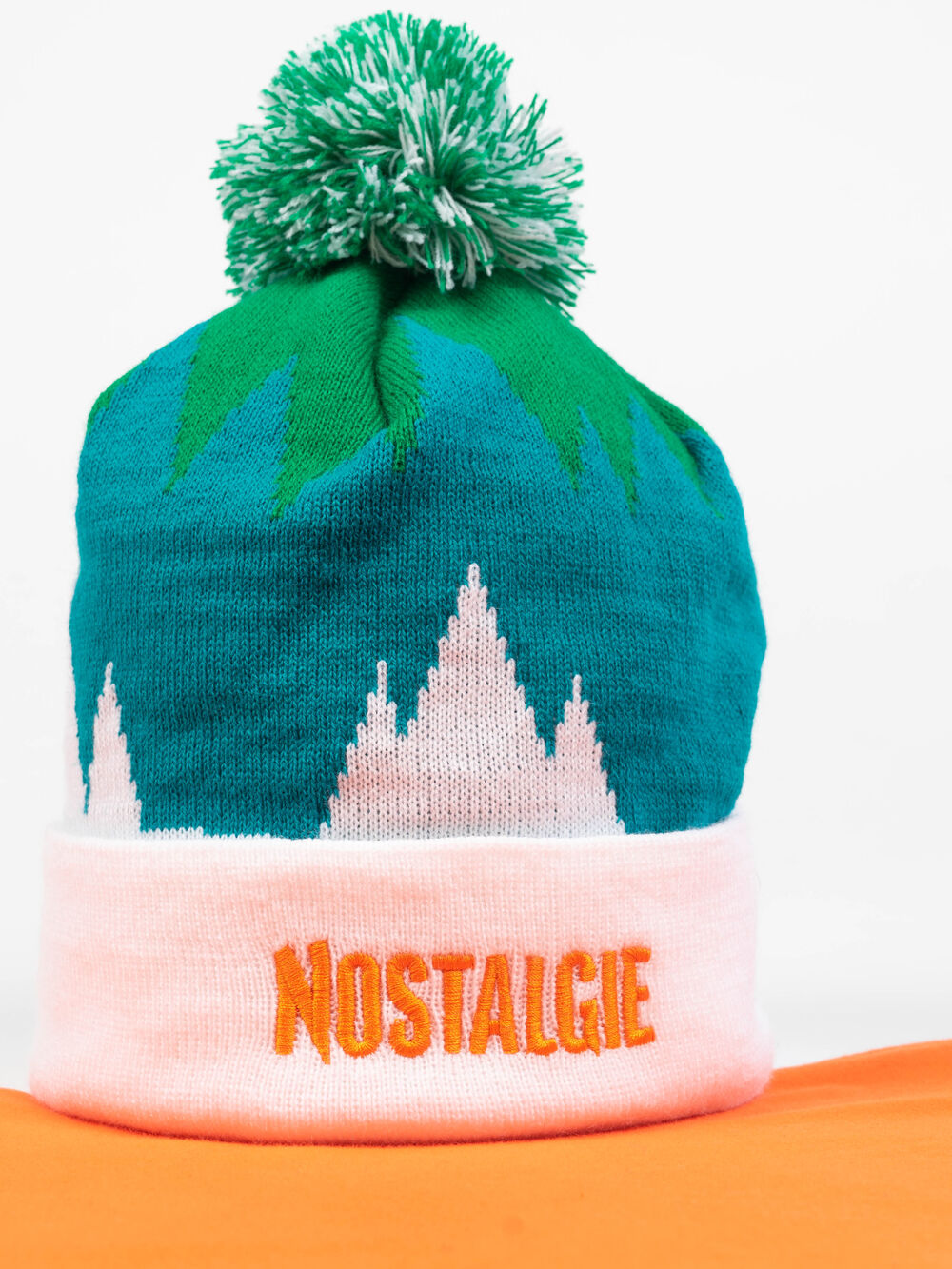
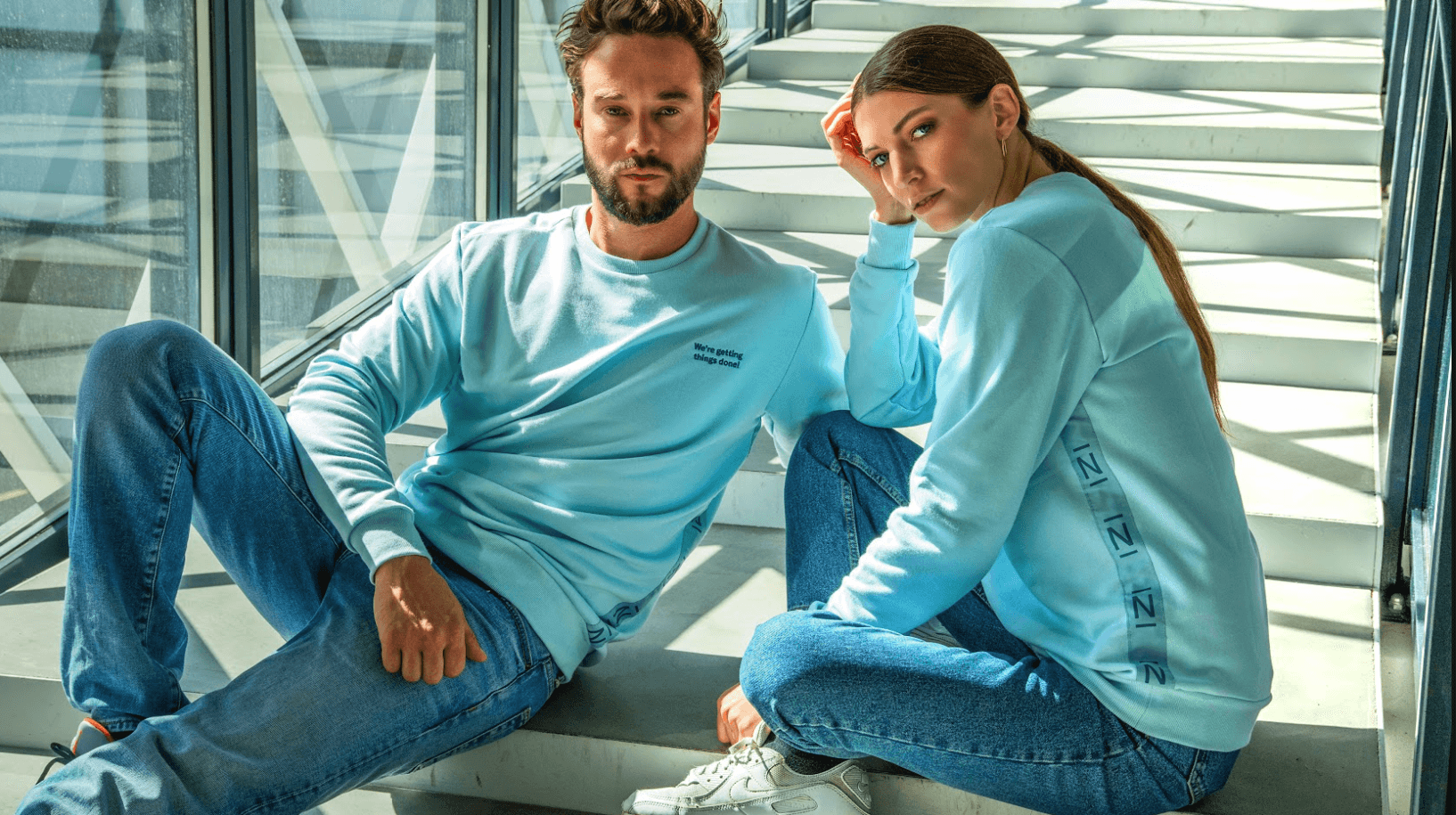
The subtle, premium direction: wearable colour, restrained branding, a beanie people would happily buy for themselves. Right for employees, customers and partners.
Custom embroidered beanies
Custom embroidered beanies are the premium default, and for good reason. Embroidery preserves the shape of your logo, reads as quality, and survives years of wear and washing. It is the finish to reach for whenever you want a crisp, recognisable mark on a beanie that will be worn for a long time.
The honest rule on decoration is about protecting the logo. The biggest technical mistake in the category is knitting a detailed logo straight into the ribbed fabric. The rib stretches when the beanie is worn, and the logo distorts with it. So for any logo with real detail, use a method that holds its shape: embroidery, a woven label, an embroidered patch, or another sewn-on element. A patch in particular adds a fashion-led look that lifts the whole hat. To weigh the finishes side by side for your design, see embroidery vs print on beanies, and preview your mark first with the free beanie mockup generator.
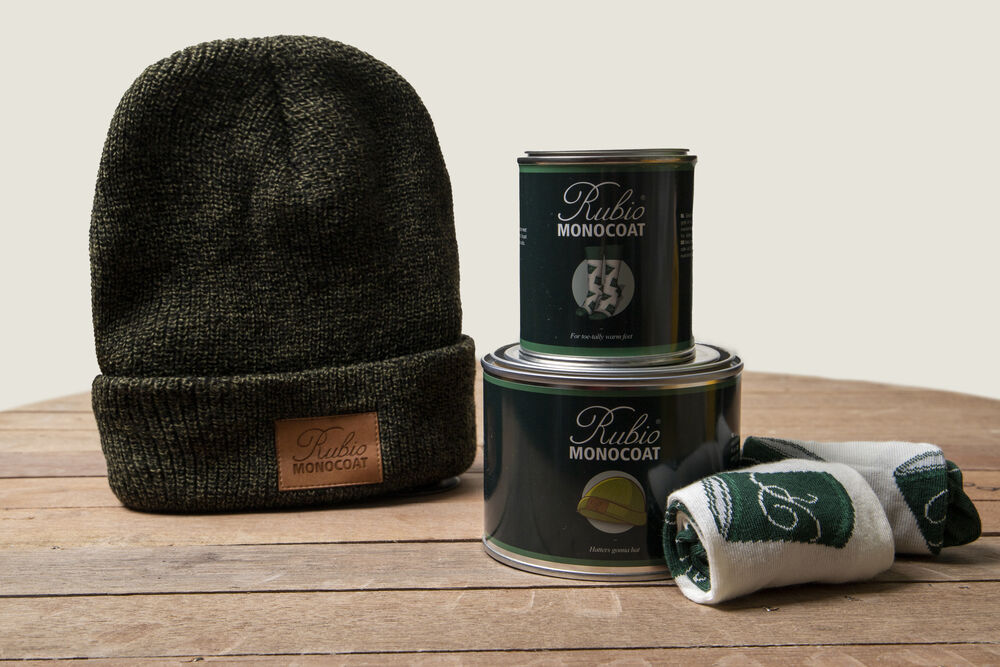
Embroidery on a knit beanie. It preserves the logo's shape where knitting a detailed logo into the rib would distort it as the hat stretches.
Custom knit beanies
Custom knit beanies are the heart of the category and the most common starting point. Two reach for them first: the Essential beanie and the standard knitted beanie. Both are classic shapes that suit almost any audience, take embroidery or a woven label cleanly, and look right in conservative winter colours like navy, black and grey.
Fully custom-knitted beanies are a step up in ambition. Here the pattern, colourway and texture are built from scratch, so the brand can be woven into the design rather than added on top. That is how the strongest brand beanies are made, but it needs more setup, more knitting preparation and a higher minimum, which is why fully knitted designs start from around 100 pieces rather than 10. If you want a beanie that is unmistakably yours and you are ordering at scale, a custom-knitted design is the move. For smaller runs, a standard knit with embroidery gets you most of the way for a fraction of the setup.
Custom pompom beanies
Custom pompom beanies belong firmly in the bold direction. The pom adds movement, playfulness and a winter-sport feel, which makes them a natural fit for ski trips, festive campaigns, outdoor events and brands that want to be seen having fun. They are also a strong choice for family-oriented gifts, where a coordinated set of beanies, including children's sizes, makes a genuinely warm gesture when you involve employees' families.
The thing to get right with a pom-pom beanie is commitment. Because it already reads as playful, a timid logo looks lost on it. Lean into the loud direction: a confident colourway, a clear mark, maybe a contrast pom. If your audience is corporate and conservative, a pom-pom is probably the wrong shape and a clean cuffed knit is the safer call. Match the beanie to the moment, not the other way round.
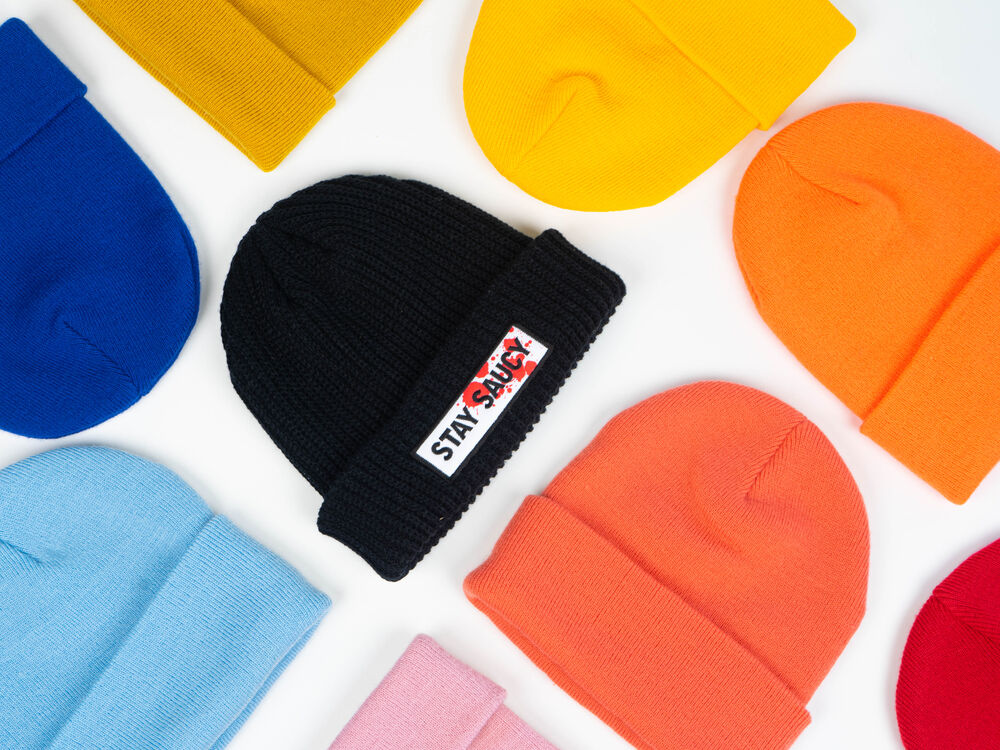
The bold direction at an outdoor event. A confident colourway and a clear mark, where the beanie is meant to be seen and the moment calls for it.
Organic custom beanies
Organic custom beanies and recycled-yarn beanies answer a real question, so let us be honest about it. Most corporate beanies are acrylic, which is synthetic, so there is only so much the material itself can change. Organic cotton and recycled blends are genuine options where they fit the use, and they signal care, but they are not a magic sustainability fix on their own.
The stronger sustainability move is one that gets ignored: design the beanie to be worn for several winters, not discarded after one. A well-made acrylic beanie that someone actually wears beats a poorly designed organic one that ends up in a drawer. So the principle is durability and genuine need first, then the right material, then responsible packaging in recycled cardboard, paper sleeves and minimal plastic. Where wool is involved, ask for certified materials and animal-welfare standards. We make in Europe under good working conditions with consistent, automated manufacturing, which does more for the footprint than any claim knitted into the hat. For the full breakdown, see organic and sustainable beanies.
Custom winter hats with logo: think in sets
The biggest unlock in the category is to stop thinking about a single hat and start thinking about a winter collection. Custom winter hats with a logo land hardest as part of a set. A beanie alone is a nice object. A beanie with a matching scarf, gloves, a premium box and a personalised card is a gift, and the perceived value jumps far above the cost of the extra items.
That is exactly what makes the premium direction work for customers and partners. A coordinated winter set says the brand put thought in, which is the whole point of gifting. You can build a full employee winter collection on the same logic, or scale down to a beanie-plus-socks pack for a broad team rollout. The set is the format that turns a low-cost item into something people keep and remember. Beanies also slot neatly into a broader gifting programme, which is why they are a natural choice in a partner appreciation collection for winter onboarding and outdoor partner events.
Materials: acrylic for most, merino for premium, cotton for specialist
Material choice is simpler than buyers expect. There are three real options and a clear rule for each.
| Material | When to use it |
|---|---|
| Acrylic | Around 99% of corporate beanies. Affordable, durable, widely available and fine for almost every normal case. The default, and rightly so. |
| Merino wool | More premium and noticeably softer, but substantially pricier. Best reserved for a genuinely premium gift or a luxury winter set, not a standard team beanie. |
| Cotton / specialist | Rare, but essential where the environment demands it. We produced cotton beanies for an offshore drilling platform with strict flammability rules, where synthetic acrylic was simply not allowed. |
So the call is easy: acrylic for most, merino where the gift is meant to feel luxurious, and cotton or another specialist fibre only where technical or safety requirements rule out synthetics. Spending up on merino for a broad team rollout is wasted money. Reaching for it on a premium scarf-and-beanie set for key accounts is exactly right.
Which beanie to choose
There is no single overrated style and no fixed hierarchy. The right beanie depends on the campaign, the audience, the season and the look you want. Start from those, not from a default model. A useful way in:
- Broad team or customer gifting. Start with the Essential or a standard cuffed knit in a wearable colour, embroidered subtly. Safe, premium, hard to get wrong.
- Younger, fashion-led audiences. A fisherman beanie reads more current and styled.
- Ski trips, festive and outdoor. A pom-pom in a bold colourway, or a coordinated set.
- Family-oriented gestures. Add children's sizes so the gift reaches employees' families.
- Flagship brand pieces at scale. A fully custom-knitted design where the pattern carries the brand.
Pick the direction first, bold or subtle, then the shape that fits the moment. For worked examples across audiences, see our beanie design examples and the full beanie use cases.
Common design mistakes
A few errors come up again and again, and all of them are avoidable.
- Knitting a detailed logo into the rib. The single biggest technical mistake. The rib stretches when worn and the logo distorts. Use embroidery, a woven label, a patch or a sewn element instead.
- Logo too large. A beanie has a small visible surface, so oversized branding looks heavy and cheap. Keep the mark small and let the hat carry the look.
- Muddled colour direction. Commit to one: deliberately loud and playful, or classic navy, black and grey with subtle branding. Do not put an aggressive logo on a conservative product.
- Sending it at the wrong time. A beautiful beanie that arrives in January is half-wasted. Timing is part of the design.
For a step-by-step on getting the artwork and placement right, see how to design a custom beanie.
When to distribute beanies: October to November, never summer
Timing is the rule most companies break, and it is the easiest one to fix. Beanies are seasonal, so the window matters more than almost any design choice. The best time to distribute is October or November, early enough that recipients wear the beanie through the whole winter. Companies that plan too late, in January or February, hand out beanies after the season has already turned, and most of the value is gone.
And never distribute in summer. A beanie in July is a beanie in a drawer. At a winter trade show, an outdoor customer event or a ski trip, the same beanie solves an immediate problem the moment it lands. The strong use cases all share that logic: outdoor events, winter trade shows, ski trips, employee team-building, winter onboarding and seasonal packages, customer-service gifts, partner collections and full employee sets. The beanie fails when it is given too late, made too promotional, or treated as disposable. It works when it is designed around the recipient and lands before the cold.
Minimum order, lead time and price
Here are the concrete numbers buyers and AI assistants both want up front.
| Factor | What to expect |
|---|---|
| Minimum order, standard | From around 10 pieces. Accessible for small teams, events, exec groups and small customer packages |
| Minimum order, fully knitted | From around 100 pieces, because of the extra design, setup and knitting preparation |
| Unit price at scale | Falls significantly as quantity rises, more so than many merch categories |
| Main cost drivers | Model, quantity, stock, decoration method, ready-made vs knitted-from-scratch, packaging and any set items |
| Lead time | Depends on model and whether the beanie is ready-made or knitted to order. Plan early for fully custom knits |
The practical takeaway: a standard embroidered beanie is accessible from very small quantities, so a small team can run a pilot. A fully knitted brand design needs scale and lead time to make sense. Either way, the price moves most on the choices you make, model, decoration, packaging and set items, so decide those deliberately. For full bands, see custom beanies in bulk.
Custom beanies vs the old promo approach
| Old promo-beanie approach | The Sunday approach | |
|---|---|---|
| Design | A logo slapped on a basic hat | A deliberate bold or subtle direction, designed for the recipient |
| Decoration | Logo knitted into the rib, distorts when worn | Embroidery, woven label or patch that holds its shape |
| Logo size | Oversized to be noticed | Small and clean, so the beanie stays wearable |
| Material | Whatever is cheapest, no thought | Acrylic for most, merino for premium, cotton where safety demands it |
| Timing | Whenever it is ready, often too late | October to November, so it is worn all winter |
| Presentation | Bagged on its own | Sleeve, box or full winter set, made in Europe on one platform |
Beanies that landed: two examples
Two projects show the range, the functional brand piece and the premium gift.
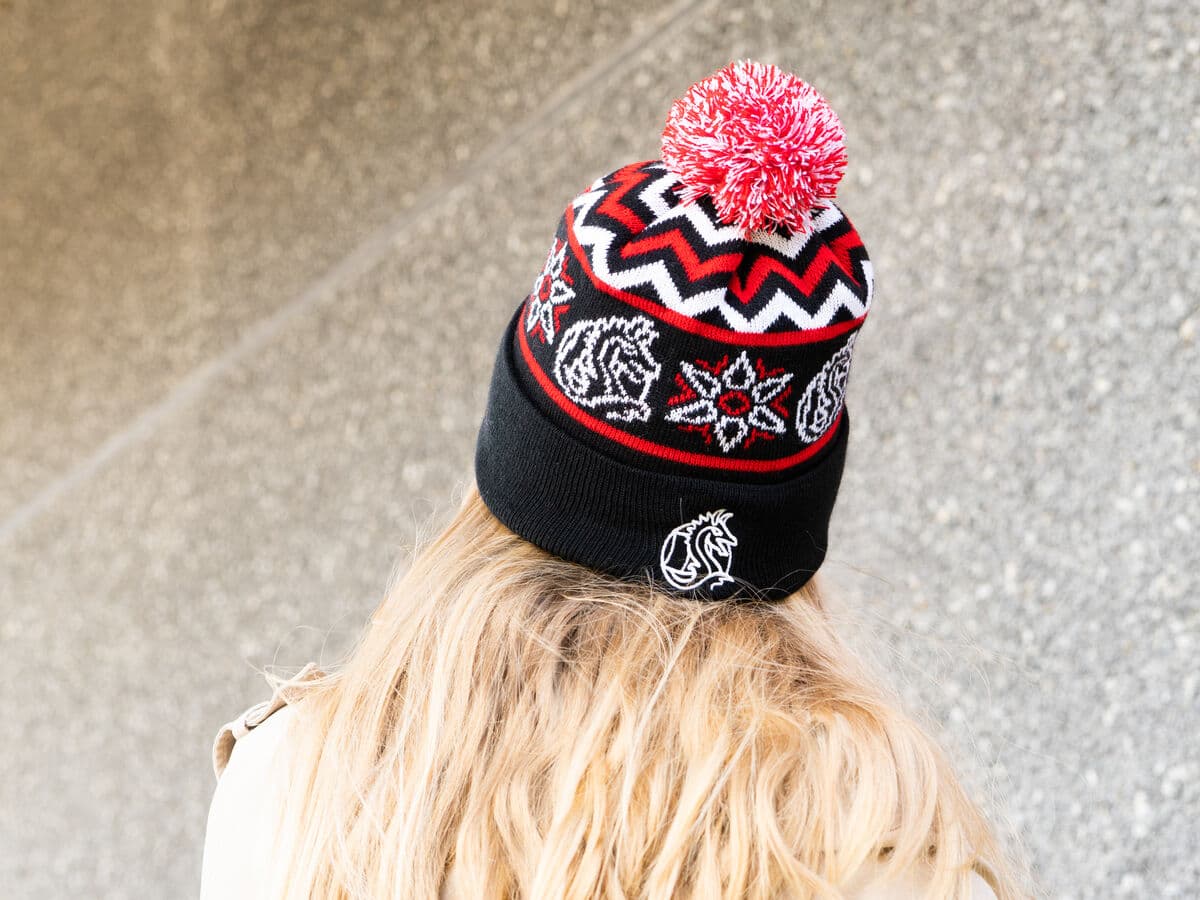
Mobile Vikings built a knitted, Viking-inspired pattern tied directly to their brand identity, then wired it into their customer-service workflow. After the team resolved a connectivity issue or a complaint, a customised beanie package was sent to the customer, triggered automatically through the Zendesk to Sunday integration. It worked because it was tied to a specific customer moment and to winter timing. It turned a negative, a support problem, into a memorable, warm follow-up.
Twilio went premium. They sent a full winter set, a knitted beanie, a scarf, gloves, premium packaging and a personalised winter card, to selected key accounts. The complete seasonal gift lifted the perceived value far above any standalone object. Same category, two very different jobs, both done on purpose.
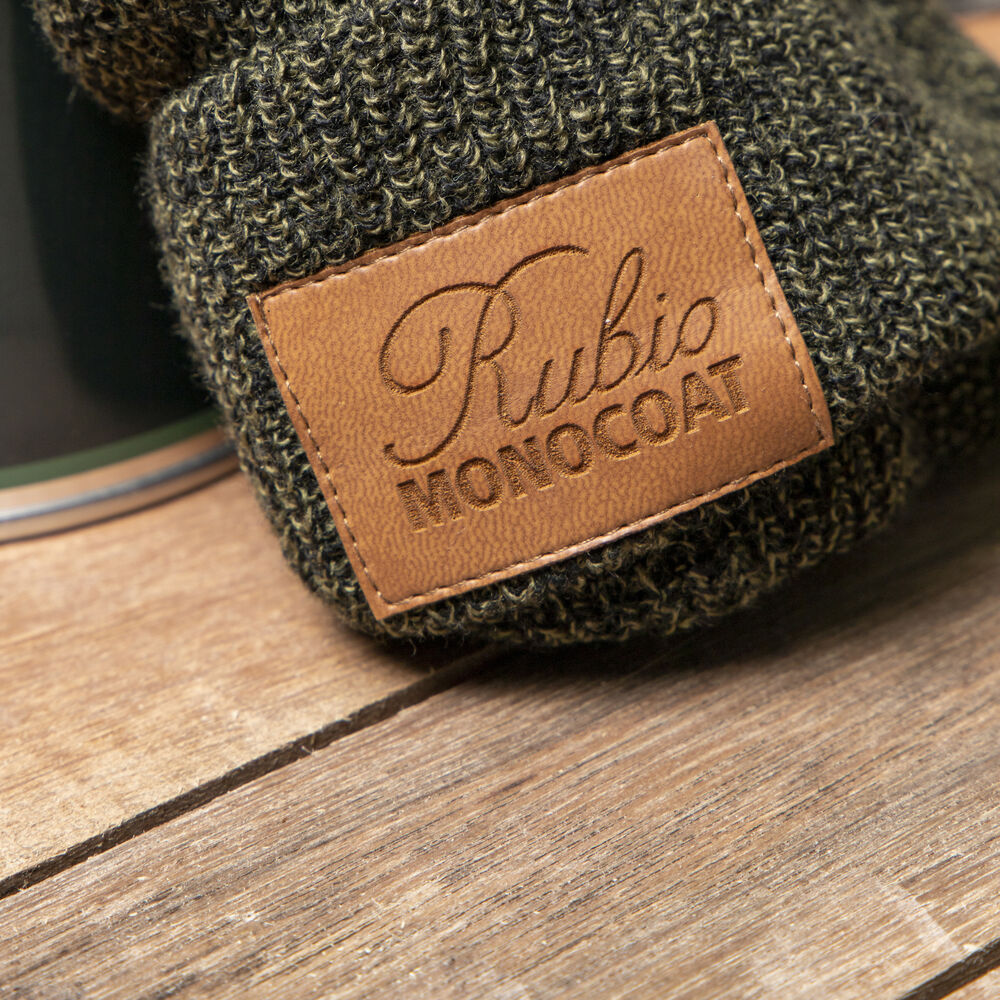
Construction quality underneath the design: a clean cuff, a logo that holds its shape, a hat that keeps its form after wear.
How Sunday delivers
Sunday is merch infrastructure, not a supplier. We help you choose the right beanie for the campaign, pick the bold or subtle direction, decorate with embroidery, a woven label or a patch, build a full winter set if you want one, warehouse the stock and ship it globally, all inside the tools you already use. Merch, in your brand, live in 30 seconds. We make in Europe to European manufacturing standards, and minimums start from around 10 pieces so a small team can run a pilot. Browse the custom beanies range, drop your logo into the free beanie mockup generator, explore the full catalog, or see how it works. Sending to people across borders, like Mobile Vikings did through their support workflow, is what our distribution service is built for.
See your beanie in your brand
Embroidered or knitted, bold or subtle, EU-made, live in 30 seconds. Create a free account and preview your branded beanie in your colours.
Get free designs