A merchandise wholesaler is often the quiet force behind shelves that look full, consistent, and thoughtfully curated. When it works well, retail feels effortless to the shopper: the right products appear at the right time, in the right quantities, with pricing that leaves room for healthy margins. That “effortless” experience is usually the outcome of disciplined wholesale operations.
Wholesalers also create momentum for brands and makers. They turn scattered, one-off orders into reliable demand signals, then translate those signals into repeatable purchasing and distribution.
What a merchandise wholesaler actually does
At its core, a merchandise wholesaler buys goods in volume and resells them to other businesses. The wholesaler sits between production and retail (or between importers and retail), absorbing complexity that many retailers cannot afford to carry day to day.
A strong wholesaler is not only a broker of products. They are a coordinator of availability, packaging, documentation, and timing, with enough operational maturity to keep promises during busy seasons.
Common wholesaler functions include:
- Bulk purchasing and case-pack ordering
- Assortment building
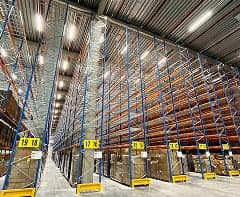
- Warehousing and distribution
- Repack, labeling, and kitting
- Credit terms for qualified buyers
- Return policies and defect handling
Where wholesalers fit in the supply chain
Most consumer goods supply chains are built on tradeoffs: speed vs. cost, variety vs. simplicity, control vs. convenience. Wholesalers exist because they can hold inventory and serve many buyers efficiently, spreading fixed costs across a larger base.
A typical flow looks like this: manufacturer or brand to importer (optional) to wholesaler or distributor to retailer to customer. That sounds linear, yet reality has side paths. Some wholesalers buy direct from factories, some buy from brands, some handle gray-market inventory, and some are exclusive regional distributors with strict pricing rules.
The key question is not “Are they a wholesaler?” but “What role do they play in my availability, risk, and margins?”
The major wholesaler models (and when each shines)
Wholesale is not one-size-fits-all. Different models optimize for different outcomes, and retailers benefit by matching the model to their operating style and customer expectations.
Below is a practical comparison to keep in mind while evaluating partners:
| Wholesaler model | Best fit for | Typical strengths | Watch-outs |
|---|---|---|---|
| Broadline wholesaler | General retail with many categories | One-stop buying, consolidated shipments | Assortments can feel generic |
| Specialty/category wholesaler | Stores with a clear niche | Deeper expertise, trend-aware assortment | Higher minimums on select lines |
| Import/closeout wholesaler | Value-driven retailers | Sharp pricing, opportunistic buys | Inconsistent availability, limited reorders |
| Exclusive distributor (brand-authorized) | Premium positioning | Brand support, MAP policy stability | Less price flexibility, tighter controls |
| Cash-and-carry / regional warehouse | Fast replenishment needs | Local pickup, quick turn | Smaller selection, limited terms |
A single retailer may work with several of these at once. A boutique might source core items from an authorized distributor and use closeouts to add “surprise and delight” finds that rotate quickly.
How wholesalers make money and why it matters
Wholesalers earn through margin on resale, service fees (sometimes explicit, often built into pricing), and operational efficiency. Their real edge is not only “buy low, sell higher.” It is their ability to predict what will move, hold it at the right depth, and deliver it with fewer errors than a retailer could manage on their own.
This matters because a wholesaler’s incentives shape your outcomes. If a wholesaler wins by turning inventory quickly, they tend to prefer steady sellers and clean replenishment rhythms. If they win by opportunistic buys, you may get great prices with less consistency. Neither is “better,” but each demands a different merchandising plan.
One sentence can save a lot of time: ask what percentage of their catalog is reliably reorderable, and what percentage is “when it’s gone, it’s gone.”
Selecting a wholesaler: the questions that separate good from risky
Choosing a wholesale partner is a business design decision. It influences cash flow, brand perception, service levels, and how often your team has to scramble.
A useful evaluation approach is to look beyond the catalog and focus on operating behavior.
- Assortment discipline: Are categories coherent, or is the mix random?
- Fill rate: What ships complete, and what backorders?
- Minimums and case packs: Do quantities match your store velocity?
- Documentation: Are invoices, lot codes, and compliance paperwork clean?
- Communication: Do they share lead times and constraints early?
Retailers sometimes fall into the trap of treating wholesalers as interchangeable. They are not. The best partners reduce surprises.
Quality, compliance, and brand integrity
“Merchandise” can mean apparel, home goods, beauty, electronics accessories, seasonal items, and more. Each category has its own quality risks and regulatory considerations. A wholesaler that treats compliance as routine is a competitive advantage for buyers, since it reduces exposure to recalls, customer complaints, and marketplace takedowns.
Quality control varies widely. Some wholesalers audit factories, run inspections, and track lot-level traceability. Others focus on speed and price, leaving verification to the buyer.
A straightforward due diligence checklist helps keep the conversation concrete:
- Source transparency: Where does inventory originate, and is it authorized?
- Testing evidence: What lab reports or certificates exist for regulated items?
- Packaging standards: Are warnings, ingredients, and instructions accurate?
- Traceability: Can they identify batches, lots, or shipment references?
- Defect policy: How are damages, spoilage, or manufacturing faults handled?
If you sell on major marketplaces or supply larger retailers, documentation can become as important as unit cost. Clean paperwork is not bureaucracy; it is protection.
Pricing, terms, and the real cost of inventory
Wholesale pricing is only the starting point. The true cost includes freight, payment terms, shrink, handling labor, storage, and markdown risk. A slightly higher unit price can be the better deal when it comes with predictable lead times, fewer errors, and smaller minimums.
It helps to separate three layers of the deal:
- Your gross margin target for the category
- Your cash conversion cycle (when you pay vs. when you sell)
- The risk profile of the item (breakage, seasonality, obsolescence)
Payment terms can transform growth. Net 30 or net 45 can free up working capital, yet terms are earned, not granted. Wholesalers look for signals of reliability: consistent ordering, clean payment history, and professional communication.
One practical approach is to start with smaller orders paid promptly, then request terms once the relationship has a track record.
Logistics and inventory: the hidden engine of wholesale success
Wholesalers live and die by operational details. Mis-picks, carton damage, and inconsistent labeling create cascading costs for retailers. When wholesale operations are excellent, buyers feel it in fewer customer service issues, faster shelf replenishment, and calmer peak seasons.
Retailers should pay attention to:
- Order cut-off times and ship windows
- Pallet vs. parcel options
- Packaging strength for fragile items
- Backorder communication cadence
- Accuracy guarantees or credits for errors
A wholesaler’s warehouse practices also shape your receiving workload. Clear carton labeling, consistent pack lists, and standardized case packs reduce time in the back room. That time can be redirected to selling, merchandising, or clienteling.
Technology and data that improve buying decisions
Many wholesalers now provide real-time inventory visibility, EDI connections, API feeds, and retailer portals. Those tools are not just “nice to have.” They can improve forecasting, reduce stockouts, and minimize dead inventory.
Data becomes most useful when it answers simple, high-value questions:
- What is available right now, not next month?
- Which items are trending up, and which are slowing?
- What lead times are actually happening, not just promised?
- What is the substitution plan when a top seller is short?
Retailers can also share data back. Even a lightweight weekly sell-through summary can help a wholesaler plan replenishment, which supports better in-stock performance for everyone.
Building partnerships that last beyond one season
The best wholesale relationships feel like a steady cadence: forecast, buy, receive, sell, repeat. That cadence comes from mutual clarity and a shared interest in reducing friction.
Wholesalers value buyers who place clean orders, respect lead times, and communicate changes early. Buyers value wholesalers who keep inventory accurate, flag issues quickly, and stand behind product quality.
A few relationship habits pay off quickly:
- Schedule periodic line reviews instead of only ordering reactively.
- Ask for substitution options when supply is tight.
- Share promotions ahead of time so the wholesaler can plan allocation.
- Confirm return authorization rules in writing before you need them.
When trust builds, negotiations tend to improve naturally: better access to limited inventory, more flexible minimums, and earlier visibility into new lines.
Signs you are ready to scale through wholesale
Wholesale becomes especially powerful when a business shifts from “ordering what looks good” to “building a repeatable assortment system.” That system creates space for creativity without relying on last-minute scrambling.
Many retailers hit a point where they need wholesale to support growth goals, not just fill shelves.
A few signals show up again and again:
- Your best sellers run out too often.
- Receiving days feel chaotic and labor-heavy.
- Your assortment lacks consistency across locations or channels.
- You want to expand, yet cash feels tight.
- Vendor management is consuming too much leadership attention.
Scaling with wholesale is less about chasing bigger catalogs and more about choosing partners that match your operating rhythm. With the right fit, wholesale stops feeling like sourcing and starts feeling like infrastructure that supports the brand you are building every day.