
A founder's guide to the 10 product categories that move the needle, the data that justifies the spend, and how to run a merch program that scales without the spreadsheets.
Branded merchandise used to be the box of t-shirts in the storage closet. The logo polos nobody wore. The pen with the chipped paint that ended up in a drawer. For a long time, "swag" was a budget line item people defended out of habit, not data.
That era is over. The global promotional products market is now around €25 billion, with brands across 200+ countries treating merch the way they treat email or paid social: a measurable channel with a target audience, a CPM, and an attribution model. PPAI research shows a single branded item leaves an impression in the first five seconds. Bags alone generate over 3,000 impressions per item, putting their cost-per-impression in the fractions of a cent.
This guide is for the operator who needs to defend a merch budget, run a global program, or just stop buying things their team won't wear. It covers what branded merchandise is, why the math works in 2026, the ten categories that actually deliver, and the playbook the best brands use to make it all work without owning a warehouse.
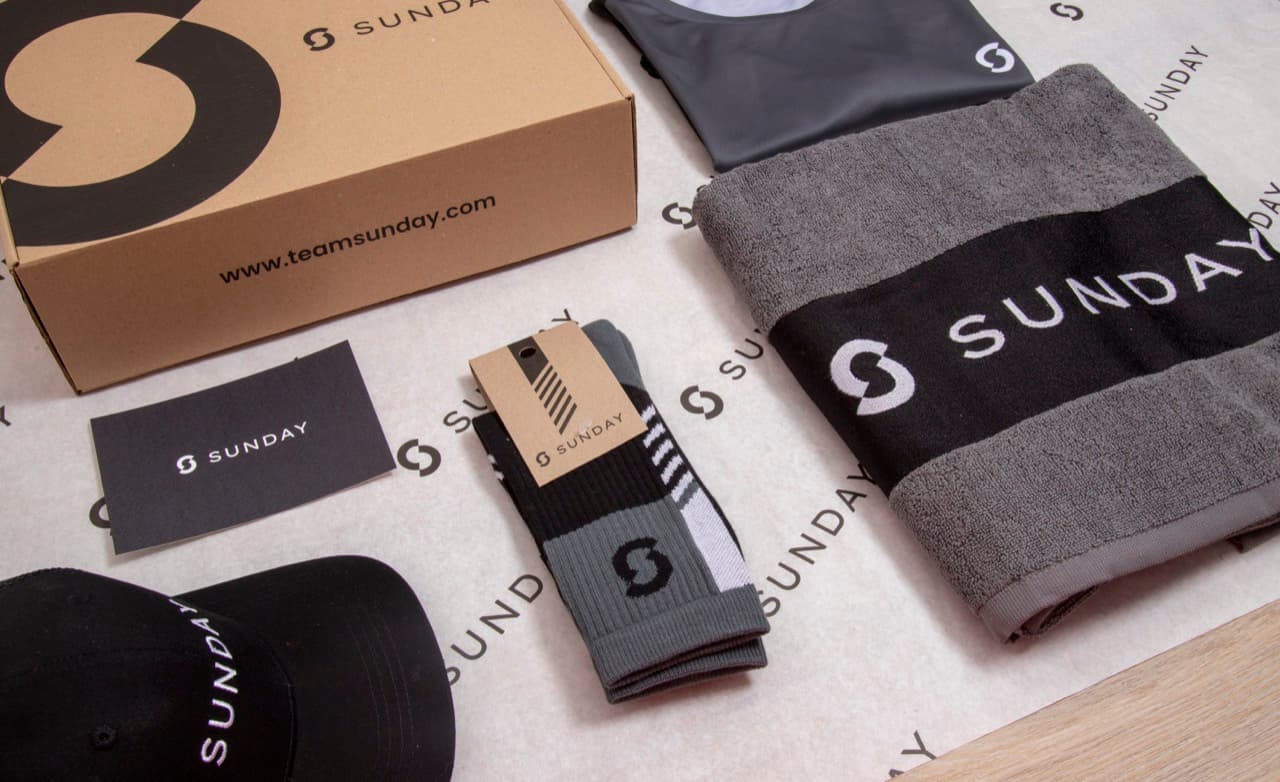
If you want the short version: pick the right categories, produce in bulk for the unit economics, and let infrastructure handle the storage and the global shipping. The companies doing this well, including ones we work with at Sunday, have moved merch from a 40-hour-a-month admin headache to something closer to 40 minutes, while spending less per piece than they did before.
- €25B: global market for promotional products, served across 200+ countries. Source: Global Market Research, 2024.
- 72%: of consumers say a promotional product directly influenced a purchase from that brand. Source: PPAI 2024 Consumer Study.
- 3,300: impressions generated by a single branded bag over its lifetime, the highest of any merch category. Source: ASI Impressions Study.
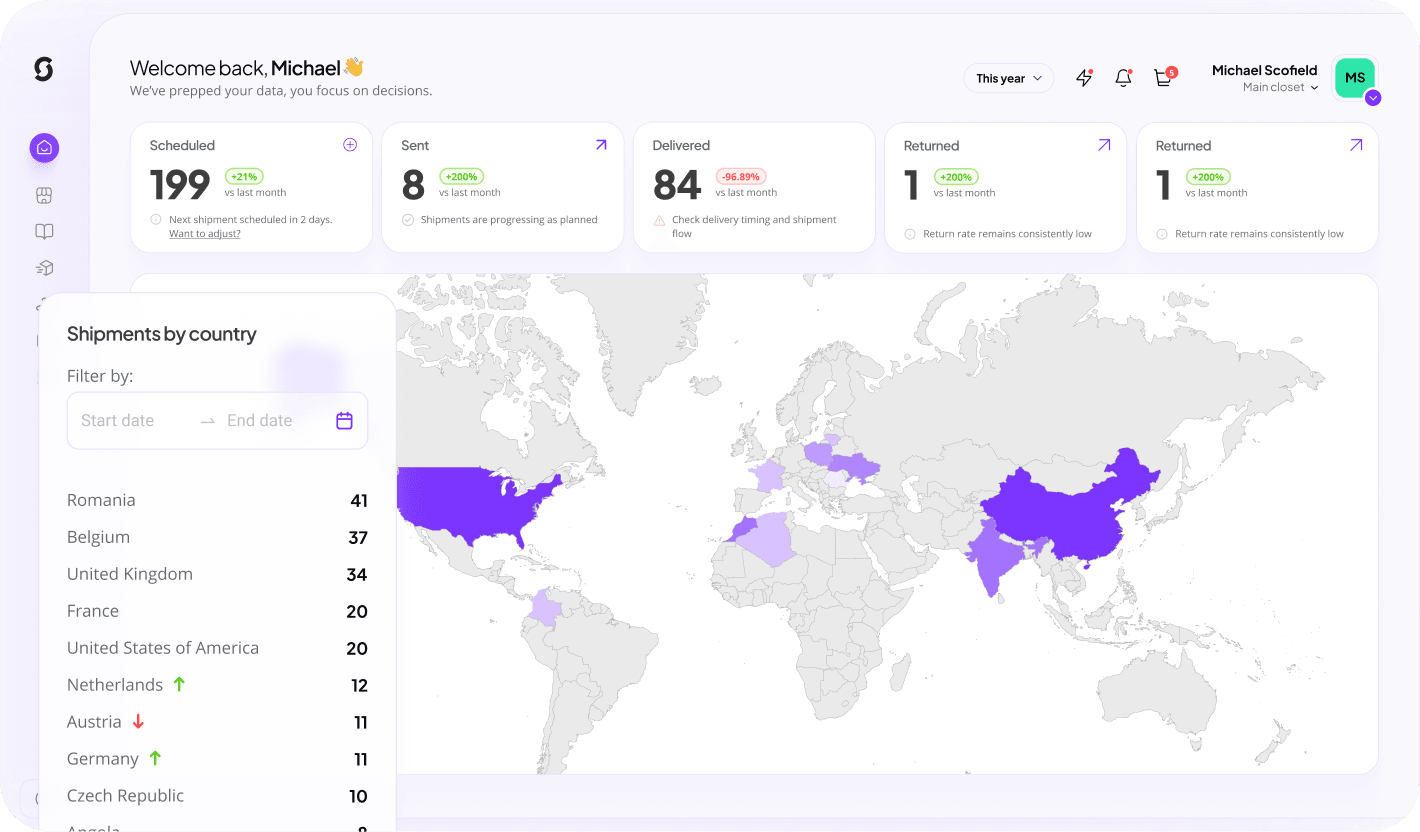
The merch trap most brands fall into. Reordering small batches every time they need merch, paying setup fees on every run, and shipping each batch separately. That model is expensive per unit and slow to deliver. The smarter move is to produce in bulk for the unit economics, store it for free in a European hub with accredited customs agent capability, and ship globally on demand at negotiated carrier rates. See how it works.
What is branded merchandise (and why it matters)
Branded merchandise is any physical product that carries a brand's identity, given to a specific audience to create a relationship, a memory, or a result. The audience can be employees, customers, prospects, partners, event attendees, or developer communities. The format can be a €4 sticker or a €400 onboarding kit. What ties it together is intent: a tangible object that earns the brand a moment of attention nothing on a screen can.
Three things changed between 2018 and 2026 and made this category serious. Distributed work made physical gestures meaningful again. Sustainability scrutiny forced everyone to plan production properly instead of guessing at quantities. And cross-border logistics became reliable, which means you can produce a planned bulk run in one location, store it for free in a European hub with accredited customs handling, and ship from there to anyone in 200+ countries within days.
The result is a discipline that looks much closer to performance marketing. You target a segment, set a goal, produce the right quantity at the right unit cost, fulfill it globally, and measure what happens. The brands that run merch this way aren't asking whether it works. They're asking which channel it's quietly outperforming.
DIY procurement vs. modern merch infrastructure
| Dimension | DIY procurement (the old way) | Modern merch infrastructure (Sunday model) |
|---|---|---|
| Production economics | Many small reorders, paying setup fees every time, high per-unit cost | Bulk production at the lowest unit cost, one setup fee, then ship from stock |
| Storage | You pay for warehouse space, or pile boxes in the office | Free warehousing in Sunday's European hubs, picked and packed on demand |
| Lead time to recipient | 4 to 8 weeks of production each time, then days to ship | Already produced and stored. Ships in 2 to 5 days, anywhere. |
| Cross-border handling | Manual customs paperwork per shipment, surcharges everywhere | Accredited customs agent status, automated documentation, negotiated carrier rates |
| Audience reach | One office, one country, one t-shirt size run | Distributed teams, 200+ countries, full size and language matrix |
| Who runs it | Office manager or marketing coordinator with a spreadsheet | Automated workflows triggered by HR, sales, or event tools |
| Sustainability | Multiple shipments, inefficient routing, repeat freight emissions | One bulk run with sea freight, then on-demand pick from a single hub |
| Measurement | Did we have enough? Did people complain? | Spend per recipient, NPS impact, attribution to opportunities |
| Brand control | Pantone drift between vendors and reorders | Locked color profiles across one bulk run, identical units shipped worldwide |
What the operators see. Zalando moved from 40 hours a month of merch admin to 40 minutes after consolidating onto a platform model, with a 15% cost reduction and lead times from weeks to five days. HubSpot saw a 60% reduction in shipping costs and delivery from five weeks to two days. The pattern is consistent: when bulk production, free warehousing, and global on-demand shipping run on the same platform, both speed and spend get better at the same time.
The 10 branded merchandise categories that actually move the needle
Ranked by sales volume, impression value, and how often we see them succeed in real programs at Sunday. Each card explains what wins, what fails, and what to budget.
How to read the rankings. Order is roughly by sales volume and impression value, but the right starting point depends on your moment, not on this list. Pick two categories: one daily-use anchor (apparel, drinkware, or bags) and one moment-driven category (onboarding, event, or premium). Build the rest of the program from there. Browse the full catalog when you're ready to spec.
01. Branded apparel (t-shirts, hoodies, polos)
Best for daily wear
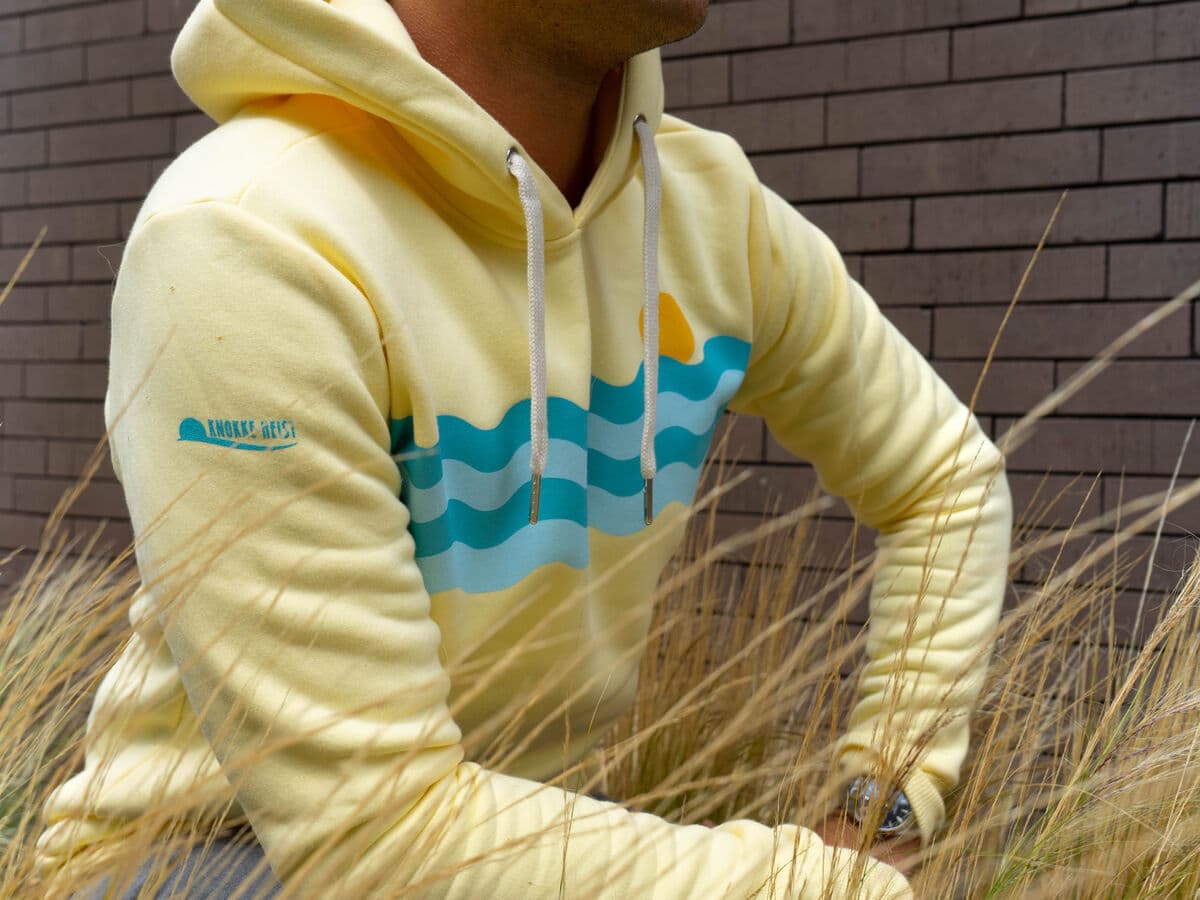
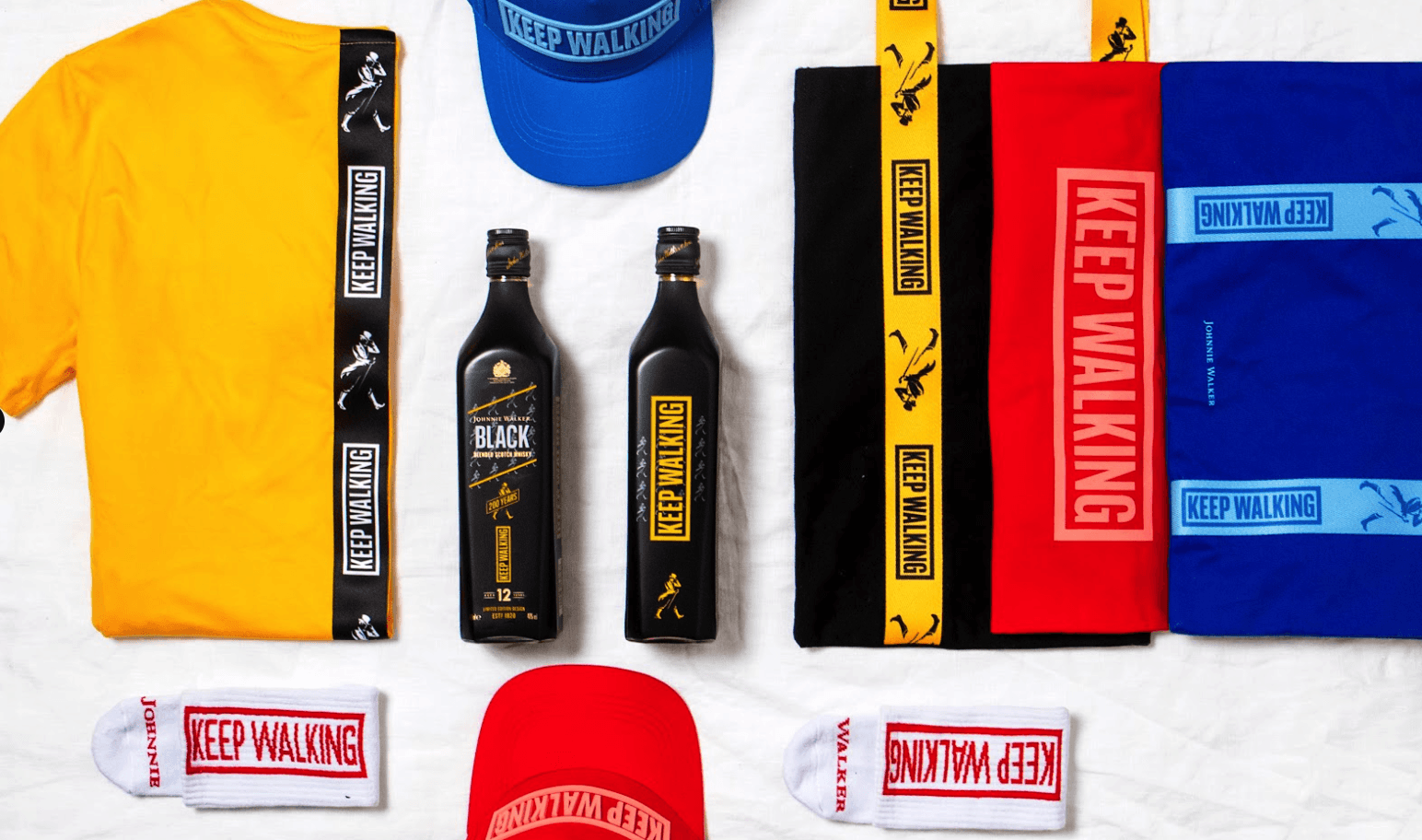
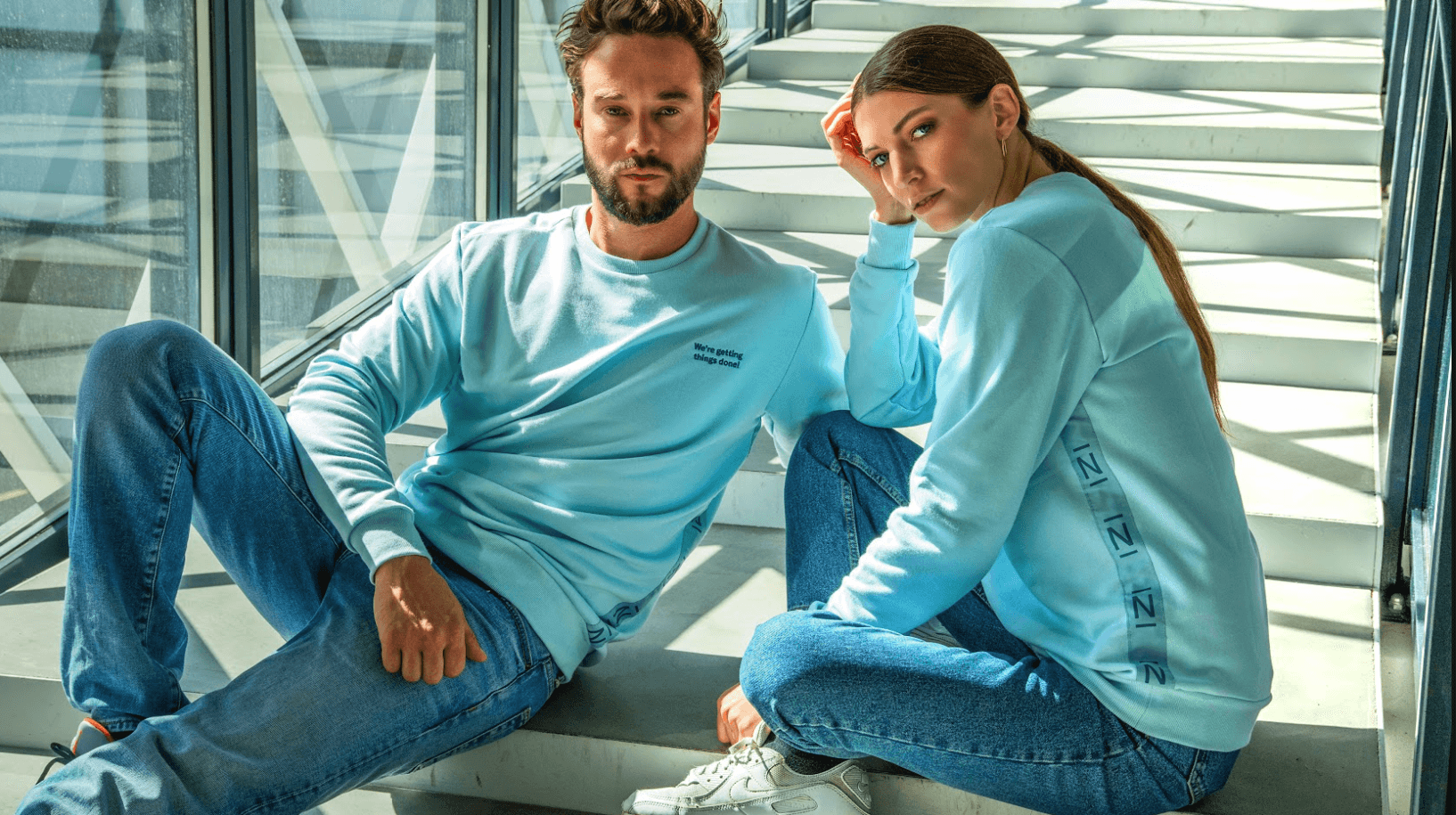
Apparel is the largest category in the industry, accounting for 26.6% of all promotional product sales, and for good reason. People wear what fits, what feels good, and what they'd buy themselves. A great branded hoodie becomes a uniform. A bad one becomes a rag.
Key features that separate winners from losers
- Ringspun cotton or premium tri-blend, never the cheapest fabric
- Heat-pressed transfers, embroidery, or DTG for soft hand-feel
- Modern fits, not boxy 2015 corporate cuts
- Tonal logos in scale, not chest billboard placement
- Inclusive size matrix from XS to 4XL, men's and women's cuts
- Stock-color flexibility so you can ship multiple seasons
- Care labels co-branded, never with vendor name on display
- QR or hidden message inside the neck for storytelling
Pros
- Highest-frequency wear of any category
- Strong second-life resale and gifting
- Recipients photograph and post unprompted
- Works for employees, events, and customers
Cons
- Size mismatches kill perceived value instantly
- Cheap blanks always look cheap
- Shrinkage from poor washes ruins the keepsake
- Sourcing variance between countries can hurt brand consistency
Why it wins. Apparel is the one merch category where the recipient does the marketing for you, every time they get dressed. When the fit and feel match a brand they already trust, you stop being swag and start being part of the wardrobe.
"The best branded hoodie I own says nothing about the company on the front, and everything about it on the inside neck. That's the bar." — Frequently overheard, design-led brands
Starting at €18/unit at 50+ qty, premium blanks €35+
02. Drinkware (insulated bottles, tumblers, mugs)
Best for desk visibility
The second-largest category by sales at 10.2%. A good insulated bottle lives on a desk for years, gets photographed in a hundred Zoom backgrounds, and travels through every airport on the recipient's calendar. A bad mug gets used for pens.
Key features that matter
- Vacuum-insulated stainless steel, double walled minimum
- Powder-coated finish that doesn't chip after a wash
- Leak-proof lid with a real warranty, not a sticker promise
- Dishwasher safe certification, not just "hand wash recommended"
- Laser engraving for premium brands, screen print for color
- BPA-free interior, ideally tested to FDA standards
- Modular lid system so the same bottle works for water and coffee
- Co-branding with a known maker for credibility (Stanley, Hydro Flask, MiiR, Yeti)
Pros
- Daily-use object with multi-year lifespan
- Visible across every meeting and conference
- Aligns naturally with sustainability messaging
- Universally welcomed across audiences and geographies
Cons
- Heavier shipping costs internationally
- Custom Pantone colors add lead time
- Co-branded models reduce your decoration area
- Cheap insulation kills the premium positioning fast
Why it wins. Drinkware is the merch category most likely to get displayed in someone's daily routine. The math is simple: a €25 bottle that gets used 1,000 times in three years is a €0.025 impression machine.
"Every conference badge is forgotten by Tuesday. The bottle is in the team chat the next week." — Anonymous DevRel lead
Starting at €12/unit, premium co-branded €35+
03. Headwear (caps, beanies, bucket hats)
Best for outdoor and event
Caps and hats overtook bags for the third-place spot in 2024, rising from 7.2% to 9% of sales. The streetwear-ification of corporate gifting is real. Done well, a cap is a billboard people willingly walk around in.
Key features
- Six-panel structured caps for clean front decoration
- Five-panel and dad caps for more relaxed brand voice
- Embroidered patches, not flat embroidery, for premium feel
- Adjustable strap or fitted, not the cheap snapback
- Recycled poly options for sustainability stories
- Trucker mesh in summer, knit beanie in winter
- Bucket hat for festival and event giveaway
- Co-branded cap with a heritage maker for collector value
Pros
- Photographs beautifully on social
- Universal sizing (mostly) reduces SKU complexity
- Strong fit with conferences, retail, and developer communities
- Scales from €8 giveaway to €80 collector item
Cons
- Embroidery quality varies wildly between suppliers
- Front-and-center logo can feel try-hard
- Limited cool-weather use for some teams
- Cheap snapbacks date your brand instantly
Why it wins. Caps are the rare merch category where understatement is rewarded. A small embroidered logo on a quality cap reads as a brand someone chose to wear, not one they were given.
"A great cap with no logo on the front is the most expensive thing you can give a person who already loves you." — Brand designer, anonymous
Starting at €14/unit, structured premium €28+
04. Bags and backpacks
Best for impressions per dollar
Bags lead every impression study. The ASI Impressions Study credits branded bags with over 3,300 impressions per item, the highest of any category. They go everywhere, get used for years, and turn the recipient into a daily walking ad.
Key features
- Padded laptop sleeve sized for 16-inch and tablet
- Water-resistant or recycled poly outer shell
- YKK zippers and reinforced stitching at strap joints
- Internal organization, not just one big pocket
- Tonal jacquard label, not a slapped-on patch
- Carry options that work for commuters and travelers
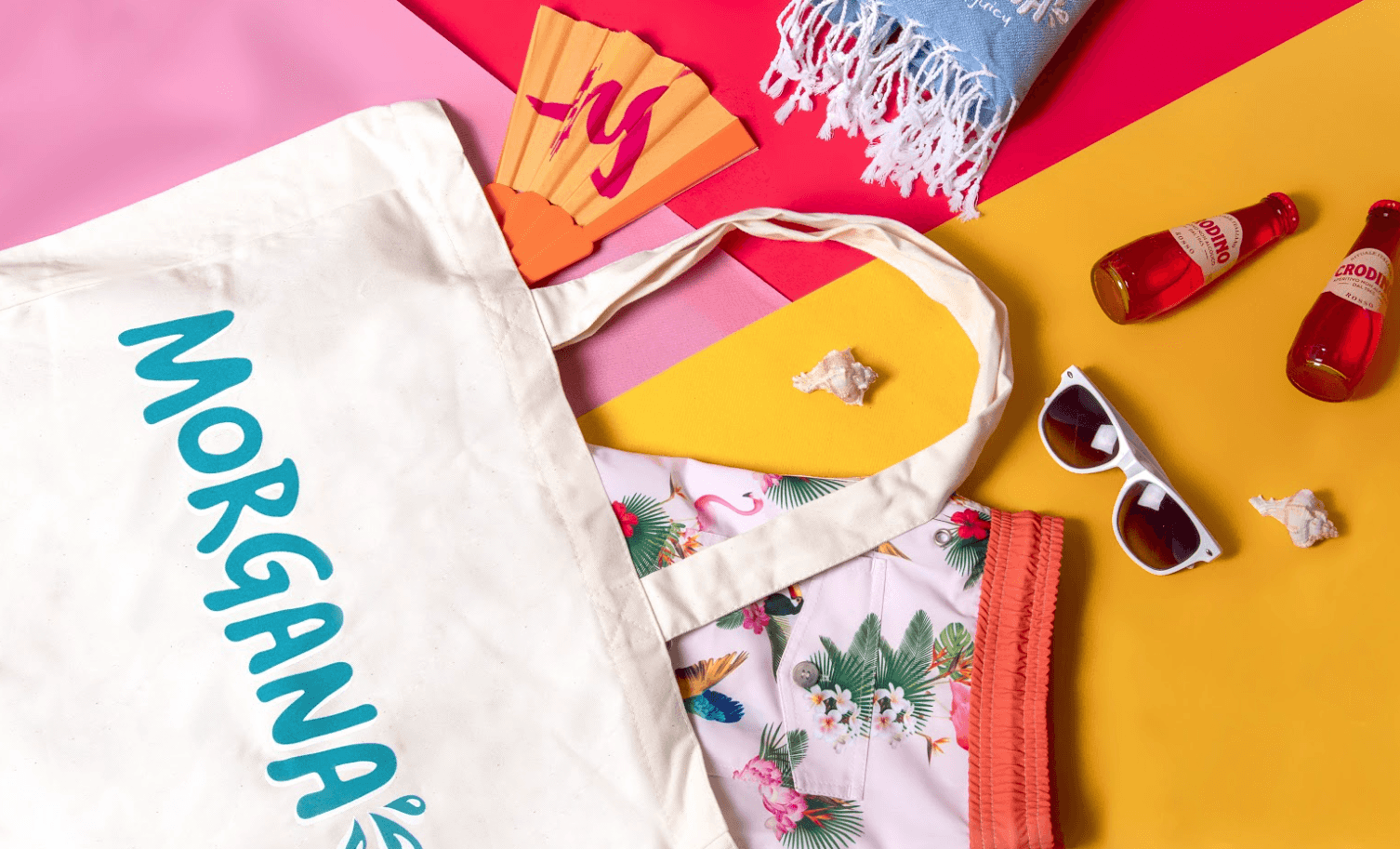
- Tote variants for daily errands and event handouts
- Weatherproof options for outdoor events
Pros
- Highest impression count of any merch category
- Daily use, often for 3+ years
- Wide price range from €4 totes to €200 backpacks
- Photograph well in coffee shops and offices
Cons
- Quality variance is enormous, set a hard floor
- Heavy items mean higher shipping and freight cost
- Custom colorways need real lead time
- Saturation risk at conferences ("another tote?")
Why it wins. If you measure merch by cost-per-impression, nothing beats a well-made bag. The trick is investing enough that it earns the carry. A €4 tote that goes in the trash earns nothing.
"A backpack is the only piece of merch that can outlast the company." — Office manager who's seen too many startups
Totes from €3, premium backpacks €80+
05. Tech accessories (cables, chargers, audio)
Best for engineering teams
Tech merch is the fastest-growing segment in the category. PPAI consumer research shows it ranks especially high with Gen Z recipients. The discipline here is brutal: tech merch fails fast if the product doesn't work, and the brand takes the blame.
Key features
- USB-C, not legacy connectors no one uses
- MagSafe-compatible chargers for iPhone and accessories
- Co-branded audio (Bose, JBL, Anker) for credibility
- Real wattage delivery, not "fast charge" marketing claims
- Webcam covers, mousepads, and quality keyboard pads
- Power banks with adequate mAh and certifications
- Cable management kits for hybrid workers
- Reasonable warranty backed by the actual maker
Pros
- Daily-use, long-life products
- Strongly preferred by technical audiences
- Premium positioning is easy to justify
- Pairs naturally with onboarding kits
Cons
- Battery shipping restrictions complicate logistics
- Quality control matters more than any other category
- Tech moves fast, watch for obsolescence
- Higher unit costs squeeze giveaway budgets
Why it wins. A great tech accessory becomes part of someone's daily setup. The brand benefits every time they sit down to work, which for many recipients is a thousand impressions a year.
"The most-used item from our last conference was a €24 USB-C hub. The custom polo went in the closet." — Marketing director at a Series B SaaS
Starting at €10/unit, premium co-branded €80+
06. Notebooks and writing instruments
Best for thoughtful gifting
The category that refuses to die. Quality notebooks and pens still convert, especially in finance, consulting, and creative agencies. The bar is high: if it's not as nice as the one the recipient already owns, it's noise.
Key features
- Hardcover with debossed logo, not printed
- FSC-certified or recycled paper stock
- Lay-flat binding for actual usability
- Co-brand with Moleskine, Leuchtturm, or Karst for instant credibility
- Real fountain or quality rollerball pens
- Custom dot grid, ruled, or task-management layouts
- Limited-run colorways for collector value
- Bookmark, pen loop, and ribbon details that show care
Pros
- Premium feel at modest cost
- Long shelf life with no expiration
- Used in front of clients, generating impressions
- Beautifully kits with other items
Cons
- Paper consumption is declining for many roles
- Cheap notebooks read as filler immediately
- Pen branding wears off fast on plastic
- Less photogenic than apparel or drinkware
Why it wins. Stationery scales with care, not budget. A €14 hardcover notebook with a thoughtful debossing outperforms a €40 leather portfolio that no one asked for. Restraint is the brand signal.
"I still use the notebook from a vendor I haven't worked with in two years. That's the win." — Senior PM, fintech
Starting at €8/unit, premium co-branded €35+
07. Sustainable and certified merch
Best for ESG and EU buyers
A 2024 joint PPAI and ASI study ranked promotional products among the lowest carbon-impact advertising channels overall. Sustainable merch goes further: certified materials, transparent supply chains, and zero-overproduction workflows. For many EU buyers, this is now a procurement requirement, not a preference.
Key features
- GOTS-certified organic cotton or recycled polyester
- FSC-certified paper, bamboo, and wood products
- Verified factory audits (BSCI, SA8000, WRAP)
- Sea freight as default, air freight only when needed
- Planned bulk runs sized to demand, then on-demand pick from stock
- Recyclable or compostable packaging by default
- Carbon accounting per shipment, not per program
- Repair or recycle programs for end-of-life
Pros
- Maps cleanly to ESG reporting and CSRD requirements
- Resonates with younger employees and customers
- Reduces overproduction risk by design
- Cost gap with conventional has narrowed significantly
Cons
- Verification and audit work is real overhead
- Greenwashing risk if claims aren't substantiated
- Limited color and decoration options on some materials
- Lead times can be longer for niche certifications
Why it wins. Sustainable isn't a category, it's a posture. The brands winning here aren't running "eco" campaigns. They've made every default in their merch program a sustainable one and don't talk about it unless asked.
"The right answer to 'is your merch sustainable' is to send the audit, not write a paragraph." — Procurement lead, enterprise
5 to 15% premium over conventional, declining annually
08. Premium and executive gifting
Best for top accounts and exec gifting
The €200-and-up tier. Used for client renewals, executive thank-yous, board gifts, and tightly curated VIP outreach. The volume is small, the impact is outsized, and the bar for taste is unforgiving.
Key features
- Curated co-branded collaborations with respected makers
- Hand-numbered, limited-run series for collectability
- Fully custom packaging with no plastic inserts
- Handwritten note from a real person, not "the team"
- Concierge fulfillment with white-glove delivery
- Discretion: small or no logo, story-driven instead
- Address verification and signed delivery
- Detailed allergen, dietary, or cultural notes for global recipients
Pros
- Direct impact on retention and renewal
- Perceived as gift, not marketing
- Differentiated from any standard "swag bag"
- Strong photo and unboxing moments
Cons
- Per-recipient cost is significant
- Compliance and gift-acceptance rules vary by industry
- Logistics complexity is highest of any tier
- Misfires (wrong allergen, wrong title) damage relationships
Why it wins. Premium gifting is the part of the program where merch stops feeling like marketing. When done with restraint, it shifts how an account thinks about the relationship. That's worth a lot more than a €300 unit cost.
"We renewed a seven-figure contract partly because someone remembered our CEO's daughter likes ceramics." — Account exec, enterprise
Starting at €150, often €400 to €1,200 for executive tier
09. Event swag (booths, lanyards, takeaways)
Best for booth pull-through
Event merch is its own discipline. Lanyards, badges, totes, photo-op props, and the headline takeaway people stand in line for. The metric is foot traffic per dollar, and the failure mode is buying 2,000 of something forgettable.
Key features
- One hero giveaway worth queuing for, plus light handouts
- Lanyards in your real brand color, not red-on-white default
- RFID-enabled badges for lead capture and gamification
- Photo-moment props that double as social shareables
- Booth apparel that staff want to keep wearing
- Modular kits so you ship empty and assemble onsite
- Low-shipping-weight defaults for international events
- Post-event follow-up gift triggered to qualified leads
Pros
- Directly drives booth traffic and lead capture
- Memorable items convert leads weeks later
- Photographs from booths run on social
- Onboarded staff feel part of a team
Cons
- Overproduction is the default failure mode
- Cheap takeaways hurt brand more than they help
- Event freight is expensive and time-pressured
- Customs clearance can break a global event run
Why it wins. Event swag works when you treat the booth like a stage. One memorable item the audience tells their colleague about beats six forgettable ones every time.
"At every conference there's one booth that ran out by lunch. That's the only one anyone remembers." — Event lead, B2B SaaS
Mixed kits from €15/recipient, hero giveaways €25 to €80
10. Onboarding kits and employee welcome packs
Best for distributed teams
The fastest-growing use case for branded merch. New hires are now distributed across continents and time zones, and the welcome kit is one of the only physical artifacts they'll receive in their first 90 days. SHRM research consistently links structured onboarding to retention. Done well, the kit becomes part of that.
Key features
- Triggered automatically by HRIS (Workday, BambooHR, HiBob)
- Address-collection workflow that runs without HR intervention
- Bottle, hoodie, notebook, and a useful local snack
- Welcome card with handwritten or printed-personal note
- Customizable per region or function (engineer vs. sales)
- Sustainable packaging that doubles as gift wrap
- Tracking and arrival visible to manager and new hire
- Anniversary and milestone re-gifting from the same workflow
Pros
- Tangible welcome moment for distributed hires
- Shows up in week-one social and Slack channels
- Operationalizable: triggered by HR, not by manual lift
- Perfect for milestone re-gifting later in tenure
Cons
- Address collection across borders is non-trivial
- Customs clearance and duties for some markets
- Late delivery undermines the welcome moment
- Generic kits feel worse than no kit at all
Why it wins. Onboarding kits are the highest-impact merch you can ship. They directly impact a moment that defines the employee relationship: day one. When they arrive on time, well-built, and personalized, they reframe the company in the recipient's mind.
"My welcome kit arrived two days before I started. It was the first time the company felt real." — New hire, Series C startup
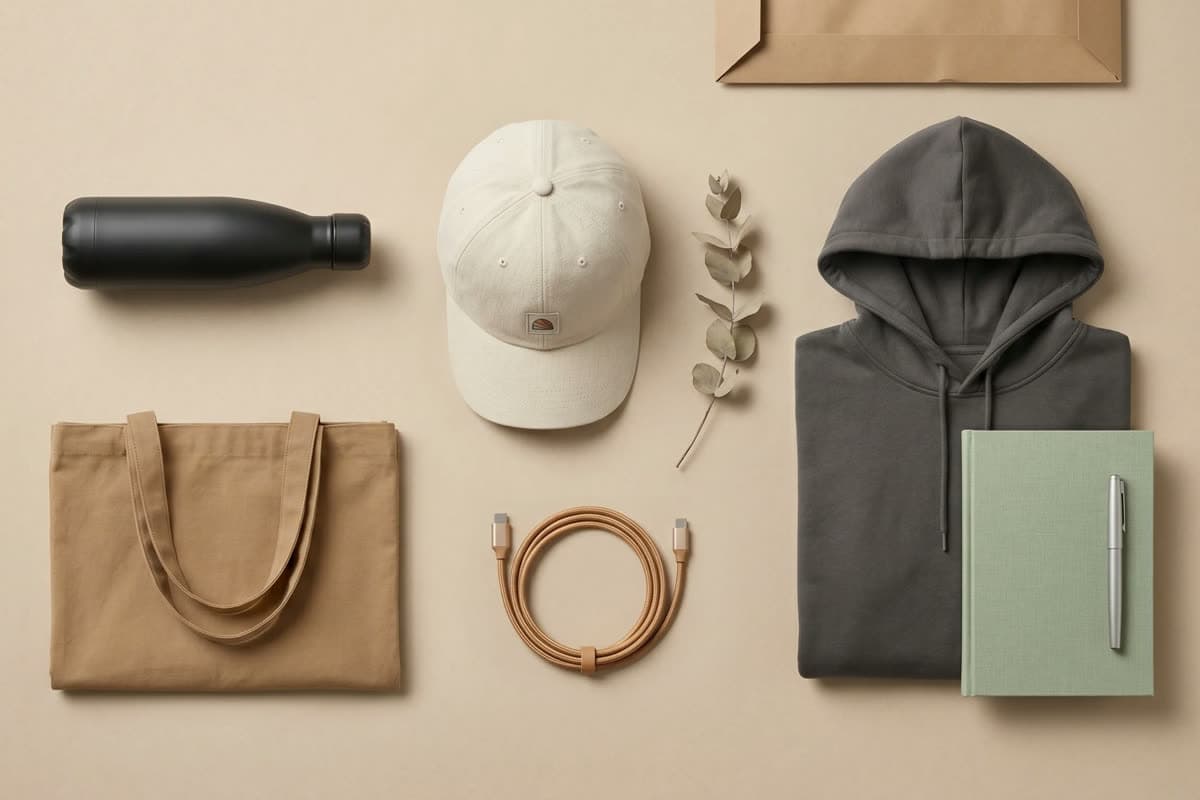
Standard kits from €60/hire, premium kits €150 to €300
How to build the merch program (the five-phase playbook)
This is what we see working at the brands running merch like infrastructure. None of these phases are optional, and the order matters.
01. Map the audience and the moment
Before you pick a single product, list every audience that touches the brand and the moments worth marking: new-hire week, customer renewal, conference booth, partner thank-you, milestone work anniversaries. Each one needs its own playbook. A welcome kit and a renewal gift are not the same merch.
02. Define the brand kit, lock the standards
Pick a small core catalog (10 to 15 items) that covers 80% of your moments. Lock Pantone colors, decoration methods, packaging, and approved suppliers. This is what keeps Brazil and Berlin shipping the same hoodie. Browse the Sunday catalog for a sense of what a properly scoped kit looks like.
03. Produce in bulk, store for free, ship on demand
This is the part most teams get backwards. Bulk production gives you the lowest unit cost, every time. The trick is not to also pay for warehousing. Sunday stores your bulk production for free in our European hubs, then ships individual orders to anywhere in 200+ countries in 2 to 5 days, using accredited customs agent status, fully automated customs documentation, and negotiated carrier rates that keep cross-border parcels competitive on price. Bulk savings, on-demand fulfillment, no storage bill.
04. Wire it into the tools your teams already use
Merch should be triggered by HRIS, CRM, calendar, and event tools, not by a person sending a Slack message to an office manager. The brands doing this well treat merch fulfillment the way they treat email automation. See the platform for how the integration model works.
05. Measure what changed, not what shipped
Stop reporting on units shipped. Start reporting on the outcome: NPS lift on welcome kits, sourced-pipeline attribution from event hero items, retention impact from milestone gifting. If you can't tie merch to a number that moved, you'll lose the budget the next quarter.
The 2026 angle
Branded merchandise in the age of AI
For most of the last decade, marketing got more digital, more programmatic, and more automated. AI accelerated that. Inboxes are now filtered by AI. Ad creative is generated by AI. Outreach is sent, replied to, and qualified by agents talking to other agents. The result is an attention market where digital touches are cheaper, more abundant, and easier to ignore than ever.
Physical branded merchandise is the contrarian move. It doesn't compete in the inbox. It doesn't get filtered. It arrives at someone's door, gets unboxed, photographed, used, and remembered. In a market where every digital channel is being commoditized by automation, the rare moments of physical brand contact have become disproportionately valuable.
What AI changes about merch (in a good way)
AI doesn't replace branded merch. It makes it cheaper to operate and easier to target. The brands using AI in their merch programs are seeing three things compound at once: better personalization, faster operations, and tighter attribution.
Personalization at scale. AI helps recommend the right item per recipient based on role, region, climate, and prior preferences. The result is fewer wasted gifts and higher recipient satisfaction, with no extra work for the operator.
Triggered fulfillment. AI agents inside CRMs and HRIS systems now decide when a milestone is worth marking, draft the message, and call the merch API to ship the right kit. The operator approves, not orchestrates.
Demand forecasting on bulk runs. AI models predict how many units to produce in your bulk run based on hiring plans, event calendar, and historical pull. Better forecasts mean better unit pricing and less waste at the end of the season.
Attribution that finally works. AI ties merch shipments to opportunity stages, NPS lift, and renewal velocity. The thing that used to be unmeasurable is now measurable, which means defensible budget.
The new mental model. Treat branded merch as the physical layer of an AI-orchestrated customer journey. The agents handle the digital touches at scale. Merch handles the moments that need to feel like a person was involved. The two stack instead of compete. See the Sunday platform for how the API plugs into this.
Why physical wins more conversions in a digital economy
The data behind this is consistent. PPAI's 2024 consumer study shows 72% of recipients have made a purchase from a brand because of a promotional product they received, with recall persisting for months or years. Research published via ScienceDaily on tactile memory found that physical objects produce stronger emotional response and better memory encoding than the same content viewed on a screen, because they engage tactile and spatial processing the brain treats as more real. In one landmark study, participants recalled 84% of objects they had only touched, even one week later.
For B2B sellers, that translates into measurable lift on conversion at the moments that matter most. A pre-meeting gift increases meeting acceptance rates. A post-demo kit shortens deal cycles. A renewal-window gift correlates with higher save rates. None of this is new. What's new is that the cost of every digital alternative has dropped, while their effectiveness has flattened, which makes the relative impact of a well-timed physical touch larger every year.
The digital fatigue effect
AI-generated outreach is now indistinguishable from human outreach in many channels. Recipients have responded by tuning more of it out. Cold email response rates have declined steadily as volume has climbed. Click-through rates on display advertising continue to compress. Even well-personalized AI emails get less attention than the same message did three years ago, because the recipient has been retrained to expect them.
Branded merchandise sits outside that fatigue cycle. A box arriving at a recipient's home or office still triggers a reaction the inbox cannot match. Done thoughtfully, with a real product they'll actually use, it earns minutes of attention that no digital channel can buy at any price.
What this looks like in practice. Sales teams using physical gifting at the right deal stage report meeting-acceptance lift in the 30 to 50% range. Customer success teams using milestone gifting report measurable retention impact. The brands building this in 2026 are pairing AI agents that decide when to send with platforms that produce in bulk and ship globally on demand. Both halves matter. See how the system runs.
What AI cannot replace
An AI can write a perfectly personalized email. It cannot send the recipient a thoughtfully chosen object that arrives at their door, in their hands, in their daily life. The fact that this is harder to scale is exactly what makes it valuable. Physical gestures cost more time and more money than digital ones. That's the whole point. The cost is the signal.
The brands that will own customer relationships through the 2030s aren't the ones with the most automated outreach. They're the ones who use automation to free up the budget and the time for the small number of physical moments that actually compound into loyalty.
Side-by-side: all 10 categories
| # | Category | Best for | Key strength | Ease of use | Agency-friendly | Starting price |
|---|---|---|---|---|---|---|
| 01 | Apparel | Daily wear | Highest wear frequency | ★★★★★ | ✅ | €18 |
| 02 | Drinkware | Desk visibility | Multi-year lifespan | ★★★★★ | ✅ | €12 |
| 03 | Headwear | Outdoor, event | Streetwear-grade brand | ★★★★☆ | ✅ | €14 |
| 04 | Bags & backpacks | Impressions | 3,300+ impressions | ★★★★☆ | ✅ | €3 |
| 05 | Tech accessories | Engineering, Gen Z | Daily-use utility | ★★★★☆ | ⚠️ battery freight | €10 |
| 06 | Notebooks & pens | Thoughtful gifting | Premium feel at low cost | ★★★★★ | ✅ | €8 |
| 07 | Sustainable merch | ESG, EU buyers | Procurement-ready | ★★★☆☆ | ⚠️ audits required | €15 |
| 08 | Premium gifting | VIP, retention | Renewal-grade impact | ★★★☆☆ | ⚠️ compliance | €150 |
| 09 | Event swag | Booth pull-through | Drives foot traffic | ★★★★☆ | ✅ | €15 |
| 10 | Onboarding kits | Distributed teams | Defines day-one moment | ★★★★★ | ✅ | €60 |
Stop running merch on spreadsheets.
Sunday is the merch infrastructure trusted by 4,000+ brands across 200+ countries. End-to-end. On-demand. Live in 30 seconds.