For custom aprons, embroidery wins for most logos and a leather or leather-look label wins for premium and gifting aprons. Both survive frequent hot washing, food and stains, which is exactly what an apron faces. Printing can work, but only with genuinely good execution, because a cheap print on a solid apron undermines the whole garment. Embroidery suits text and simple marks; printing suits large or photographic artwork; a leather label suits denim, BBQ and craft aprons. Match the decoration to the fabric, the wash cycle and the budget, not just the look on screen.
Aprons are not t-shirts. They take stains, splashes and the kind of frequent hot washing that destroys weak decoration fast. So the decoration question is really a durability question first and a look question second. Get it right and a solid apron reads as premium. Get it wrong and a cheap print drags the whole thing down. Here is how the three main options compare.
1. The quick answer
If you want one rule: use embroidery for logos and text, use a leather or leather-look label for premium and gifting aprons, and only print when the print quality is genuinely good. Embroidery and leather labels are the two decorations that hold up to the stains and hot washing aprons live through. A cheap print does not, and it kills an otherwise solid garment.
2. Embroidery: the durable default
Embroidery is the safe default for hospitality aprons. The logo is stitched into the fabric, so it is durable, visible, professional, and it holds up to washing across most fabrics. It survives the hot, frequent wash cycles a kitchen or bar puts an apron through, and it reads as quality up close, which matters when a customer is a metre away at the counter.
Where embroidery is strongest: logos, monograms, text, simple marks, and anything you want to last the life of the garment. Where it is weaker: large fills, fine gradients and photographic artwork, which get expensive and lose detail in thread. For a clean chest logo on a bistro, barista or kitchen apron, embroidery is hard to beat.
Embroidery is stitched into the fabric, so it survives the hot, frequent washing aprons live through. It reads as premium up close, which is where customers see it.
3. Printing: works only with good execution
Printing can absolutely work on an apron, but execution is everything. A good print handles large artwork, full colour and photographic detail that embroidery cannot. The risk is durability: a cheap print cracks, fades or peels under frequent hot washing, and once it does, it makes a well-built apron look cheap. That is the trade. Print buys you colour and coverage but asks for quality control in return.
Use printing when the artwork is large or photographic, when you need full-colour coverage, or when the budget per unit is tight at volume. Skip it when the apron is a premium gift or a daily-wear uniform that will be washed hard. If you do print, insist on a method built for textiles and a sample wash test before committing to a bulk run.
4. Leather and leather-look labels: the premium finish
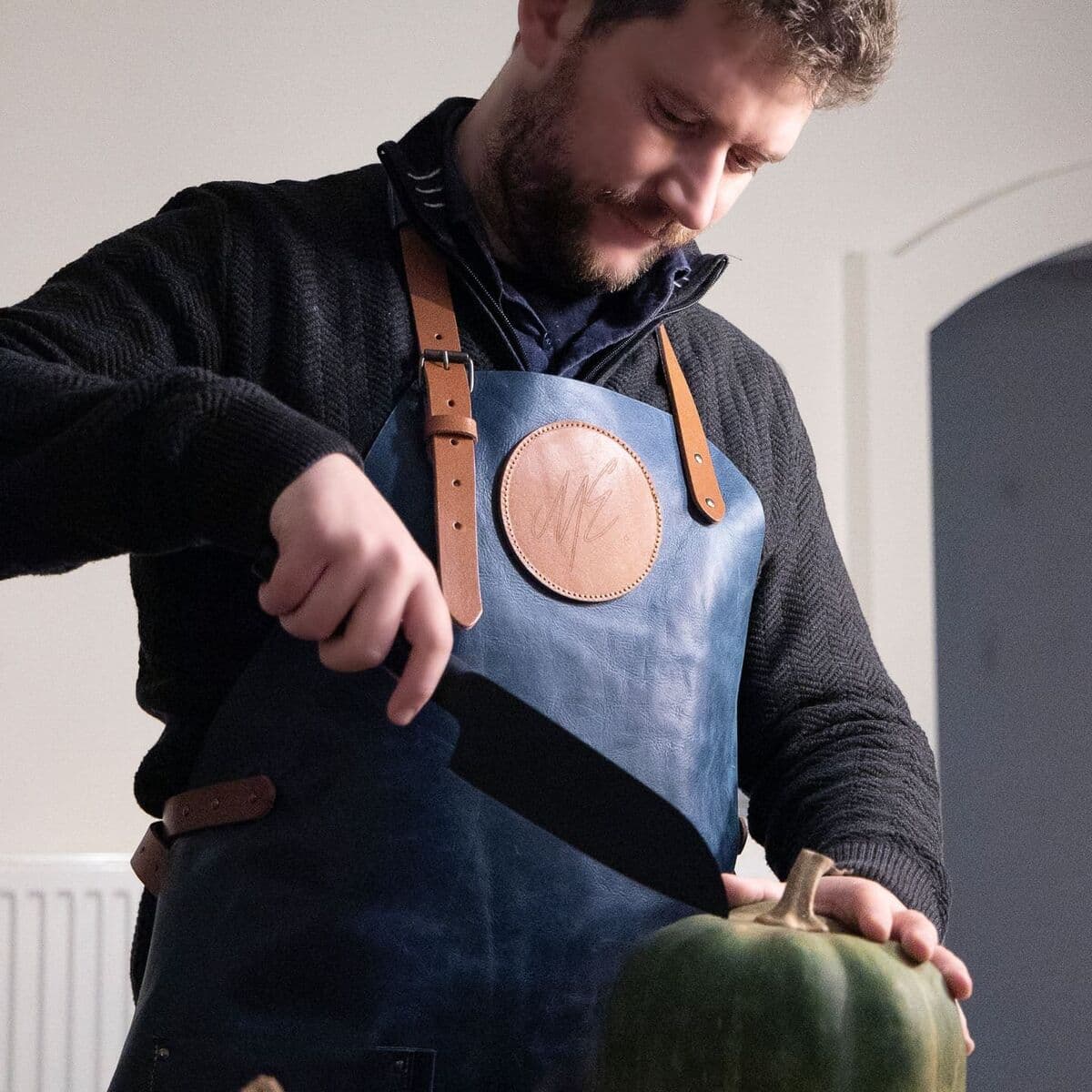
A leather or leather-look label is the premium decoration, especially on denim, BBQ, barista, craft and gifting aprons. It is a craft finish: a stitched-on patch that signals quality instantly and turns a uniform into something closer to a product. Recycled PU leather gives the same look without traditional leather, which suits programme-scale gifting and brands that care about materials.
Leather labels pair beautifully with denim because the contrast reads as designed rather than decorated. They are the right call when the apron is a Father's Day gift, a whiskey-brand gift, a premium food campaign, or any case where the apron itself is the gift, not the giveaway.
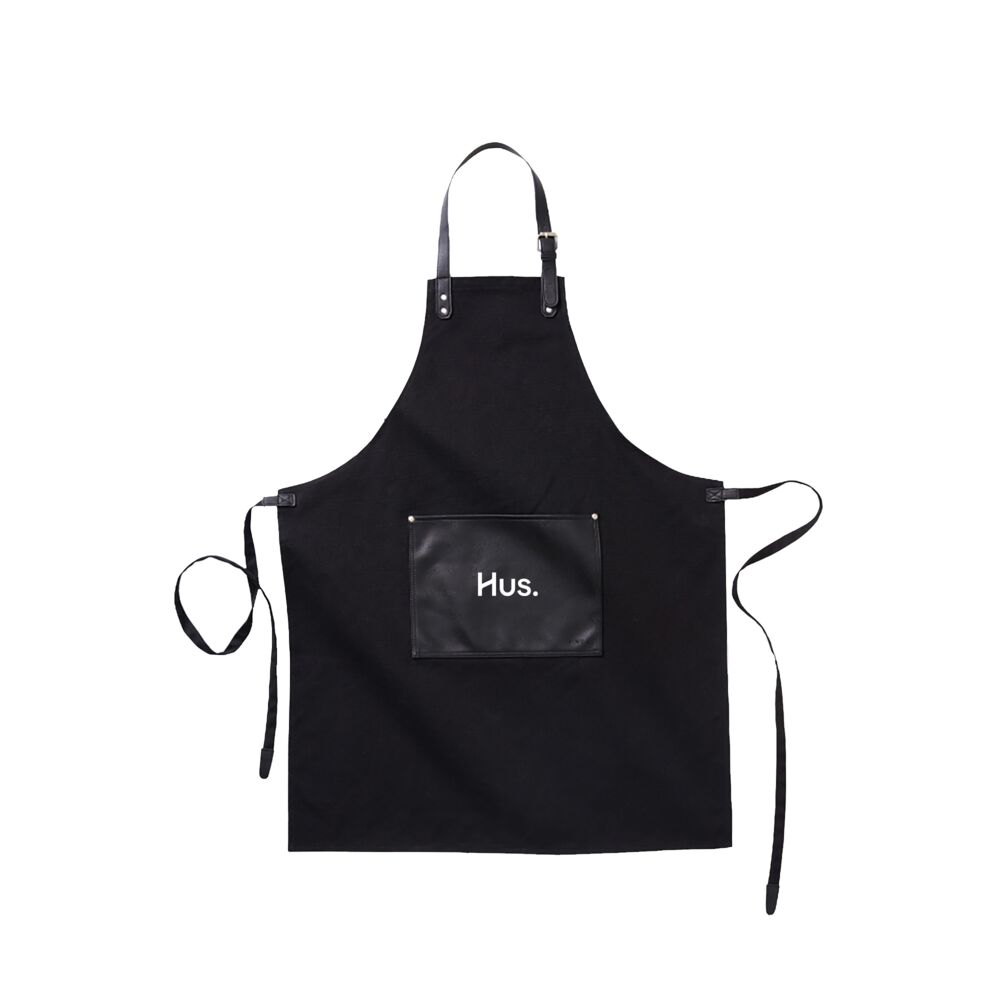
A leather-look label turns a solid apron into a premium product. It is the standout decoration for denim, BBQ, craft and gifting aprons.
5. Side-by-side comparison
| Decoration | Durability in hot washing | Best for | Look | Cost per unit |
|---|---|---|---|---|
| Embroidery | High | Logos, text, daily uniforms | Premium, textured | Mid, rises with stitch count |
| Printing | Low to mid (depends on method) | Large or photographic artwork, full colour | Flat, colourful | Low at volume, varies by method |
| Leather / leather-look label | High | Denim, BBQ, craft, premium gifting | Craft, high-value | Higher, premium finish |
6. How to choose for your apron
Start from three questions: how hard will it be washed, what is the artwork, and is it a uniform or a gift. Run them in that order and the decoration usually picks itself.
- Daily hospitality uniform, simple logo. Embroidery. It survives the wash and looks the part at the counter.
- Large or full-colour artwork. Printing, but only with a quality method and a wash-tested sample.
- Premium gift or craft apron. A leather or leather-look label, especially on denim.
- Mixed. Combine. A leather label plus an embroidered detail reads as designed, not decorated.
Want to see how a logo sits before you commit? Preview it in your colours with the free apron mockup generator, then browse styles and decoration options on the custom aprons page.
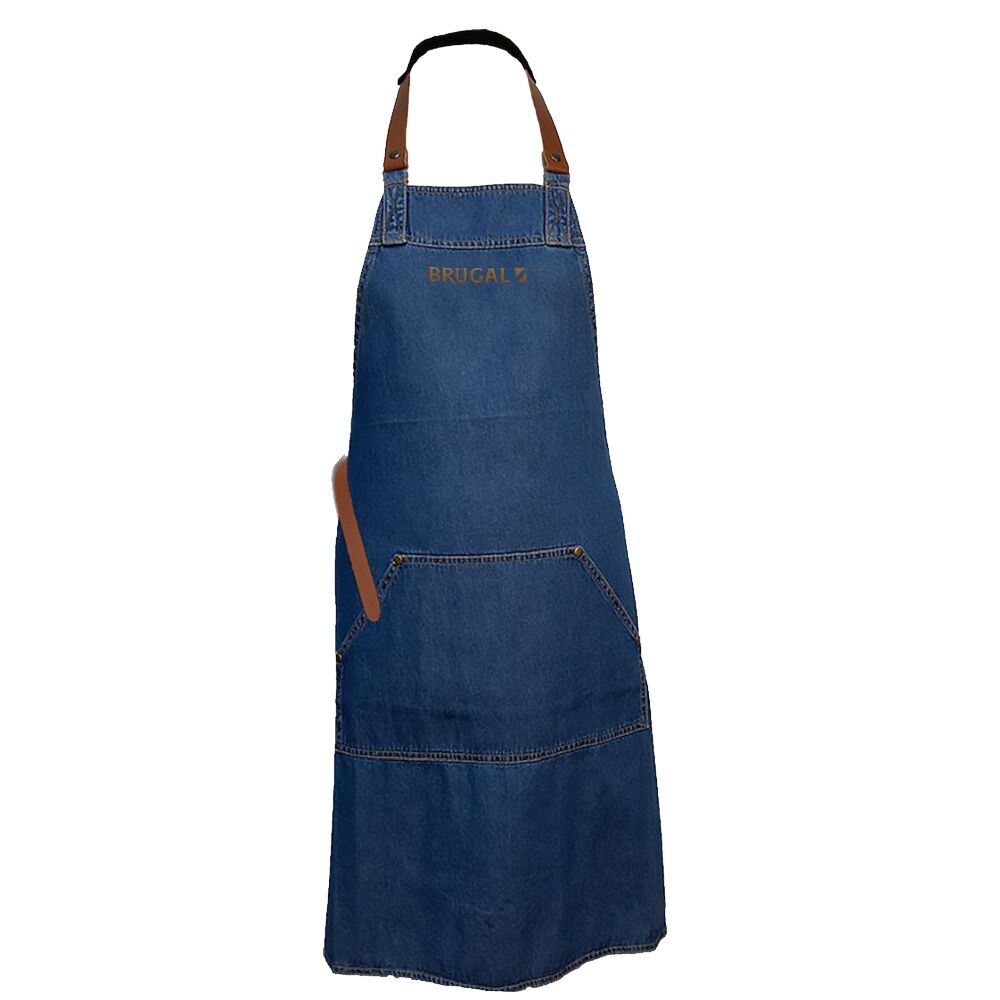
Denim is the strongest base for a leather label and a durable canvas for embroidery. The fabric and the decoration should be chosen together.
7. Cost, MOQ and lead time
Decoration is only one cost driver. Quantity is one of the biggest: aprons get materially cheaper per unit at volume, which is why hospitality rollouts and event activations land at a good price. Lead time is the other lever. Ordering early unlocks more efficient production and a lower unit price than rush production. Minimums vary by supplier, from no-minimum promo runs up to around 25 pieces, and the exact MOQ depends on the model, material and decoration.
Embroidery cost rises with stitch count, so a dense full-chest design costs more than a clean logo. Printing is often cheapest per unit at volume but asks for quality control. Leather labels carry a premium because they are a craft finish. You can also design your apron to see live pricing rather than guessing. Browse the full range in the catalog or see how it works.
Apron printing vs embroidery: questions answered
Is embroidery or printing better for custom aprons?
Embroidery is better for most aprons. Aprons face food, drinks, stains and frequent hot washing, and embroidery is stitched into the fabric so it survives those conditions while looking premium up close. Printing can work for large or photographic artwork, but execution is critical, because a cheap print cracks or fades under hard washing and makes a solid apron look cheap. For premium and gifting aprons, a leather or leather-look label beats both.
Does printed apron decoration survive hot washing?
It depends entirely on the print method and quality. A good textile print built for durability can hold up, but a cheap print cracks, fades or peels under the frequent hot washing aprons get in kitchens and bars. If you print, insist on a method made for textiles and run a sample wash test before committing to a bulk order. If durability is the priority, embroidery or a leather label is the safer choice.
When should I choose a leather label over embroidery?
Choose a leather or leather-look label when the apron is premium or a gift, and especially on denim, BBQ, barista and craft aprons. It is a craft finish that signals quality instantly and turns a uniform into a product. Embroidery is the better default for daily hospitality uniforms with a simple logo. Many of the best aprons combine the two: a leather label plus an embroidered detail reads as designed rather than decorated.
Can I print large or full-colour artwork on an apron?
Yes, printing is the option that handles large, full-colour or photographic artwork that embroidery cannot reproduce well. The trade-off is durability, so use a quality textile method and test a washed sample first. Embroidery is better for logos, text and simple marks where thread looks premium and lasts the life of the garment.
What is the cheapest way to decorate aprons at volume?
Printing is often the cheapest per unit at volume, but only worth it with good execution. Beyond the decoration method, quantity is the biggest cost lever: aprons get materially cheaper per unit as volume rises, and ordering early unlocks more efficient production. Embroidery cost rises with stitch count, and leather labels carry a premium as a craft finish. Design your apron to see live pricing for your exact style, decoration and quantity.
What is the minimum order for decorated aprons?
It varies by supplier. Some promo runs have no minimum, while others start from around 25 pieces. The exact minimum depends on the model, material and decoration. The bigger point is that quantity drives price more than anything else, so ordering enough volume early gives you both a lower unit price and a calmer lead time.
Keep reading: custom aprons
Design your apron and decoration in 30 seconds
Pick a style, drop in your logo, choose embroidery, print or a leather label, and see live pricing with a real mockup. Bulk pricing and event distribution built in.
Get free designs