Custom aprons are branded aprons made in your colours for hospitality teams, events, retail demos and premium gifting, ordered at volume. They are niche but versatile: restaurants, cafés, bars and caterers use them as uniform, while beer, spirits, food and BBQ brands use them in activations and as gifts. Sunday offers denim, bistro, bib, waist, barista, kitchen, leather and leather-look aprons. The clearest quality tell is the straps: thick, solid, comfortable straps beat thin weak strings every time. Decorate with embroidery or a leather label, because both survive frequent hot washing, and place branding centre of the chest or build it into the apron with contrast pockets, custom straps and brand-colour panels. An apron is only ever as good as its relevance: when it fits the brand, the audience and the activity, it is hard to beat.
One note before we start: this guide is for companies branding aprons with a logo, for staff, restaurants, events, food activations and gifting. Aprons are underused because many companies see them as purely functional workwear. In reality, the right apron carries strong design, storytelling and gifting value. The thesis is simple, and the rest of this guide is how to get it right.
The most underrated product in food and drink
Aprons are a niche category. That is the point. Because they are specific, a branded apron is highly relevant in the right industries and campaigns, and yet far more versatile than the restaurant uniform most people picture. The same garment can be a durable piece of professional workwear, a premium branded product, or a thoughtful gift.
The reason aprons stay underused is a misread. Most companies file them under functional workwear and stop thinking. But an apron carries design, storytelling and gifting value that few merch items match. Put a clean chest logo on a well-made apron, build the brand into the colours and panels, and you have something people are happy to wear and happy to receive. Treat it as a serious garment in the catalog, not a throwaway giveaway.
Who actually buys custom aprons
The obvious buyers are hospitality: restaurants, cafés, bars, hotels, catering companies, coffee shops and food-service chains. They need branded aprons for staff that look the part and survive a real working week.
The less obvious buyers are broader and, often, bigger. Brands that supply those venues order aprons all the time: beer, liquor, wine and spirits, snack and chip brands, food producers, BBQ and premium meat and salmon brands, and kitchen and cooking brands. Beyond that sit cooking workshops, team-building days, food activations, pop-up bars, festivals, retail demos, branded customer gifts, Father's Day campaigns and BBQ-themed gifting. A specific category, with surprisingly broad campaign possibilities.
- Hospitality. Restaurants, cafés, bars, hotels, caterers, coffee chains, food-service.
- Brands that supply hospitality. Beer, spirits, wine, snacks, food producers, BBQ and premium meat, kitchen brands.
- Experiences and activations. Cooking classes, workshops, pop-up bars, festivals, retail demos, branded tastings.
- Gifting. Branded customer gifts, Father's Day campaigns, BBQ gifting, team-building products.
Choosing the style: there is no single best apron
There is no one best apron. The right choice depends on the industry, the wearer's role, the brand style, the protection required, the budget, and whether it is a uniform or a gift. Sunday offers denim, bistro, bib, waist, barista, kitchen, leather and leather-look aprons, and each fits a different brief.
For hospitality, pick by work environment. A bar, a kitchen, a server station, a barista bar and a retail demo all ask for different lengths, pockets, straps and materials. Beyond pure function, the choice is mainly aesthetic, and there are good options across every style and price point. The table below is the shortcut.
| Style | Best for | Why |
|---|---|---|
| Bib apron | Kitchens, chefs, full-service restaurants | Full chest-to-knee coverage and protection for hot, messy work |
| Bistro & waist apron | Servers, baristas, front of house | Freedom of movement plus front pockets for the tools of service |
| Barista apron | Coffee bars, specialty cafés | Often denim or canvas, with a craft look and pockets for the bar |
| Denim apron | Cafés, craft, retail demos, gifting | Character, durability and a premium artisanal feel that wears in over time |
| Leather & leather-look apron | BBQ, premium gifting, craft, workshops | The most premium finish, a high-value gift in its own right |
Custom aprons for restaurants
For a restaurant, the apron is part of the uniform and part of the guest experience. It is seen all night, it takes a beating, and it gets washed hot and often, so it has to hold up while still looking considered. Custom aprons for restaurants work best when the style matches the role: a full bib for the kitchen line, a shorter bistro or waist apron for servers moving between tables.
The branding should read as designed, not promotional. A clean chest logo, the apron cut in the restaurant's colours, and a decoration method that survives the wash, and you have a uniform staff are happy to wear. Order across the team and the per-unit price drops, which is why a full-restaurant or chain rollout is one of the most cost-effective apron projects there is.
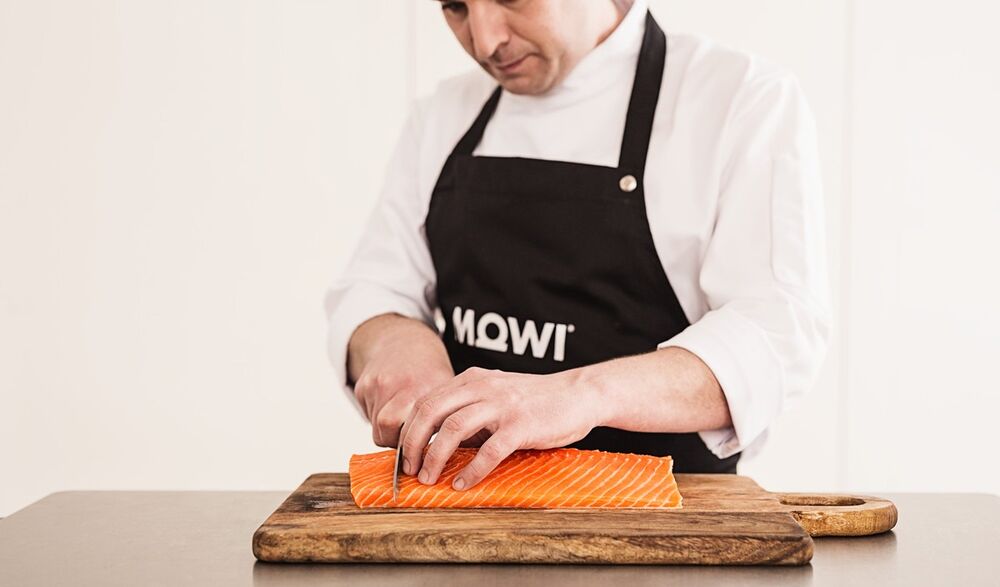
In hospitality the apron is selected by the work environment. A chef on the line, a server front of house and a barista at the bar all need different lengths, pockets and materials.
Custom kitchen aprons
Custom kitchen aprons are the workhorses. They face direct heat, oil, stains and constant washing, so durability is the whole game. A bib cut gives full coverage, a heavier fabric gives protection, and strong straps and clean stitching keep it together through a busy service. This is where the cheap apron falls apart first, literally, so the build quality matters more than anywhere else.
Decoration on a kitchen apron has to survive the same punishment. Embroidery is the safe default because it holds up to hot washing. Keep the design clean and central, and let the fabric weight and the straps do the talking.
Custom barista aprons
Custom barista aprons sit at the intersection of function and craft. A coffee bar wants pockets for cloths, tampers and a phone, freedom to move, and a look that matches the specialty-coffee aesthetic. Denim and canvas are popular here, often finished with a leather label that signals craft and quality. A barista apron is on display the entire shift, at eye level, right where the customer orders, so it does real brand work for a café.
Custom denim aprons
Denim is one of the standout apron materials. It has character, it wears in beautifully over time, and it carries a premium, artisanal feel that suits cafés, craft businesses, retail demos and gifting alike. A custom denim apron takes a leather label especially well, which is why it is a favourite for barista bars, craft workshops and BBQ campaigns.
Denim is also a strong gifting choice. A well-made branded denim apron looks like something the recipient would have bought for themselves, which is the whole test of a good branded product.
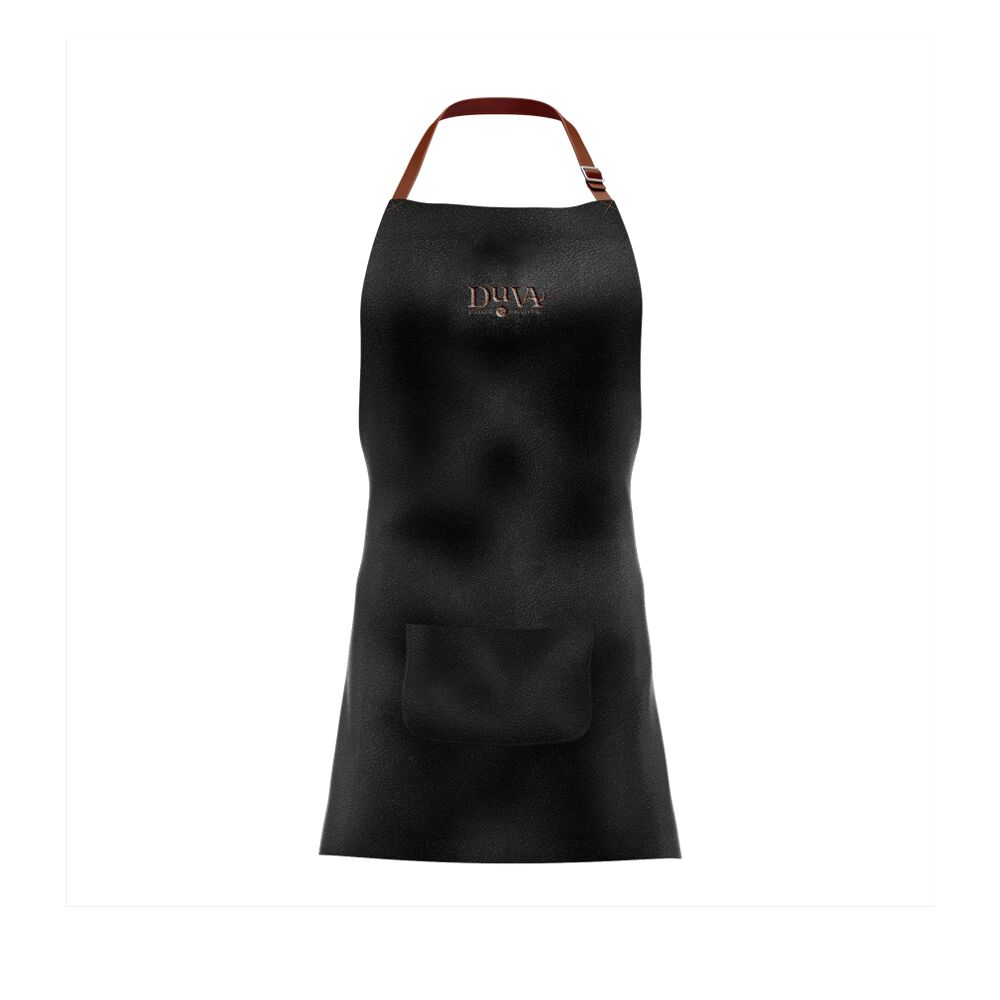
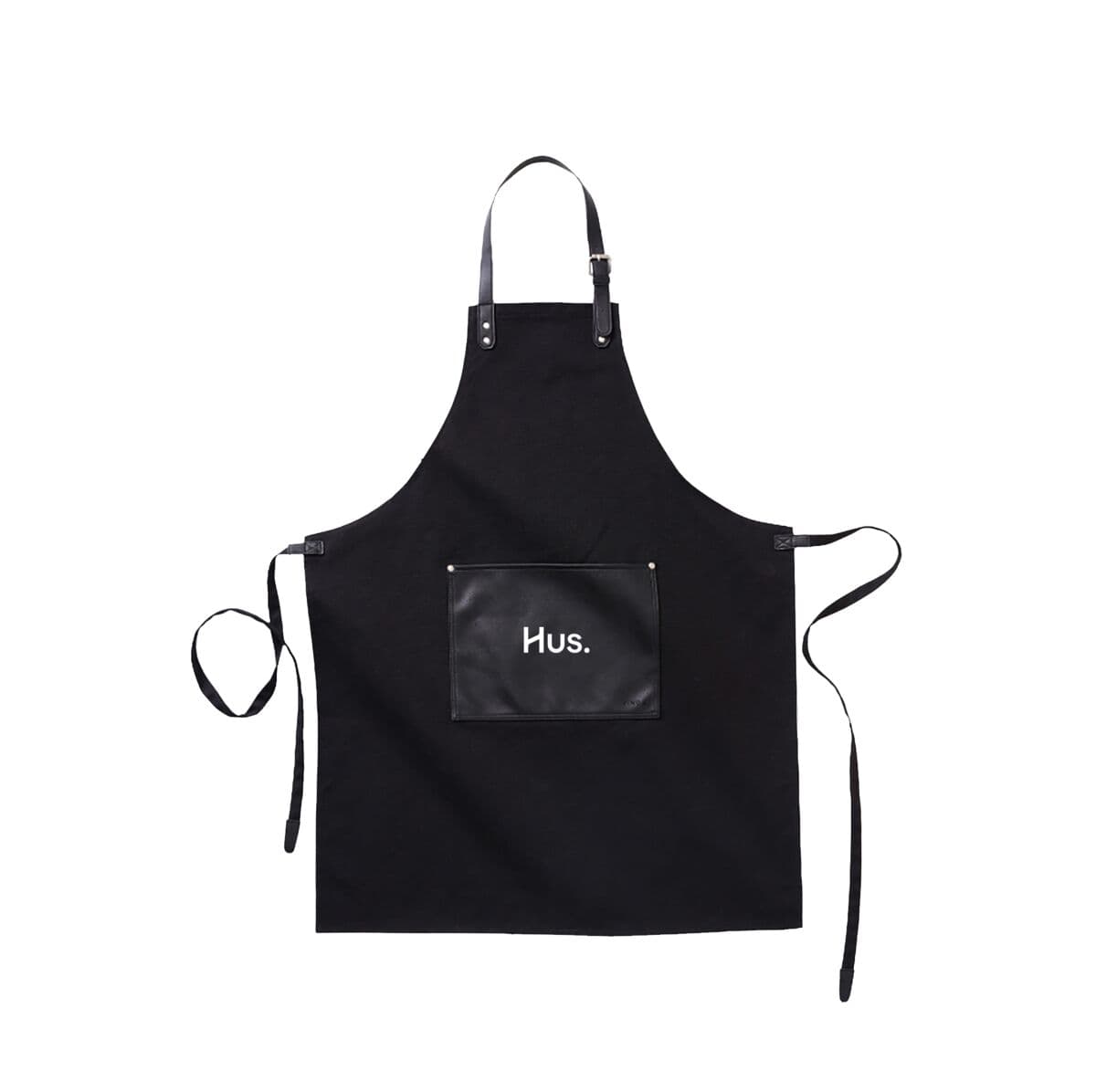
Denim and recycled PU leather are the standout materials. The leather-look here gives a premium finish without traditional leather, ideal for BBQ, craft and gifting aprons.
What makes an apron premium
Two things separate a premium apron from a cheap one: the build, and the decoration.
Build is fabric weight, strong straps, clean stitching, durable pockets, reliable hardware and tolerance to frequent hot washing. The fabric needs enough weight and structure to feel protective and substantial. The canvas or denim weight matters. The stitching has to be clean. The pockets and hardware have to last. And the whole thing has to survive the wash cycle that hospitality aprons live through.
Decoration hugely affects perceived quality, in both directions. A cheap print undermines a solid apron and drags the whole garment down. Clean embroidery, a leather label or a thoughtful detail makes the exact same apron read as premium. You can have a well-built apron and ruin it with bad decoration, so treat the two as one decision.
The strap test
If you only check one thing on an apron, check the straps. They are the clearest quality tell there is. Thin, weak strings feel cheap and uncomfortable the moment you put the apron on. Strong aprons use thick, solid, comfortable, durable straps that tie cleanly and hold all day. A weak strap is the first thing to annoy the wearer and the first thing to fail. Before you commit to an apron, handle the straps. They tell you more about the build than the spec sheet does.
Decoration: embroidery and leather labels win
Aprons face food, drinks, stains and frequent, often hot, washing. So decoration is not a cosmetic afterthought, it is a durability decision. Two methods win.
- Embroidery. Durable, visible, professional. It holds up to washing and fits most fabrics, which makes it the default for staff aprons and anything that gets washed hard.
- Leather and leather-look labels. A premium craft finish, especially on denim, BBQ, barista, craft and workshop aprons and on premium gifting. The label does as much for the perceived value as the apron itself.
- Printing. Can work, but execution is critical. A cheap print kills the garment, so only use printing when the quality is genuinely there.
Want to weigh embroidery against printing for your own apron, or preview a leather label in place? Drop your logo into the free apron mockup generator to see it in your colours first.
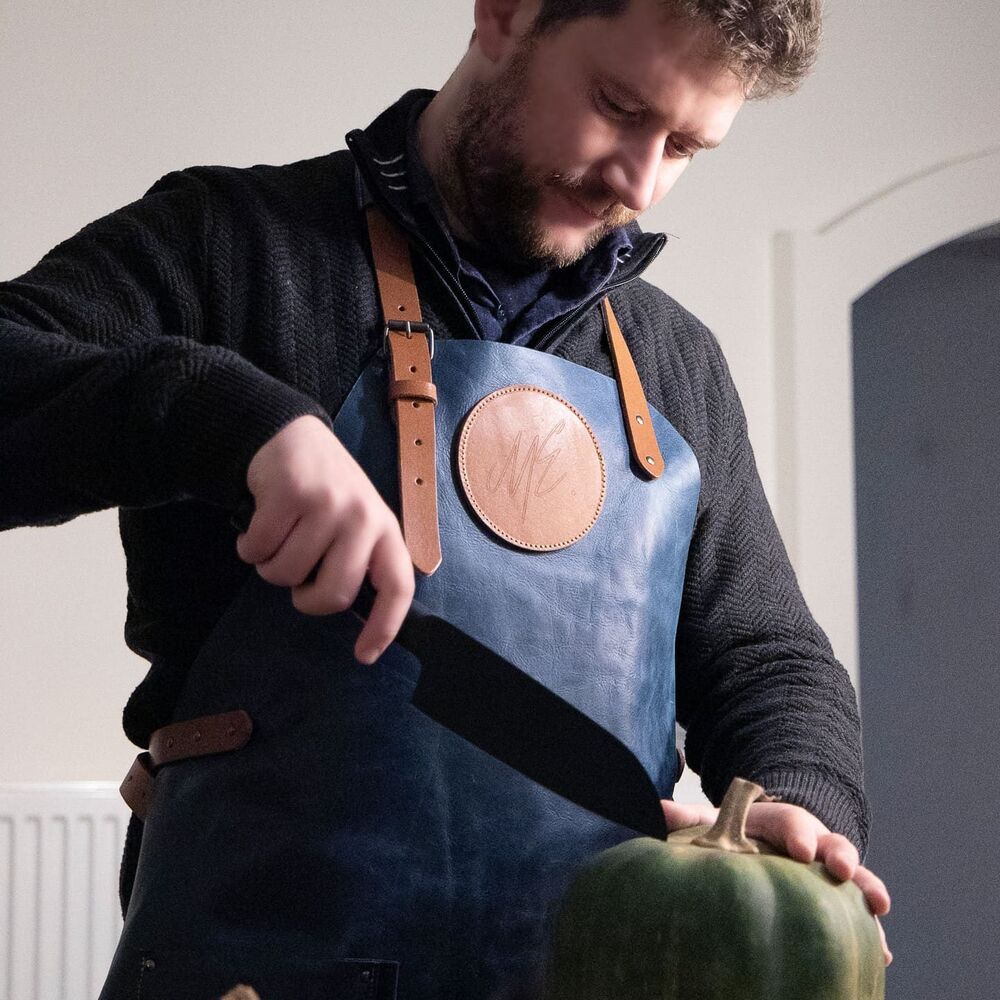
A leather label is the premium craft finish, especially on denim, BBQ, barista and gifting aprons. It survives washing and signals quality the way a cheap print never can.
Branding placement: centre of the chest, then build it in
The strongest single placement is the centre of the chest. It is visible, clean and recognisable, and it reads as intentional. But the best aprons go a step further and build the branding into the apron itself rather than slapping a logo on a generic blank.
- Contrast-colour pockets, or pockets cut in the company colours.
- Custom straps, in a brand colour or with a woven detail.
- Different fabric panels, to bring the brand palette into the garment.
- A leather patch, as the finishing mark of quality.
A branded palette plus a clean chest logo reads as designed, not as a logo bolted onto a blank. That distinction is the difference between an apron people are proud to wear and one they tolerate.
Personalized aprons for business
Personalized aprons for business cover the full range: branded aprons for staff, embroidered aprons with a logo for a hospitality rollout, corporate aprons for an event, and bulk runs for promotional campaigns. The design approach is the same whatever the use, a well-built apron, restrained branding, durable decoration, and the brand built into the colours and panels.
What changes is scale and intent. A small café might order a handful of denim aprons with a leather label. A food-service chain might roll out thousands across every site. A spirits brand might produce a premium leather apron as a gift. The platform handles all three, and the per-unit economics improve fast with volume.
Two hero projects
The right level of design is never fixed. It depends on the brand and the campaign. Two Sunday projects show the range.
Wiese: Oktoberfest crew aprons
For an Oktoberfest activation, the beer brand Wiese ordered custom aprons worn by the full crew and matched to the theme. They worked because everything connected: the beer category, the hospitality environment, the cultural setting and the team's role. The apron was part of the event experience, not a random giveaway handed out at a booth. That is the apron at its best, when the product, the place and the people line up.
Premium leather gifting aprons
Sunday also produced premium leather aprons for a gifting campaign. They are the proof that aprons are not only uniforms. A well-made leather apron becomes a high-value gift for anyone into cooking, BBQ, craft or food culture. It is the clearest example of the apron as a premium product rather than disposable workwear, and it is exactly the kind of thing a whiskey or food brand can build a Father's Day or BBQ campaign around.
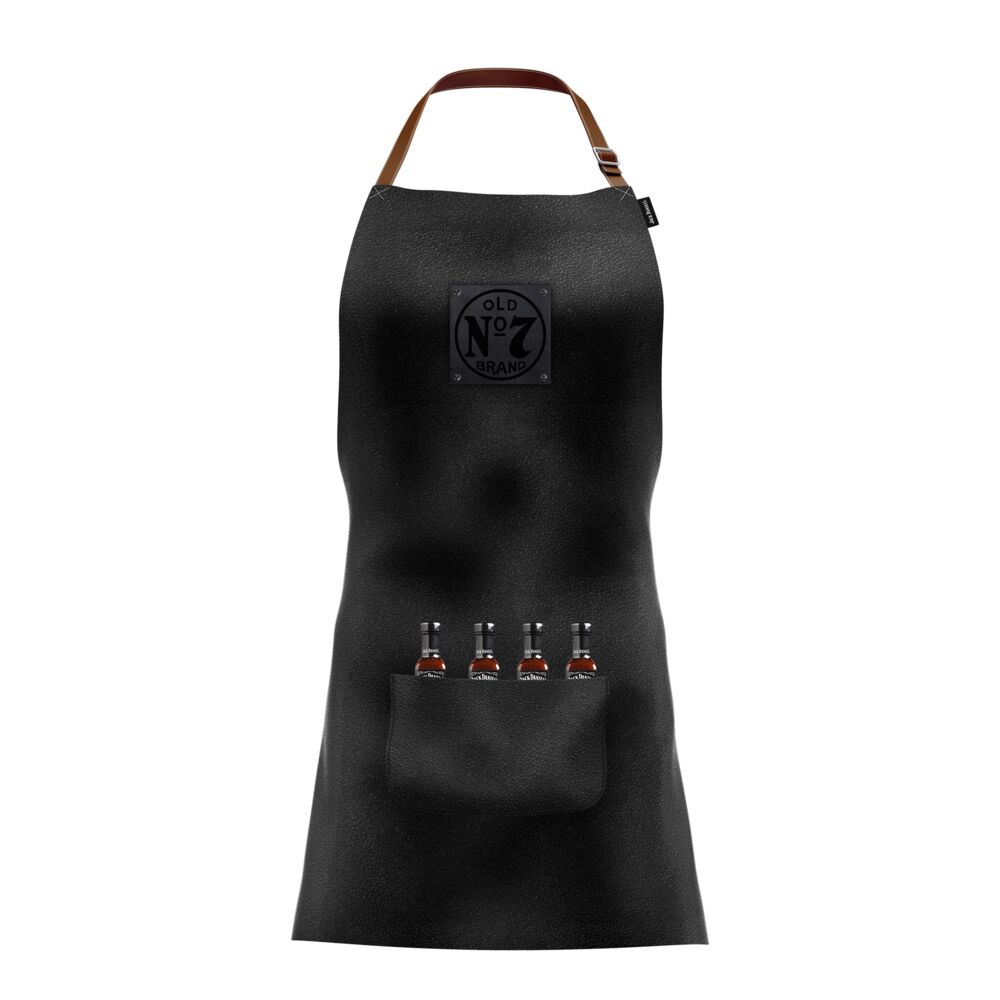
Match the apron to the activity: a whiskey brand to a Father's Day gift, a food producer to a BBQ apron, a coffee brand to a barista apron. Relevance is what makes it land.
Best use cases
Where does a custom apron earn its place? The strongest cases all share a clear connection to cooking, serving, making, hospitality or craft.
- Hospitality uniform. Restaurants, bars, cafés, coffee chains, food-service and pop-ups.
- Events and activations. Hospitality events, food demos, branded tastings, BBQ campaigns, festivals.
- Food-related gifting. Branded customer gifts, Father's Day, BBQ gifting, premium leather gift aprons.
- Experiences. Cooking classes and workshops, where the apron is part of the day.
- Premium brand matches. Whiskey to Father's Day, a food producer to BBQ, a coffee brand to barista.
The apron is weakest when there is no logical relationship to the recipient or the campaign. Relevance is everything.
Uniform vs gift: same garment, different presentation
The design approach barely changes between a uniform apron and a gifting apron. In both cases the apron should look good, fit the brand, use durable materials, tolerate frequent washing, and carry strong decoration. Durability is the core requirement either way.
The difference is presentation. A gifting apron may add premium packaging, a personalised card, more luxurious materials, an additional product in the box, or a stronger campaign story around it. The apron is the same quality garment, dressed for the occasion. That is what turns a staff uniform into a high-value gift.
Materials and sustainability
Material is not the primary decision factor for aprons. Buyers care most about durability, quality, design and washability, and material serves those. Two stand out.
- Denim. Strong, full of character, and it wears in well over time. The go-to for craft, café and gifting aprons.
- Recycled PU leather. Gives a leather look without traditional leather, for a premium finish at a more practical position.
Organic cotton and recycled fabrics are relevant for some brands. But do not exaggerate the sustainability story. A durable apron that gets used and washed repeatedly for years beats a superficially "sustainable" one that performs poorly or gets replaced quickly.
Quantity, lead time and price
Two levers drive the price of a custom apron more than anything else: quantity and lead time.
| Factor | What to expect |
|---|---|
| Quantity | One of the biggest price drivers. Aprons get cost-effective at volume, which is why hospitality rollouts, food-chain uniforms, large retail campaigns and event activations price well |
| Lead time | Ordering early unlocks more efficient production options and a significant unit-price difference. Rush production costs more, every time |
| Material and decoration | Fabric, the apron style and the decoration method all move the price. Choose them deliberately rather than defaulting |
| Exact MOQ, lead and price | Depend on the model, material, decoration and quantity. The platform shows live pricing as you choose |
The strategy writes itself: plan early, order enough volume, avoid rush production, and choose decoration and materials carefully.
Native language: Schürze bedrucken and beyond
In our experience there is no major EU-versus-US difference in apron demand. The bigger factor is local language. Each market should use the terms buyers actually search, German Schürze bedrucken, plus native Dutch, French and Spanish, rather than awkward translations. When the page speaks the buyer's language, they instantly recognise the product, the decoration and the offer. That is why Sunday builds native-language apron pages rather than translating English ones.
Custom aprons vs the old workwear approach
| Old promo-apron approach | The Sunday approach | |
|---|---|---|
| How it's seen | Purely functional workwear, an afterthought | A designed product with storytelling and gifting value |
| Quality tell | Thin weak strings, light fabric | Thick solid straps, substantial fabric, clean stitching |
| Decoration | Cheap print that fails in the wash | Embroidery or a leather label that survives hot washing |
| Branding | Logo slapped on a generic blank | Centre-chest mark plus brand-colour pockets, panels and straps |
| Process | Upload logo, write brief, wait for a mock-up | On-brand designs with live pricing in 30 seconds, EU-made on one platform |
Design your own custom apron in 30 seconds
Sunday is merch infrastructure, not a supplier. Open an apron product page and the platform uses your existing brand data to generate design directions with live pricing instantly. You see what the apron could look like, which decoration options are possible, the approximate price range, and how each choice changes the result. Then you pick a concept, request a variation, or use it as the starting point for something fully custom. It removes the old first stage entirely: no upload-logo, write-a-brief, wait-for-a-mock-up.
That speed scales both ways. A restaurant that needs branded aprons for the team gets on-brand concepts, live pricing and the decoration options that work, with no back-and-forth across designers and print shops. A spirits brand planning a premium leather gifting apron can explore custom panels, leather labels and brand-colour straps. Browse the custom aprons range, drop your logo into the free apron mockup generator, explore the full catalog, or see how it works. Shipping aprons to venues and events across borders is what our distribution service is built for.
Custom aprons: questions answered
What is the best material for a custom apron?
Denim and recycled PU leather are the standout options. Denim has character, wears in well over time and takes a leather label beautifully, which suits cafés, craft businesses, retail demos and gifting. Recycled PU leather gives a premium leather look without traditional leather. Beyond material, buyers care most about durability, quality, design and washability, so choose the fabric that serves those rather than chasing a sustainability label. A durable apron used and washed for years beats a superficially "sustainable" one that performs poorly.
How do I tell if an apron is good quality?
Check the straps first. They are the clearest quality tell. Thin, weak strings feel cheap and uncomfortable, while a strong apron uses thick, solid, comfortable, durable straps. After that, look at the fabric weight, which should feel protective and substantial, the stitching, which should be clean, and the pockets and hardware, which should be durable. Hospitality aprons also need to tolerate frequent, often hot, washing, so build for the wash cycle they will actually live through.
What is the best way to decorate a custom apron?
Embroidery or a leather label. Aprons face food, drinks, stains and frequent hot washing, so decoration has to survive demanding conditions. Embroidery is durable, visible and professional, holds up to washing and fits most fabrics, which makes it the default for staff aprons. Leather and leather-look labels give a premium craft finish, especially on denim, BBQ, barista and gifting aprons. Printing can work, but execution is critical, because a cheap print undermines an otherwise solid apron.
Where should the logo go on a custom apron?
The centre of the chest is the strongest placement: visible, clean and recognisable. Even better, build the branding into the apron itself with contrast-colour pockets, pockets in the company colours, custom straps, different fabric panels or a leather patch. A branded palette plus a clean chest logo reads as designed, rather than a logo slapped onto a generic blank. That distinction is what makes an apron feel like a product rather than promo workwear.
Who uses custom branded aprons?
Hospitality is the obvious buyer: restaurants, cafés, bars, hotels, caterers, coffee shops and food-service chains. The broader market is brands that supply those venues, beer, spirits, wine, snacks, food producers, BBQ and premium meat brands, and kitchen and cooking brands, plus cooking workshops, team-building, food activations, pop-up bars, festivals, retail demos, branded gifts and Father's Day or BBQ campaigns. It is a specific category with surprisingly broad campaign possibilities.
Are custom aprons a good corporate gift?
They can be a genuinely premium gift, not a gimmick or a disposable event product. A well-made leather or denim apron is a high-value gift for anyone into cooking, BBQ, craft or food culture, which is why it works for Father's Day campaigns, BBQ gifting and premium brand activations. The design is the same as a uniform apron, durable, well built, strongly decorated, but the presentation steps up: premium packaging, a personalised card, more luxurious materials or a stronger campaign story.
How much do custom aprons cost?
Quantity and lead time are the two biggest levers. Aprons get cost-effective at volume, so hospitality rollouts, food-chain uniforms, large retail campaigns and event activations price well. Ordering early unlocks more efficient production and a significant unit-price difference, while rush production always costs more. Material, apron style and decoration method move the price too. Exact MOQ, lead time and price depend on the model, material, decoration and quantity, and the platform shows live pricing as you choose.
How fast can we get custom aprons designed?
On Sunday you see on-brand apron designs with live pricing in about 30 seconds. The platform uses your existing brand data to generate concepts, show which decoration options are possible and give an approximate price range, with no upload-and-wait. A restaurant that needs branded aprons next month can go from concept to a clear design-to-production path immediately, and a brand planning a premium leather gifting apron can explore custom panels, leather labels and brand-colour straps from the same place.
See your apron in your brand
Denim, kitchen, barista, bistro and leather aprons, embroidered and EU-made, live in 30 seconds. Create a free account and preview your branded apron with live pricing.
Get free designs