



How to set up a company swag store, what to stock, who should own it, how multi-team access works, and how to turn branded merchandise from scattered requests into a controlled, measurable brand channel.
Most companies do not have a swag problem. They have an operating model problem.
A company swag store is not just a place where employees buy branded hoodies. In a modern company, the swag store is the controlled front door for everything related to branded merchandise: internal ordering, employee welcome kits, event stock, customer gifts, partner packages, department budgets, approved designs, inventory visibility, and global shipping.
That matters because merchandise has become cross-functional. HR needs onboarding kits. Marketing needs event merch. Sales needs ABM gifts. Customer success needs thank-you packages. Partner teams need reseller kits. Office teams need local stock. If every team solves this separately, the company ends up with duplicated vendors, inconsistent quality, untracked stock, slow approvals, and a lot of unused products sitting in back rooms.
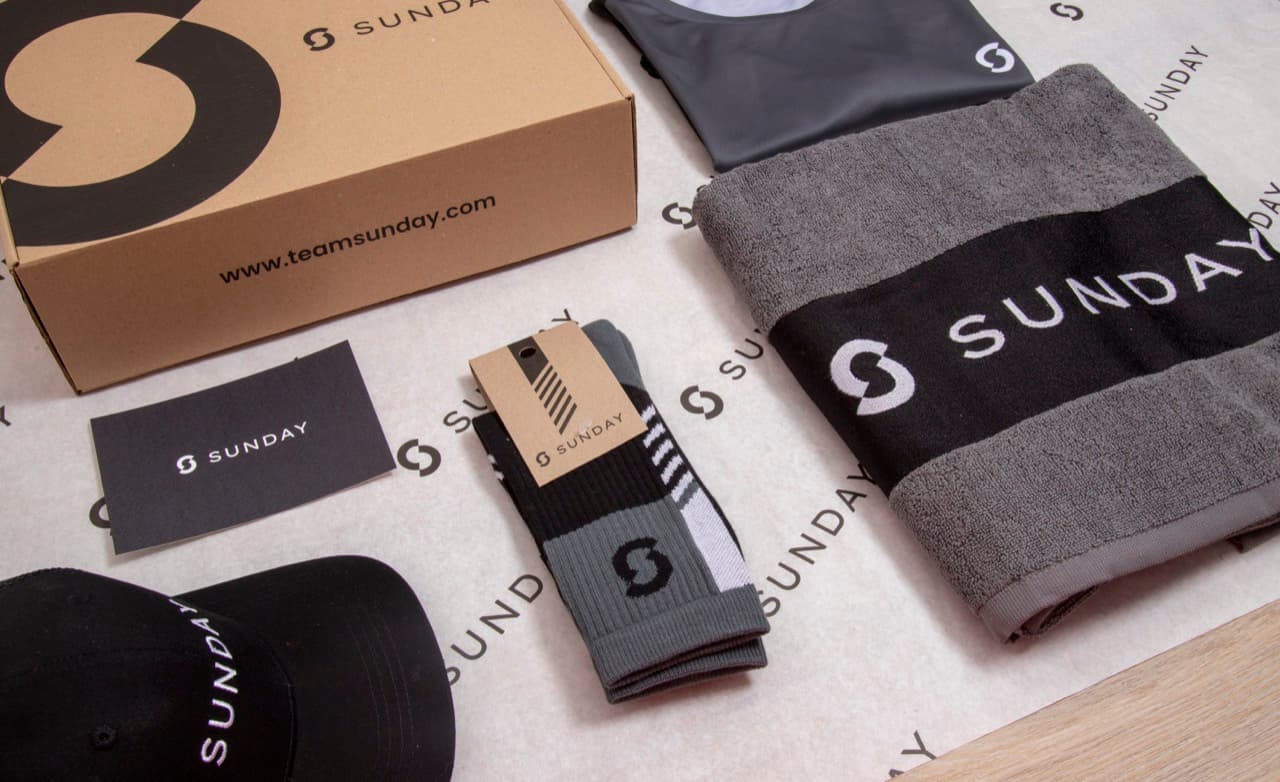
The best swag stores in 2026 work more like internal brand infrastructure. They make it easy for any approved team to order the right products, while keeping central control over brand quality, budget, stock, data, and delivery. This is why Sunday positions its branded merchandise platform around one system to design, produce, store, manage, and ship branded merchandise globally.
The goal is not to add another shop. The goal is to remove manual work from merchandise. When the store is designed well, people no longer ask, "Who has the latest hoodie design?" or "Where is the event stock?" or "Can someone send me the size spreadsheet?" They go to the store, pick the approved flow, and move.
- $27.7B: North American promotional products distributor sales in 2025, reported by PPAI through industry coverage.
- 73%: of B2B purchases involve three or more departments, according to Forrester’s 2025 buyer network analysis.
- 400+: teams can order from one internal merch store in Sunday’s Zalando example.
Core principle: A swag store should reduce freedom in the right places and increase speed everywhere else. Central teams control the brand, catalog, pricing, permissions, and stock. Local teams get fast access to approved merchandise without restarting the process every time.
What is a company swag store?
A company swag store is a branded online environment where employees, departments, customers, partners, or event attendees can access approved merchandise. Depending on the setup, users can order products, redeem gifts, request event shipments, reorder previously produced items, view available stock, or trigger direct-to-recipient shipping.
The key word is "approved." A real swag store is not an open catalog with every possible product. It is a curated system with brand rules, product rules, permission rules, and fulfillment rules. A good store answers five questions before anyone places an order: who is allowed to order, what can they order, who pays, where does it ship, and what happens when stock runs out?
For growing companies, this is the difference between ad hoc merchandise and scalable merchandise. Ad hoc merchandise is built around individual requests. Scalable merchandise is built around repeatable workflows. Sunday's how it works flow is designed around this full journey: design, produce, store, manage, and deliver from one platform.
| Old approach | New swag store approach | Why it matters |
|---|---|---|
| Each team contacts a vendor separately | Approved teams order from one central platform | Better brand consistency, fewer duplicate orders, clearer reporting. |
| Product ideas live in emails and decks | Approved products live in a branded catalog | Teams can reorder what already works instead of reinventing every campaign. |
| Sizes and addresses are collected in spreadsheets | Recipients submit details through redeem flows | Less manual work and fewer privacy-sensitive spreadsheets. |
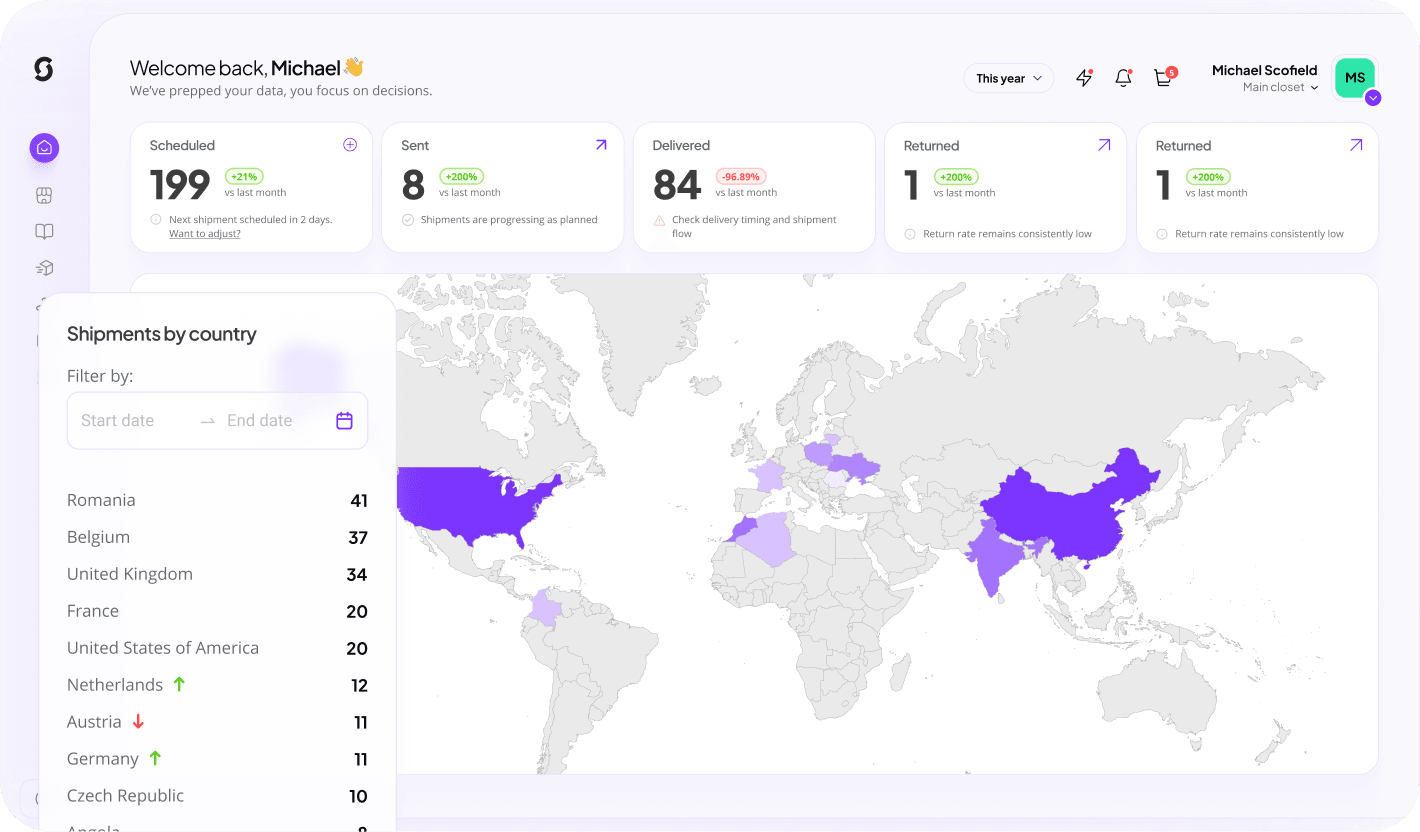
| Stock sits in office cupboards | Inventory is visible in a warehouse-connected platform | Teams can see what exists before buying more. |
| Budgets are handled manually | Departments use permissions, closets, and approval flows | Finance keeps control while teams keep speed. |
| Success is measured by "we gave it out" | Success is measured through orders, usage, feedback, and campaign data | Merch becomes easier to defend as a marketing and people investment. |
Warning: Do not launch with every product your company has ever made. A cluttered swag store becomes a digital storage room. Start with a clear core range, a few campaign-specific collections, and a process for adding new products.
The 10 decisions that make or break a company swag store
This is the part most basic guides skip. A swag store does not fail because the homepage looks bad. It fails because ownership, product logic, permissions, inventory, and measurement were never designed. Use the following ten decisions as your setup blueprint.
01. Define the store's job before choosing products
Best for strategic alignment
The first mistake is treating a swag store as a shopping experience before defining its operational job. Is it mainly for employees, events, customer gifting, partner enablement, or all of those? The answer decides the catalog, stock model, permissions, shipping logic, and reporting.
- Primary audience
- Business use cases
- Budget owner
- Fulfillment model
- Approval depth
- Success metric
Good setup
- One clear reason to exist
- Use cases mapped by team
- Catalog reflects real demand
Bad setup
- Random product dumping
- No campaign logic
- No way to know if it worked
Why it wins: a store with a clear job becomes easier to govern, easier to explain internally, and easier to expand across departments.
"A company swag store should start with the moment it supports, not the product it sells."
Budget impact: prevents overbuying before launch
02. Create a product architecture, not a product dump
Best for brand consistency
The best swag stores have a simple product architecture: always-on essentials, seasonal drops, event collections, onboarding kits, customer gifts, and premium hero pieces. This gives teams choice without creating chaos. Sunday's catalog supports this by helping teams move from broad product inspiration to approved, branded merchandise collections.
- Core apparel
- Drinkware
- Desk and work items
- Bags and travel
- Event giveaways
- Premium gifts
- Onboarding kits
- Seasonal drops
Good setup
- Clear collections by use case
- Quality tiers are visible
- Products are easy to reorder
Bad setup
- Too many similar SKUs
- No hero products
- Cheap items dilute brand perception
Why it wins: product architecture makes the store feel curated, not crowded. Teams find the right product faster and brand managers retain control.
"The right swag store feels like a brand collection, not a warehouse search bar."
Budget impact: shifts spend toward products people keep
03. Assign one owner and several controlled contributors
Best for ownership clarity
A swag store needs a central owner, usually brand, marketing operations, people operations, or procurement. That owner should not manually execute every shipment. Their job is to manage the rules: what is allowed, who can order, what needs approval, how budgets are handled, and which data matters.
- Global store owner
- Department admins
- Finance visibility
- CSM or merch partner support
- Approval rules
- Quarterly catalog review
Good setup
- One accountable owner
- Teams can self-serve
- Finance sees spend early
Bad setup
- Everyone can request anything
- No one owns cleanup
- Approvals happen in Slack
Why it wins: clear ownership prevents the store from becoming another unmanaged internal tool.
"The store owner should govern the system, not become the human API for every hoodie request."
Budget impact: reduces hidden admin time
04. Design permissions around departments, not individuals
Best for multi-team access
Multi-team access is where most stores become valuable. HR, events, sales, customer success, office, and partner teams need different products, budgets, and shipping flows. The answer is not one shared login. The answer is team-based access with separate closets, budgets, and permissions.
- HR closet
- Marketing closet
- Events closet
- Sales gifting access
- Office stock visibility
- Regional permissions
- Manager approval
- Usage reporting
Good setup
- Teams move independently
- Central brand rules remain intact
- Internal adoption grows naturally
Bad setup
- Shared password culture
- No department-level budget control
- Stock disappears without trace
Why it wins: department-based access gives the company scale without losing control.
"A good swag store lets teams move fast inside a controlled sandbox."
Budget impact: improves budget attribution by team
05. Separate stocked products from on-demand products
Best for inventory control
Not every product should be warehoused. High-volume evergreen products deserve stock because they need fast delivery and stable quality. Low-volume or experimental items can be made on demand or handled as campaign orders. Sunday's Wardrobe platform supports this by connecting warehousing, virtual stock, shipments, and campaign flows.
- Stocked essentials
- Made-to-order campaign items
- Reorder thresholds
- Live inventory
- Dead-stock review
- Storage rules
Good setup
- Fast delivery for common items
- Lower risk on experimental products
- Better warehouse planning
Bad setup
- Everything is stocked too early
- Slow movers eat budget
- Teams reorder without seeing existing stock
Why it wins: the store becomes faster without forcing the company to pre-buy every possible product.
"Stock what repeats. Test what is uncertain. Retire what does not move."
Budget impact: lowers wasted stock and storage cost
06. Use redeem links when the recipient should choose
Best for employee gifting
A store is not always the best interface. For onboarding, anniversaries, holiday gifting, customer thank-yous, and size-sensitive apparel, redeem links are often better. The recipient chooses their size, color, gift, and delivery details. The team keeps control over budget and product options. This is why Sunday built redeem pages as part of the platform.
- Recipient choice
- Size collection
- Address collection
- Budget cap
- One-time links
- Direct-to-recipient shipping
Good setup
- Less admin
- Better recipient experience
- Fewer wrong sizes
Bad setup
- Teams collect addresses manually
- Privacy-sensitive spreadsheets circulate
- Recipients get unwanted items
Why it wins: redeem flows turn gifting into a controlled self-service experience instead of a spreadsheet project.
"When choice matters, do not ship a box. Send a controlled redeem experience."
Budget impact: reduces reshipments and wrong-size waste
07. Build an event shipment flow before the event calendar gets busy
Best for event teams
Events are one of the biggest reasons companies need a swag store. The store should let event managers reserve stock, ship bulk quantities, send packages to booths, and restock after the event. Without this, event teams over-order because they do not trust the system.
- Bulk destination shipments
- Event kit templates
- Shipping deadlines
- Customs documentation
- Leftover stock return
- Post-event reporting
Good setup
- Faster event preparation
- Less duplicate buying
- Cleaner booth execution
Bad setup
- Last-minute courier chaos
- No view of leftover stock
- Every event starts from zero
Why it wins: event merch becomes a repeatable operational flow instead of a deadline-driven panic.
"The real event merch win is not the tote bag. It is knowing what to send, when to send it, and what came back."
Budget impact: reduces emergency shipping and duplicate production
08. Show pricing rules clearly enough for teams to make better decisions
Best for pricing control
Swag stores become more valuable when users understand price breaks, minimum quantities, decoration costs, storage impact, and shipping. Hidden pricing creates unnecessary back-and-forth. Visible pricing makes teams better buyers. Sunday's pricing approach is built around making the platform accessible while teams pay for the merchandise and services they use.
- Tiered pricing
- MOQ visibility
- Shipping estimates
- Storage cost logic
- VAT and destination rules
- Approval thresholds
Good setup
- Teams understand trade-offs
- Finance sees planned spend
- Fewer quote revisions
Bad setup
- Prices are hidden until late
- Small orders become expensive surprises
- Teams optimize for unit price only
Why it wins: pricing transparency turns internal users into smarter merch planners.
"A good store does not just show products. It teaches teams what their choices cost."
Budget impact: improves order consolidation and planning
09. Launch the store as an internal product, not as a link
Best for adoption
Internal adoption does not happen because someone posts a URL in Slack. Launch the swag store like a product: explain who it is for, show what it replaces, give examples, invite the first teams, and create a feedback loop. The first 30 days should focus on adoption, not catalog expansion.
- Launch email
- Department walkthrough
- First-order examples
- Office hours
- Feedback form
- Usage dashboard
Good setup
- People understand the new process
- Early teams create examples
- Support questions reveal missing flows
Bad setup
- The store is technically live but ignored
- People keep using old vendors
- No one knows what changed
Why it wins: treating the store as an internal product creates behavior change, not just a new destination.
"The launch goal is not traffic. The launch goal is replacing the old way of ordering merch."
Budget impact: speeds up internal migration
10. Measure usage, waste, speed, and feedback
Best for ROI and improvement
A swag store should create data that did not exist before. Track who orders, what products move, which stock is aging, how long shipments take, which campaigns get feedback, and where teams still ask for manual help. This is where merchandise becomes measurable rather than anecdotal.
- Orders by department
- Stock turnover
- Campaign engagement
- Recipient feedback
- Delivery speed
- Reorder frequency
- Dead-stock risk
- Budget by use case
Good setup
- Merch decisions improve quarterly
- Waste becomes visible
- Top products become obvious
Bad setup
- No one knows what works
- Reorders are based on opinion
- Old stock stays invisible
Why it wins: measurement gives brand, HR, and marketing teams the language to defend and improve merchandise spend.
"If your swag store cannot show what moved, what stayed, and what people loved, it is only half built."
Budget impact: improves next-order decisions
Choose the right swag store model before you design the catalog
There is no single perfect swag store model. Most companies eventually use a hybrid model: a stocked internal store for fast-moving essentials, redeem pages for recipient choice, event shipment flows for bulk logistics, and campaign collections for launches. The mistake is forcing every use case into one storefront.
- Internal employee store — Best for employees, departments, onboarding, tenure gifts, and internal brand culture. Works best with approved access and stocked essentials.
- Event merch hub — Best for field marketing and event teams that need bulk shipments, deadlines, and recurring event kits.
- Redeem experience — Best for gifting moments where the recipient should choose the item, size, color, or delivery address.
- Customer gifting store — Best for ABM, customer success, sales incentives, and account-based campaigns with controlled budgets.
- Partner merch portal — Best for resellers, agencies, franchise partners, or regional teams that need approved brand materials.
- Brand collection catalog — Best for inspiration, reorders, and showing teams what is already approved or previously produced.
Stat-driven operating note: When multiple departments are involved in buying decisions, the store should support multiple departments by design. Forrester's B2B buyer research highlights how buying networks have become broader and more cross-functional, which matches how merchandise is actually requested inside companies.
The 5-phase company swag store rollout
Do not launch with the perfect store in one big project. Launch a controlled version, learn from usage, then expand. This keeps the project commercially useful while avoiding six months of internal debate.
01. Audit
List current products, vendors, stock locations, recurring campaigns, spend owners, and pain points. Identify what should be kept, retired, or rebuilt.
02. Design
Create the store architecture: collections, user groups, permissions, pricing rules, stocked items, redeem flows, and reporting fields.
03. Pilot
Launch with 2-3 teams such as HR, events, and sales. Use real use cases: onboarding kits, event shipments, and customer gifts.
04. Scale
Invite more departments, add regional access, expand approved products, and migrate reorders into the store.
05. Optimize
Review stock turnover, campaign feedback, spend by team, dead stock, delivery speed, and new product requests every quarter.
Compare the main swag store building blocks
| Building block | Best for | Key feature | Ease of use | Control level | Cost profile | When to use it |
|---|---|---|---|---|---|---|
| Stocked internal store | Employees and departments | Fast ordering from available inventory | ★★★★★ | High | Storage + upfront production | Evergreen products with predictable demand |
| Redeem pages | Gifting and size-sensitive items | Recipient enters choices and delivery details | ★★★★★ | High | Controlled budget per recipient | Onboarding, tenure, holiday gifts, customer gifts |
| Event shipment flow | Field marketing | Bulk shipments to offices, venues, or booths | ★★★★☆ | High | Shipping-sensitive | Trade fairs, roadshows, conferences, internal events |
| Campaign collection | Launches and seasonal moments | Temporary product range for a specific audience | ★★★★☆ | Medium-high | Campaign-based | Employer brand launches, rebrands, product launches |
| Open catalog request | Exploration and ideation | Teams browse options before approval | ★★★☆☆ | Medium | Variable | Early planning and product discovery |
| Concierge merch support | Complex or premium projects | Expert handles design, sourcing, and logistics | ★★★★★ | High | Higher service value | Executive gifts, custom-made products, global rollouts |
Sunday recommendation: Start with three flows: a stocked internal store for evergreen products, redeem pages for gifting, and event shipments for bulk logistics. That covers most company swag use cases without overcomplicating the first launch.
How this looks in real company situations
For a company like Zalando, the value is internal control at scale: hundreds of teams can access a central merch environment while the company avoids fragmented ordering. For HubSpot-style gifting workflows, the value is speed: teams can move from manual coordination to predefined kits, stocked items, and direct delivery. For global brands using Sunday as a merchandise platform, the value is continuity: when people change roles, the approved catalog, order history, stock logic, and delivery flows stay in one system.
These examples connect directly to the broader Sunday positioning: see your brand on merch instantly, use the catalog to turn brand ideas into products, manage the flow through the platform, and use one clear process instead of spreadsheets and ad hoc vendor chains.
- HR: onboarding kits, tenure gifts, employee recognition, internal culture moments.
- Marketing: events, ABM gifting, campaign drops, community programs.
- Sales: prospect gifts, customer thank-yous, deal celebration kits.
- Operations: stock visibility, warehousing, shipping, customs, reorder logic.
Build a company swag store people actually use.
Sunday helps growing brands design, produce, store, manage, and ship branded merchandise from one platform. Start with a focused store, add redeem pages, connect warehousing, and give every team a controlled way to order better merch.