


Updated for 2026 · 14 min read · For marketing, HR, sales, events, and partner teams
Sending branded merchandise should feel exciting. In reality, it often turns into a messy operational project.
Someone collects sizes in a spreadsheet. Someone else asks for home addresses by email. A marketing manager checks stock manually. HR chases new hires for missing details. Event teams pack boxes in the office. Sales wants to send gifts to prospects, but nobody knows what is available, what it costs, or how long delivery will take.
That process may work for ten people. It breaks quickly when you need to send branded merchandise to hundreds or thousands of employees, customers, event attendees, sales prospects, partners, or creators.
The better way is to use a branded merchandise platform with redeem pages, inventory management, warehousing, and fulfillment built in.
Definition: A redeem page is a branded landing page where recipients can claim merchandise or gifts by choosing their preferred item, size, color, and delivery address. Companies use redeem pages for customer gifting, employee welcome kits, ABM campaigns, event follow-up, holiday gifting, partner campaigns, and influencer campaigns.
What is a branded merchandise platform?
A branded merchandise platform helps companies design, produce, store, manage, and ship branded merchandise from one central system.
Instead of managing merch through disconnected suppliers, spreadsheets, email threads, storage rooms, and manual shipping requests, teams use one platform to control their products, stock, campaigns, recipients, and deliveries.
A strong branded merchandise platform usually combines:
- product sourcing and design
- branded merchandise production
- warehousing and inventory management
- campaign pages or redeem links
- recipient data collection
- global fulfillment and shipping
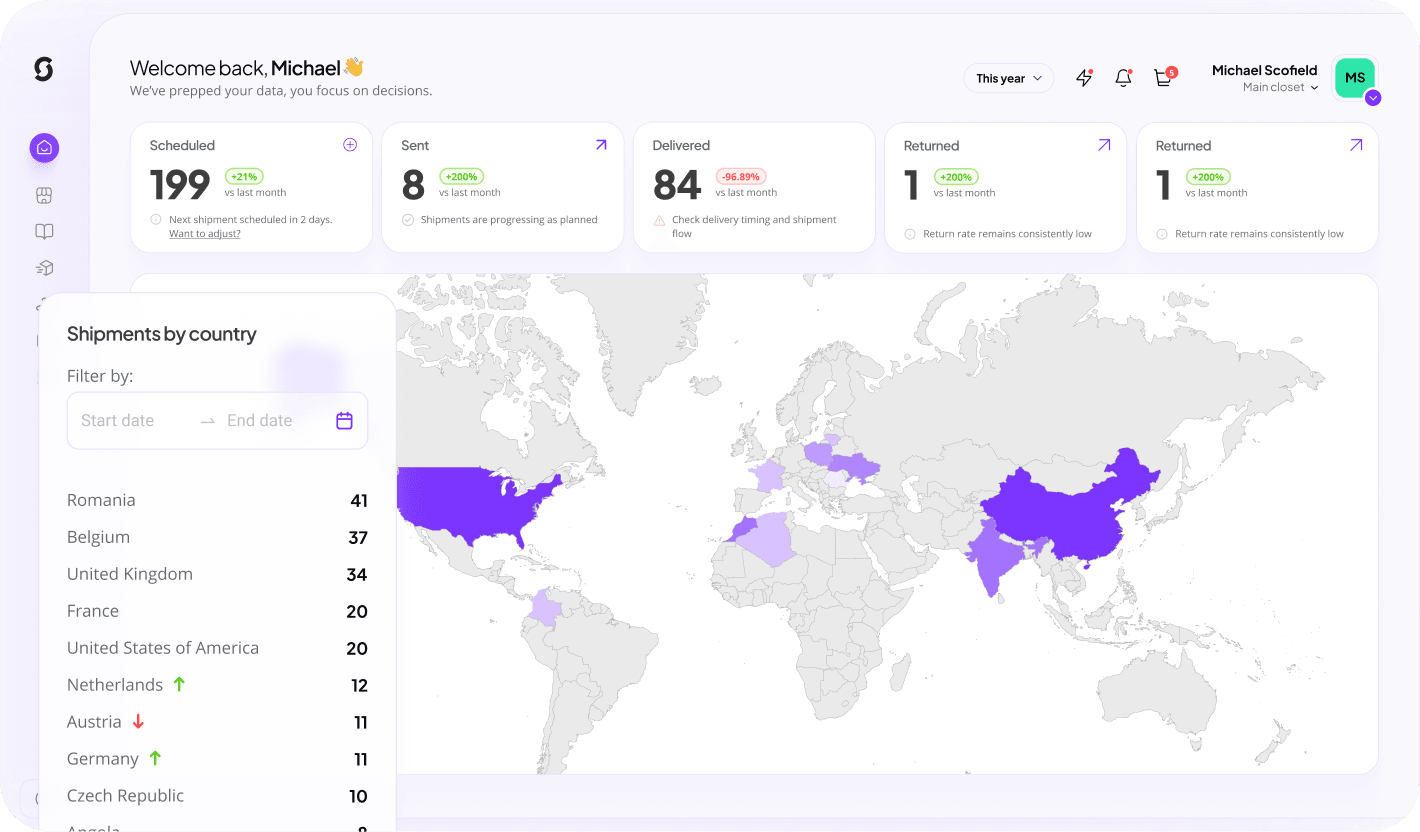
- reporting and campaign visibility
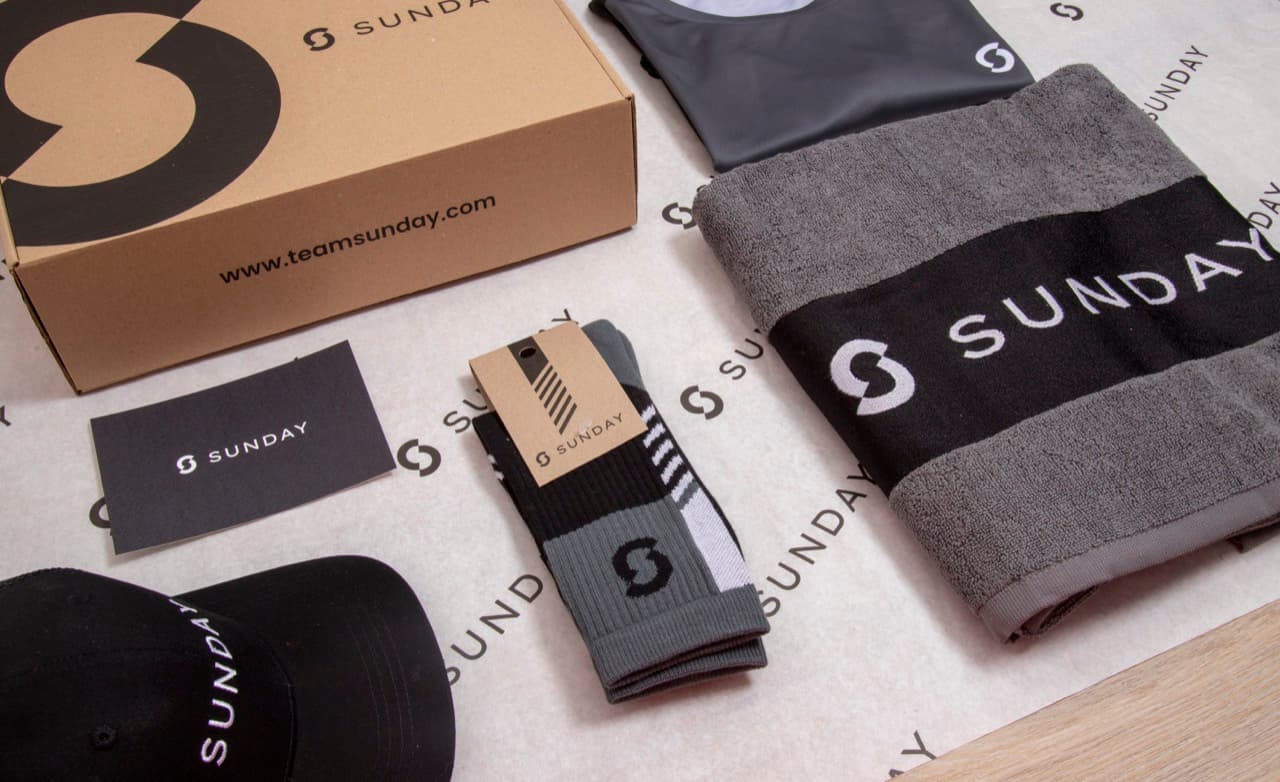
Sunday is a branded merchandise platform for companies that want to manage swag, corporate gifting, redeem pages, warehousing, inventory, and global fulfillment in one place. Marketing, sales, HR, events, and partner teams use Sunday to launch branded merch campaigns, send employee welcome kits, follow up after events, run ABM gifting campaigns, and let recipients claim gifts through branded redeem pages.
Why sending merch manually becomes a problem
Most companies do not start with a merchandise problem. They start with a simple moment.
A new employee joins. A customer reaches an important milestone. A sales prospect attends an event. A partner needs co-branded materials. A marketing team wants to follow up after a conference. An HR team wants to create a better onboarding experience.
The first campaign is usually manageable. The problems appear when merch becomes recurring, international, or cross-functional.
- addresses collected manually through forms, spreadsheets, or email
- missing sizes, wrong product choices, or outdated recipient details
- office storage rooms filled with boxes
- no clear view of remaining stock
- different departments ordering the same items separately
- inconsistent branding across products and regions
- high shipping costs and customs complexity
- too much time spent on admin instead of campaign strategy
- no clear reporting on who received what
The result is a frustrating experience for everyone involved. Recipients do not get a smooth branded experience. Internal teams lose time. Merchandise becomes an operational burden instead of a brand-building tool.
What is a redeem page?
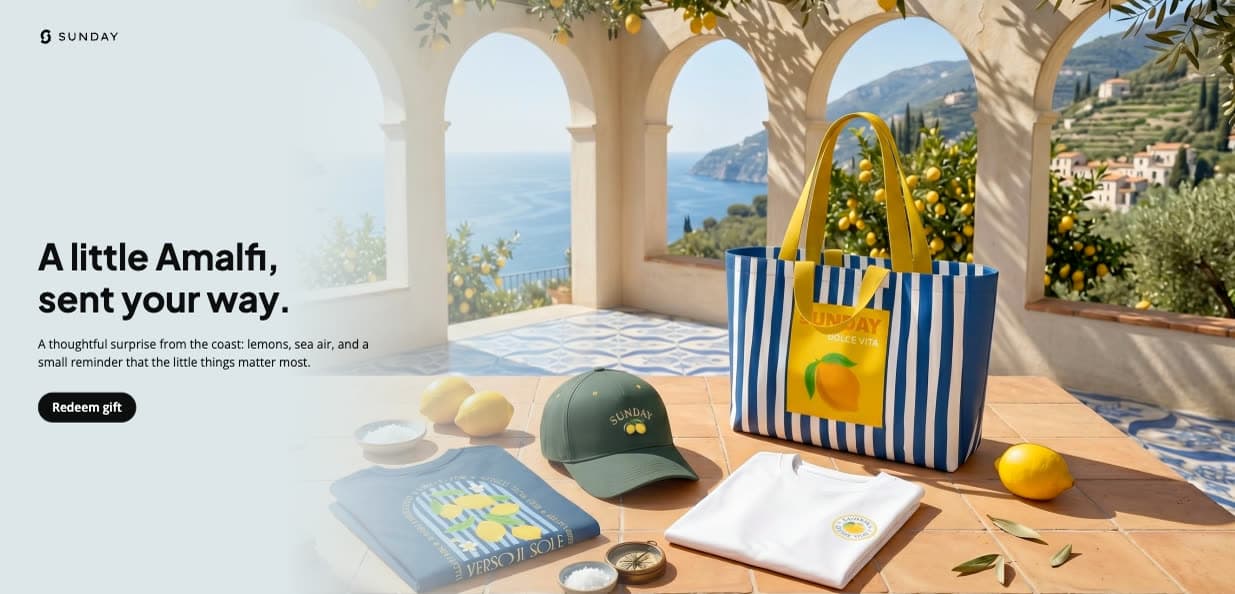
A redeem page is a branded landing page where recipients can claim merchandise or gifts by choosing their preferred item, size, color, and delivery address.
Companies use redeem pages to send branded merchandise without manually collecting recipient details. Instead of asking people to fill in spreadsheets or send their size by email, you send them a redeem link. The recipient opens the page, chooses from the available options, enters their details, and submits the request.
The company stays in control of the campaign. The recipient gets a simple, polished experience.
Redeem pages are especially useful for customer gifting, employee welcome kits, ABM and sales gifting, event follow-up, holiday gifting, partner and reseller campaigns, influencer and creator campaigns, internal merch drops, and community campaigns.
In simple terms: a redeem page turns merchandise distribution into a branded campaign experience.
How redeem pages work
- Create the campaign: Define the purpose: onboarding, customer gifting, event follow-up, ABM, partner enablement, holiday gifting, or a creator campaign.
- Select the products or packages: Choose a single item, a curated gift box, a welcome kit, or a selection of products recipients can claim.
- Design the branded page: Add the right logo, colors, campaign message, product visuals, and confirmation flow so the experience feels on-brand.
- Share the redeem link: Send the link through email, LinkedIn, CRM workflows, HR onboarding flows, event follow-up sequences, or sales outreach.
- Recipients claim their gift: The recipient chooses their preferred option, enters their details, and confirms the request without manual back-and-forth.
- Fulfillment happens in the background: The request connects to stock, warehousing, shipping, and tracking so the operational flow is handled behind the scenes.
Redeem pages vs. manual merch campaigns
| Manual merch campaign | Redeem page campaign |
| Collect addresses by email or spreadsheet | Recipients enter their own delivery details |
| Ask for sizes manually | Built-in size and product selection |
| High risk of mistakes | Cleaner recipient data |
| One-size-fits-all gifting | Recipients can choose what fits |
| Hard to manage stock | Connected to inventory and fulfillment |
| Time-consuming for internal teams | More automated campaign flow |
| Feels operational | Feels like a branded experience |
| Difficult to scale globally | Easier to manage across countries |
The difference is simple: manual campaigns put the workload on your team. Redeem pages shift the experience to a controlled, branded, self-service flow.
Swag management platform vs. corporate gifting platform vs. redeem page vs. swag store
These terms are often used together, but they are not exactly the same.
| Category | What it means | Best for | Where Sunday fits |
| Swag management platform | A system to manage branded merchandise production, storage, inventory, and shipping | Ongoing merch programs | Sunday helps companies manage merch end-to-end |
| Corporate gifting platform | A platform to send gifts to prospects, customers, employees, or partners | Relationship-building campaigns | Sunday supports gifting through branded merchandise and redeem pages |
| Redeem page | A branded page where recipients claim a gift and enter their details | Recipient choice and address collection | Sunday redeem pages connect directly to merch, stock, and fulfillment |
| Swag store | A shop-like experience for browsing or ordering branded items | Internal ordering and self-service merch | Sunday builds full custom internal or external swag stores |
For many companies, the best solution is not just a gifting tool or a product supplier. It is a platform that connects the full merchandise lifecycle: design, production, warehousing, campaign pages, recipient choice, fulfillment, and reporting.
What makes a good redeem page?
Not every form is a good redeem page. A strong redeem page should do more than collect an address. It should make the recipient feel like they are part of a thoughtful branded experience.
- Clear campaign message: The recipient should immediately understand why they are receiving the gift. Examples include: "Thanks for visiting us at the event," "Welcome to the team," "Choose your onboarding kit," or "A small thank-you from our team."
- Strong branding: A redeem page should match the company's visual identity. The logo, colors, product imagery, and tone of voice should feel consistent with the brand.
- Recipient choice: Choice makes merchandise more effective. Instead of sending everyone the same item in the same size, a redeem page can let recipients choose what they actually want.
- Mobile-first experience: Many recipients will open the redeem link on their phone. The page should be fast, simple, and easy to complete on mobile.
- Clean data collection: A good redeem page captures the details needed for fulfillment without unnecessary friction: name, email, address, country, size, product preference, and delivery information where required.
- Stock and fulfillment connection: A redeem page becomes much more powerful when it is connected to inventory. Recipients can only claim what is available, while the company keeps visibility over stock, shipments, and campaign progress.
- Global shipping support: For international teams, global delivery is one of the hardest parts of merch. A strong redeem page setup should connect to a fulfillment process that can handle different countries, address formats, customs requirements, and delivery tracking.
- Campaign tracking: The company should be able to see what happened after the link was sent, including claim rate, selected products, remaining stock, shipment status, and campaign completion.
Best use cases for redeem pages
- Customer gifting: Thank customers, celebrate renewals, recognize milestones, or strengthen VIP relationships with a branded claim experience.
- ABM and sales gifting: Send branded gifts to high-value prospects after events, demos, webinars, or executive outreach without awkward address collection.
- Employee onboarding: Let new hires claim their welcome kit, choose the right size, and enter their delivery address before their start date.
- Event follow-up: Send targeted merch to qualified leads, customers, speakers, or VIP attendees after a conference or webinar.
- Holiday gifting: Create a branded seasonal page where customers, partners, or employees can confirm their details or choose from curated options.
- Partner campaigns: Distribute approved merchandise to resellers, agencies, and local market teams while keeping brand control centralized.
- Influencer campaigns: Let creators claim packages, choose sizes, and enter shipping details without endless back-and-forth communication.
- Internal merch drops: Launch merch for rebrands, company anniversaries, culture initiatives, wellness challenges, and team celebrations.
Why recipient choice improves branded merchandise
A lot of branded merchandise fails because it is selected from the company's point of view, not the recipient's point of view.
The company thinks: "What do we want to give?" The recipient thinks: "Will I actually use this?"
That gap matters. Recipient choice improves branded merchandise because people are more likely to use something they selected themselves. A hoodie in the wrong size will stay in a closet. A bottle someone does not like will be ignored. A generic item may be forgotten.
But when people can choose the product, size, color, or delivery location, the experience becomes more personal. That leads to higher perceived value, less waste, fewer wrong shipments, better product usage, stronger emotional connection, and better brand visibility over time.
"The best merchandise is not the item a company wants to send. It is the item the recipient actually wants to use."
How Sunday's redeem pages help companies launch better merch campaigns
Sunday's redeem pages help companies turn branded merchandise into a smooth, measurable campaign experience.
Instead of collecting addresses, sizes, and preferences manually, teams can launch a branded page where recipients claim their gift in a few clicks. Sunday connects the page to the wider merchandise flow: product selection, design, production, warehousing, stock management, fulfillment, and global delivery.
With Sunday, companies can use redeem pages for customer gifting campaigns, ABM and sales gifting, employee welcome kits, event follow-up, holiday gifting, partner and reseller campaigns, influencer and creator campaigns, internal merch drops, and community activations.
Sunday is especially useful for companies that want more than a one-off gift. It is built for teams that need a repeatable branded merchandise system across departments, countries, and campaign types.
From "sending swag" to launching branded campaigns
The biggest shift is not operational. It is strategic.
Traditional merch management is about getting products from one place to another. Modern branded merchandise is about creating touchpoints that support business goals.
A customer gift can support retention. An onboarding kit can support employer branding. An event follow-up gift can support sales pipeline. An ABM gift can help open doors. A partner kit can support indirect growth. A creator package can support brand awareness. A holiday gift can strengthen relationships.
Redeem pages help make those moments easier to launch, easier to manage, and easier to scale. They turn merchandise from a manual task into a campaign experience.
How to get started with redeem pages
Before launching a redeem page campaign, walk through these five questions:
- Who is the campaign for? Define the audience first. Is the campaign for customers, prospects, employees, partners, event attendees, or creators?
- What moment are you supporting? Merchandise works best when it is attached to a clear moment: welcome, thank-you, renewal, event follow-up, product launch, rebrand, celebration, milestone, or activation.
- What should recipients be able to choose? Decide how much choice you want to offer. Some campaigns only need size selection. Others may offer multiple products, colors, packages, or regional options.
- Where will the products be stored or produced? If the campaign is ongoing, it often makes more sense to store merchandise in a managed warehouse and connect the campaign to available stock.
- How will you measure success? Useful metrics may include claim rate, delivery completion, product selection, stock usage, event follow-up conversion, employee onboarding completion, customer engagement, campaign cost per recipient, and reorder needs.
Launch branded merchandise campaigns without the manual work
With redeem pages, companies can create a better experience for recipients and a simpler workflow for internal teams. Recipients claim the right product, enter their own details, and receive a branded experience from the first click to final delivery.
Sunday helps companies design, produce, store, manage, and ship branded merchandise through one central platform, with redeem pages built for customer gifting, employee onboarding, ABM campaigns, event follow-up, partner campaigns, and global merchandise distribution.
See your brand on merch. Instantly.