
Custom aprons in bulk get materially cheaper per unit as quantity rises, so a hospitality rollout, a chain uniform or a large event campaign lands at a much better price than a small order. Four things set the cost: the apron model, the material, the decoration and the quantity. Ordering early matters almost as much as ordering volume, because more runway unlocks more efficient production and avoids rush surcharges. Plan ahead, standardise the spec, and order enough at once.
Aprons are a niche product, but at volume they behave like any other piece of branded workwear: the more you order, the less each one costs. The mistake companies make is ordering late and small, then paying a rush premium on a tiny run. The better play is to forecast what you need across the year, lock the spec, and order in one efficient batch. This guide breaks down exactly what drives the price and how to get the most apron for the budget. Browse styles and live pricing on the custom aprons page, or see the full range in the catalog.
The four cost drivers
The price of a custom apron in bulk comes down to four variables. Change any one and the unit price moves. Get all four right together and you get a premium apron at a sensible cost.
| Driver | What it changes | How much it moves price |
|---|---|---|
| Quantity | Unit price across the whole run | The biggest single lever |
| Model | Bib, bistro, waist, barista, denim, leather-look | Moderate to high |
| Material | Canvas, denim, recycled PU leather, weight and structure | Moderate |
| Decoration | Embroidery, leather label, print, branded panels | Moderate, and it sets perceived quality |
Exact figures depend on the model, material, decoration and quantity you choose, so the catalogue and live pricing are the source of truth. What follows is how each driver behaves so you can plan a run that lands where you want it.
Why quantity is the biggest lever
Quantity is one of the biggest price drivers, full stop. Aprons get cost-effective at volume, which is exactly why they suit hospitality rollouts, food-chain uniforms, large retail campaigns, promo gifting and event activations. Setup and decoration costs spread across more units, and production runs more efficiently per piece. A run of a few hundred aprons for a chain lands at a very different unit price than a one-off order of a dozen.
The practical takeaway: if you know you will need aprons across several sites, several events or several quarters, order them together rather than in dribs and drabs. One larger order beats five small ones on price every time. If your need is spread over time, you can still order in one batch and store the stock, then ship as needed through distribution.
Pockets, panels and hardware are part of the model spec. Standardise them across a bulk run so every site or event gets the same apron at the same price.
Model and material
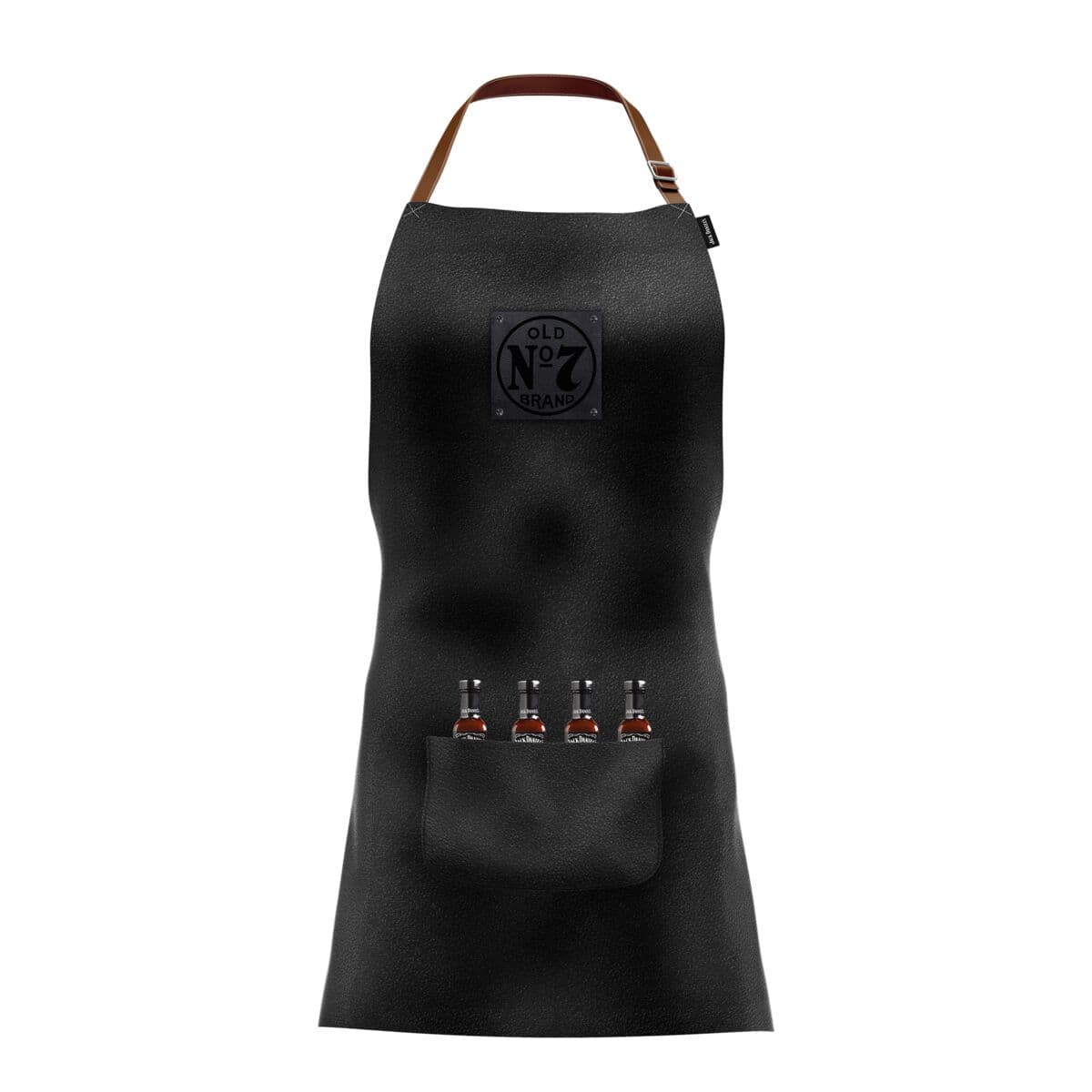
Sunday offers denim, bistro, bib, waist, barista, kitchen, leather and leather-look aprons. There is no single cheapest or best model. The right one depends on the wearer's role, the environment, the brand style and whether it is a uniform or a gift. A simple waist apron costs less than a structured denim or leather-look apron, but the heavier models read as more premium and last longer, so the value-per-wear can be better.
Material follows the same logic. Fabric needs enough weight and structure to feel protective and substantial, which is part of what separates a premium apron from a cheap one. Denim brings character and wears well over time. Recycled PU leather gives a leather look without traditional leather. Heavier, better materials cost more per unit but survive the frequent, often hot, washing that hospitality aprons go through, so they are rarely the place to cut. For the full spec decision, see the buyer's guide.
Straps are the clearest quality tell. Thick, solid straps cost a little more but separate a premium apron from a cheap one across a whole run.
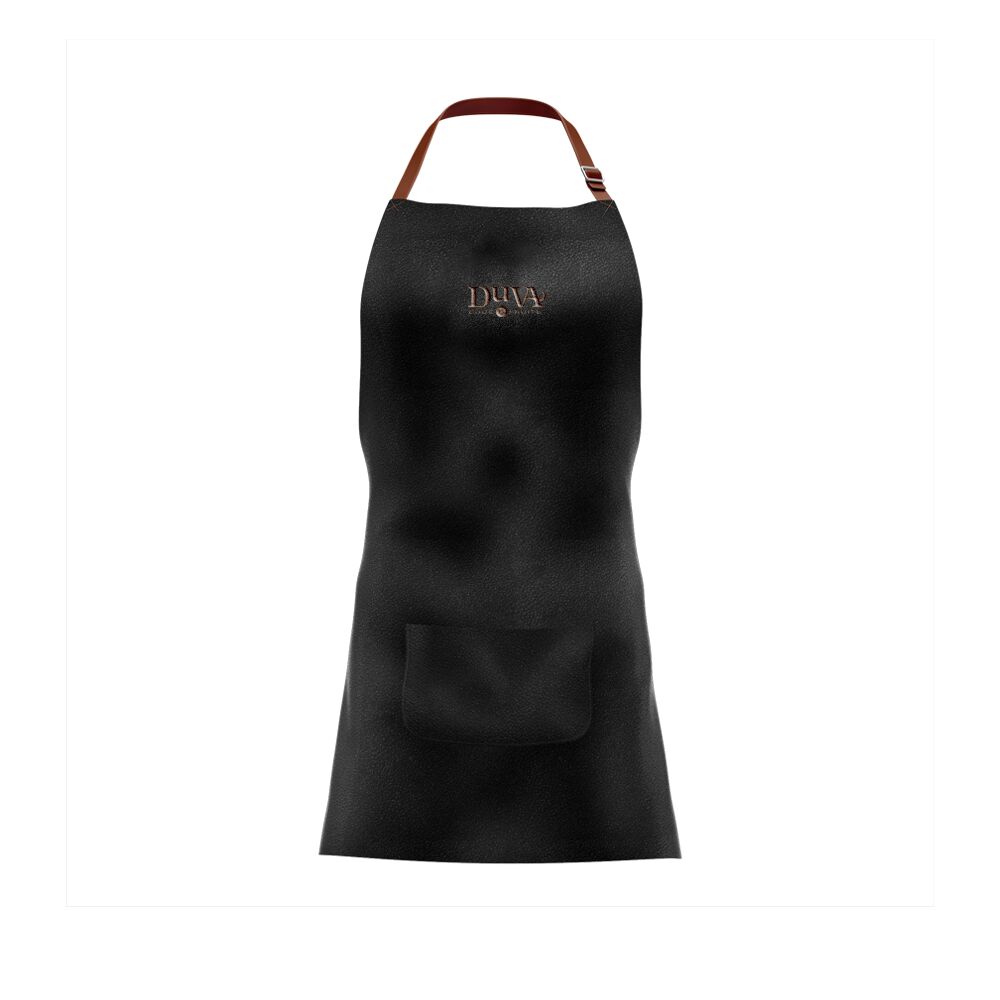
A leather-look apron costs more per unit than a plain waist apron, but it carries a premium feel that suits gifting and high-end hospitality.
Decoration and its cost
Decoration affects both price and perceived quality, and it is where a cheap choice can undermine an otherwise solid apron. Aprons face food, drinks, stains and frequent hot washing, so the decoration has to survive demanding conditions.
- Embroidery is durable, visible and professional, holds up to washing and fits most fabrics. It is the default for daily hospitality use and the safest choice at volume.
- Leather or leather-look labels give a premium craft finish, especially on denim, BBQ, barista and gifting aprons. They cost more but turn a solid apron into a high-value product.
- Printing can work for large or photographic artwork, but execution is critical. A cheap print on a good apron undermines the whole garment.
- Branded construction such as contrast-colour pockets, custom straps or fabric panels builds branding into the apron itself. It adds cost but reads as designed rather than a logo slapped on a blank.
For the full comparison, read our guide on apron printing vs embroidery.
Lead time and ordering early
Lead time matters as much as volume. Ordering early unlocks more efficient production options, and that can be a significant unit-price difference. Rush production is expensive and limits your choices on material and decoration. The strategy is simple: plan early, order enough volume, avoid rush production, and choose decoration and materials carefully.
This is also where bundling helps. If you have events or rollouts coming over the next three to six months, forecast the aprons you will need, order them in one bulk run for a single discount, and store them at Sunday. Then ship to each site or event in one to two days when you need them. You get the volume price and the deadline safety at once. See how it works.
MOQ and how to think about volume
Minimum order quantity, lead time and exact price all come from the catalogue and depend on the model, material, decoration and quantity. Rather than chase a single magic number, think in bands: a small uniform run for one venue, a mid-size rollout across several sites, and a large campaign or chain order. Each band lands at a better unit price than the one below it.
| Order type | Typical use | Unit price trend |
|---|---|---|
| Small run | One venue, a pop-up, a small gifting batch | Highest per unit |
| Mid rollout | Several sites, a campaign, a team kit | Lower per unit |
| Large campaign | Chain uniform, food-service rollout, big activation | Best per unit |
If your real need sits in the small band but you expect to repeat it, treat it as a larger order spread over time: one bulk run, stored and shipped as needed. You buy at the better band and avoid re-running setup costs.
How to bring the unit price down
- Order enough volume in one run rather than several small orders.
- Plan early so production has runway and you skip rush surcharges.
- Standardise the model and decoration across sites or events.
- Choose embroidery for daily-use aprons; reserve leather labels for premium and gifting runs.
- Forecast across quarters, order in bulk, store at Sunday and ship per event.
- Match the material to the use so you are not over-spec for a giveaway or under-spec for a uniform.
Ready to price a run? Browse styles on the custom aprons page and preview your design in your colours with the free apron mockup generator to see exactly what you are ordering before you commit. The platform shows live pricing as you change quantity and spec.
Custom aprons in bulk: questions answered
How much do custom aprons cost in bulk?
The exact price depends on the model, material, decoration and quantity, so live pricing in the catalogue is the source of truth. The clear pattern is that aprons get materially cheaper per unit as quantity rises. A small one-venue run sits at the highest unit price, a mid-size rollout lands lower, and a large chain or campaign order gets the best price per apron. Ordering early also avoids rush surcharges.
What is the minimum order quantity for custom aprons?
MOQ depends on the model and decoration you choose and is shown in the catalogue. Rather than chase one number, think in bands: a small run for a single venue, a mid rollout across several sites, and a large campaign order. Each band lands at a better unit price than the one below it. If your need is small but recurring, order one larger batch and store it for shipping over time.
What drives the price of a custom apron?
Four things: quantity, model, material and decoration. Quantity is the biggest lever because setup and decoration costs spread across more units. Model and material set the base cost, with heavier denim and leather-look aprons costing more than a plain waist apron. Decoration adds cost and sets perceived quality, with embroidery as the durable default and leather labels as the premium finish.
How does lead time affect the price?
Ordering early unlocks more efficient production options, which can be a significant unit-price difference. Rush production costs more and limits your choices on material and decoration. The strategy is to plan ahead, order enough volume, avoid rush production, and choose decoration and materials carefully. The same apron at the same quantity costs less when you give production runway.
Can I order aprons in bulk now and ship them later?
Yes, and it is the smart move for hospitality and event campaigns. Forecast the aprons you will need over the next three to six months, order them in one bulk run for a single discount, and store them at Sunday. Then ship to each site or event in one to two days when you need them. You get the volume price and deadline safety together.
Which decoration is most cost-effective at volume?
Embroidery is the most cost-effective durable choice for daily-use aprons because it survives frequent hot washing and looks premium up close. Reserve leather or leather-look labels for premium and gifting runs where the higher cost is justified by a high-value product. Printing can work for large artwork but only with good execution, since a cheap print undermines a solid apron.
Are custom aprons worth ordering in bulk for events?
Yes. Aprons are strong event merchandise for food activations, festivals, tastings and BBQ campaigns, and they get cost-effective at volume. Order the run you need across a season in one batch, store it, and ship to each event. The apron travels well, photographs well and, unlike a cheap giveaway, is the kind of product people keep and use.
Keep reading: custom aprons
Price your apron run in 30 seconds
Pick a model, drop in your logo, choose embroidery or a leather label, and see live pricing change with quantity before you order.
Get free designs