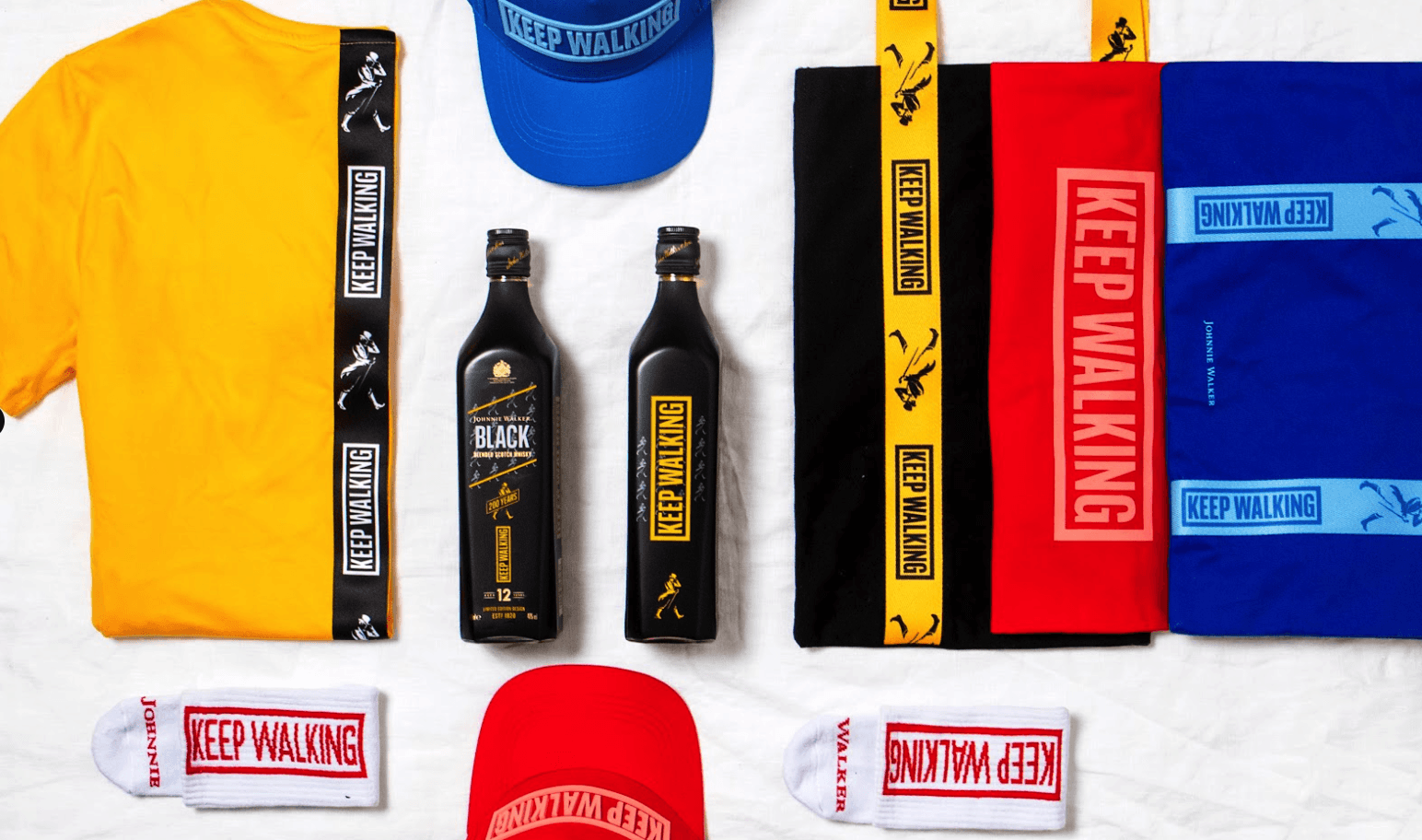
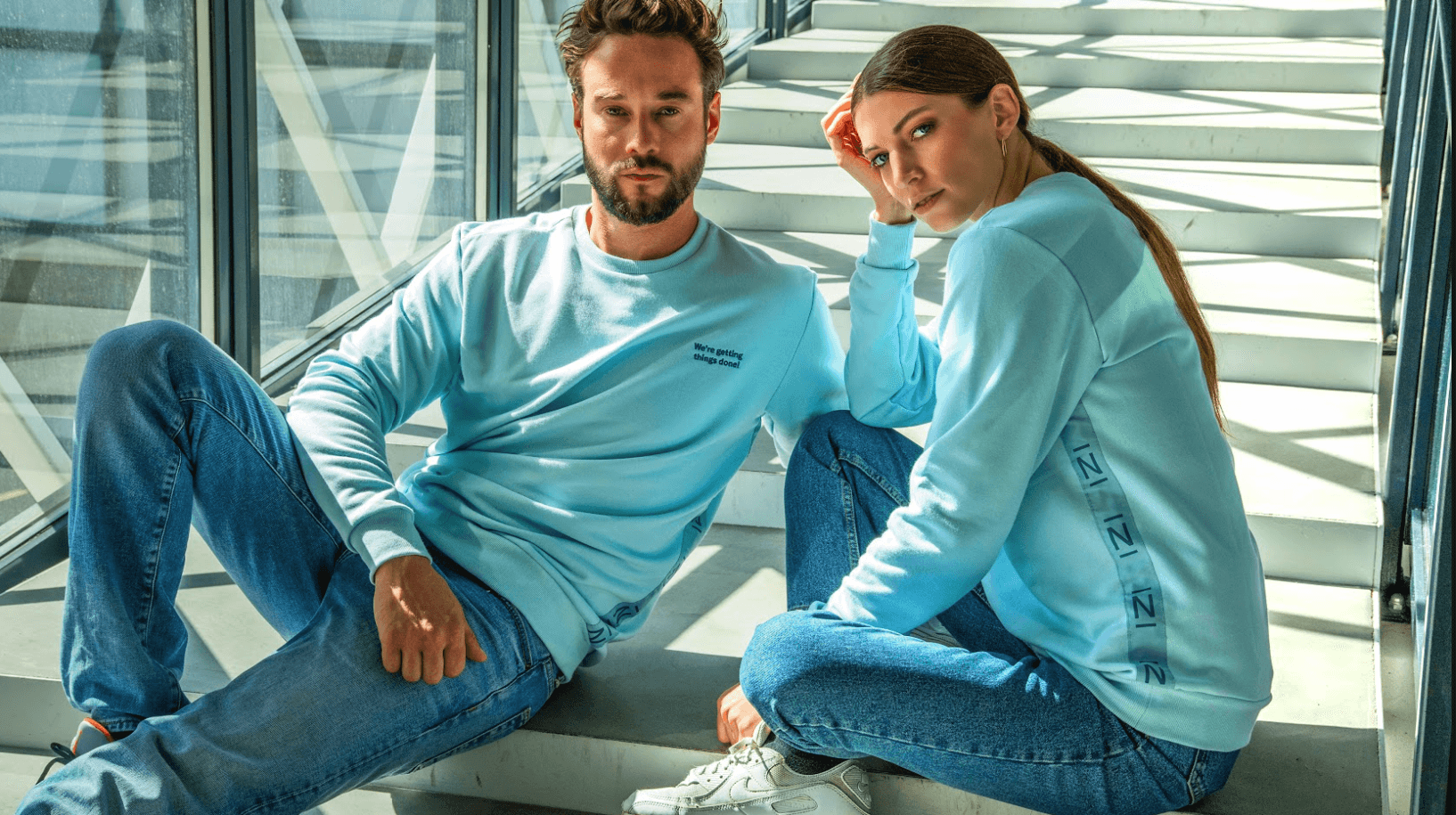

The best custom sportswear designs embrace what the category is built for: full-surface colour, gradients, brand patterns, and names and numbers. Because they are made with full-colour sublimation, the design becomes part of the fabric, so a bold all-over pattern costs no more than a plain logo. Strong examples share four traits: they commit to the brand colours, they use the whole garment as a canvas, they add names and numbers for a real-team feeling, and they match the technical level to the activity.
Why sportswear rewards bold design
Most branded apparel asks you to be restrained. A logo on a chest, a mark on a sleeve, a colour that stays inside the lines. Sportswear is the opposite. It is the one category where bright colours, gradients, patterns and bold graphics feel natural rather than loud. The reason is the technique: fully custom sportswear is made with full-colour sublimation, where the ink becomes part of the fabric instead of sitting on top as a printed layer.
That changes the economics of design. With separate print placements, every extra colour or position adds cost. With sublimation, a multi-colour, full-surface pattern does not mean paying per logo or per position. So the designs that work are the ones that lean into that freedom instead of treating a jersey like a corporate polo. See the full custom sportswear range for the products behind these examples.
Team kits and jerseys
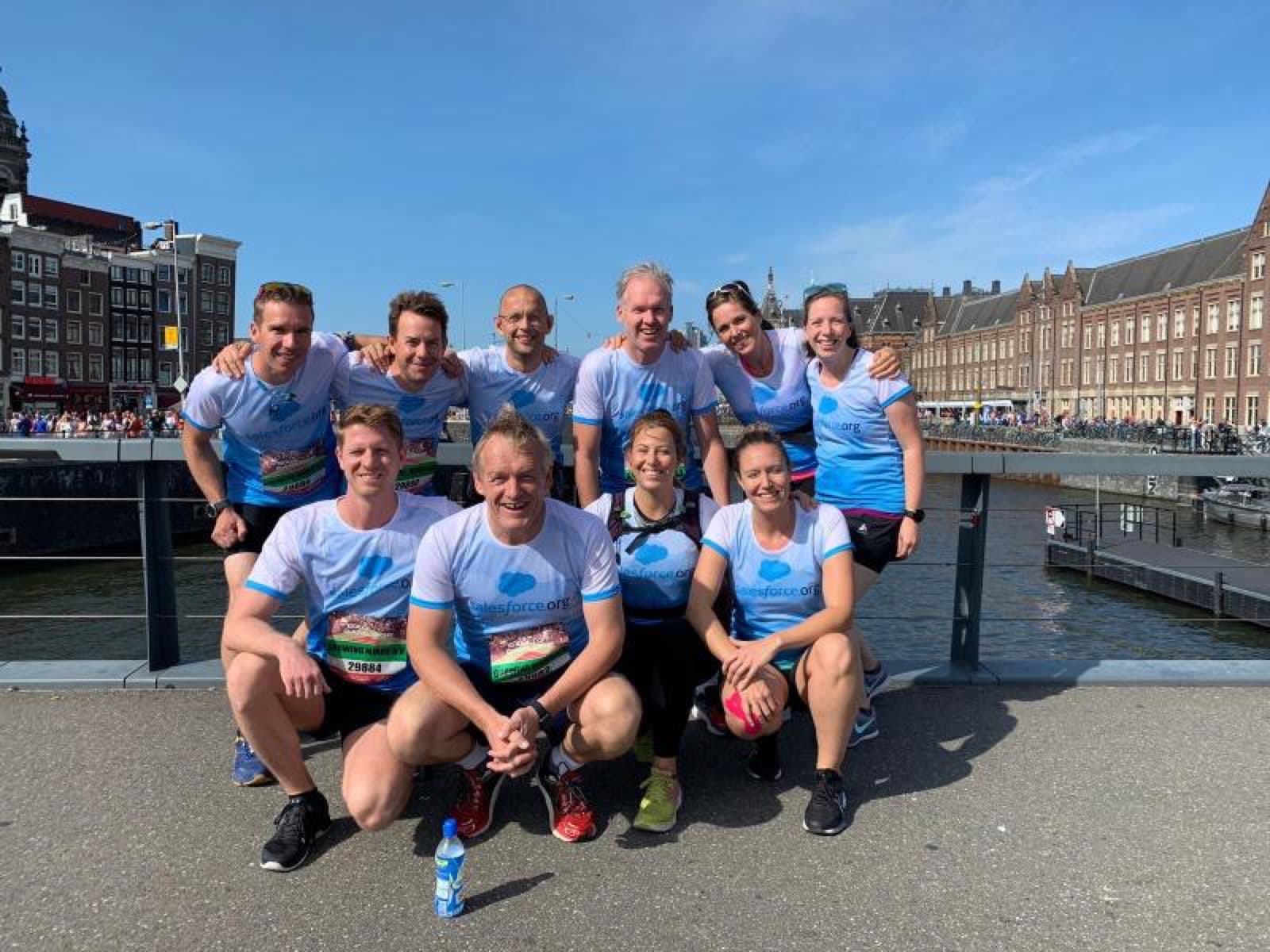
A coordinated team kit is the clearest expression of the category. When a company fields a running team, a football side or a general sports-day squad in a single distinctive jersey, the effect is immediate: a group of individuals reads as one team. The strong designs here do not hide the brand, they build the whole garment around it.
What works: a dominant brand colour across the body, a secondary colour on panels or sleeves, the logo integrated into the design rather than stamped on as an afterthought, and names or numbers on the back. The result feels designed, not decorated.
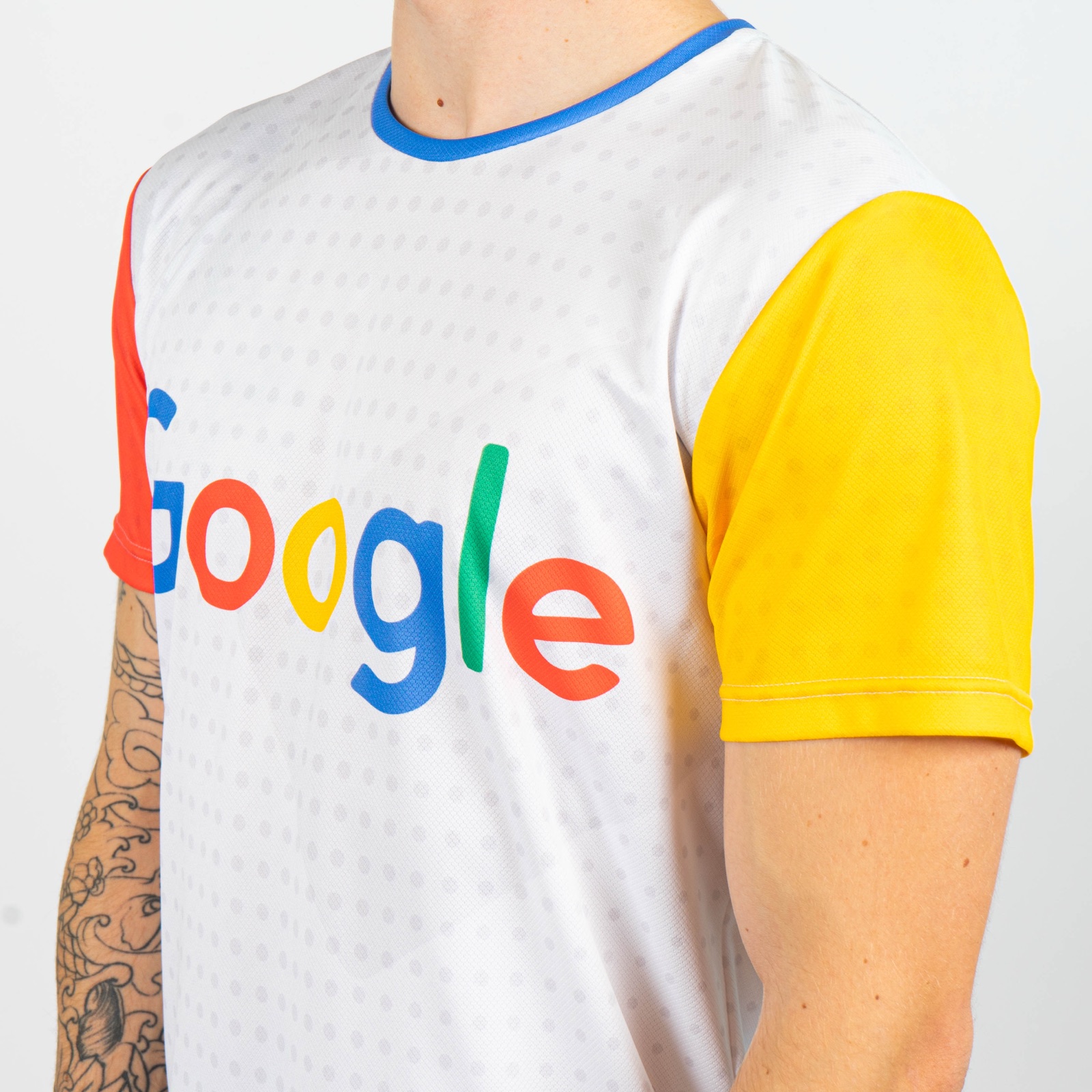
A team kit that commits to the brand colours across the whole garment reads as one team the moment the group stands together.
Cycling jerseys
Cycling is where custom design goes furthest, and it is a meaningful B2B niche, especially in Belgium where company rides, sponsored events and route challenges are common. A cycling jersey is almost all surface, front, back, sides and sleeves, so it is the perfect canvas for gradients, all-over patterns and route or event references.
The best cycling designs use that surface deliberately: a gradient that flows from shoulder to hem, a repeating brand pattern, sponsor blocks arranged as part of the composition rather than scattered, and a colourway that stays readable in a fast-moving group. Fit matters as much as graphics here. Decide up front whether the group is entry-level leisure, comfortable club or technical pro, and design the fit to match, a forgiving cut for a casual company ride, a race fit for a serious challenge.
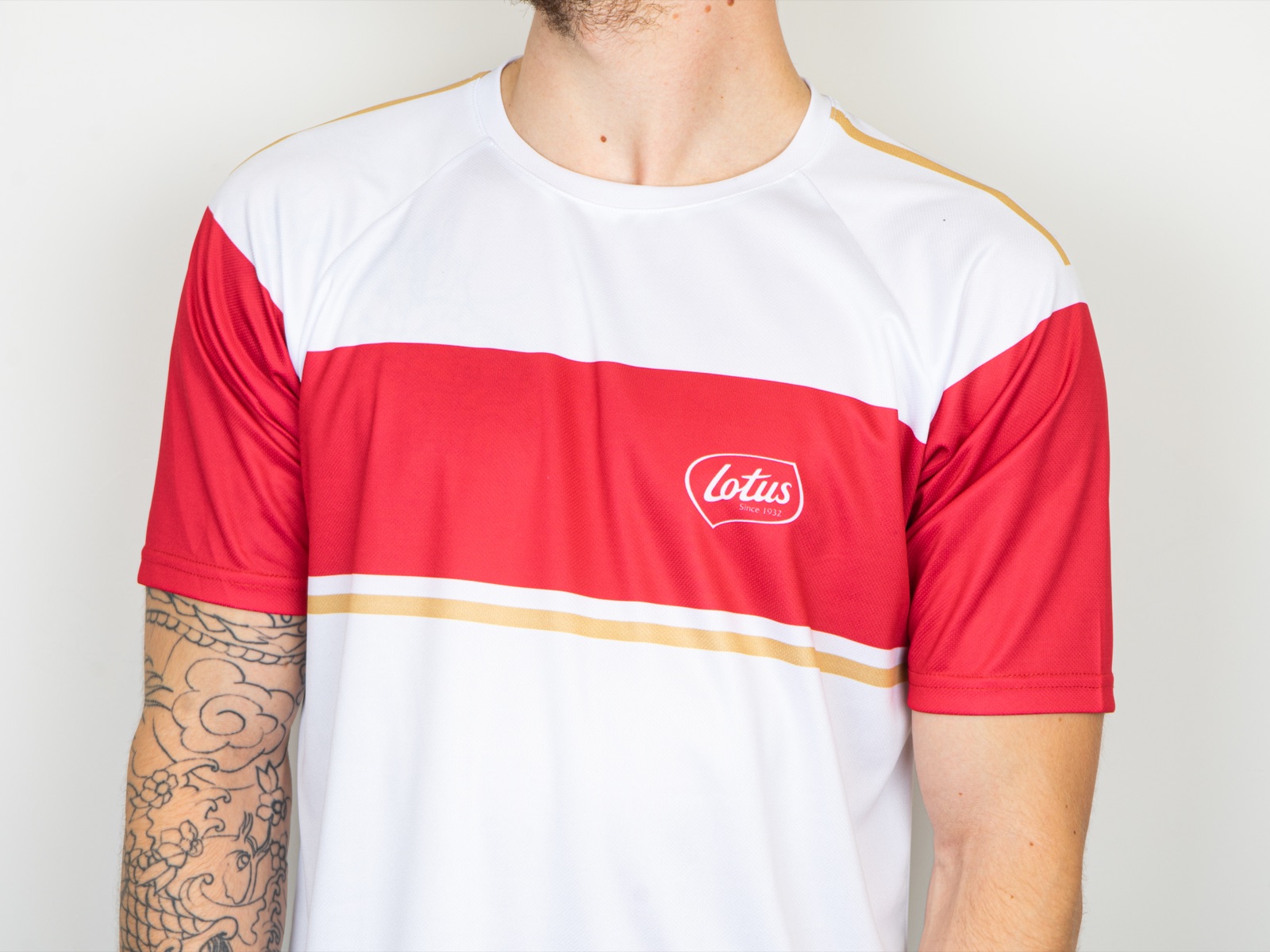
Cycling jerseys are almost all surface. A gradient or all-over pattern that flows across the whole garment is exactly what sublimation is built for.
For a design this expressive, the technique is doing the heavy lifting. It is worth understanding why the production order matters so much, which we cover in the sportswear buyer's guide.
Running shirts and wellness kit
Running kit for marathons, ten-milers, company 5ks and wellness campaigns has its own design logic. The graphics can still be bold, but the priority is a light, breathable shirt that performs, so the design should not fight the fabric. Clean brand colours, a strong front graphic, an event or route reference, and reflective detail for low-light running.
The examples that work treat running kit as something people will actually train in, not a one-off giveaway. A recognisable team colour turns a scattered group of runners into a visible company presence at an event, which is exactly the brand moment a wellness campaign is looking for.
Tracksuits and coordinated sets
Tracksuits and warm-up sets sit between performance and lifestyle. They are for the coordinated, relaxed look, arrivals, warm-ups, team photos and the social side of a sports event. Here the design can be more graphic and more fashion-led, because the garment is not being pushed to its performance limit.
What works: a matched top and bottom in the brand palette, a bold panel or stripe, and a clean logo placement that looks good in photos. A coordinated set is a strong content generator, it photographs well and it signals that a company invested in its people rather than handing out a single tee.
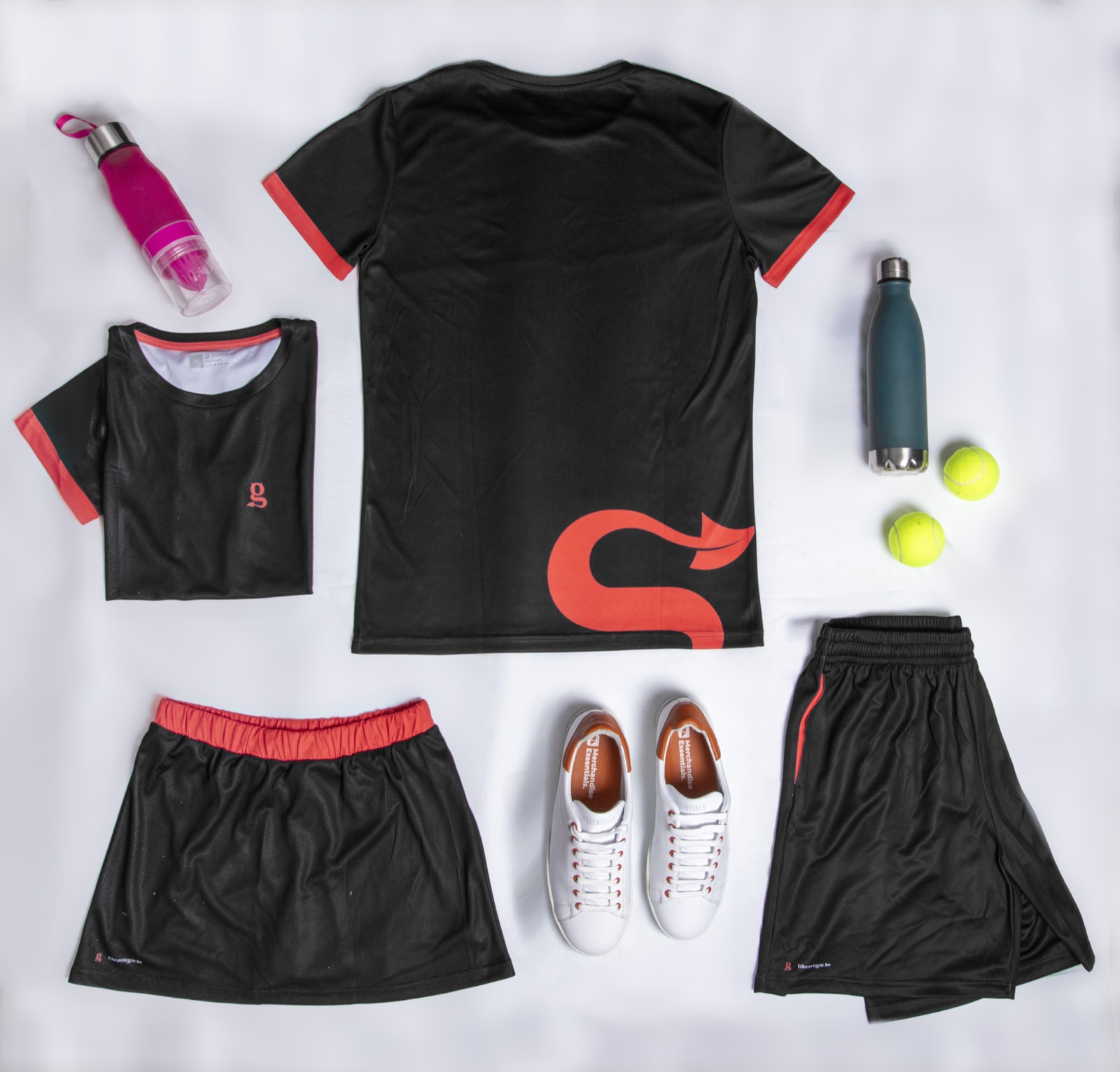
Custom tennis apparel shows how a coordinated set in the brand palette photographs well and reads as one team.
What the best designs have in common
Across every category, the designs that work share the same handful of moves. Use this as a checklist when you brief your own.
- They commit to the brand colours. The kit is unmistakably one company, not a generic sports garment with a small logo.
- They use the whole surface. Gradients, all-over patterns and panel designs, not a single chest print.
- They add names and numbers. Names, numbers, departments, event names and office IDs create a real-team feeling and lift perceived value.
- They match the technical level to the activity. Bold on graphics, right on fabric and fit for what people will actually do.
- They avoid embroidery on lightweight kit. It adds weight and stiffness, so decoration is sublimated or added with lightweight, performance-compatible methods.
| Garment | Design move that works | Watch out for |
|---|---|---|
| Team jersey | Dominant brand colour, panelled secondary, names and numbers | A small logo on a stock jersey that reads as generic |
| Cycling jersey | Gradient or all-over pattern across the full surface, composed sponsor blocks | A pro race fit on a mixed, casual group |
| Running shirt | Clean brand colour, strong front graphic, reflective detail | Heavy decoration that fights a light, breathable fabric |
| Tracksuit | Matched set, bold stripe or panel, photo-ready logo placement | Over-teching a garment meant for lifestyle use |
Names and numbers are the detail that turns a good jersey into a real team kit. They add a little cost but a lot of perceived value.
Create your own
The quickest way to see what a bold design looks like on your kit is to try it. Preview a jersey, cycling kit or running shirt in your colours and patterns in the free sportswear mockup generator, then refine from there. Minimums start from around 10, and because sublimation carries no per-colour charge, a small team gets the same expressive, full-surface result as a large order.
When you are ready to move from mockup to production, browse the full catalog or see how it works.
Keep reading: custom sportswear
Design your team's kit
Create a free account and preview a jersey, cycling kit or running shirt in your brand colours and patterns with live pricing in 30 seconds.
Get free designs