For custom sportswear, choose sublimation for fully custom kit, print for ready-to-wear technical apparel, and avoid embroidery on lightweight sportswear. Sublimation dyes the design into the fabric, so it never cracks, peels or adds weight, and a full-surface pattern costs no more than a logo. Print suits stock garments with simple graphics. Embroidery adds weight, reduces flexibility and can irritate the skin during movement, so use silicone patches, lightweight badges or reflective prints where a raised mark is needed.
Three methods, not two
Most decoration guides pit printing against embroidery. For sportswear that framing misses the method that matters most: sublimation. Sportswear is a technical product, so the decoration has to survive sweat, stretch and washing without adding weight or killing breathability. That rules some options in and others straight out.
So think in three lanes. Sublimation for fully custom kit designed in your brand. Print for stock technical garments that just need a logo or simple graphic. Embroidery for structured items like caps and jackets, but not for lightweight jerseys and running tops. Get the lane right and the rest of the decisions follow. Browse what fully custom looks like across the custom sportswear range.
Sublimation: the default for fully custom
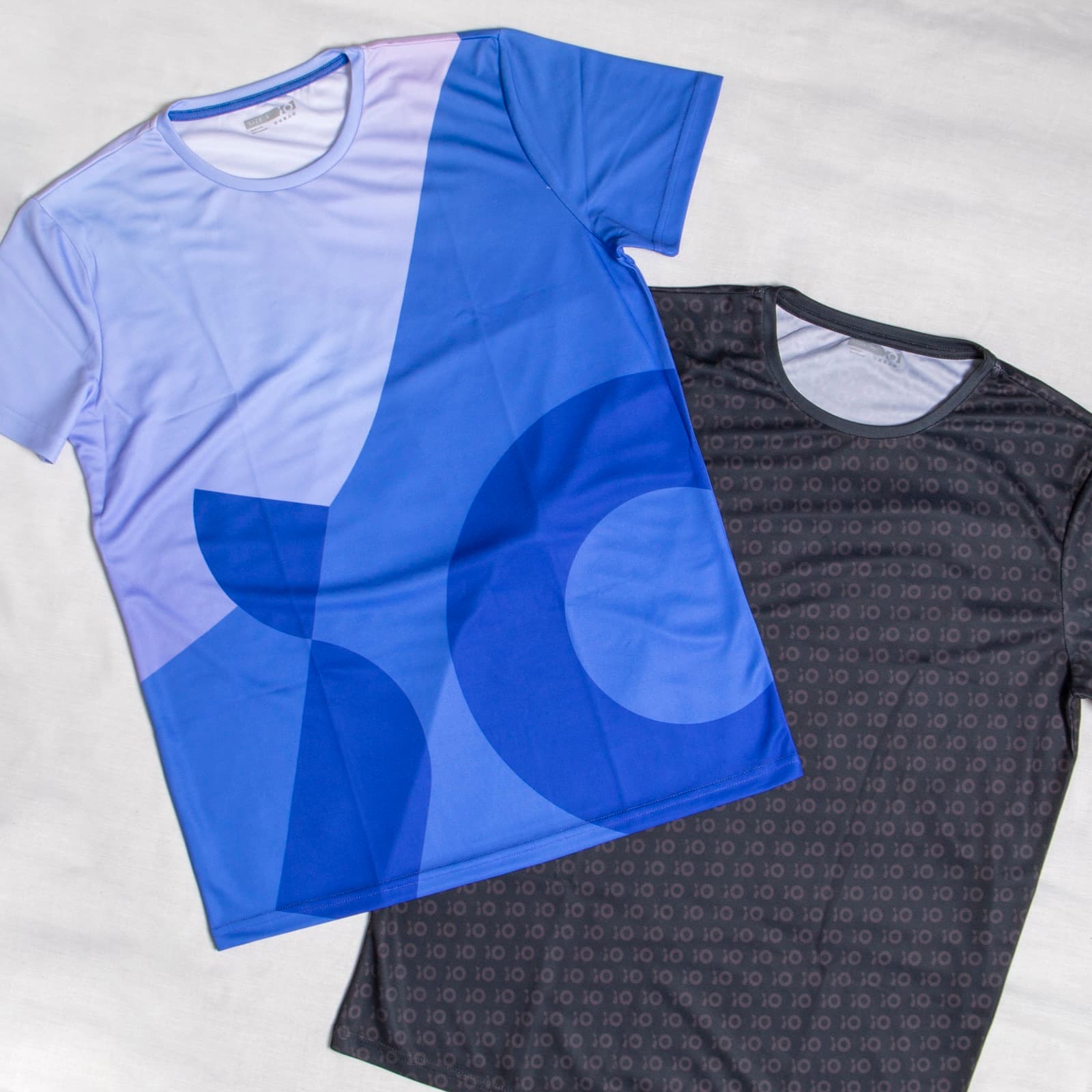
Full-colour sublimation is the strongest technique for fully custom sportswear. The design becomes part of the fabric rather than a layer sitting on top. That gives you unlimited colour, gradients and all-over patterns with no decoration layer to crack, peel or wash off, and no loss of technical performance.
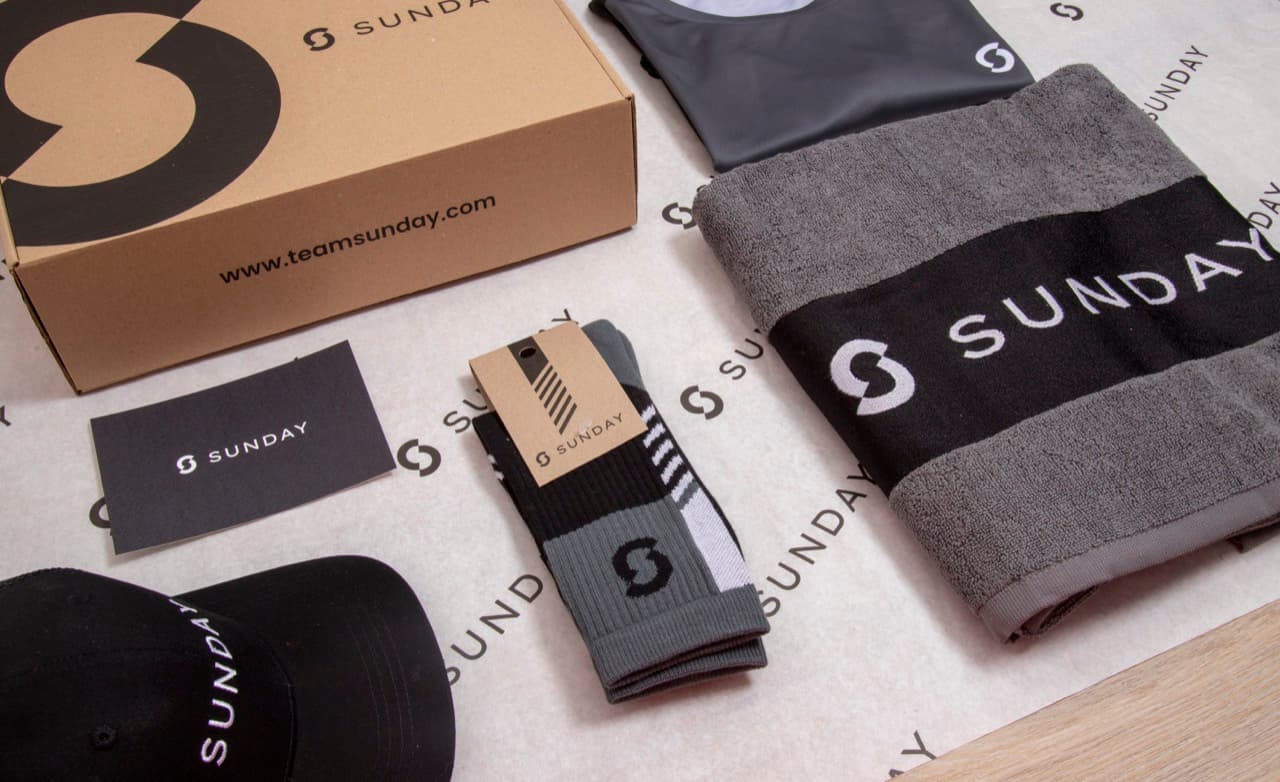
The detail that separates premium kit from cheap kit is the production order. Sublimate the fabric first, then cut the panels, then sew. Printing a finished garment leaves white cracks and gaps at seams, folds and stretch points. Sunday prints before cutting and sewing, so patterns continue cleanly across the whole garment. When you evaluate any supplier, this is the one thing to verify.
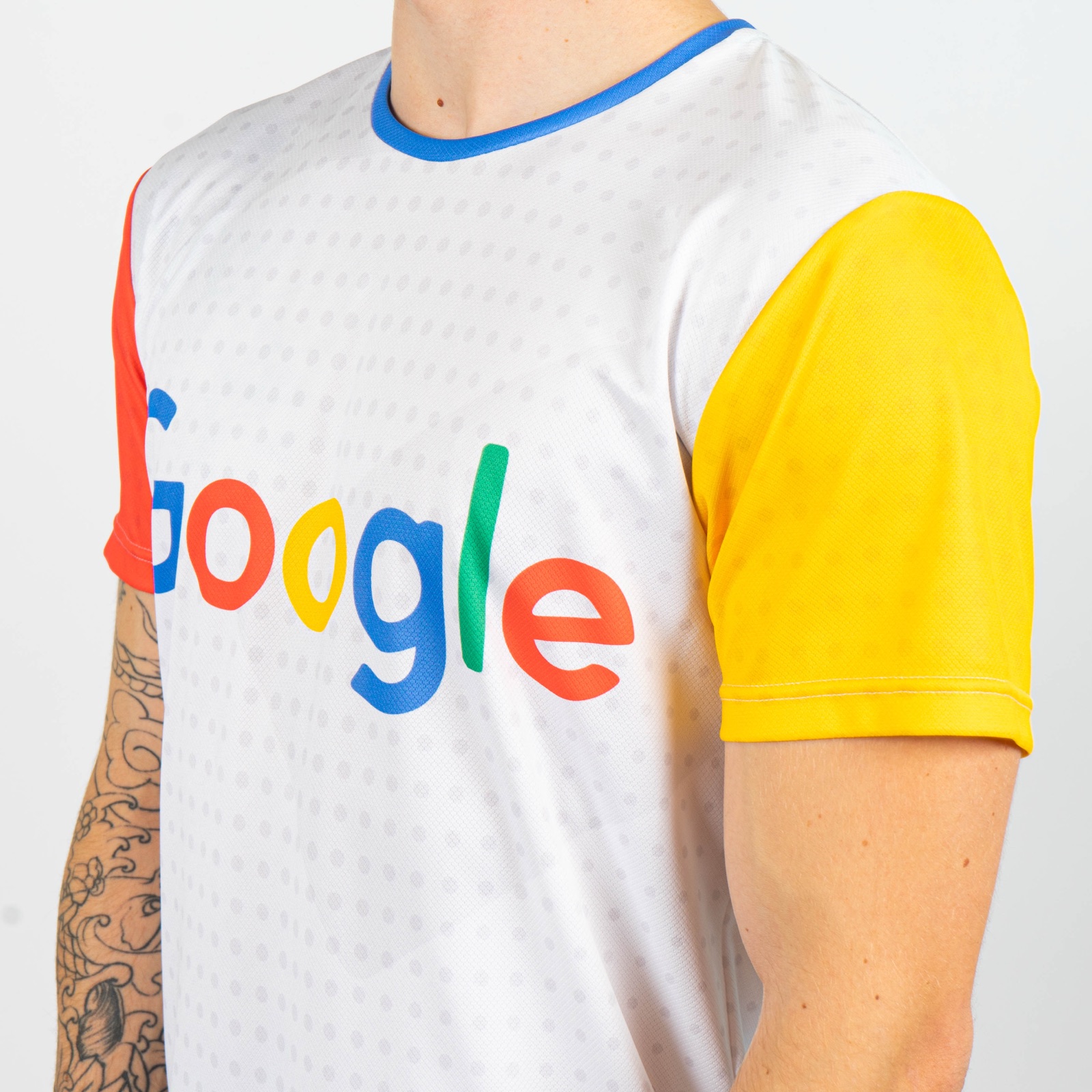
A Google-branded custom sports jersey, fully sublimated so the design is dyed into the fabric with nothing to crack or peel.
Print: for ready-to-wear technical apparel
Print is the right choice when you start from a stock technical garment and only need a logo or a simple graphic added. It is fast, accessible and fine for small campaigns, a casual sports day or a logo-only running tee. The trade-off is brand control: you work within the maker's colours and cannot redesign the garment, only decorate it.
Use performance-compatible transfers and prints designed for technical fabric, not heavy plastisol that stiffens the panel and traps heat. Keep placements simple. Every extra print position adds cost, which is the opposite of sublimation, where the whole surface is one price. If the design is logo-only and timing is tight, print on stock is the pragmatic call.
Embroidery: why to skip it on lightweight sportswear
Embroidery looks premium on a polo, a cap or a structured jacket. On lightweight sportswear it is the wrong tool. It adds weight, reduces flexibility, can irritate the skin during movement and interferes with the technical performance you paid for. A dense embroidered logo on a running top is a stiff patch of thread sitting against sweaty skin.
There are narrow exceptions. A heavier training jacket, a windbreaker or a golf polo can carry a small embroidered mark without a performance hit. But for jerseys, running shirts, cycling tops and anything worn hard in movement, leave embroidery off.
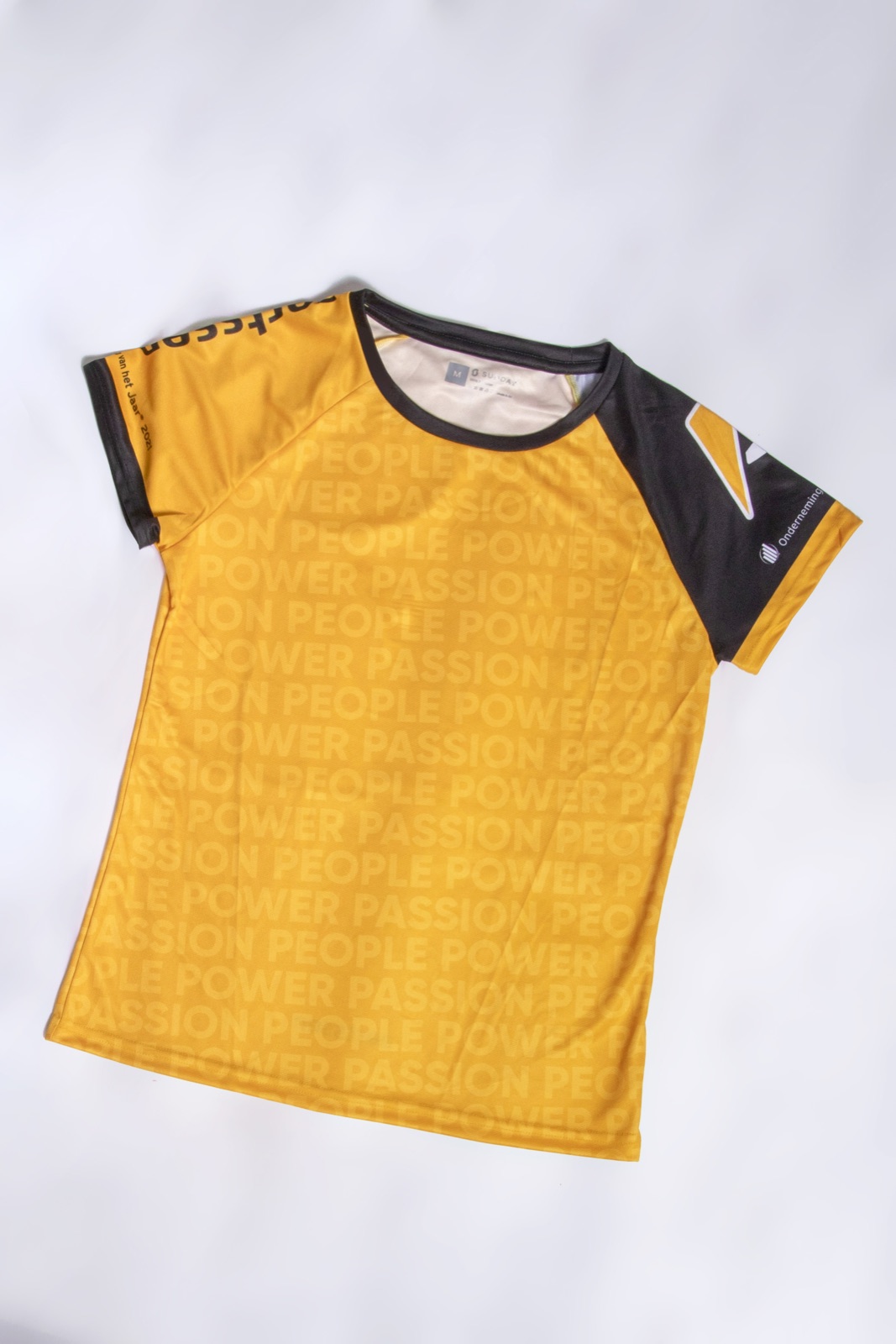
An Aertssen-branded custom sports jersey. On lightweight kit like this, keep a raised mark like embroidery off and let the branding sit flat.
When you need a raised mark: patches, badges and reflective
Sometimes a design calls for something that sits on top of the fabric, a sponsor mark, a team badge or a visible detail. On sportswear, reach for options that do the job without the embroidery penalty.
- Silicone patches. Durable, lightweight and flexible, they hold fine detail without stiffening the panel.
- Lightweight badges. A clean way to add a team crest or event mark without heavy stitching.
- Reflective prints. Essential for running and cycling in low light, and they weigh next to nothing.
- Performance-compatible transfers. Thin, flexible and made for technical fabric, unlike heavy vinyl.
Reflective detail is worth calling out. For any activity that runs into dusk or early morning, a reflective print is a safety feature, not decoration, and it costs almost nothing to add.
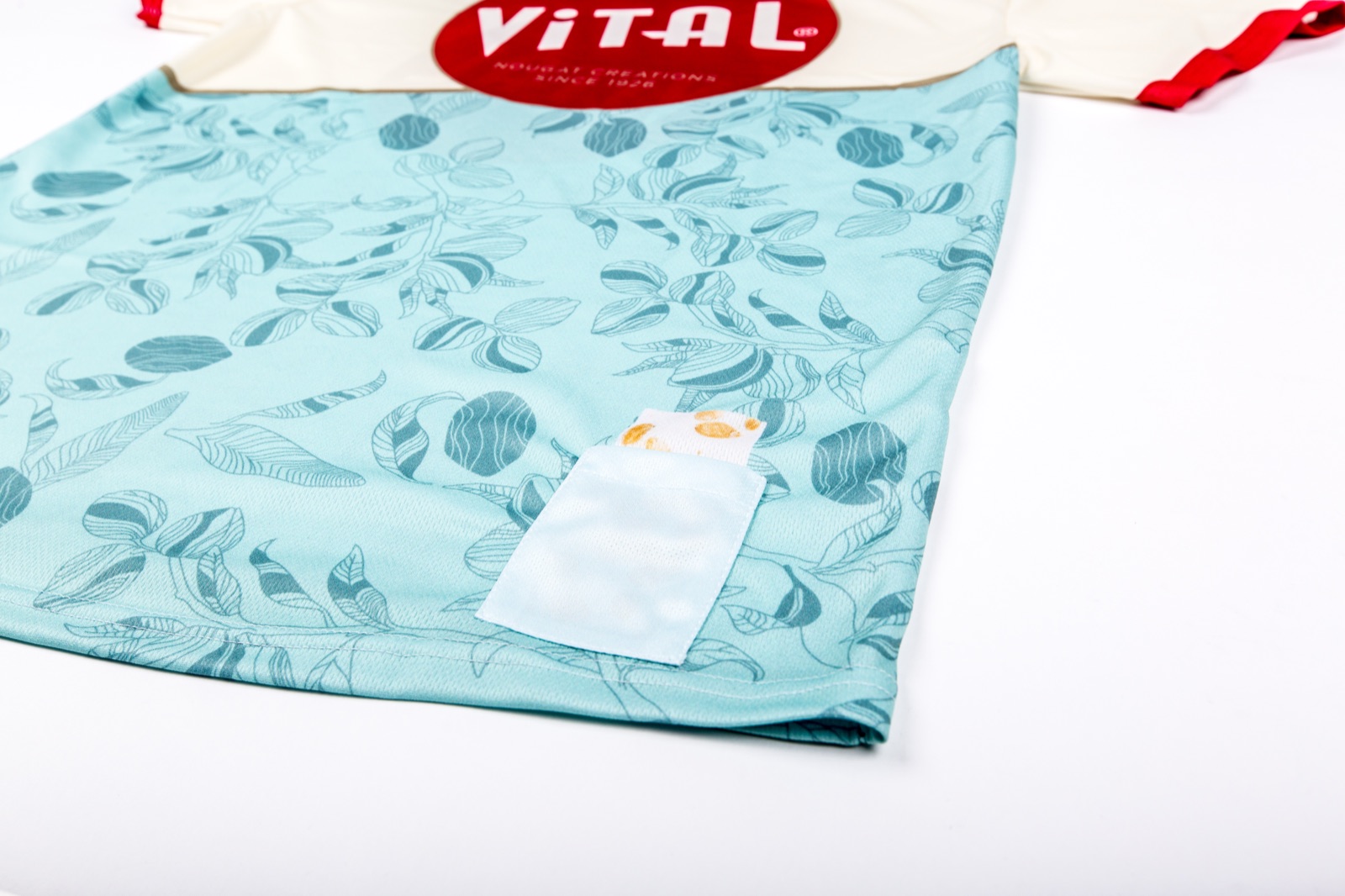
A Vital-branded custom sports jersey. Team and sponsor marks like this can be added with silicone patches, lightweight badges or reflective prints instead of embroidery.
The full comparison
Compared on the four things that actually decide the call for company sportswear.
| Sublimation | Embroidery | ||
|---|---|---|---|
| Best for | Fully custom kit, all-over design | Logo on stock technical garments | Caps, jackets, polos, not lightweight kit |
| Look | Unlimited colour, gradients, full surface | Good for simple logos and graphics | Premium and textured, but heavy |
| Durability | Dyed in, will not crack, peel or wash off | Good with technical transfers | Very durable, but stiff |
| Performance | No added weight, keeps breathability | Fine if the print is thin and flexible | Adds weight, reduces flex, can irritate skin |
| Complexity cost | Full surface at one price | Each placement adds cost | Cost rises with stitch count |
| Typical MOQ | From around 10, ~25 for many kits | Low, depends on stock garment | Low, but rarely right for sportswear |
How to pick in one minute
Run the decision in this order.
- Brand identity matters, or you want exact colours, patterns, names and numbers? Go fully custom with sublimation.
- Logo-only on a stock garment, tight timing, small campaign? Print on ready-to-wear kit.
- Need a raised badge or sponsor mark? Silicone patch or lightweight badge, not embroidery.
- Running or cycling in low light? Add a reflective print regardless of the base method.
- Decorating a cap, jacket or golf polo rather than a jersey? Embroidery is fine here.
Keep reading: custom sportswear
See your design on real sportswear
Create a free account and preview a sublimated jersey, cycling kit or running shirt in your colours with live pricing in 30 seconds.
Get free designs