



A strong merchandise program is rarely “just buying shirts.” It is a supply chain, a customer experience, and a brand promise compressed into something people can wear, use, and keep. When it works, merchandise becomes a steady revenue line and a quiet marketing engine. When it fails, it fails loudly: late shipments, inconsistent quality, and customer support tickets that pile up fast.
That’s why merchandise vendor solutions have expanded well beyond a catalog and a price list. The best vendors now act like operators who can help you design, source, produce, store, ship, and support, while protecting your brand at every step.
What “vendor solutions” really means
A merchandise vendor can be a factory broker, a print shop, a fulfillment warehouse, a software platform, or a coordinated mix of all of the above. “Vendor solutions” is the useful part: the repeatable system you rely on to keep product flowing from idea to customer.
In practice, the most valuable solutions are the ones that remove fragile handoffs and make performance measurable.
- Product development
- Sourcing and production
- Decoration (print, embroidery, patches)
- Warehousing and fulfillment
- Returns and customer support
- Storefront and integrations
- Reporting and forecasting
Choosing a vendor model that matches your business
The right vendor depends less on your taste in hoodies and more on your demand pattern. Are you spiky (event launches)? Predictable (steady monthly sales)? Global? Highly seasonal? The model should fit the reality, not the aspiration.
Many teams start with print on demand because it is low risk. Then they shift portions of the assortment to bulk production as hero items become predictable, margins matter more, or quality expectations rise.
Here is a practical comparison of common models:
| Vendor model | Best for | Strengths | Watch-outs |
|---|---|---|---|
| Print on demand (POD) | Testing new designs, long-tail catalogs | Low upfront cost, minimal inventory risk | Lower margins, limited blank selection, color consistency can drift |
| Bulk production + in-house fulfillment | Small brands with space and staff | Control, faster pack decisions, branded unboxing | Labor burden, storage constraints, error rates rise with volume |
| Bulk production + 3PL fulfillment | Growing programs with steady demand | Better margins, scalable shipping, professional SLAs | Forecasting risk, storage fees, onboarding complexity |
| Event-first production (local or on-site) | Tours, festivals, conferences | Immediate delivery, reduced shipping, high excitement | Capacity limits, payment flow, weather and venue constraints |
The tech stack behind modern merchandise
Even if you never want to think about “systems,” your customers already do. They feel it when tracking numbers are late, when inventory oversells, or when a return takes weeks.
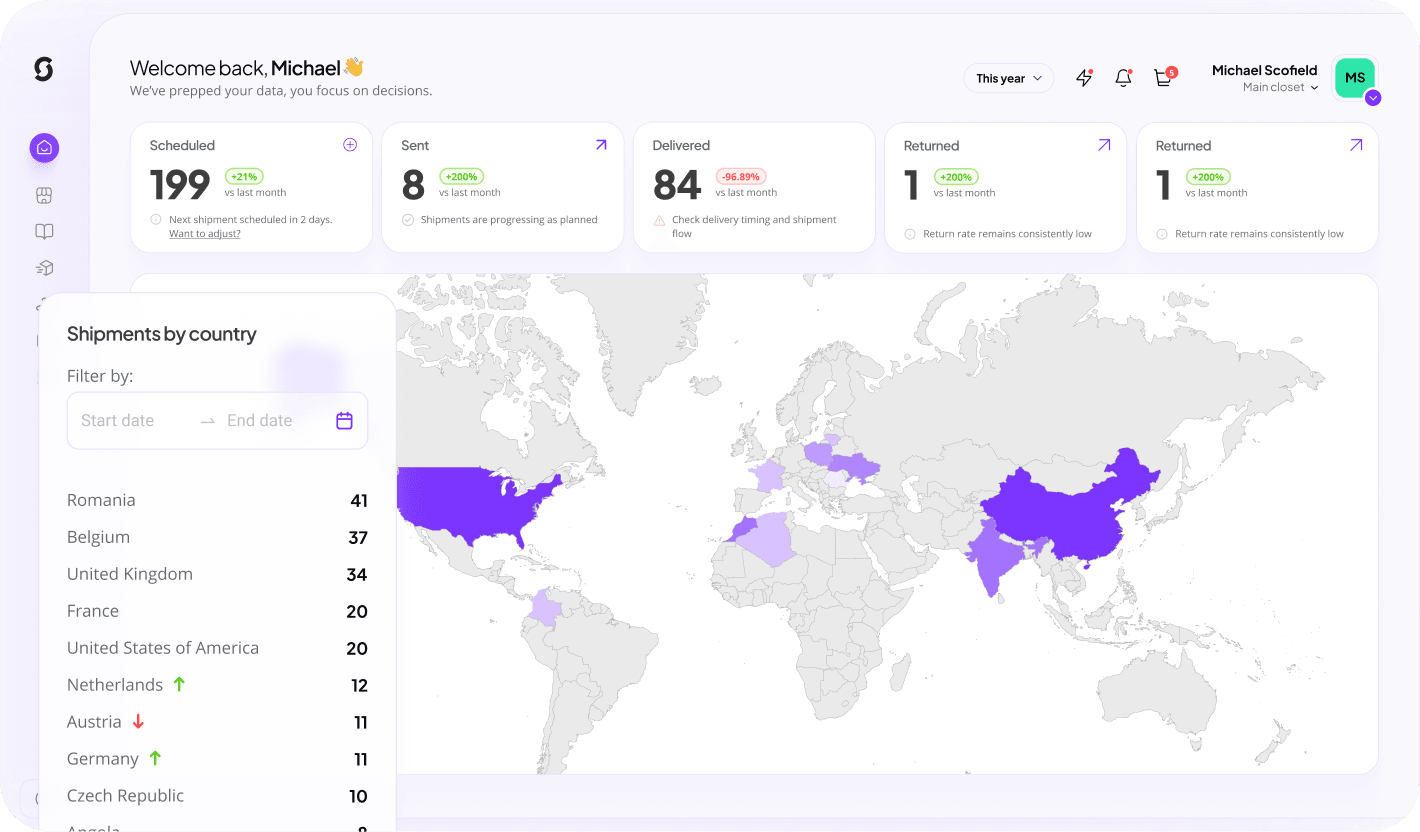
A capable vendor solution usually includes an order management layer that can connect your store, inventory, production status, shipping carriers, and support workflows. If you are running Shopify, WooCommerce, or a headless setup, ask how the vendor handles:
- Inventory synchronization across channels
- SKU and variant complexity (sizes, colors, bundles)
- Automated shipping confirmations and tracking
- Tax and duties logic for international shipments
- Data exports you can actually use (not screenshots)
One sentence test: can you see, in one place, what is selling, what is delayed, and why?
Quality, compliance, and brand protection
Merchandise is tactile proof of your brand standards. Customers forgive many things, but a hoodie that shrinks two sizes or a print that cracks after two washes will be remembered.
Quality assurance should be defined, written down, and repeatable. Ask for pre-production samples, decoration test swatches, and clear tolerances (print placement, thread colors, garment measurements). Then ask what happens when reality misses the standard. A serious vendor will already have a process.
Here are the topics worth putting into your vendor brief and contract language:
- Blank standards: approved garment lines, fabric weights, and allowed substitutions
- Decoration specs: ink types, stitch density, placement tolerances, wash testing expectations
- Compliance needs: CPSIA for kids items, labeling rules, restricted substances policies
- Brand controls: who can approve artwork changes, how proofs are stored, how files are secured
- Defect policy: what counts as defective, who pays shipping, how credits are issued
Unit economics that stay healthy at scale
Merchandise programs often look profitable at the item level, then get quietly eroded by shipping, reprints, customer support, and returns. Vendor solutions that protect margins are the ones that expose true costs early and let you make deliberate trade-offs.
Start by insisting on a cost sheet that separates: product cost, decoration, packaging, pick and pack, storage, and shipping. Then decide where you want to compete.
Some teams prioritize premium blanks and accept lower margin because the brand lift is worth it. Others optimize for contribution margin and keep premium items as limited drops. Both can win, as long as the decision is intentional.
A few profit protectors that tend to matter more than people expect:
- Packaging size and weight (dimensional weight can dominate shipping cost)
- Return rates by category (hats and outerwear behave differently than tees)
- Multi-item order incentives (bundles can reduce per-item shipping)
- Geographic inventory placement if you ship nationally
Service levels that customers feel
Vendor solutions are experienced as service, even when the customer never knows your vendor exists. The difference between “fine” and “great” is often speed, communication, and recovery when something goes wrong.
Ask vendors to define their service levels in plain language: production time, fulfillment time, cutoff times, carrier options, and support response windows. Then request real performance reporting, not best-case promises.
A practical way to evaluate service is to ask for anonymized metrics over the last 90 days: average ship time, percentage shipped on time, replacement rate, and top delay reasons. Vendors who measure themselves tend to improve faster because they can see where the system breaks.
Sustainability without sacrificing margins
Sustainability is no longer limited to fabric choices. It includes packaging, shipping methods, labor practices, and the waste created by forecasting errors.
The easiest wins are often operational: right-sizing packaging, reducing split shipments, and shifting part of the catalog to made-to-order where it makes sense. If you want sustainable materials, ask for traceability and realistic lead times. Organic and recycled options can be excellent, yet they are not always stocked in every color or size curve.
If sustainability is part of your brand promise, treat it as a specification, not a slogan. That means defining acceptable certifications, packaging standards, and reporting expectations up front, then selecting vendors who can meet them without improvising.
A practical selection process (without endless meetings)
A vendor search can drag on when teams try to evaluate everything at once. A cleaner approach is to start with your highest-impact constraints, then narrow quickly.
Begin by writing a one-page “merch operating brief” that states your order volume range, product categories, target ship regions, timelines, and brand requirements. Then run a short pilot that looks like real life: a small drop with multiple sizes, at least one complexity (bundle, personalization, or limited inventory), and real customer support expectations.
A simple selection sequence that tends to work:
- Define your non-negotiables
- Shortlist vendors who can meet them
- Run a paid pilot with clear success metrics
- Review results, then negotiate terms
What to negotiate so the relationship stays stable
Pricing matters, yet the cost of instability is usually higher than a few percentage points. Clear terms protect both sides and keep the program calm during peak demand.
Contracts vary, and legal counsel is always wise, but the themes are consistent: lead times, liability, IP usage, quality standards, data access, and exit terms. Also pay attention to what happens when you scale. A vendor who can handle 200 orders a month may struggle at 2,000 without process changes, staffing, and inventory planning.
If you expect spikes, negotiate capacity planning and production reservations early. If you expect international growth, clarify who acts as importer of record, how duties are handled, and what shipping promises are realistic by region.
Relationship management: turning a vendor into an operating advantage
The best vendor solutions are built, not found. Even a strong vendor needs context to serve you well: what matters to your customers, what “good” looks like to your brand, and what risks you are willing to take.
Weekly or biweekly operating check-ins can be short and focused: what sold, what is delayed, what is out of stock, what needs replenishment, what customers are complaining about, and what you will change next cycle. Treat it like product operations, not a one-time purchase.
When you invest in shared scorecards, clear specs, and a repeatable launch calendar, your merchandise stops feeling like a side project. It starts behaving like a system you can trust, with vendor solutions doing what they are meant to do: making growth feel steadier, even when demand surprises you.