




Moving merchandise efficiently is less about moving faster and more about moving smarter. The companies that consistently hit delivery promises, protect margins, and keep shelves stocked treat transportation as a system: lanes, inventory positioning, packaging, carrier relationships, data quality, and exception handling all working together.
When that system is designed well, transportation stops feeling like a constant scramble and starts feeling like a competitive advantage.
What “efficient” really means in merchandise transportation
Efficiency is often framed as cost per mile, but that view is too narrow for modern commerce. A transportation plan that is cheap yet unreliable can quietly drain revenue through stockouts, markdowns, and customer churn.
A stronger definition balances four outcomes: service reliability, total landed cost, speed where it matters, and resilience when conditions change. That balance looks different for promotional goods than for replenishment freight, and different again for high value items that need extra security.
One sentence can summarize the mindset: efficiency is the ability to deliver the right item, in the right condition, to the right place, with minimal waste and minimal surprise.
Picking the right modes and lanes (and mixing them on purpose)
Merchandise moves through a network, not a straight line. The best networks are intentionally hybrid, using different modes by product family, season, and demand variability.
A quick way to clarify options is to compare modes through the lens of predictability, scalability, and exposure to disruption.
| Mode | Best for | Typical strengths | Typical tradeoffs |
|---|---|---|---|
| Parcel | Small, high velocity orders | Dense carrier networks, frequent pickups | Higher unit cost, surcharges, DIM impacts |
| LTL (Less-than-Truckload) | Mid-volume replenishment | Good for multi-stop distribution | Terminal handling risk, variable transit |
| FTL (Full Truckload) | Palletized lanes, steady volume | Direct transit, fewer touches | Capacity swings, empty miles if poorly planned |
| Intermodal (rail + truck) | Long haul, cost-sensitive lanes | Cost stability, emissions benefits | Longer lead times, ramp constraints |
| Ocean freight | Global sourcing, bulky goods | Lowest cost per unit | Long transit, port variability |
| Air freight | Urgent, high value, constrained supply | Fastest transit | Highest cost, capacity volatility |
Mode choice becomes much clearer when tied to inventory strategy. If a product has stable demand and can be positioned closer to the customer, slower modes become safe and profitable. If demand is spiky or the item is seasonal, speed and flexibility rise in value.
After you map the network, set lane intent: which lanes are “clockwork,” which lanes are “surge capable,” and which lanes are “expedite only.” This prevents emergency decisions from becoming routine spending.
Planning that starts upstream: packaging, cube, and item data
Transportation cost is strongly shaped before a trailer is booked. Dimensional weight, pallet patterns, carton strength, and label accuracy all decide how many sellable units fit into the cubic space you are paying for.
Small improvements here compound quickly. A modest carton resize can turn into fewer parcels, fewer pallets, fewer trailers, fewer touches, and fewer damage claims.
A practical upstream checklist usually includes:
- Carton right-sizing
- Pallet pattern optimization
- Accurate item weights and dimensions
- Label quality and scan-ability
- Packaging that matches handling realities
Even one inaccurate weight field can trigger reweigh fees, billing disputes, and poor mode selection logic. Data hygiene is not glamorous, yet it is one of the highest return activities in transportation.
Consolidation and pooling: the quiet engine of cost control
Consolidation is the art of turning scattered shipments into fewer, fuller moves without sacrificing service. Pooling is the network version of the same idea: merge freight into a hub, then distribute regionally.
This works especially well for merchandise with store delivery requirements or multi-location replenishment. A pool point can convert many LTL shipments into one inbound truckload and a set of short regional runs, often cutting cost while improving delivery consistency.
Where consolidation succeeds, you usually see three conditions: predictable order cadence, disciplined cutoffs, and clear ownership of appointment scheduling. Without those, consolidation attempts can add delay and confusion.
A helpful way to communicate consolidation design is to separate goals:
- Density: increase average shipment cube and weight
- Frequency: keep enough departures to protect in-stock targets
- Touch count: reduce handling events that cause damage and delay
- Flex capacity: keep an option for surge weeks without chaos
Carrier strategy: relationships, contracts, and the spot market
Transportation performance is built on carrier behavior, and carrier behavior responds to clarity and fairness. Clear lanes, fast payment, accurate tenders, and predictable dwell times attract better service at better rates.
A resilient carrier strategy is rarely “all contract” or “all spot.” It is a portfolio with roles. Contract carriers stabilize core lanes, while a controlled spot program provides pressure relief during seasonal peaks or unexpected demand.
If you want a carrier to treat your freight as priority freight, design the shipper experience as a priority experience. Warehouse check-in, appointment adherence, trailer readiness, and detention management all matter as much as the linehaul rate.
Technology that makes execution calmer, not louder
Technology earns its place when it reduces friction and increases certainty. A transportation management system can automate tendering, rating, carrier selection, and document workflows, but the real win is exception management that surfaces the right problem at the right time.
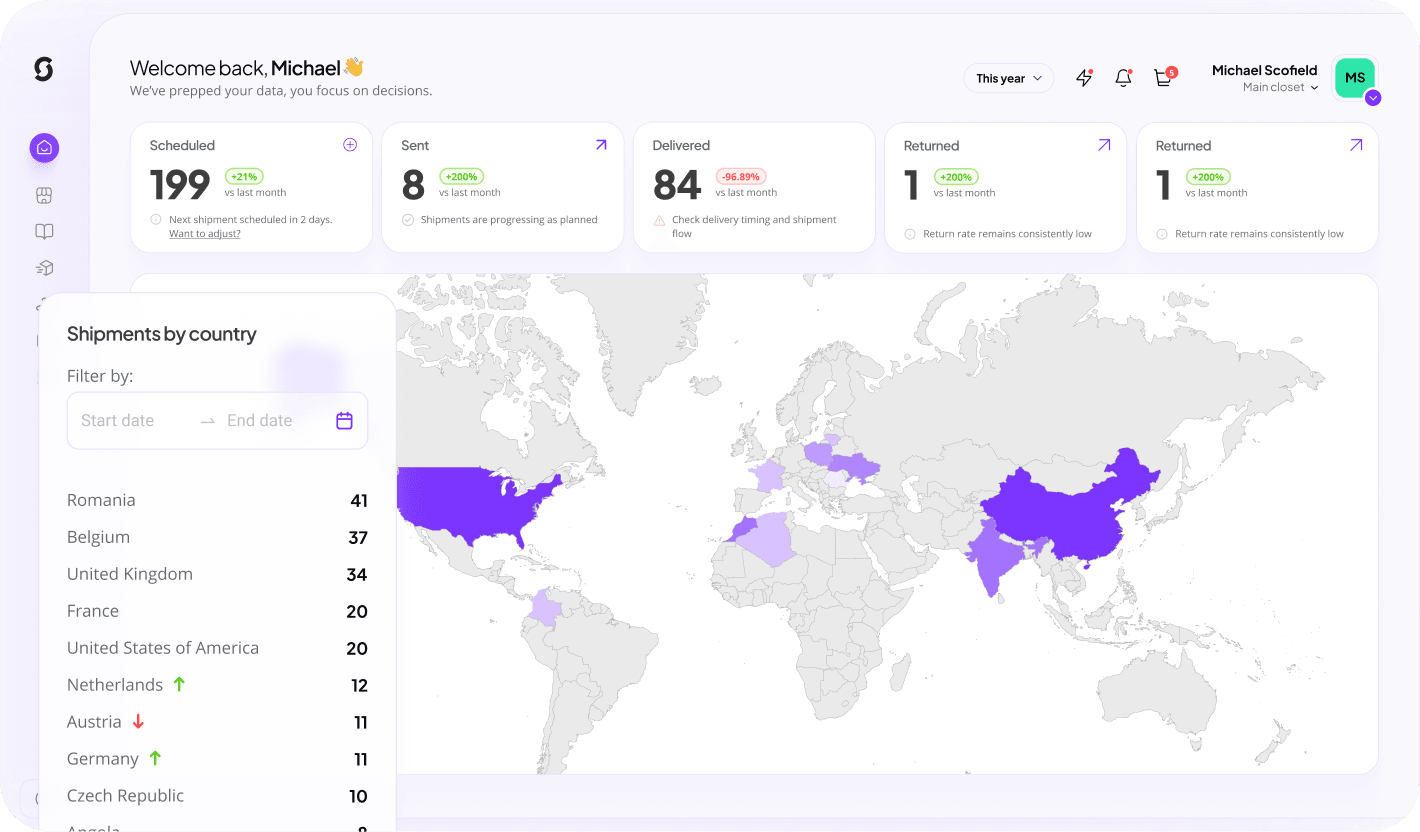
Visibility tools should not just show dots on a map. They should translate events into decisions: which shipments will miss a delivery window, which stores need an alternate replenishment path, which customers should be proactively contacted.
The strongest setups connect order management, warehouse operations, and transportation so that planned ship dates, actual pack times, and carrier pickup times agree with each other. When these systems disagree, teams spend their day reconciling, expediting, and explaining.
One sentence test: if a tool increases alerts without increasing control, it is noise.
International moves: lead time engineering and landed cost discipline
Global merchandise transportation rewards patience and planning. Lead time is not just ocean days, it includes purchase order readiness, drayage, port cutoffs, customs clearance, and final delivery appointments.
A disciplined approach starts with landed cost visibility by SKU and lane, then uses that to set reorder points, safety stock, and mode rules. When rules are clear, teams stop debating each shipment and start managing the system.
Common friction points include incomplete commercial invoices, inconsistent product descriptions, and late booking against vessel cutoffs. These are fixable with standardized templates, strong vendor routing guides, and simple compliance scorecards.
Last-mile and store delivery: precision, not speed
Last-mile efficiency is often described as speed, yet the real challenge is precision: correct address data, delivery windows, access requirements, returns handling, and proof of delivery that stands up to audit.
Retail store delivery adds more variables. Backroom constraints, appointment schedules, liftgate needs, pallet exchange rules, and store staffing levels can turn a good route plan into missed stops.
A strong last-mile program tends to standardize service levels into a small menu and then assigns products and customers to those tiers. That keeps expectations clear and supports repeatable carrier performance.
A compact way to frame last-mile service tiers is:
- Standard delivery with predictable windows
- Appointment delivery for constrained locations
- White-glove delivery for high-touch items
- Returns pickup with condition assessment and scan events
Measuring what matters: KPIs that drive better decisions
Metrics can either guide behavior or create busywork. The best transportation scorecards stay close to outcomes and stay consistent over time.
A balanced set usually includes on-time performance, cost to serve, damage rate, claims cycle time, and tender acceptance. Pair those with a small number of operational health indicators: dwell time, appointment compliance, and exception resolution speed.
When a KPI moves, ask a second question right away: did the customer experience improve? If cost went down but in-stocks fell, the system is not efficient, it is just cheaper on paper.
Building a practical operating rhythm
Efficiency is sustained through rhythm: weekly lane reviews, monthly carrier business reviews, seasonal capacity planning, and daily exception huddles with clear owners.
This rhythm can be light, even for a small organization. What matters is repeatability. The goal is to spot weak signals early, before they become premium freight.
A simple operating rhythm often works best when it assigns clear time horizons:
- Today: recover delayed shipments and protect critical deliveries
- This week: tune carrier coverage and rebalance consolidation plans
- This month: renegotiate chronic accessorials and fix dwell drivers
- This quarter: redesign lanes, pool points, and inventory placement
Sustainability and efficiency: the same playbook
Reducing transportation emissions often comes from the same actions that reduce cost: higher cube utilization, fewer empty miles, more direct routing, and mode shifts on lanes where lead time allows.
Intermodal can make sense for long haul replenishment. Pool distribution can cut miles while improving delivery reliability. Packaging optimization lowers both freight spend and material waste.
When sustainability goals are handled as operational targets, not marketing statements, teams can make tradeoffs confidently. You can quantify the cost per ton-mile, the emissions per unit delivered, and the service impact of each network choice.
Risk, resilience, and the confidence to promise dates
Merchandise transportation is exposed to weather, labor disruptions, capacity cycles, and demand shocks. Resilience comes from choices made before disruption hits: dual sourcing strategies, alternate ports, backup carriers, safety stock placement, and clear expedite rules.
The most capable teams also rehearse exceptions. They decide in advance which orders qualify for premium modes, who can approve them, and what communication goes to stores or customers.
That preparation turns a bad day into a managed day, and it protects brand trust even when conditions are not perfect.
Where efficient transportation solutions usually start
If you want quick traction, start where data and process meet physical reality: accurate item dimensions, clean appointment processes, clear routing guides, and a small set of lanes targeted for consolidation or mode optimization.
From there, build outward into network design and deeper carrier strategy. Momentum comes fast once the basics are reliable, because every improvement compounds through thousands of shipments.
A transportation system that runs with calm discipline does more than move merchandise. It creates room for growth, sharper customer promises, and a supply chain team that spends more time improving and less time reacting.