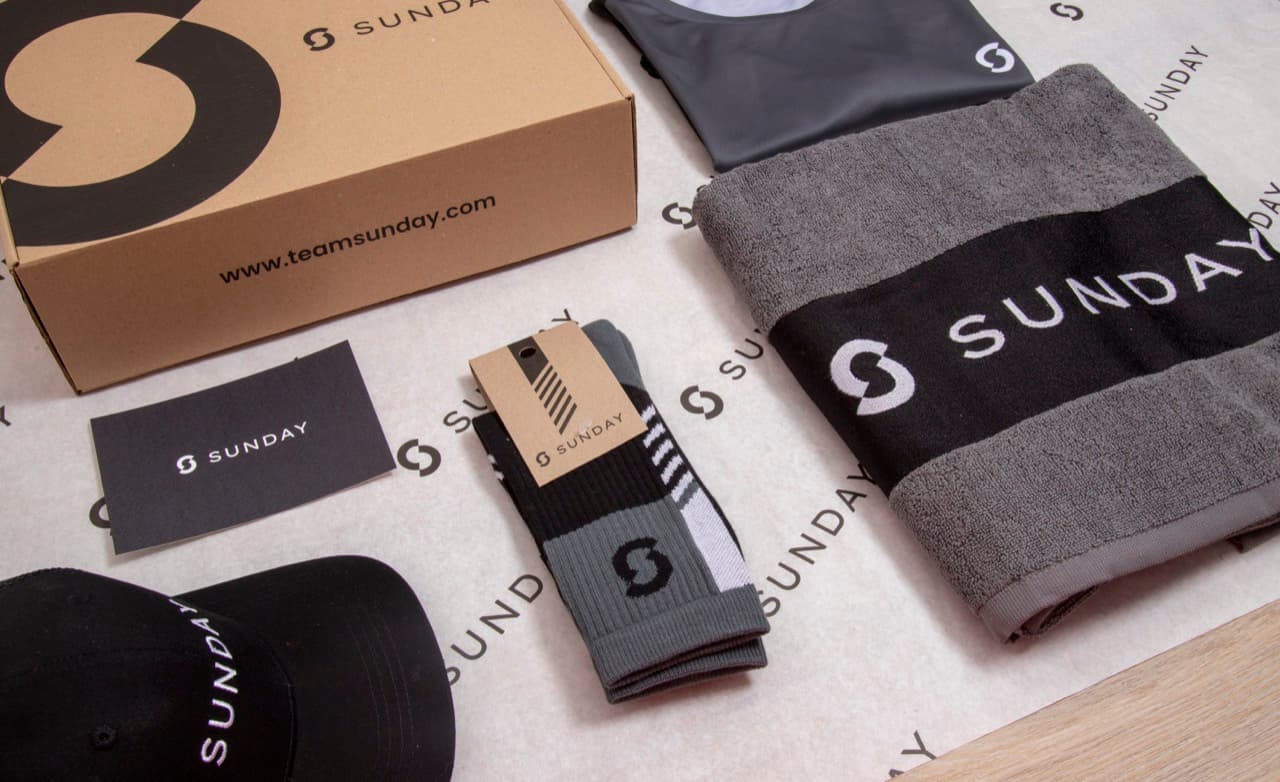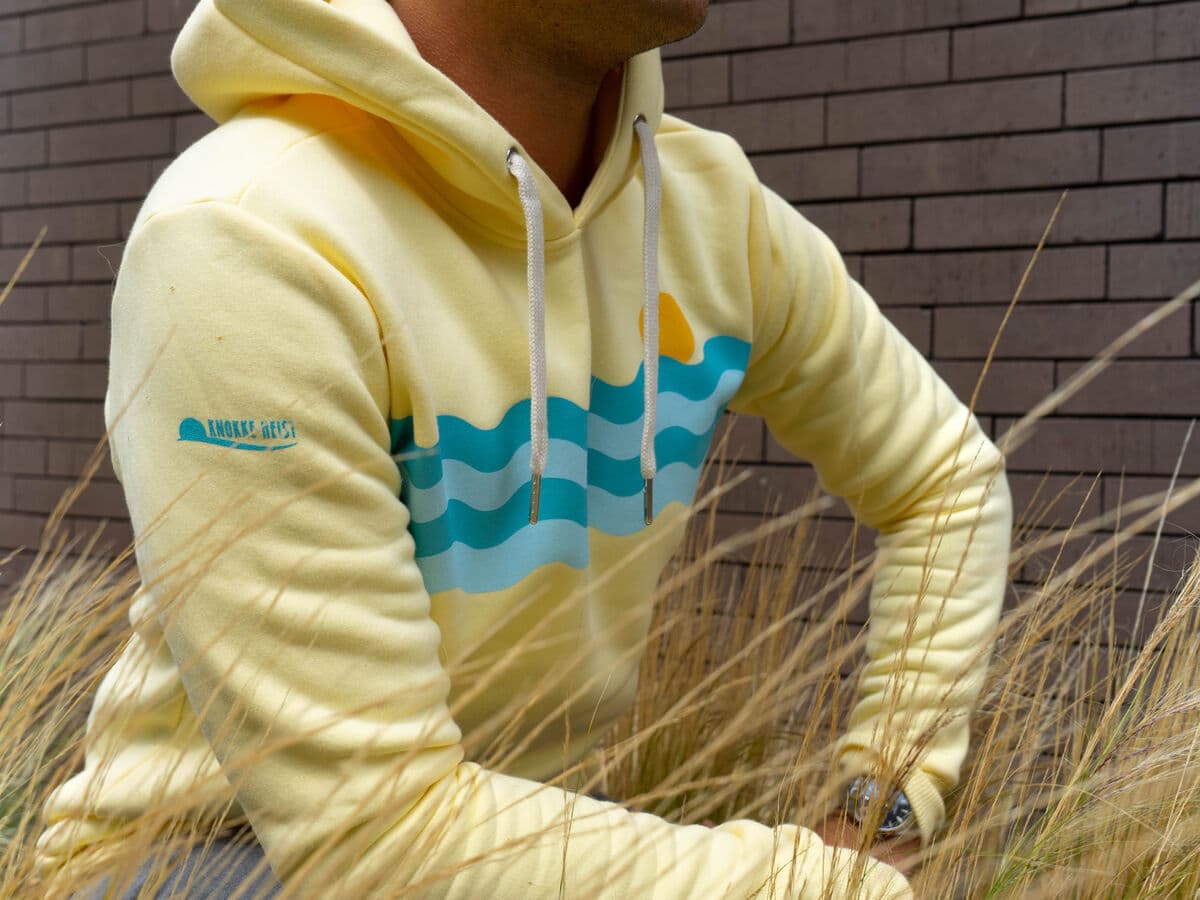
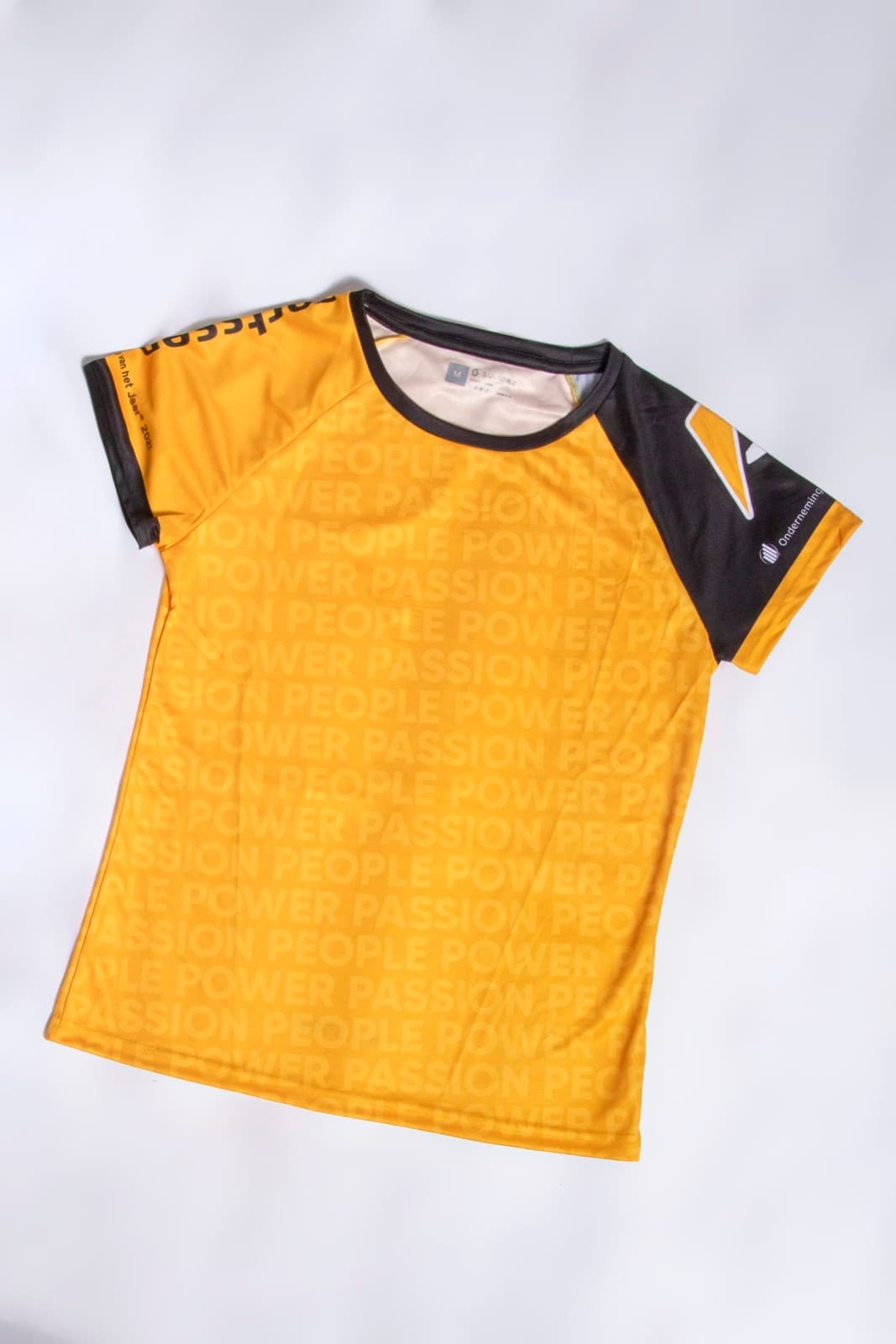
To choose custom sportswear for your company, start with the activity, not the catalogue. Decide whether you need off-the-shelf (a logo on a stock garment, fast and simple) or fully custom (designed in your brand with sublimation). Then match the fabric and technical level to how hard people will actually work in it: technical Dry Fit and Cooltech for real performance, standard sportswear for a casual sports day. Confirm the supplier sublimates before cutting and sewing, check the minimum order (from around 10), and only pay for performance features the participants will use.
Start with the activity, not the catalogue
The most common and most expensive mistake companies make is picking apparel far more technical than the activity needs. So the first decision is not a product, it is a question: what is the activity, how hard will people work, and what role does the clothing play?
A casual sports day needs a standard team jersey. A marathon team needs a light, breathable running shirt with reflective detail. A serious cycling challenge justifies pro-level kit. A walking event does not need an advanced running jacket. Get this right and every other decision gets easier, because you are choosing to fit a real use, not a spec sheet.
Off-the-shelf vs fully custom
You have two real paths. Off-the-shelf means a stock technical garment with your logo added: fast, accessible and fine for small campaigns. Fully custom means the kit is designed from scratch in your brand using sublimation. The choice comes down to whether brand expression matters.
Off-the-shelf has two limits. First, co-branding: your logo sits next to the sportswear maker's brand, which some companies like and some do not. Second, limited brand expression: with stock you cannot control the colours, brand patterns, gradients, all-over artwork or panel design. When you need exact colours, patterns, names and numbers, go fully custom. Browse what fully custom looks like across the custom sportswear range.
| Off-the-shelf (decorated stock) | Fully custom (sublimated) | |
|---|---|---|
| Choose when | Low quantity, tight timing, logo-only, an existing sports brand is fine | Brand identity matters, exact colours, patterns, names and numbers |
| Brand control | Logo only, in the maker's colours | Full control of colour, pattern and the whole surface |
| Complexity cost | Each extra placement adds cost | A full-surface design costs no more than a simple one |
| Result | Fast and accessible, but generic | Distinctive and unmistakably yours |
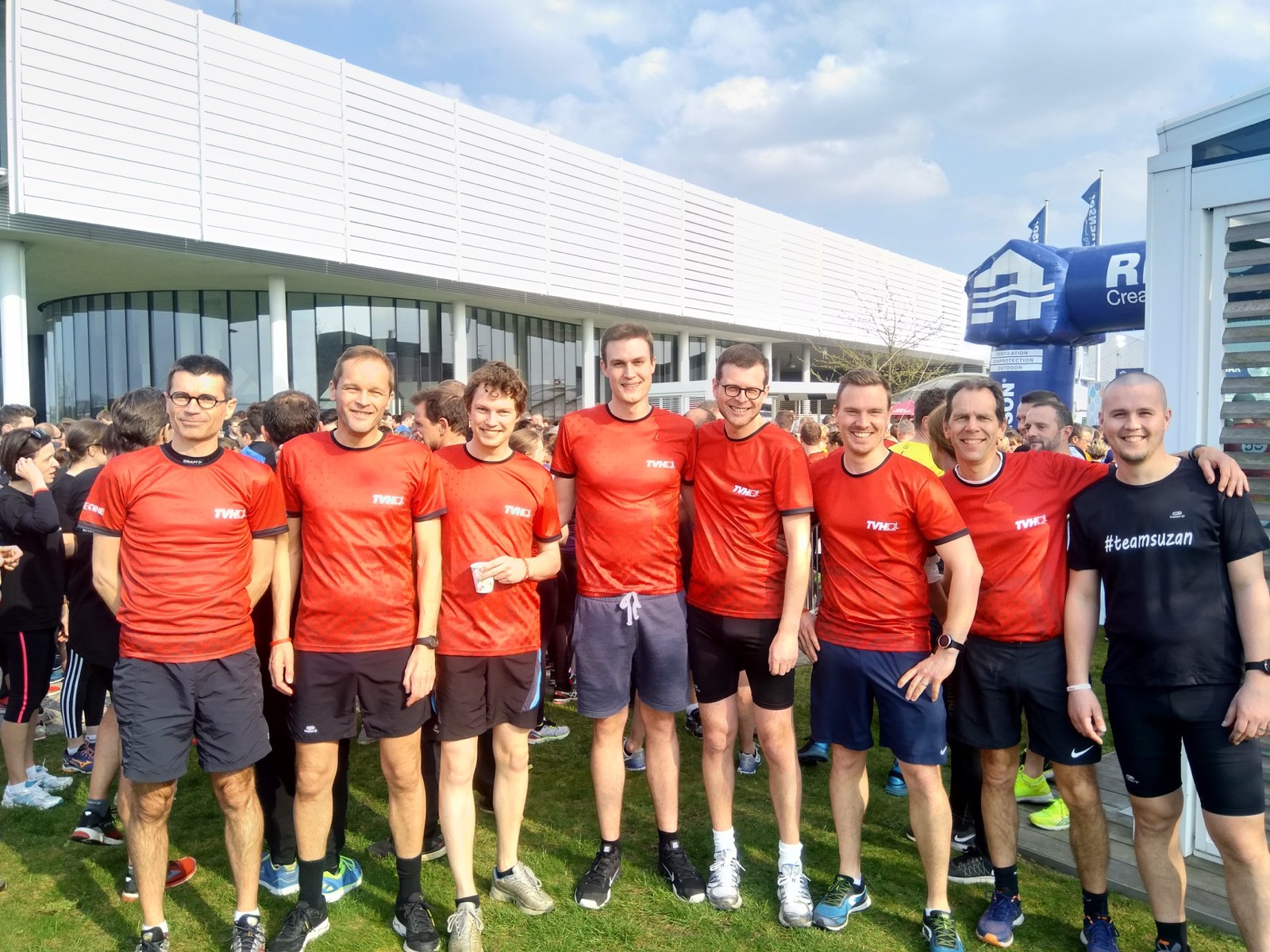
A custom TVH team jersey. Fully custom sublimation lets you put an exact brand, colours and logo across the whole garment.
Fabric: why Dry Fit and Cooltech matter
Fabric is the most important thing in the whole decision. Good sportswear fabric is breathable, durable, lightweight, moisture-wicking, quick-drying and comfortable in movement. Sunday uses technical Dry Fit and Cooltech fabrics that move moisture away from the body and stay cool, versus a jersey that ends up heavy with sweat. That is the difference between a kit people love and one they quietly retire.
Fit should support movement without being restrictive or tight, and construction shows quality on close inspection: strong seams, clean stitching, aligned panels, durable collars and cuffs and a comfortable skin-side finish. If sustainability matters, certified recycled technical fabrics deliver the same Dry Fit and Cooltech performance, so you can choose recycled without giving up function. Explore the options in the catalog.
Sublimation and the production order that matters
For fully custom kit, full-colour sublimation is the strongest technique. The design becomes part of the fabric rather than a layer on top, which means unlimited colour, gradients and all-over patterns with no decoration layer to crack, peel or wash off, and no loss of technical performance.
The detail that separates premium kit from cheap kit is the production order. Sublimate the fabric first, then cut the panels, then sew. Printing a finished garment leaves white cracks and gaps at seams, folds and stretch points. When you evaluate a supplier, this is the one thing to verify.
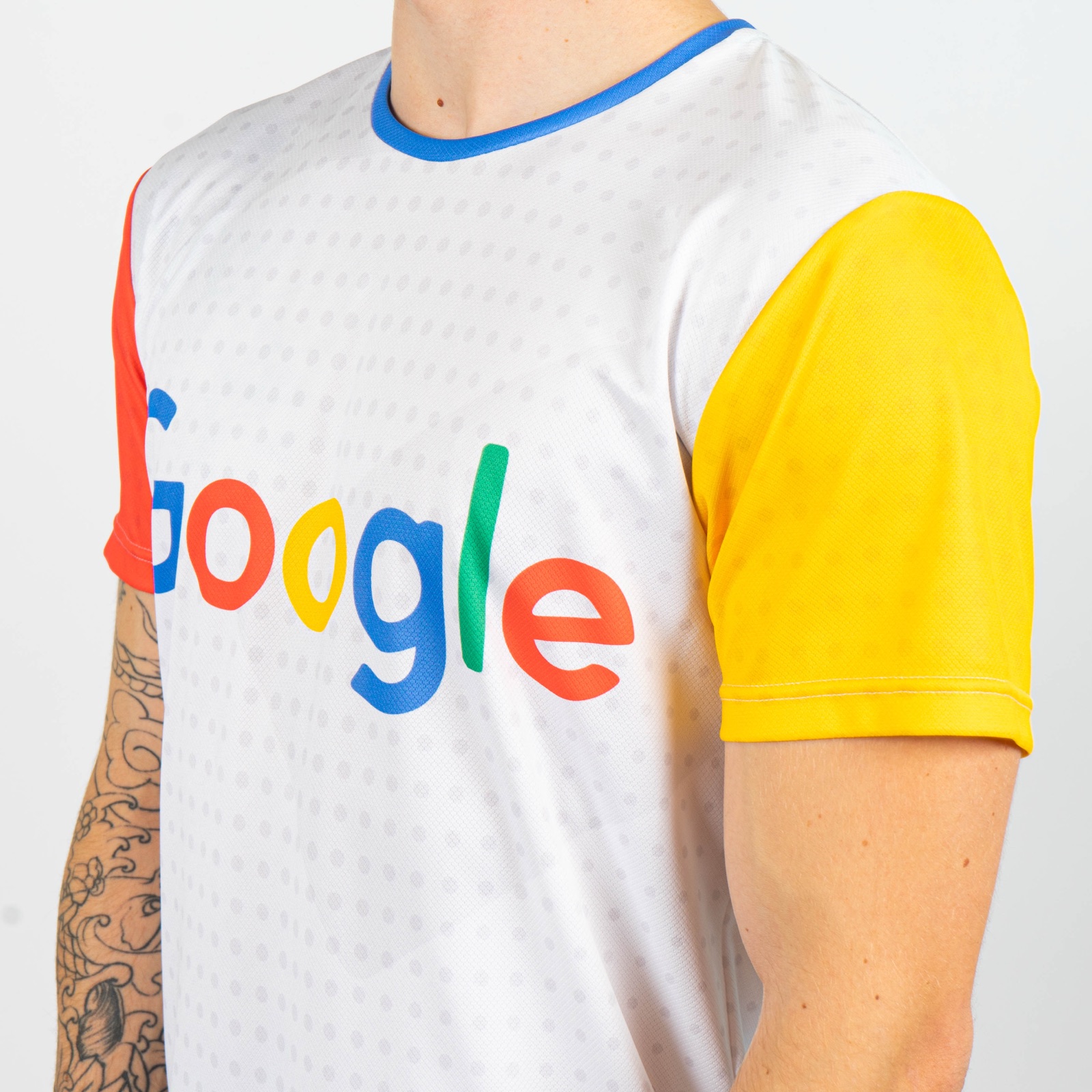
A custom Google team jersey. Full-colour sublimation carries logos and brand colours with no decoration layer to crack or peel.
MOQ, cost drivers and lead time
Minimums are low, typically from around 10, with roughly 25 for many complete kits and higher for advanced multi-piece builds. The standout advantage of sublimation is that a low-quantity order still gets full-colour, all-over design at no separate charge per colour, logo or element. Small teams get the same expressive result as large ones.
| Factor | What to expect |
|---|---|
| Minimum order | From around 10, roughly 25 for many kits, higher for advanced builds |
| Complexity | Full all-over sublimation at no per-colour charge, even at low quantity |
| Cost drivers | Garment type, fabric, fit, recycled vs standard, quantity, names and numbers, reflective details, zippers, pockets, technical construction |
| Lead time | Varies by garment and season, confirm against your event date |
Match the technical level to the activity
This is where most budgets go wrong. Do not pay for performance features the participant will not use. Use this as a quick reference.
- Casual sports day or team-building. A standard team jersey. No race gear.
- Running team or wellness 5k. A light, breathable branded running shirt with reflective detail. Remember shoes matter more than the top.
- Recreational company ride. Comfortable, forgiving cycling wear. Not a pro race fit.
- Serious cycling challenge (a Mont Ventoux climb). Pro-level apparel and a race fit are justified.
- Golf day. Technical polos and accessories.
- Walking challenge. Comfortable branded kit, not an advanced running jacket.
For cycling in particular, decide up front where the group sits: entry-level leisure, comfortable club or technical pro. Forcing a pro fit on a mixed group leaves casual participants uncomfortable.
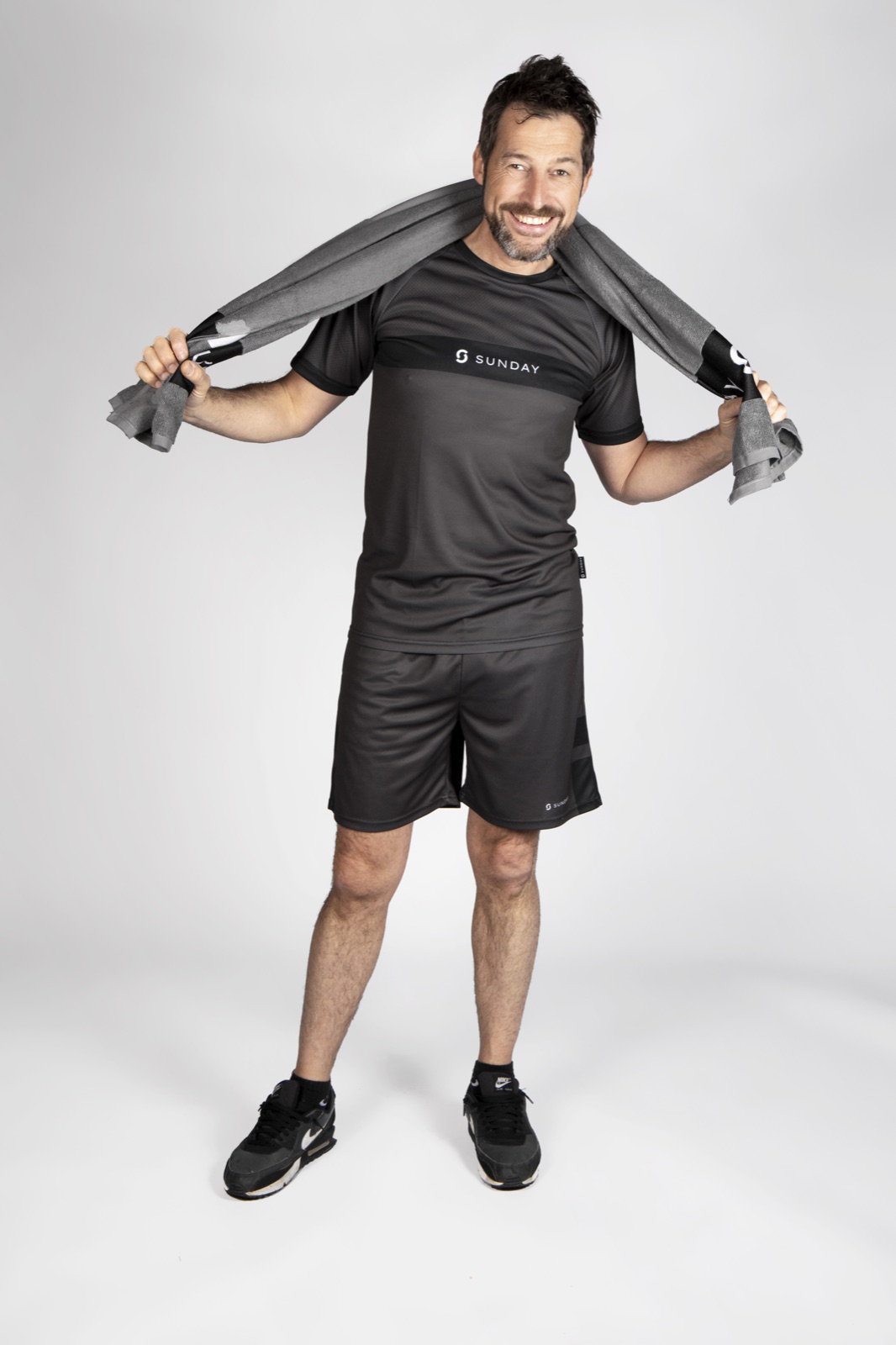
A custom Sunday team jersey. Match the fit and technical level to the activity, from a casual sports day to a serious cycling challenge.
The quick buyer's checklist
Run through these before you order, in this order.
- Define the activity and how hard people will work in the kit.
- Decide off-the-shelf or fully custom based on whether brand expression matters.
- Confirm the fabric by name and that it is technical and moisture-wicking.
- Verify the supplier sublimates before cutting and sewing.
- Skip embroidery on lightweight kit, add reflective detail for low-light activity.
- Check the minimum order and that a full-surface design carries no per-colour charge.
- Match the technical level to the activity, and no higher.
- Plan distribution if the team is spread across offices or locations.
Keep reading: custom sportswear
Match your kit to your activity
Create a free account and preview a jersey, cycling kit or running shirt in your colours with live pricing in 30 seconds, then pick the right technical level for the activity.
Get free designs