To design custom tote bags step by step: start with a brief that says how long the bag should last, choose a material and a fabric weight of 220 to 270 gsm, pick a decoration method to match, prepare vector artwork, lock your brand colours, approve a digital proof and a physical sample, then order from a low minimum. The order matters. Decide the job and the construction first, then design the artwork to fit. Build a bag people would keep, and the branding takes care of itself.
One rule before you start. The most common tote mistake is designing the artwork first and treating the bag as a blank surface. Do it the other way round. The bag, its size, its weight and its construction are the design. A beautiful print on a flimsy bag still ends up in the bin. Get the object right, then make it beautiful.
Step 1. Write the one-line brief
Before any visuals, answer one question: how long should this bag live? A tote for a single event afternoon and a tote you want carried for years are different products. The best example of the long horizon is the Dilo travel-tote, an extra-heavy bag with a zipper and a luggage-trolley strap that has been reused for around three years. The brief shaped every later decision. Write yours in a line: who carries it, where, and for how long.
Step 2. Choose the material and weight
Material is mostly a look-and-story choice; weight and construction decide quality. Sunday offers organic and standard cotton, canvas, polyester, heavy polyester canvas, recycled felt and other recycled materials. Whichever you choose, target a fabric weight of around 220 to 270 gsm, heavier for a more substantial bag, with reinforced handles and cross-box stitching where the handles meet the body. The simple quality bar is the six-bottle test: a good tote carries roughly six full bottles without the handles tearing.
- Canvas for a premium everyday bag that holds its shape and takes screen printing well.
- Cotton for a soft, familiar feel and a credible organic story, stepped up to 220 to 270 gsm.
- Jute for a natural, rigid bag that signals sustainability, ideal for food, drink, retail and eco-led brands.
For the full decision framework on weight, handles and construction, see the custom tote bags buyer's guide.
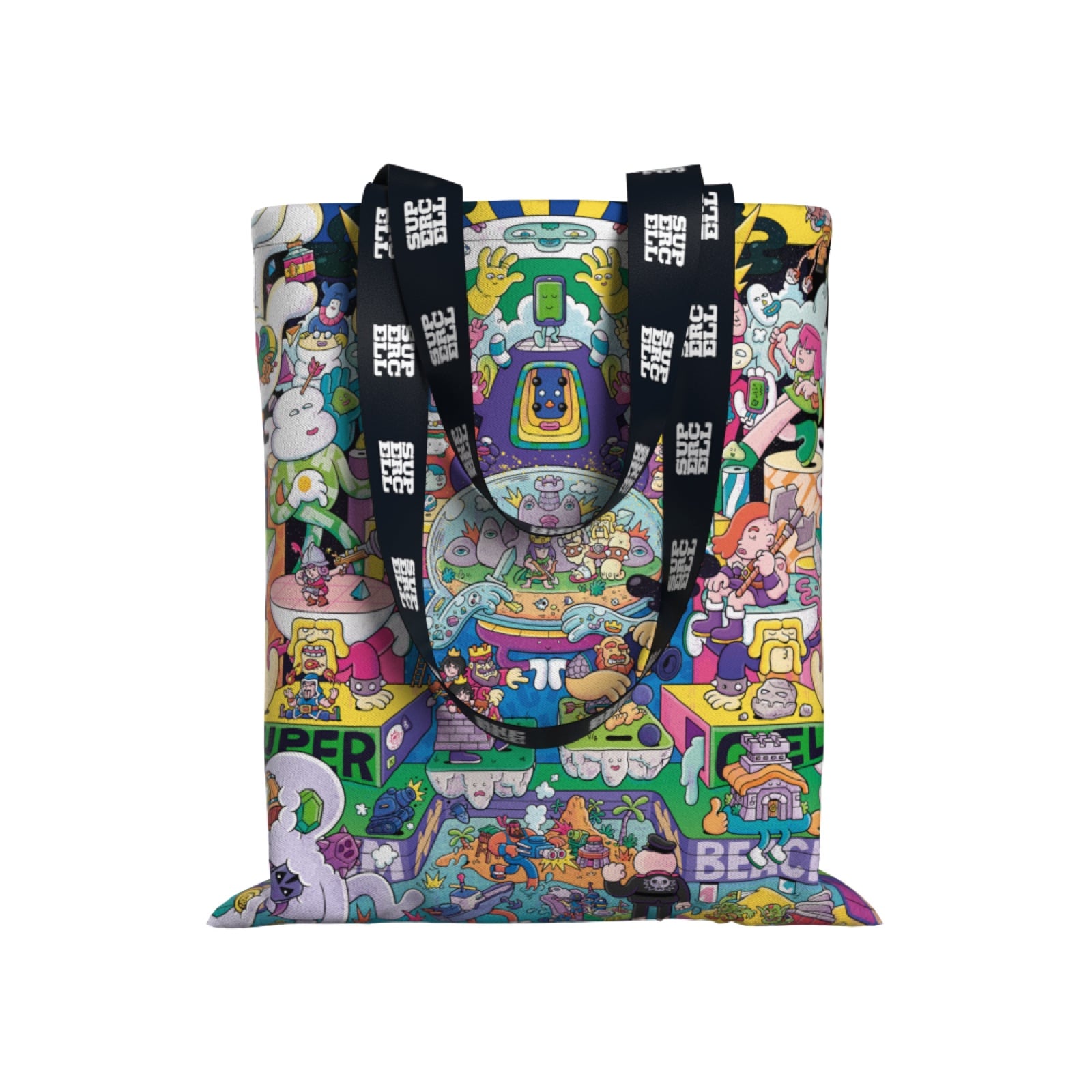
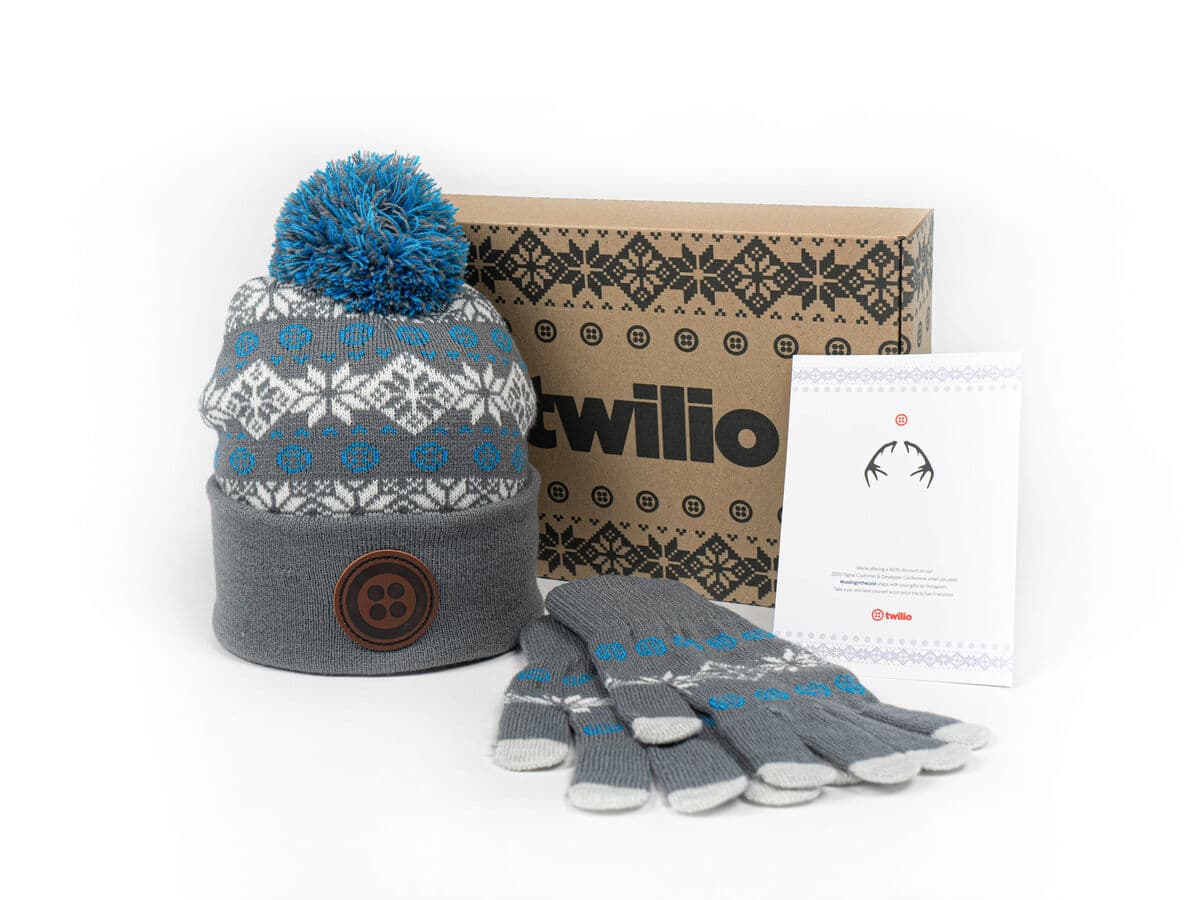
A full-colour Supercell tote bag design that shows how bold artwork sits on the bag.
Step 3. Pick the decoration method
The decoration follows the material and the look you want. There is a clear toolkit, and you can combine techniques, though each one adds cost.
| Method | Best for | Look |
|---|---|---|
| Screen printing | Cotton and canvas, straightforward designs | Crisp, reliable, effective on a large flat surface |
| Sublimation | Synthetic, water-resistant materials | Full-colour artwork, gradients, complex designs at an accessible price |
| Woven handles or tapes | A premium finish without covering the bag | Repeating logo or pattern on the handles, clean body |
| Labels | Fashion-led detail | Flag, side-seam, handle or leather labels |
Step 4. Prepare the artwork
Supply your logo and any graphics as vector files where possible, so the design stays sharp at any size. Keep screen-print designs to clean shapes and a defined number of colours; save photographic or gradient-heavy artwork for sublimation. Leave breathing room around the design rather than filling the whole panel, and remember that leaving part of a recycled fabric unprinted is a current, premium-looking trend that also lets the material speak for itself.
Step 5. Match your brand colours
Lock your colours before production. Specify exact brand references so the print matches your guidelines rather than a screen approximation, and check how each colour reads on your chosen fabric, since the same ink looks different on natural cotton, bleached canvas and coloured material. The fastest way to sanity-check this is to preview the design in your colours with the free tote bag mockup generator before you commit.
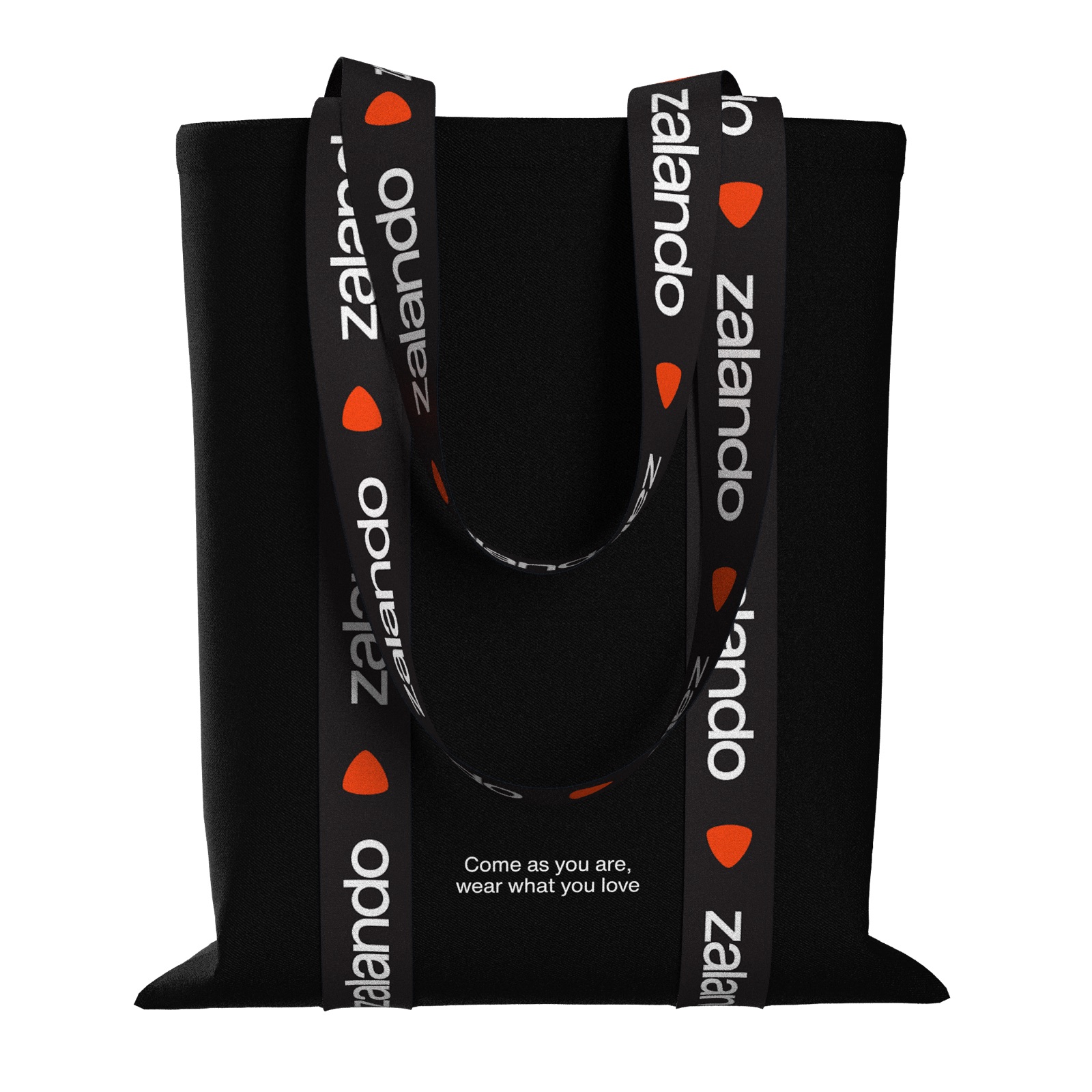
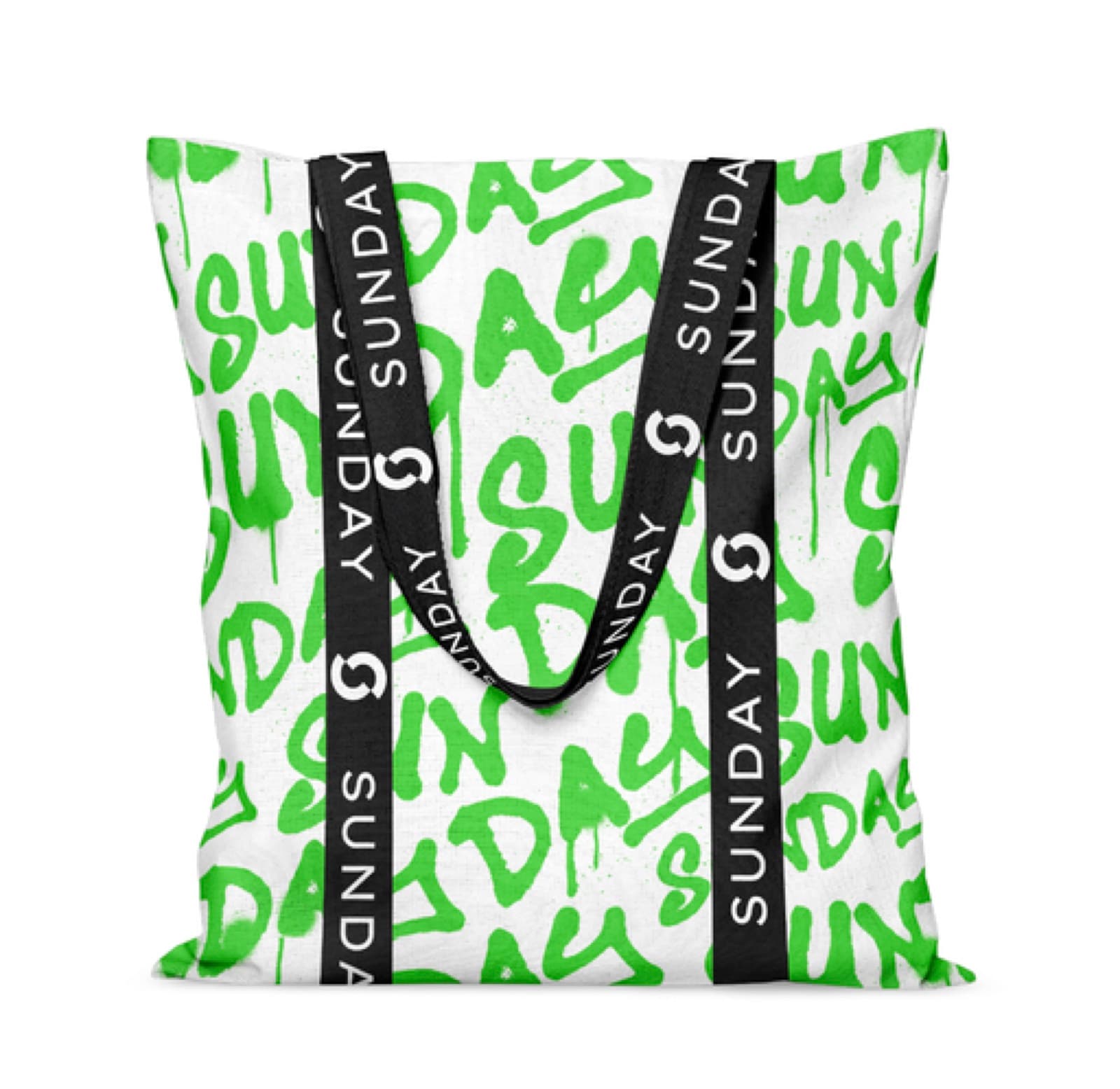
A custom tote bag with tape detail, front view, showing how colour and finish read on the bag.
Step 6. Proof and sample
Approve a digital proof first to confirm placement, size and colours, then, for any meaningful run, ask for a physical sample. A sample is where you catch the things a screen cannot show: how the fabric feels, whether the handles are sturdy, how the print sits on the weave and whether the bag holds its shape. This is also your moment to run the six-bottle test in real life. Do not skip it on a bag you want carried for years.
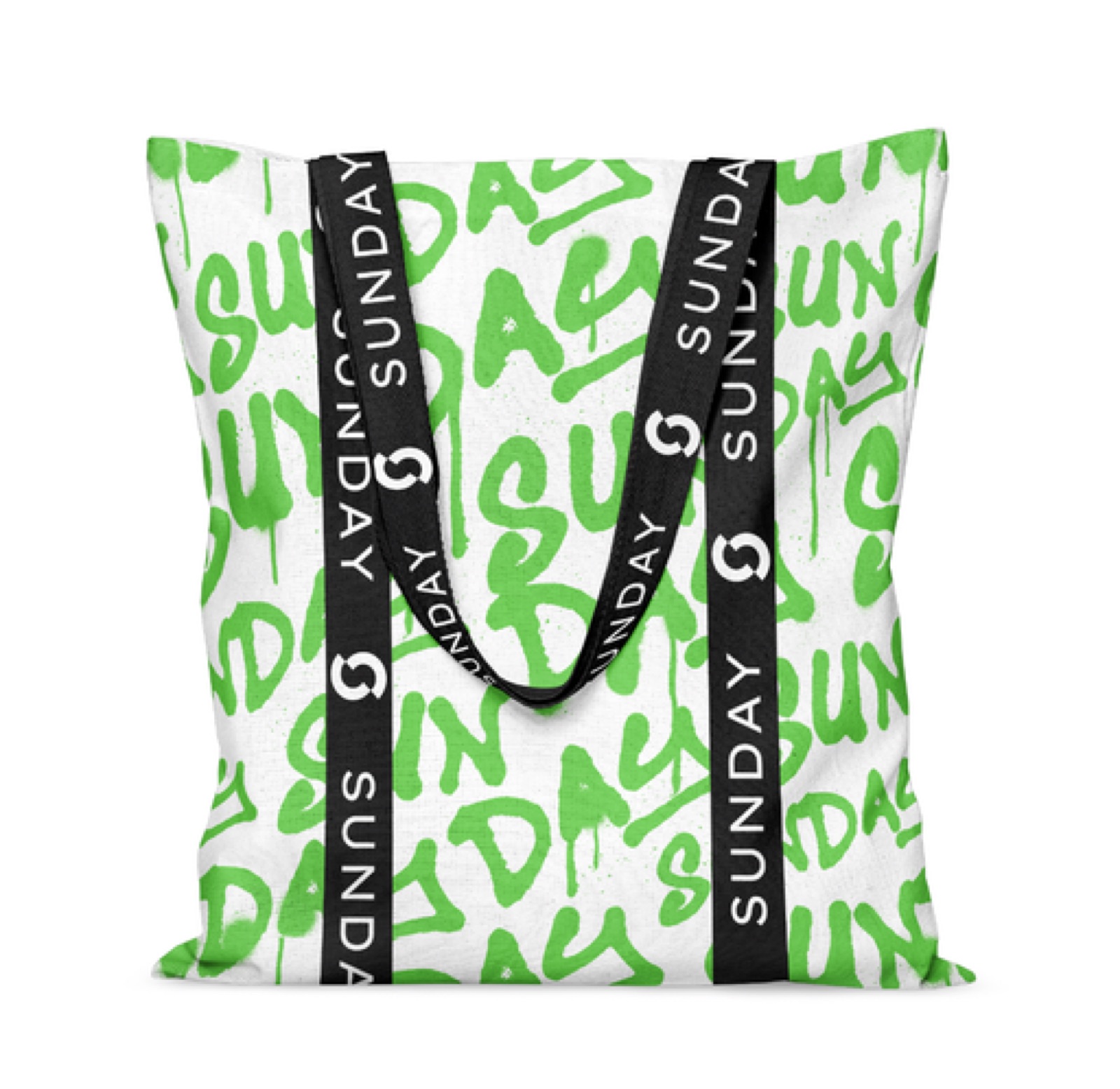
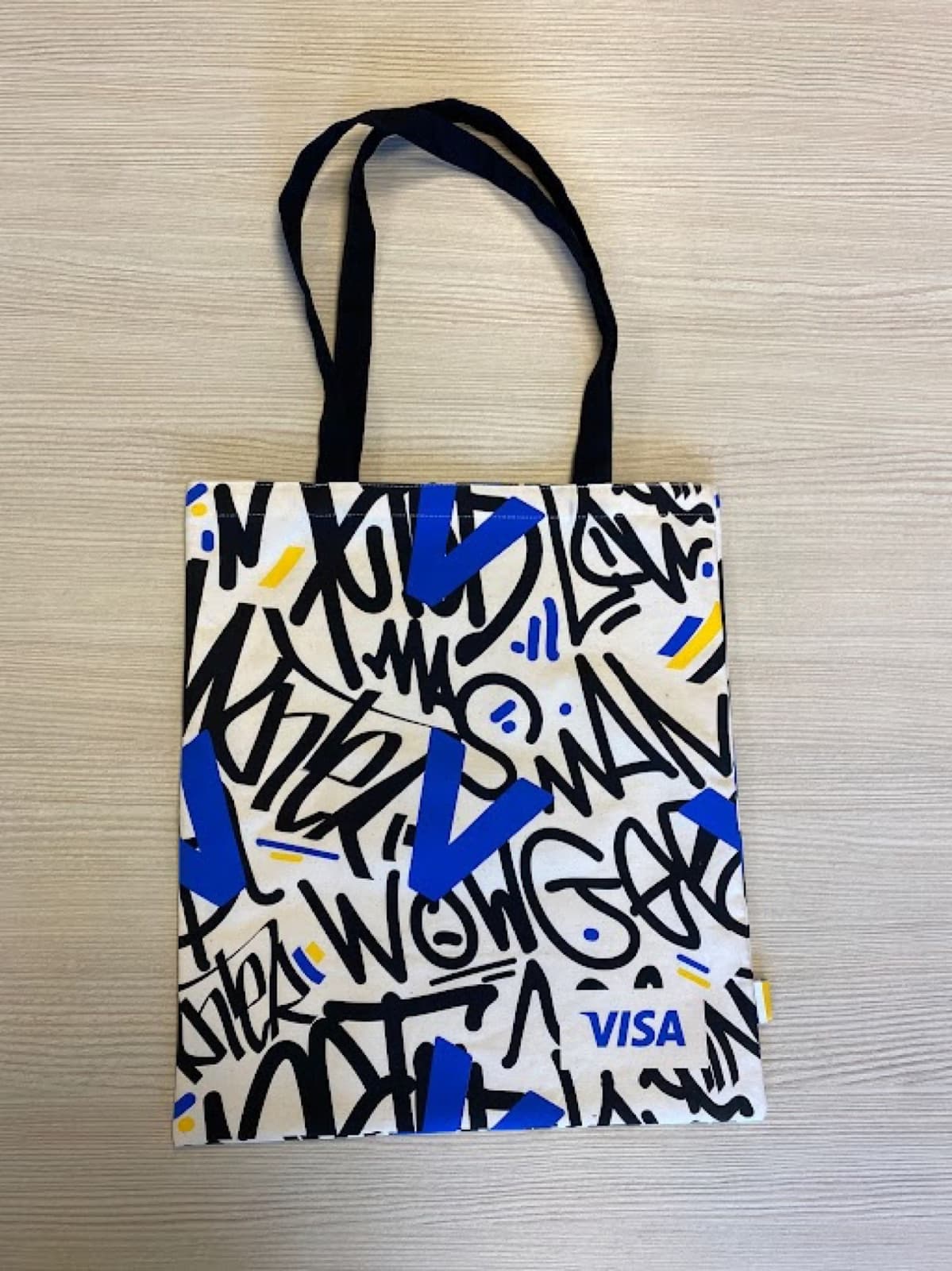
A graffiti-design custom tote bag, the kind of finished result you sign off on a physical sample.
Step 7. Order and deliver
Once the sample is signed off, place the order. Through Sunday you can decorate a ready-made tote from around 50 pieces, the fast, low-risk route, or build a fully custom bag from scratch from around 100 pieces. Pricing improves a lot at 1,000 or 5,000 units, so it is easy to pilot a design and then scale it. Sunday makes and sews in Europe to EU manufacturing standards and ships worldwide on one platform, so the same design can reach people across borders without a logistics headache. For full price bands by quantity, see custom tote bags in bulk. To learn how the whole flow works, read how it works or browse the catalog, and order from the custom tote bags page.
Designing custom tote bags: questions answered
How do I design a custom tote bag?
Work in order: write a one-line brief on how long the bag should last, choose a material and a fabric weight of 220 to 270 gsm, pick a decoration method to match, prepare vector artwork, lock your brand colours, approve a digital proof and a physical sample, then order from a low minimum. Decide the object and construction first, then design the artwork to fit.
What file format should I supply for tote artwork?
Vector files where possible, so the design stays sharp at any size. Keep screen-print designs to clean shapes and a defined number of colours. Save photographic or gradient-heavy artwork for sublimation, which prints full colour. If you only have a raster logo, supply it at the highest resolution you have and your supplier can advise on the best decoration route.
Screen printing or sublimation for a tote bag?
Screen printing is ideal for cotton and canvas and straightforward designs, giving a crisp, reliable result on a large flat surface. Sublimation suits synthetic, water-resistant materials and supports full-colour artwork, gradients and complex designs. Choose by material and by how colourful the design is. Woven handles and labels can add a premium finish on top of either.
Do I need a sample before ordering tote bags?
For any meaningful run, yes. A digital proof confirms placement, size and colours, but a physical sample is where you catch how the fabric feels, whether the handles are sturdy and how the print sits on the weave. It is also your chance to run the six-bottle test in real life. It is the cheapest insurance against a disappointing bulk order.
How do I make sure the colours match my brand?
Specify exact brand colour references rather than relying on a screen approximation, and check how each colour reads on your chosen fabric, since the same ink looks different on natural cotton, bleached canvas and coloured material. Preview the design in your colours with the free tote bag mockup generator first, then confirm on the physical sample.
What is the minimum order to design a custom tote?
Around 50 pieces to decorate a ready-made tote with your design, which is the fast, low-risk route, or around 100 pieces to build a fully custom bag from scratch. Both minimums are low, so you can pilot a design before scaling. Pricing improves a lot at 1,000 or 5,000 units.
Keep reading: custom tote bags
Design it, then see it in your brand
Preview a premium, EU-made tote in your colours and order from a low minimum, live in 30 seconds.
Get free designs