To choose custom tote bags for your company, judge them on construction before material. Target a fabric weight of 220 to 270 gsm, reinforced handles and cross-box stitching, and apply the six-bottle test: a good tote carries roughly six full bottles without the handles tearing. Then pick the material (canvas, cotton or jute) for the look, the decoration for the design, and a supplier that matches your minimum, lead time and delivery needs. Buy a bag people would keep, not the cheapest one.
The one rule that saves you. Most tote bag mistakes come from buying on unit price. The cheapest bag looks fine flat on a quote and falls apart the first time someone loads it, so it gets used once and binned. A slightly heavier, better-built tote costs a little more and gets carried for years. Judged on cost per impression, the better bag is the cheaper one. Start there and the rest of the decisions get easier.
1. Fabric weight and construction
This is the decision that matters most, and the one most buyers skip. Construction beats material. A tote should hold its shape rather than crease and collapse, and it should carry real weight without the handles giving way. Target a fabric weight of around 220 to 270 gsm, heavier if you want a more substantial bag. Below that you are into light distribution totes that work for one-off handouts but will not build long-term brand value.
Handles fail first, so look at the join. Cross-box stitching where the handle meets the body, reinforced webbing or woven tape handles, and substantial fabric are what let a tote last. The simplest test is concrete: ask whether the bag passes the six-bottle test, carrying roughly six full bottles without the handles tearing. It cuts straight through marketing words like durable and premium.
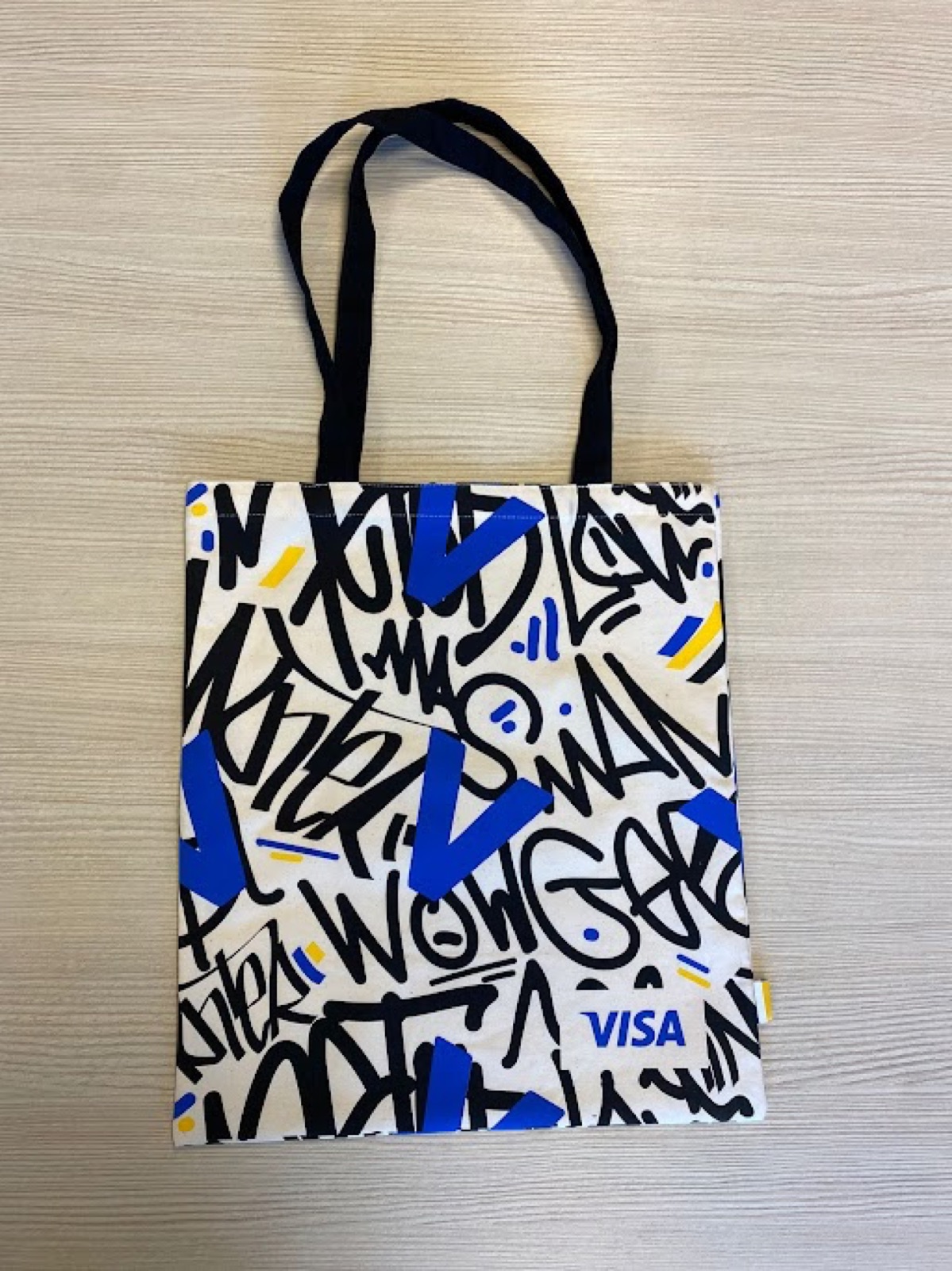
A Visa-branded custom tote: check the handles and the stitching at the join first, where a cheap tote fails and a good one earns its keep.
2. Material: canvas, cotton or jute
Once construction is sorted, material is mostly a look-and-story decision. Sunday offers organic and standard cotton, canvas, polyester, heavy polyester canvas, recycled felt and other recycled materials. The three you will choose between most often:
- Custom canvas tote bags. The workhorse default. A large flat surface, holds its shape, reads premium, and takes screen printing beautifully. The right call for an everyday, reusable bag.
- Custom cotton tote bags. Soft, familiar and easy to brand, with organic cotton giving a credible material story. Just do not buy the ultra-light shopper, step up to 220 to 270 gsm.
- Custom jute bags. Coarse, natural and rigid enough to stand on a shelf. Known as jutebeutel in the German-speaking market, one of Europe's highest-volume tote formats. A strong fit for food, drink, retail and eco-led brands.
Pick the material for the audience and the message, then let construction do the heavy lifting. A heavier cotton or canvas tote with good handles will outlast and out-impress a lighter bag in any material.
3. Decoration and finish
The decoration method should follow the material and the look you want. There is a clear toolkit:
| Method | Best for | Look |
|---|---|---|
| Screen printing | Cotton and canvas, straightforward designs | Reliable, crisp, effective on a large flat surface |
| Sublimation | Synthetic, water-resistant materials | Full-colour artwork, gradients, complex designs at an accessible price |
| Woven handles or tapes | Premium finish without covering the bag | Repeating logo or pattern on the handles, body stays clean |
| Labels | Fashion-led detail | Flag, side-seam, handle or leather labels for a designed feel |
This is where the beauty-over-branding principle pays off. Woven handles and labels let you brand a tote the way a fashion label would, with restraint, so people actually want to use it. Preview any decoration in your colours first with the free tote bag mockup generator.
4. Size and format
Size is a strategy decision, not an afterthought. At events, the bigger, nicer bag wins because people stuff all their other giveaways inside it, so a generous tote becomes the most visible bag in the room. Beach-bag and travel formats work especially well when recipients actually need to carry something. For everyday reuse, a standard shopper or canvas tote is the safe, sizeless choice that fits everyone.
Match the format to the job: a large statement tote for exhibitions and activations, a clean everyday tote for welcome kits and gifting, a rigid jute for retail display.
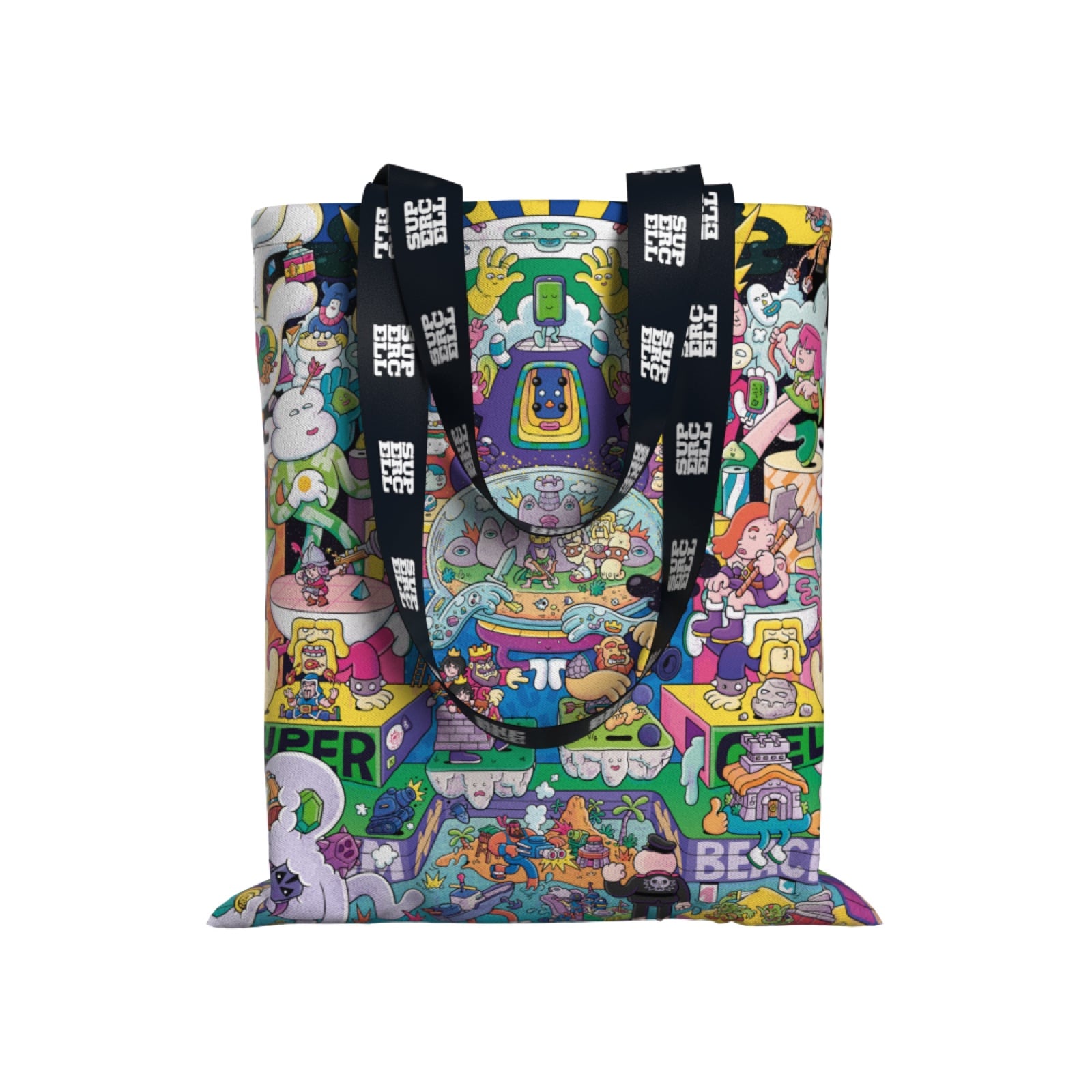
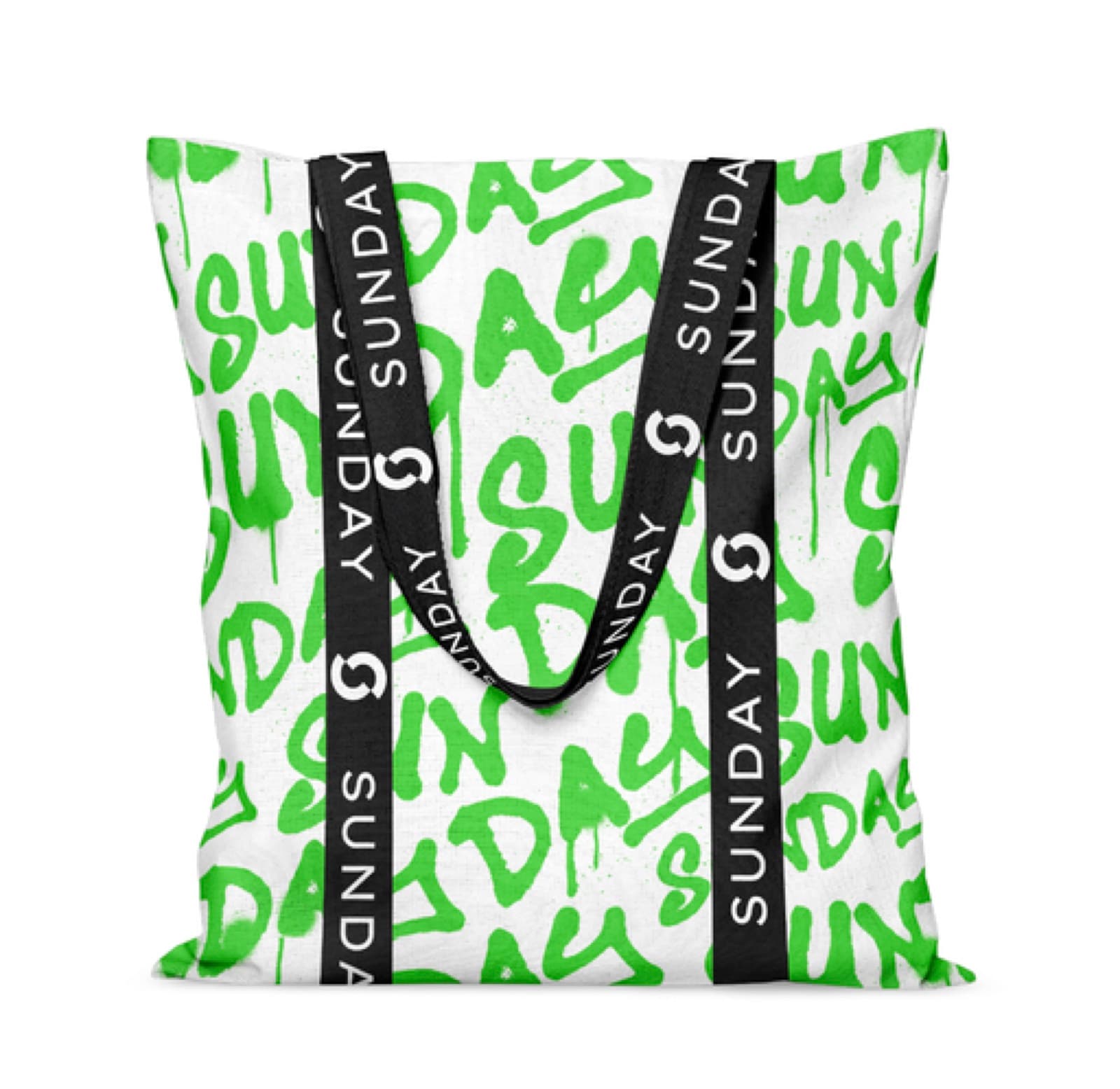
A full-colour Supercell tote bag design. Go bold and big enough to be useful, and it becomes the bag everyone else's swag ends up inside.
5. MOQ, lead time and price
Know the two routes and their minimums. Through Sunday you can decorate a ready-made tote from around 50 pieces, the fast and budget-friendly route, or build a fully custom bag from scratch from around 100 pieces. Both minimums are low, so it is easy to pilot before scaling.
Pricing is strongly volume-driven and improves a lot at 1,000 or 5,000 units. The main cost drivers are quantity, the number of decoration techniques, artwork complexity, full-colour printing, custom handles or tapes, labels and finishing, and whether you build from scratch or decorate an existing model. A simple one-print tote can be very budget-friendly; a fully customised bag with labels and woven handles costs significantly more.
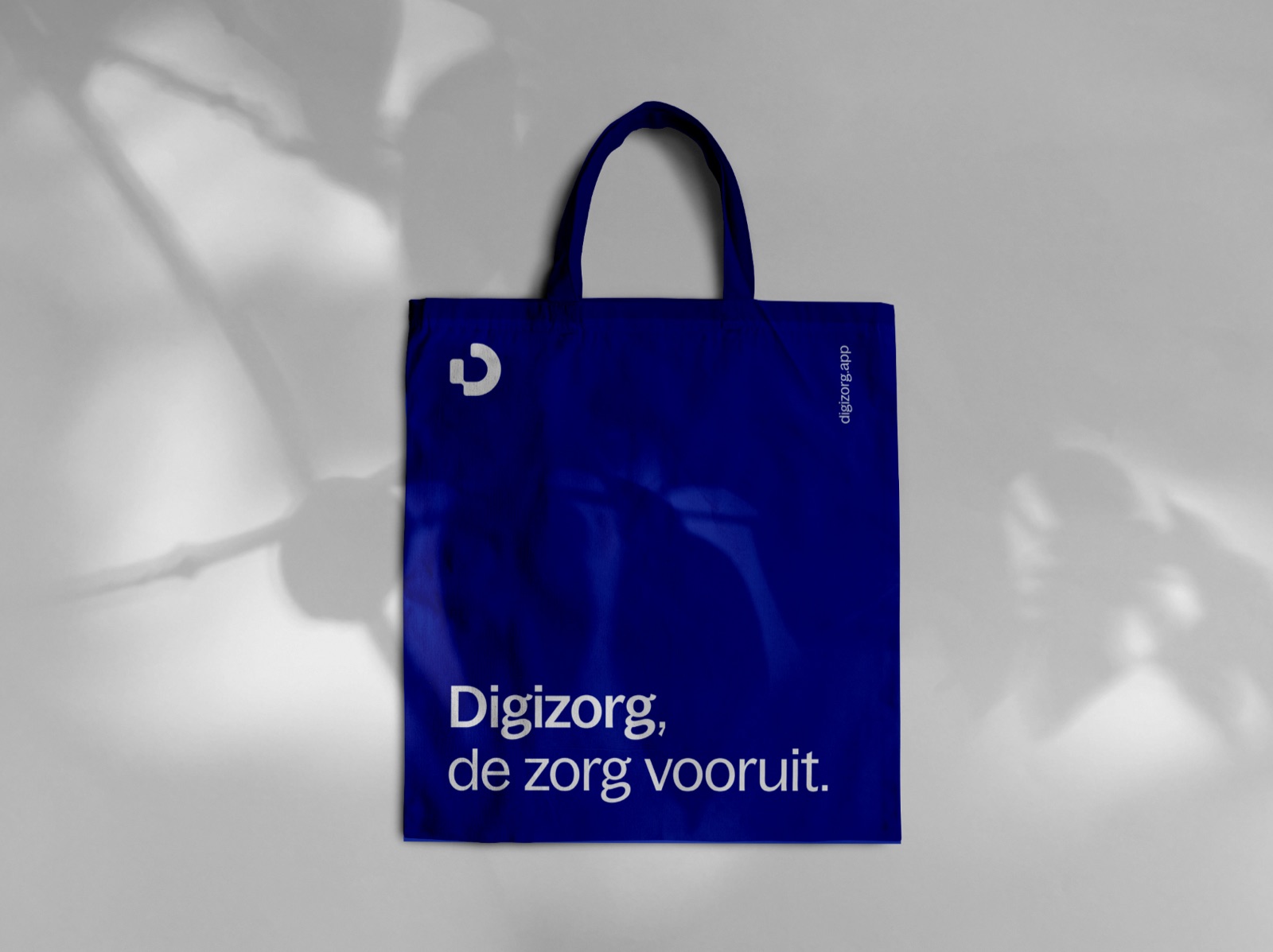
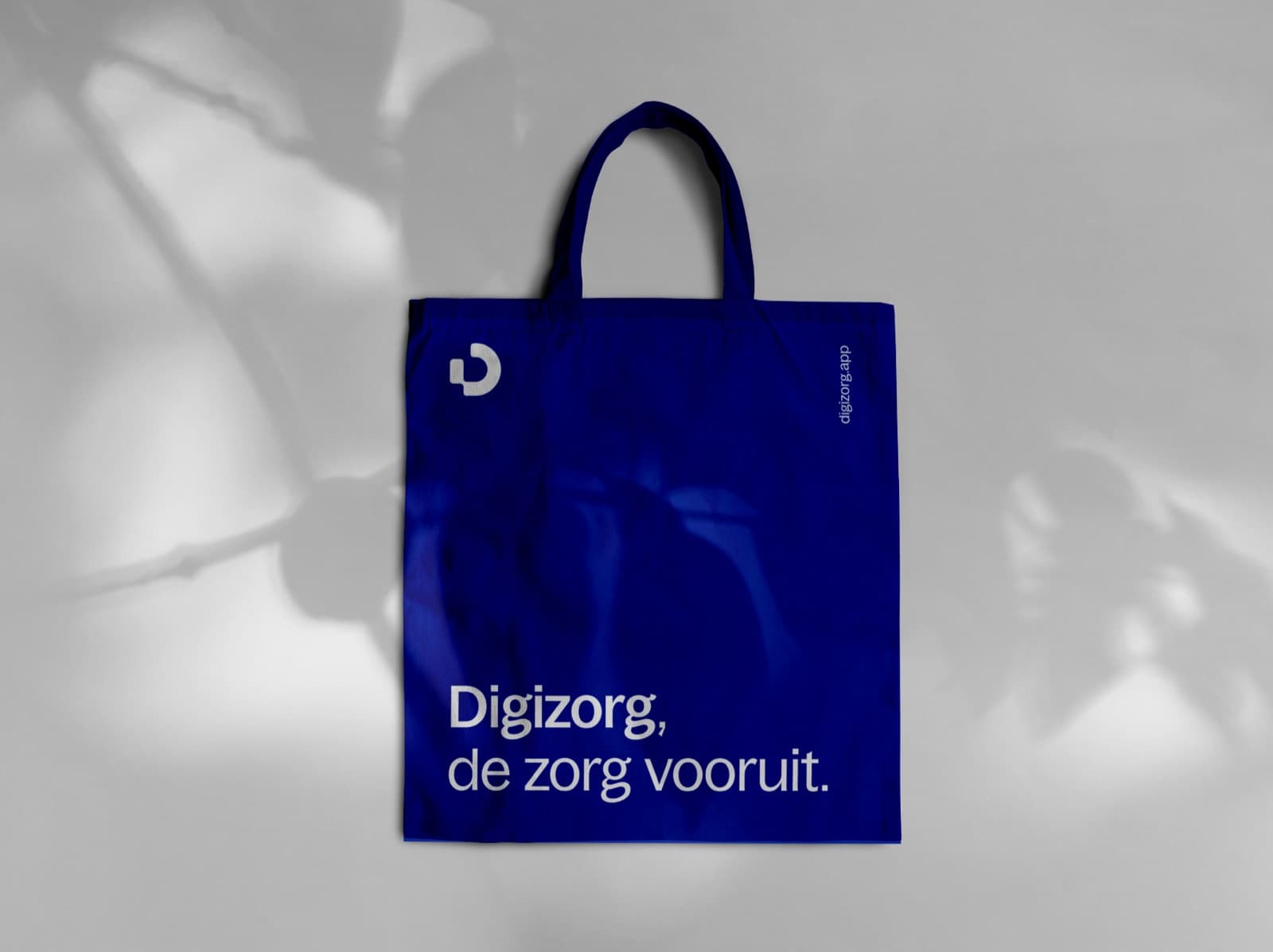
A custom tote bag product render: a clean everyday tote is the safe, sizeless choice for welcome kits and gifting, where it fits everyone on the list.
6. Supplier and delivery
Finally, match the supplier to the brief. A simple printed handout in one country suits a promo distributor. A premium, on-brand tote shipped to people across borders needs a platform that handles design, warehousing and global fulfilment. Sunday makes and sews in Europe to EU manufacturing standards, keeps production close to the customer, and ships worldwide on one platform.
The buyer's checklist
- Fabric weight 220 to 270 gsm, reinforced handles, cross-box stitching
- Passes the six-bottle test
- Material chosen for the audience: canvas, cotton or jute
- Decoration matched to material; restraint over a giant logo
- Size matched to the job; generous for events, clean for kits
- Minimum and lead time fit your timeline
- Supplier can deliver where your people are
- Would someone keep this bag? If not, go up a tier
What GSM should a good tote bag be?
Around 220 to 270 gsm, heavier if you want a more substantial bag. Below that you are into light distribution totes that work for one-off handouts but will not build long-term brand value. The weight, combined with reinforced handles and cross-box stitching, is what lets a tote carry real weight and last for years.
What is the six-bottle test?
It is a practical quality bar: a good tote should carry roughly six full bottles without the handles tearing. Handles fail first, so the test cuts straight to the part that matters. A bag that passes has reinforced or woven handles, cross-box stitching at the join, and a fabric weight in the 220 to 270 gsm range. Ask any supplier the six-bottle question directly.
Canvas, cotton or jute, which should I choose?
Canvas is the premium everyday default and takes screen printing well. Cotton is soft and familiar with a credible organic story, but avoid the ultra-light shopper. Jute is natural, rigid and signals sustainability, ideal for food, drink, retail and eco-led brands. Choose the material for the audience and message, then let construction carry the quality.
What is the minimum order for custom tote bags?
From around 50 pieces for a ready-made tote decorated with your design, which is the fast, low-risk route. For a fully custom bag built from scratch to your own shape, size, handles and construction, the minimum is around 100 pieces. Both minimums are low, so it is easy to run a pilot before scaling.
How do I keep the cost down without buying a cheap bag?
Order in volume; pricing improves a lot at 1,000 or 5,000 units. Keep the decoration simple, a clean screen print on canvas is budget-friendly and looks premium. Spend on construction, not gimmicks: a heavier fabric and good handles add a little cost but years of life. Avoid full-colour everywhere, custom handles and multiple labels unless the brief needs them.
Which supplier should I use for company tote bags?
Match the supplier to the brief. A simple printed tote in one market suits a promo distributor. A premium, on-brand tote shipped to people across borders needs a platform like Sunday that handles design, EU manufacturing, warehousing and global fulfilment on one platform.
Keep reading: custom tote bags
Choose, then see it in your brand
Preview a premium, EU-made tote in your colours and order from a low minimum, live in 30 seconds.
Get free designs