


Measure customer service recovery gifts on four fronts: NPS and satisfaction for immediate sentiment, retention and churn against a similar non-gifted control group, social and word-of-mouth from customers posting the gift, and downstream value through repeat purchases, renewal rates and LTV. The single sharpest number is the retention math: if a 20-euro gift prevents a churn that costs 100 euros to replace, you save around 80 euros before counting the revenue you keep.
20-euro gift vs 100-euro acquisition
If acquiring a replacement customer costs 100 euros and a 20-euro recovery gift prevents the churn, you have saved roughly 80 euros before counting the retained revenue. For a customer spending tens of thousands, a 50-euro gesture is negligible against the potential loss. In recurring businesses, retaining through a thoughtful gesture is cheaper than acquiring.
1. NPS and satisfaction: immediate sentiment
The fastest signal is how the customer feels right after. Send an NPS or CSAT survey following the resolution and the gift, and compare the score against your baseline for resolved tickets. A service failure is an emotional low, so a strong post-recovery score shows the gesture flipped the experience from frustration to feeling recognised. Watch the qualitative comments too: customers often mention the gift by name.
2. Retention and churn versus a control
This is the metric that matters most, because it ties the gift to revenue. Compare the retention and churn of customers who received a recovery gift against a similar group who had a comparable issue resolved but no gift. Run it as a controlled or A/B test so the difference is attributable to the gift, not to the resolution alone.
- Gifted group: customers who had an issue resolved and received a recovery gift.
- Control group: a similar set who had an issue resolved with no gift.
- The number: the gap in retention or churn between the two over the following period.
Compare the gifted group against a non-gifted control to isolate the retention lift the gift actually adds.
3. Social and word-of-mouth
Recovery gifts get shared. Customers post the unexpected gesture, which turns a private apology into positive public exposure. Track mentions, tags and shares tied to recovery gifting, and count the reach. A complaint that ends with the customer publicly praising how you handled it is worth far more than the gift cost.
4. Downstream value: repeat, renewal, LTV
Beyond the immediate moment, the gift should show up in the numbers that compound. This is where recurring-revenue businesses see the clearest case.
| Metric | What it tells you |
|---|---|
| Repeat purchases | Whether the customer kept buying after the recovery |
| Renewal rate | For subscriptions, whether they renewed rather than churned |
| Lifetime value | The total revenue retained by keeping the relationship |
| Support satisfaction | Whether the resolution experience improved overall |
| Complaint recurrence | Whether the same customer needed to escalate again |
| Referrals & expansion | Whether the saved relationship grew or referred others |
Recovery gifting is especially powerful for subscription and recurring-revenue businesses, where retention has direct long-term value, so renewal and LTV are the headline numbers there.
Who owns the measurement
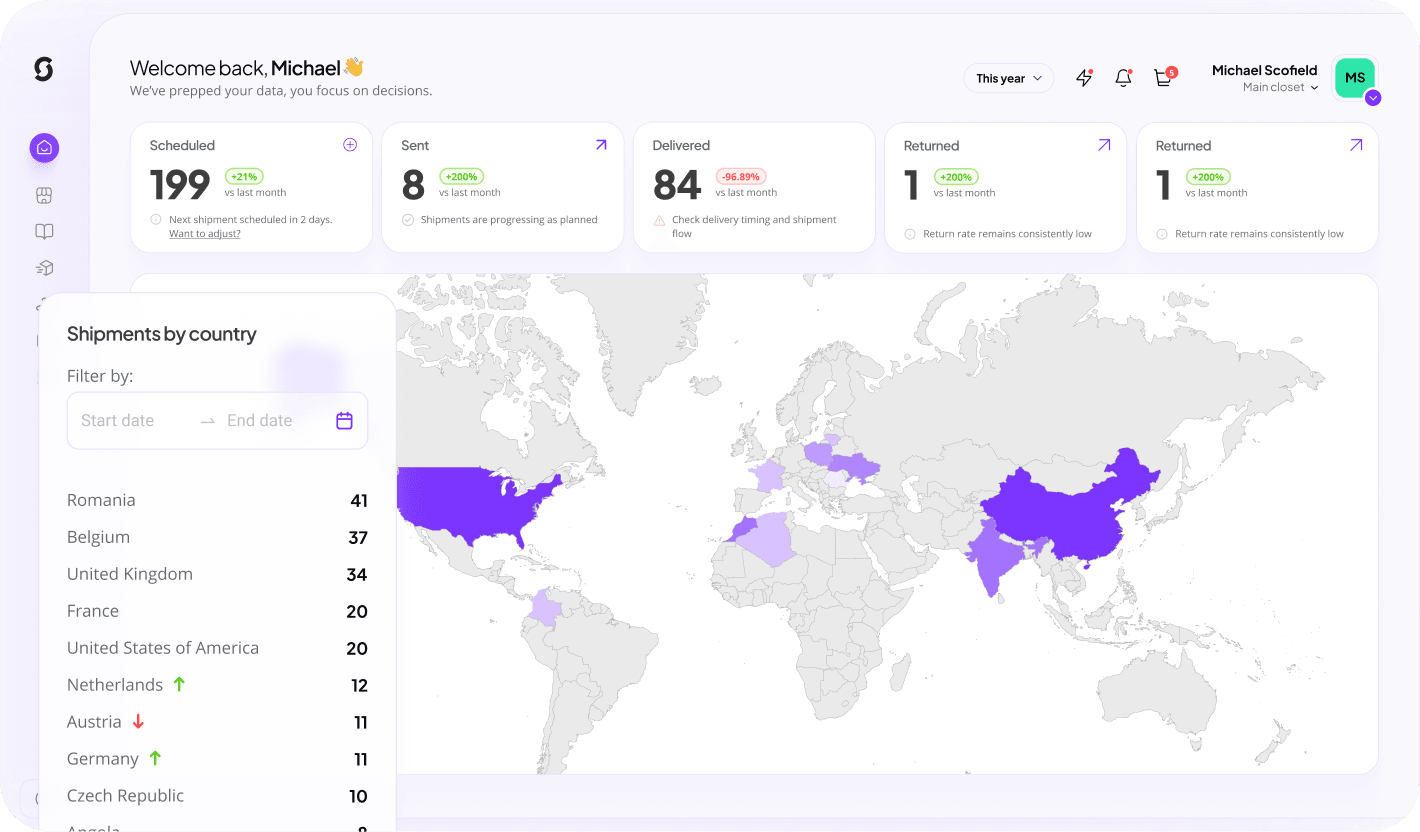
Measurement sits with the teams that own NPS, retention and relationships, usually customer marketing or customer success, with support executing the sends. Marketing or CS owns the strategy, budget, products, rules and performance reporting. Support selects and sends at the right moment. The platform handles the logistics and the reporting, so the data comes back without manual tracking.
How Sunday closes the loop
Sunday turns recovery gifting into a structured workflow with reporting built in, so each send is logged and attributable. The rep resolves the ticket, selects an approved gift and budget tier, adds a personal note, and the platform handles shipment creation, fulfilment and the data. That makes the control-group comparison and the retention math straightforward to run. See how it works, and because Sunday is merch infrastructure, the measurement is part of the workflow, not an afterthought.
About this article
How do you measure the ROI of customer service recovery gifts?
Compare the retention and churn of customers who received a recovery gift against a similar control group who had an issue resolved without one, run as a controlled or A/B test. Multiply the retention lift by customer value to get ROI. The core math: if a 20-euro gift prevents a churn that costs 100 euros to replace, you save around 80 euros before counting the retained revenue.
What metrics show recovery gifts are working?
NPS and satisfaction for immediate sentiment, retention and churn versus a control group for revenue impact, and social mentions for word-of-mouth. Downstream, track repeat purchases, renewal rates, lifetime value, support satisfaction, complaint recurrence, referrals and account expansion. For recurring-revenue businesses, renewal rate and LTV are the headline numbers.
Why do you need a control group?
Without a control group, you cannot tell whether retention came from solving the problem or from the gift. By comparing gifted customers against a similar non-gifted group who had a comparable issue resolved, you isolate the lift the gift adds. That isolated lift, multiplied by customer value, is the real ROI of the recovery gifting program.
Is a 50-euro recovery gift ever worth it?
For a high-value customer, easily. If a customer spends tens of thousands a year, a 50-euro gesture is negligible against the potential loss from churn. The spend should scale with severity and customer value, which is why budget tiers run from around 10 euros for a minor issue up to 50 euros for a major one or a high-value account.
Who should own recovery gift measurement?
The teams that own NPS, retention and relationships, usually customer marketing or customer success, with support executing the sends. Marketing or CS owns the strategy, budget, rules and performance reporting, while support selects and sends at the right moment. A platform that logs each send makes the data come back automatically, so the control-group comparison and retention math are easy to run.
How soon can you measure the effect?
Immediate sentiment shows up within days through a post-resolution NPS or CSAT survey. Retention, churn and renewal effects take longer, over the following billing or contract period, because that is when the customer chooses to stay or leave. Track both: the fast sentiment signal confirms the gesture landed, and the slower retention number confirms it paid off.
Keep reading: customer service recovery gifts
Make recovery gifting measurable
Run approved gifts and budget tiers through a Zendesk integration, with reporting that ties each send to retention.
Build this campaign