
To run a sales team outfits program, treat it as a coordinated kit rather than a one-off order. Set the trigger and the brief, choose a base layer (usually a branded polo), build a layering system on top (merino sweater, zipped sweatshirt, bodywarmer, softshell, jacket), keep every layer on-brand, size men and women properly, then handle reorders for new hires. Build the whole kit on one platform with live pricing, so sizing and reorders stop being a spreadsheet scramble.
Most teams treat apparel as an emergency before each event: a frantic order, a guess at sizes, no plan for the next hire. A program flips that. You design the kit once, size it per person, and reorder on demand. The clothing becomes infrastructure, not a fire drill. This guide is the practical build; the strategy behind it is in the full sales team outfits guide.
Step 1. Set the trigger and brief
Start with what the program is for. A trade-show season, a new field-sales team, a rebrand, a customer-facing service rollout. The trigger sets the formality and the bias. An enterprise industrial team and a casual tech team should not wear the same kit, so write a one-line brief: who wears it, where, and what impression it should give.
- Environment: booth, field, retail floor, office, or a mix.
- Formality: formal enterprise, semi-formal retail and service, or casual tech.
- Brand image: understated and refined, or bold and recognisable.
The brief is the filter for every later decision. Get it right and the rest of the program almost chooses itself.
Step 2. Choose the base layer
The base layer is what reps wear most, so it carries the program. For most teams that is a branded piqué polo: professional, comfortable, approachable, and the right canvas for restrained embroidery. For formal enterprise B2B, the base may be a business shirt instead; for casual tech, a premium tee. Decide on brand and customer context, not convenience.
Whatever the base, get the fundamentals right: quality fabric that holds shape, a structured collar, a balanced fit, and embroidery or a sewn detail rather than a flex transfer. Preview yours in the free polo mockup generator.
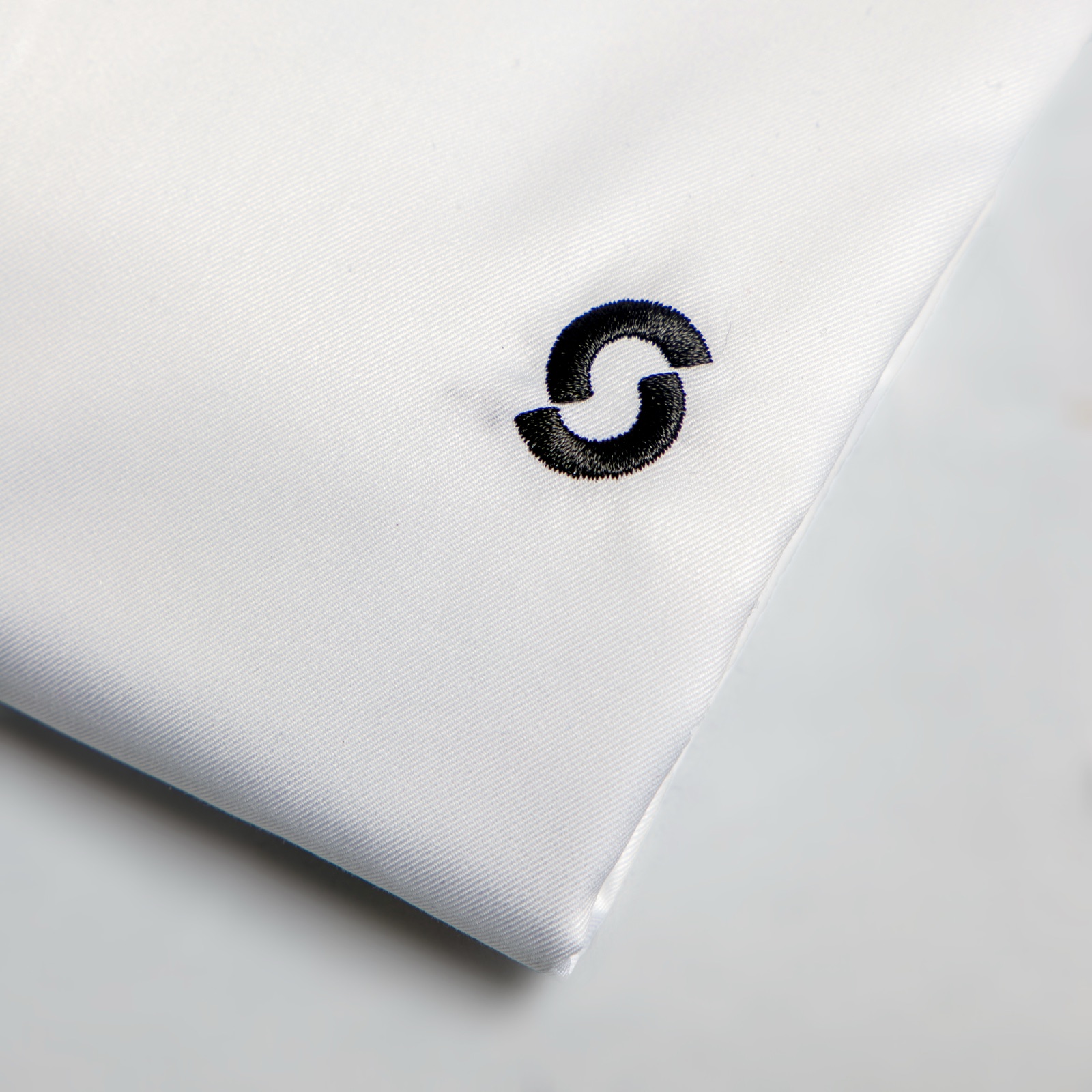
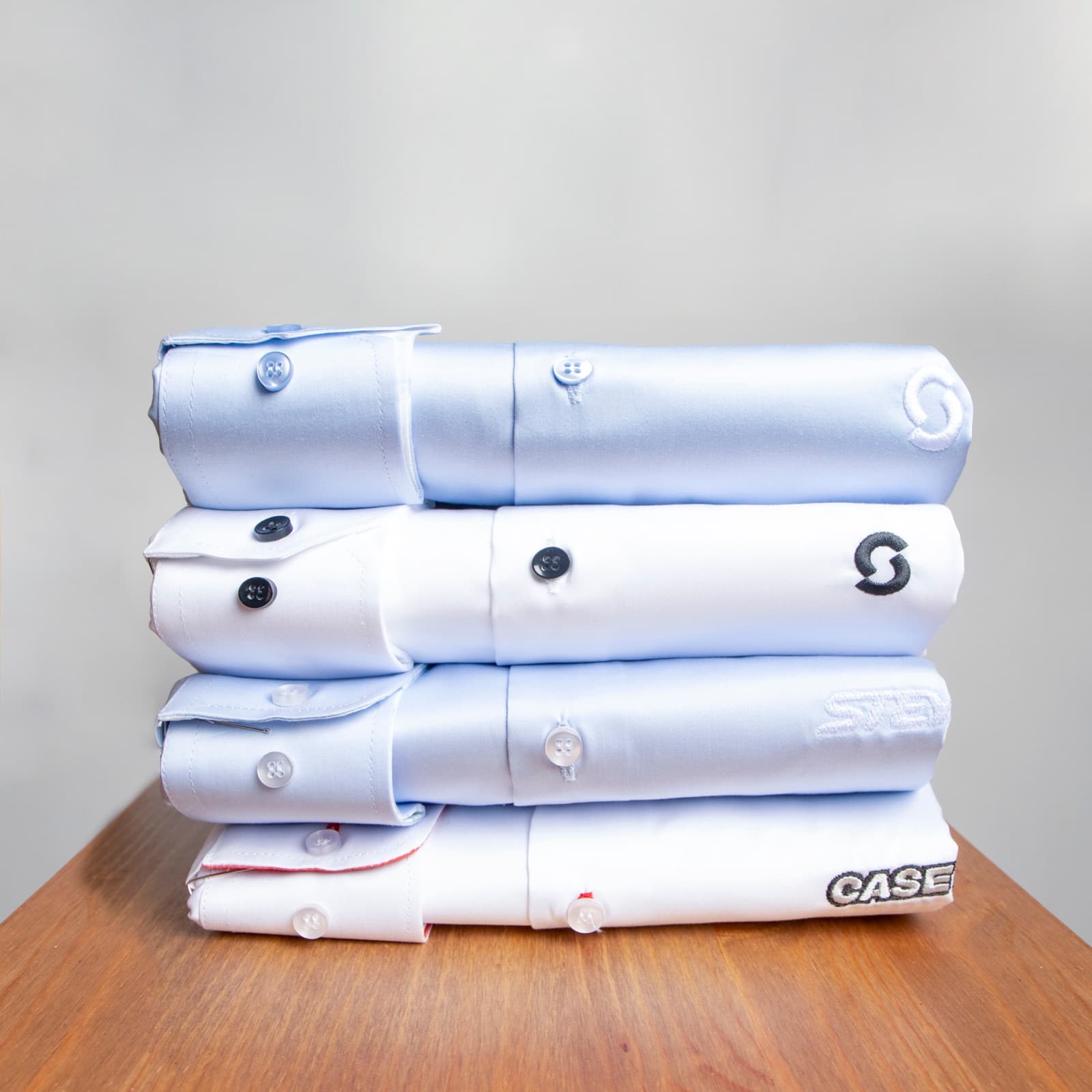
The base layer carries the program. A well-made Sunday-branded business shirt keeps the team looking sharp and on-brand all day.
Step 3. Build the layering system
Booths, offices, customer sites and the outdoors all run at different temperatures, so a complete outfit layers. This is the part most one-off orders skip, and it is what makes a program flexible. Build from the base outward.
| Layer | Role in the kit |
|---|---|
| Base: polo or business shirt | The everyday layer, on-brand and comfortable for a full day. |
| Merino sweater | A refined mid-layer for cooler rooms and a more formal look. |
| Zipped sweatshirt | A casual, practical mid-layer for the field and travel. |
| Bodywarmer | Core warmth without bulk, easy to keep on indoors. |
| Softshell or jacket | The outer layer for weather, the car park and outdoor stands. |
A rep does not wear all of it at once. The point is that any combination works and stays on-brand, so the team looks coordinated from a warm hall to a cold car park. The outer layers connect to our companion range of custom jackets and softshells.
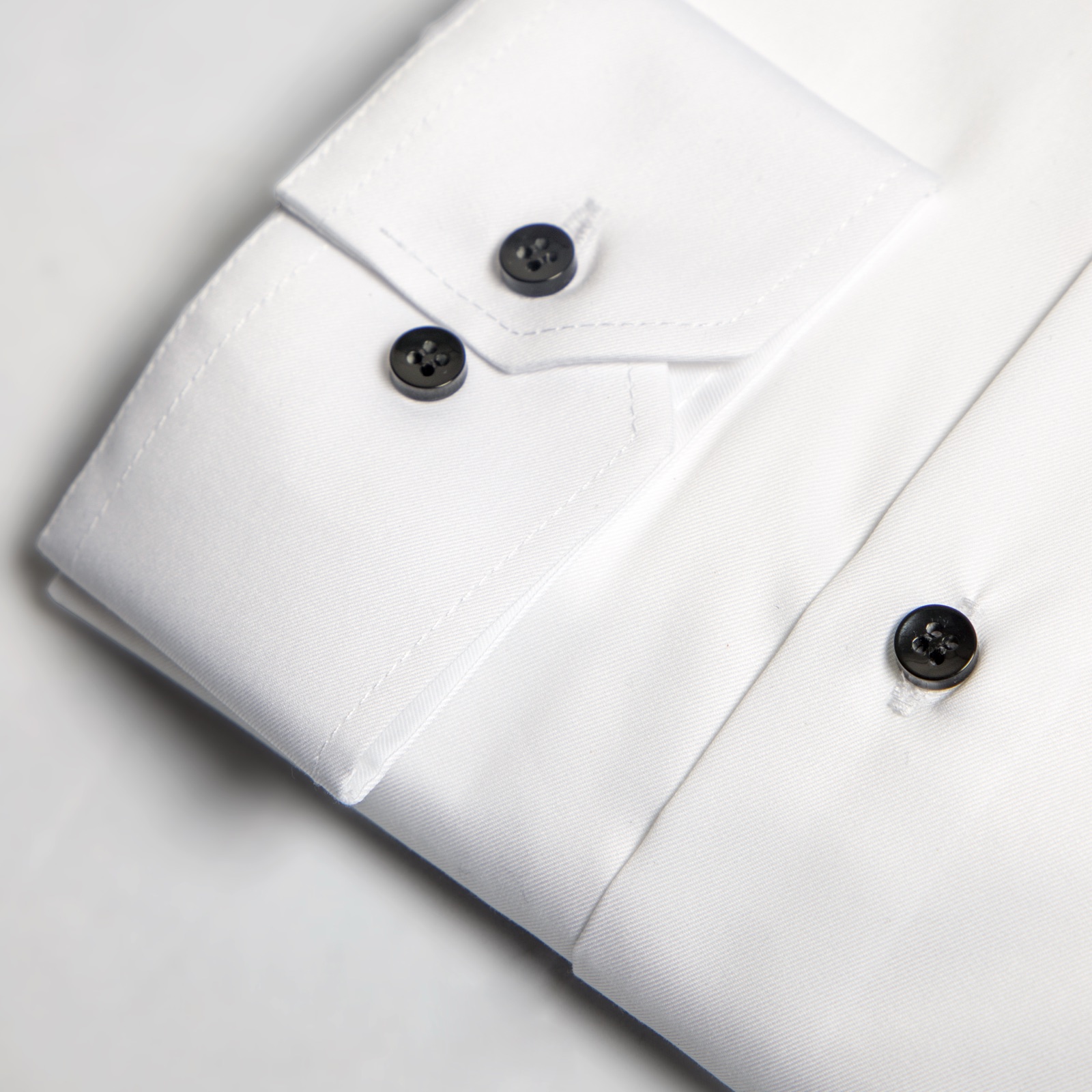
Consistency finishes the kit. A Sunday-branded business shirt keeps a rep on-brand across every setting.
Step 4. Keep every layer on-brand
A program only looks coordinated if the branding is consistent across layers. Decide one colour story and one decoration approach, then apply them to the polo, the sweater, the bodywarmer and the jacket. Keep branding restrained on each piece: a small embroidered mark beats a big logo on every layer.
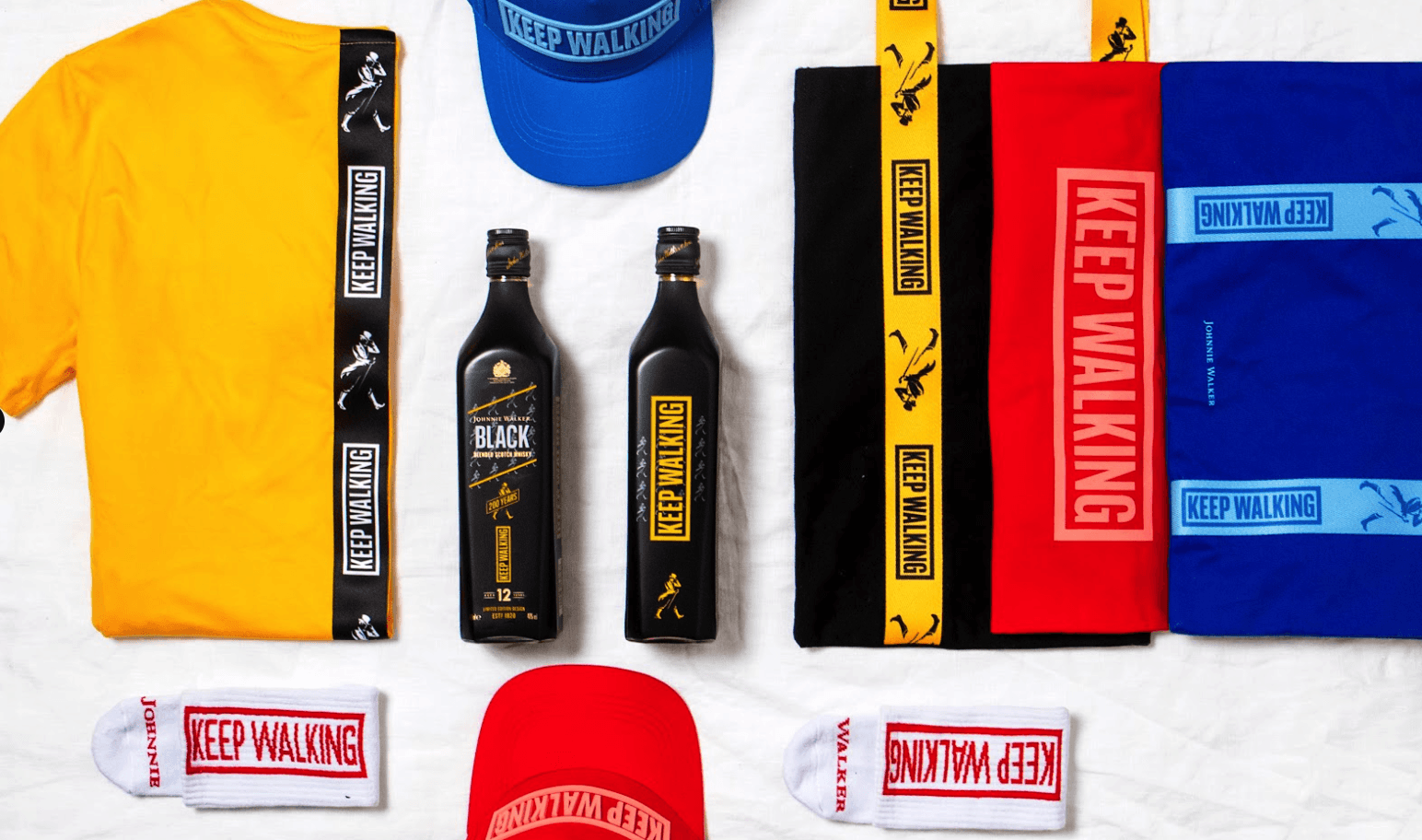
Consistency also extends to the booth. The strongest team presence ties the apparel to the signage, the giveaways and the stand, all in one palette. That is what turns a pile of logo gear into a branded sales apparel collection. Durability matters here too: logos should not wash off and garments should hold shape, because a faded, misshapen kit undoes the whole effort.
Step 5. Size men and women properly
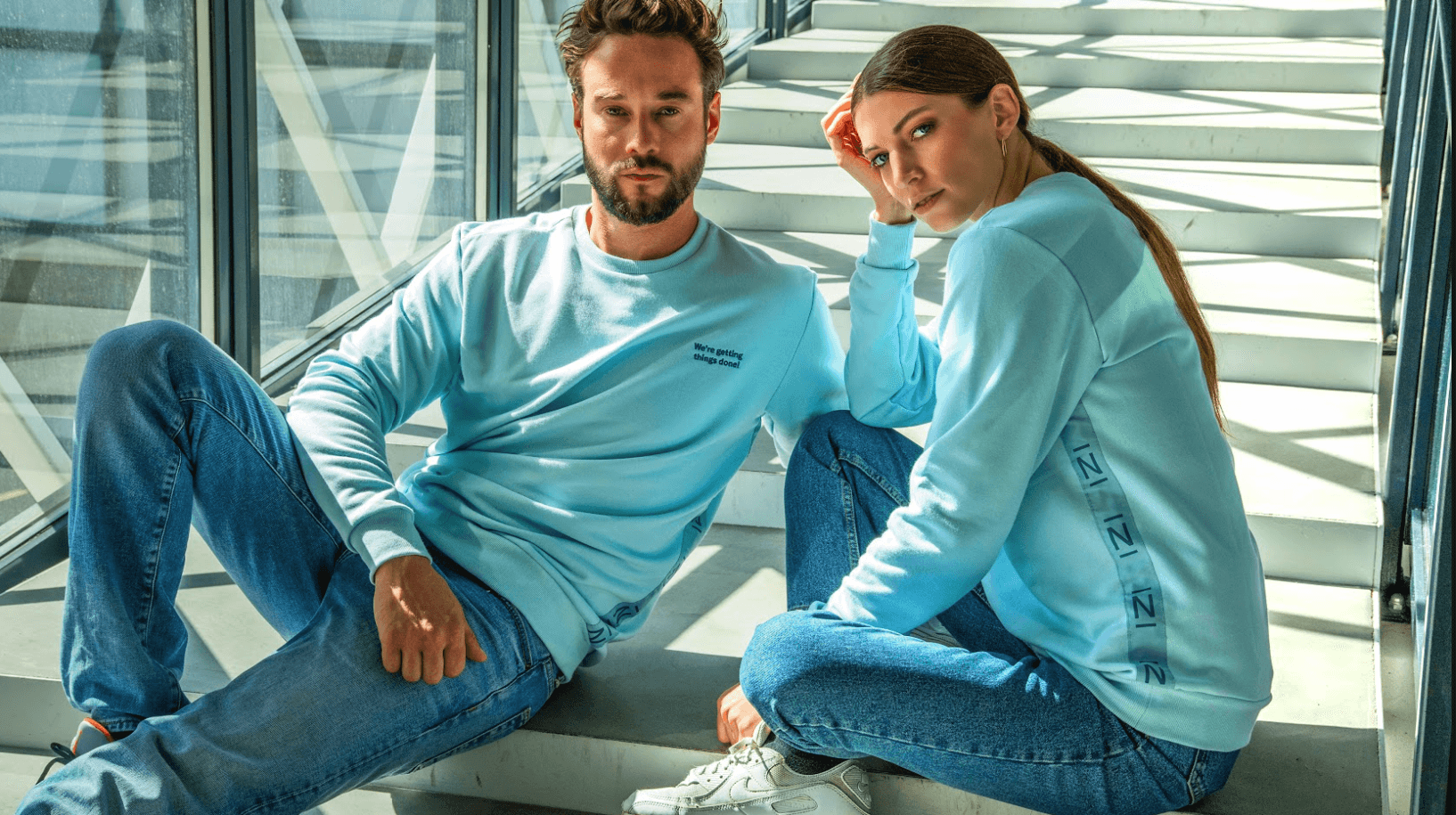
Fit is where programs quietly succeed or fail. Offer distinct men's and women's fits so nobody feels bad in the team photo, and collect real sizes rather than guessing. A study of uniform wearers across seven European companies found well-fitting kit lifted happiness at work by 22%, with the largest gains for women, so this is not a cosmetic detail. (VistaPrint)
- Offer men's and women's fits in a balanced regular cut.
- Collect sizes per person, do not assume a unisex run.
- Keep the cut comfortable, neither overly slim nor oversized.
Get fit right and people actually wear the kit, which is the whole point.
Step 6. Plan reorders for new hires
The painful part of every apparel program is what happens after launch. A new rep starts mid-quarter and needs the kit in their size. Without a plan, that means re-running the whole order, chasing sizes and waiting. With a plan, it is a single reorder against a saved design.
Build the program so reorders are routine: a fixed kit, saved designs, stored sizes, and a clear path to produce a few pieces on demand. That is how a program stays coordinated over time instead of drifting as the team grows.
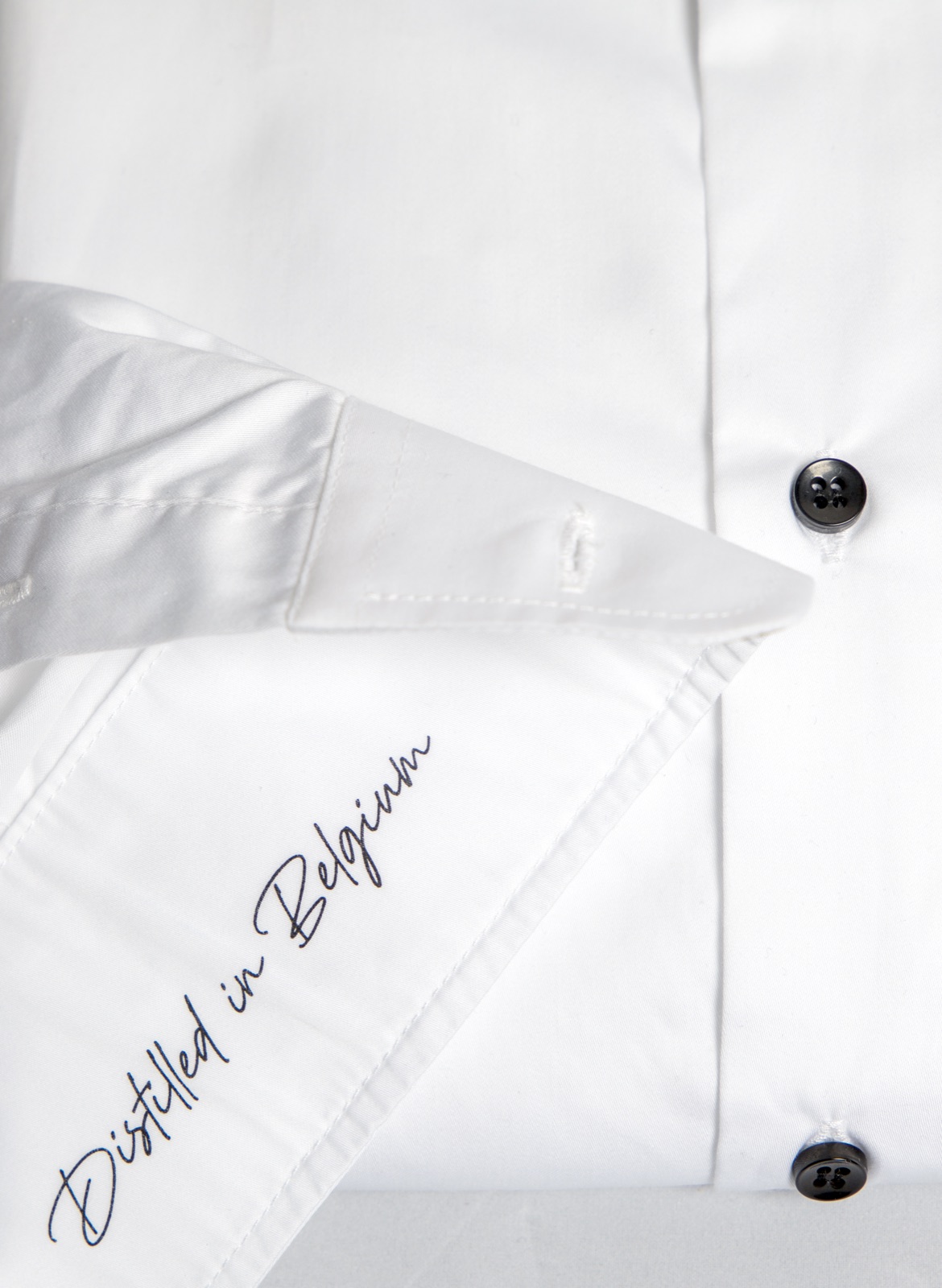
Reorders keep a program alive. A saved design like this Filliers-branded business shirt turns a new-hire kit from a re-run order into a single request.
Step 7. Run it on one platform
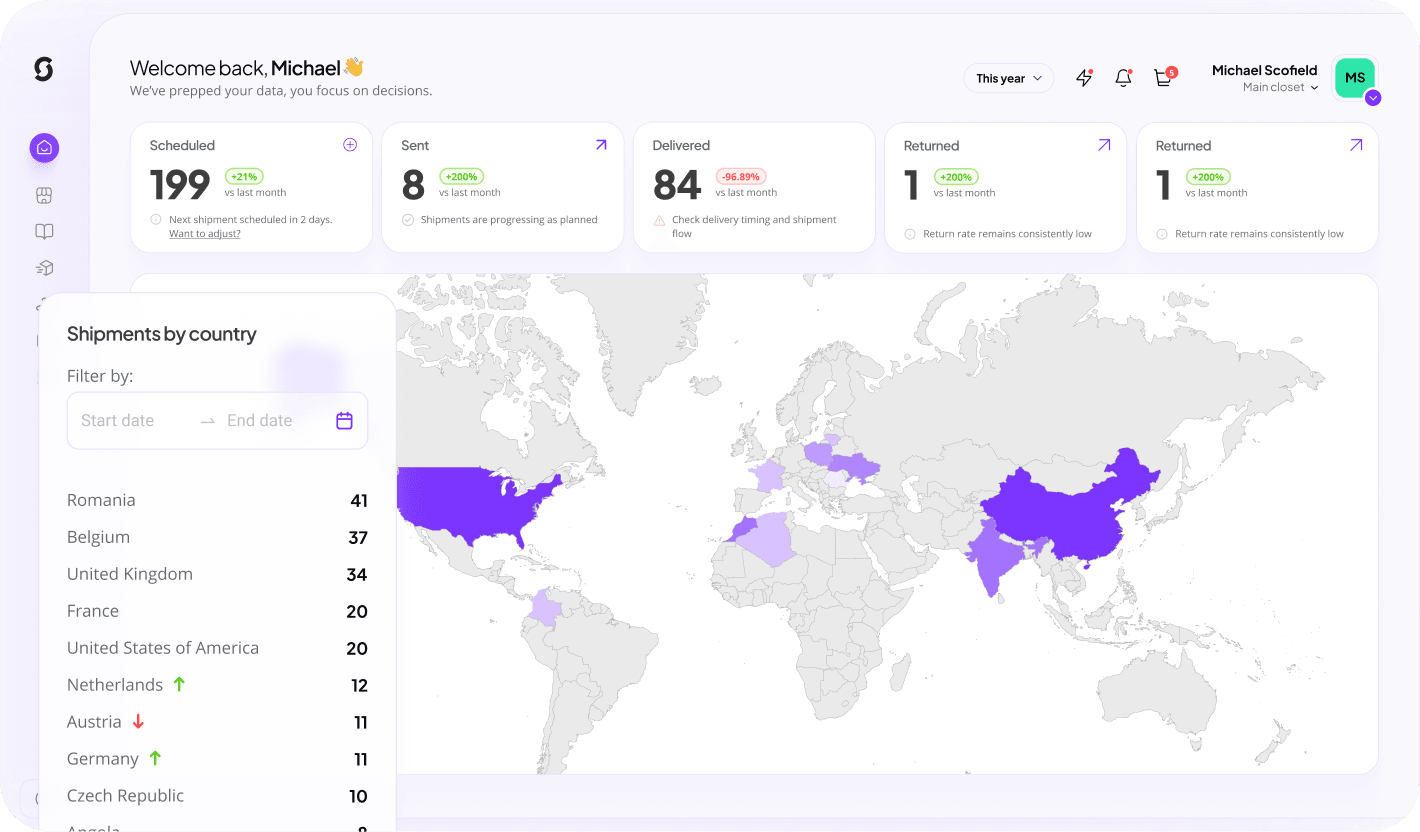
The whole program gets easier on one platform. Instead of a scramble across designers, suppliers and print shops before each event, Sunday builds the kit on-brand with live pricing in about 30 seconds, then handles sizing, kitting and reorders across borders. Design the polo, the layers and the outer shell once, size them per rep, and reorder for new hires on demand.
That is the difference between apparel as a fire drill and apparel as infrastructure. Browse the full catalog, start with custom polos as the base, see how it works, and let our distribution service handle getting the kit to a team in different cities.
Running a sales team outfits program: questions answered
How do I run a sales team outfits program?
Treat it as a coordinated kit, not a one-off order. Set the trigger and a one-line brief, choose a base layer (usually a branded polo), build a layering system on top (merino sweater, zipped sweatshirt, bodywarmer, softshell, jacket), keep every layer on-brand, size men and women properly, and plan reorders for new hires. Running it on one platform keeps sizing and reorders out of a spreadsheet.
What is the layering system for a sales outfit?
A complete outfit layers from a polo or business shirt base, to a merino sweater or zipped sweatshirt mid-layer, to a bodywarmer, to a softshell or jacket as the outer layer. A rep does not wear it all at once. The point is that any combination works and stays on-brand across temperatures, from a warm hall to a cold car park.
Should the base layer be a polo?
For most teams, yes. A branded piqué polo is professional, comfortable and approachable, and the right canvas for restrained embroidery. For formal enterprise B2B, a business shirt may be a better base, and for casual tech a premium tee. Choose on brand and customer context, then build the layers on top.
How do I handle sizing for a whole sales team?
Offer distinct men's and women's fits in a balanced regular cut, and collect real sizes per person rather than assuming a unisex run. Well-fitting kit measurably lifts how people feel about wearing it, so it is worth doing properly. Store the sizes so new hires can be fitted without re-running the whole order.
How do reorders for new hires work?
With a program, a new hire is a single reorder against a saved design and stored size, not a fresh order. Build the kit with fixed garments, saved designs and a clear path to produce a few pieces on demand. On one platform, that turns a mid-quarter joiner from a fire drill into a routine request.
What does a full sales outfit cost per rep?
It depends on how many layers you include. A single branded polo is the entry point; a full field kit with a polo, sweaters, a bodywarmer and a jacket or softshell costs more but covers every setting and lasts. Cost drivers are the garments chosen, the decoration and the quantity. Live pricing on the platform shows the trade-offs as you build the kit.
Keep reading: sales team outfits
Build the kit, size it, reorder it
Design a coordinated sales-apparel program on-brand with live pricing, sized per rep and EU-made. Create a free account and build your kit.
Build this campaign