



A global company’s merchandise program can feel deceptively simple: pick items, add a logo, ship them out. In practice, it is closer to running a small retail operation with brand governance, procurement discipline, international logistics, and a customer experience that reflects on the company every time a box arrives.
The right corporate merchandise provider makes that complexity manageable. The best ones act less like a vendor and more like an operational backbone, helping teams deliver consistent, on-brand items across regions without turning every campaign into a custom project.
What “global-ready” merchandise really means
A provider that works well for a single-country office can struggle the moment you add multiple currencies, import rules, and regional product expectations. Global readiness is not a single feature. It is a stack of capabilities that reduce risk and keep delivery predictable.
The first test is coverage. Can the provider fulfill to your major employee and customer geographies without constantly routing shipments through one country and triggering customs delays? The second is consistency. Can they keep a product line stable so a “standard welcome kit” in Singapore matches the quality and brand intent of the same kit in Germany?
The third test is governance. Global brands need guardrails: approved logos, color control, product standards, and access rules that prevent well-meaning teams from creating off-brand items. A strong provider builds these constraints into the buying flow.
And the fourth is resilience. Global programs need backups: alternative products when inventory runs short, multiple decoration methods, and logistics options that can flex during peak seasons.
Common provider models and when they fit
Most “leading” providers fit into a few operating models. The best choice depends on whether your program prioritizes brand control, speed, variety, cost, or operational simplicity.
Some companies want a single partner that does everything: sourcing, warehousing, decoration, kitting, and international shipping. Others want a platform that centralizes ordering while distributing fulfillment across regional partners. Another group prefers print-on-demand for lighter governance and quick iteration, accepting that color matching and fabric consistency can vary more.
A useful way to compare models is to look at how much they standardize versus how much they offer unlimited choice.
| Provider model | Best for | Tradeoffs to plan for |
|---|---|---|
| Full-service global merch partner (managed program) | High brand control, repeatable kits, fewer internal touchpoints | Less “infinite catalog” flexibility, program setup can take time |
| Platform with branded storefronts and regional fulfillment options | Multi-team access, centralized approvals, distributed shipping | More moving parts behind the scenes, clarity needed on who owns vendor management |
| Promotional products distributor with global reach | Broad catalog, campaign-driven buys, negotiated pricing | Consistency across regions depends on the supply chain and regional execution |
| Print-on-demand network | Fast launches, low inventory risk, quick design cycles | Greater variation in materials and color, fewer premium packaging options |
The encouraging news is that you can mix models. Many global companies run a managed core assortment for consistency, then allow a limited “campaign lane” for local teams to order regionally appropriate items.
Signals of a strong corporate merchandise partner
When you evaluate providers, it helps to move past the catalog and ask how they operate. The best partners are disciplined about process, transparent about constraints, and realistic about timelines.
A strong provider can explain how they maintain brand fidelity across decoration methods, including how they handle color targets, proofing, and reorders. They can also articulate their approach to substitutions when an item goes out of stock, without surprising you after the fact.
Look for operational maturity in how they handle data and controls. A global program needs user roles, cost centers, campaign codes, and exportable reporting that finance and procurement teams can rely on.
After you’ve mapped your requirements, these are practical “tell me how you do it” areas that separate a capable partner from a flashy storefront:
- Inventory and reorder stability
- Proofing workflow and approvals
- Customs documentation support
- Kitting accuracy and quality checks
- Returns and replacement policy
- ESG and product safety documentation
- Reporting depth across regions and business units
A practical shortlist of widely used providers
“Leading” can mean different things: scale, service depth, product range, or software strength. Rather than treating this as a single leaderboard, it is more helpful to group providers by what they are known for delivering well, then match those strengths to your operating reality.
Many global companies end up with one primary partner and one secondary option for specialized needs (premium gifting, on-demand apparel, or a region with unique compliance requirements).
Here are categories that frequently show up in global programs, along with examples of providers that are commonly considered in those lanes:
- Global promotional distributors: Large catalogs and procurement-friendly purchasing, often suited to campaign buys; examples include HALO Branded Solutions and 4imprint
- Managed merchandise and kitting specialists: Strong at curated assortments, kits, and repeatable fulfillment workflows; examples include Kotis Design
- Branded storefront and program platforms: Good for multi-team ordering with approvals, budgets, and standardized collections; examples include Axomo
- Print-on-demand networks: Useful for fast launches and low inventory risk when variability is acceptable; examples include Printful
If you operate in highly regulated categories (medical, food-adjacent, child-focused products), also ask whether the provider regularly supplies documentation like test reports, material declarations, and product safety certifications relevant to your markets.
Global logistics: shipping, customs, and returns
International shipping is where great merchandise programs either earn trust or lose it. A global provider should be candid about what they can ship where, what triggers duties and taxes, and what delivery times look like during peak months.
Customs is not only paperwork. It affects recipient experience. Surprise fees at the door can sour even the most thoughtful gift. Many companies address this by choosing delivery terms that reduce recipient friction, standardizing item values, and routing certain items through local fulfillment where possible.
Returns are equally important. Employees may need size exchanges. Customers may receive a damaged item. A mature provider has a clear exception-handling path and can report on failure modes so the program improves over time.
One sentence that can save weeks later: ask how the provider labels shipments and what the recipient sees on the package and paperwork.
Brand governance and compliance across regions
Global brand consistency is less about policing and more about designing a system where the easiest path is the correct path.
Look for providers that can lock approved artwork, restrict product choices to curated collections, and support region-specific assortments without letting every office invent its own version of your brand. The goal is thoughtful flexibility: a winter kit in Canada can differ from a summer kit in Australia while still feeling unmistakably like the same company.
Compliance adds another layer. Some items may be fine in one market and problematic in another due to labeling rules, material restrictions, or local expectations. A good provider helps you avoid preventable issues by flagging risks early and steering you toward safer substitutes.
If sustainability commitments matter in your organization, treat them like any other requirement: define what “acceptable” means (materials, certifications, packaging, shipping practices), then bake those standards into your approved catalog.
Budgeting and measuring impact without guesswork
Merchandise works best when it has a job to do. Welcome and onboarding, sales enablement, events, customer appreciation, referrals, retention. When the purpose is clear, budgeting gets easier because you can plan by audience size and cadence, not just by item cost.
Global companies also benefit from separating “core” from “campaign.” Core items are stable, reordered frequently, and worth negotiating hard on. Campaign items are time-bound and can tolerate more variety. This split reduces last-minute fire drills and keeps procurement conversations grounded.
Measurement does not need to be complicated. Start with operational metrics (on-time delivery, error rates, replacement frequency), then connect to program signals (redemption rates for swag stores, event attendance lifts, employee onboarding satisfaction). Over time, you can test which kits drive the outcomes you care about.
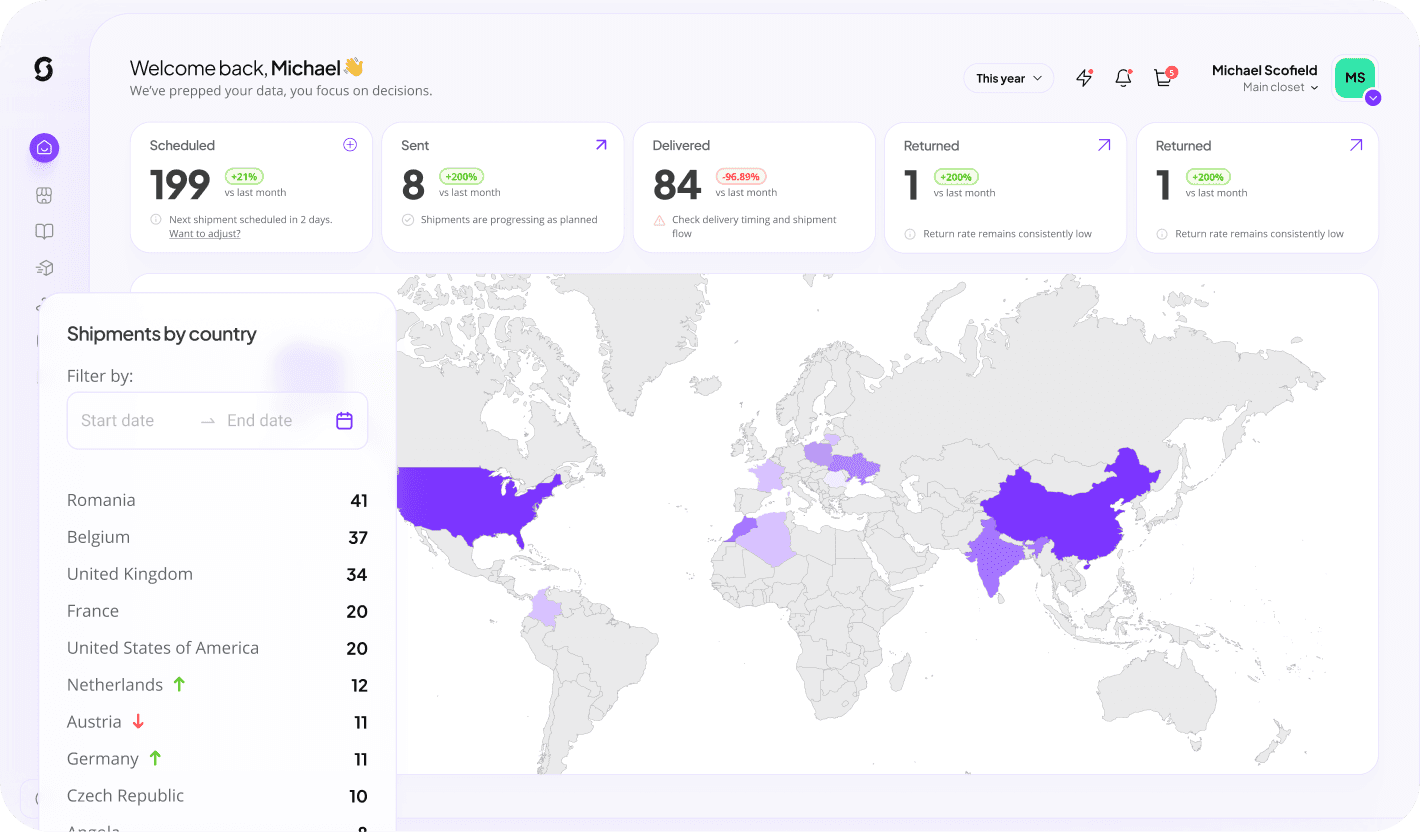
A provider that can give clean reporting by region, business unit, and program type becomes a strategic asset, not just a shipper.
Putting the program in motion across teams
The fastest way to build momentum is to launch with a tight, high-confidence assortment. Think of it as a “starter collection” that is easy to approve, easy to reorder, and broadly appealing across roles and regions.
After that, expand carefully. Add a premium lane for executive gifting. Add event packs with standardized components. Add region-specific capsules where climate, sizing norms, and cultural preferences matter. Growth feels exciting when operations stay calm.
A simple operating rhythm helps: quarterly assortment review, monthly inventory and backorder check, and a documented playbook for new requests. The provider you choose should be comfortable living inside that rhythm and helping you keep it healthy.
When corporate merchandise is treated as a system, global scale stops being intimidating. It becomes a repeatable way to build belonging with employees, create warmth with customers, and express the brand in a tangible, well-run way.