What's in this guide
- What partner appreciation gifts are
- How partner gifting is different
- Gifts vs rebates, SPIFFs and MDF
- Channel partner gift ideas
- Reseller and distributor gift ideas
- Gifts for referral partners
- The best triggers
- How to reward channel partners: build a program
- Global logistics
- Budget: a percentage of partner revenue
- Measuring ROI
- Programs that worked
- How Sunday delivers
Partner appreciation gifts are branded gifts a company sends to its channel partners, resellers, distributors, agencies and referral partners to strengthen a shared go-to-market relationship. They sit outside the financial incentives, rebates, SPIFFs and MDF, and add the personal, emotional, visible layer those cannot. The best ones map to a specific behaviour: onboarding, certification, a first deal, a revenue milestone, a partner kickoff. Build them into a repeatable program, triggered from your CRM or PRM and offered through a credit-based partner webshop, budget roughly 1 to 2% of partner-generated revenue, and tie spend to partner quality and market impact, not packages sent.
One thing to be clear about up front: partners are not customers and they are not employees. A customer buys from you. An employee works for you. A partner sits in between: a deeper, more collaborative relationship than a normal customer, but external. Partners resell, implement, train, deliver services or represent your brand locally. Both companies face the same end customer, on the same side. That is what makes merch uniquely powerful here. A partner is not just receiving your brand. They are helping represent it. This guide is about gifting that recognises that shared effort, distinct from customer appreciation (thanking someone for buying) and from employee recognition (an internal relationship).
What partner appreciation gifts are
Partner appreciation gifts are branded, considered gifts sent to the people and companies who take your product to market for you. The audience is the channel: resellers, distributors, system integrators, agency partners and referral partners. The job is not to thank someone for a purchase. It is to strengthen a relationship where the partner is actively investing their own time, reputation and commercial effort in representing your brand.
Because the partner represents you, the gift can do more than a customer gift can. Partners genuinely want to wear and use well-branded merch, because your brand is tied to their own commercial activity. That opens up a broader, more visibly branded range than you would ever send a customer: apparel, backpacks, travel bags, desk accessories, water bottles, winter products, event merch and full co-branded collections. The gift is part of the partnership, not a token tacked onto it.
How partner gifting is different from customer and employee gifting
The three are easy to confuse and worth separating, because the gift changes with the relationship.
| Relationship | What the gift does | How branded |
|---|---|---|
| Customer | Thanks someone for buying or using your product | Restrained. The customer is not representing you |
| Employee | Recognises an internal relationship: culture, engagement, retention | On-brand, internal audience |
| Partner | Strengthens a shared go-to-market relationship | Can be stronger. Partners want to wear and use it |
The key difference is who the brand is for. A customer gift that screams your logo can feel self-serving. A partner gift that carries strong branding feels right, because the partner is on your side facing the same end customer, and a co-branded collection serves both companies at once. That is why a partner collection can be broader and more visibly branded than anything you would send a customer. For the customer side of the family, see our complete guide to customer appreciation gifts, and note this guide is specifically about the channel.
Where gifting sits next to rebates, SPIFFs and MDF
Be honest about this, because getting it wrong wastes money. Merch does not replace the commercial foundations. Rebates, sales incentives, SPIFFs, margin structures and market development funds remain necessary. Partners need clear financial reasons to sell and support your product. Gifting sits outside those, adding a recognition and engagement layer that cash cannot.
An example makes the split clear. A software vendor's IT partner gets the standard margin and incentives at the company level. But an individual salesperson can get a gift after closing their first deal, or a "merch bomb" after the first successful joint project. That recognises personal effort, which a company-level rebate structurally cannot. Another model is sponsored co-branded merch: the vendor pays for products carrying both identities, the partner gets valuable event and customer merch, and the vendor's brand reaches the end customer through the partner. Gifting complements cash. It does not compete with it.
Channel partner gift ideas
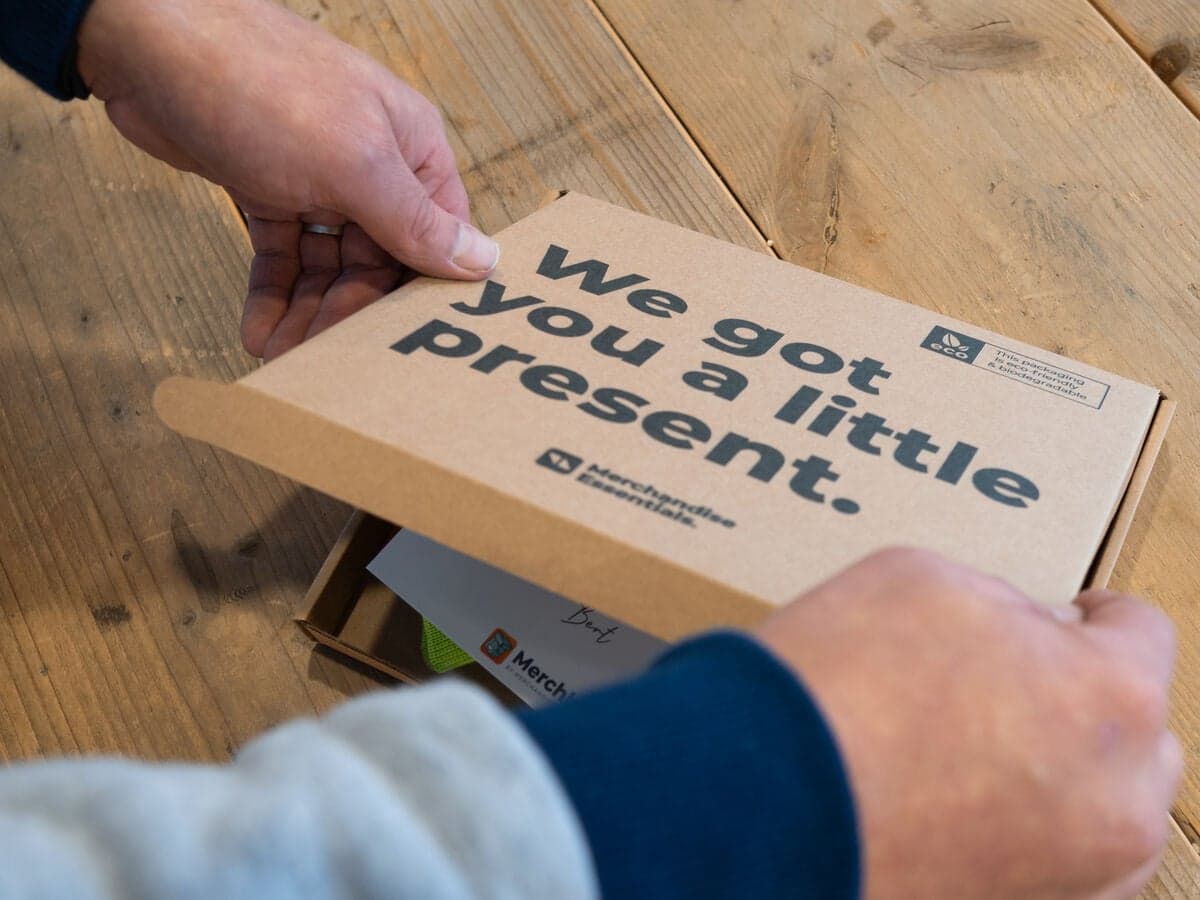
The best channel partner gift ideas are useful, on-brand and tied to a moment. Partners actively use what you send, so range matters more than a single hero gift. Strong categories:
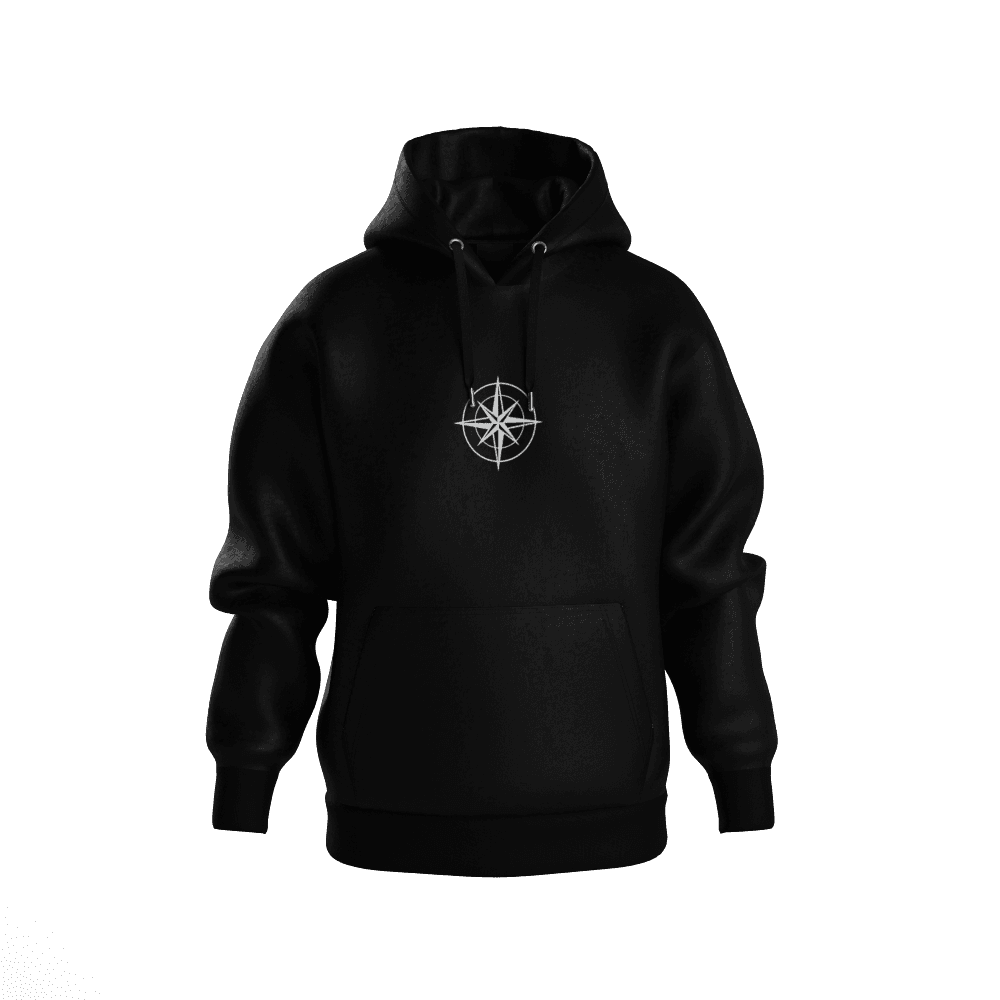
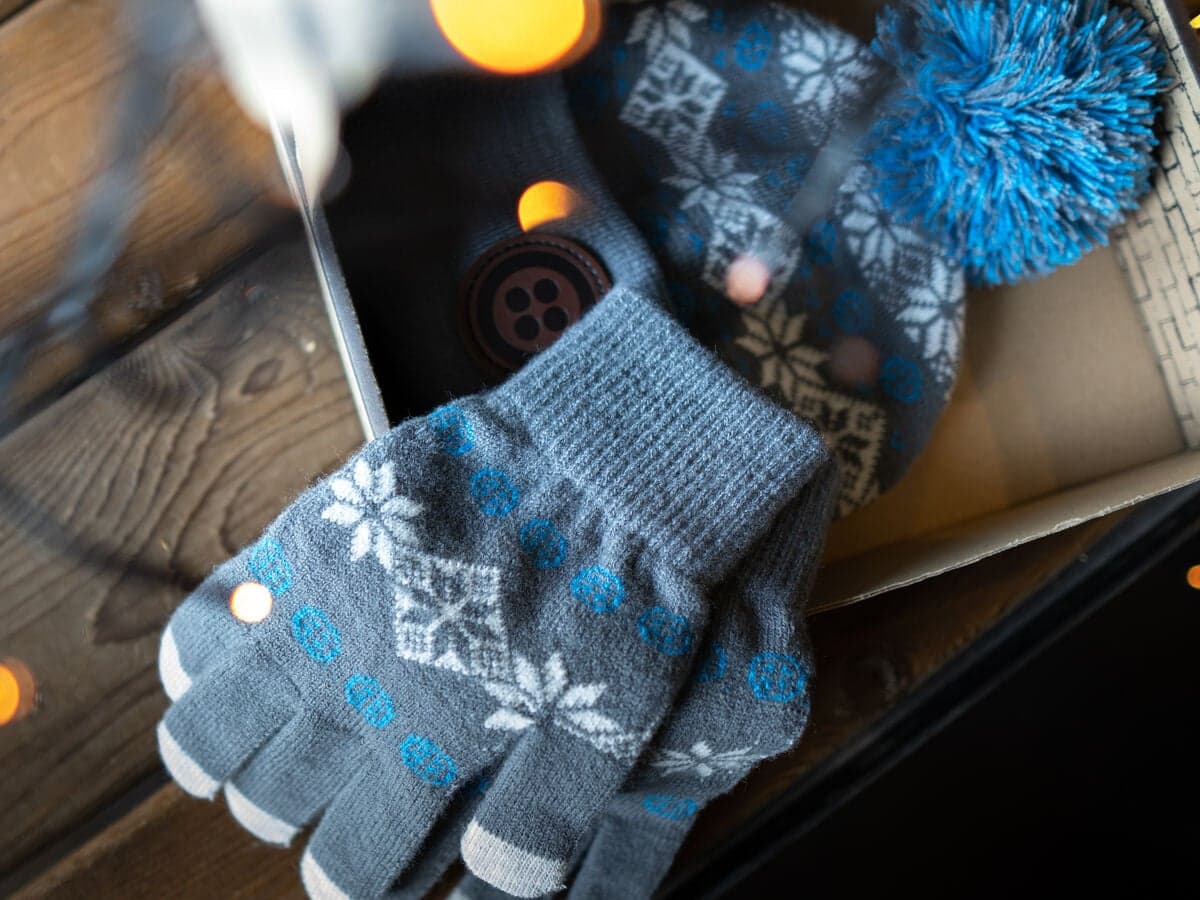
- Apparel and winter products. Jackets, hoodies and a winter set with a custom beanie, scarf and gloves. Partners wear branded apparel willingly, which is rare in gifting.
- Bags and travel. Backpacks and travel bags for partners who are constantly on the road to customer sites and events.
- Desk products and tech. A premium water bottle, a charging station, a desk accessory or a useful tech item. These stay on the desk and keep reminding the partner of the achievement and the brand.
- Event and co-branded merch. Products carrying both logos that make the partner look professional at their own customer events while extending your reach.
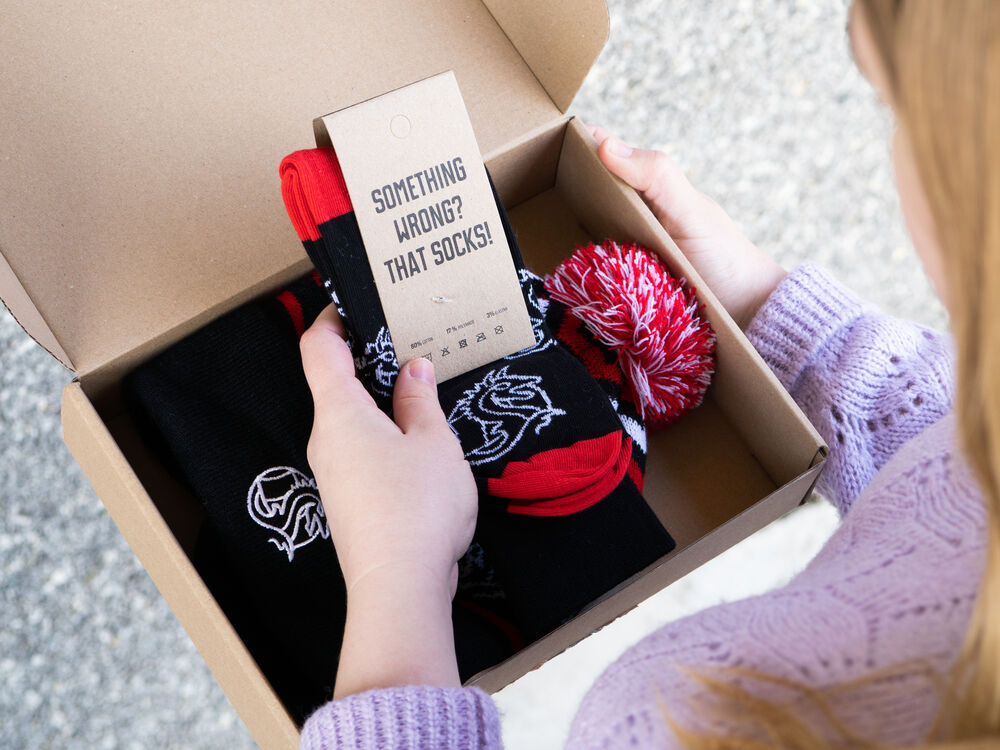
A considered partner kit. Range and presentation matter more than a single hero gift, because partners actually use what you send.
Reseller and distributor gift ideas
Resellers and distributors carry your brand into markets where you have no presence, so reseller and distributor gift ideas should help them sell and help you stay visible. Two patterns work especially well. First, discounted partner merch: let resellers request your branded products at heavily discounted prices, so they can equip their own teams and customers without it being a cost burden. Second, drop-shipping on the partner's behalf: ship branded merch directly to end customers in the partner's market, building physical brand presence where you have no office.
That second pattern turns partner merch into a scalable local brand-distribution system. The reseller is the face of the relationship, and the merch keeps your brand visible in the market. It is one of the most underrated uses of gifting in the channel, and it only works if the logistics are automated, which we will come to.
Gifts for referral partners
Referral partners are lighter-touch than resellers, but the principle holds: recognise the specific act, and recognise the individual. Gifts for referral partners work best when they are triggered by a referred deal closing or a milestone number of referrals, and when they reach the actual person who made the introduction rather than a generic company address. A premium, personal gift after a referral pays off says you noticed, and it makes the next referral more likely.
Keep the budget proportional to the value the referral brings, and keep the gift desirable rather than promotional. A referral partner who would never wear a cheap branded cap will happily use a genuinely good backpack, bottle or winter set. The same range logic applies: offer something they want, tied to the moment they earned it.
The best triggers
A partner gift should map to a specific behaviour or milestone, never be sent without context. The strong triggers, roughly in order of the partner lifecycle:
- Onboarding. A kickoff package as the partner starts representing your brand, so they can show up looking the part from day one.
- Training and certification. A desk product or wearable as a visible, lasting reward. People are proud to complete a certification, and a physical reward gives that pride permanence.
- First deal. Recognises individual effort and builds an early emotional connection with the salesperson who did the work.
- Deal and revenue milestones. First project, N closed deals, sales volume, annual thresholds, expansion into a new market.
- Short-term sales campaigns. Reward partners who hit a focused target. Lamett, for example, sent a merch package to partners who sold a specified number of square metres from a target part of the collection, focusing attention on a priority range.
- Events and kickoffs. Partner kickoffs, QBRs, co-branded trade shows, conferences, awards, local events and launches.
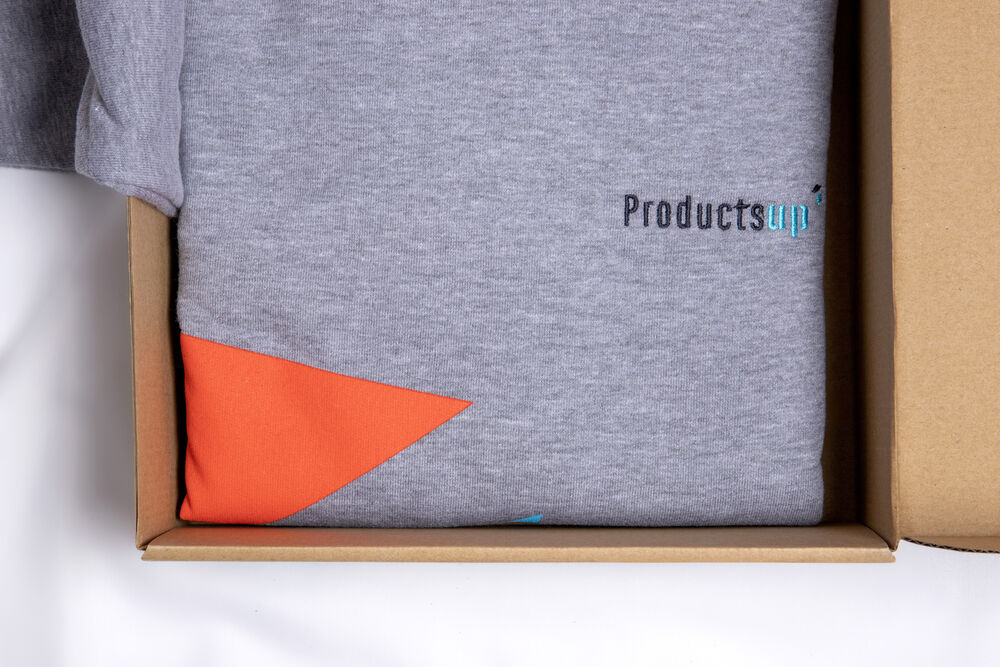
Gifts mapped to milestones, not sent at random. Onboarding, certification, first deal and revenue thresholds each get their own moment.
How to reward channel partners: build a repeatable program
One-off sends do not scale and they forget people. To reward channel partners properly you need a repeatable program, and there are two models that work. Most mature programs use both.
1. CRM or PRM-triggered automation
Store your partner data where it already lives: level, revenue, certifications, training completed, deals, service performance, geography, campaign participation. When a trigger is met, the CRM or PRM connects to Sunday and auto-initiates the gift. No manual admin. No forgotten partners. The certification completes, the gift goes out. The first deal closes, the merch bomb ships. The system does the remembering.
2. A credit-based partner webshop
Partners earn credits through training, reaching a new tier, closing deals, hitting targets or joining campaigns, then spend them on an approved collection. They can transfer credits to their own employees, bulk-order, choose co-branded products, pick event merch or buy extras. The result is freedom for the partner and brand and budget control for the vendor. This is the single most underrated idea in partner gifting: a dedicated partner webshop that gives partners flexibility while keeping you in central control.
Global logistics: the part that actually breaks
Partners are global, so the instinct is to worry about couriers and customs. That is not the hard part. The hard part is capturing requests, collecting choices, confirming addresses, tracking who is eligible, and forgetting no one. Since you are already giving a gift, you cannot demand hours of back-and-forth from the recipient to receive it.
So automate the whole flow: recipient selection, eligibility checks, product choices, address and size collection, approvals, inventory, shipment creation, international fulfilment, customs documentation and tracking. Sunday provides the request-to-delivery infrastructure, which is what our distribution service is built for. Get the data flow right and shipping to hundreds of partners across borders stops being a project and becomes a setting.
Budget: a percentage of partner revenue
The cleanest budgeting heuristic is to reserve a percentage of the revenue each partner generates for joint marketing plus merch. Roughly 1 to 2% works for most, depending on margin and industry.
| Partner-generated revenue | Rough merch and marketing reserve |
|---|---|
| €50,000 | ~€1,500 |
| €100,000 | ~€2,000 to €3,000 |
| €1,000,000 | €10,000+ |
Tune the percentage by margin, strategic importance, market potential, partner tier, local brand strength and growth goals. Then add one thing the percentage misses: a standardised onboarding package for every new partner, regardless of revenue, so they can represent your brand immediately, before they have generated anything. The percentage rewards proven partners. The onboarding package equips new ones.
Measuring ROI: tie spend to partner quality, not packages sent
Counting packages shipped tells you nothing. Tie merch spend to strategic partner behaviour instead. The signals worth tracking:
- Partner quality. Partner NPS, end-customer NPS and service quality. Unlock more merch budget for partners with strong service, so you reward investment in implementation and support, not just sales.
- Activation. Engaged employees, portal use, training and certification completion, merch redemption, campaign participation.
- Market importance. Invest more in developing markets that need awareness, less where your brand is already strong.
- Commercial outcomes. Partner-sourced pipeline, registered deals, closed and repeat revenue, retention, product mix, and participation in priority campaigns.
The thread through all of it: connect merch spend to the behaviour you want more of. A program that rewards certification, service quality and pipeline will produce more of each. A program that just ships boxes produces shipped boxes.
Programs that worked
Three programs show the range, from structured IT channel to machinery resale to a focused sales push.
AnyDesk runs a structured IT-partner program: automated onboarding gifts, partner and co-branded event merch, training and certification rewards, and engagement-linked merch. The co-branded event support makes partners look professional while extending AnyDesk's reach into local markets, the textbook case of a gift doing commercial work.
AVR, which makes machinery and sells through partners and resellers, lets partners request AVR merch at heavily discounted prices, and ships merch to end customers on a local partner's behalf. That builds physical brand presence in markets where AVR has no office, with the reseller as the face and the merch keeping the brand visible.
Lamett tied merch to a short-term sales campaign, sending a package to partners who sold a specified number of square metres from a targeted part of the collection. It focused partner attention on a priority range, exactly the behaviour the campaign was designed to drive.
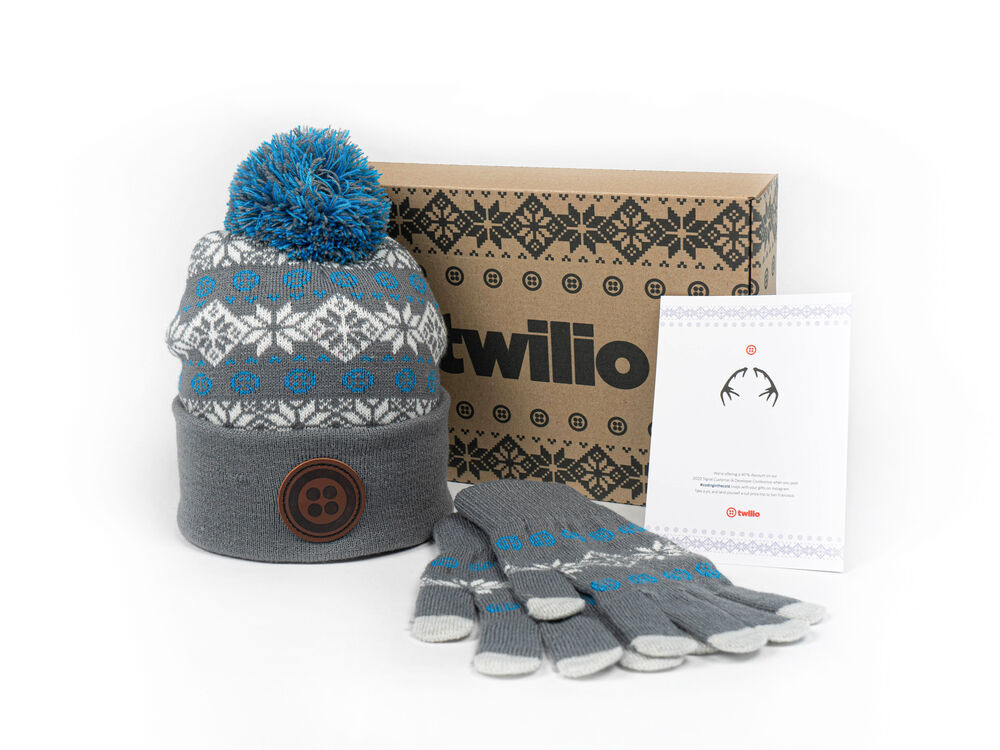
A beanie fits a partner program as one option in a broader collection: winter onboarding, outdoor partner events, ski trips and colder markets. Not the default for everyone.
How Sunday delivers
Sunday is merch infrastructure, not a supplier. We help you design an on-brand or co-branded partner collection, connect the triggers to your CRM or PRM so gifts go out automatically, run a credit-based partner webshop with central control, warehouse the stock and ship it globally with the customs paperwork handled. Merch, in your brand, live in 30 seconds. We serve 4,000+ brands across 200+ countries and make in Europe to European standards. Explore the platform, see how it works, browse the full catalog, and lean on distribution for the global send. Building a winter partner kit? A custom beanie is a natural anchor, and you can preview it in your colours with the free beanie mockup generator before you commit. The whole guide comes down to one idea: partner gifting works when it is part of the program, tied to real milestones, automated, flexible for the partner, and proportional to the revenue and strategic value the partner brings.
About this article
Build a partner gifting program that runs itself
Triggered from your CRM, flexible for partners, shipped globally with customs handled. Create a free account and design your partner collection in 30 seconds.
Get free designs