The best sales team outfits examples share a pattern: the outfit fits both the brand and the commercial environment. Industrial and enterprise teams lean formal, with business shirts and merino layers. Retail and service teams wear branded polos for instant recognition. Younger tech teams go casual with tees, sweatshirts and college jackets. Booth teams turn it up to be recognisable across the hall. Kickoffs are swag, not uniforms. Coordinated, never a costume, is the rule.
A coordinated team looks intentional, not over-uniformed. The clothing should strengthen both the brand and the person wearing it. Below are the patterns that work, grouped by where the team actually is. The polo is the backbone of most of them. Branded apparel earns its keep too: in one survey, 60% of people said they trust a business more when staff wear branded clothing, and 67% said it makes staff easier to identify and approach.
The three style tiers
Almost every good sales-team look fits one of three tiers. Pick the tier that matches your brand and your customer, then build the outfit inside it.
| Tier | Best for | The look |
|---|---|---|
| Formal / industrial | Enterprise, industrial, traditional B2B | Business shirt, merino sweater, bodywarmer or professional jacket. Understated branding, clean styling. |
| Retail / service | Stores, showrooms, customer-facing technical teams | Branded polo. Professional, approachable, instantly recognisable. Stronger brand colour is fine here. |
| Casual / tech | Younger startups and tech brands | Well-designed tee, zipped sweatshirt or hoodie, college jacket, even a custom sneaker. |
The polo is the strong middle ground: more professional than a tee, less formal than a business shirt. That is why it works across so many of the examples below.
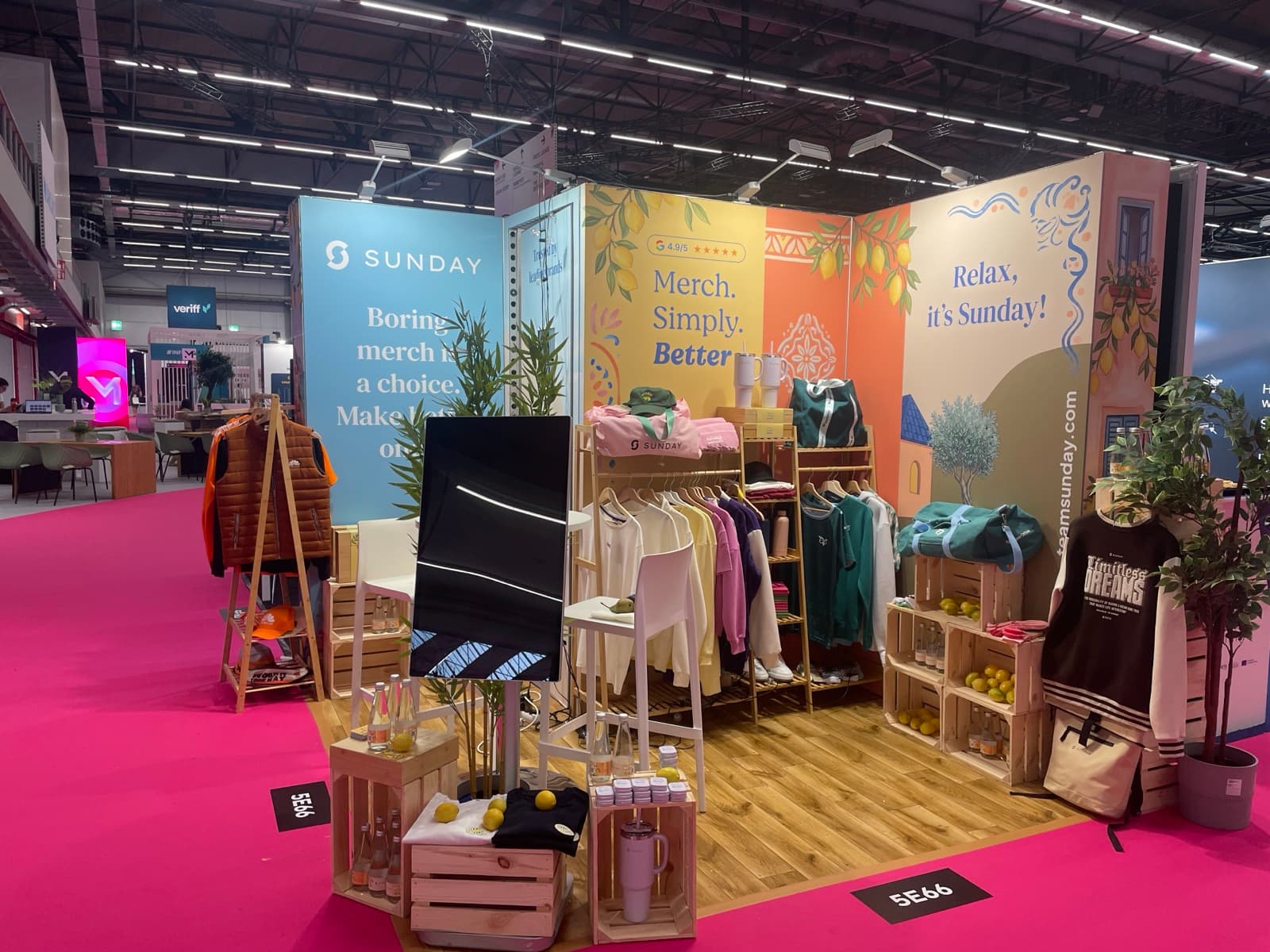
Booth teams at a trade show
A booth team has one job before they say a word: be identifiable from across the hall. This is the one context where you go bolder than normal field wear. Bright tees, colourful polos, branded business shirts, distinctive ties, highly recognisable company colours, coordinated layers.
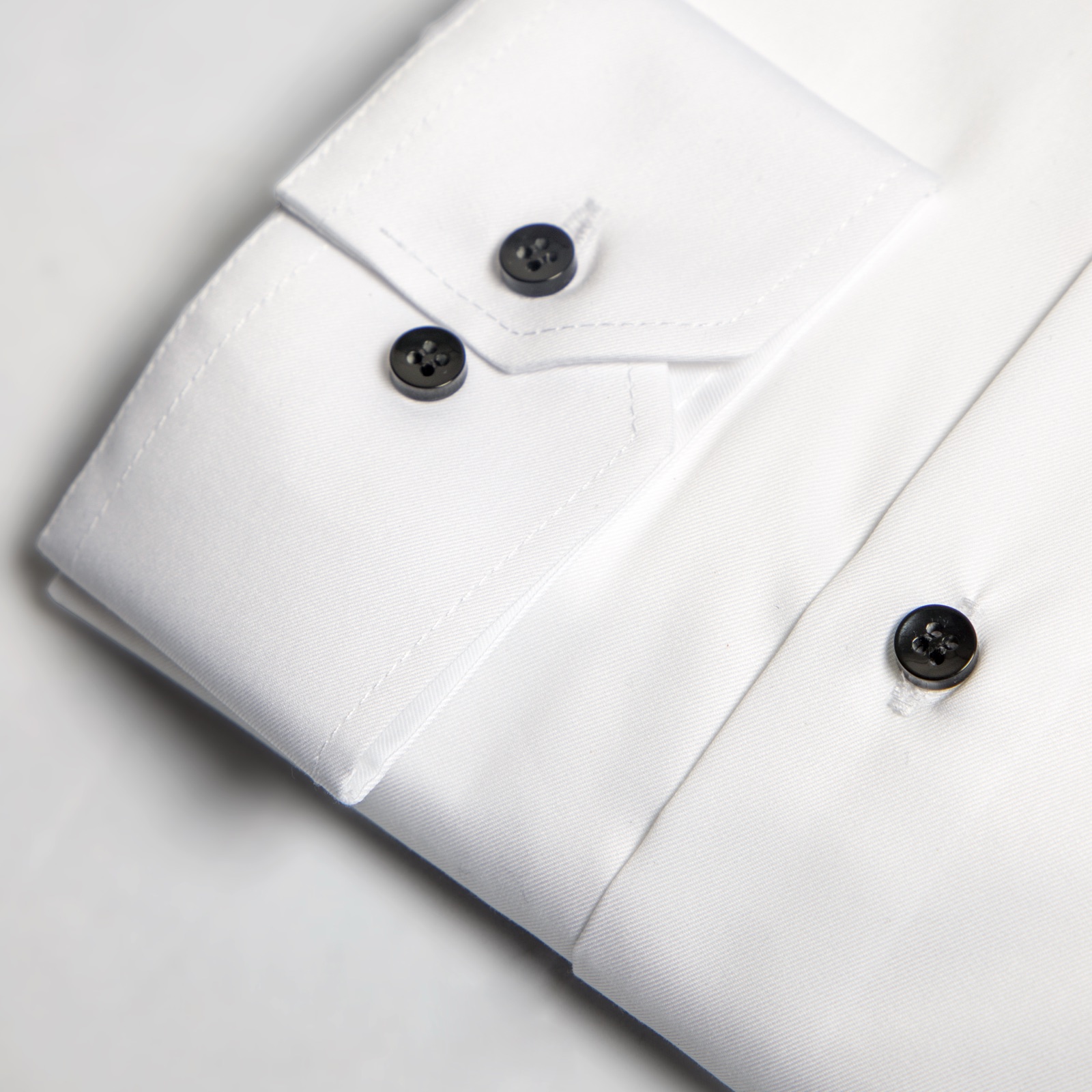
Team in Sunday-branded business shirts. A coordinated business shirt in strong company colours makes a booth team recognisable from across the hall.
The mechanics: pick one strong company colour, apply it consistently across the team, and layer for the temperature swings of a multi-day event. The polo plus trousers is the consensus booth-staff default, and it is the look most attendees expect. Preview your booth polo in your colours with the free polo mockup generator.
Field sales on the road
Field sales is the opposite of a booth. The rep needs a complete, adaptable wardrobe for different visits, customers and weather, not one loud garment. The example that works is a layered kit that stays on-brand at every level.
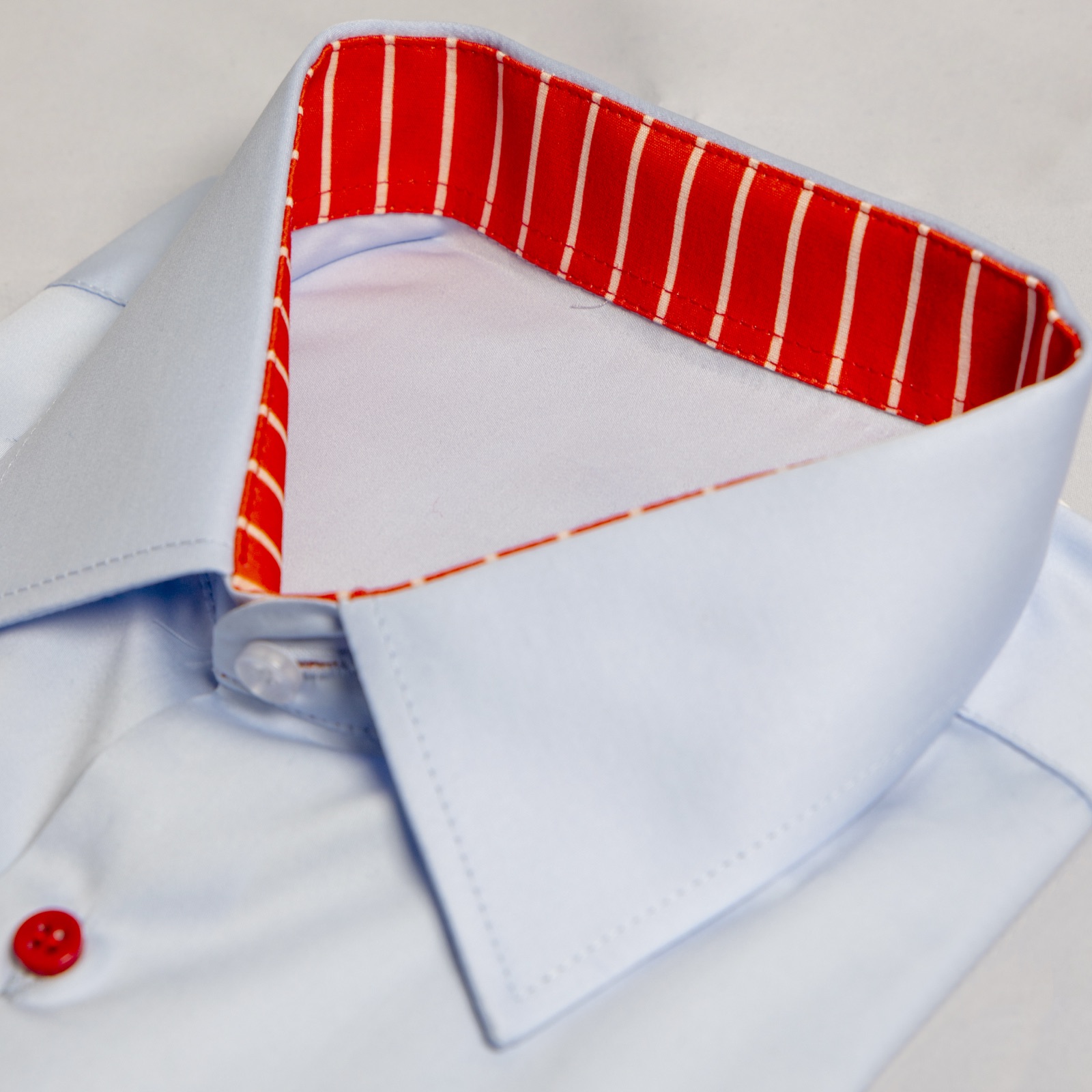
The field-sales base. A Steyr-branded business shirt sits under merino, a bodywarmer, a softshell or a jacket. A complete kit flexes across visits while every layer stays on-brand.
A road rep's complete wardrobe usually includes a jacket, a softshell, a bodywarmer, several sweaters, several business shirts, suitable trousers and an optional cap. The layering is the point. When you reach the outerwear, see the custom jackets and softshell options that complete the look.
Retail and service teams
Here the outfit is a functional uniform, and recognition is the function. Customers need to see at a glance who can help. This is the clearest case for a branded polo, and the one place you can turn the brand colour and customisation up.
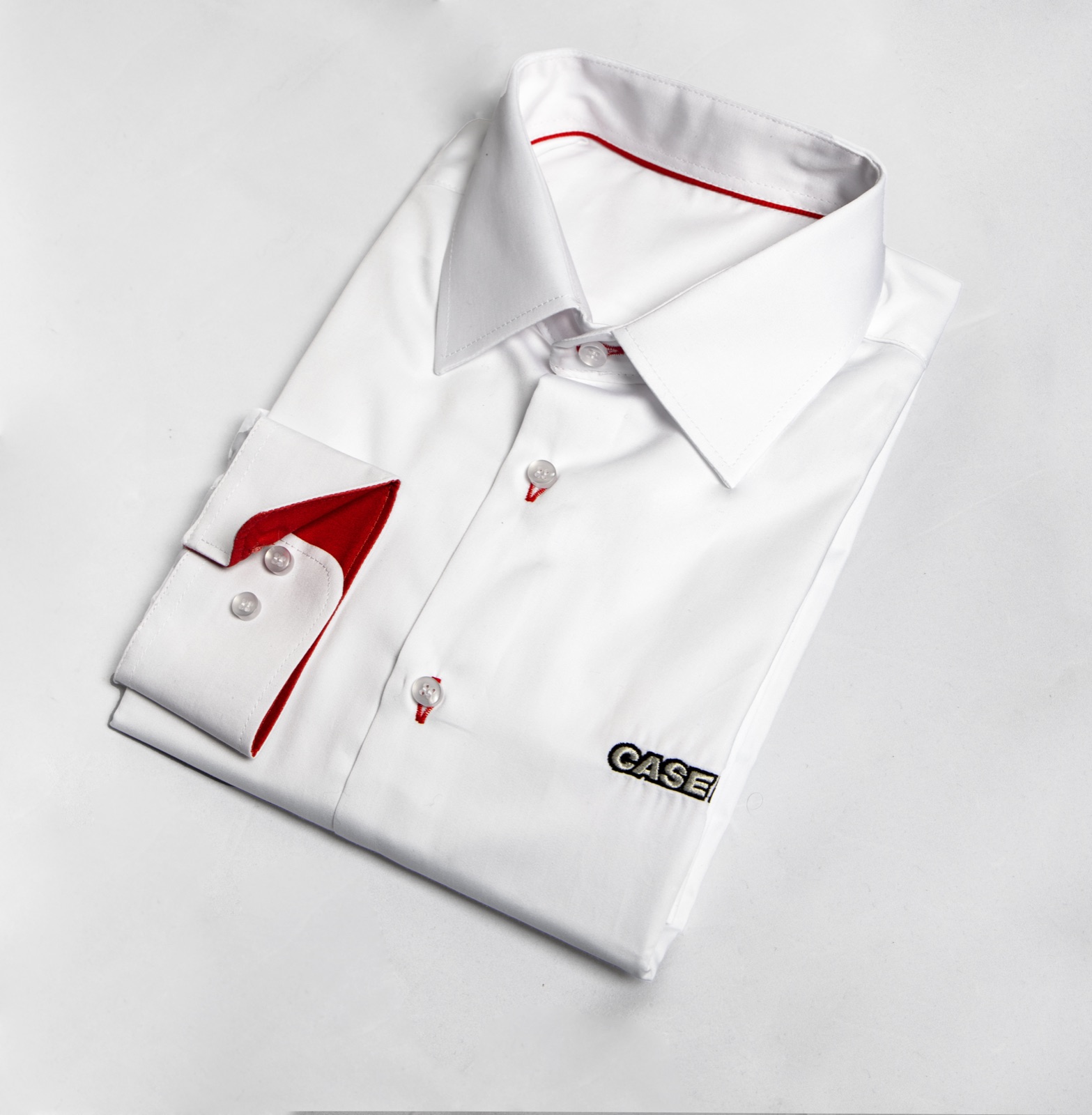
The functional uniform. For retail, service and showroom teams, a Case-branded business shirt builds trust because customers can instantly identify who works there.
The mechanics: a durable polo that holds shape and keeps its logo through repeated washing, in a colour that reads instantly as your brand. Well-fitting kit also makes teams happier. A study of uniform wearers found 22% higher happiness at work when the uniform fit well.
Sales kickoffs
A sales kickoff is not a uniform programme. Treat it as merch and swag: fun, wearable-outside-work items that build team spirit rather than a customer-facing look. Tees, hoodies, sweatshirts, casual jackets and fun accessories all land here.
The mechanics: design it to be wanted, not endured. Comfortable, well-designed, genuinely on-brand. The same durability rules apply, since nothing kills team spirit faster than a logo that washes off after two cycles.
Build your own kit
The takeaway across every example: the best outfit is not the one with the biggest logo. It fits your positioning, matches the sales environment, makes the team recognisable, makes people feel confident, stays comfortable all day and looks good after repeated washing.
- Pick your tier: formal, retail or casual.
- Choose a base layer, usually a branded polo, then layer up.
- Go bolder for booths, more adaptable for field, more functional for retail.
- Treat kickoffs as swag, not uniforms.
- Insist on durability: logo, shape and fit that survive repeated wear.
You can build a coordinated kit on-brand in about 30 seconds. The Sunday platform generates on-brand apparel concepts with live pricing, then handles sizing and reorders. Browse custom polos, explore the full catalog, or see how it works.
Sales team outfits examples: questions answered
What are good examples of sales team outfits?
It depends on the context. Formal and industrial teams wear business shirts with merino layers. Retail and service teams wear branded polos for instant recognition. Younger tech teams go casual with tees, sweatshirts and college jackets. Booth teams turn it up to stand out across the hall, and sales kickoffs use fun swag rather than uniforms.
What should a sales team wear at a trade show booth?
Something recognisable from across the hall. Booth teams can be bolder than normal field wear: bright or colourful polos, branded business shirts, distinctive ties and strong company colours applied consistently. The polo plus trousers is the consensus booth-staff default. Layer for the temperature swings of a multi-day event.
Is a polo a good base for a sales team outfit?
Often, yes. The polo is the strong middle ground: more professional than a tee, less formal than a business shirt. It works especially well for retail, service and customer-facing teams. For traditional enterprise sales a business shirt may be better, and for casual tech a premium tee. Decide on brand and customer context.
What does a complete field-sales wardrobe include?
A road rep usually needs a jacket, a softshell, a bodywarmer, several sweaters, several business shirts, suitable trousers and an optional cap. The point is adaptable layers for different visits, customers and weather, all kept on-brand, rather than one loud garment that only works in one setting.
How are sales kickoff outfits different from uniforms?
A sales kickoff is swag, not a uniform programme. The goal is team spirit, so choose fun, wearable-outside-work items like tees, hoodies, sweatshirts, casual jackets and accessories. A simple test: would a rep wear it on a Saturday? If yes, it is kickoff swag. If it only works on the clock, it belongs in the field or booth kit.
How do I keep a coordinated look without it feeling like a costume?
Match the formality to the brand and the customer, keep branding considered rather than oversized, and make sure the kit fits and flatters. A coordinated team should look intentional, not over-uniformed. When the clothing looks good and people feel confident in it, a uniform builds trust instead of feeling like a gimmick.
Keep reading: sales team outfits
Build your sales-team kit with Sunday
Create a free account and design a coordinated, on-brand outfit with live pricing in 30 seconds, then size and reorder it without the spreadsheet scramble.
Build this campaign with Sunday