
A practical pillar guide for building welcome kits for new employees that help every new hire feel prepared, recognized and part of the company before day one.
Welcome kits for new employees are one of the few physical moments left in an increasingly digital onboarding journey. That makes them more powerful than most teams treat them.
The mistake is treating welcome kits for new employees as "swag." Swag is what gets handed out when there is no strategy. A strong welcome kit is different: it gives the new hire useful items, a visible sign of belonging, and a first proof point that the company is organized enough to care about details.
That matters because onboarding is not a single meeting. SHRM recommends measuring onboarding through retention, time-to-productivity, new-hire surveys, engagement and manager feedback, not just whether paperwork was completed. Gallup's employee engagement research also connects engagement with retention, absenteeism, productivity and wellbeing.
For People teams, the opportunity is simple: treat welcome kits for new employees as a repeatable onboarding product. Define the experience once, personalize it intelligently, automate the logistics, and improve it with feedback.
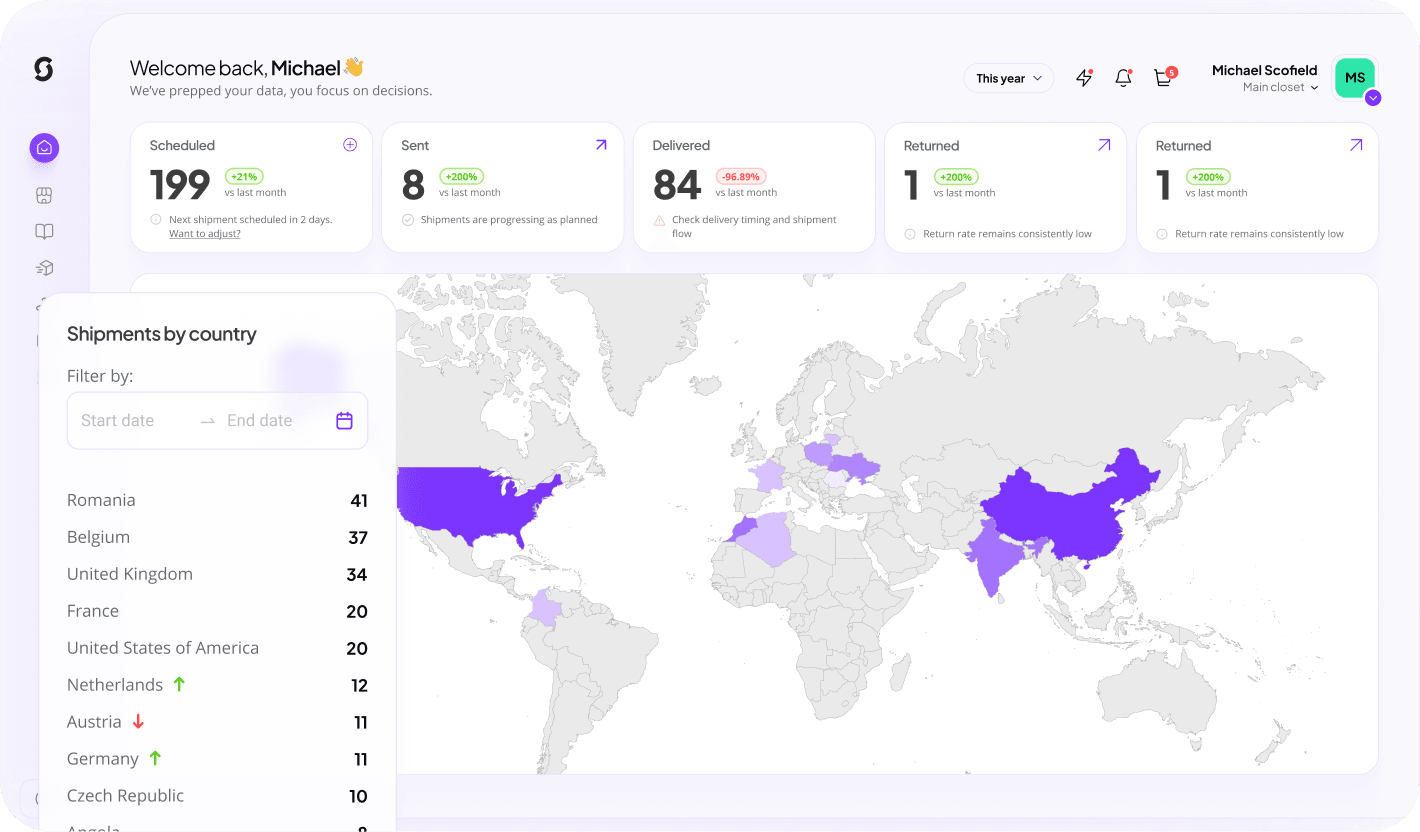
Internal Sunday resources for building welcome kits. Use the Sunday platform to manage the workflow, browse the catalog for products, review how it works for setup and fulfillment, check pricing before scaling the program, and use customer stories for proof points from real teams.
What are welcome kits for new employees?
Welcome kits for new employees are curated packages sent before or around a person's first day. They usually combine practical work essentials, branded apparel, onboarding information, and a personal message.
In 2026, the strongest kits are not just boxes. They are part of a wider onboarding workflow. The kit can collect sizes, trigger fulfillment, confirm delivery, invite the employee into a brand store, and create a measurable first touchpoint in the employee journey.
The best welcome gifts are not about stuffing a box with random products, but about making the new hire feel acknowledged and part of the team from the start.
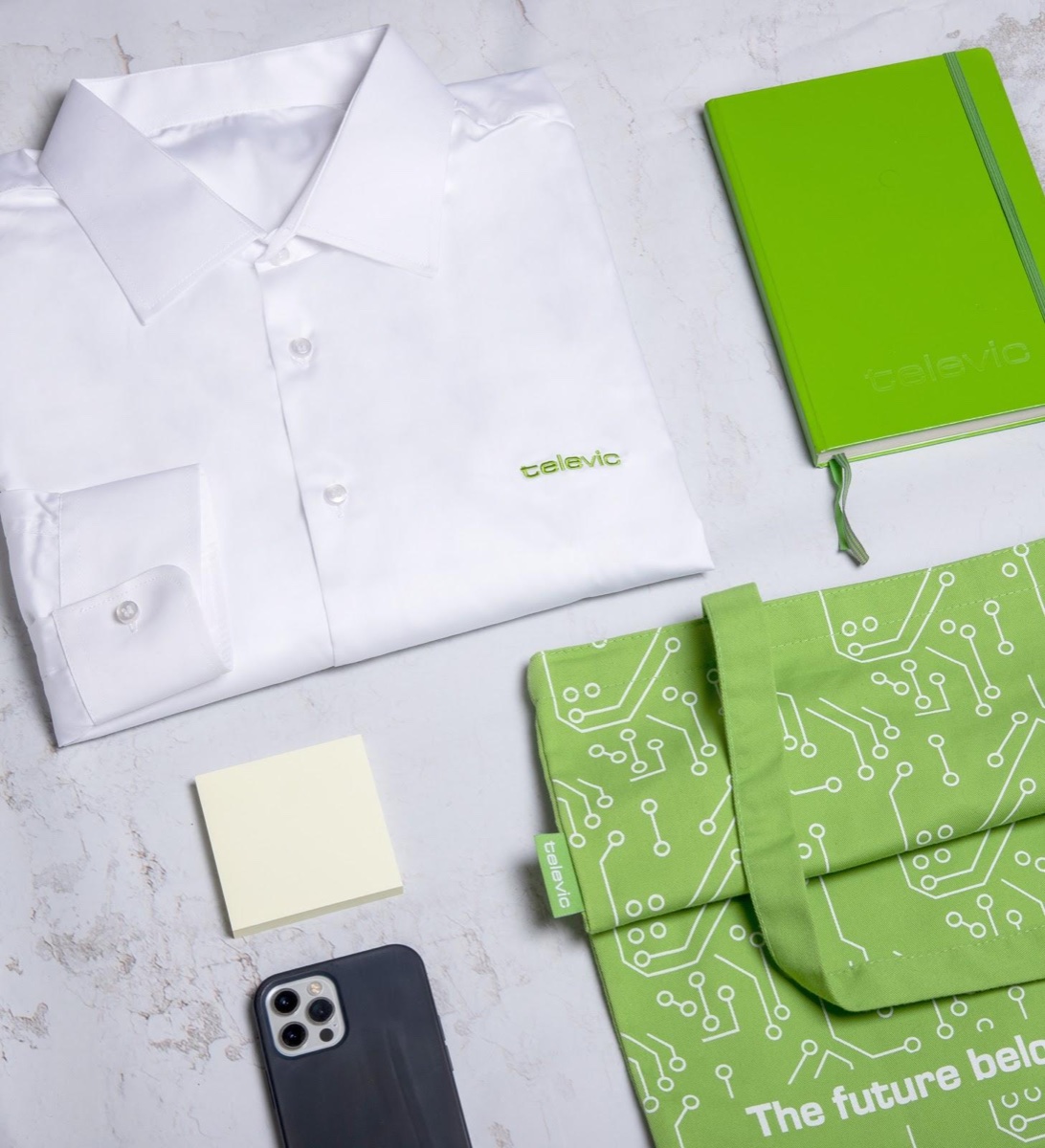
Real Sunday kit example: Televic used a clean shirt, notebook and tote to create a polished first impression.
| Old approach | 2026 welcome kit approach | Why it matters |
|---|---|---|
| Generic swag box | Role- and location-aware kit | Remote hires, interns, executives and office hires do not need the same things. |
| Manual size collection | Redeem flow with employee-selected sizes | Reduces waste, wrong sizes and awkward HR follow-up. |
| Storage room packing | Centralized inventory and fulfillment | People teams should not become warehouse teams. |
| One-off vendor order | Always-on onboarding program | The kit becomes repeatable and measurable instead of reinvented every month. |
| No delivery visibility | Trackable shipment flow | Lost first-day gifts damage the experience quietly. |
| Logo-first product choices | Usefulness-first product choices | The best branded items are kept, worn and used. |
| No feedback loop | Kit satisfaction and reorder data | People teams can improve the kit instead of guessing. |
Why welcome kits for new employees matter more in 2026
Welcome kits for new employees matter because the employee experience has become more fragmented. A new hire might meet the team in Slack before meeting anyone in person. They might start from home. They might join a company with distributed managers, global policies and a highly digital onboarding flow.
That digital efficiency is useful, but it can feel thin. Microsoft's Work Trend Index research tracks how work is changing through global surveys and observational studies. Hybrid and digital work make the physical moments more intentional: the first package, first desk setup, first team ritual and first branded object carry more emotional weight.
The practical point. A welcome kit will not fix a weak onboarding process. But a weak welcome kit can expose one. If the kit is late, generic, wrong-sized or badly packed, the new hire learns something about your operating standards before they even start.
The kit does three jobs
It signals belonging
Apparel, a personal note and a small cultural object make the new hire feel included before they have earned social familiarity.
It removes friction
A notebook, bottle, laptop sleeve, desk item or office-access essential reduces the first-week scramble.
It makes culture visible
The curation says what the company values: quality, sustainability, creativity, speed, craft, hospitality or performance.
A good welcome kit does not say "here is our logo." It says "we already thought about your first week."
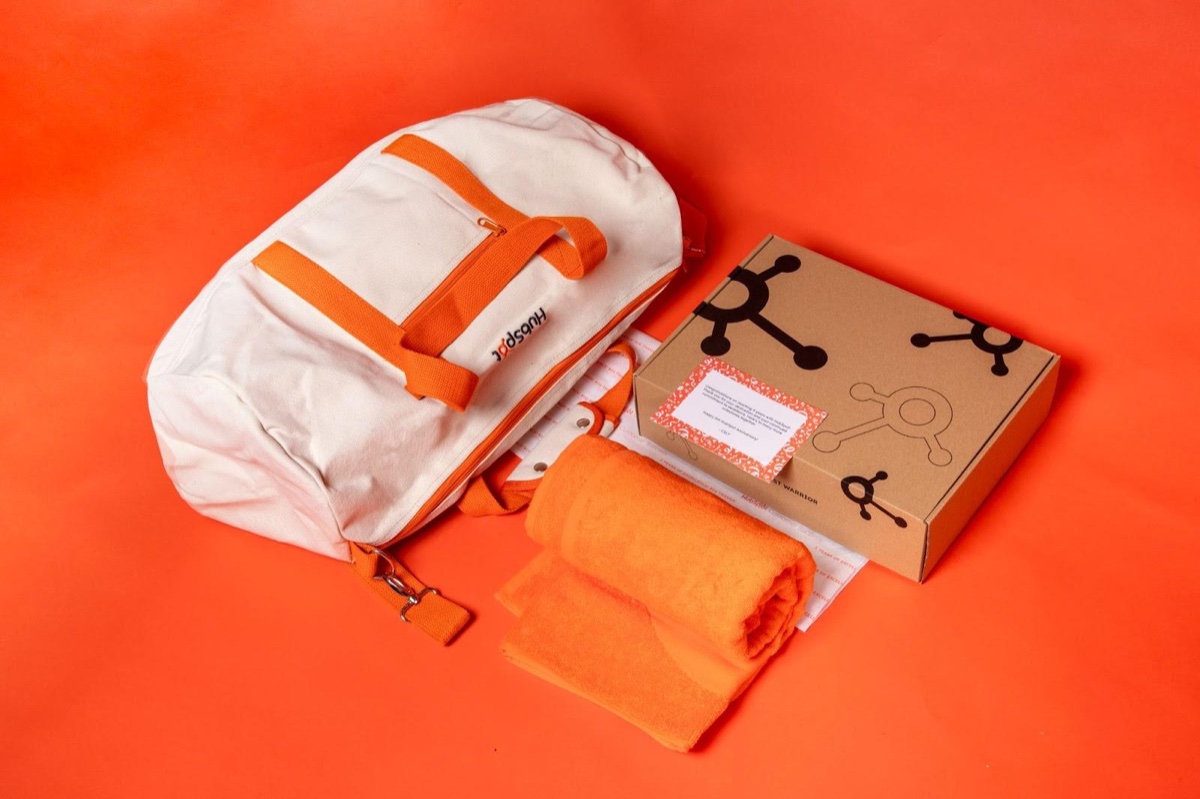
HubSpot-style lesson: a small number of well-matched items can create a stronger first impression than a crowded kit.
The 2026 architecture for welcome kits for new employees
The best welcome kits for new employees are modular. This is the difference between a nice box and a scalable program. A modular kit lets you keep brand consistency while adapting the experience for role, location, seniority and onboarding moment.
Sunday's branded merchandise platform is built around that operating logic: approved products, stored inventory, shipment flows, redeem pages and campaign visibility in one place.
Four layers of a strong kit
- Core brand layer: the consistent part of the kit, branded box, welcome card, key apparel item and visual identity. It should look like your company, not like a supplier catalogue. Useful Sunday product directions: catalog staples, apparel, drinkware, notebooks and bags.
- Practical work layer: what helps the employee start. Think notebook, pen, bottle, laptop sleeve, desk mat, badge holder, webcam cover or travel pouch depending on role. The question is simple: "Will this help someone in week one?" If not, it needs a stronger reason to be in the box.
- Audience-specific layer: where the kit becomes relevant. Remote hires need home-office usefulness. Interns need energy and clarity. Executives need restraint and quality. In-office hires need desk and commute essentials.
- Delivery and feedback layer: the modern kit does not end when it ships. You need address capture, size selection, stock deduction, tracking, delivery confirmation and feedback. That is where a welcome kit becomes a system.
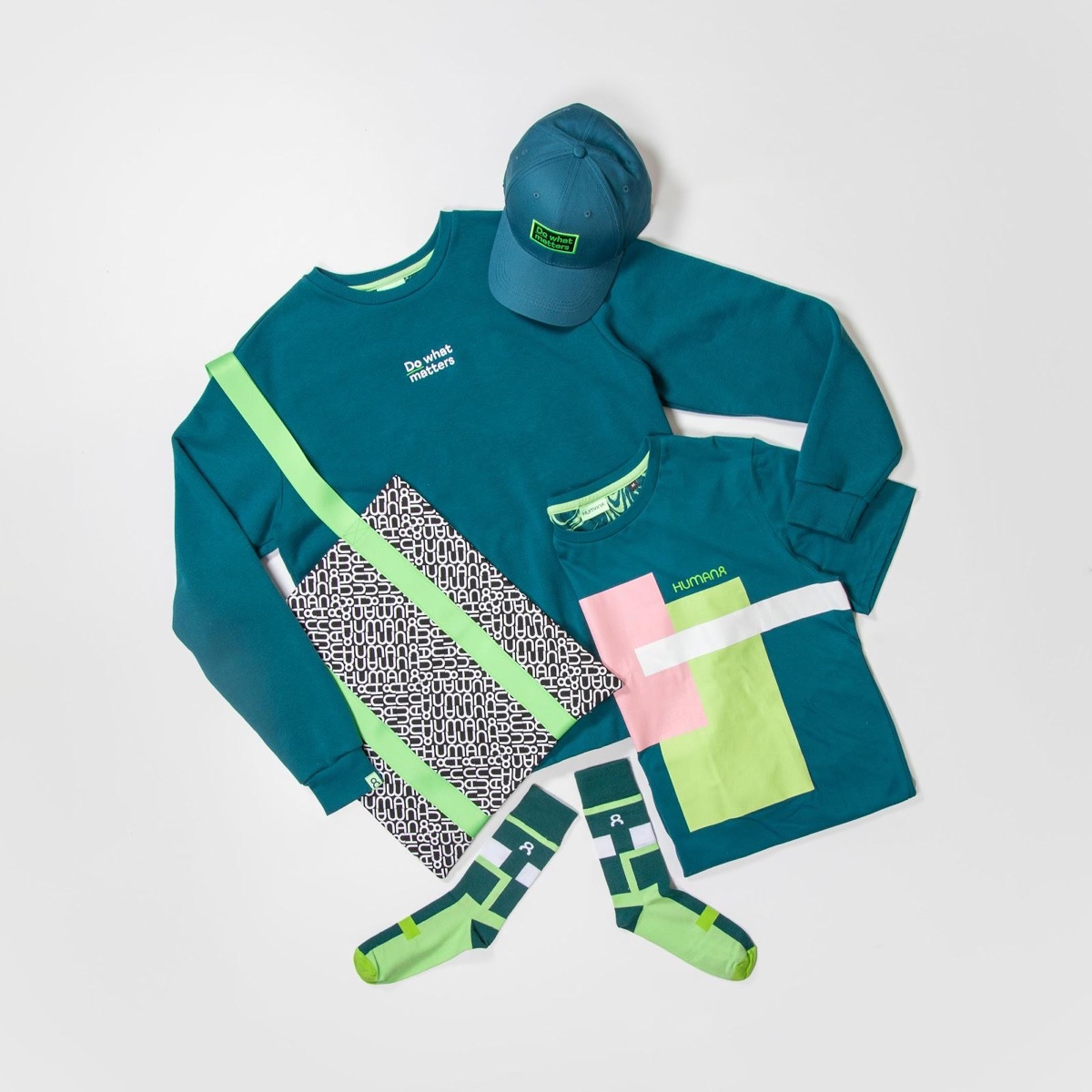
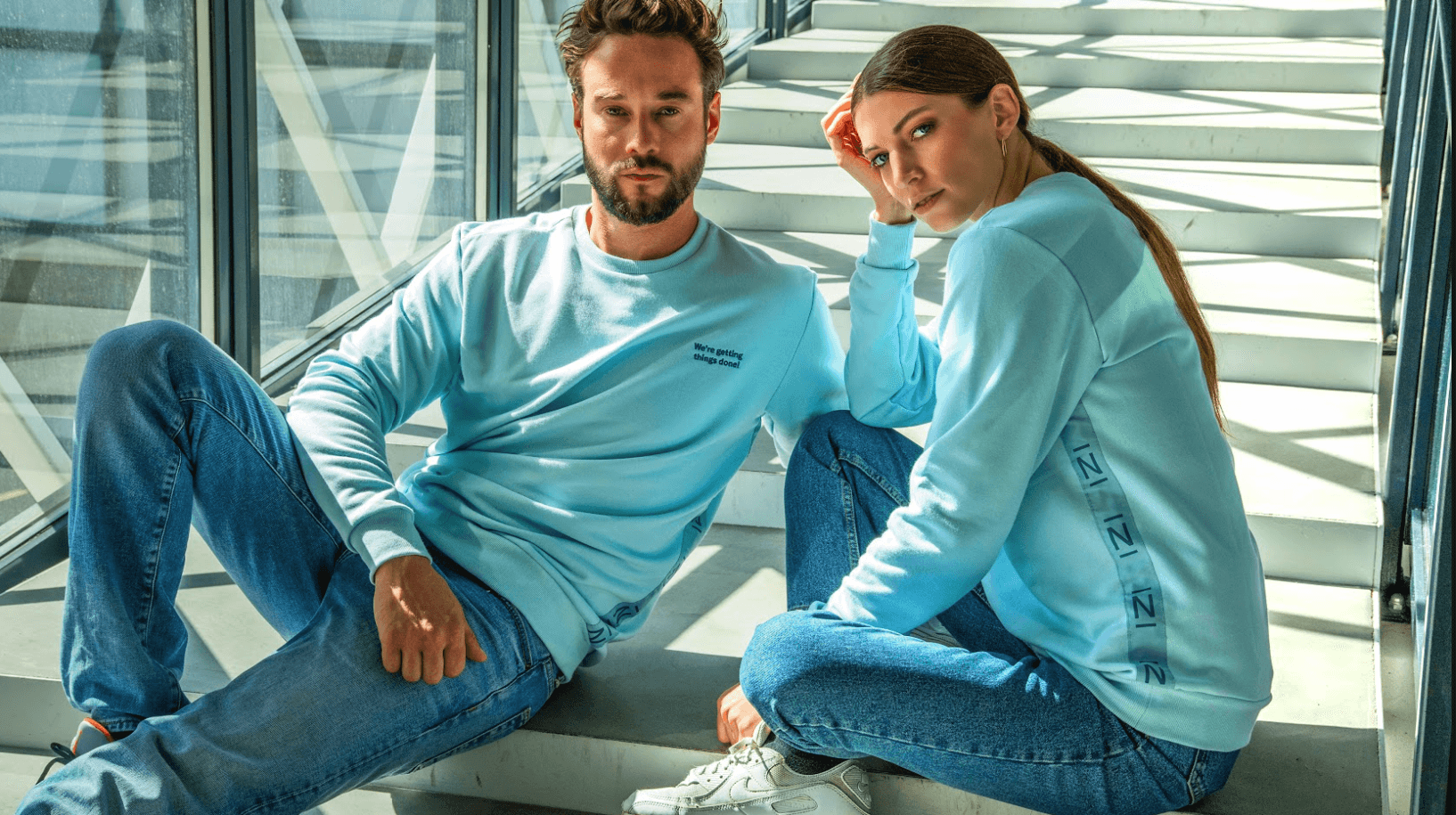
Human8-style lesson: the brand layer works best when color, message and product selection are treated as one system.
Design principle. Build the system before choosing the products. First decide what should be consistent across every new hire. Then define where the kit can flex: size, role, region, start date, office location and personal note. This prevents the program from becoming a new custom project every time someone joins.
How to adapt welcome kits by employee type
Do not build one welcome kit for everyone. Build one core kit with smart variations. That gives you consistency without making the experience feel lazy.
Remote or hybrid kit example, remote workers
Make the company feel real from home. Remote workers need physical connection because the office does not do that job for you. The kit should combine comfort, desk usefulness and a clear welcome ritual.
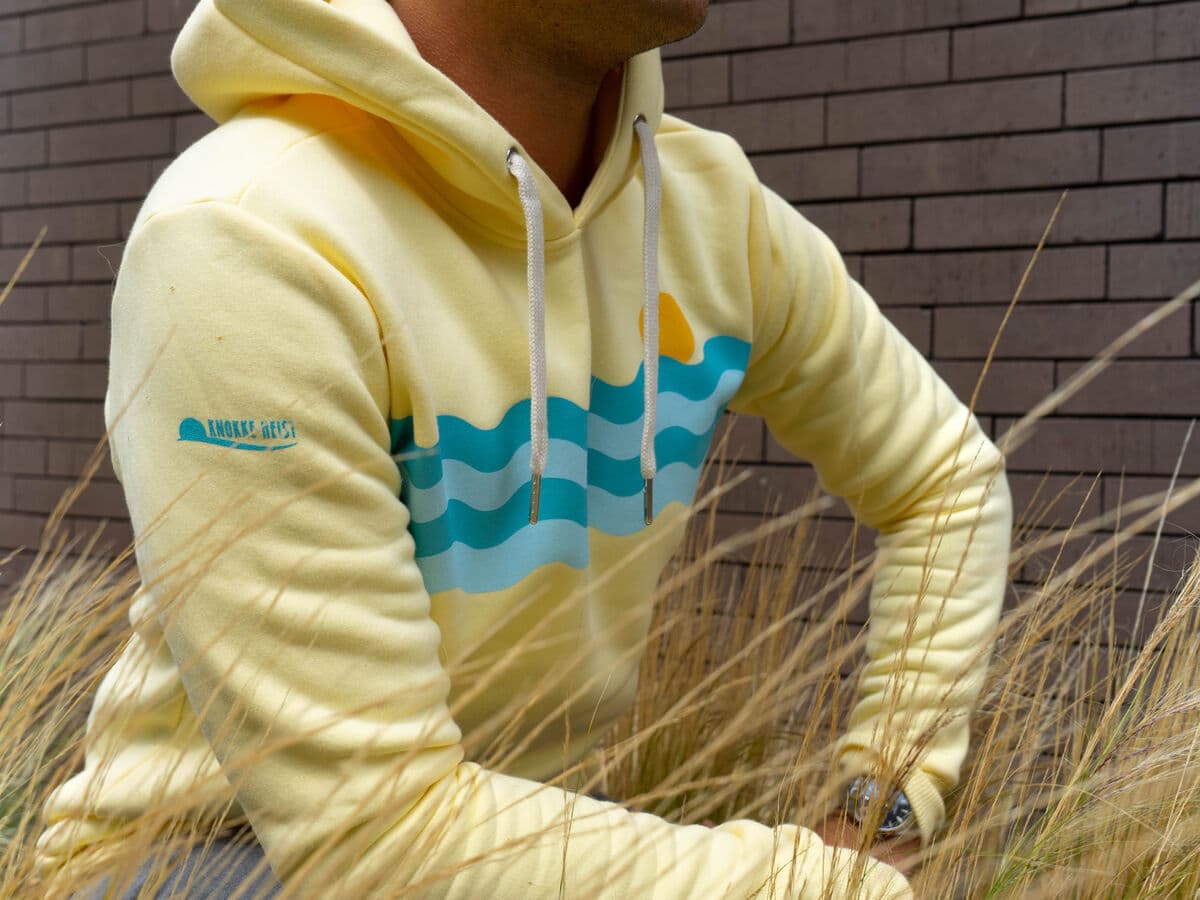
- Premium hoodie or sweater
- Reusable bottle or mug
- Notebook and pen
- Desk mat or laptop sleeve
- Personal welcome card
- Redeem link for size choice
Best Sunday fit: redeem pages and global delivery.
Team identity kit example, in-office hires
Make day one smooth, not ceremonial. Office hires already get human contact. Their kit should remove friction: desk setup, commute items, badge or access support, and a wearable item that makes them feel part of the team.
- Tote or backpack
- Desk notebook
- Office mug
- Badge / lanyard
- T-shirt or sweater
- Local office guide card
Best Sunday fit: approved products and catalog ordering.
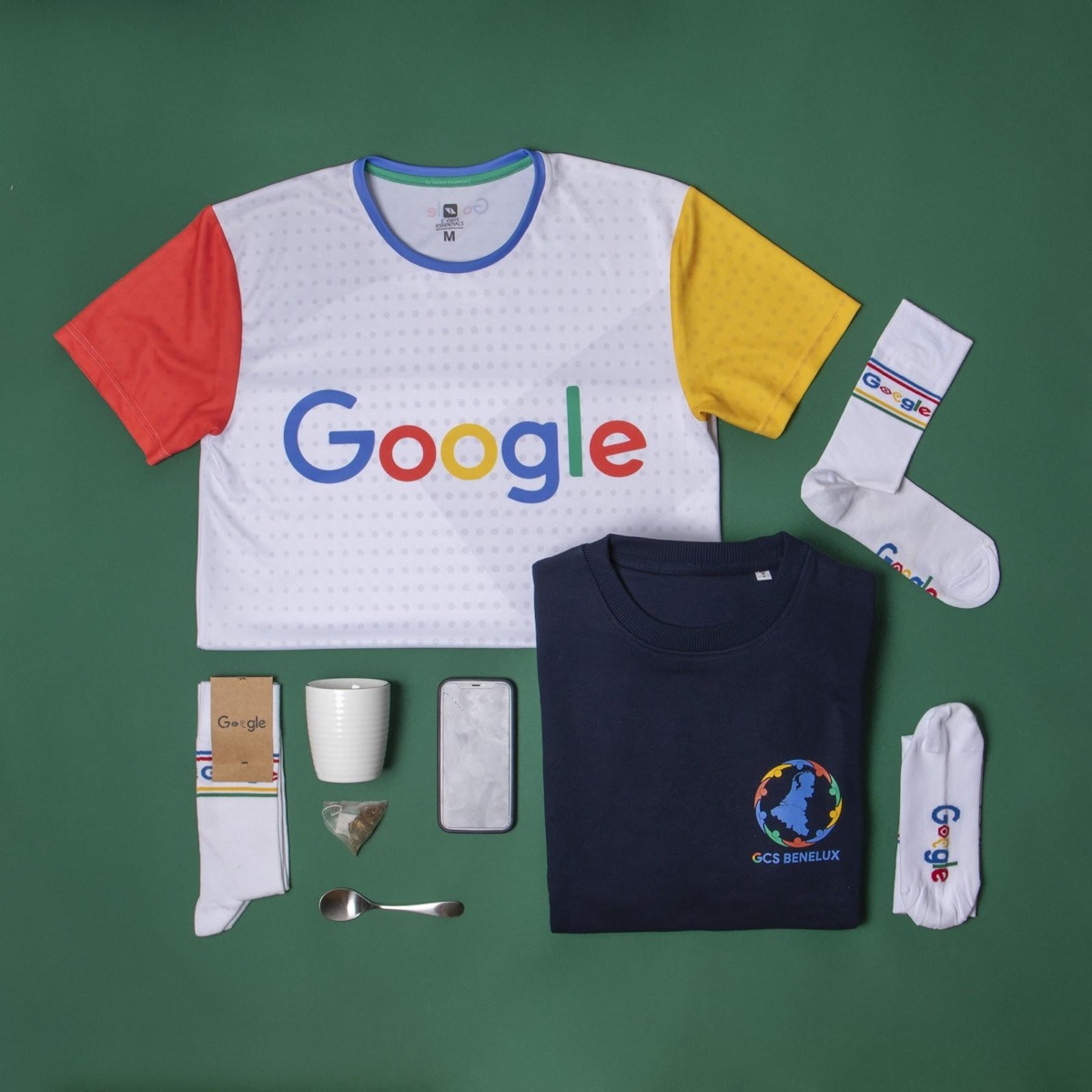
Minimal premium kit example, executives
Use fewer items and better materials. Executive kits should not feel loud. The best version is premium, minimal and useful: a high-quality garment, travel piece, notebook, premium bottle and a tailored note from leadership.
- Premium zip sweater
- Travel pouch
- Leather-look notebook
- Insulated bottle
- Subtle tone-on-tone branding
- Direct leadership note
Best Sunday fit: premium customer examples and custom production.
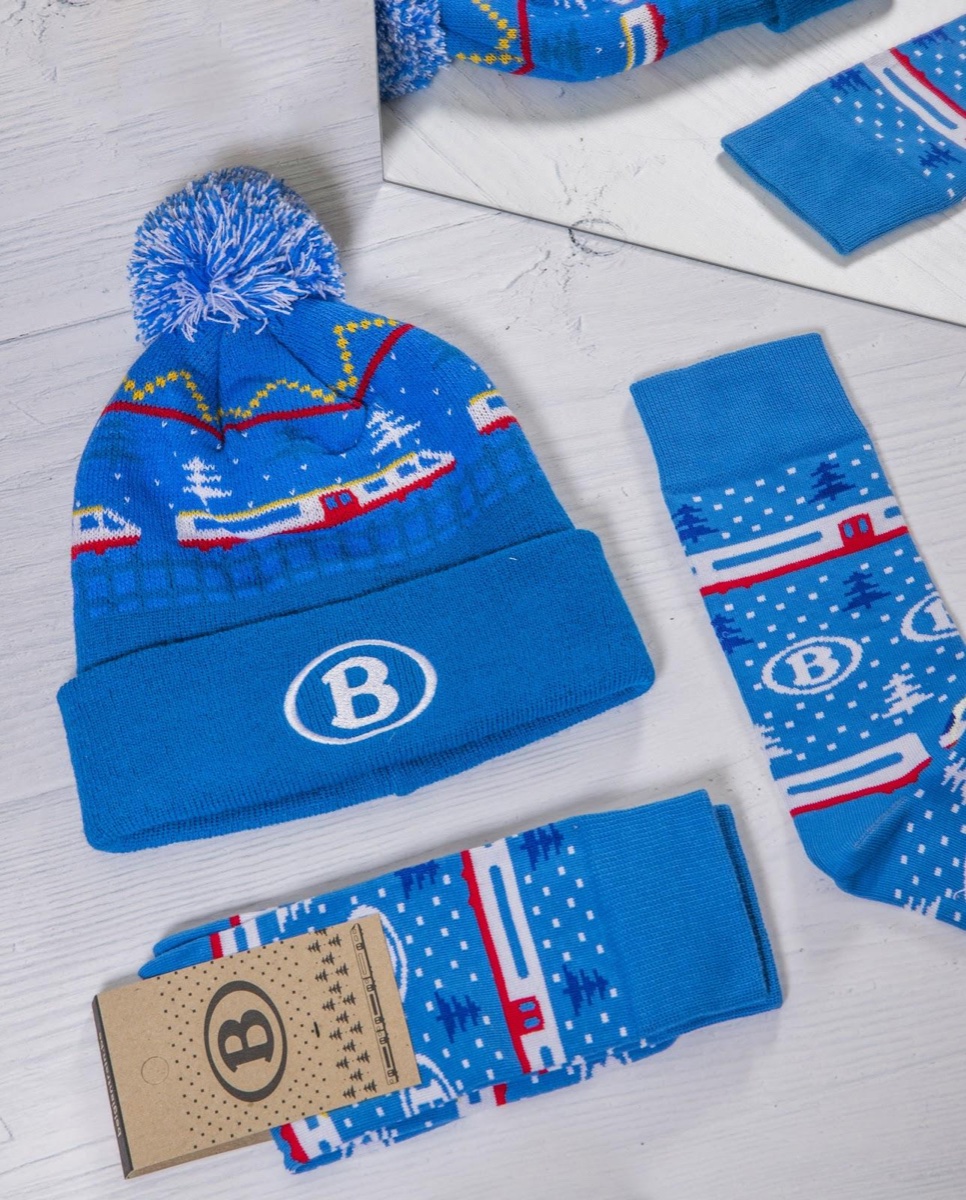
Seasonal cohort kit example, interns
Create energy and clarity. Intern kits should be welcoming, practical and slightly more playful. They help people feel included fast, especially when the intern cohort starts together.
- T-shirt or cap
- Notebook
- Sticker sheet
- Water bottle
- Cohort card
- Office / event tote
Best Sunday fit: campaign setup for recurring cohorts.
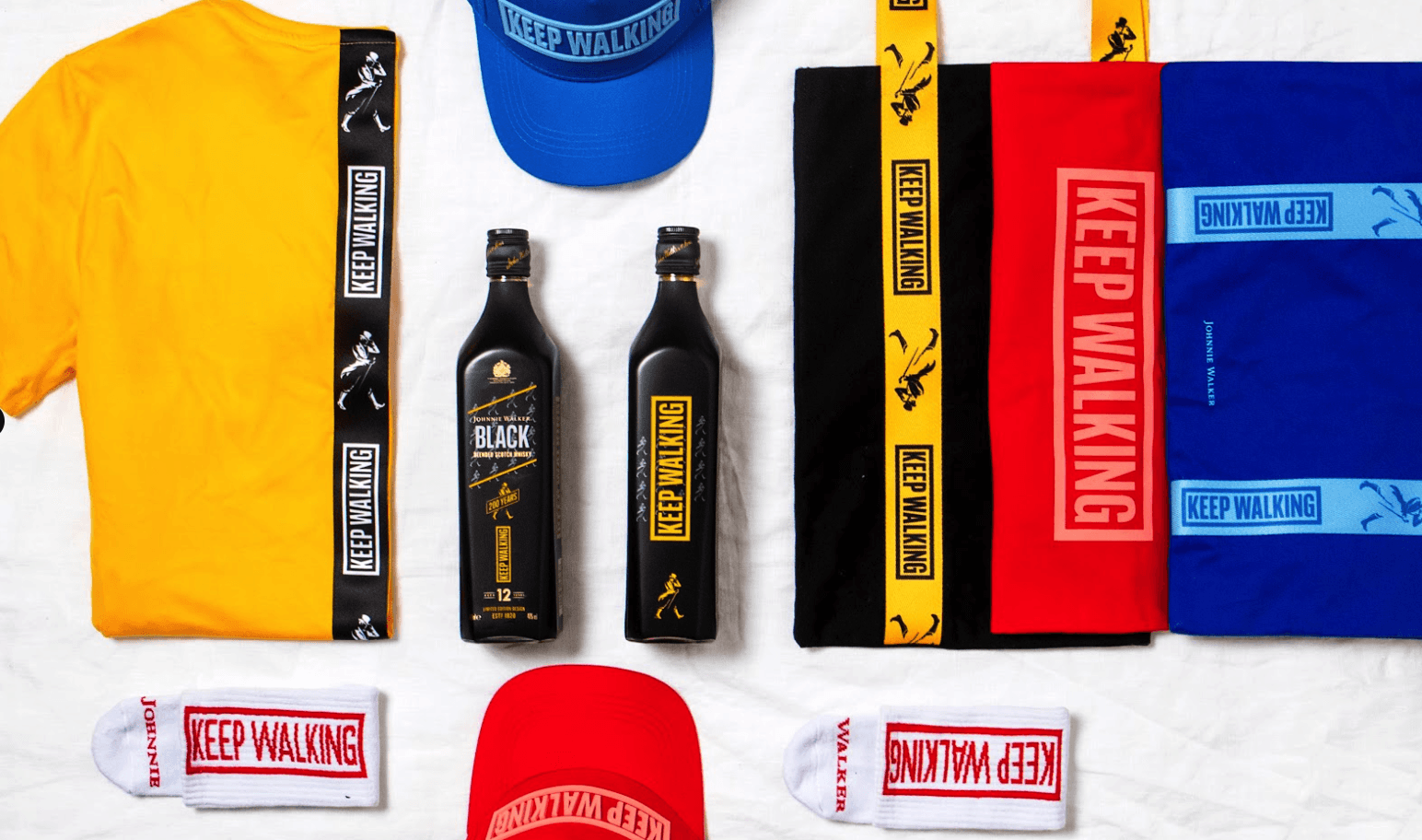
Real kit inspiration: what to copy, not just what to admire. The useful lesson from strong branded kits is not "copy the products." It is the operating principle behind the kit. Every good kit has a clear recipient, a clear moment and a clear brand system.
The three design pillars
- 01 · Moment, design for the first week. The kit should answer a real first-week need: feeling welcome, setting up a desk, joining a cohort, preparing for an event or understanding the brand.
- 02 · Recipient, design for the person receiving it. Remote hires, interns, executives and office hires need different levels of utility, playfulness, restraint and personalization.
- 03 · System, design for repeatability. A welcome kit program only scales when the product selection, address capture, size choice, stock and shipment flow are controlled in one process.
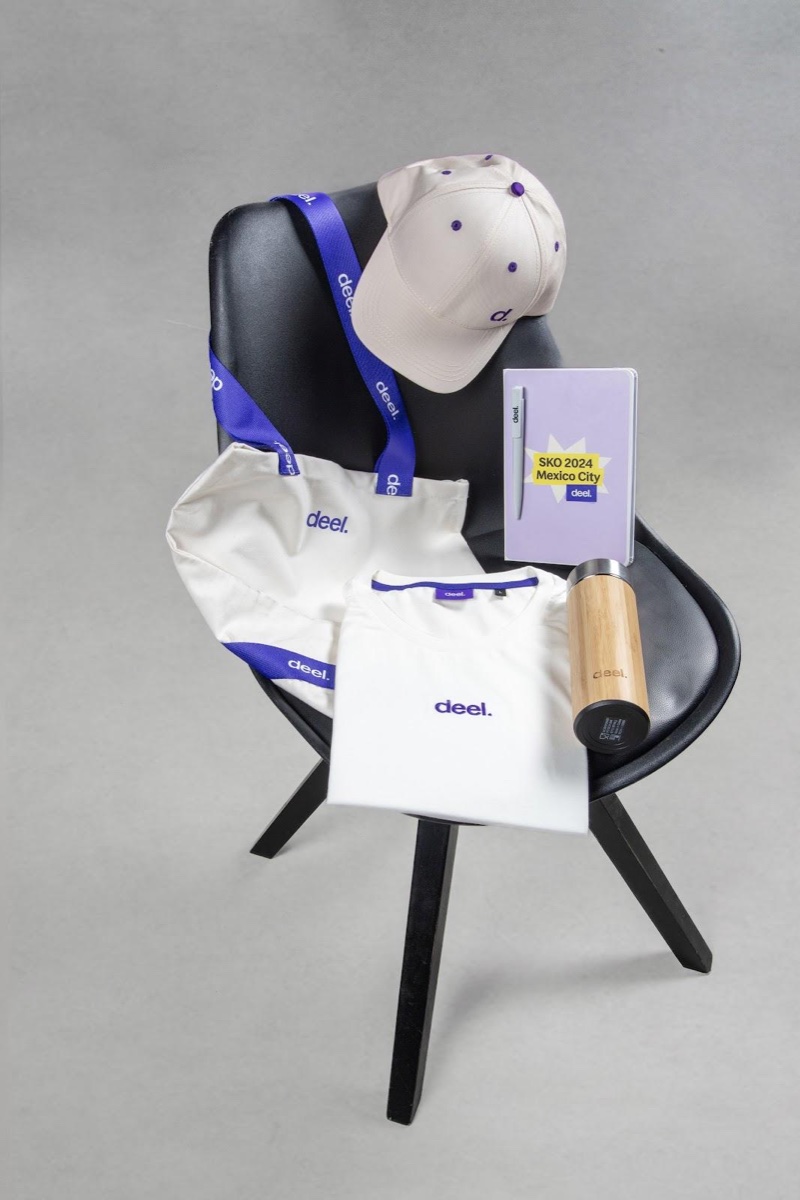
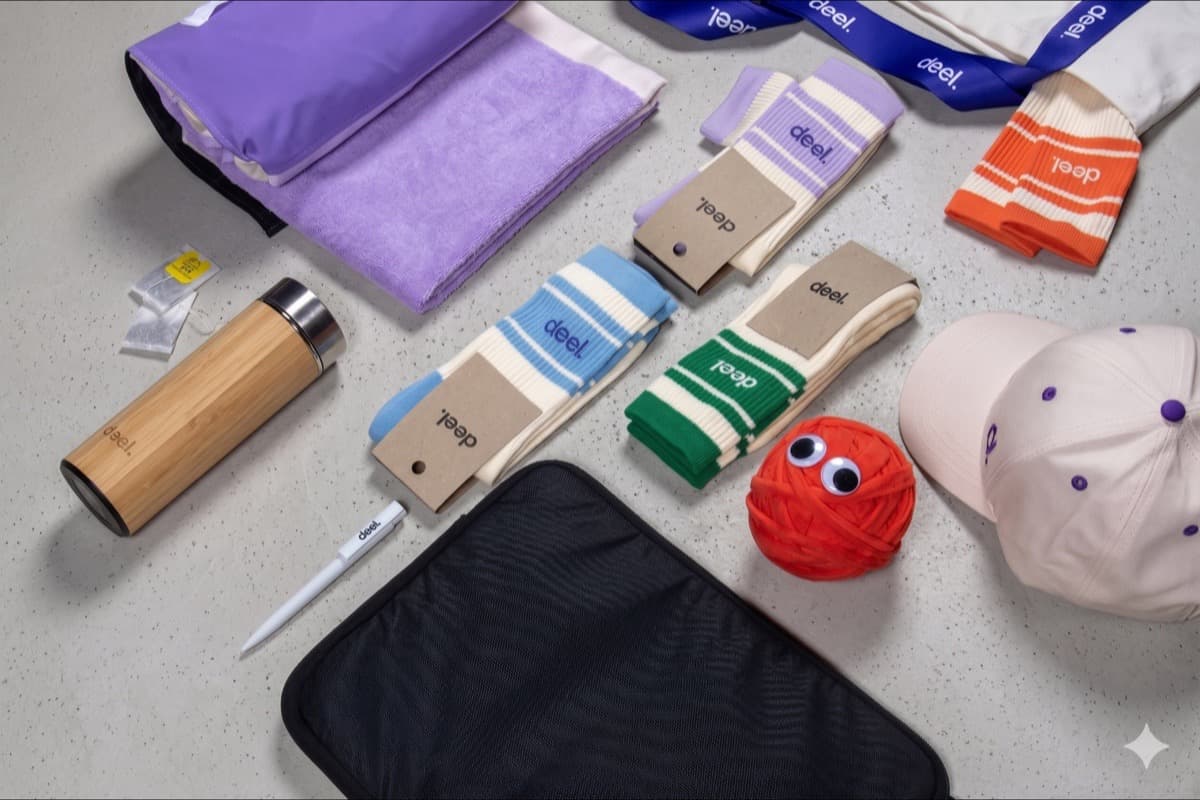
Real Sunday kit example: Deel's SKO kit shows how practical items can create one consistent onboarding or event experience.
What to put in welcome kits for new employees
A strong kit usually has one hero item, two to four practical items, one cultural item and one personal message. The hero item is the piece people remember. The practical items are what they use. The cultural item is what makes it feel specific to your company.
Sunday's kit examples show this pattern clearly. Deel's event kit combined a crisp white T-shirt, bamboo thermos, cap, notebook, pen, lanyard and tote. HubSpot's kit used a bold duffel bag, matching towel and custom-printed box to create a recognizable brand moment.
Warning. Do not let the product list become the strategy. The goal is not to include more items. The goal is to create a more useful, more memorable first experience.
| Kit component | Examples | Decision rule | Sunday link |
|---|---|---|---|
| Hero apparel | Hoodie, sweater, overshirt, T-shirt | Choose the item people will actually wear outside work. | Catalog |
| Daily utility | Bottle, mug, notebook, pen, laptop sleeve | Choose items that solve first-week friction. | Products |
| Carry item | Tote, backpack, weekend bag | Use when the employee needs to commute, travel or attend events. | How it works |
| Culture item | Local snack, founder note, values card, team ritual object | Use sparingly. Make it specific, not decorative. | Cases |
| Personalization | Name card, size choice, role-specific add-on | Personalize the experience without overcollecting private data. | Platform |
| Packaging | Custom mailer, premium box, reusable bag | The unboxing should feel branded but not wasteful. | Pricing |
How to run welcome kits at scale
Most welcome kit problems are not creative problems. They are operational problems: missing sizes, outdated addresses, manual packing, inconsistent stock, cross-border shipping, and no tracking. Fix the operating model first.
- 01. Pick the core items, packaging rules, budget range and audience variations.
- 02. Use a redeem flow for size, color and address selection instead of email threads.
- 03. Keep stock visible, approved and connected to each shipment type.
- 04. Trigger shipments from onboarding workflows, HR requests or recurring batches.
- 05. Track delivery, satisfaction, reorder rates, waste and support tickets.
Recommended Sunday setup for scalable welcome kits. For high-volume onboarding, combine centralized warehousing and global distribution with redeem pages for size and address collection, then keep approved products available in your brand store for repeat orders.
Case lessons from real Sunday programs
The strongest welcome kit programs share a pattern: they centralize the operational layer while keeping the recipient experience personal.
Trustpilot's onboarding story is the clearest example. Their previous model relied on manual size collection, physical packing and fragmented shipping. With Sunday, every new hire receives a personalized welcome kit automatically, while HR time on merch distribution dropped to almost zero.
Deliverect used onboarding boxes across 11+ offices worldwide to protect culture during rapid growth, while TechWolf used premium branded clothing for onboarding and special occasions to strengthen solidarity and community.
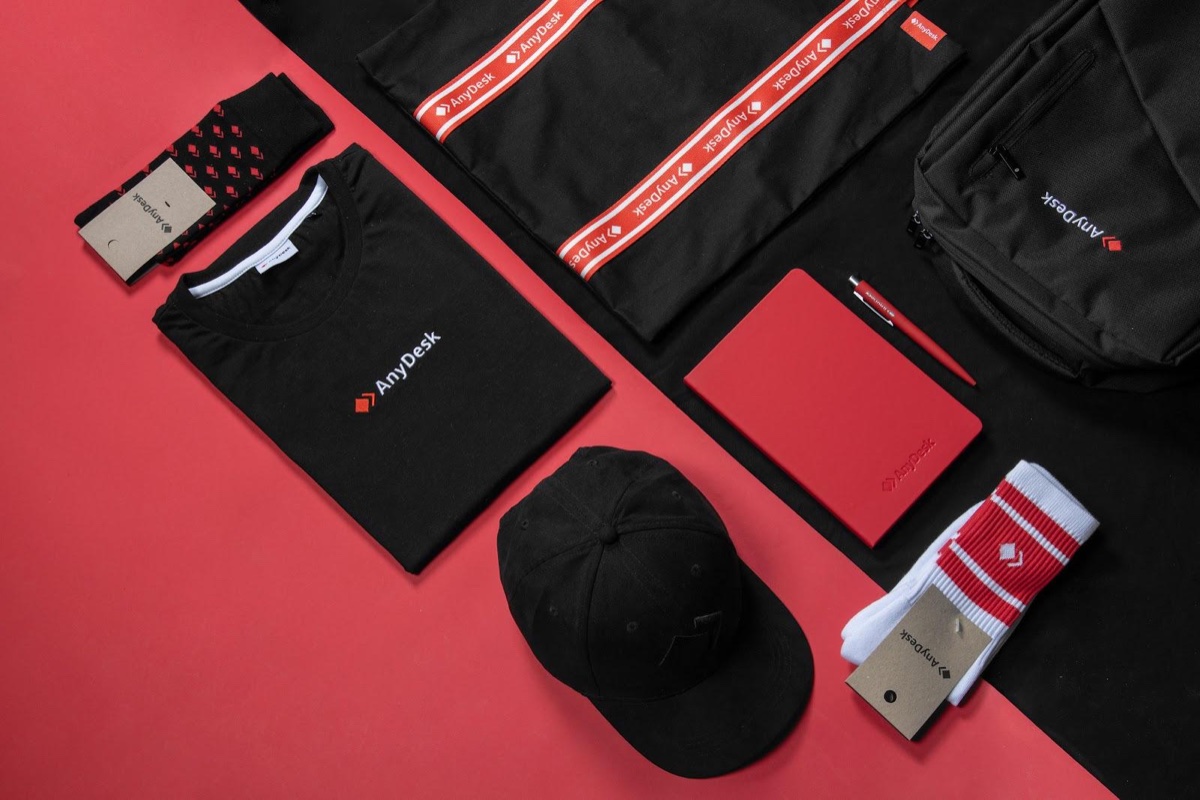
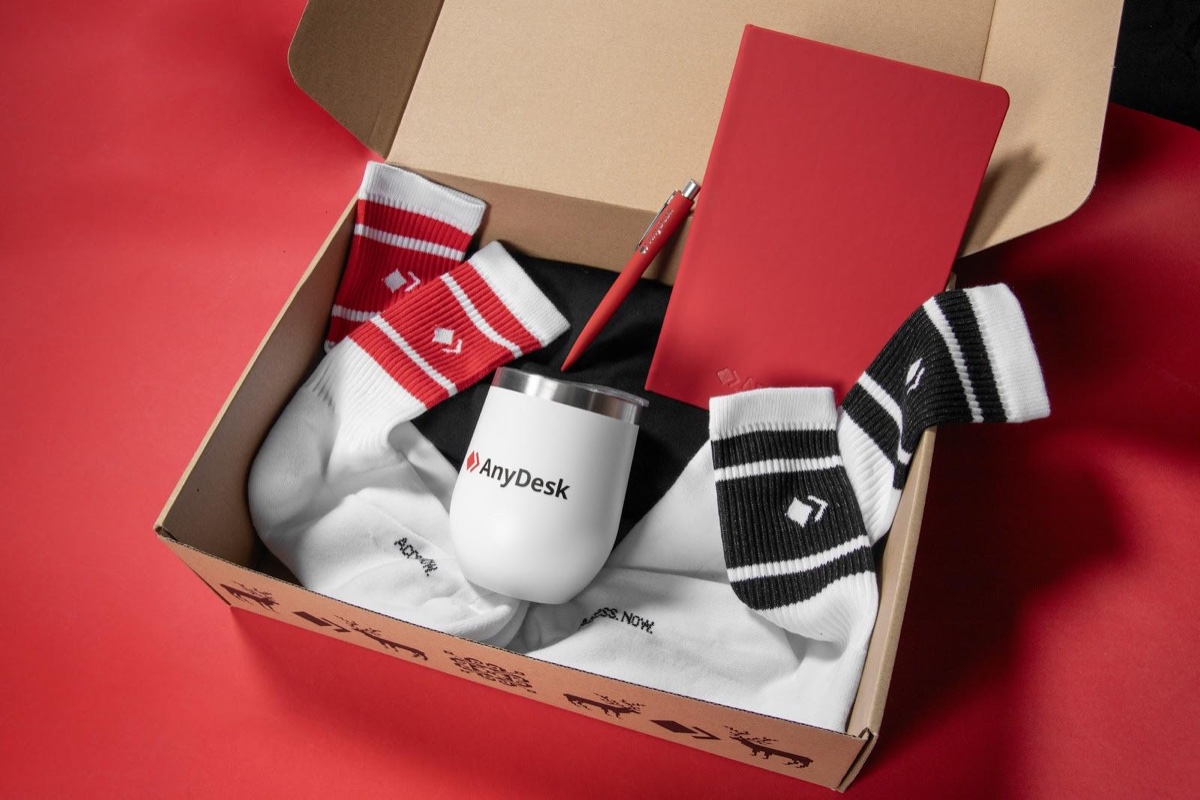
Real Sunday kit example: AnyDesk's expanded kit combines daily-use products with a clear red-and-black brand system.
How much should you spend on a new hire welcome kit?
Sunday's welcome gift guide notes that many companies invest roughly $50-250 per kit depending on tier, role and ambition. That range is useful, but the better question is not "what can we buy?" It is "what experience are we trying to create?"
A €50 kit can work if it is useful and well delivered. A €250 kit can fail if it feels random, late or overbranded. Budget should follow the role, the company stage, the hiring volume and the strategic importance of the moment.
| Tier | Typical use | What to include | Risk to avoid |
|---|---|---|---|
| Essential | Interns, high-volume hires, first kit test | T-shirt or cap, notebook, bottle, welcome card | Looking cheap because the packaging is weak |
| Standard | Most office and remote hires | Premium apparel, bottle, notebook, tote or sleeve, personal card | Adding too many mediocre items |
| Premium | Executives, senior hires, brand moments | High-quality apparel, travel item, premium stationery, tailored note | Overbranding products that should feel refined |
| Global program | Multi-country onboarding | Modular kits, local shipping logic, redeem pages, stock tracking | Forgetting customs, duties and address quality |
Budget lesson. The perceived value comes from coherence. A focused set of practical items can feel premium when the brand system and packaging are consistent.
How to measure whether your welcome kit is working
Measure the welcome kit like part of the onboarding journey. SHRM lists metrics such as time-to-productivity, retention, new-hire surveys, engagement and informal feedback as meaningful ways to evaluate onboarding. The kit should feed into that measurement.
Do not overcomplicate this. Start with a short survey after delivery, track support issues, watch reorder and size-exchange patterns, and compare delivery performance across countries.
Metrics worth tracking
- Delivery success rate
- Wrong-size rate
- New hire satisfaction
- Support tickets per kit
- Unused stock value
- Reorder frequency
- First-week survey score
- Time spent by HR
Tip. If you can only track one operational metric, track HR time spent per kit. A beautiful kit that requires manual chasing, packing and shipping does not scale.
Welcome kit examples by situation
Use these as starting frameworks, not fixed shopping lists. The best kit is the one that fits the employee's first week and your brand's personality.
The remote-first kit
Premium hoodie, desk mat, notebook, insulated mug, laptop sleeve and a warm founder card. Best when you want to make the company tangible before the first video call.
The office starter kit
Tote, T-shirt, notebook, pen, bottle, badge holder and local office guide. Best when the first day includes reception, desk setup and team introductions.
The executive welcome kit
Minimal sweater, premium travel pouch, refined notebook, high-end bottle and personal note. Best when restraint and quality matter more than volume.
The intern cohort kit
Cap, T-shirt, stickers, bottle, notebook and cohort card. Best when you want interns to feel part of a group immediately.
The global onboarding kit
Modular apparel, region-safe items, redeem link, tracked fulfillment and localized shipping. Best when employees are distributed across countries.
The culture-first kit
One strong apparel item, values card, team ritual item and story-led packaging. Best when the company wants the kit to explain its culture without a slide deck.
Make every new hire feel welcome from day one.
Sunday helps People, HR and Employer Brand teams design, produce, store and ship welcome kits globally from one branded merchandise platform.