
Executive Summary
Deel runs between 400 and 500 events per year across every continent. Before Sunday, each one triggered a new vendor search, a new round of logistics chaos, and a new invoice that no one could easily compare to the last. By centralizing production, storage, and global distribution through Sunday's platform, Deel reduced merchandise costs by 44% and recovered over 2000 operational hours per year, while delivering the same premium kit whether the event is in São Paulo, Singapore, or Stockholm.
About Deel
Deel is a global payroll and HR platform that lets companies hire anyone, anywhere. The company reached unicorn status faster than almost any business in its category, and that growth is reflected in its event calendar. With 400 to 500 events annually, ranging from small customer dinners to major industry conferences, branded merchandise is not a perk for Deel. It's an operational requirement, repeated hundreds of times a year, across a dozen time zones.
That kind of volume exposes every weakness in an ad-hoc approach. Deel found them all.
The Challenge: What 500 Events Actually Costs
The fragmentation tax at Deel showed up in four places.
Quality drift. With no single vendor managing production, merchandise quality varied event by event. An attendee at one conference might receive a hoodie that felt considered. Someone at the next got something that didn't make it past the first wash. For a company building a global brand, that inconsistency is a problem that compounds quietly.
Emergency pricing. Last-minute orders are the most expensive orders. Without a forecast or centralized stock, Deel teams were regularly paying urgency premiums, sourcing locally at short notice, absorbing shipping costs that no one had planned for, and accepting whatever quality was available in the timeframe.
Logistics overhead. Customs documentation. Shipping delays. Delivery failures during live events. Each international shipment required manual coordination, and the failure rate was high enough to become a routine expectation rather than an exception.
Vendor management at scale. Onboarding a new supplier for a single order is a significant time commitment. Doing it dozens of times a year, across multiple regions, with different languages, payment processes, and quality standards, consumed internal resources that had no business being spent on hoodie logistics.
The result: Deel was paying more than necessary, receiving less consistency than required, and absorbing operational friction that scaled with every new event on the calendar.
The Solution: One Collection, Everywhere
Sunday started by working with Deel to step back from the event-by-event approach entirely.
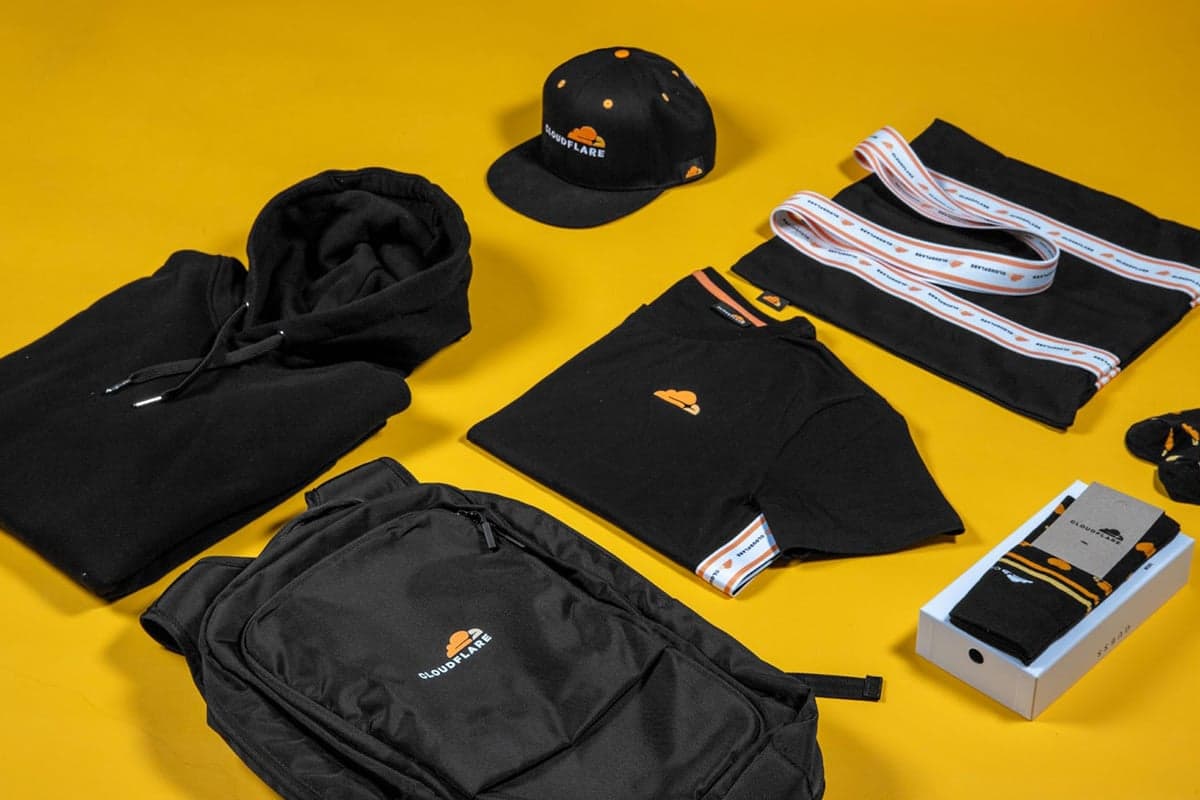
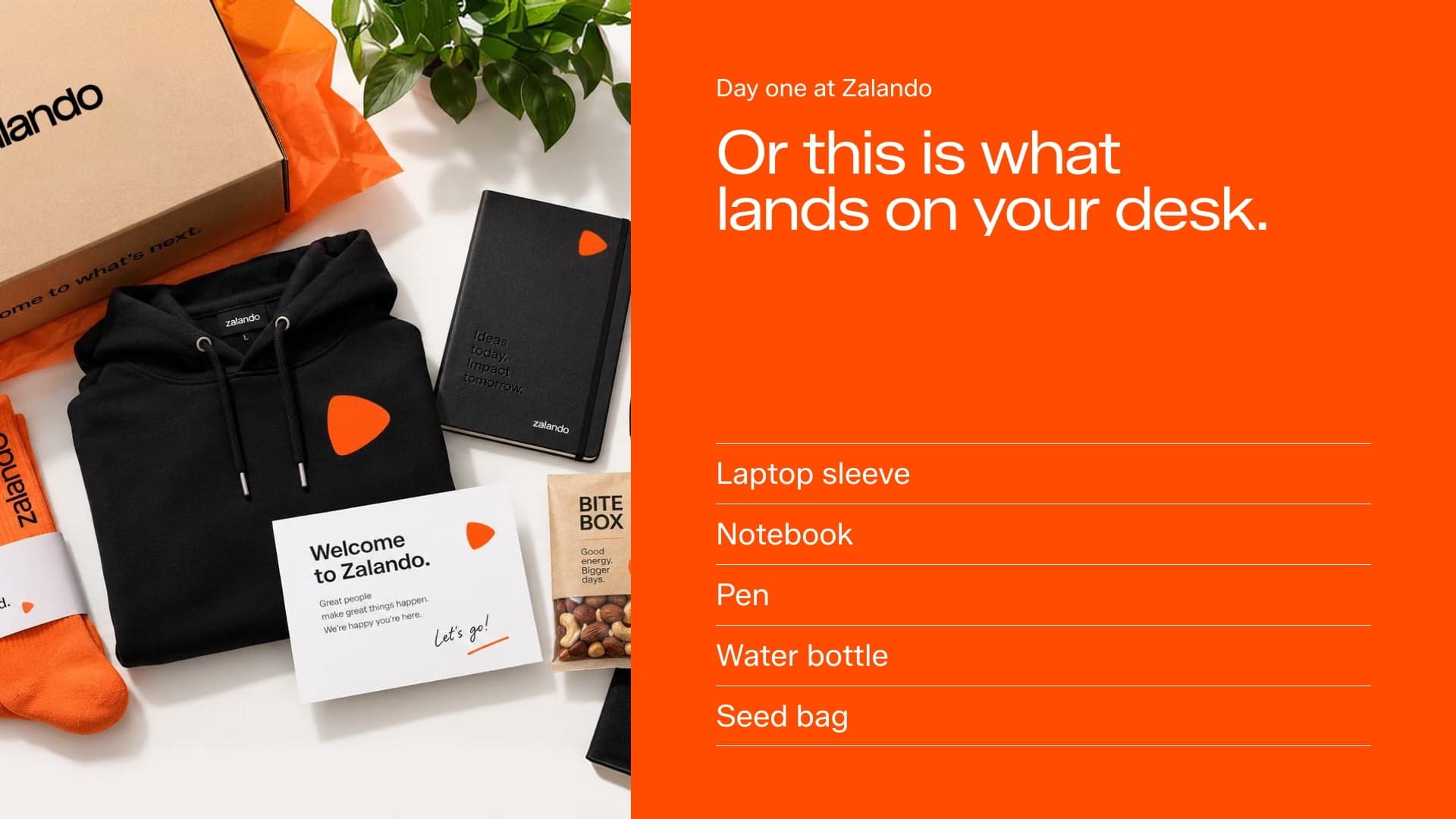
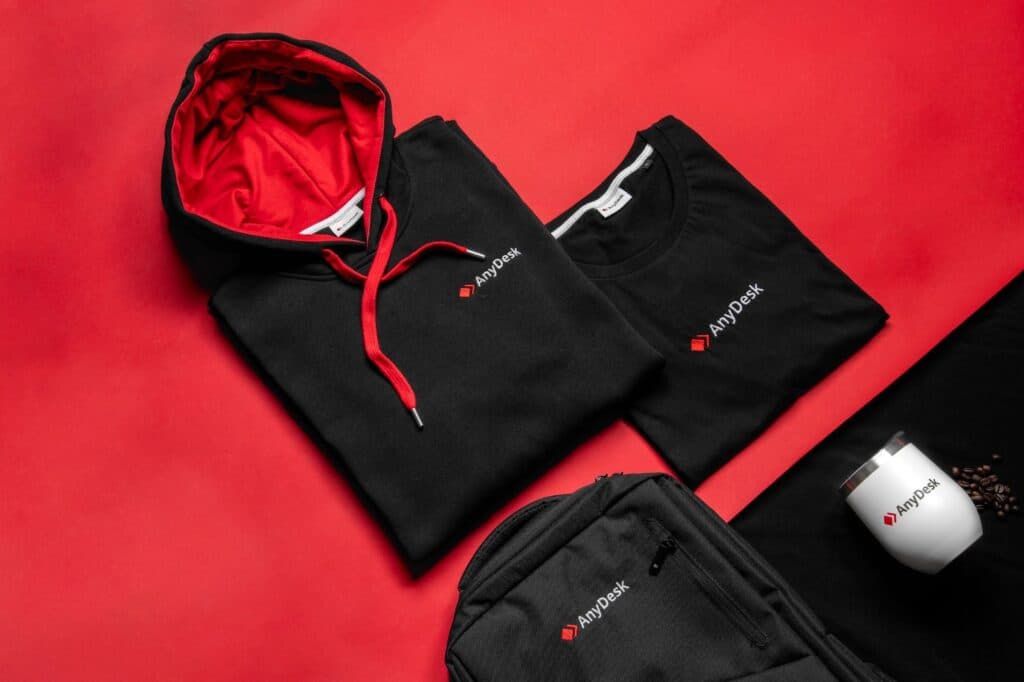
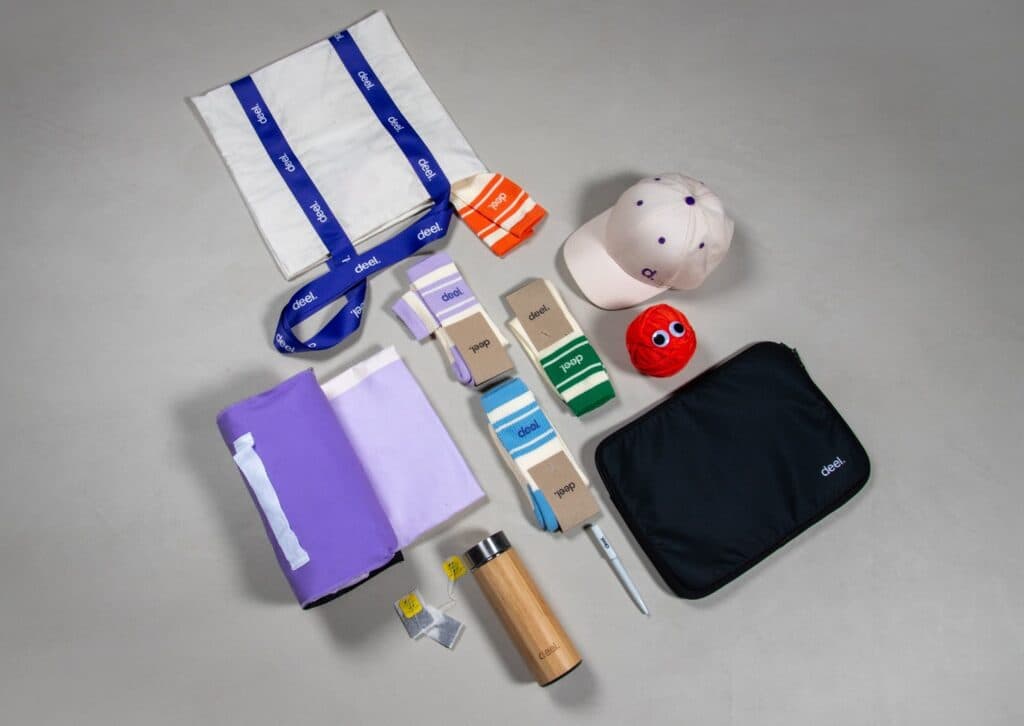
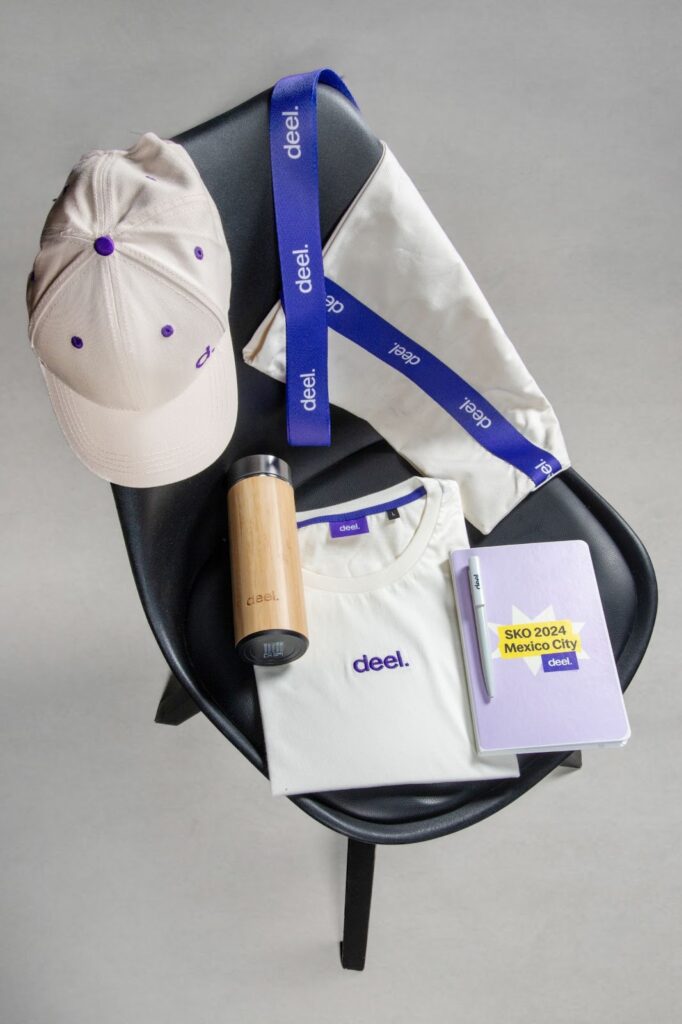
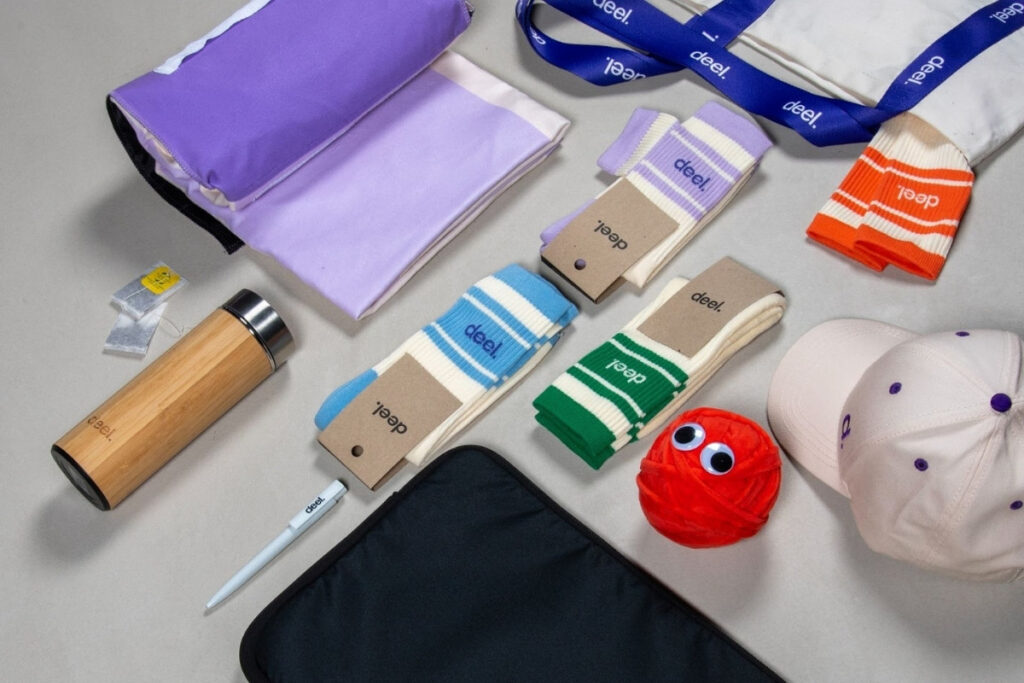
Instead of sourcing per event, they built a core collection, tennis socks, zip hoodies, sweaters, T-shirts, picnic blankets, water bottles, tea bottles, designed to Deel's brand standards and produced in volume across a six-month forecast window. The economics of batch production are straightforward: larger runs cost less per unit, reduce lead time dependency, and eliminate the quality lottery that comes with rotating vendors.
That collection is now held centrally in Sunday's warehouse. When an event requires merchandise, it ships from existing stock. There's no production delay, no emergency sourcing, no customs surprise for the team managing the event. The merchandise arrives just in time because it was already made.
For Deel's global footprint, this mattered at the distribution level too. Sunday manages customs documentation, last-mile delivery, and carrier selection across regions. Whether an event runs in EMEA, Latin America, or Asia-Pacific, the attendee experience is the same: the same product, the same quality, delivered on time.
Platform and Products Used
Sunday Wardrobe (centralized storage): Deel's core collection sits in Sunday's warehouse infrastructure, available for dispatch on demand. Stock visibility is live, the team knows what's available before committing to an order.
Global logistics: Sunday handles customs, documentation, and delivery coordination for every international shipment. No Deel team member is generating customs forms or tracking packages through carrier portals.
Forecasting and batch planning: The six-month production cycle that underpins Deel's cost savings required deliberate demand planning. Sunday worked alongside Deel's events team to model requirements across regions and seasons, moving away from reactive ordering toward predictable production.
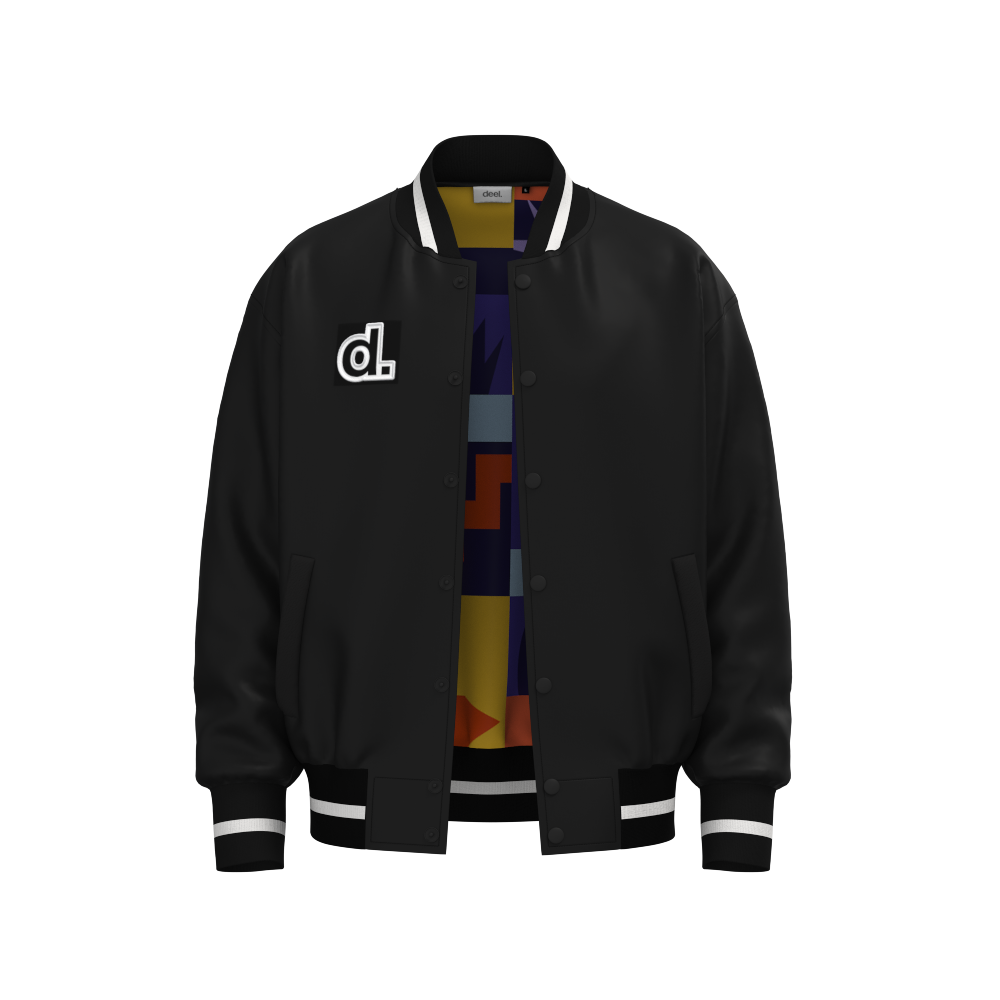
Products: The Deel event collection, zip hoodies, crew sweaters, T-shirts, tennis socks, picnic blankets, water bottles, tea bottles, was developed to meet a specific brief: premium enough to want, functional enough to use, consistent enough to represent the brand the same way in every city.
Expanding the System: Beyond Events
The event partnership established the infrastructure. Other teams noticed.
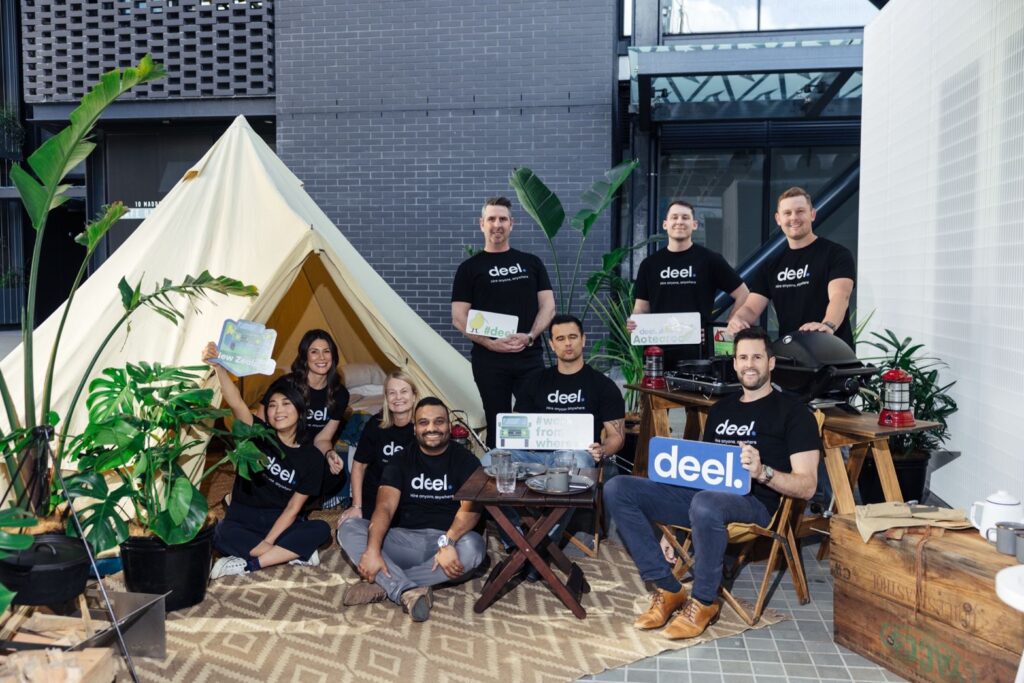
Deel's ABM team adopted Sunday's services for targeted account campaigns, using the same centralized approach to eliminate per-campaign vendor sourcing. Partner programs followed, using merchandise to reward and recognize partners within the Deel ecosystem. Local marketing teams, operating with their own budgets and regional requirements, integrated Sunday's solution to maintain brand consistency without losing autonomy.
The most significant expansion is still in progress: an internal employee shop for Deel's 5,000 remote employees, built on a coin system that allows staff to redeem branded merchandise. For a fully distributed company, that kind of tangible brand touchpoint matters. It addresses the specific challenge remote-first organizations face: building shared identity across teams that never share an office.
Impact and Key Results
44% reduction in merchandise costs. The primary driver is batch production. Eliminating emergency orders and consolidating volume through a single production partner reduced per-unit costs substantially, even while upgrading product quality.
300+ operational hours recovered annually. The hours previously spent on vendor management, logistics coordination, customs paperwork, and event-specific sourcing are gone. Teams that were managing merchandise as a side responsibility now don't have to.
Consistent quality across all regions. A Deel event in London delivers the same merchandise as one in Buenos Aires. That consistency is the result of centralized production, not coincidence.
Reliable delivery for live events. Shipping from centralized stock with dedicated logistics management means merchandise arrives when it's needed. The previous experience, chasing shipments, handling customs delays mid-event, is no longer part of the process.
Conclusion: The Cost of Doing It the Old Way
Deel's experience makes the math legible. Running merchandise event-by-event looks like the flexible approach. In practice, it means paying urgency pricing, absorbing quality variation, and spending internal hours on logistics problems that don't need to exist.
The centralized model costs less, performs more consistently, and scales without adding overhead. That's the calculation most teams aren't making clearly enough when they treat merchandise as a series of independent projects.