Executive Summary
Fastned, Europe's fastest-growing fast-charging network, was scaling across 7 countries with one persistent problem: their uniforms didn't look like Fastned. Generic black garments from local vendors, ordered ad hoc, consumed 3 days of management time every month and produced results that were off-brand and inconsistent. By centralizing their entire uniform operation on Sunday, including product development, a per-country order platform, and batched logistics, Fastned deployed 4,000 units of fully custom, European-made uniforms in their signature brown and yellow, across 7 countries, for the same total budget as before. The 25% cost savings from consolidation were reinvested directly into better products. The mess didn't just get smaller. It disappeared.
About the Client
Fastned is building the charging infrastructure for Europe's electric future. With fast-charging stations across the Netherlands, Germany, the UK, Belgium, Switzerland, France, and Denmark, they are one of the continent's most recognizable and rapidly expanding EV charging networks.
Their stations are unmistakable: bold architecture, signature yellow canopies, and a brand identity built on trust, clarity, and forward momentum. For Fastned, every customer touchpoint is an opportunity to reinforce that identity and that includes the 500 employees and installers who wear the brand every single day.
The Challenge: When Uniforms Become an Operational Tax
For a company so deliberate about its visual identity, Fastned's internal uniform process was a significant contradiction.
Before Sunday, uniforms were sourced locally. Each country worked with its own vendor, negotiated its own pricing, and made its own design decisions. The practical result was a patchwork of garments that ranged from "close enough" to "clearly wrong." Generic black items. Standard colors with no brand recognition. The kind of clothing that gets worn because it's required, not because it's something anyone would choose.
But the visible problem, the brand inconsistency, was only part of the story. The hidden cost was operational.
Every ordering cycle triggered the same chain of manual work. Sizes had to be collected. Vendors had to be briefed. Designs had to go through approval rounds that dragged on across email threads. Prices had to be renegotiated from scratch, country by country, with no leverage and no consistency. Parameters changed constantly. Clarity was never there.
Someone at Fastned was spending approximately three days every month just managing this process. Not designing better products. Not thinking strategically about employer branding. Just coordinating the logistical mess that comes from running a fragmented, ad-hoc uniform program across an international operation.
This is what fragmentation actually costs. Not just mismatched hoodies, but days of professional time, every month, indefinitely.
There was also a subtler trap at work. Because uniforms were being sourced locally and reactively, the default was always "cheap and generic." Nobody was making a deliberate choice to under-invest in the product. They were simply optimizing for the wrong thing: short-term unit cost, not total cost of ownership. The result was spending real money every cycle and still getting a result that fell short of what the brand deserved.
The Solution: One Collection, One Platform, Seven Countries
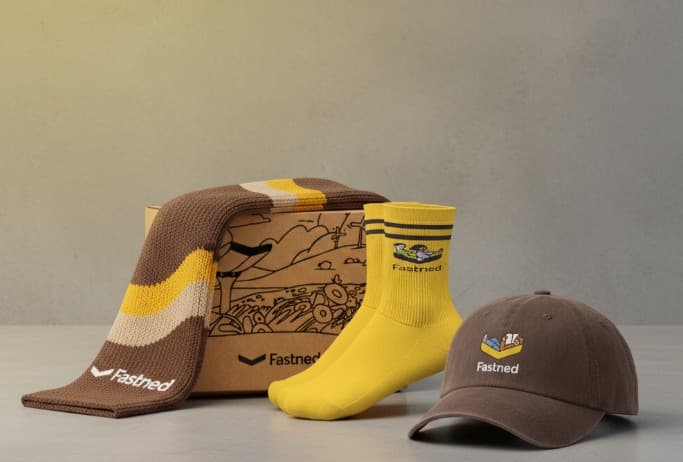
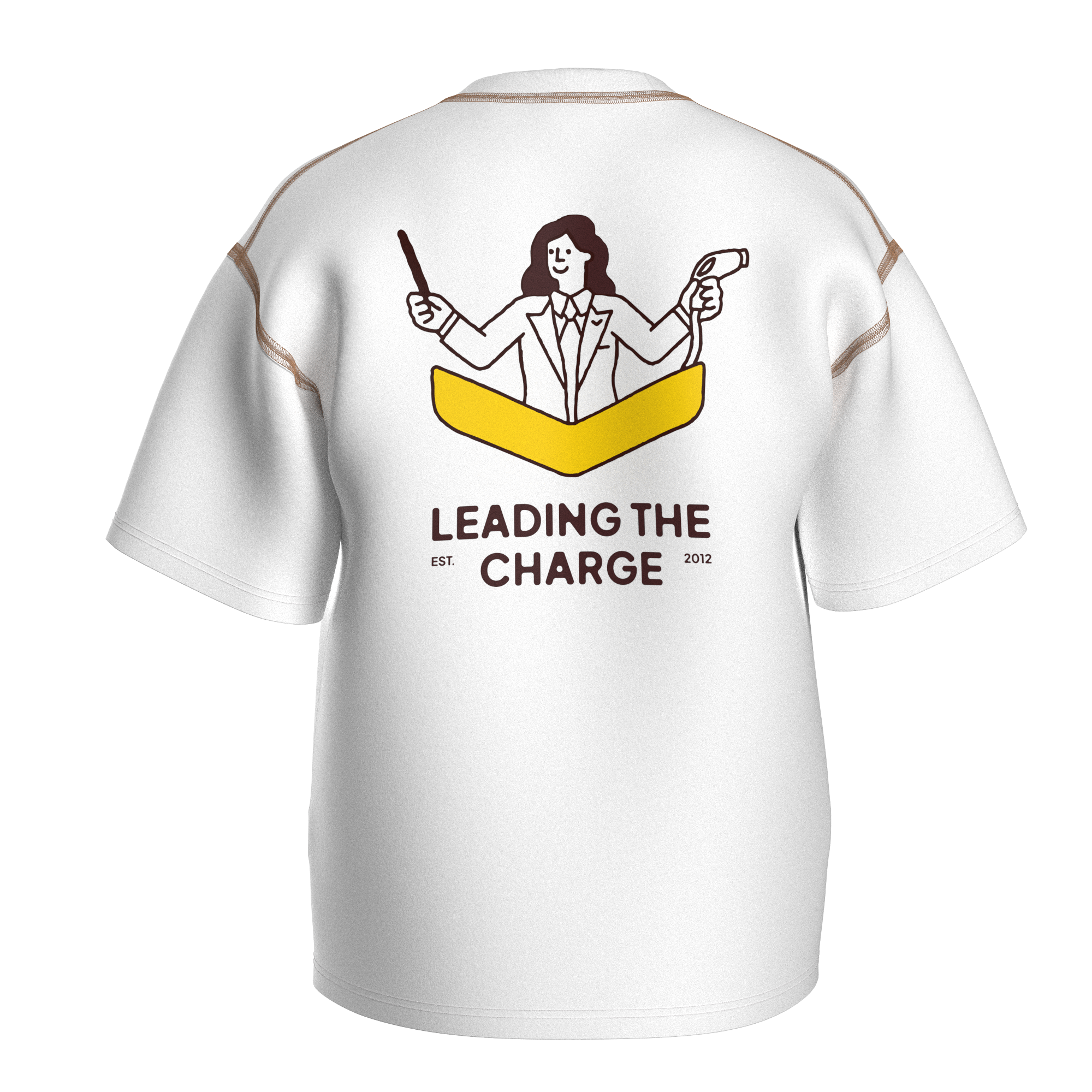
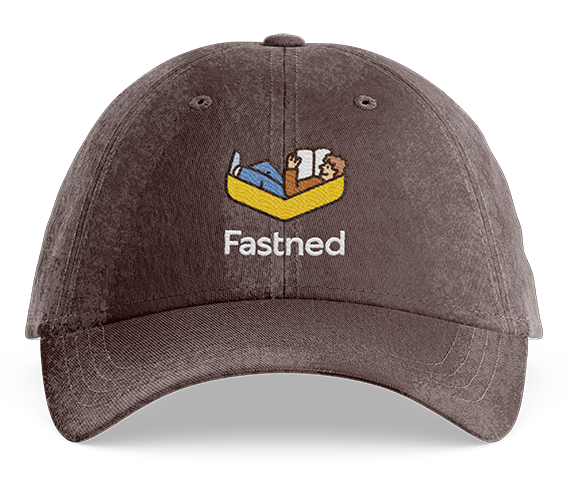
The starting point was product development. Sunday worked with Fastned's brand team to build a uniform collection from scratch, not adapting off-the-shelf garments, but developing custom pieces that translated the Fastned identity into wearable clothing. The brand's distinctive brown and yellow. Consistent placement and treatment of the logo. Garments produced in Europe, to a quality standard the team would actually be proud of.
The first time the Fastned team saw the design board, the decision was made. This was, for the first time, the Fastned brand fully expressed in a uniform. Not an approximation. Not a compromise. The collection.
That design process, sampling, approvals, refinement, was front-loaded into the initial setup. It required more effort at the start. But that was by design. The goal was to build something that wouldn't need to be rebuilt. Once approved, the collection becomes the foundation. Future orders are simply reorders, not reinventions.
The operational infrastructure was built in parallel. Sunday created a centralized brand store giving every country manager in all 7 markets a live view of the approved collection and its current stock status. Every six months, the store opens for an ordering window. Country managers log in, see the collection, and enter the quantities they need for their team. That's the entirety of their involvement.
Everything else, batching the orders across countries to unlock volume pricing, managing production, handling logistics, invoicing each country separately, is handled by the platform and the Sunday team. Country managers don't negotiate with vendors. They don't chase delivery updates. They don't coordinate across borders. They enter quantities and move on.
This matters more than it might initially sound. In the previous model, every country manager was absorbing a share of the operational burden. Multiplied across 7 countries and multiple ordering cycles per year, that adds up to a significant amount of time that had nothing to do with anyone's actual job. The platform removes that burden entirely.
Platform and Products Used
Platform features:
- Centralized Brand Store: a single live portal where all country managers access the approved collection, check stock, and submit orders during each ordering window
- Batched ordering across countries: individual country orders are consolidated into a single production run, then invoiced and delivered separately per country
- Global logistics management: Sunday handles fulfillment and distribution across all 7 markets from a single logistics setup
- Custom product development: sampling, design approval, and European production managed end to end before the first unit ships
The collection:
The uniform program covers approximately 12 SKUs across different functions, from field installers to office staff, each adapted for its role while maintaining a consistent visual identity. Every garment in the collection is fully custom: Fastned's signature brown and yellow, European production, and a quality level that positions the uniform as something employees want to wear, not just something they're required to wear.
The collection was launched with an initial batch of 4,000 units, ensuring every person across all 7 markets received their full set from day one.
Impact and Key Results
25% cost reduction, reinvested, not pocketed
By consolidating 7 fragmented country-level vendor relationships into a single centralized program, Sunday unlocked a 25% reduction in total uniform spend. Fastned made the deliberate decision not to take that saving as a budget reduction. Instead, it was reinvested into better products, moving from generic off-brand garments to fully custom, European-made uniforms. Same total budget. Dramatically better output.
3 days per month recovered
The manual coordination that previously consumed approximately three days every month, collecting sizes, briefing vendors, managing approvals, renegotiating prices, has been reduced to near zero. Country managers now spend minutes submitting quantities during the biannual ordering window. The rest is handled.
4,000 units. 7 countries. One system.
The initial deployment covered every employee across all markets simultaneously. A unified collection, consistent quality, delivered and invoiced per country without any additional complexity for the Fastned team.
100% brand consistency across all markets
For the first time, every Fastned employee, from an installer at a charging station in Denmark to an office team member in Amsterdam, wears the same collection, built to the same standard, expressing the same brand. The patchwork of local variations is gone.
A collection that scales without reinvention
The upfront investment in product development and design approval means that future ordering cycles require no creative work, no vendor briefings, and no approval rounds. The collection is built. Reordering is operational, not creative.
Conclusion: Uniforms as Brand Infrastructure
Fastned's story is not primarily about clothing. It's about what happens when a fast-scaling company stops treating a recurring operational need as a series of ad-hoc projects and starts treating it as infrastructure.
The uniforms were always important to Fastned. The brand is built on trust, visibility, and consistency, and the people wearing the brand every day are a critical part of that. The problem wasn't ambition. It was the absence of a system capable of matching it.
With a centralized collection, a per-country order platform, and a logistics operation that removes complexity from every market simultaneously, Fastned now runs a uniform program that scales with the company rather than against it.
Every new country. Every new hire. Same collection. Same standard. Zero reinvention.