Executive Summary
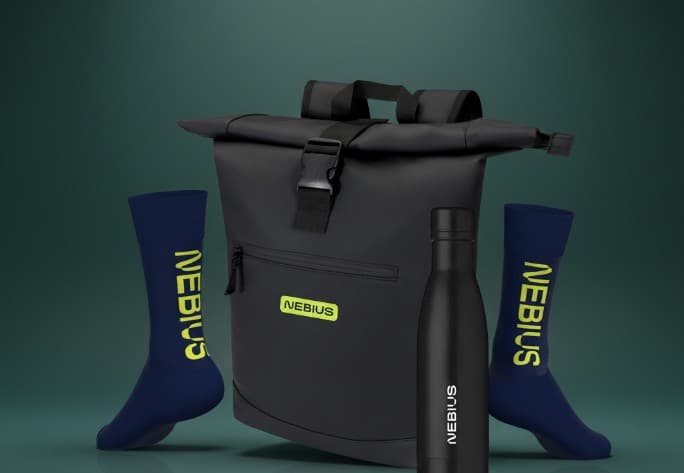
Nebius, the AI infrastructure scale-up powering enterprise clients like the world's leading AI labs, operates in one of the most competitive and noise-saturated markets in technology. With contract values in the millions and a sales cycle defined by relationship depth, their growth engine depends on being remembered. By centralizing their EMEA merchandise operation with Sunday, across 50 annual events and an ABM program targeting 1,000 companies, Nebius compressed logistics lead times from three to four weeks down to two to three days, eliminated last-minute event stress entirely, and built a first-of-its-kind system where physical merchandise generates early pipeline signals tracked directly by their Account Executives.
About the Client
Nebius is an AI infrastructure company operating at the frontier of the enterprise cloud market. Their clients include some of the most sophisticated AI organizations in the world, companies that demand performance, reliability, and scale at a level that most providers cannot match. As a result, Nebius does not sell on price. They sell on trust, technical credibility, and relationship depth.
Their go-to-market motion reflects this reality. Across EMEA, Nebius runs approximately 50 events per year, from major industry conferences to intimate roundtables, while simultaneously running a high-touch Account-Based Marketing program targeting around 1,000 carefully selected companies. The individuals they are trying to reach are senior technical and commercial decision-makers who attend every major AI and cloud event, receive premium outreach constantly, and have seen every variation of vendor gift, branded tote bag, and conference giveaway imaginable.
In this environment, generic merchandise is not just ineffective. It is actively damaging to the brand.
The Challenge: Noise, Speed, and the Limits of Doing It In-House
Before Sunday, Nebius managed merchandise the way most fast-growing scale-ups do: internally, reactively, and imperfectly.
Event merchandise was handled on a campaign-by-campaign basis, typically under time pressure. With lead times running three to four weeks through standard vendors, the practical reality was that the team was almost always ordering too late. The consequence was predictable: standard products, inconsistent quality across events, and a persistent background stress around whether items would actually arrive before the event started. Sometimes they did not.