

Executive Summary
Zalando, Europe's leading online fashion platform, faced a classic scaling paradox: as the company grew to 15,000 employees, branded merchandise became an unmanageable operational tax. By centralizing 400 individual departments into a single Sunday Merch OS, Zalando reduced the brand team's administrative workload from 40 hours per week to just 1 hour per month. Despite upgrading to premium custom apparel, the company achieved a 15% reduction in unit costs and slashed production lead times from weeks to just 5 days.
About the Client
Zalando is a titan of European e-commerce. With over 15,000 employees and a culture built on innovation and speed, the company operates with a highly decentralized structure. Over 400 individual departments: ranging from Engineering in Berlin to Marketing in Madrid: frequently require branded apparel and gifts to drive culture, recruitment, and internal events. In an organization of this size, merchandise is not a "nice to have" perk; it is a critical tool for employer branding and internal alignment.
The Challenge: The Hidden Cost of Fragmentation
For a company that lives and breathes fashion, brand consistency is not optional. However, Zalando's internal merchandise process had become a victim of its own scale. Before partnering with Sunday, the organization was paying what we call a "Fragmentation Tax": the accumulated cost of hundreds of teams acting as independent procurement agencies.
The "before" state was defined by three primary friction points:
1. The designer bottleneck
Every time a team wanted a simple run of 25 t-shirts, it triggered a manual design cycle. This consumed 2 to 4 hours of a professional designer's time per order just to verify logo placement, color codes, and font usage. Multiply this by hundreds of orders, and the creative team was effectively acting as a high-priced clerical department.
2. The managerial drain
Individual team leads and managers were spending upwards of 8 hours per order. This time was lost to sourcing local vendors, managing endless email chains, handling invoices, and tracking shipments. Across 400 teams averaging 1.5 orders per year, Zalando was losing over 4,800 management hours annually to administrative merch tasks.
3. The rise of rogue merch
Because the central brand team was overwhelmed by the sheer volume of requests, teams often bypassed official channels to meet their deadlines. This resulted in "unauthorized" merchandise appearing in the wild. These items often failed to meet Zalando's sustainability standards or brand guidelines, creating a fragmented brand identity that was impossible to police.
The Solution: A Centralized Operating System for Merchandise
Zalando replaced the "Email and Spreadsheet" model with the Sunday platform. The goal was to move from reactive project management to a proactive "Merch Ops" infrastructure. The strategy shifted the central brand team from being gatekeepers who slowed things down to enablers who provided the tools for success.
The "last mile" breakthrough: Freedom within a framework
The most significant innovation in this partnership was the implementation of "Last Mile Customization." This feature solved the conflict between brand control and local relevance.
Instead of the brand team approving every individual shirt, they worked with Sunday to define "Global Design Rules" within the platform.
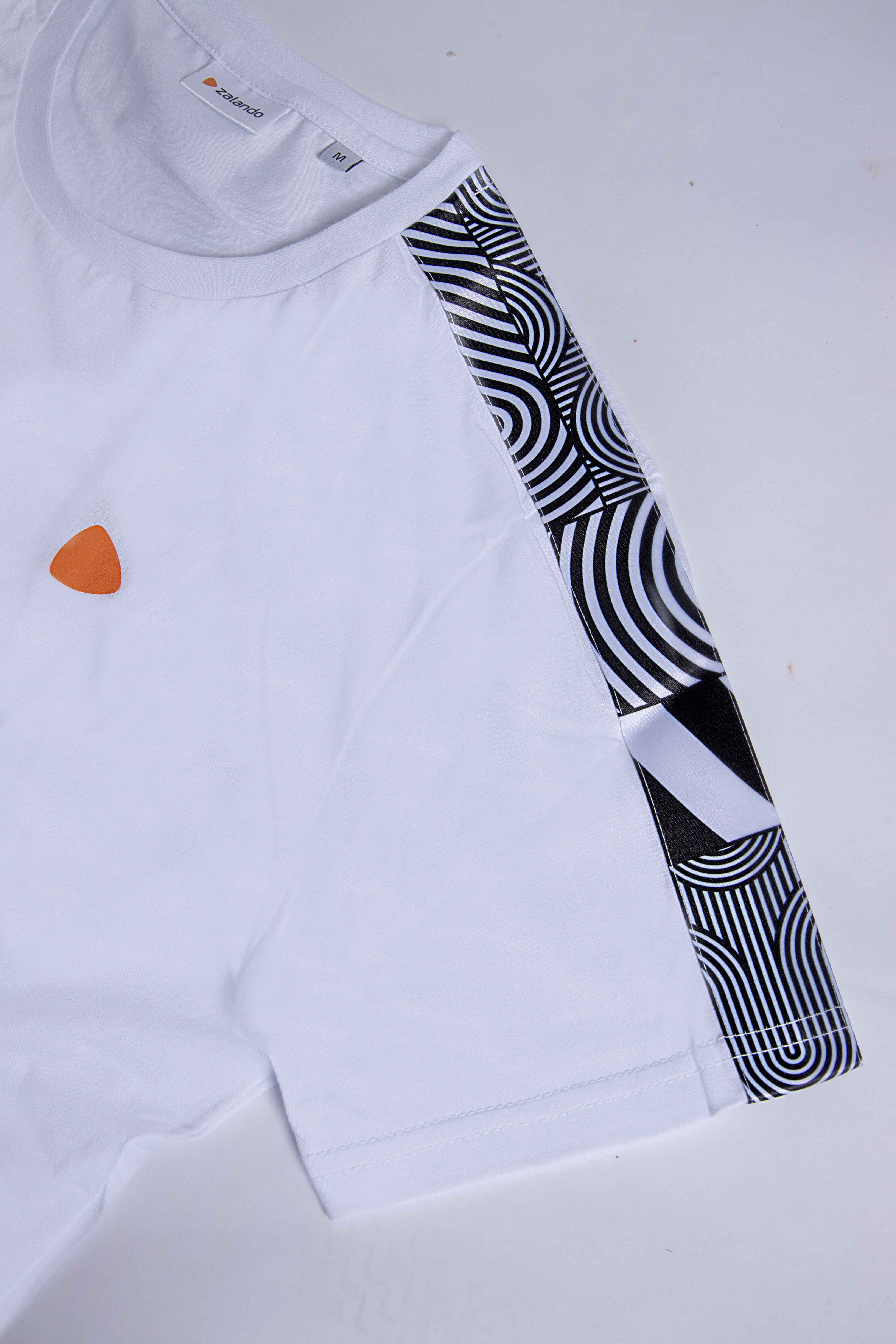
- Locked assets: The core Zalando logo and its specific positioning were hard-coded into the templates.
- Controlled creativity: Individual teams were given "the last mile." They could add their specific department name or project title using pre-approved fonts, character limits, and standardized placements.
- Fulfillment automation: Once a manager entered their specific team name, the design was instantly finalized. No designer was needed. No approval loop was required. The system guaranteed 100% brand compliance by default.
From ad-hoc projects to batch production
In the old model, 400 teams placed 400 small, expensive orders. Sunday helped Zalando transition to a "Core Collection" model. By identifying high-demand items: such as specific hoodies and tech accessories: Zalando could move to 6-month batch production cycles.
These items are produced in bulk, leveraging economies of scale that were previously impossible. The stock is then held in Sunday's warehouse and made available through the Zalando Brand Store. This shifted the logistics reality from a 4-week wait time to instant dispatch. For customized "last mile" items, the production time was stabilized at just 5 business days, providing a level of agility that local vendors could not match.
Platform and Products Used: The Brand Store
The Zalando Brand Store became the "single source of truth" for the organization. This private internal portal allows all 400+ managers to see only approved products.
Platform features utilized:
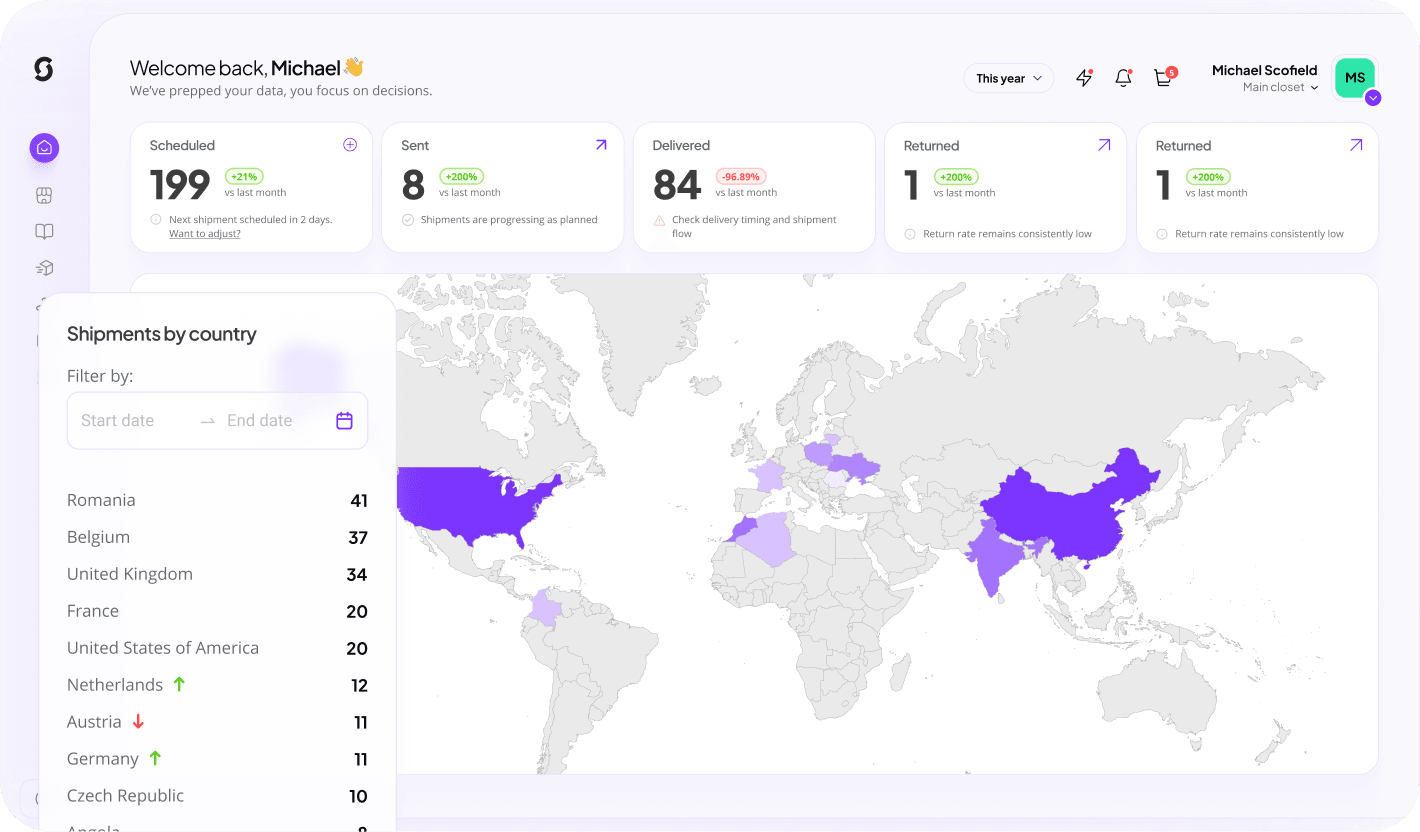
- MerchMetrics: The brand team now has a live dashboard showing exactly what is being ordered, by which team, and at what frequency.
- Last Mile Customization: Easily add a final print to a 90% finished product.
- Sunday Logistics: By opting to run gifting campaigns through Sunday's logistics solution rather than internal mailrooms, Zalando freed up significant internal capacity.
Products used:
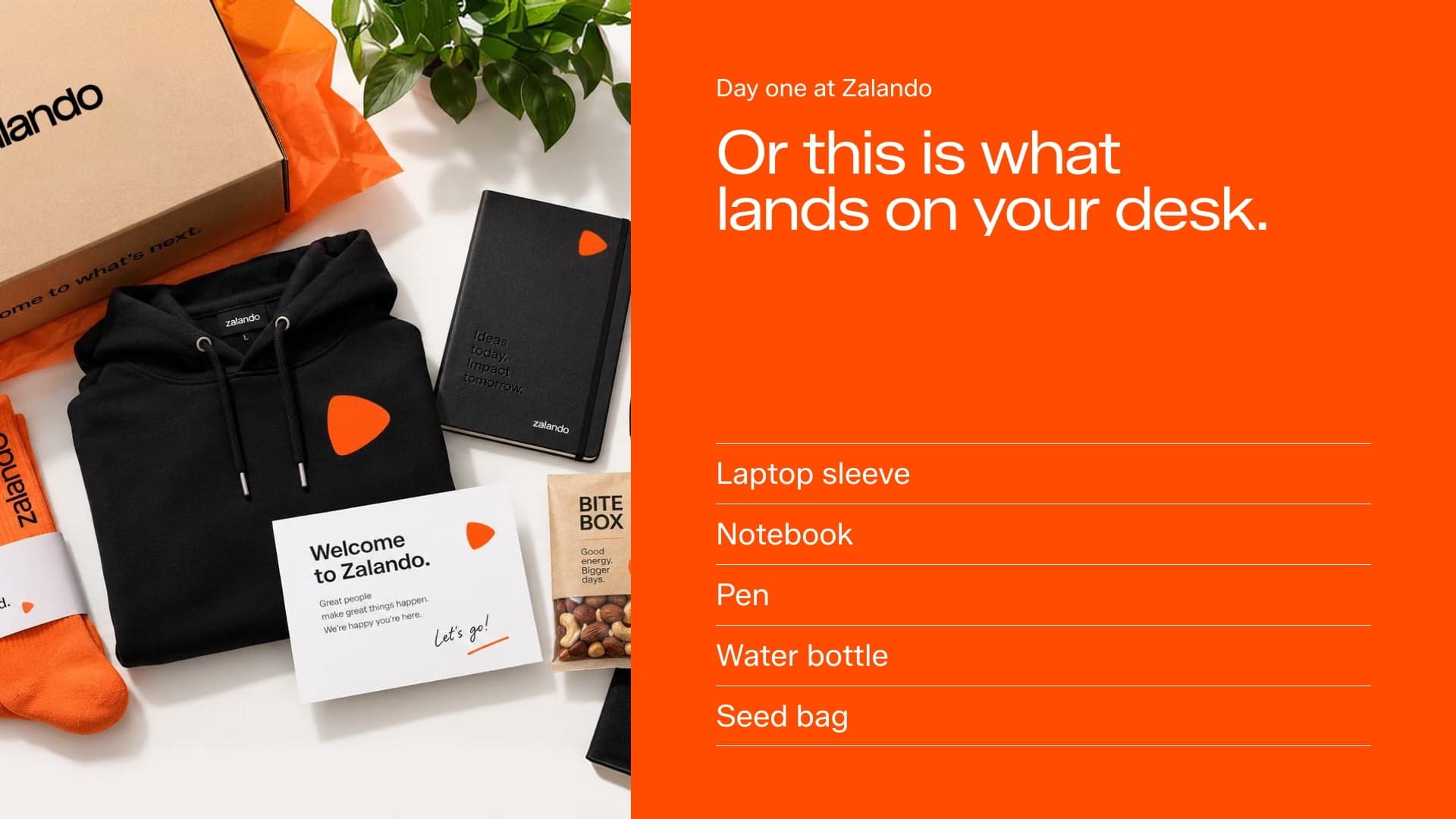
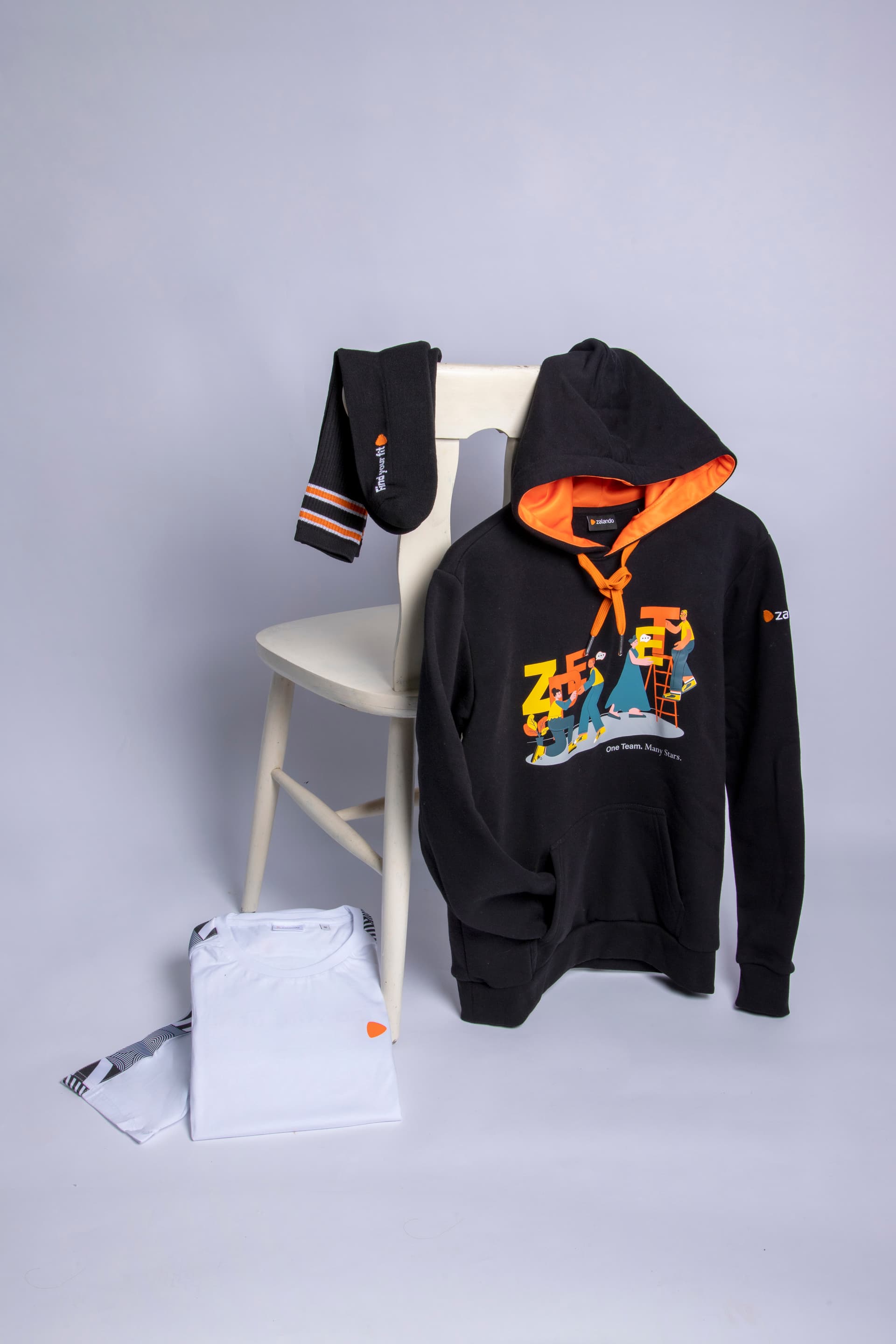
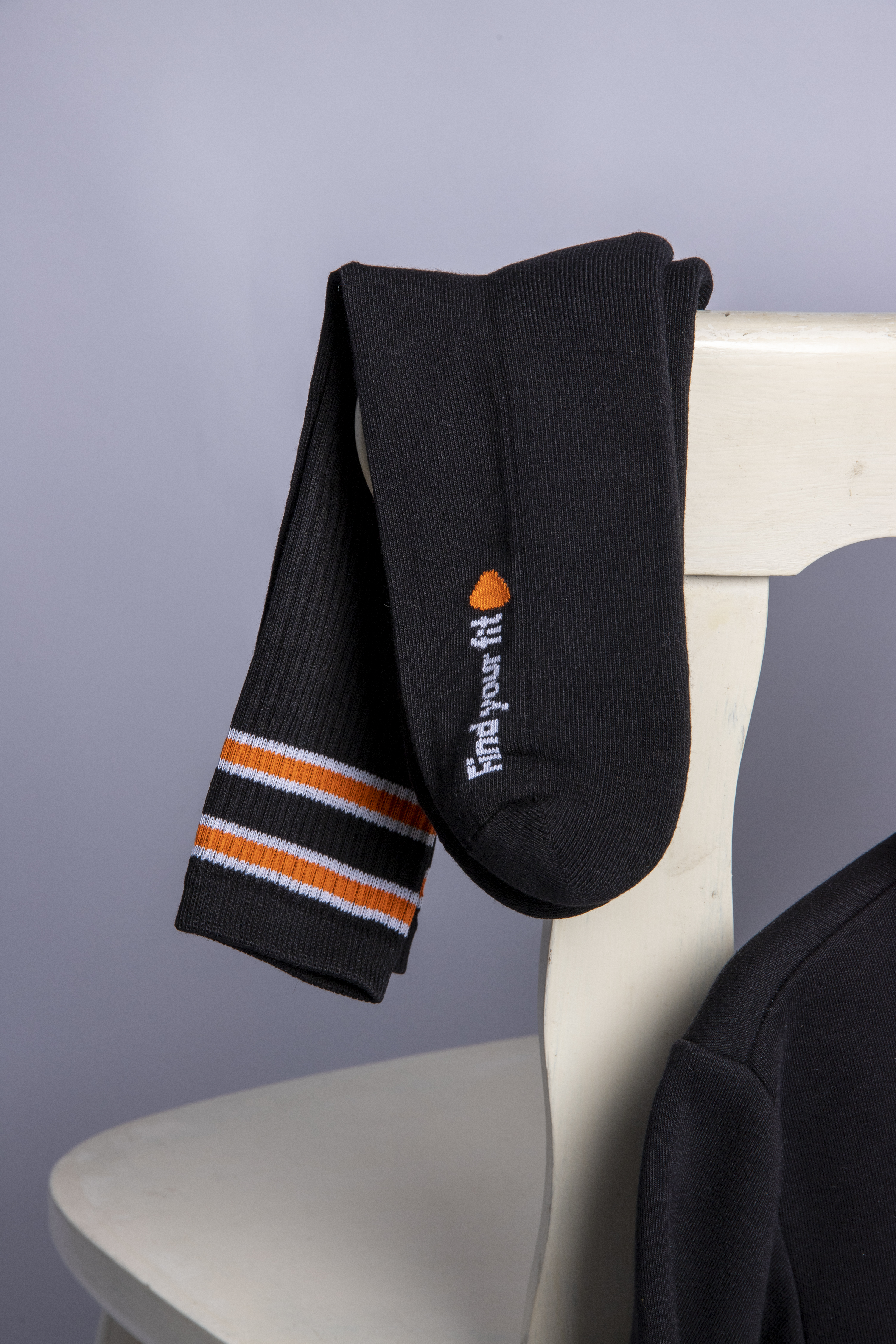
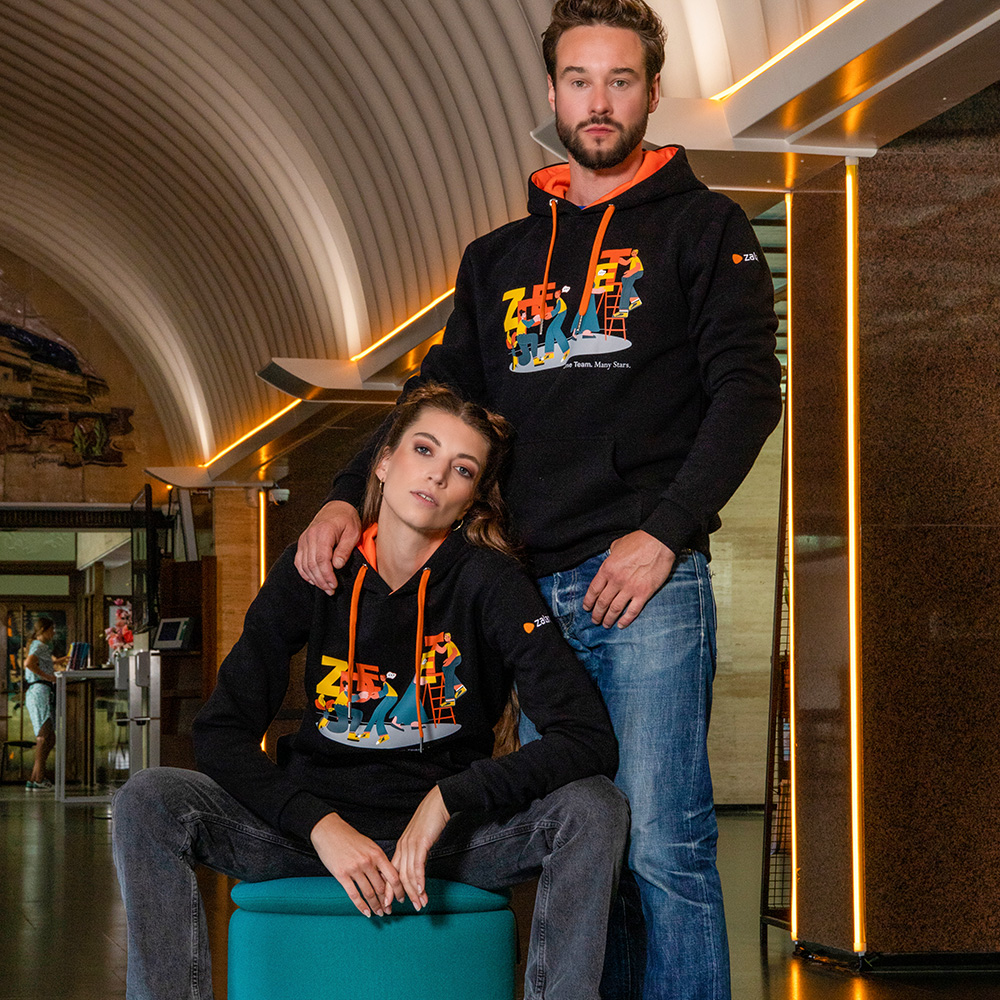
Zalando moved away from generic "off the shelf" items. Sunday's R&D team developed custom apparel patterns specifically for Zalando. This ensured the merchandise felt like a premium fashion product rather than a promotional giveaway. The focus was on "love brand" quality: pieces that employees would actually choose to wear in their daily lives.
Impact and Key Results: The Data Behind the Shift
The transition to Sunday allowed Zalando to quantify the return on their merchandise operations for the first time. The results were immediate:
1. 97.5% reduction in administrative overhead
The central brand team's time investment dropped from 40 hours per week of manual policing to just 1 hour per month for a high-level review. This recovered nearly 2,000 hours of professional design and brand management time per year.
2. 15% reduction in total cost of ownership (TCO)
By consolidating volume and utilizing batch production, Zalando reduced average unit prices by 15%. This was achieved even while significantly upgrading the fabric quality and customization levels of the products.
3. Thousands of hours returned to managers
By automating the design and ordering flow, Zalando recovered approximately 10 hours of productivity per order. This allowed managers to focus on their core business goals rather than tracking hoodies through customs or email chains.
4. Instant lead times
The availability of core stock for instant dispatch transformed merchandise from a "plan 2 months ahead" task to an "on-demand" resource for teams.
Conclusion: Merch as Infrastructure
Zalando's journey proves that as a company grows, its merchandise operations do not have to become more complex. By moving to a centralized Merch OS, they successfully balanced the needs of 400 independent teams with the strict requirements of a global fashion brand. They stopped "doing merch" and started running a merchandise system.