




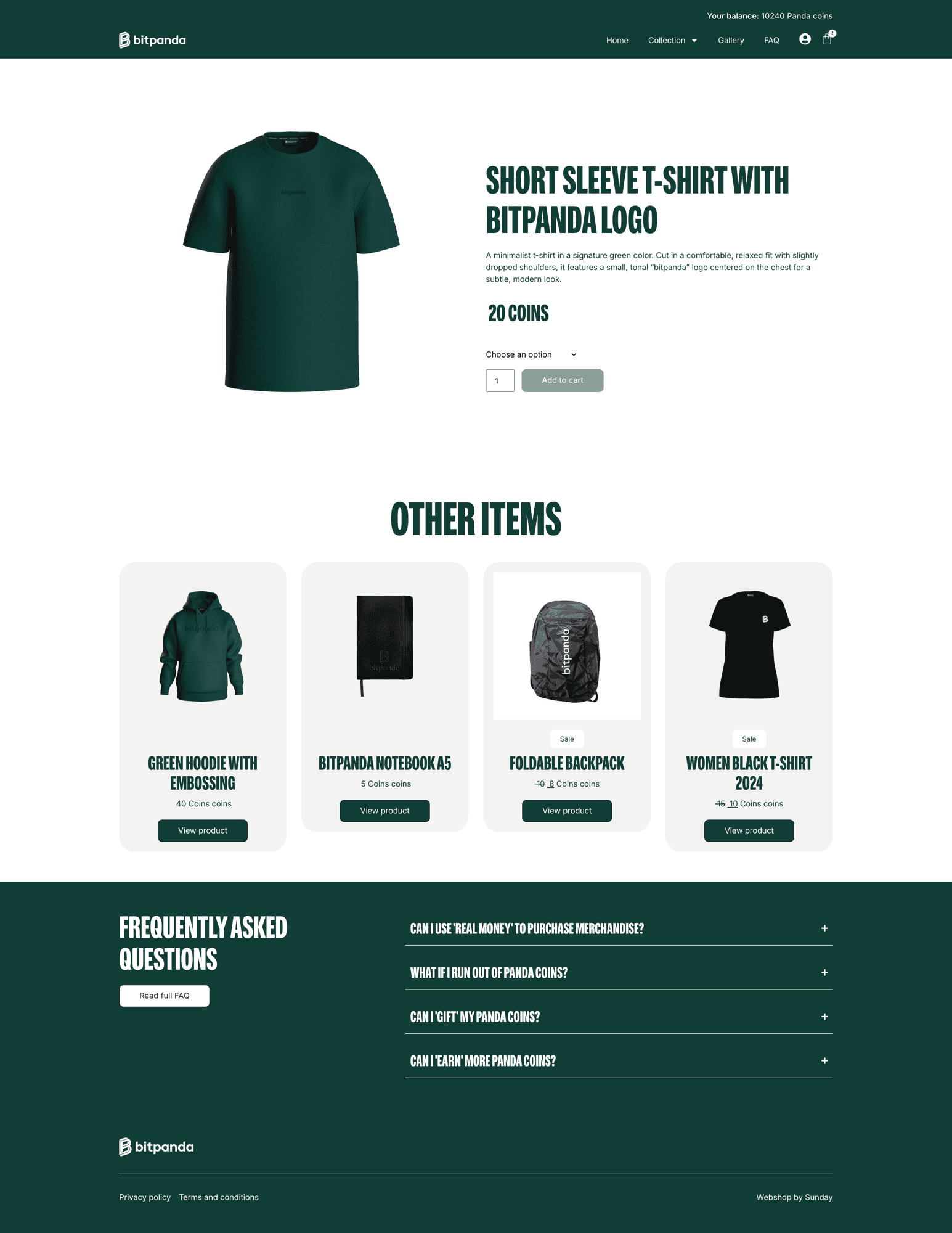
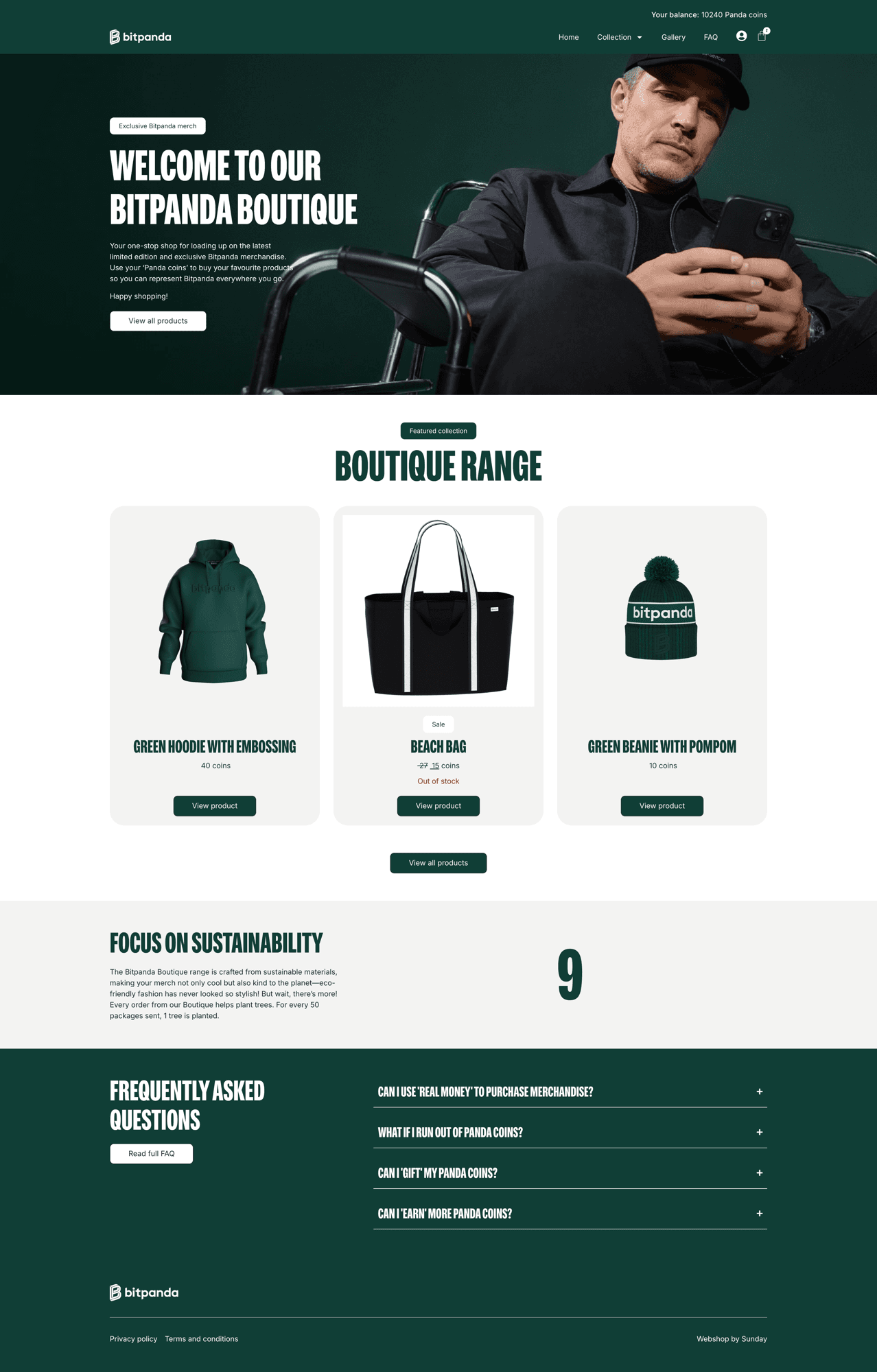
Bitpanda Boutique
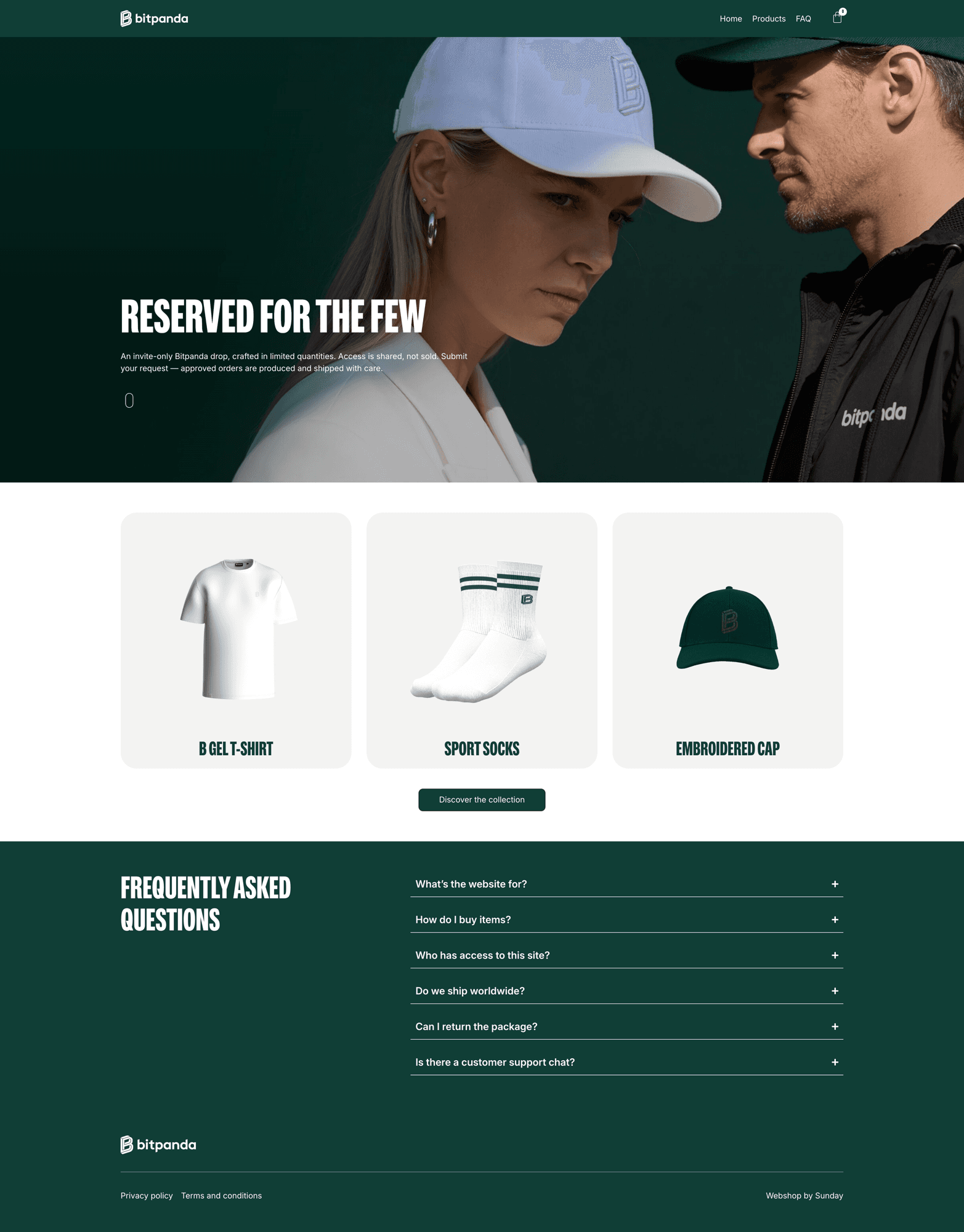
Internal store with API creditsCredits arrive through a Workday API connection, and new products carry a New label automatically.
Workday APISSOAutomated merchandising

Company swag stores
Give every employee, manager, partner or customer the right corporate swag, permissions and payment flow. Sunday builds the store and runs everything behind it.
A company swag store is the branded place where employees, managers, and partners browse, redeem, buy, and order company swag. Sunday runs it as infrastructure.
Stores built for brands that cannot compromise






More than ecommerce
Behind every order sit products, stock, permissions, payments, customs, and support. Sunday brings swag management into one system.
The usual setup
Agency · Supplier · Developer · Warehouse · Courier · Customs support
Six relationships. Every handover is yours to manage.
One engine. Different experiences.
Give people coins or credits, show collections for their location or role, and ship directly to their door.
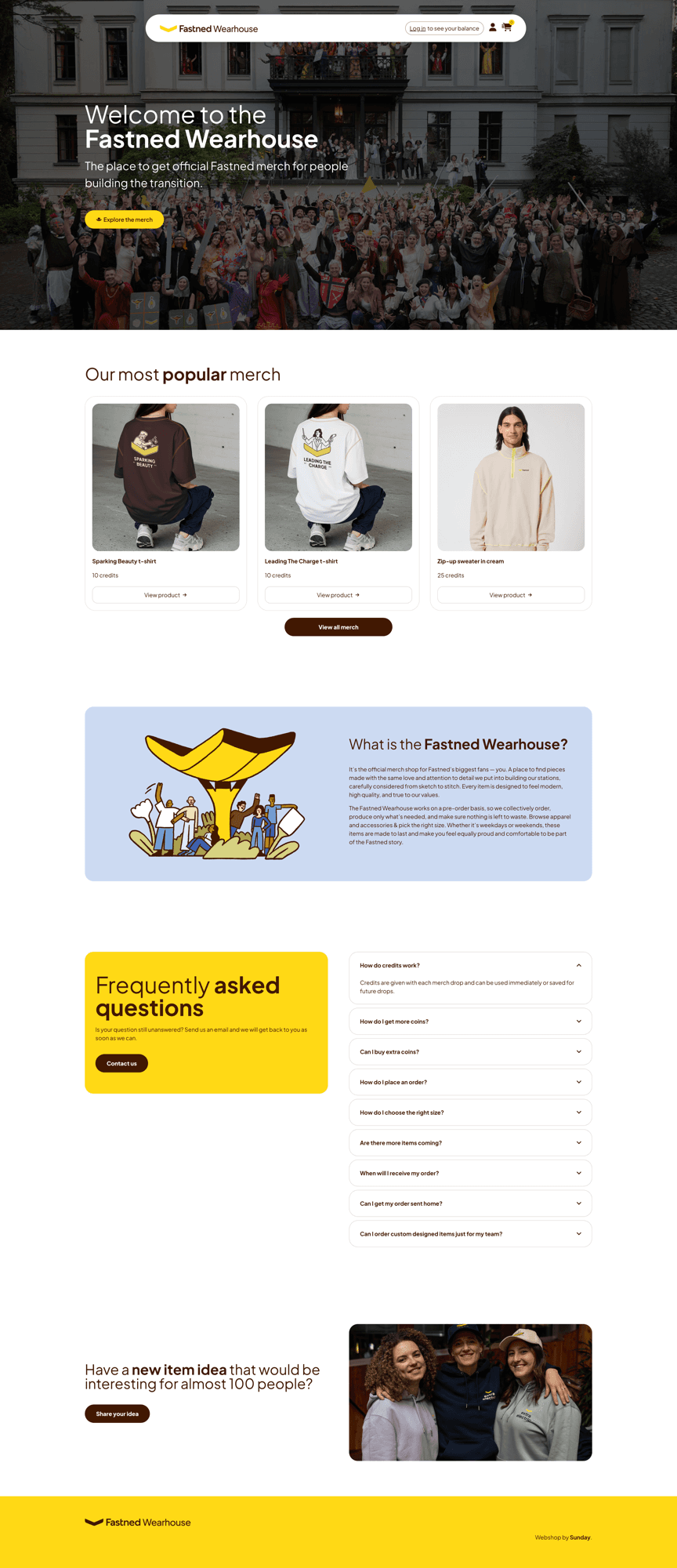
Live implementation: Fastned / Bitpanda Boutique
Swag management platform
Access
Use SSO data to control who sees which products, pages, prices, and payment methods.
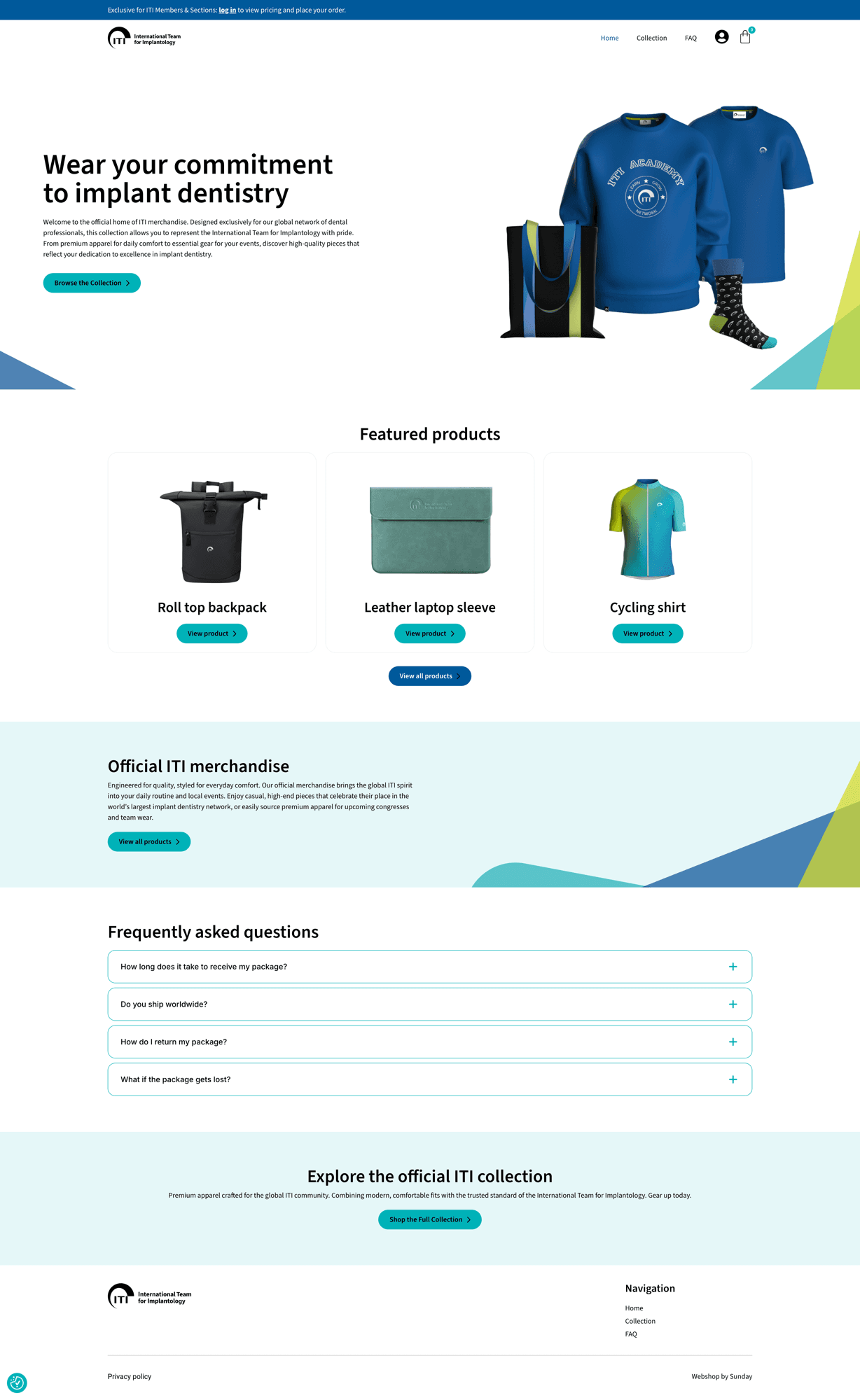
Proof. ITI: permissions and catalogue visibility by role.
Funding
Coins, card, invoice, purchase order, or API-assigned credits, chosen per role or use case.
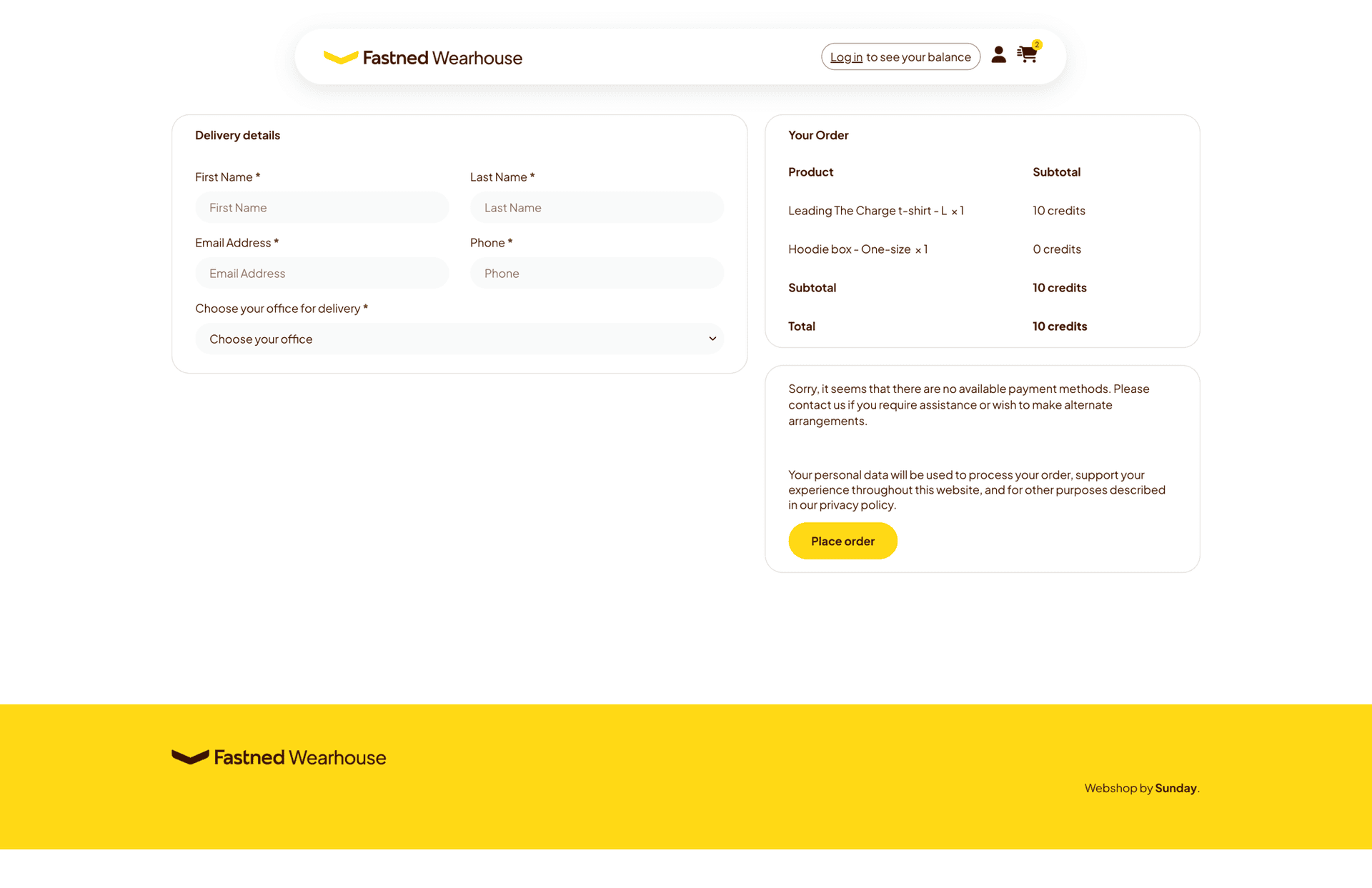
Proof. Fastned: coins on first login. ITI: card or invoice by role.
Governance
Approvals, budgets, pricing, and product rules run in the background, not in the user's way.
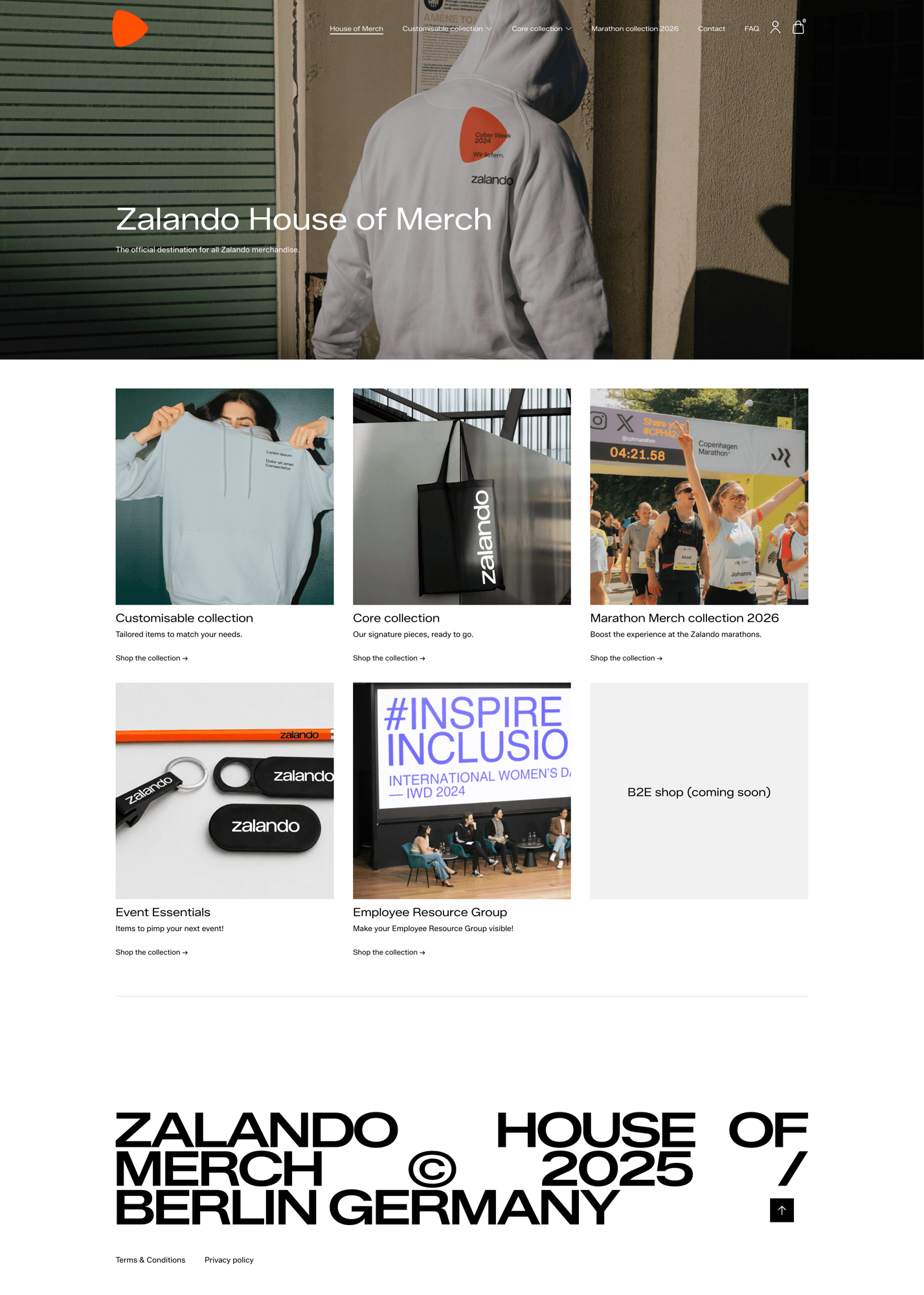
Proof. Bitpanda: order approvals. Zalando: pricing by quantity.
Integrations
Credits, identity, onboarding, loyalty, and recognition workflows connect through APIs.
Proof. Bitpanda Boutique: credits via Workday API.
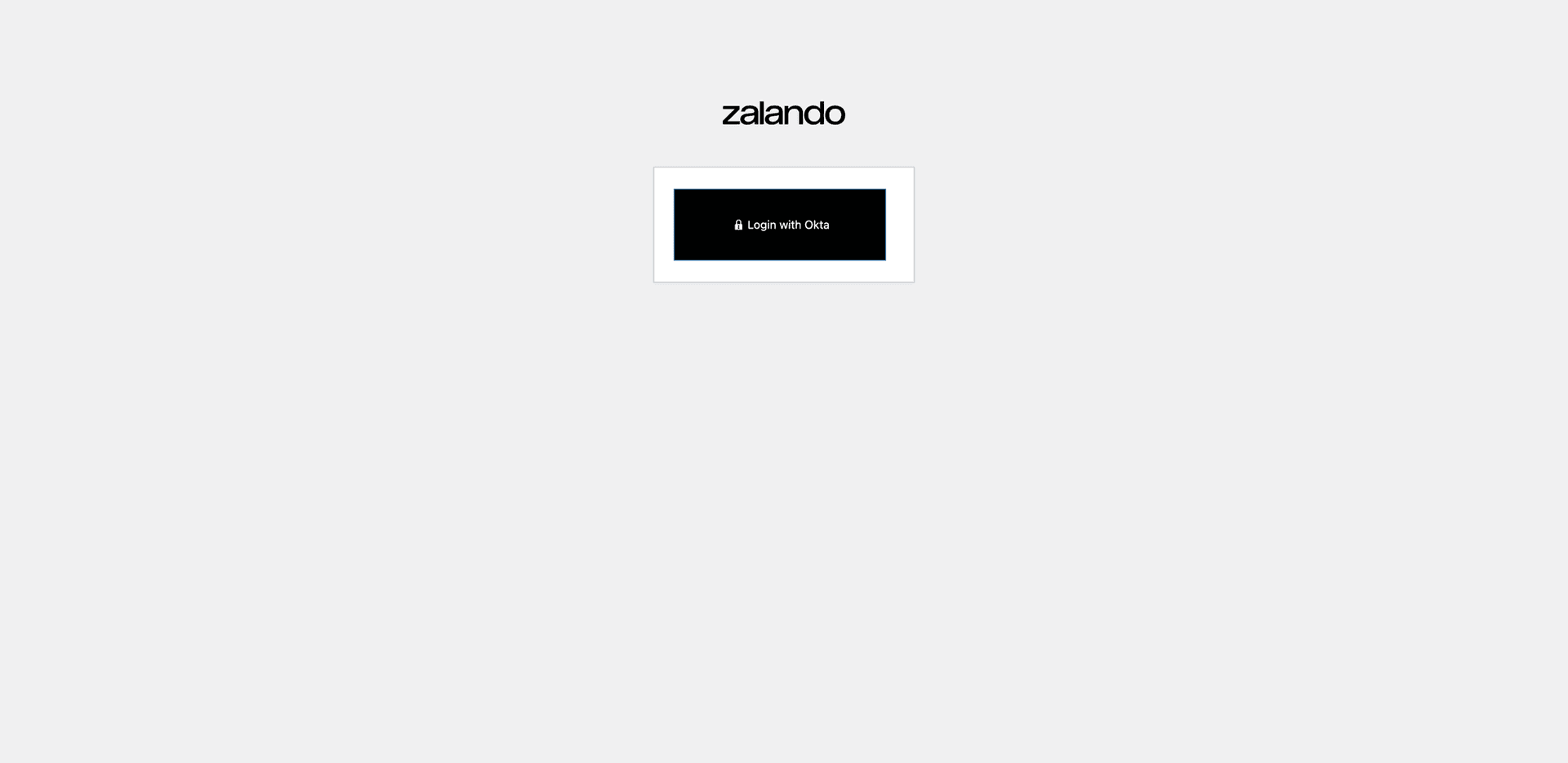
House of Merch gives Zalando teams a private, brand-approved place to order swag, with SSO, purchase orders, and quantity-based pricing built into the flow.

One platform, five jobs
Same platform, different rules for access, funding, approvals, and fulfilment.
Sunday's largest deployment: SSO sets catalogue visibility, and payments switch by role.
Credits arrive through a Workday API connection, and new products carry a New label automatically.
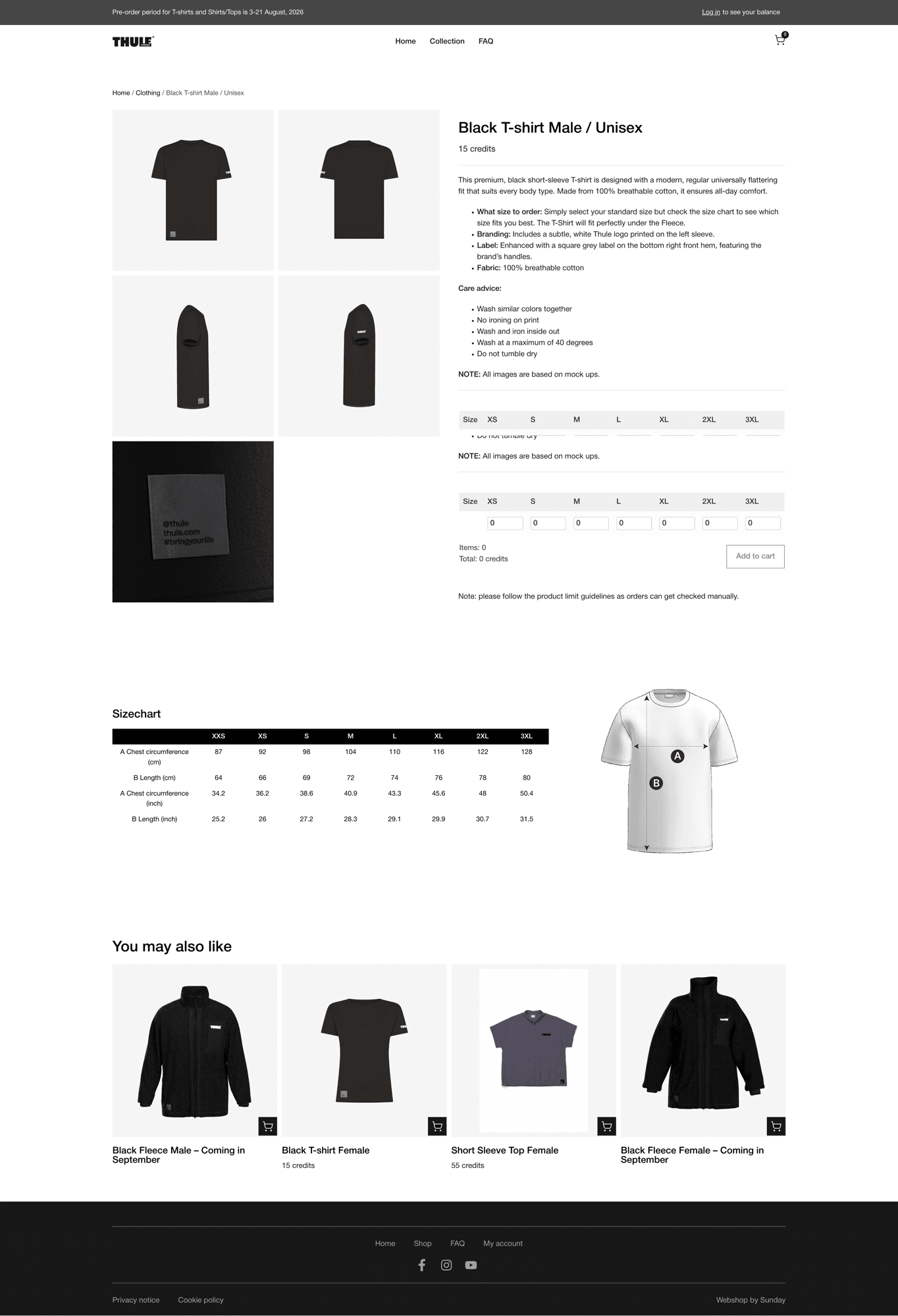
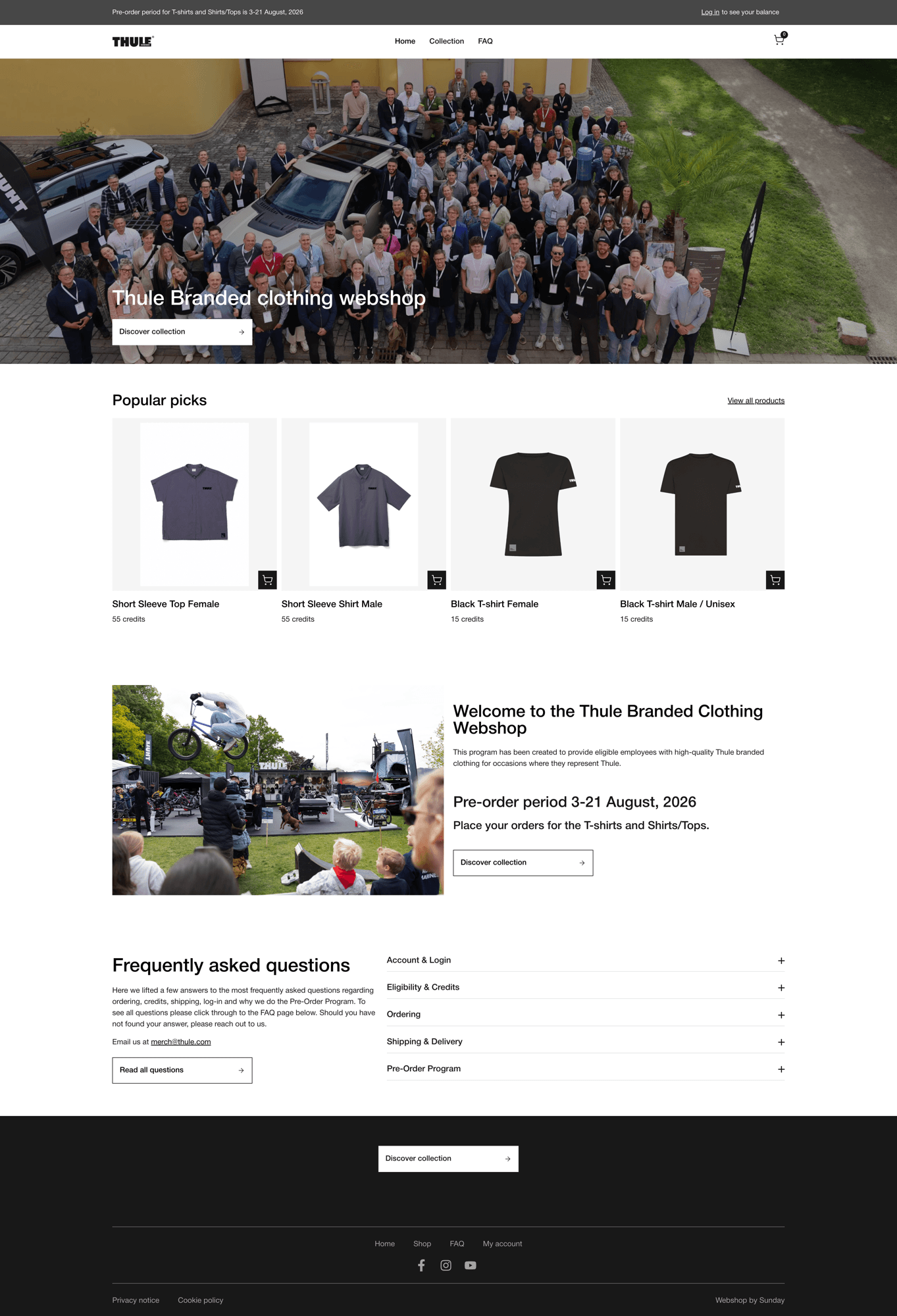
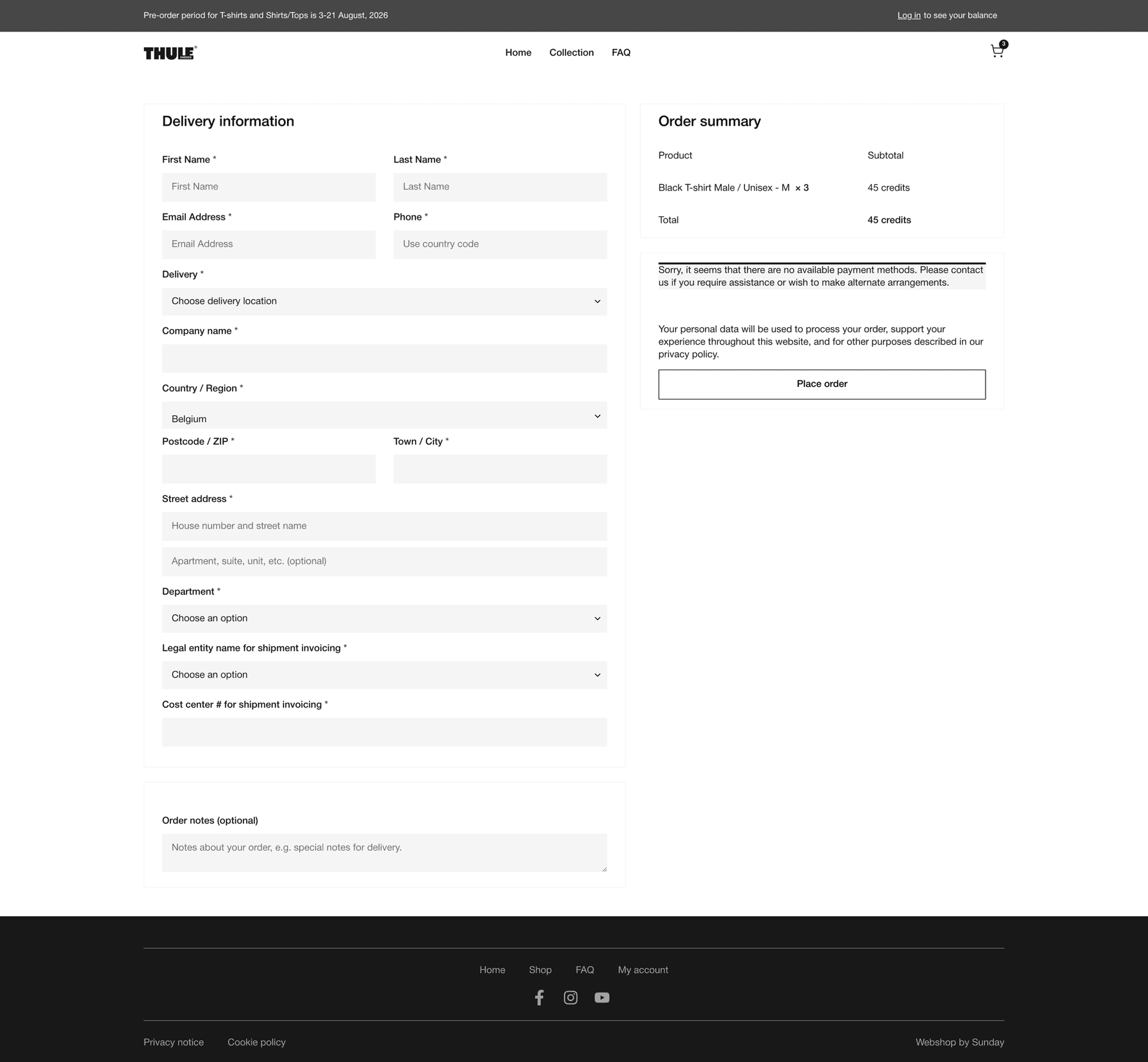
Managers order approved merchandise for their teams, and Thule edits the store content itself.
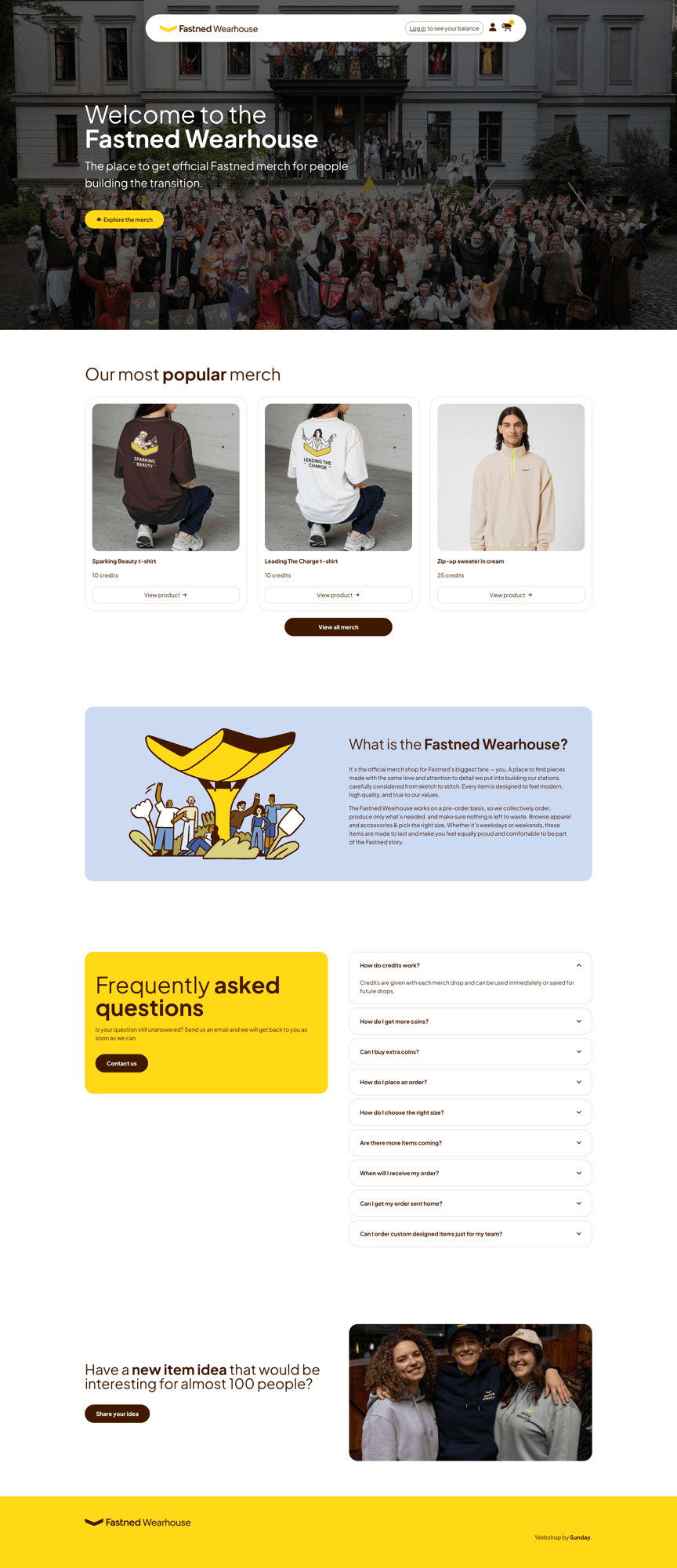
Coins are granted automatically at first login, with more assigned later when the company chooses.
C-level users invite recipients, who claim a free product without an account. Orders need approval first.
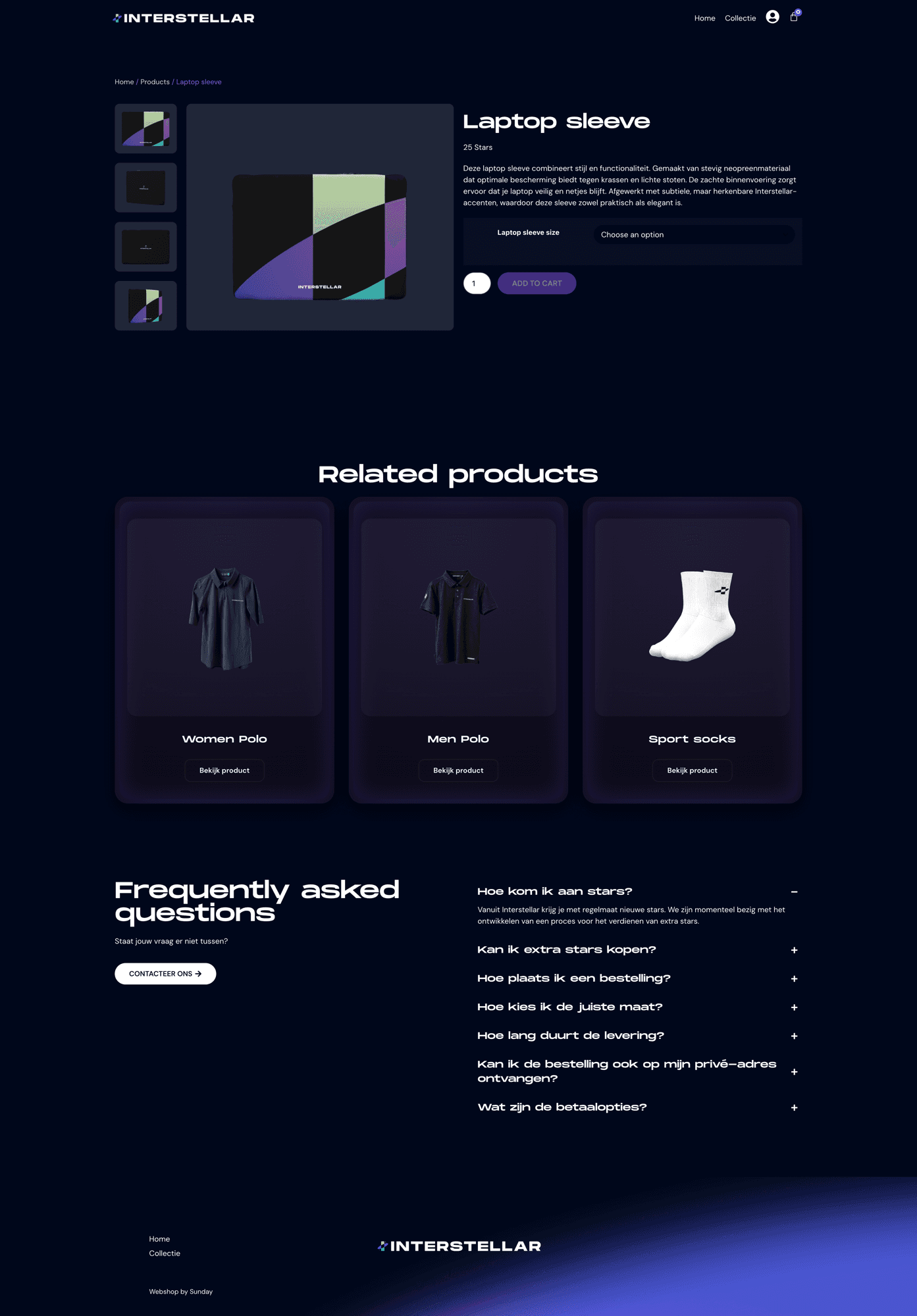
SSO-protected procurement store with purchase orders, MOQ pricing, and team-name customisation.
From brief to launch
We define the use case, audiences, access, payments, shipping logic, and integrations with you.
We design the store in Figma for your review. Sunday handles design in roughly 95% of projects.
We build the store, configure SSO and permissions, connect APIs, and test the order flow.
Live in around 3 to 4 weeks, usually as the merchandise arrives. Sunday then runs fulfilment and support.
Timing is typical, not fixed: scope, integrations, and feedback speed shift it.
Global, prepared properly
Currencies, duties, warehouse logic, couriers, and tracking are planned around your programme.
Couriers and warehouse routing planned per market.
DDP shipping and automated customs paperwork: nobody pays to receive their swag.
Multi-currency pricing and tax set with your finance team before launch.
Shipments, status emails, and returns run automatically.
Choose the right layer
The always-on branded store with accounts, SSO, roles, coins, payments, and approvals.
Best for
Recurring, always-on programmes
A lightweight page where one invited group claims a single gift or a small choice.
Best for
One moment: onboarding, an event, a gift
The operational layer your internal team uses behind either front end.
Best for
Running the programme behind the scenes
Most programmes run an online swag store and add redeem pages for individual campaigns.
Built to stay relevant
The strongest stores do not offer 150 interchangeable products. Start curated, rotate quarterly, then clear remaining stock at year end.
One tight, high-quality set. Best for a first launch or a gifting-led programme.
Apparel, an accessory, and a seasonal piece. The most common enterprise starting point.
Multiple audiences, markets, or catalogues, with rotation planned in advance.
Launch with a gift or company-funded coins, so the store feels like a benefit first.
Track orders, active users, coins used, and stock turnover against the actual goal.
FAQ
A company swag store is a branded ecommerce experience where employees, managers, partners, customers or fans can browse, redeem, buy, customise or order company merchandise. Enterprise stores can use SSO, roles, credits, approvals, purchase orders and different catalogues.
A redeem page supports one campaign or gifting moment, often with one item or a small choice. An online swag store is persistent and supports recurring collections, accounts, permissions, payments and order history.
Yes. A swag store from Sunday can use your SSO to protect access and determine roles, permissions, pages, products and payment methods.
Yes. Depending on the setup, stores can support card payments, invoices, purchase orders, coupons, coins, credits and multiple currencies.
A typical store can be designed and built in roughly 3 to 4 weeks, usually as the merchandise arrives. Timing depends on design feedback, security review, integrations and scope.
Yes. Sunday can handle product design, production, warehousing, store development, integrations, fulfilment, tracking and support.
Cost depends on the assortment, the integrations and the fulfilment scope: how many products you launch with, whether the store needs SSO, credits or API connections, and how many markets it ships to. Sunday quotes the store and the merchandise together after the demo.
Yes. Sunday serves 200+ countries and plans courier selection, customs, duties, documentation, tracking and warehouse logic around the programme.
Your company swag store starts here
Show us who needs to order corporate swag, what they should see, and how your company works. Sunday will design the store and run everything behind it.
Bring your use case. You do not need a finished technical brief.