
Workwear is functional, branded clothing that employees wear on the job: polos, softshells, work jackets, work trousers, and hospitality aprons with a logo. Sunday focuses on non-certified, branded workwear where brand experience, comfort, and durability matter, not on certified safety wear. Choose decoration that survives washing (embroidery holds up best) and manage workwear as a recurring process with reorders, not as a one-off merch order.
A note upfront: this guide is about companies that order branded workwear in bulk for their team. Where strict safety standards apply (hi-vis, reflective elements, EN ISO 20471), you use certified safety wear. That's a separate field with its own buyers and specifications. The rest of this guide covers the workwear where you do have free choice: how to make it look good and make it survive daily use.
What's in this guide
- What is workwear, and what isn't
- Two types of workwear
- Who buys workwear
- The range
- Workwear for women
- Workwear by sector
- What makes workwear last
- Printing and embroidering workwear
- Branding and recognizability
- Custom-made versus branded stock
- Reordering as a process
- Buy cheap, buy twice
- Workwear is more than construction wear
- Werkkleding and werkkledij: NL and BE
- Design your workwear with Sunday
What is workwear, and what isn't
Workwear is the clothing your employees wear while they work and represent your company. It's functional, recognizable, and lasts longer than a one-off giveaway. Think of the polo of a retail employee, the softshell of a technician, the apron of a barista, or the work jacket of a warehouse team. The point isn't luxury, it's that the team looks professional and the clothing survives daily use.
Important to define right away: branded workwear is not the same as certified safety wear. As soon as formal safety rules apply (mandatory hi-vis, reflective elements, steel toes, certified standards), you choose compliant safety wear. Sunday is not a supplier for that. Sunday focuses on the workwear where brand experience, comfort, washability, and presentation are the priorities.
Two types of workwear
Before you order anything, you need to know which of these two categories you're in. They have different buyers, different rules, and different suppliers.
- Certified safety wear. Construction, industry, and logistics where safety standards apply: steel toes, hi-vis, reflective elements, EN ISO 20471. Compliance comes first. This is not Sunday's focus.
- Non-certified workwear. Clothing people wear at work without formal safety regulation: retail teams, hospitality, service teams, installers, showroom and customer-facing staff. This is about branded, functional clothing without heavy certification. This is Sunday's focus.
Most companies fall into the second category without calling it that. They have teams that are visible to customers all day and need to look well-groomed and recognizable. That's where this story begins.
Who buys workwear
Buying workwear is more operational than buying corporate apparel. Procurement is heavily involved, because it's functional, recurring, spans many employees, and comes down to price, quality, durability, and reordering. At the same time, there's a brand side to it. In a store, the brand team looks at how it looks, while procurement looks at cost and lifespan.
In practice, you're at the table with a mix: Head of Brand, marketing or retail, operations, HR, and department, store, or regional managers. What binds them is a dual requirement. The workwear has to look good and survive daily use at the same time. A garment that looks great on day one but wears out after ten washes fails on both fronts.
The range
Workwear isn't a single product. The right mix depends on the sector. A hotel, a retail chain, an installation network, and a foodservice company each need a different combination. These are the building blocks of non-certified workwear.
- Polos. One of the most important pieces: professional, recognizable, and practical. The foundation for most customer-facing teams.
- T-shirts and business shirts. From casual service teams to polished front office.
- Softshells and work jackets. For outdoors, showroom, warehouse, and installation.
- Padded jackets and merino sweaters. For colder environments and seasons.
- Trousers and overalls. Where the role calls for it.
- Hospitality aprons. For bar, kitchen, and service.
- Reflective details. In non-certified contexts, for visibility without a full safety standard.

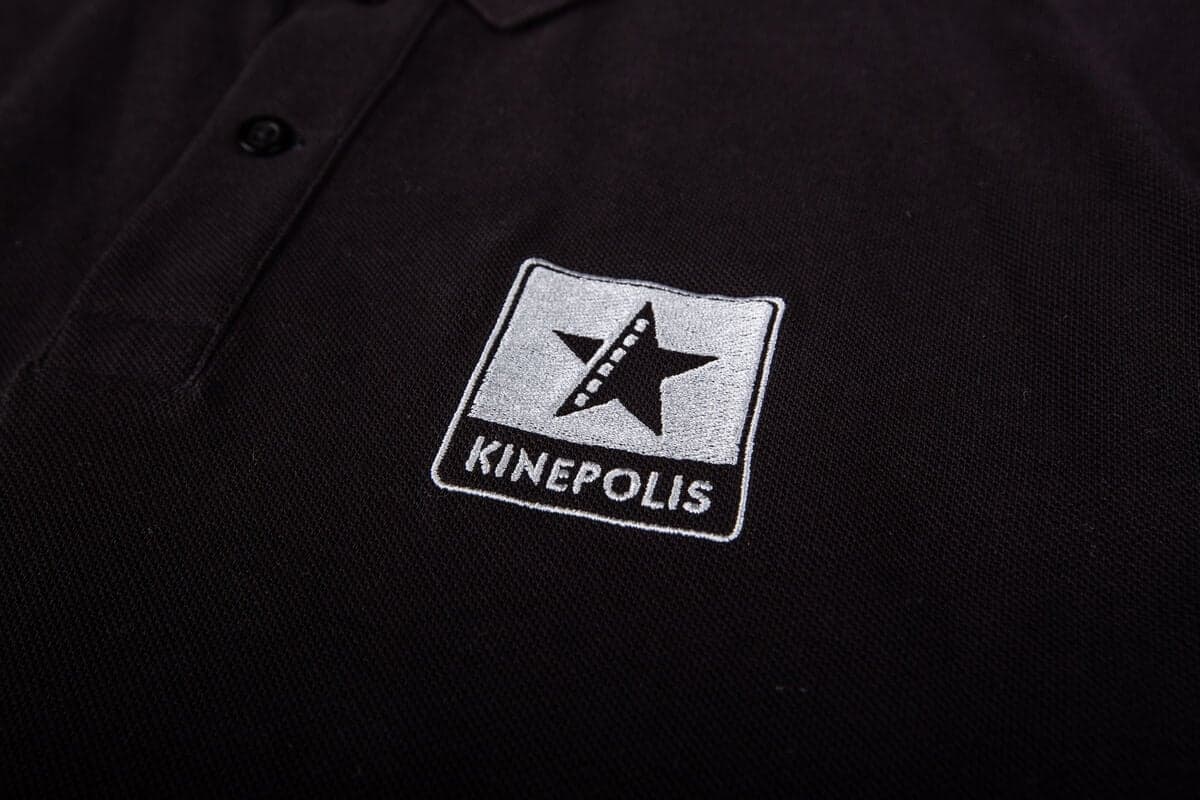
For most customer-facing teams, the polo is the foundation of the workwear range: professional, recognizable, and practical, with a logo that survives washing.
Workwear for women
Workwear for women isn't an afterthought, it's a separate fit. Too many companies order only a unisex model and leave half the team wearing clothing that doesn't fit well. Women's workwear with its own cut delivers comfort, a polished look, and a team that actually wears the clothing instead of tolerating it.
So work with men's and women's fits, clear size charts, and an inclusive size range from the start. Polos, softshells, and jackets all come in women's cuts. The small difference in cut is exactly the difference between clothing a team would choose for itself and clothing that gets imposed on it.
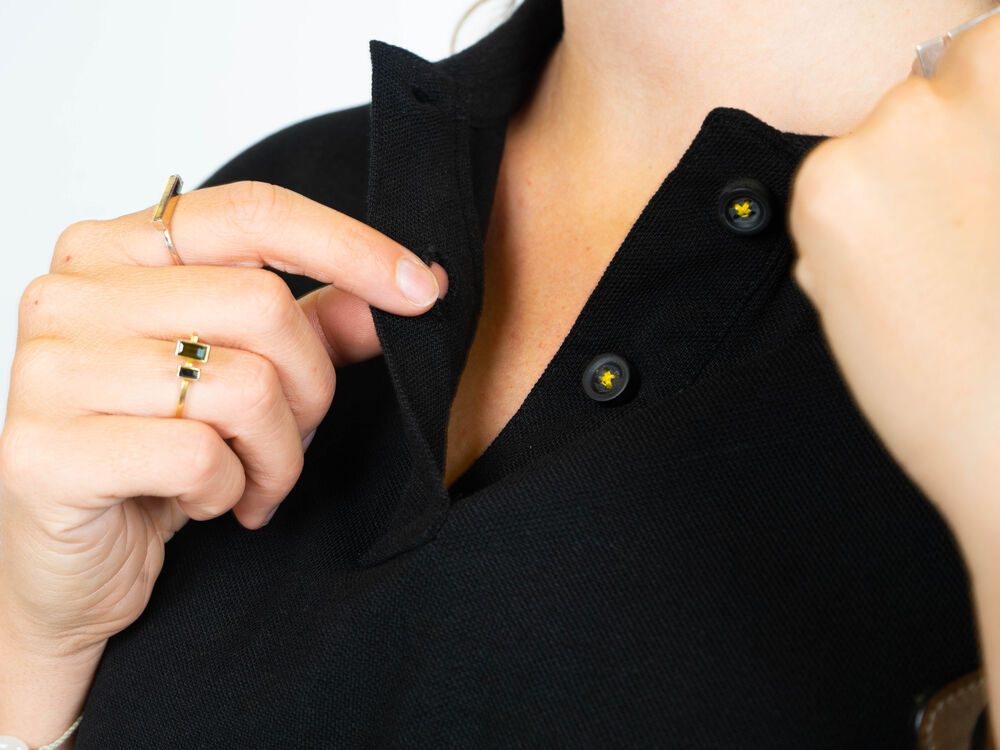
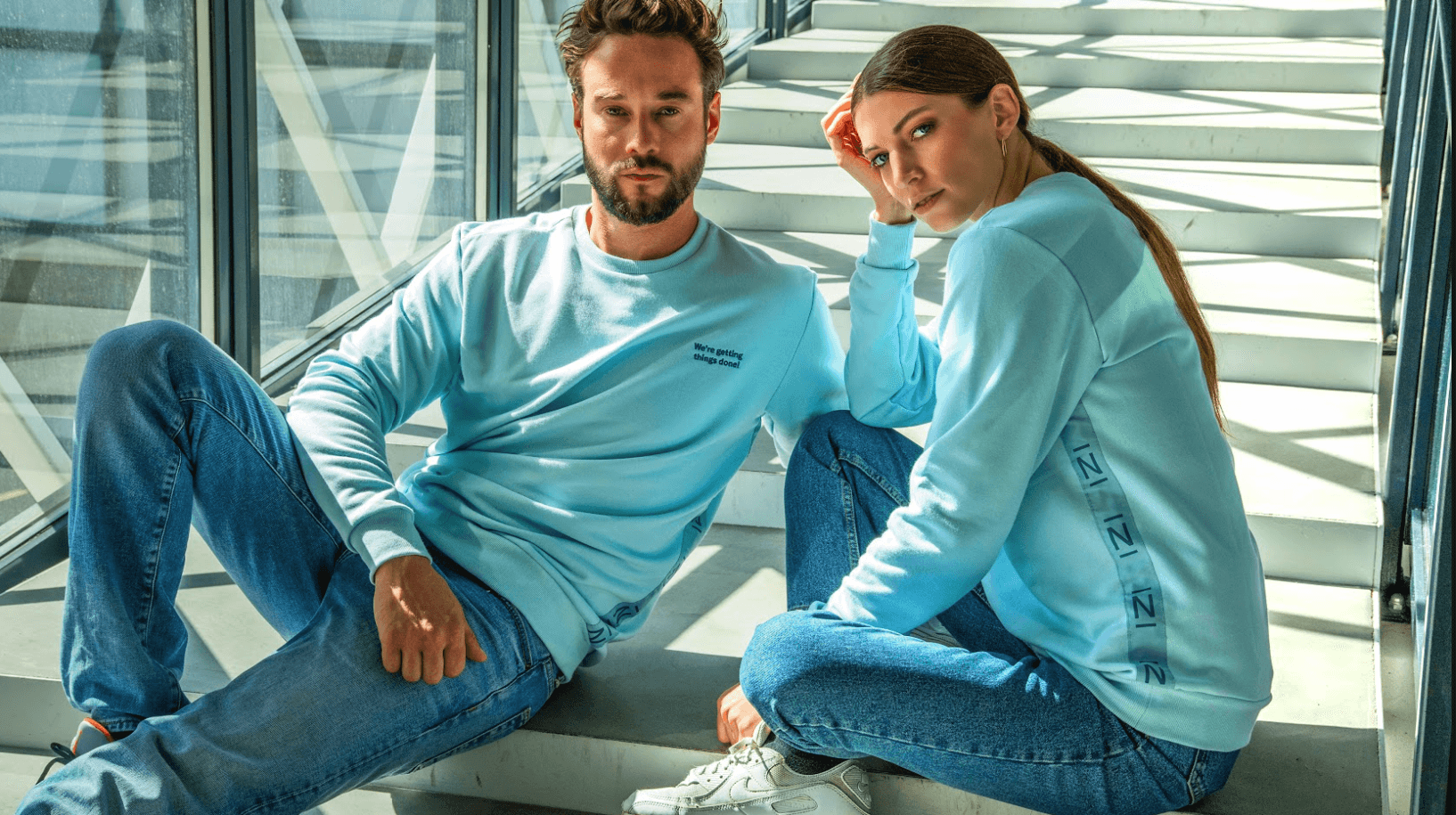
Workwear for women needs its own cut, not a unisex compromise. A women's fit delivers comfort and a polished, consistent look across the whole team.
Workwear by sector
The sector determines the combination. Same building blocks, different mix.
- Construction and installation. Where no certification is required: sturdy polos, softshells, work trousers, and jackets with reflective details. Where safety standards do apply, you work with certified safety wear.
- Logistics. Comfortable, hard-wearing clothing for long shifts, with clear branding for recognizability on the floor.
- Hospitality. Aprons, shirts, and polos that look well-groomed and can handle intensive, hot washing.
- Retail. Recognizable polos and shirts in brand colors, so customers can immediately see who works there and who they can approach.
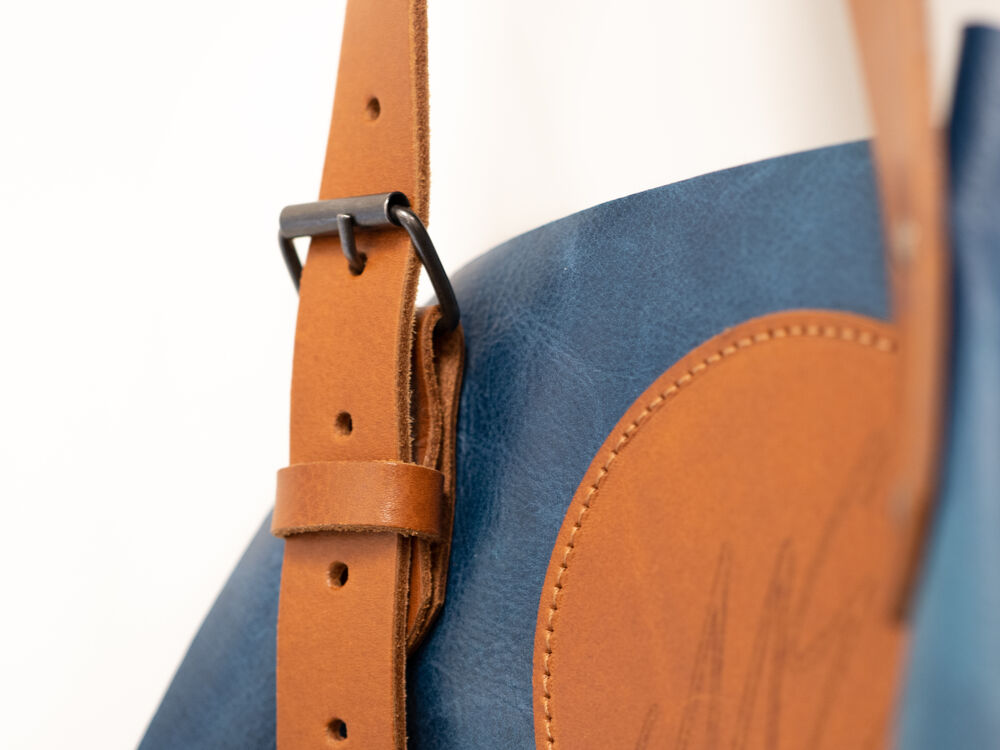
In hospitality, workwear is both a showcase and a workhorse. An apron has to look well-groomed while withstanding daily, hot washing.
What makes workwear last
With workwear, quality isn't a nice-to-have. The clothing is worn often, washed often (sometimes hot or industrially), and used more harshly than office clothing. Fabric and decoration choices therefore matter more than in a one-off merch campaign. Watch for these factors.
- Strong fabric. Durable cotton or suitable blends that can handle intensive use.
- Washability. Resistant to repeated washing without color loss or distortion.
- Strong stitching and reliable hardware. Seams, zippers, and buttons that don't fail first.
- Stable fit. Clothing that keeps its shape after washing.
- Decoration that doesn't come off. The logo should last as long as the garment itself.
Printing and embroidering workwear: what survives the washing machine
With workwear, decoration is a durability question, not an aesthetic one. Choose wrong, and the print cracks, fades, or peels, making the whole outfit look cheap. Choose well, and the logo lasts as long as the fabric.
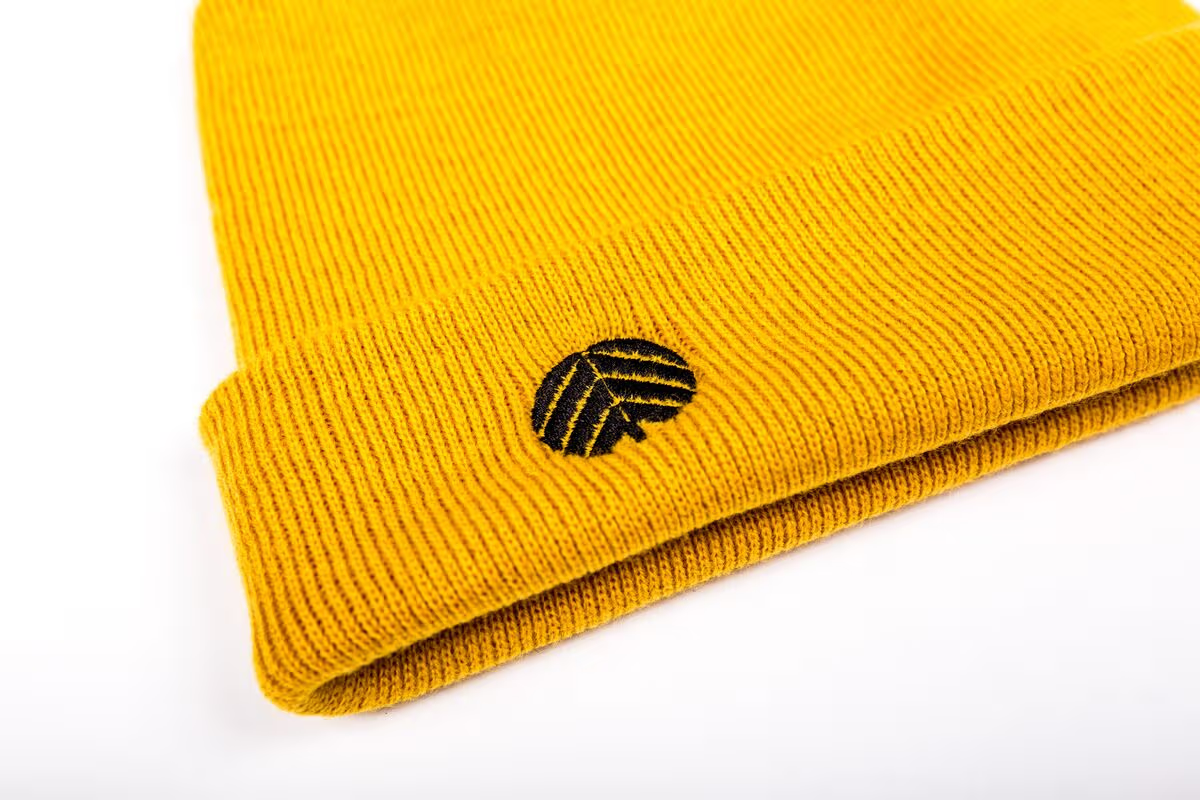
- Embroidery. The strongest option. The logo is stitched into the fabric and can't wash off. The standard choice for workwear that gets washed often.
- Sewn-on patches and woven labels. Durable and recognizable, good for brand details.
- High-quality screen printing and durable transfers. Works, provided it's chosen for repeated washing and not just for how it looks fresh out of the box.
The rule of thumb: choose decoration for washing and daily use, not just for how it looks fresh out of the box. If you want to dig deeper into that trade-off, read our separate guide on printing and embroidering workwear.
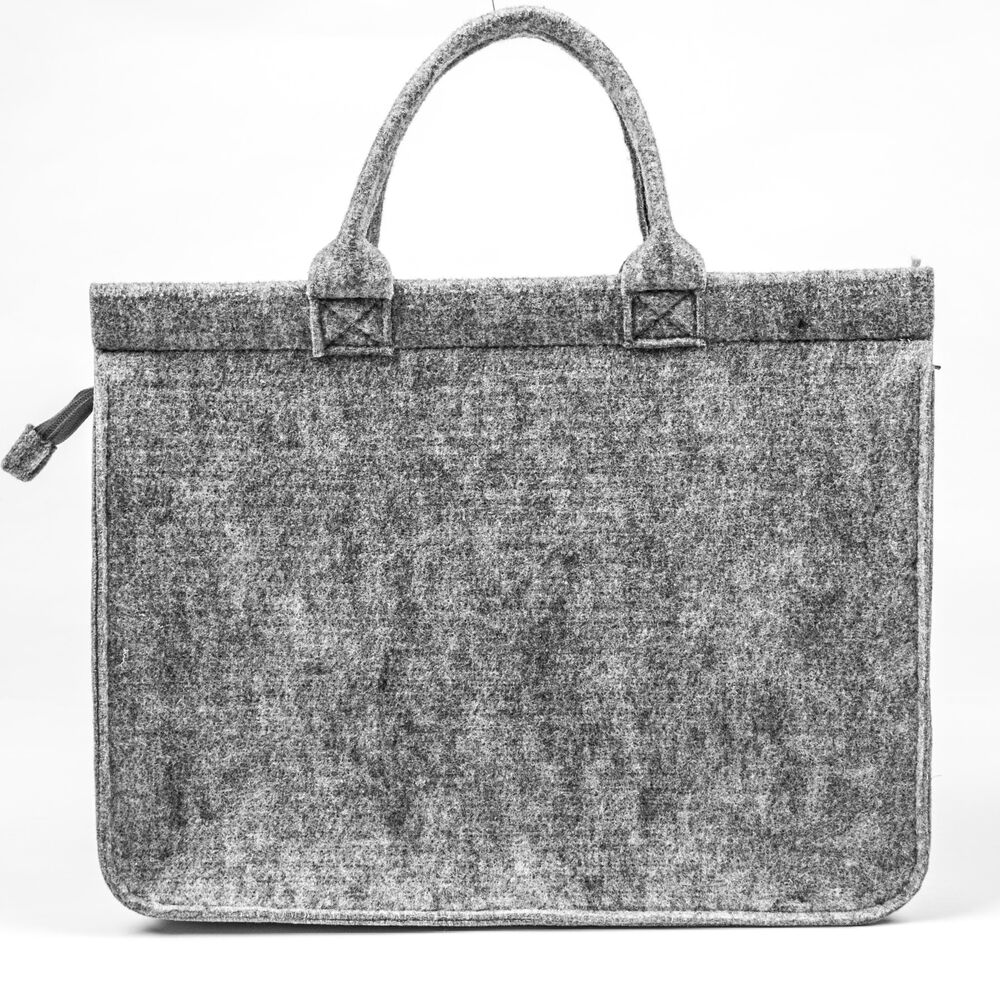
Embroidery is the strongest choice for workwear: the logo is stitched into the fabric and doesn't wash off. Poor print that cracks or peels is the biggest failure factor.
Branding and recognizability: workwear as a uniform
Workwear allows for more visible branding than casual corporate apparel, and that's exactly the point. Part of its function is identification. Customers, visitors, and colleagues can immediately see who works there and who they can approach. In retail, hospitality, and service, stronger branding therefore works well, because the outfit functions as a uniform.
You have choices in placement: chest, sleeve, back logo, labels, patches, or a garment entirely in brand color. Think of how it works for cabin crew, police, retail teams, hotel staff, or technical services. The clothing says: this person works here and can help you. Professional, but also friendly and approachable. A good outfit builds trust. A sloppy outfit makes the company look indifferent.
Custom-made versus branded stock
There are two routes, and the right one depends on your size and time horizon.
| Branded stock | Custom-made | |
|---|---|---|
| Best for | Smaller companies, lower quantities, fast timing, initial tests, limited budget | Larger companies with a long-term view and their own look |
| Approach | Choosing existing garments and branding them | Developing your own colors, cut, and construction |
| Minimum | Low, quick to start | Custom-made from around 500 pieces |
| Reordering | As long as the model is in stock | Reorders from around 100 pieces, since the development work is already done |
The numbers to remember: custom-made starts around 500 pieces, and once development is done, you can reorder from about 100 pieces. So reorders are smaller and easier than the first order. For smaller teams or an initial test, branded stock is often the smartest start.
Reordering as a process, not a one-off order
Workwear is never finished. Employees leave and join, sizes run out, garments wear out, teams grow. Anyone who treats workwear as a one-off merch order will have gaps in sizes and an inconsistent-looking team within six months.
So manage it as a recurring operational process. Plan for live inventory visibility, reorder quantities, minimum reorder amounts, size availability, lead times, and fabric reproducibility. Do that through a central platform instead of emails and spreadsheets, and the team stays consistent year after year. That central management is exactly what the Sunday platform is built for.
Buy cheap, buy twice
The objection we hear most often: "it's going to get dirty anyway, so we'll just buy cheap clothing." That's the wrong framing. Employees wear that clothing every day while representing the company, visible to customers, visitors, partners, and colleagues. Sloppy, cheap, or inconsistent reflects on the business.
Calculate it over the lifespan, not per piece. Clothing that lasts twice as long and keeps looking good the whole time is cheaper per day worn than the cheap alternative you replace every season and that never lets the team look well-groomed.
Workwear is much broader than construction wear
The biggest misconception is that workwear equals construction wear. Workwear is any garment people wear while representing the company in a functional role. The retail team, the barista, the installer, the front desk: all of it is workwear.
And the real value isn't only in durability. It's in how the clothing makes the employee feel and how the customer sees them. Anyone standing in an outfit all day needs to feel good in it. Investing a little more in everyday workwear pays off: people look better, feel better, and represent the brand better.
Werkkleding and werkkledij: NL and BE
In the Netherlands, buyers search for werkkleding, in Belgium often for werkkledij. It's the same thing, but the search language differs. Beyond that, people search for werkkleding bedrukken, werkkledij bedrukken, werkkleding met logo, and werkkleding borduren. We build our pages around the language buyers actually use per market, not translated English. If you're searching in Belgium, werkkledij bedrukken is your term; in the Netherlands, werkkleding bedrukken.
Design your workwear with Sunday
Sunday is merch infrastructure, not a traditional supplier. You open a product page and the platform uses your brand assets to immediately show design directions with live pricing. You see how a polo, softshell, or work jacket could look in your colors, which decoration survives washing, and how each choice changes the price. From there, you pick a concept, request a variation, or use it as a starting point for fully custom-made workwear.
That speed works for a hospitality team that needs 40 aprons and for an installation network that wants a full, custom-developed work wardrobe. Check out the branded workwear range, discover how it works, or browse the catalog. Sending workwear to multiple locations or across borders is exactly what our distribution is built for. Want to see examples first? Read our comparison of workwear brands and the workwear buying guide.
About this article
See your workwear in your own brand
Polos, softshells, work jackets, and aprons with your logo, made to survive daily use and the washing machine, EU-made and live in 30 seconds. Create a free account and see your workwear with live pricing.
Get free designs