For custom socks, printing vs embroidery is the wrong fight. The decoration method that matters most is knitting. Knitted socks build the design from coloured yarn, so it holds shape, colour and feel when worn. Printing (sublimation) suits photographic novelty socks but cracks and shows white lines when stretched. Embroidery adds a premium logo accent but only on small areas. For branded socks people actually wear, knit the design.
Most "custom socks printing vs embroidery" guides treat the two as equal halves of a coin. They are not. They miss the method that defines a good branded sock: knitting. So let us put all three side by side, decide which one fits your design, and be honest about the trade-offs. Spend two minutes here and you will not waste money on socks that look cheap after one wear.
The three ways to decorate a sock
There are three real options for getting a logo, pattern or colourway onto a sock. You knit it from coloured yarn as the sock is made. You print it onto a finished sock with sublimation. Or you embroider a logo onto the surface with thread after the sock is knitted. Each lands differently on look, durability, feel, minimum order and price. The right answer for custom socks comes down to your design, not a default.
Knitting: the default for branded socks
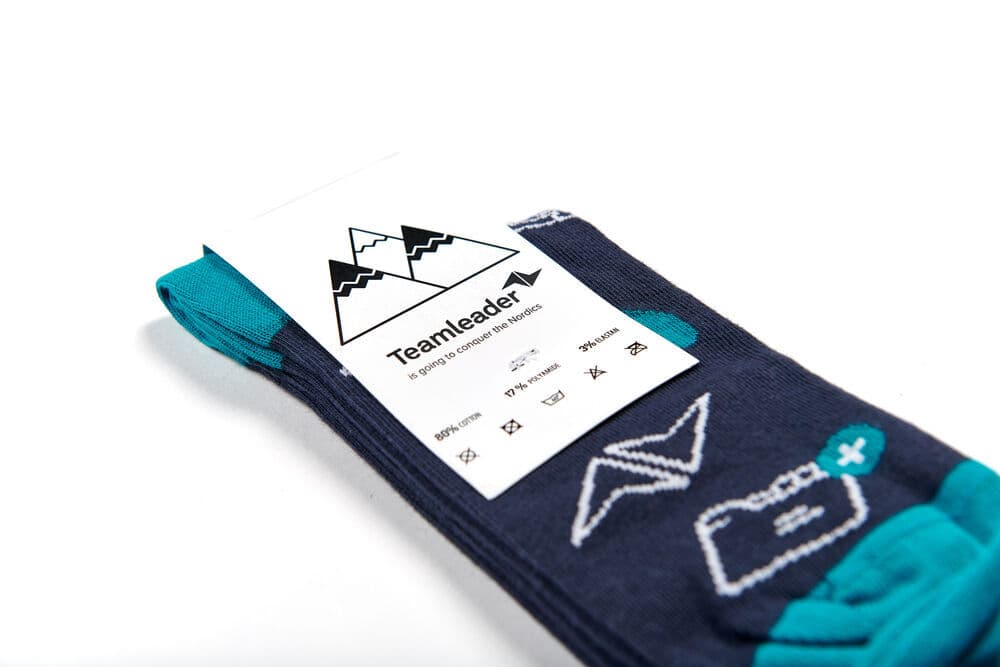
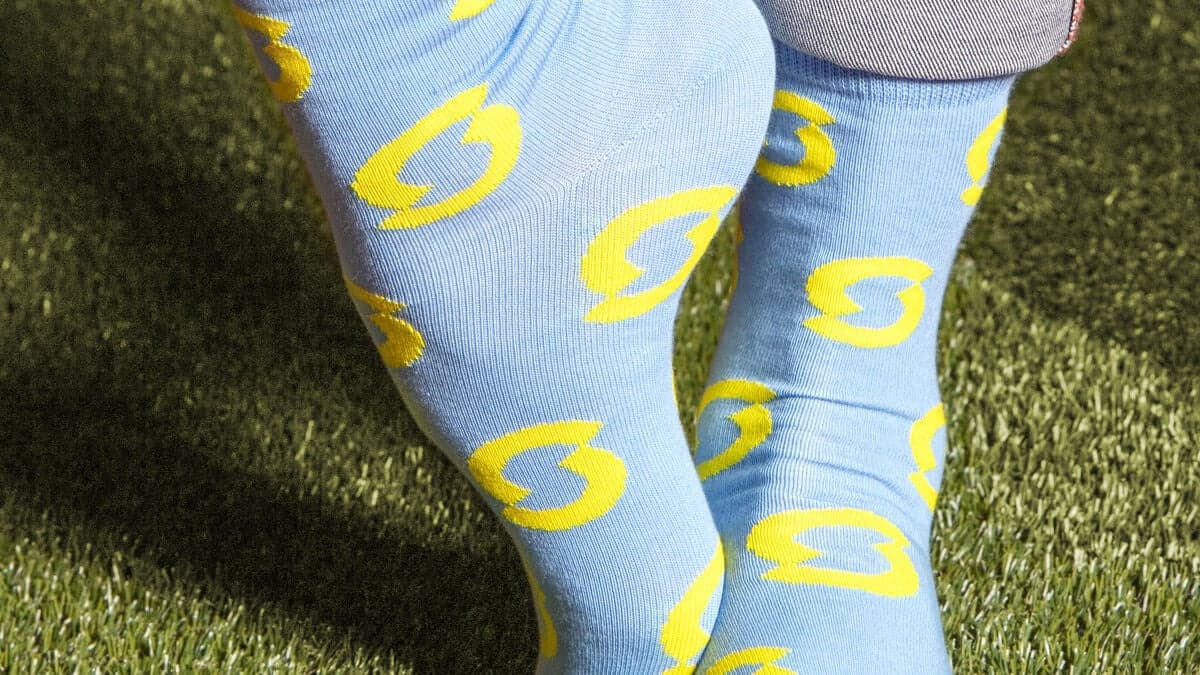
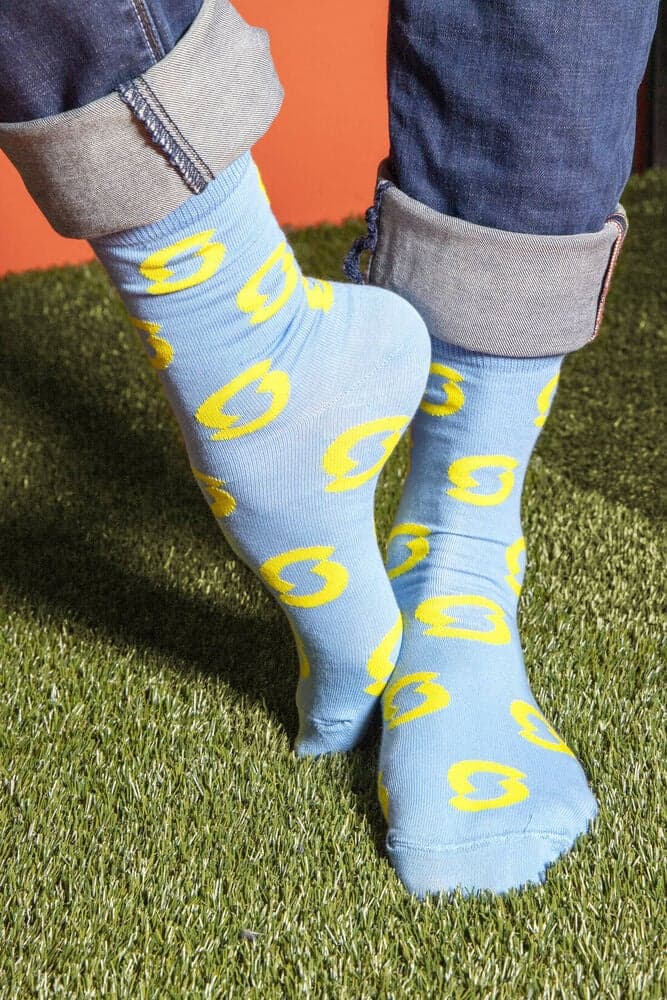
Knitted socks build the pattern as the sock is made, so the design is part of the fabric, not sitting on top of it. That is why a knitted sock holds its shape, keeps its colour and feels right on the foot. The yarn carries the colour, so there is nothing to crack, peel or fade.
The trade-off is detail. Knitting reproduces bold shapes, stripes, repeats, blocks and clear logo placement beautifully. It is not the tool for a photograph or a fine gradient, and you usually work within roughly five to seven colours. For a brand identity that is rarely a limit. Most logos and patterns are made of exactly the bold, flat shapes knitting does best.
This is what Sunday knits for brands like Deel, Cloudflare and HubSpot. Get construction right and the rest follows.
Printing: novelty and photos only
Printing usually means sublimation: your artwork is heat-pressed onto a finished sock at around 400 degrees. The upside is range. Sublimation can carry photographs, gradients and unlimited colour, with eye-popping detail across the whole sock. It also runs at very low quantities, so it suits one-off samples or a tiny novelty batch.
The downside is unmissable once the sock is worn. Sublimation needs a high-synthetic sock to take the ink, and synthetic fabric makes feet sweat and feels rough. Worse, when the fabric stretches over a foot, the printed graphic stretches too, so it warps and shows white lines where the knit opens up. It is fine for occasional wear or a promotional giveaway where longevity does not matter. It is the wrong call for a branded sock you want people to keep wearing.
Our rule is simple: never order printed socks for brand merch. The only good case for printing is a genuine photo or face sock, where reproducing an image is the whole point.
Embroidery: a premium logo accent
Embroidery stitches thread onto the surface of a finished sock, creating a raised, textured, three-dimensional mark. It reads as premium and durable, and it is a lovely way to place a small, clean logo on the cuff or ankle of an otherwise plain, high-quality sock.
The limit is coverage. Embroidery works on small areas only. You cannot embroider a full-sock pattern, and dense stitching on a stretchy sock can stiffen the fabric or pull if overdone. Treat embroidery as an accent on a knitted sock, not a way to decorate the whole thing. A subtle embroidered logo on a quality knit can be the most premium option of all, for the right brand.
The comparison table
| Knitted | Printed (sublimation) | Embroidered | |
|---|---|---|---|
| How it works | Woven from coloured yarn | Heat-pressed onto a finished sock | Thread stitched onto the surface |
| Look when worn | Crisp, full coverage | Warps, white lines when stretched | Raised, premium logo |
| Detail | Bold shapes, ~5-7 colours | Photos, gradients, unlimited colour | Small logos and text only |
| Feel | Soft, structured | Often synthetic, sweaty | Slightly raised at the mark |
| Durability | Excellent | Cracks and fades | Excellent |
| Coverage | Whole sock | Whole sock | Small area only |
| Best for | Branded merch | Photo / novelty socks | Premium logo accent |
The Sunday view. Give a bit less, but give better. A knitted sock in a good cotton blend, with a subtle embroidered logo if you want a premium touch, beats a flood of cheap printed pairs every time. Better to run a small batch done nicely than to hand out socks that warp after one wear.
How to choose for your design
Match the method to what you are actually putting on the sock:
- A logo, pattern, stripes or colourway: knit it. This is almost every branded sock.
- A clean wordmark or icon on a plain premium sock: knit the sock, embroider the logo on the cuff.
- A photograph, a face or a fine gradient: print it, and accept it is a novelty piece, not everyday merch.
Design for the method from the start. Because a knit is built from yarn, the strongest sock designs use bold blocks, repeats and clear logo placement rather than fine photographic detail. Pick two to four core colours and one accent, place the logo where it reads when worn, and design the cuff and toe, not just the leg.
Cost, MOQ and lead time
Decoration method also sets your economics. Knitted socks start at a minimum of around 100 pairs, because the knitting machine has to be set up and test runs produced first. Budget roughly four to six euros per pair at volume, about 800 euros total at the 100-pair minimum, with two to three weeks of production (longer for very large runs of 10,000 to 20,000 pairs and up). Printed socks can drop below that minimum but cost more per pair and trade away quality. Embroidery adds a small per-unit charge on top of the knitted sock.
How Sunday helps
Sunday is merch infrastructure, not a supplier. We knit your socks in Europe, handle design, production, warehousing and global shipping, and run it inside the tools you already use. You can preview your socks in your branding in about 30 seconds, with live pricing, before you commit. Browse the catalog, see how it works, or explore the platform.
Custom socks printing vs embroidery: questions answered
Is printing or embroidery better for custom socks?
Neither is the best primary method. For branded socks, knitting the design from yarn wins on look, feel and durability. Printing suits photographic novelty socks, and embroidery works as a small premium logo accent on the cuff of a knitted sock. So the real choice is knit first, then add embroidery if you want a premium logo.
Why do printed socks look cheap when worn?
Sublimation printing needs a high-synthetic fabric to take the ink. Synthetic feels rough and makes feet sweat, and when the sock stretches over a foot the printed graphic stretches with it, warping and showing white lines where the knit opens. Knitted colour does not do this because it is built into the fabric.
Can you embroider a logo onto socks?
Yes, on small areas like the cuff or ankle. Embroidery gives a raised, premium, durable mark, which makes it ideal for a clean logo on an otherwise plain knitted sock. It cannot cover a whole sock or reproduce a full pattern, so use it as an accent, not the main decoration.
What is the minimum order for custom knitted socks?
Around 100 pairs. That floor exists because the knitting machine has to be set up and test runs produced before the real batch. Printed socks can go lower, but with the quality trade-offs above.
How much do custom socks cost and how long do they take?
Budget roughly four to six euros per pair at volume for knitted socks, about 800 euros at the 100-pair minimum, with two to three weeks of production. Very large runs take longer. Embroidery adds a small per-unit charge.
When should I choose printing over knitting?
Only when the design is a genuine photograph, a face, or a fine gradient that knitting cannot reproduce, and you accept the result is a novelty piece rather than everyday branded merch.
Keep reading: the custom socks series
- The complete guide to custom socks
- How to choose custom socks for your company
- How to design custom socks step by step
- Custom sock design examples that work
- Custom socks in bulk: pricing, MOQ and lead times
- Custom socks: your questions answered
See your socks in your brand
Knitted in Europe, in your colours, with packaging that does a job. Create a free account and get free designs based on your logo in 30 seconds.
Get free designs