To choose custom socks for your company, decide on six things in order: construction (knitted, not printed), material blend, sizing, packaging, and finally minimum order, lead time and price. Get the first one right and the rest fall into place. Knitted socks in a good cotton blend, packaged in branded cardboard, from around 100 pairs at four to six euros each, is the safe, premium default.
Most companies overthink the design and underthink the build. The truth is the opposite matters more. A great design printed on a cheap synthetic sock still looks cheap on a foot. So this guide goes in the order that actually protects your budget, starting with the decision that makes or breaks the whole order.
1. Construction: knitted, not printed
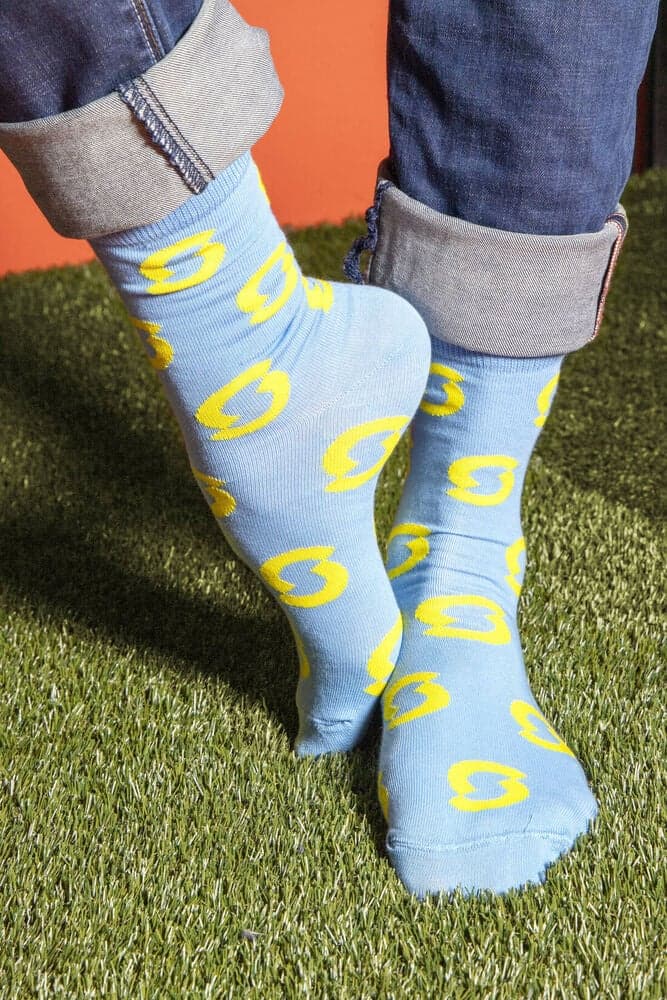
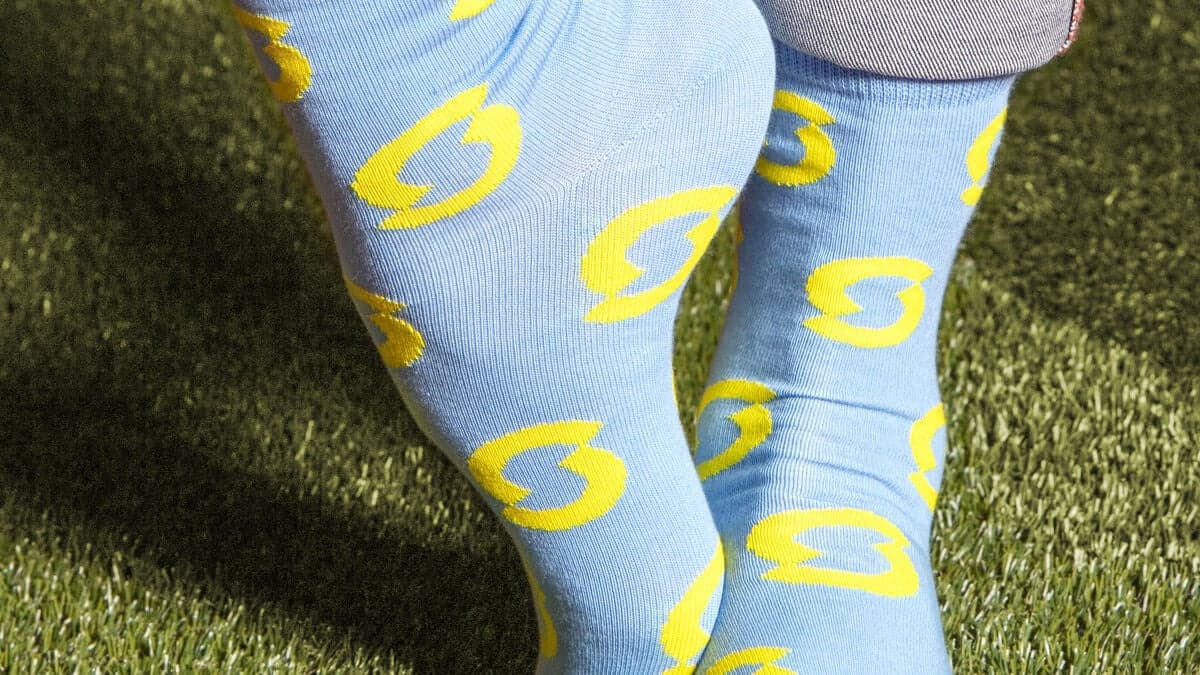
This is the decision that matters most. There are two ways to put a design on a sock. You knit it from coloured yarn as the sock is made, or you print it onto a finished sock. Knitted socks look crisp on the foot and last. Printed (sublimated) socks need a high-synthetic base, and when the sock stretches over a foot the print stretches with it, showing white lines and a broken-looking design.
The rule is simple: for anything worn more than once, order knitted. We would never recommend printed socks for branded merch. It is a waste of money.
| Knitted | Printed / sublimated | |
|---|---|---|
| Look on the foot | Crisp, full coverage | White lines when stretched |
| Feel | Soft, structured | Often stiff, synthetic |
| Durability | Holds shape | Fades and warps |
| Recommendation | Always | Avoid for merch |
2. Materials and blend
A good custom sock is mostly combed cotton for softness and a clean knit, blended with a little polyamide and elastane for shape and stretch. That blend keeps a knitted design sharp and stops the sock bagging out after a wash. Lean more cotton for dress and everyday socks. Add performance yarn and cushioning for sports socks, where moisture-wicking and grip matter.
Watch out for heavily synthetic blends. They make feet sweat, feel rough, and behave like they have already been stretched out, so the logo looks coarse and the sock can lose shape after one wear. A sock you can only wear once is not a gift.
- Everyday & dress: cotton-rich blend, fine knit, clean logo placement. The default for gifting and welcome kits.
- Sports & grip: performance yarn, cushioning and a tighter weave for support. For run clubs, teams and active brands.
- Recycled & eco: recycled yarns, recycled fishing-net fibre or bamboo. Best when the material ties to your brand story.
- Compression: graduated support for travel and wellness programmes, where comfort over long days is the point.
3. Sizing and fit
Fit is the quiet advantage of socks. They run on shoe-size bands rather than precise sizes, so one size genuinely fits most. That removes the sizing matrix that slows down apparel orders and makes socks easy to gift at scale. For most company runs, one or two size bands cover everyone. Only specialist sports or compression socks need tighter sizing.
4. Packaging
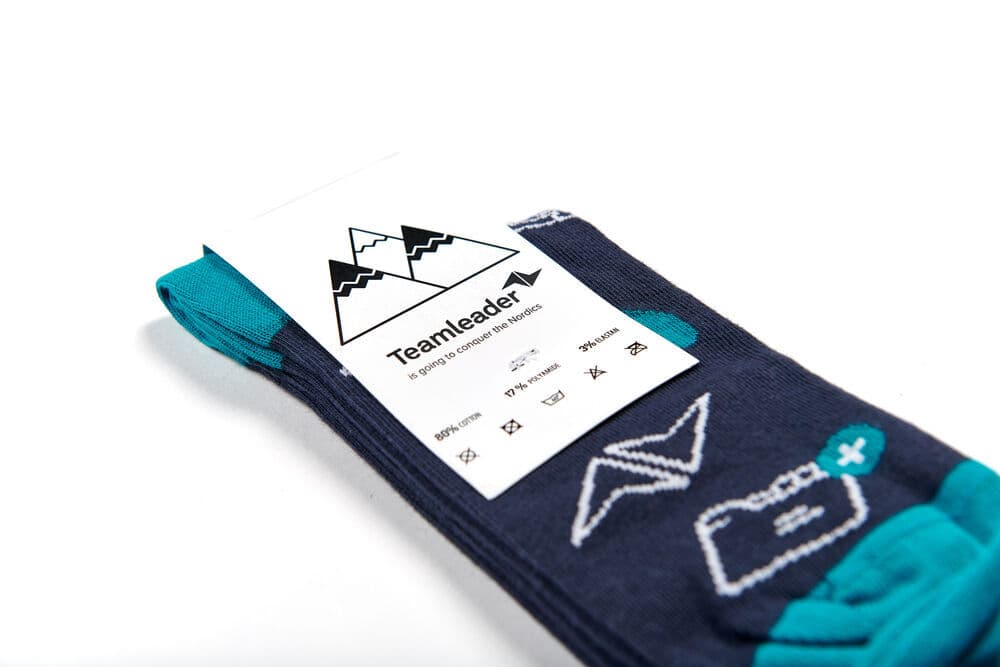
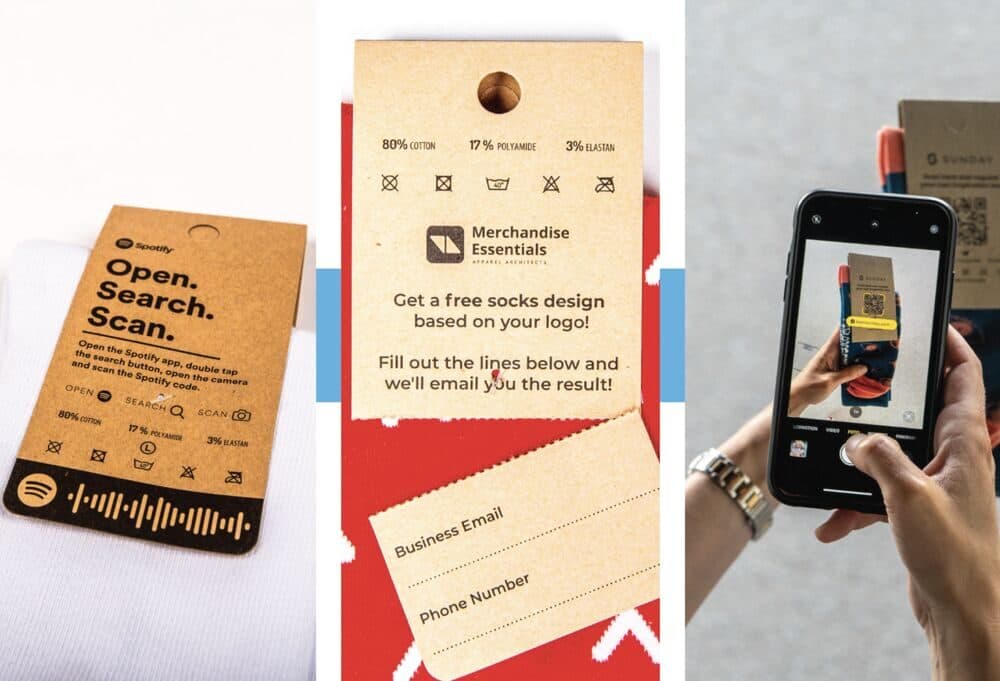
Half the joy of a good pair of socks is opening them. A branded cardboard band, your colours, a printed message or a scan-to-activate call to action turns a sock into an experience and, at an event, into a lead source. Cheap suppliers drop packaging first because it is the easiest cost to cut. Insist that it is included, not an upsell. You can preview how your design and packaging look in your colours with the free sock mockup generator.
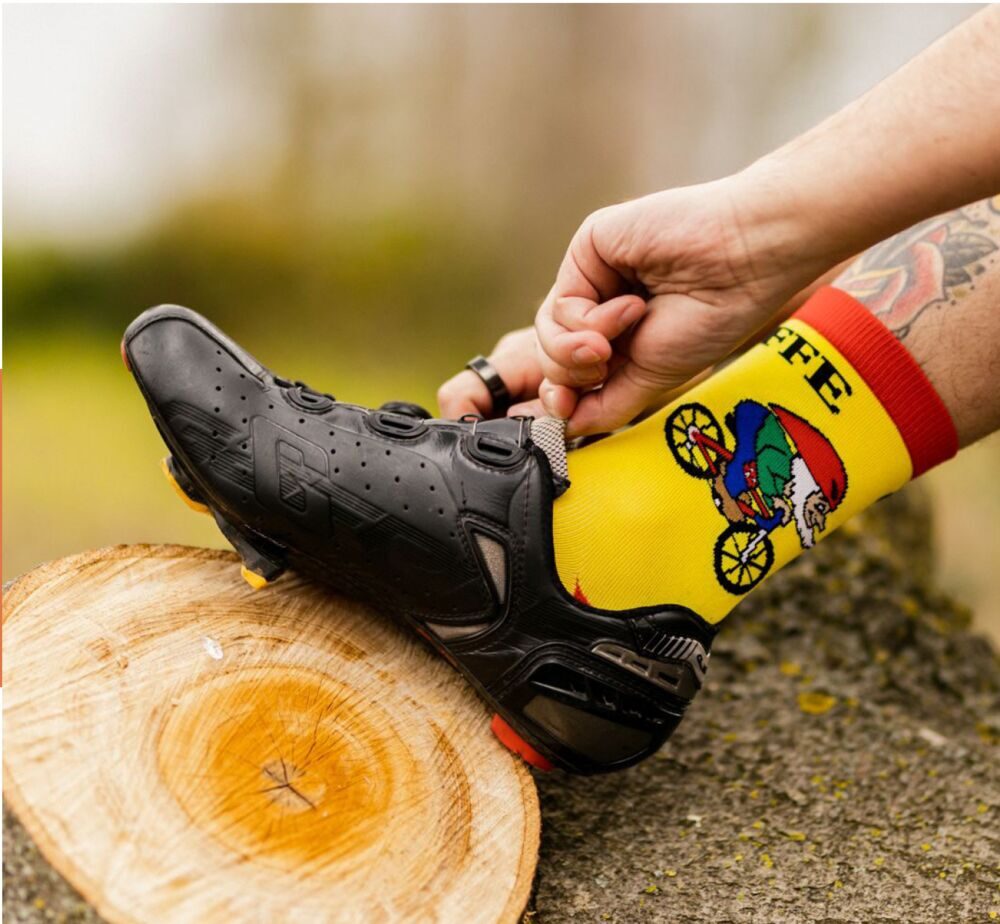
Match the build to the use. Sports socks add cushioning and performance yarn; everyday socks lean cotton-rich for a clean knit.
5. MOQ, lead time and price
Once construction, materials and packaging are set, the economics are straightforward.
| Detail | What to expect |
|---|---|
| Minimum order (knitted) | From around 100 pairs |
| Production time | 2 to 3 weeks (longer for very large runs) |
| Price per pair | Roughly 4 to 6 euros at volume |
| Total at 100 pairs | Around 800 euros |
The 100-pair floor exists because the knitting machine has to be set up and test runs produced. It is also a sensible starting point: enough to outfit a team or stock a welcome-kit programme without over-committing.
The Sunday view. Give a bit less, but give better. A tight run of well-made knitted socks beats cheap volume every time. Better to do nothing, or a limited run done nicely, than to hand out pairs that fall apart after one wear.
6. Supplier and service
Finally, choose a supplier that fits how you will use the socks. For a one-off, almost anyone will do. For a programme you reorder, you want knitted construction, packaging included, and tooling to store, reorder and ship. Sunday is merch infrastructure, not a supplier: we knit in Europe, handle design, warehousing and global shipping, and run it inside the tools you already use. Brands like Deel and HubSpot use socks across events and welcome kits for exactly that reason. Browse the catalog, see how it works, explore the platform, or open the custom socks page.
Keep reading: the custom socks series
- The complete guide to custom socks
- Best custom socks companies in 2026, compared
- Ordering custom socks in bulk: pricing, MOQ and lead times
- Custom sock design examples that work
- How to design custom socks step by step
- Printing vs embroidery vs knitting for custom socks
See your socks in your brand
Work through the framework, then preview the real thing. Create a free account and get free designs based on your logo in about 30 seconds.
Get free designs