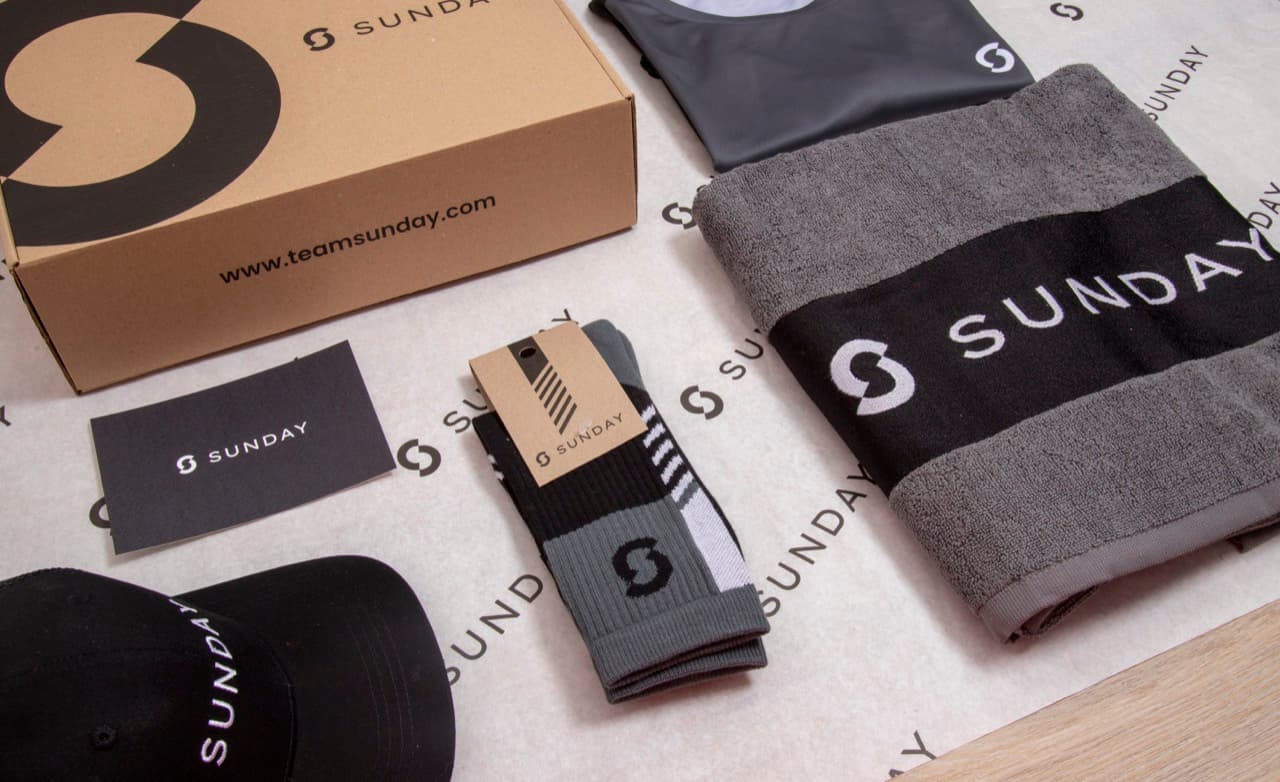

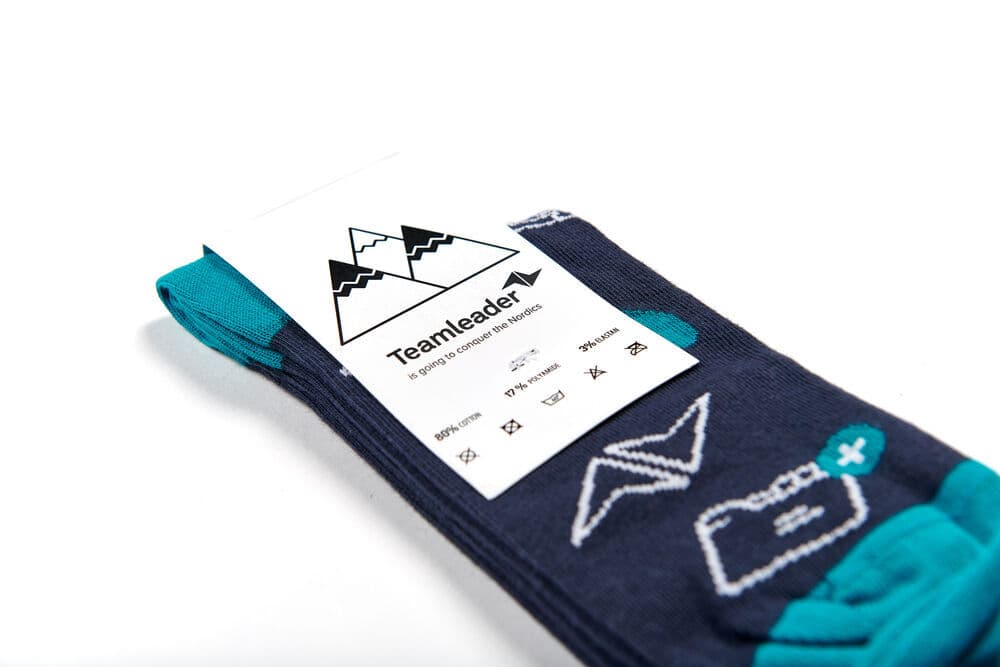
Recycled custom socks use yarns spun from recycled cotton, recycled polyester or specialty fibre like recycled fishing nets, instead of virgin material. They are worth it most when the material ties to your brand story. The honest baseline: a sock knitted in Europe from a durable blend is already a sustainable choice, because the thing you keep and wear beats the thing you bin.
Sustainability on socks works best when it is real and specific, not a label slapped on for marketing. Sunday makes custom socks with recycled and eco options, but the most important sustainability decision is one most buyers skip: make a sock good enough that people actually wear it. This guide covers the eco materials available, when they earn their place, and what already comes baked into a well-made sock.
The most sustainable sock is the one people keep
Start with the unglamorous truth. The biggest environmental cost in branded merch is waste: cheap items made fast, worn once, thrown away. A printed full-synthetic sock that loses its shape after a wash is not sustainable at any material spec. A durable knitted sock that someone wears for two years is. Quality is the sustainability strategy that comes before any recycled yarn.
The Sunday view. Give a bit less, but give better. Durability is the first eco credential. A well-knitted sock in a cotton-rich blend, worn for years, beats a bin-bound novelty whatever it is made of.
Sunday's socks are knitted in Europe from durable blends, so they already carry a sustainability baseline: shorter supply chain, longer wear life, less waste. You can go further on materials when it matters, but you are building on a solid floor, not starting from zero.
Recycled and eco sock materials
When you do want to push further, here are the eco options and what each one suits. These are more advanced builds, so plan a little extra on lead time and cost versus a standard knit.
| Material | What it is | Best for |
|---|---|---|
| Recycled cotton | Yarn spun from reclaimed cotton offcuts and textiles | Brands with a circular or recycled-materials story |
| Recycled polyester (rPET) | Fibre from recycled plastic bottles, blended for stretch | Sport socks and performance knits |
| Recycled fishing nets | Reclaimed ocean and industrial netting respun into fibre | Ocean, marine and fishing-linked brands |
| Bamboo | Soft, breathable fibre from fast-growing bamboo | Natural and wellness brands |
The cost and complexity sit above a standard knit, which is why these are a deliberate choice rather than a default. Material moves the per-pair number, so weigh the spend against the story it tells.
Match the material to your brand story
The eco socks that land are the ones where the material says something true about the company. A recycled-materials company goes for recycled yarns. A brand tied to the ocean picks recycled fishing-net fibre. A natural or wellness brand reaches for bamboo. The material becomes part of the message, not a footnote. When there is no link to your business, a standard durable knit is the more honest call, and nobody has to defend a sustainability claim that does not hold up.
- There is a real link. The fibre reflects what your company actually does or stands for.
- You can back the claim. Recycled content is verifiable, not vague. Keep the wording honest and specific.
- The sock still feels good. Eco material that compromises comfort defeats the point. It has to be worn to count.
Keep it honest, not preachy. Sustainability is a nice-to-have that matters most when it fits the brand's story. Overclaiming on a sock reads worse than a clean, durable pair with no eco label at all.
How to spec an eco sock
Decide the material story first, then design for it. Drop your logo into the free sock mockup generator to preview your design in your colours, and flag the recycled or eco build when you set up the order. Sunday handles the rest: knit in Europe, from 100 pairs, in two to three weeks. Browse the catalog or see how it works to start.
Recycled custom socks: questions answered
What are recycled custom socks made of?
Recycled custom socks use yarns spun from reclaimed material: recycled cotton from textile offcuts, recycled polyester from plastic bottles, or specialty fibre such as recycled fishing nets. They replace some or all of the virgin fibre in a standard knit.
Are eco socks more expensive than standard custom socks?
Usually a little. Recycled and specialty eco yarns are more advanced builds, so they sit above a standard knit on both cost and lead time. The minimum order stays around 100 pairs and production is still roughly two to three weeks.
Are knitted socks already sustainable?
To a degree, yes. A durable sock knitted in Europe has a shorter supply chain and a long wear life, so it generates less waste than a cheap sock worn once. Durability is the first eco credential, before any recycled material is added.
When should a company choose recycled custom socks?
When the material ties to the brand story: a recycled-materials company picks recycled yarns, an ocean brand picks recycled fishing-net fibre, a natural brand picks bamboo. If there is no real link, a standard durable knit is the more honest choice.
Can recycled socks still be knitted, not printed?
Yes, and they should be. Eco material does not change the rule: knit the design from yarn so it stays crisp and lasts. A recycled sock that is printed and cracks on the foot is not a sustainable result.
Are bamboo socks a good eco option?
Bamboo is soft and breathable and suits natural or wellness brands. As with any eco fibre, it earns its place when it reflects what the company stands for and when the sock still feels good enough to wear regularly.
Keep reading: the custom socks series
- The complete guide to custom socks
- The best custom socks companies in 2026
- Ordering custom socks in bulk: pricing, MOQ and lead times
- How to choose custom socks for your company
- Custom sock design examples that work
- How to design custom socks step by step
Design a sock worth keeping
Create a free account and get free sock designs based on your logo in about 30 seconds. Spec recycled or eco materials when it fits your story.
Get free designs