



Swag store metrics fall into two groups. Operational signals show whether the store runs well: orders, active users, repeat orders, coins used, stock turnover, fulfilment performance and dead stock. Outcome metrics show whether the programme works, and they belong to the business objective the store was built to serve.
The guardrail first. Do not judge a swag store only by orders, sessions or revenue. An employee store can produce very little revenue and still be one of the highest-return things a company does. A store can produce impressive order counts while doing nothing for the objective that funded it.
Part of our complete company swag store guide.
The vanity metric trap
Commerce dashboards are built for shops. They report the things a shop cares about: sessions, conversion rate, average order value, revenue. Pointed at an employee swag store, those numbers describe the wrong universe.
Revenue is the clearest example. A store that gives everyone credits and lets them redeem produces almost no revenue and can still deliver excellent engagement, retention and brand advocacy. Meanwhile, a store built to maximise revenue from employees usually damages the exact thing it was meant to support. That trade-off is the subject of online swag store for employees.
What the research says about merch and engagement
The outcome side is measurable, and it has been measured. In 2023 Sunday commissioned research agency Sapience and the Vrije Universiteit Brussel (VUB) to study the branded merchandise programme at Belgian rail operator NMBS/SNCB. The study surveyed 258 people and compared employees who had received branded merch with those who had not.
| Outcome | Employees with branded merch |
|---|---|
| Engagement | 19% higher |
| Satisfaction | 21% higher |
| Ambassadorship | 26% higher |
The same study shows why usage matters more than order counts. 69% of recipients wore their bag and 67% their sweater more than twice. Plain socks went unworn by 31%. Two products with the same order count can deliver very different outcomes. The full method and results are in the company swag scientific study.
That is the benchmark to aim your reporting at: engagement, satisfaction and ambassadorship for employees, with product usage as the leading indicator.
Operational signals worth tracking
These matter. They just do not define success. Read them as the health of the machine.
| Signal | What it tells you | What to do about it |
|---|---|---|
| Orders | Volume moving through the store | Compare to campaign moments, not to last month |
| Active users | How much of the eligible audience shows up | Low numbers usually mean access friction or no reason to return |
| Repeat orders | Whether the store has a life after launch | Flat repeats means the assortment stopped changing |
| Coins or credits used | Whether granted value is being redeemed | Unspent balances point at unclear value or a weak assortment |
| Stock turnover | Which products actually move | Replenish winners, repurpose slow movers |
| Fulfilment performance | Dispatch times, delivery success, issue rate | The fastest way to lose trust is a late or failed delivery |
| Dead stock | Capital sitting still | Give it a new job before you write it off |
Two of these deserve a note. Dead stock is often inventory waiting for a better campaign, not a mistake, and the repurposing routes are in swag inventory management. And fulfilment performance only exists as a metric if warehouse and courier events flow back into the store, which is an integration decision covered in swag store integrations.
How MerchMetrics reports a live store
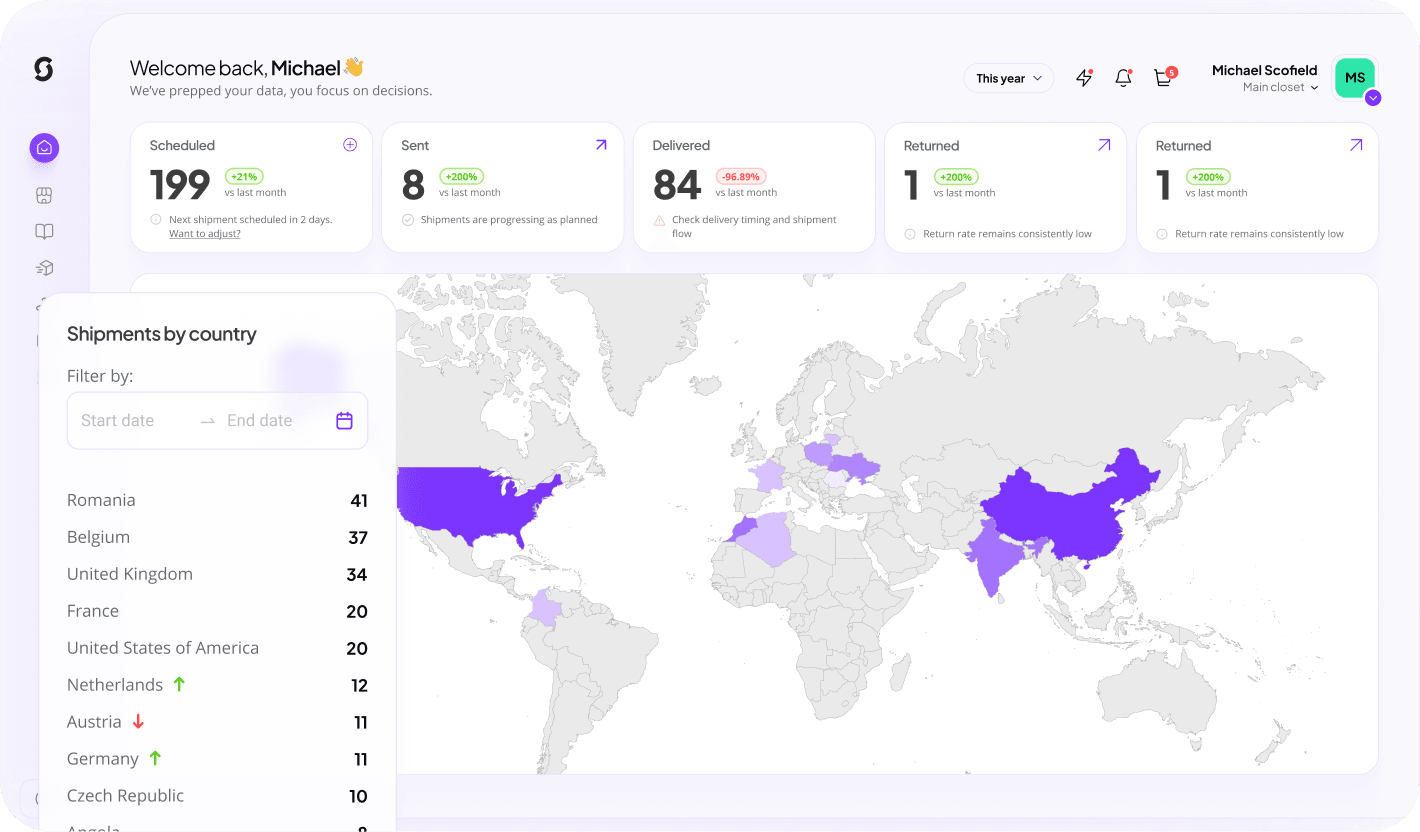
MerchMetrics is Sunday's analytics layer for merch programmes. Because the store, the stock and the shipping run on one platform, the operational signals above come from a single source instead of three exports stitched together. Use it for the monthly and per-collection reviews below, and pair it with the outcome measures your objective needs.
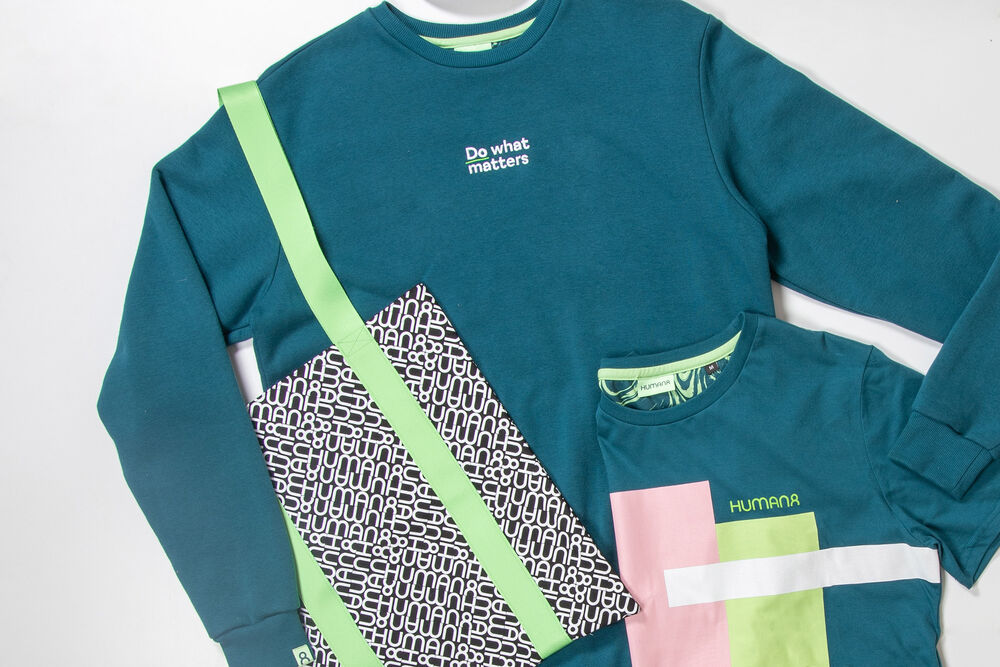
Adoption is the first outcome signal for an employee store. Not how many people visited, but how many chose something and then used it.
Outcome metrics by audience
A swag store exists for a reason. The reason differs by audience, and so should the measurement. This is the table to bring to a budget review.
| Audience | Why the store exists | What to measure |
|---|---|---|
| Employees | Engagement, retention, ambassadorship, culture | Adoption rate, redemptions, repeat use, MerchMetrics, qualitative feedback |
| Customers | Loyalty, retention, expansion and upsell | Campaign participation, orders, repeat engagement, commercial movement in the accounts touched |
| Partners | Enablement and partner-generated revenue | Ordering activity, merchandise usage in the field, downstream revenue impact |
| Managers and departments | Operational efficiency and control | Self-service rate, purchase-order accuracy, approval time, support volume |
Notice what the manager row implies. For an internal ordering platform, success looks like fewer emails, fewer exceptions and fewer corrections, not more orders. A store that removed 200 requests from a marketing inbox did its job even if the order count stayed flat. How those managers pay, by coin, card or purchase order, is covered in swag store funding models.
Notice also that employee measurement includes qualitative feedback on purpose. A merchandise programme creates feelings before it creates numbers, and the fastest early warning you will get is people saying the products are not worth redeeming for.

Collection-level reporting beats product-level reporting. What sold, what stalled, and what the next drop should look like.
Measure the campaign, not the store
Here is the principle that resolves most reporting arguments. The storefront is the delivery mechanism. The KPI belongs to the business objective.
Three examples of the same idea:
- Onboarding kits. The metric is not store orders. It is whether new hires received their kit on time, and what they said about their first week.
- A customer activation campaign. The metric is not conversion rate. It is participation among the target accounts and what happened commercially in those accounts afterwards.
- A recognition programme. The metric is not coins spent. It is whether recognition happened more often, and whether people felt it.
The store contributes the evidence: who ordered, what they chose, when it arrived. The objective supplies the question. Report them together and the programme becomes defensible. Report store numbers alone and you are describing a shop nobody asked for.
This is also why gifting programmes and merchandise programmes share a measurement logic. Every programme starts with a business objective, as set out in building a corporate gifting programme and the corporate gifts hub. If a one-off kit serves the objective better than an ongoing store, compare the two in swag boxes vs swag stores.
A reporting cadence that works
Most programmes over-report weekly noise and under-report the thing that matters. A simple rhythm:
| Cadence | Who reads it | What it contains |
|---|---|---|
| Monthly | Programme owner | Operational signals: orders, active users, stock turnover, fulfilment issues |
| Per collection or campaign | Owner plus the requesting team | Participation, what moved, what stalled, what to repurpose, feedback |
| Quarterly | Owner, finance, sponsor | Outcome metrics against the objective, plus the plan for the next collection |
Pair the cadence with an owner. A store without a named owner drifts into a static catalogue, and static catalogues get abandoned. Ownership options are covered in the company swag store pillar and the launch sequence in how to launch a swag store.
A programme, not a project. The quarterly question is what the next collection should be, not whether the store still exists.
The eight ways swag programmes fail
Two of these are measurement failures outright, and the rest show up in the numbers before anyone admits them.
- A paid employee store with no value given first. Adoption never recovers from the first impression.
- Treating launch as completion. A static store is an abandoned store, usually within two quarters.
- Too many SKUs. Choice paralysis, slow stock, weaker photography, worse experience.
- Low-quality print on demand. Long lead times and products that feel promotional rather than wanted. See print on demand vs warehouse stock.
- Manual fulfilment and tracking. Fine at 40 orders, broken at 400, and invisible in reporting.
- No owner or no objective. Nobody to answer the quarterly question, so nobody asks it.
- Unprepared global policy. Customs, duties and returns decided after the first stuck parcel. See global swag store.
- Measuring only commerce vanity metrics. Sessions and revenue reported to an audience that funded engagement.
The last two are the ones that quietly kill programmes at renewal time. A store that cannot show its contribution to a business objective becomes a line item, and line items get cut.
To see what Sunday reports back on a live store, explore the platform, the catalog, distribution and how it works. For a comparison of reporting across vendors, see the swag management platform comparison.
Frequently asked questions
What are the most important swag store metrics?
Two groups. Operational signals show whether the store runs well: orders, active users, repeat orders, coins used, stock turnover, fulfilment and dead stock. Outcome metrics show whether the programme works and depend on the audience: engagement for employees, loyalty for customers, enablement for partners and efficiency for managers.
How do you measure the ROI of a company swag store?
Start from the objective that funded it, not from the store. In a 258-person study of NMBS's merch programme run by Sapience and VUB for Sunday, employees with branded merch scored 19% higher on engagement and 26% higher on ambassadorship. Measure the outcome the store serves, using store data as evidence.
Should revenue be the main swag store KPI?
Almost never for an employee store. A credits-based store produces little revenue and can still deliver strong engagement, retention and advocacy. Judging success on revenue pushes a programme toward selling to employees, which damages the outcome it was funded for. Revenue only matters for public, fan or genuinely commercial stores.
What is a good adoption rate for an employee swag store?
There is no universal benchmark worth quoting, because eligibility, funding model and assortment change the number completely. Watch the trend instead: how much of the eligible audience redeemed at launch, whether repeat orders continue, and whether unspent balances shrink. Low adoption usually traces back to access friction or a weak assortment.
How do you measure a swag store for managers and departments?
By efficiency and control rather than volume. The metrics that matter are self-service rate, purchase-order accuracy, approval time and support volume. Success looks like fewer emails, fewer exceptions and fewer corrections. A platform that removed hundreds of ad hoc requests from an inbox has done its job even if orders stay flat.
Why do swag programmes fail?
Eight recurring reasons: a paid employee store with no value given first, treating launch as completion, too many SKUs, low-quality print on demand, manual fulfilment, no owner or objective, unprepared global policy, and measuring only vanity metrics. The last two usually kill a programme at renewal time.
About this article
Report the outcome, not just the orders
Adoption, redemptions, stock turnover and fulfilment performance in one place, connected to the campaign that justified the budget.
Build your swag store