Corporate gifts are physical, usually branded gifts a company gives to employees, customers, prospects, partners or key stakeholders to strengthen a relationship or reach a business goal. Unlike a promotional giveaway, a corporate gift is intentional: a known recipient, a chosen moment, a clear reason. The product is only part of it. Occasion, presentation and experience decide whether it succeeds.
One idea runs through this entire guide: the best corporate gifts are not the most expensive ones. They are the most intentional ones. A beautifully packaged gift at the right moment beats a pricier gift that feels like cleared warehouse stock. Get that order right and everything below follows.
What's in this guide
- What a corporate gift actually is
- The corporate gifting map
- The biggest misconception
- The five ingredients of a gift that lands
- The biggest mistake, and the cringe list
- The one gift that almost always works
- The best corporate gift categories
- What luxury actually means
- Branded vs custom vs personalised
- Brand less. Package more.
- The budget guide
- Sustainable corporate gifts
- Employees vs clients vs partners
- Gifting as a programme
- Global gifting and DDP shipping
- Gift cards vs merch
- The real objection, and how Sunday fits
What a corporate gift actually is
A corporate gift is a physical, usually branded gift a company gives to strengthen a relationship or support a business goal. The recipient can be an employee, a customer, a prospect, a partner or any key stakeholder. The occasion can be a new hire's first day, a thank-you to a loyal customer, a partnership milestone, a deal you want to accelerate, a referral, or any moment that matters to the relationship.
What separates it from a promotional giveaway is intent. A promotional item is built for broad distribution and awareness. Nobody knows exactly who ends up with it, and that is fine, because the point is exposure. A corporate gift is the opposite. You know the recipient, you chose the moment, and you have a reason. That intentionality is the whole category. We go deeper on the line between the two in the guide to branded corporate gifts.
The corporate gifting map
Corporate gifts is the umbrella. Underneath it sit all the specific occasions companies gift for, and each has its own playbook. This hub explains why companies gift and what makes a gift work. The pages below explain when and how for each moment.
- Christmas and holiday gifts. The biggest seasonal moment of the year. See corporate Christmas gifts.
- Employee gifts. Onboarding, anniversaries, recognition and milestones. See corporate gifts for employees and work anniversary gifts.
- Customer and client gifts. Appreciation, renewals and relationship-building. See customer appreciation gifts.
- Partner gifts. Recognising the people who represent you externally. See partner appreciation gifts.
- Referral, executive, event and onboarding gifts. Each a moment worth marking with the right experience.
Read the umbrella first, then go deep on the occasion you are planning for. The principles here carry into every one of those pages.

Corporate gifts is the umbrella above every specific occasion. The hub explains why companies gift. The supporting guides explain when and how.
The biggest misconception
The most common mistake is treating gifting as an afterthought. A team grabs whatever merch is left in the cupboard, drops it in a box, and calls it a gift. Recipients notice immediately. A real gift feels intentional, and intention shows up in the small things: the presentation, the packaging, the note.
The test is simple. The recipient should feel the company created something for them, not cleared warehouse shelves. That feeling is what turns an object into a gesture. It is also why the cheapest way to ruin a good product is to present it carelessly.
The five ingredients of a gift that lands
A gift succeeds when five things line up. Miss one and the whole thing wobbles.
- A genuinely useful product. Something the recipient actually wants to keep and use.
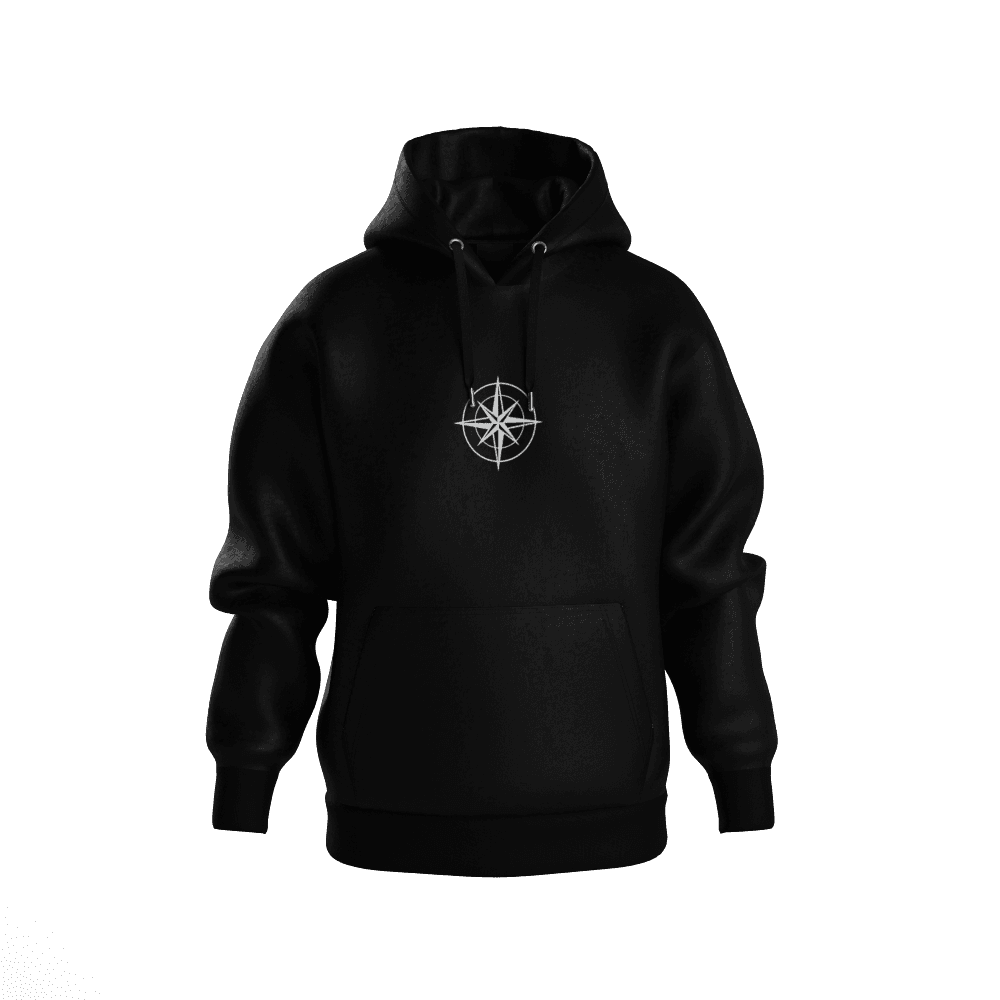
- Subtle branding. Present, not shouting. The lighter the logo, the more the gift gets used.
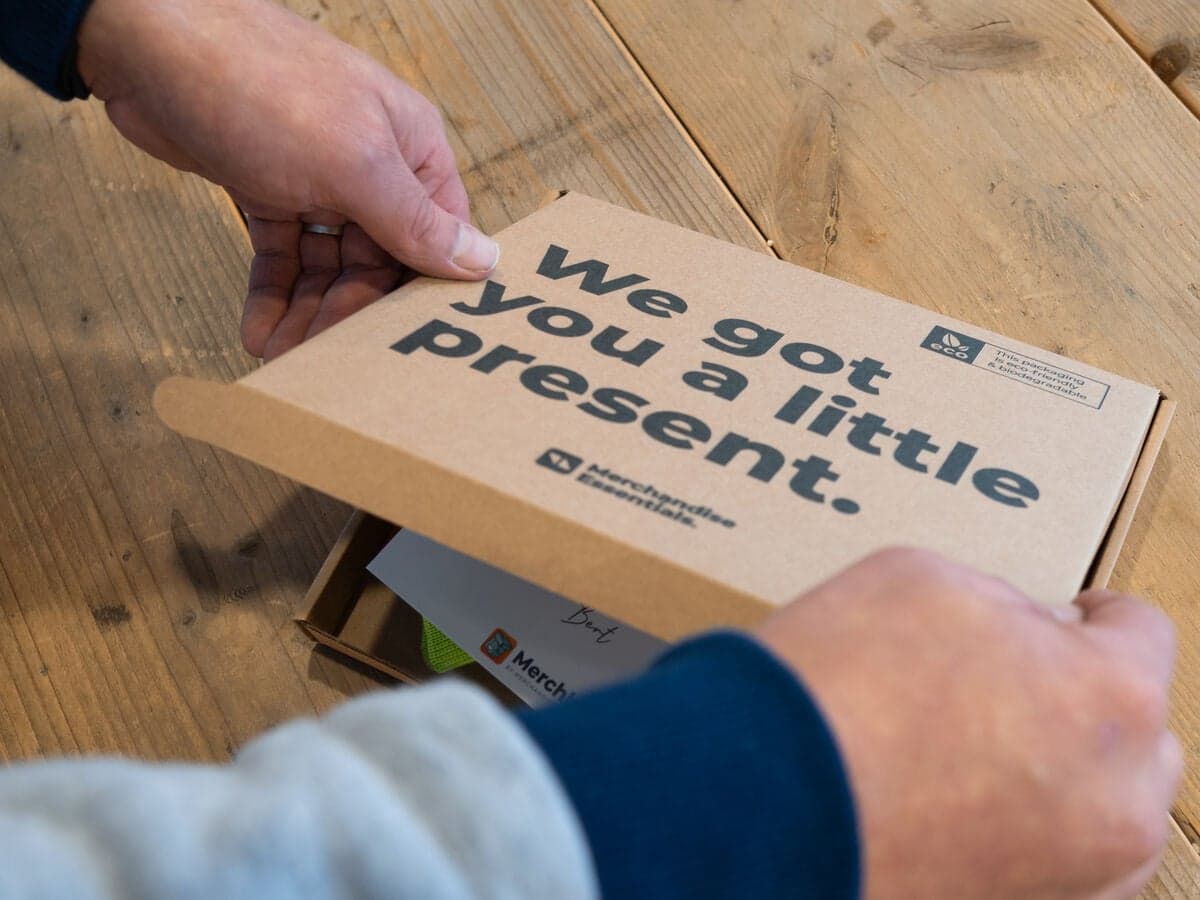
- Thoughtful packaging. The unboxing is part of the gift, not the wrapper you throw away.
- Right timing. A gift tied to a real moment lands harder than a random one.
- A clear reason. The recipient should understand why they received it.
Experience matters as much as product. A beautifully packaged thirty-euro gift often beats a carelessly presented eighty-euro one. That is not a slogan, it is the single most reliable pattern in corporate gifting.
The biggest mistake, and the cringe list
The biggest mistake is a gift that is too generic. Another notebook, another pen, another standard mug. Predictable, forgettable, and quietly a little insulting because it signals nobody thought about it. The fix costs nothing but attention: spend time on the concept. A surprising product, custom hot sauce, a clever kitchen accessory, a creative seasonal item, or something tied to your campaign, will out-perform a pricier generic gift almost every time. Thinking beats budget.
Then there is the cringe list, the items that signal low effort on arrival:
- Stress balls.
- Cheap plastic tote bags.
- Low-quality pens.
- Outdated USB sticks, when most laptops no longer even have a USB-A port.
None of these are banned. A clever campaign can reinvent almost anything. But avoid them unless you have a genuinely strong concept that gives them a reason to exist. For a full run of ideas that avoid the trap, see corporate gift ideas and the best corporate gifts.
The one gift that almost always works
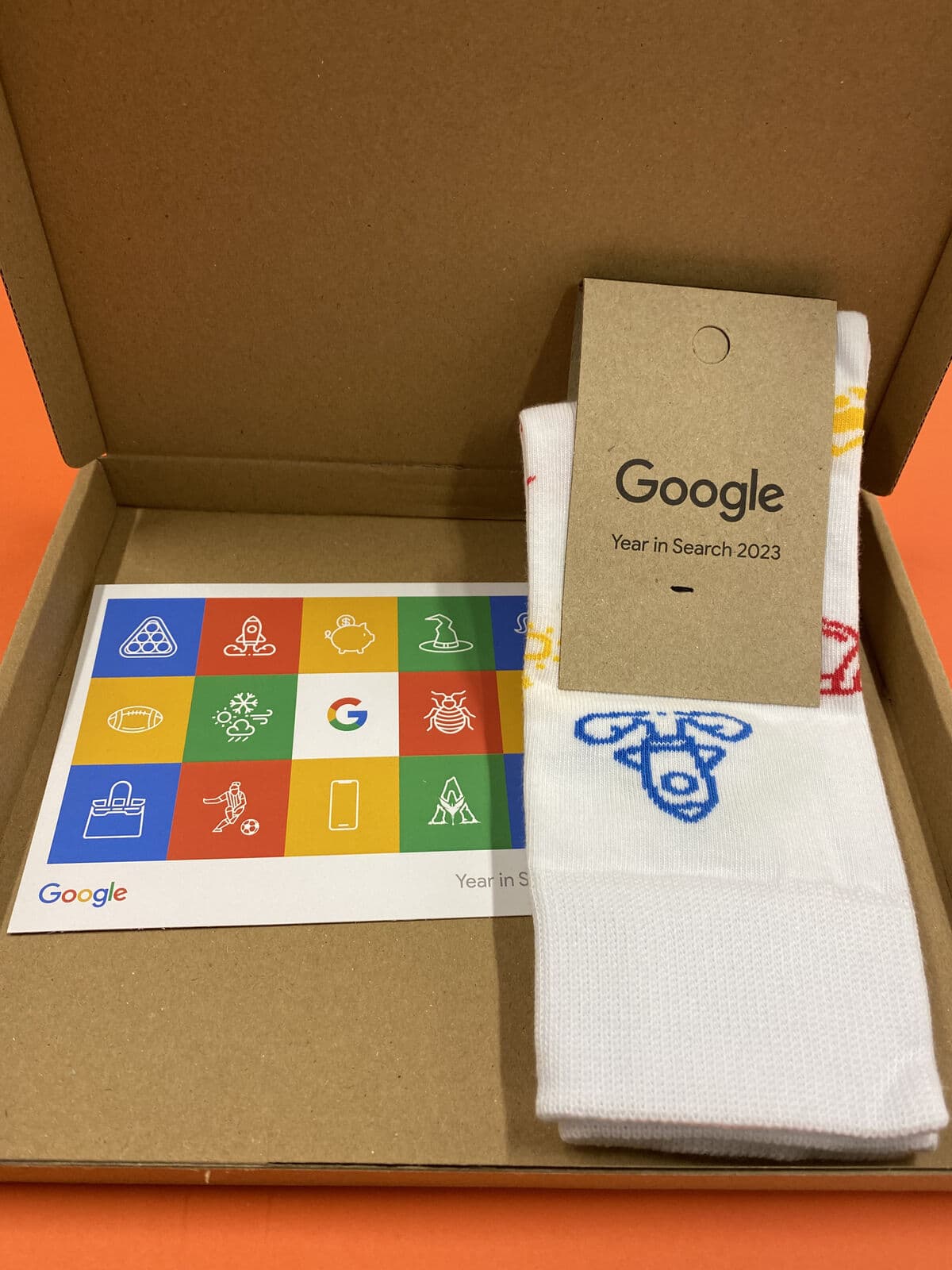
If you want a near-universal corporate gift, custom socks are hard to beat. Everyone wears them, everyone runs out of them, and they work both internally and externally. They scale across any budget: a small budget buys one good pair, a larger budget buys three premium pairs in a proper gift box. And if the recipient does not wear them, someone in their household will, so the gift never goes to waste.
Socks also solve the sizing problem that trips up apparel gifting, and they carry subtle branding beautifully. Design a pair in your colours in the free sock mockup generator, or read the full custom socks guide. When people ask for the safest single choice, this is it.
The best corporate gift categories
Some categories consistently outperform. Here is how they stack up.
| Category | Why it works | Watch out for |
|---|---|---|
| Gift boxes | The unboxing creates excitement and perceived value | The box has to feel considered, not padded out |
| Desk & tech | Practical and visible every working day | Avoid dated tech nobody uses anymore |
| Bags: backpacks & weekend bags | They travel with the recipient, so brand exposure lasts for years | Quality shows instantly, so do not go cheap |
| Wearables | Great for employees, who wear the brand happily | More restrained for clients and partners |
| Drinkware | Still useful and used daily | Saturated, most people already own several |
| Experiences | A category of their own, memorable and personal | The best physical gift supports the experience, it does not compete with it |
Two categories are badly underused. Premium backpacks are one of the highest-use gifts you can give, because everyone needs one and a subtly branded good backpack gets carried for years. See custom backpacks. Weekend bags are the other, because the travel and leisure association makes them surprisingly memorable. Both quietly beat the obvious drinkware default.
Bags travel with the recipient, so a subtly branded backpack or weekend bag keeps generating impressions for years. Both are badly underused.
What luxury actually means
Luxury in corporate gifting has almost nothing to do with a big logo. Premium is the accumulation of details: better materials, refined construction, premium hardware, engraved zippers, custom linings, a hidden message, considered packaging. Small branding feels more luxurious than an oversized logo, because restraint reads as confidence.
Premium is worth it when it materially supports a business objective, winning a strategic account, accelerating a deal, thanking employees who earned it, or marking a genuine milestone. Evaluate the gift's value against the result you want, not against a price tag in isolation. The full breakdown is in the guide to luxury corporate gifts.
Branded vs custom vs personalised
Three words get used interchangeably and they should not be. The difference decides cost, lead time and how the gift feels.
| Type | What it means | Best for |
|---|---|---|
| Branded | An existing product decorated with your logo: print, engrave, embroider, laser | Fast, cost-effective, larger volumes |
| Custom | Every element is the brand: colours, linings, neck labels, packaging, zippers, trims, hardware, hidden messages | Premium recipients who notice the difference instantly |
| Personalised | Every recipient gets something unique: their name, a note, a custom product, or their own choice | High-value gifts where the individual matters |
Personalisation carries the most value and the most operational complexity. The sweet spot for large campaigns is to personalise the note, not every product. A handwritten or personalised message feels human without blowing up the logistics. Giving recipients a choice of two or three gifts is another powerful, simpler form of personalisation, because choice itself improves the experience.
Brand less. Package more.
There is no universal rule for logo size, it depends on the product. But one law always holds: the bigger the logo, the less likely people are to use the product. Subtle branding creates more real-world impressions, because the gift keeps getting used and keeps being seen. That is the whole logic behind Sunday's core mantra: brand less, package more.
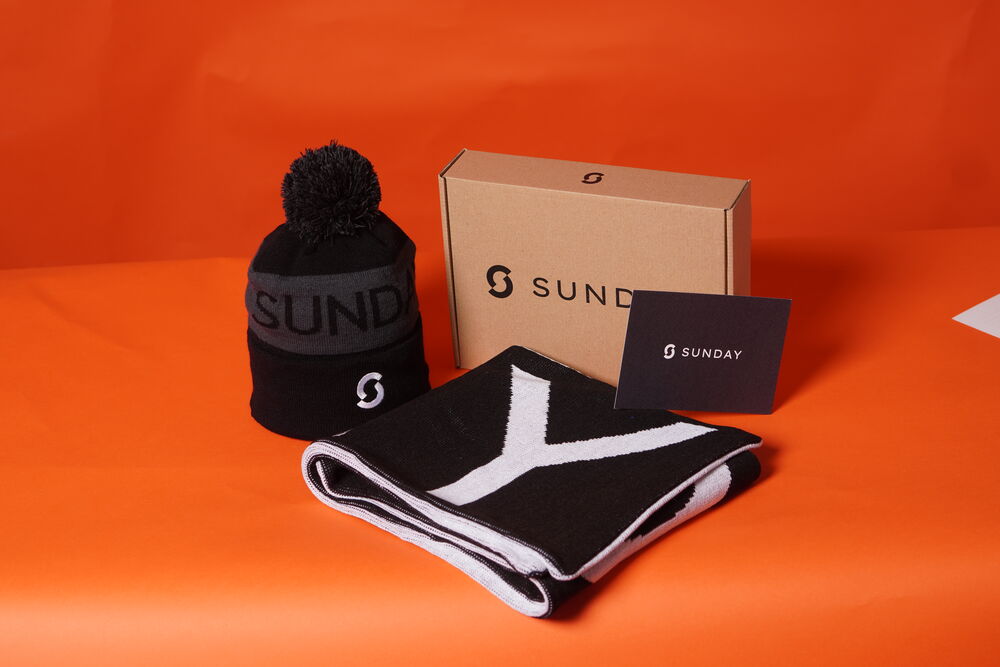
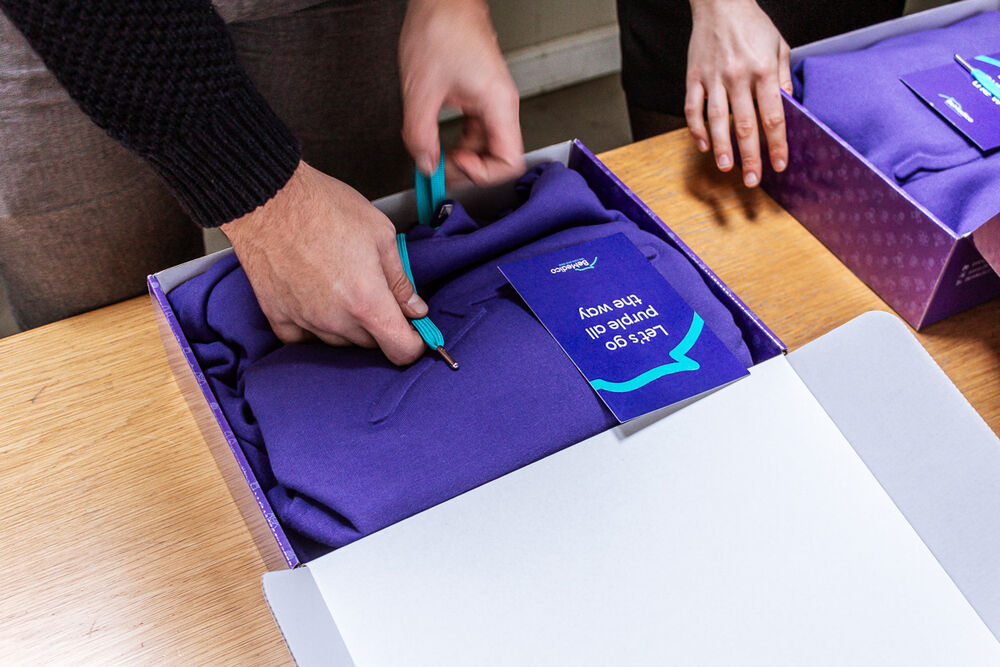
Packaging is Sunday's single strongest recommendation. Retail products never arrive without packaging, so corporate gifts deserve the same. A premium sleeve, a proper gift box, a well-designed insert card, these lift perceived value more than upgrading the product itself. If you have budget to spend, spend it on the presentation before you spend it on a fancier item.
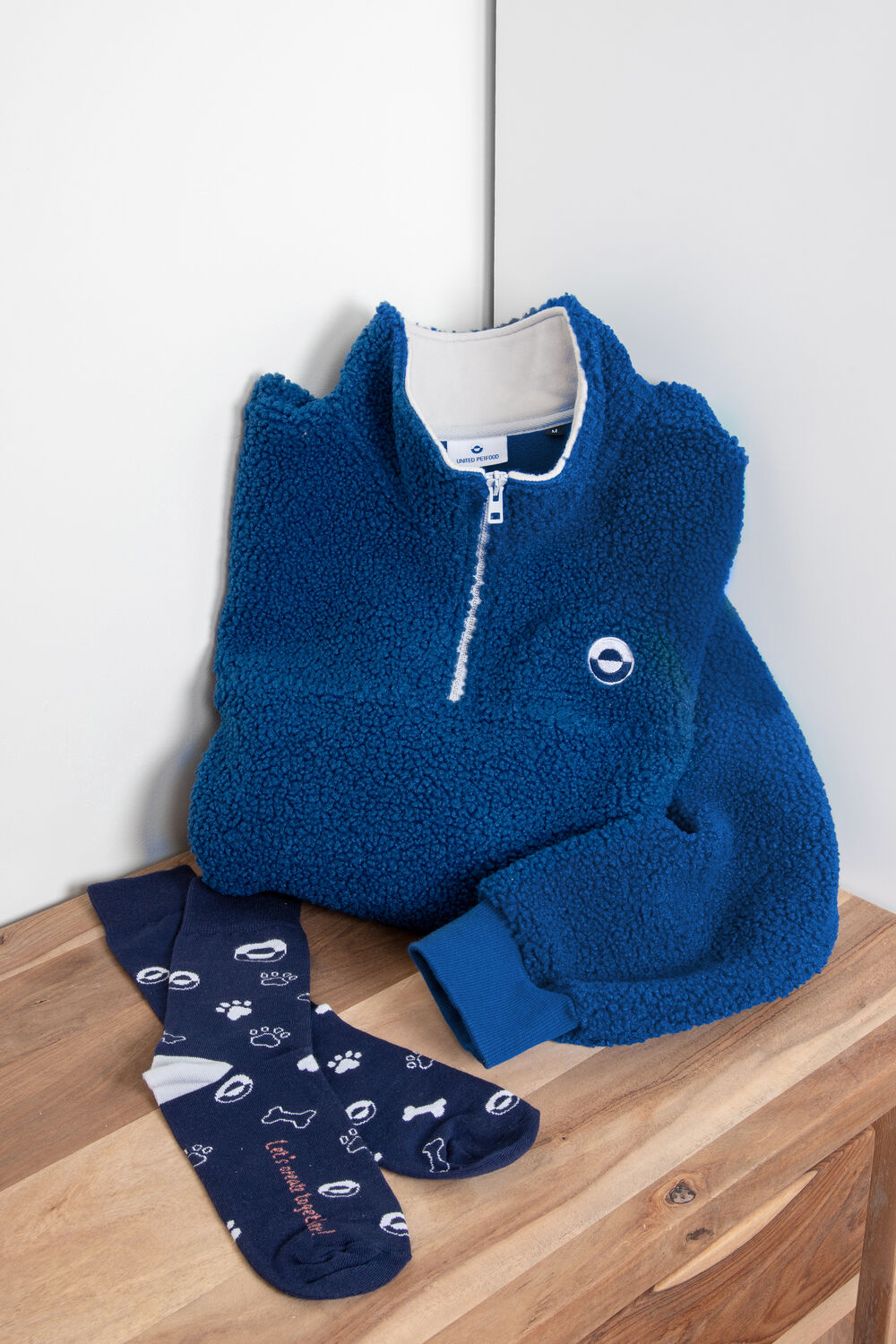
Spend on packaging before you spend on a pricier product. A premium sleeve or gift box lifts perceived value more than a logo ever will.
The budget guide
Budget matters less than most buyers think, but it does set what is possible. Here is the honest breakdown per recipient.
| Tier | What it buys |
|---|---|
| ~€25 | One or two genuinely good products, enough for a thoughtful, well-presented gift |
| ~€50 | The sweet spot: premium gift boxes, multiple coordinated products, a backpack, a jacket, a curated experience. A true gifting experience |
| €100+ | Quantity gives way to refinement: premium materials, deeper customisation, luxury packaging, exceptional finishing |
On minimums, context decides. A race jersey can work at any price. But for Christmas gifting, avoid dropping below roughly fifteen euros per recipient. Below that, the honest move is to rethink the concept, not just buy something cheaper. The full budget and bulk breakdown lives in the guide to corporate gifts under fifty dollars and in bulk.
Sustainable corporate gifts
The most sustainable gift is the one people keep using. Durability beats a marketing claim every time. A recycled product that ends up in a drawer creates less real value than a well-made product used for years. Materials and certifications are genuine additions, and they matter, but usefulness comes first.
This is also where Sunday refuses to overclaim. No greenwashing. A gift that gets used is the sustainability story, and it happens to be the same thing that makes a gift good in the first place. Design for keep-and-use and the environmental case takes care of itself.
Employees vs clients vs partners
The right level of branding depends on how far the recipient sits from your organisation. The further out, the subtler the branding.
- Employees are part of the company. They are comfortable with branded apparel, and internal collections can be expressive and fun. See corporate gifts for employees.
- Partners represent you externally, so their gifts should be slightly more refined. See partner appreciation gifts.
- Clients are the least likely to wear another company's logo. Desk accessories, premium gifts and subtly branded products beat large-logo apparel here. See customer appreciation gifts.
Gifting as a programme, not a December scramble
Smart companies do not only gift at Christmas. They map the meaningful moments across the year, onboarding, anniversaries, renewals, referrals, certifications, first purchases, deal closes, service recovery, milestones, and gift at each one. That turns gifting from a seasonal panic into a programme that compounds.
Once a campaign works, automate it. Sunday connects gifting to your CRM, HRIS and sales systems, so each moment triggers the right gift automatically. The rule for what to automate is clean: automate the administration, keep the humanity. Automate storage, inventory, picking, packing, shipping, address collection, customs documents and tracking. Keep human the relationship decisions, the personal notes and the choice of the right moment. Automation removes admin, not warmth. The step-by-step build is in how to run a corporate gifting program.
Map the moments that matter across the year, then automate the logistics. The trigger fires, the right gift ships, and the relationship work stays human.
Global gifting and DDP shipping
Sending gifts internationally is where most programmes break. The hard parts are address collection, address formats, courier selection, customs documents, duties, tracking and failed deliveries. Any one of them can turn a nice gesture into an awkward one.
Sunday solves this with global logistics, multiple courier integrations, DDP shipping, automated documentation and central fulfilment. DDP matters more than it sounds: a gift should never surprise the recipient with a customs invoice. If they have to pay duties to receive it, it stops feeling like a gift. Delivered-duty-paid keeps the gesture intact all the way to the door.
Gift cards vs merch
Gift cards and merch solve different problems, so this is not really a competition. Gift cards are incentives, they nudge a behaviour, and they reduce a bill. Merch is relationship-building, it creates emotional attachment and long-term brand exposure. A card is spent and forgotten. A good branded product keeps getting used and keeps being seen.
Use gift cards when you want to drive a specific action. Use merch when you want to be remembered months or years later. Many strong programmes use both, at different moments, for different reasons.
The real objection, and how Sunday fits
When buyers hesitate on corporate gifting, it is rarely about price. The real objection is operational complexity: selecting products, collecting addresses, shipping internationally, holding stock, handling customs and managing fulfilment. That complexity is what stops good gifting ideas from ever happening.
Sunday removes it. The platform handles design, custom production, warehousing, global DDP shipping, address collection, customs documentation and campaign automation, connected to the tools you already use. You keep the parts that should stay human, the relationship, the note, the timing, and Sunday runs the logistics silently underneath. The best corporate gifts are intentional, thoughtfully selected, beautifully presented and delivered at meaningful moments. A successful gift is not a branded product. It is an experience that strengthens a relationship. Brand less. Package more.
Start by exploring the catalog, see how it works, or build a program on the platform. Running gifting at scale as a self-serve store is its own model, covered in the company swag store guide.
About this article
Keep reading
- The best corporate gifts, by category and budget
- Branded corporate gifts: logos done right
- 22 corporate gift ideas that actually land
- How to choose a corporate gifts company
- Corporate gifting FAQ, plus how to measure ROI
- How to make gifting repeatable with a program
- Corporate gifts for employees
- Corporate gifts under $50, budget and bulk
- How big should a logo be on a corporate gift
- Corporate promotional gifts vs corporate gifts
- Custom corporate gifts: every detail on brand
- Corporate food gifts vs branded merch
- Luxury corporate gifts: details over logos
- Personalized corporate gifts: what to personalise
- Eco friendly corporate gifts: what actually counts
- Unique corporate gifts: stop giving forgettable ones
Gift in your brand, live in 30 seconds
Design, custom production, warehousing, global DDP shipping and campaign automation, all in one platform. Create a free account and build your corporate gifting programme with Sunday.
Build your gifting programme