

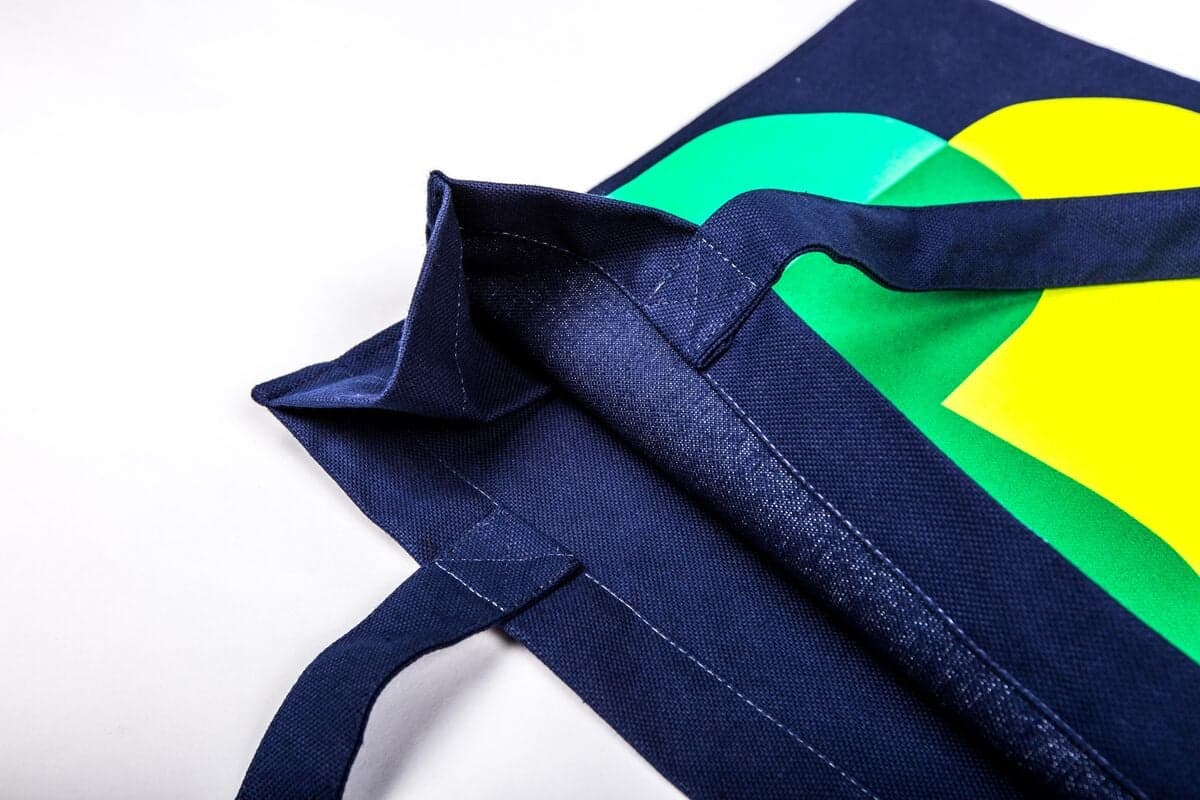
Corporate promotional gifts are branded items distributed broadly to build awareness, usually to recipients you do not know individually: trade-show giveaways, pens, notebooks, totes and bottles. Corporate gifts are intentional, given to a known recipient at a defined moment for a defined reason. Related categories, different jobs. Promotional buys reach; corporate builds relationships.
The reason this matters is money. Teams routinely buy promotional products and expect a corporate-gift result, or buy expensive corporate gifts and expect promotional reach. Both fail, and both look like the merchandise was the problem. It usually was not. The category was wrong for the objective.
What's in this guide
- The definition that actually separates them
- What promotional gifts are genuinely good at
- What corporate gifts are genuinely good at
- Side by side
- Which one is right for your objective
- Products that belong in each category
- How to budget for each
- The four expensive mistakes
- Where the two overlap
- Where to go next
The definition that actually separates them
Forget price, forget quality, forget whether there is a box. The clean line between the two categories is one question: do you know who is receiving this?
Promotional gifts go out to a group. A conference audience, a stand's foot traffic, a mailing list, everyone who walks past. You know the profile, not the person. The item is a vehicle for the logo, and success is measured in reach and recall.
Corporate gifts go to a named individual at a defined moment for a defined reason. A new hire on their first day. A customer who just renewed. A partner celebrating a milestone. The item is a vehicle for the relationship, and success is measured in what happens to that relationship afterwards.
What corporate promotional gifts are genuinely good at
Promotional products get an unfair kicking in gifting content, usually from people selling gifting. That is not our position. Promotional merchandise has a real job and does it well, which is why the category has survived every prediction of its death.
- Awareness at scale. A thousand branded totes at a conference put your name in front of a thousand people for a fraction of what a thousand gifts would cost.
- Extremely low cost per impression. A tote carried weekly for two years is one of the cheapest advertising units in existence. Nothing in the corporate-gift category competes on this metric.
- No recipient data needed. No addresses, no names, no consent headaches. You hand it over in person or leave it on a stand.
- Fast, simple logistics. One SKU, one destination, one pallet. Compared with sending 400 individual gifts to 400 addresses, this is trivially easy.
- A reason to start a conversation. On a stand, a good giveaway is a legitimate opening line.
- It works for unqualified audiences. When you genuinely do not know who is worth investing in yet, spreading a small amount widely is a rational bet.
The mistake is not buying promotional products. The mistake is buying them and then being disappointed that nobody replied to your email. That was never what they were for.
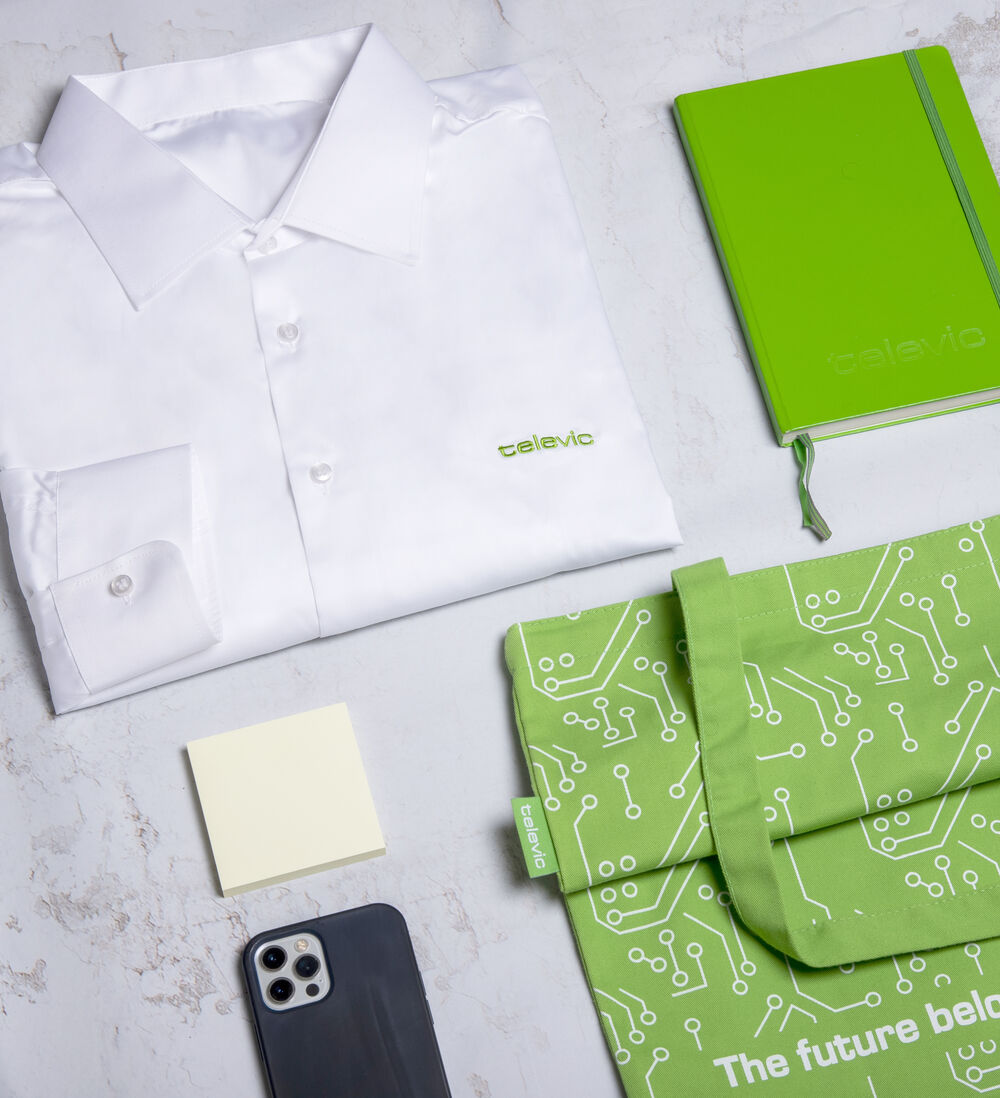
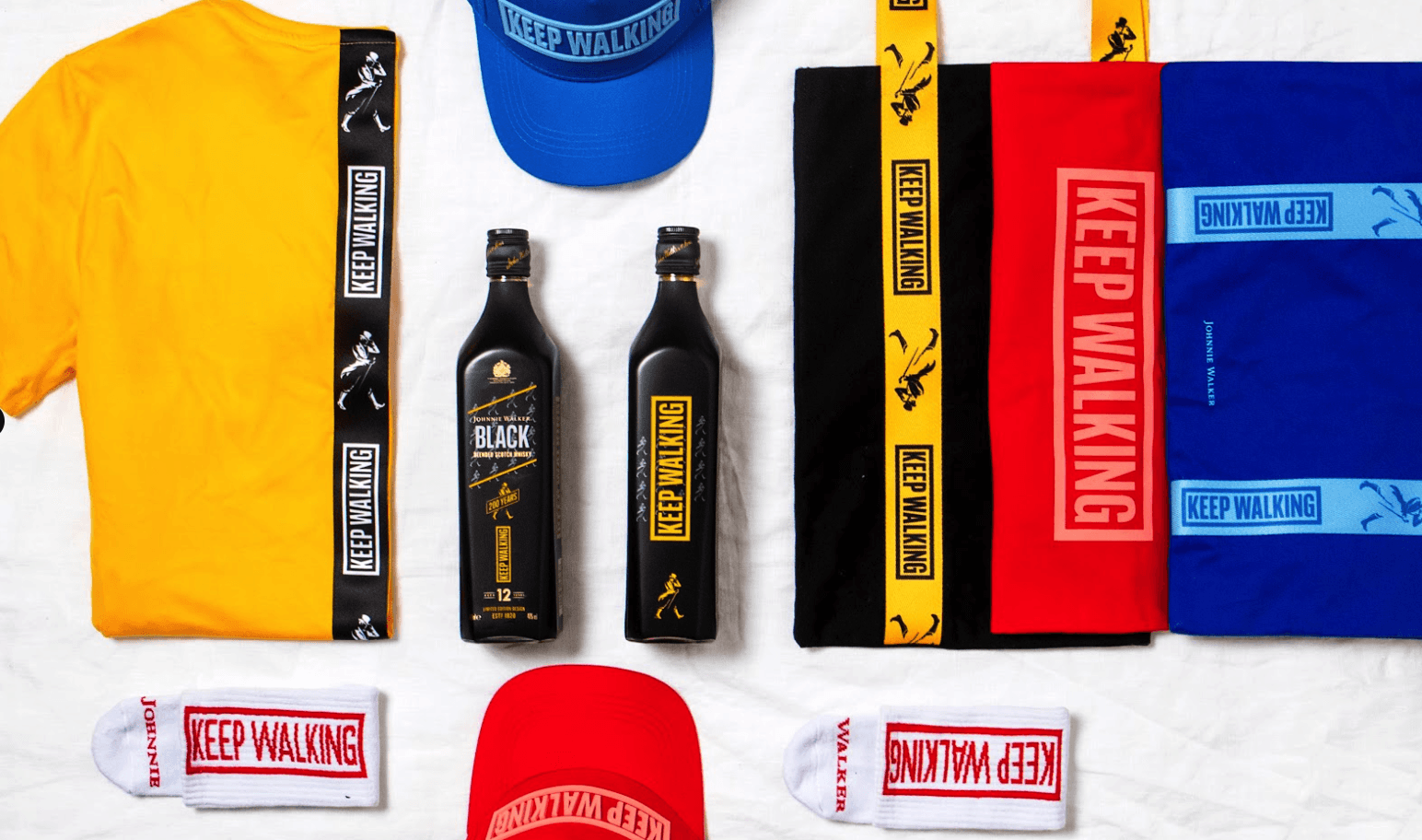
The classic promotional line-up: notebooks, totes, pens, bottles. Cheap per unit, easy to distribute, judged on reach rather than reaction.
What corporate gifts are genuinely good at
Corporate gifts do something promotional products structurally cannot: they change how a specific person feels about your company. That requires knowing who they are, why you are giving it, and when.
- Relationship, not exposure. The gift is evidence that someone thought about this person specifically.
- Timed to a moment. Onboarding, an anniversary, a renewal, a referral, a close, a recovery after something went wrong. The moment does half the work.
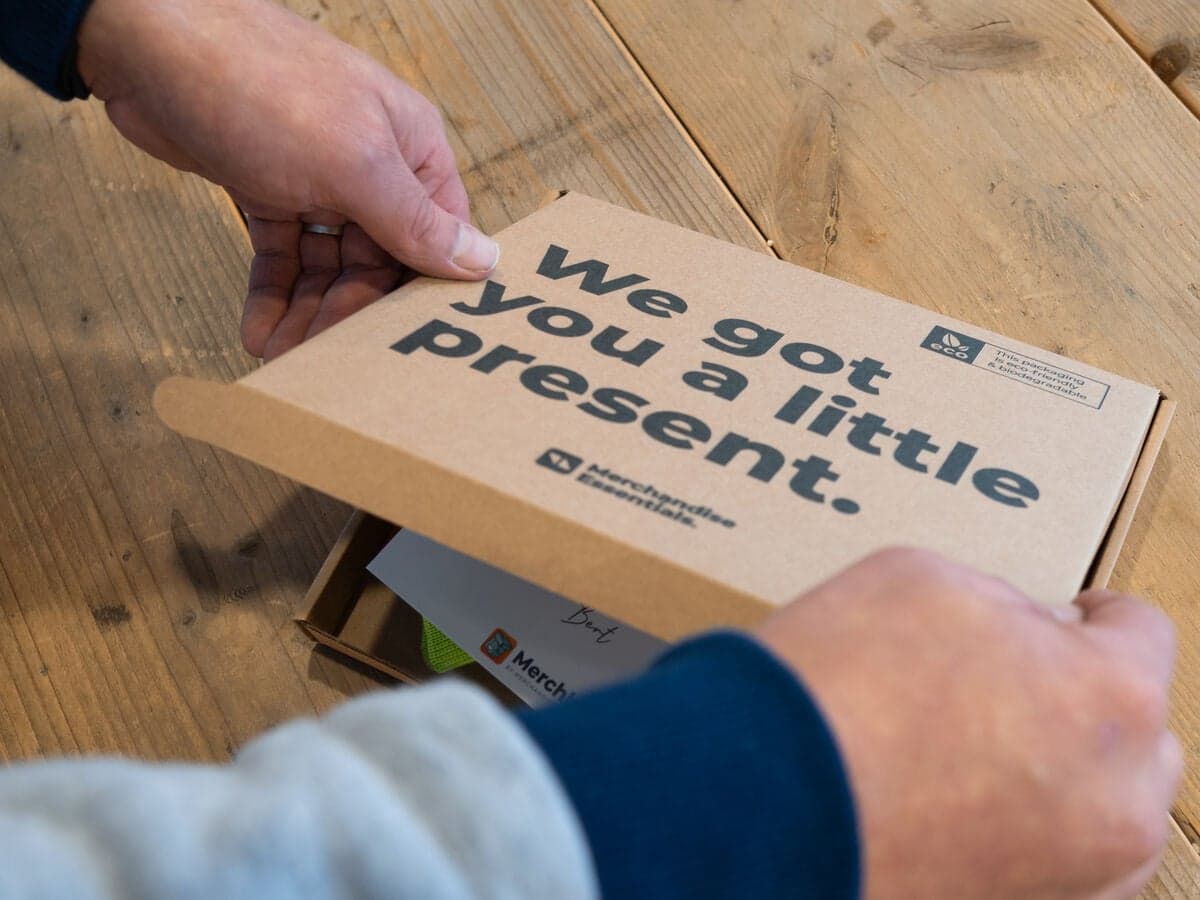
- Presentation carries the value. Packaging, an insert card, a note. A beautifully packaged $30 gift often beats a carelessly presented $80 one.
- Restrained branding. The further the recipient is from your organisation, the smaller the logo should be. Clients are the least likely people on earth to wear another company's branding.
- Measurable against a business objective. Account expansion, deal velocity, retention, referrals, employee engagement. Not "did they like it".
None of this is achievable at scale with an unnamed recipient, which is exactly why the two categories cannot substitute for each other.
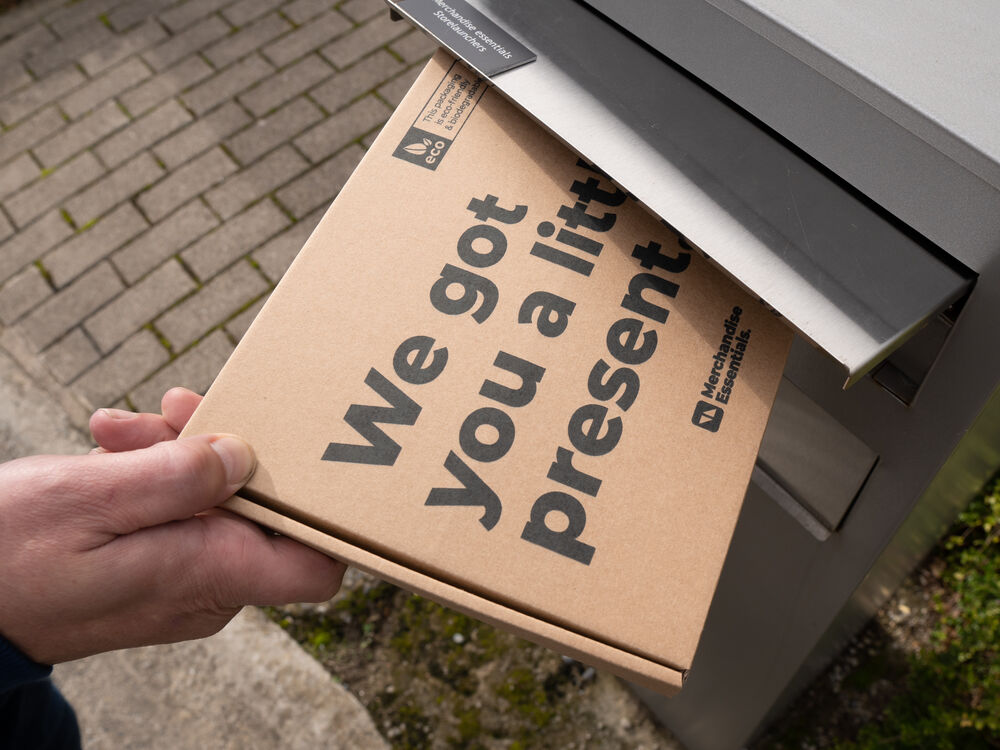
A corporate gift knows where it is going and why. That single fact changes the product, the packaging and the budget.
Side by side
| Corporate promotional gifts | Corporate gifts | |
|---|---|---|
| Recipient | Unknown, a profile rather than a person | Known and named |
| Primary goal | Awareness and recall | Relationship and a business outcome |
| Distribution | Broad, in person or in bulk | Individual, often to a home or office address |
| Typical spend per head | Low, often a few dollars | Mid to high, commonly $25 to $100+ |
| Branding | Prominent, that is the point | Subtle, so the item gets used |
| Packaging | Minimal or none | Central to the experience |
| Timing | Whenever the audience is gathered | Tied to a specific moment |
| Success metric | Cost per impression, reach, stand traffic | Deal velocity, retention, referrals, engagement |
| Personalisation | None | The note at minimum, sometimes the product |
| Fails when | You expected a personal reaction | You expected mass reach |
Which one is right for your objective
Start from the outcome, not from the catalogue. Almost every buying mistake in this category starts with someone browsing products before defining the goal.
| Your objective | Category | Why |
|---|---|---|
| Get noticed by 800 people at a conference | Promotional | You need reach, and you do not know who matters yet |
| Open a door at twelve named target accounts | Corporate | Twelve people, twelve reasons, twelve packages |
| Make new hires feel welcome on day one | Corporate | Known recipient, defined moment, high emotional weight |
| Kit out a stand team and give something away | Both | Uniform items for the team, giveaways for visitors |
| Thank 40 customers after a strong quarter | Corporate | Named list, specific reason, packaging matters |
| Seed a new market with brand presence | Promotional | Volume and visibility beat depth here |
| Recover a relationship after a service failure | Corporate | A generic item would make it worse, not better |
| Give a webinar audience something tangible | Promotional | Unqualified list, low spend per head, awareness goal |
Products that belong in each category
Some products can play either role, but most sit naturally on one side.
Natural promotional products
Tote bags, pens, notebooks, water bottles, stickers, lanyards, caps, wristbands. Cheap per unit, no sizing problem, easy to hand out, and their whole value is the logo on them. Totes in particular are the workhorse of the category because they are carried in public for years, which is where the low cost per impression comes from. If you are building this side of the programme, see custom tote bags and try a layout in the free tote bag mockup generator.
Natural corporate gifts
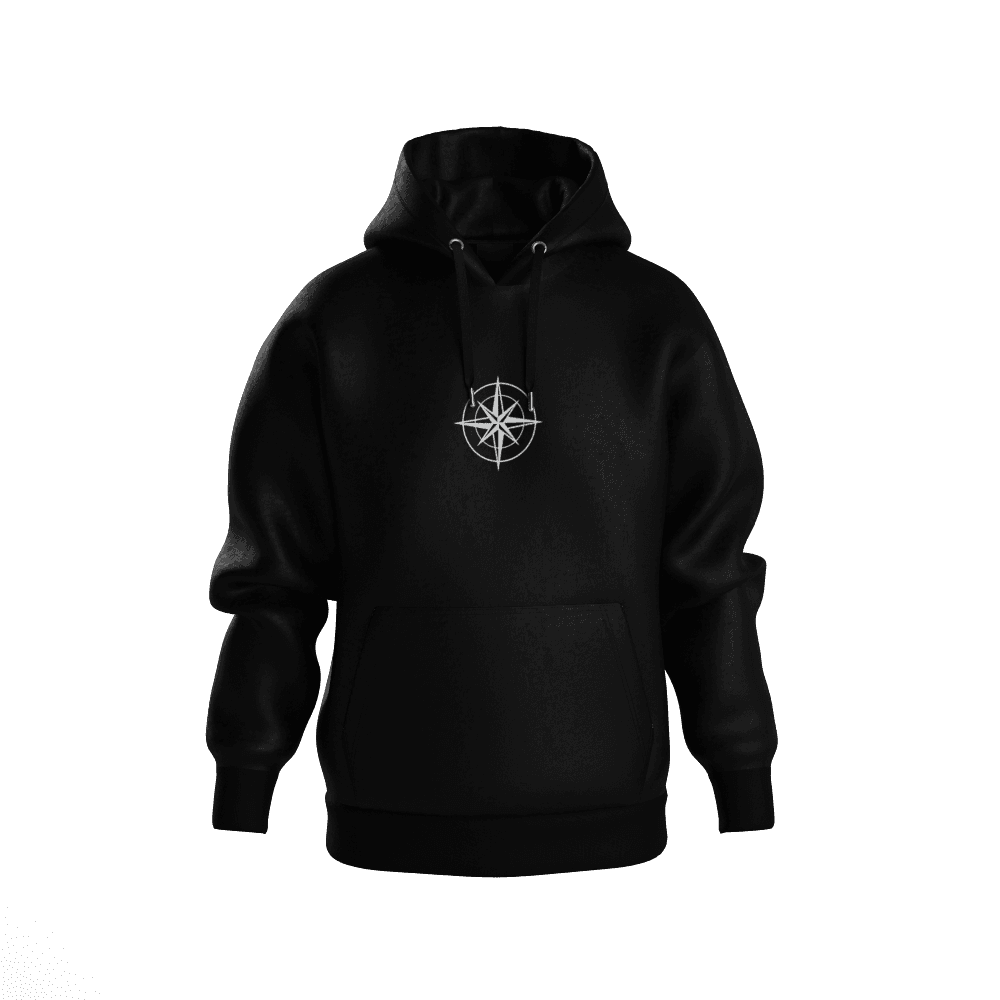
Premium backpacks and weekend bags, quality knitwear, desk and tech accessories, curated gift boxes, and anything with real construction detail. These reward being unwrapped, which is why packaging matters so much on this side. The full range is in corporate gift ideas and the premium end is covered in luxury corporate gifts.
The product that works in both
Custom socks are the one honest exception. At a stand they are a giveaway people actually keep, and in a box with two other pairs they become a proper gift. No sizing problem, universal appeal, and they scale across budgets. See the custom socks guide, browse custom socks, or preview a design in the free sock mockup generator.
How to budget for each
The two categories should be budgeted with different arithmetic, and mixing the two formulas is where a lot of spend quietly disappears.
Promotional budgets work on cost per impression. Take the unit cost, estimate how many times the item will realistically be seen over its life, and divide. As a worked example: a $4 tote carried twice a week for two years and seen by even a handful of people each time works out at fractions of a cent per impression. That number is what justifies the volume. The corollary is that quality still matters, because an item that falls apart in three months takes the impressions with it.
Corporate gift budgets work on outcome value. The question is not "what is the cheapest acceptable gift", it is "what is this relationship worth, and does the gift materially support the objective". As a rough guide: around $25 buys one or two genuinely good products, enough for a thoughtful gift. Around $50 is the sweet spot, where premium boxes, coordinated multi-product sets, backpacks and jackets become possible. Above $100 you stop buying more and start buying refinement: better materials, deeper customisation, luxury packaging, exceptional finishing.
There is a floor worth naming. For seasonal gifting, going below roughly $15 per recipient is where the gift stops reading as a gift. If that is the budget, rethink the concept rather than buying a cheaper version of the same idea. The detailed version of this is in corporate gifts under $50 and in bulk.
The four expensive mistakes
- Sending promotional stock as a gift. Grabbing leftover merch, boxing it and calling it a gift. Recipients spot it instantly. The recipient should feel the company created something for them, not cleared warehouse shelves.
- Buying gift-grade products for mass distribution. Blowing a quarter's budget on 60 premium items handed to strangers at a stand. The reach is too small to justify the spend and the personal element is missing anyway.
- Putting a huge logo on a corporate gift. The bigger the logo, the less likely people are to use the product. On the promotional side a big logo is the product; on the gifting side it kills it.
- Measuring the wrong thing. Judging a promotional campaign by reply rate, or a gifting campaign by units distributed. Each will look like a failure against the other's metric.
Where the two overlap
The clean split is useful, but real programmes blur at the edges and it is worth being honest about where.
Events sit in the middle. A trade show usually needs both: uniform apparel for the team, giveaways for general traffic, and a small number of proper gifts held back for the meetings that actually matter. That mixed model is what most stands should be running, and it is covered properly in event merchandise.
Internal merchandise is its own thing again. Employees are part of the company, so they are comfortable with visible branding in a way clients never are, and an internal range is more like a collection than either a giveaway or a gift. That is company swag, and the self-serve version of it is a company swag store.
A promotional item can become a gift with packaging. This is the cheapest upgrade available. The same tote, socks or bottle, put in a proper box with an insert card and a note, addressed to a named person, moves categories. The product barely changed. The intent did, and the intent is what the recipient responds to. Our short version of this: brand less, package more.
Where to go next
If you have decided you are in gifting territory, start with the corporate gifts hub and then go to the page for your specific audience. Employees are covered in corporate gifts for employees, clients in corporate gifts for clients, and thanking customers in customer appreciation gifts. Seasonal gifting has its own timeline and rules in corporate Christmas gifts.
If you are on the branding question rather than the category question, branded corporate gifts covers the difference between decorating an existing product and building a custom one, and corporate gifts with logo covers placement and size. For gifts that people keep using rather than bin, see eco friendly corporate gifts. And if you are choosing a supplier for either side of this, corporate gifting companies is the buyer's guide.
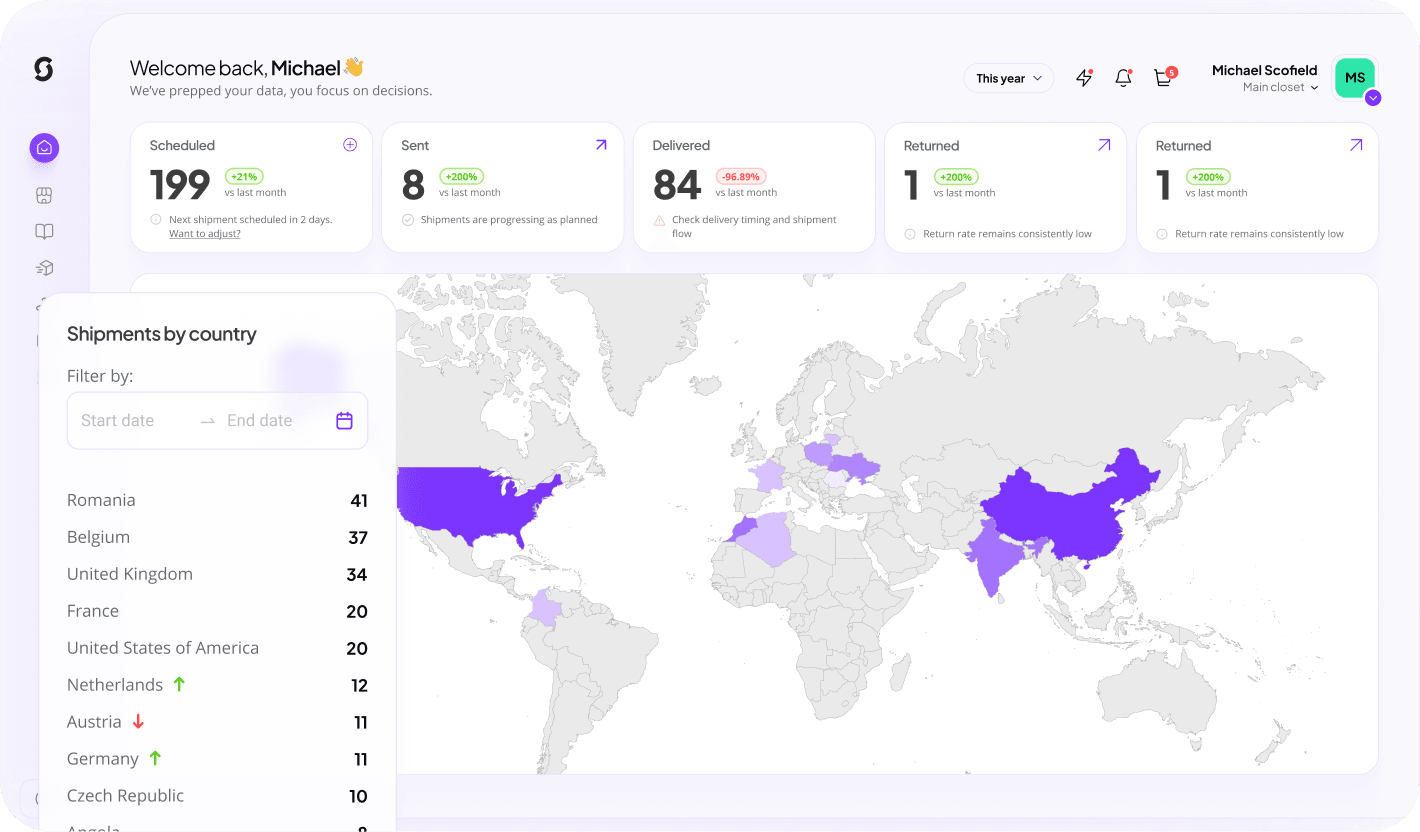
When you are ready to produce something, the catalog covers both sides of this split, and the platform handles custom production, packaging, warehousing and global delivery so a promotional run and a gifting campaign can come out of the same system. See how it works for the mechanics.
About this article
Promotional runs and gifting campaigns, one platform
Custom production, premium packaging, global DDP shipping and campaign automation. Create a free account and design either side of your programme in your brand.
Start your campaign