
Event merchandise is the branded products a company hands out or sends around an event, conferences, trade shows, corporate events and festivals, to build awareness, start conversations and stay memorable afterwards. The merch that works is unique, high-quality or genuinely useful, with restrained branding. The strongest 2026 approach is a three-tier model: affordable volume giveaways for general booth traffic, more distinctive gifts for visitors who match your ideal customer profile, and tailored gifts for the strategic accounts you most want. Make the biggest, most useful bag at the event so it travels the floor as a mobile ad, capture every recipient with a redeem page or scan so you can measure ROI, and produce less but better. Forecast for the next three to six months, bulk order, store it, and ship to each event in one to two days.
One note before we start: this guide is for companies running merch at conferences, trade shows, corporate events and festivals. The whole thing rests on one idea. Event merch succeeds when people keep, use or talk about the product after the event, and fails when it is chosen only because it is cheap, easy to distribute or expected at a booth. Everything below is how to land on the first side of that line.
Keep, use or talk about
Event merch has one job: give people a reason to keep, use or talk about the product after the event. Get that and the merch keeps working for weeks and months, on desks, in bags and in conversations. Miss it and you have spent budget on something that goes straight in the bin on the way out.
It rests on three principles: uniqueness, quality and usefulness, with tasteful branding that connects the product to the company without feeling like disposable advertising. The failure mode is always the same, choosing merch because it is cheap, easy to distribute or simply expected at a booth. Those are reasons for you, not reasons for the recipient.
Event swag that people keep
There are three kinds of product people actually keep. Aim for at least one of them.
- Unique products. Something a recipient has never seen creates attention and recall. It is the hardest route, because it needs creativity, product development, customisation, prep time and a real understanding of the audience. But it lands harder than anything else.
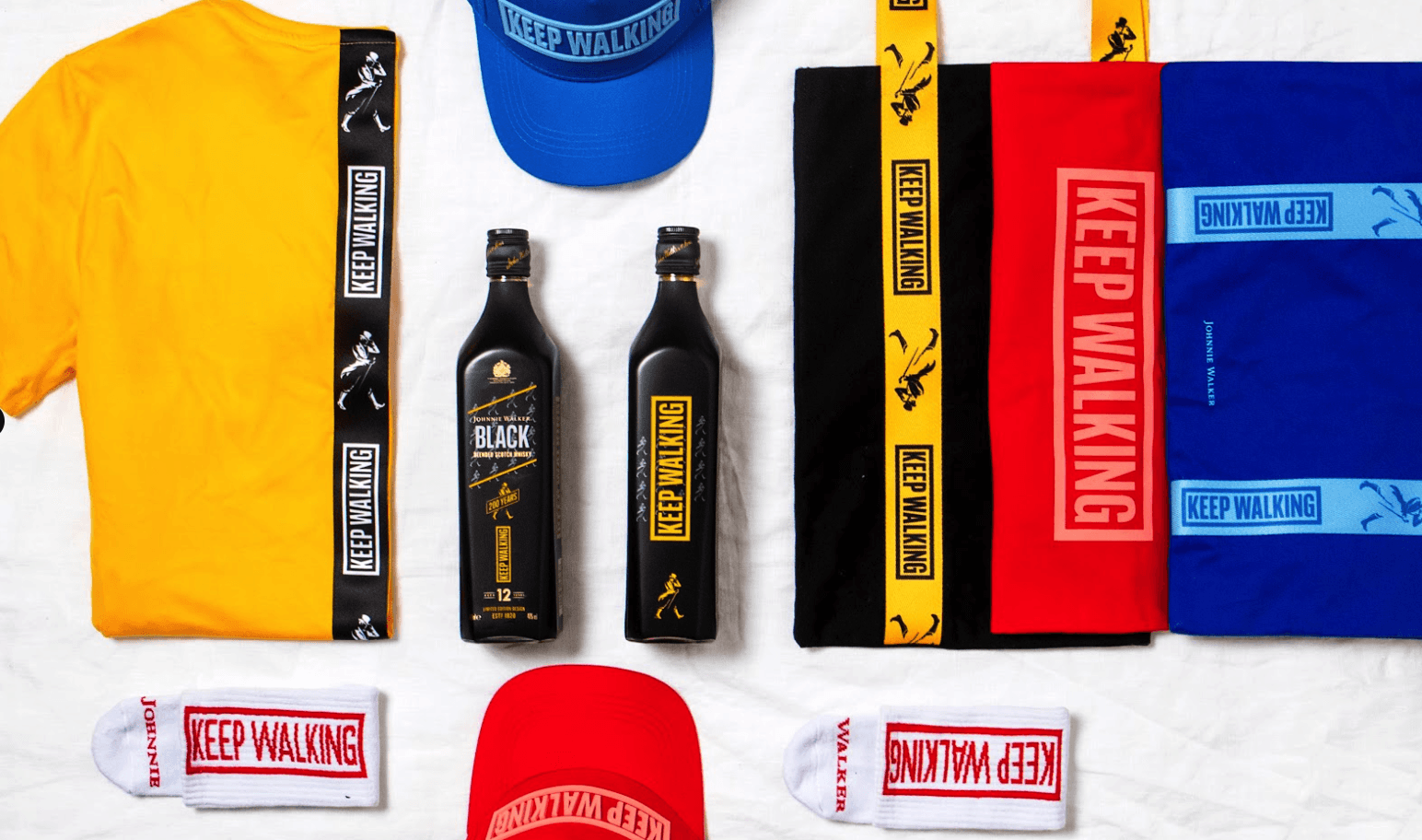
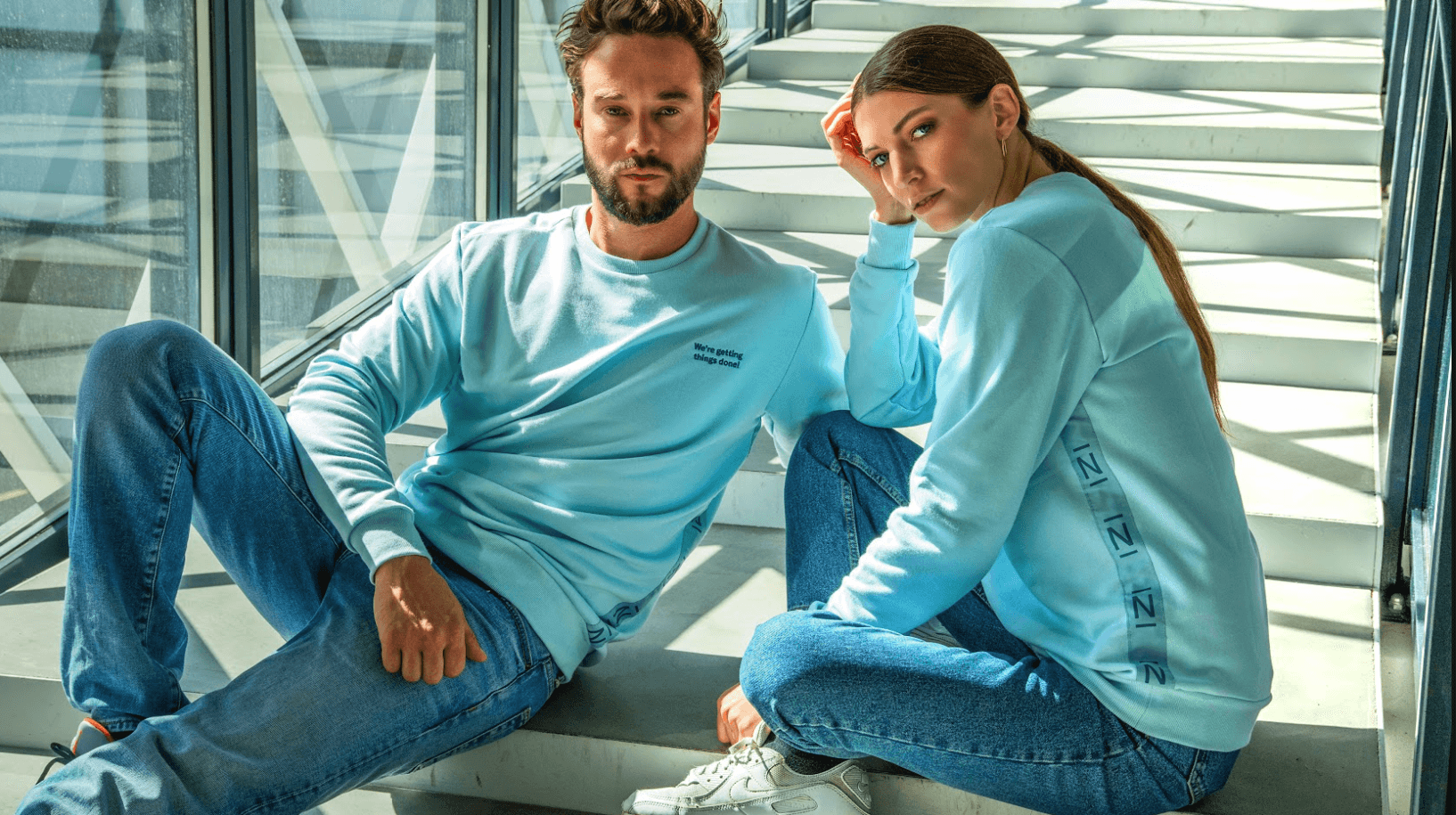
- Beautiful, high-quality familiar products. Well-designed socks, a premium tee, an attractive mug, a durable bag, a high-quality bottle. Familiar items done genuinely well, so people want to keep them.
- Useful products. Desk and wireless chargers, laptop dongles, travel adapters, tech accessories and practical travel products. People genuinely use them, which is the whole point.
One caveat runs across all three: even a useful product gets binned if it is drowned in branding. Keep the branding restrained and the product earns its place.
The 2026 three-tier formula
The strongest way to plan event merch in 2026 is in three tiers, matched to who you are talking to. Nobody gets ignored, qualified leads get more value, strategic accounts feel recognised, and your budget tracks commercial importance instead of being smeared evenly across everyone.
| Tier | Who it's for | What it looks like |
|---|---|---|
| Tier 1 — volume giveaways | General booth traffic | Affordable, easy to distribute, memorable, available in volume. Goal: basic awareness and recall later |
| Tier 2 — ICP-match gifts | Visitors who match your ideal customer profile | More distinctive and valuable, handed at the booth or sent afterwards via a redeem page or lead-capture flow. A stronger reason to remember and continue the conversation |
| Tier 3 — strategic gifts | Pre-identified target accounts, known attendees, partners | Highly tailored, tied to a clear commercial objective. Prepared in advance for the accounts you most want |
The model is the backbone of a modern event programme. The rest of this guide hangs off it: the bag tactic feeds Tier 1, conference and attendee gifts are Tier 2, and the pre-event strategic kit is Tier 3.
The biggest, most useful bag at the event
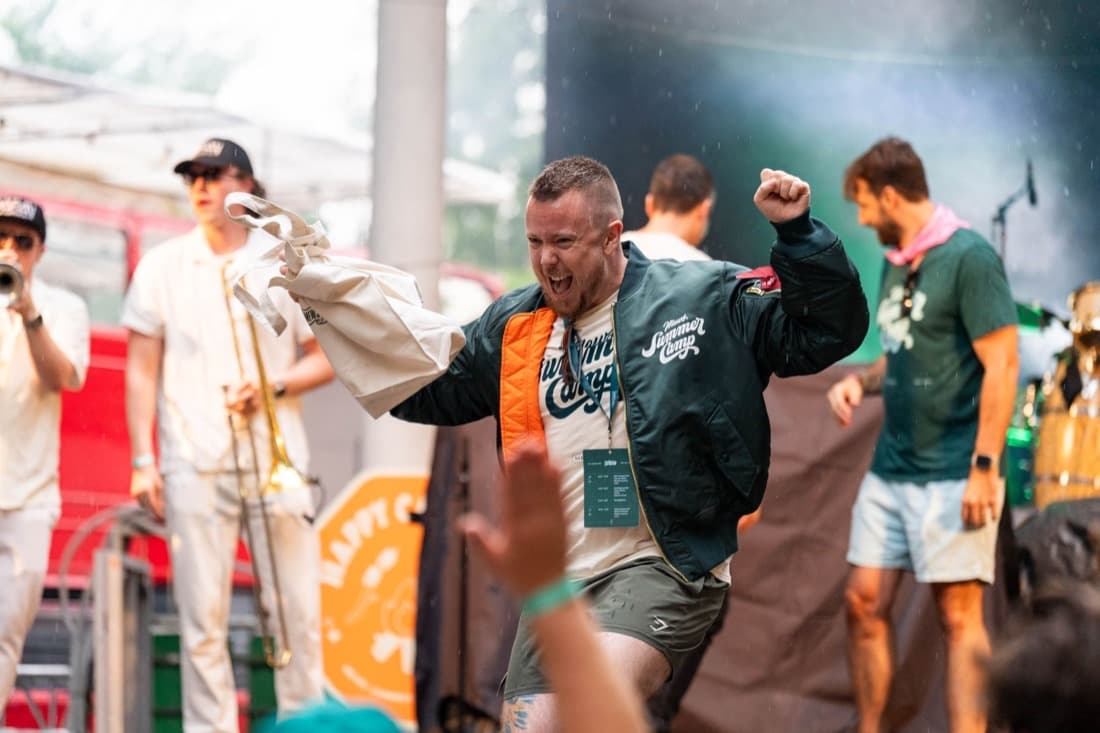
Here is the single best floor tactic: make the biggest, most useful bag at the event. Visitors stuff every other piece of merch they collect into the largest, best bag they get. So a premium tote, a travel bag or an oversized carrier travels the whole venue as a mobile ad, with your brand on it, carried by the attendee for free.
The alternative is a visually striking item, an oversized plush, a large branded object, a novelty or a distinctive wearable, to pull people in. It works, but it also attracts freebie-seekers, so keep a way to qualify visitors and protect your higher-value products from people who will never buy. The bag is the safer, harder-working version of the same idea.
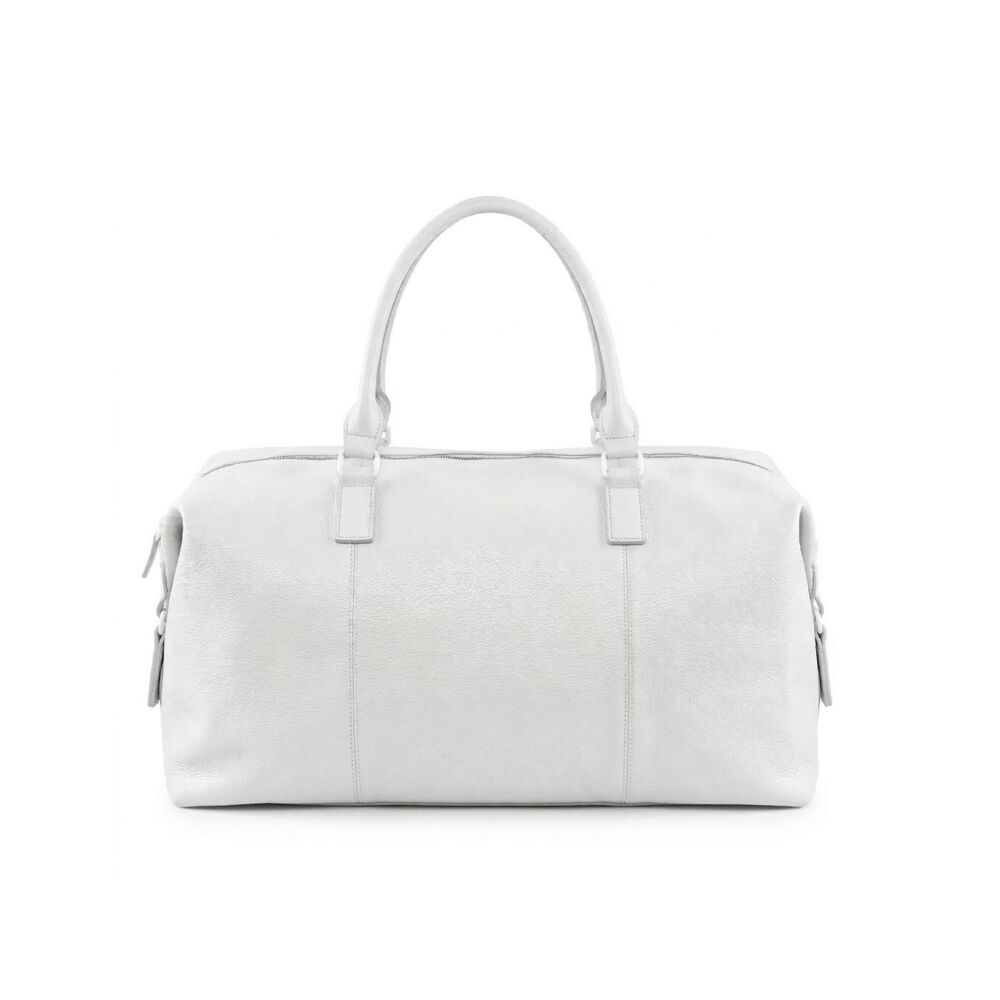
The biggest, most useful bag wins the floor. A premium travel bag, like the fully custom bags with a luggage-attach travel strap Sunday built for Dilo, stays useful long after the event and keeps the brand visible.
Conference giveaways
At a conference the audience is more qualified than at a general show. People are there for a topic, an industry or a community, which means they are more likely to match your target. If they do, spend more per recipient on something more relevant, useful and substantial. Conference giveaways are where the Tier 2 gift earns its keep: a quality item that gives a real reason to remember the brand and continue the conversation.
Conferences are also the easiest place to optimise for good conversations rather than raw distribution. Pair a premium giveaway with something you can send afterwards via a redeem page, and you turn a hallway chat into a tracked follow-up. That is conference swag working as a pipeline tool, not a sticker dispenser.
Trade show giveaway ideas
Trade shows are about presence. The goal is to make the brand pop and draw people to the booth for a conversation, so the merch leans on volume plus a few attractive, attention-grabbing items. Trade show swag does two jobs at once: the eye-catching item pulls people in, and the volume giveaway sends them off carrying your brand.
- An attractive hero item at the front of the booth to draw the crowd.
- Volume giveaways that are cheap to distribute but still worth keeping, so the brand travels the floor.
- The biggest, most useful bag as the workhorse that carries everyone else's merch too.
- A Tier 2 gift held back for visitors who qualify, captured for follow-up rather than handed to everyone.
For a deeper list of trade show giveaways and conference swag that pulls a crowd without burning premium inventory, plan your event merch ideas around the keep-use-talk test.
Trade show booth giveaways
Booth traffic is the most mixed audience you will face: students, suppliers, temp staff, general visitors, freebie collectors and genuinely qualified prospects, all in the same queue. So trade show booth giveaways need to be affordable and widely distributable, the kind of thing you can give freely without burning premium inventory on someone who will never buy.
Good booth-level items are cheap but not nasty: AirTag covers, electrolyte sachets, affordable socks, small tech accessories, and unusual-but-inexpensive items that spark a second look. The trick is to keep the premium gifts off the open table and reserve them for visitors who qualify. Volume at the front, value held back.
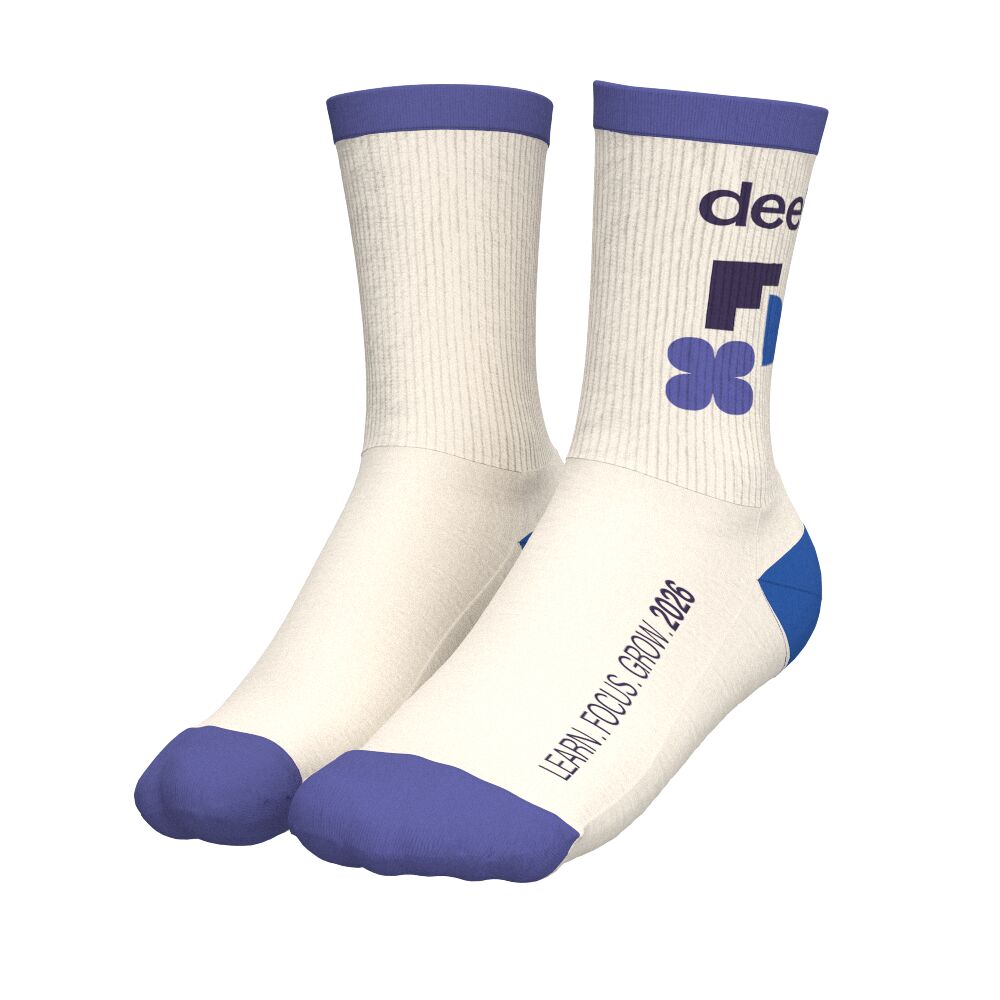
Collectible, well-designed socks, like the Deel sock designs that drove repeat engagement, are a beautiful-familiar-product giveaway people actually keep. Familiar item, genuinely good execution.
Best event swag
The best event swag is never a single product, it is the right product for the right tier and the right audience. But if you want a shortlist that reliably gets kept and used: a premium bag, a high-quality bottle, well-designed socks, a durable backpack, a good charger or travel adapter, and a genuinely unique item when you have the runway to develop one. Event goodies that land all share the keep-use-talk test, and they all keep their branding restrained.
Merch by event type
The right merch shifts with the event. Match the strategy to the format.
| Event type | Audience | Strategy |
|---|---|---|
| Trade show | Mixed, high-volume | Volume plus a few attractive items so the brand pops and draws people to the booth for a conversation |
| Conference | Qualified, there to learn | Optimise for good conversations: premium gifts and items you can send afterwards via a redeem page |
| Corporate event | People you know, invited prospects, internal teams | Go heavier on branding and on the experience: a nice kit, even a pre-event kit |
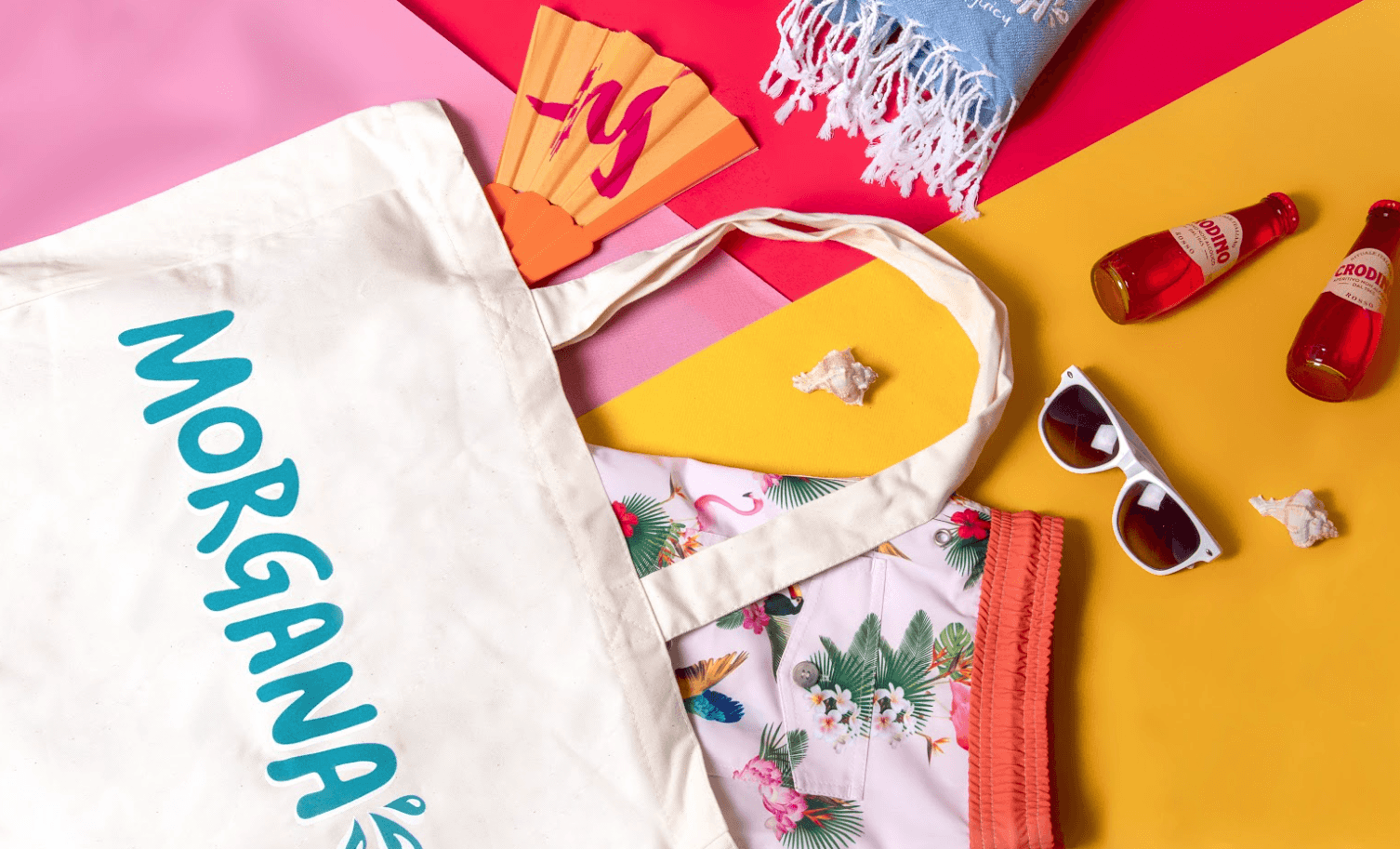
| Festival | B2C, general public | Festival-practical items, caps, hand fans, sunscreen, for real-world brand reach |
Attendee gifts deserve their own note. They should be more premium, a quality bag, a backpack, a charger, a travel bag or a tech pouch, practical long-term items so the recipient remembers the event and the brand every time they use them.
Four hero examples
Four Sunday projects show the principles in practice.
Dilo: the travel bag that keeps working
Dilo ordered fully custom bags with a luggage-attach travel strap. Practical, distinctive and useful in travel, the bag delivers ongoing post-event visibility long after the show closes. It is the biggest-most-useful-bag idea done as a genuinely good product.
Cloudflare: audience-specific collections
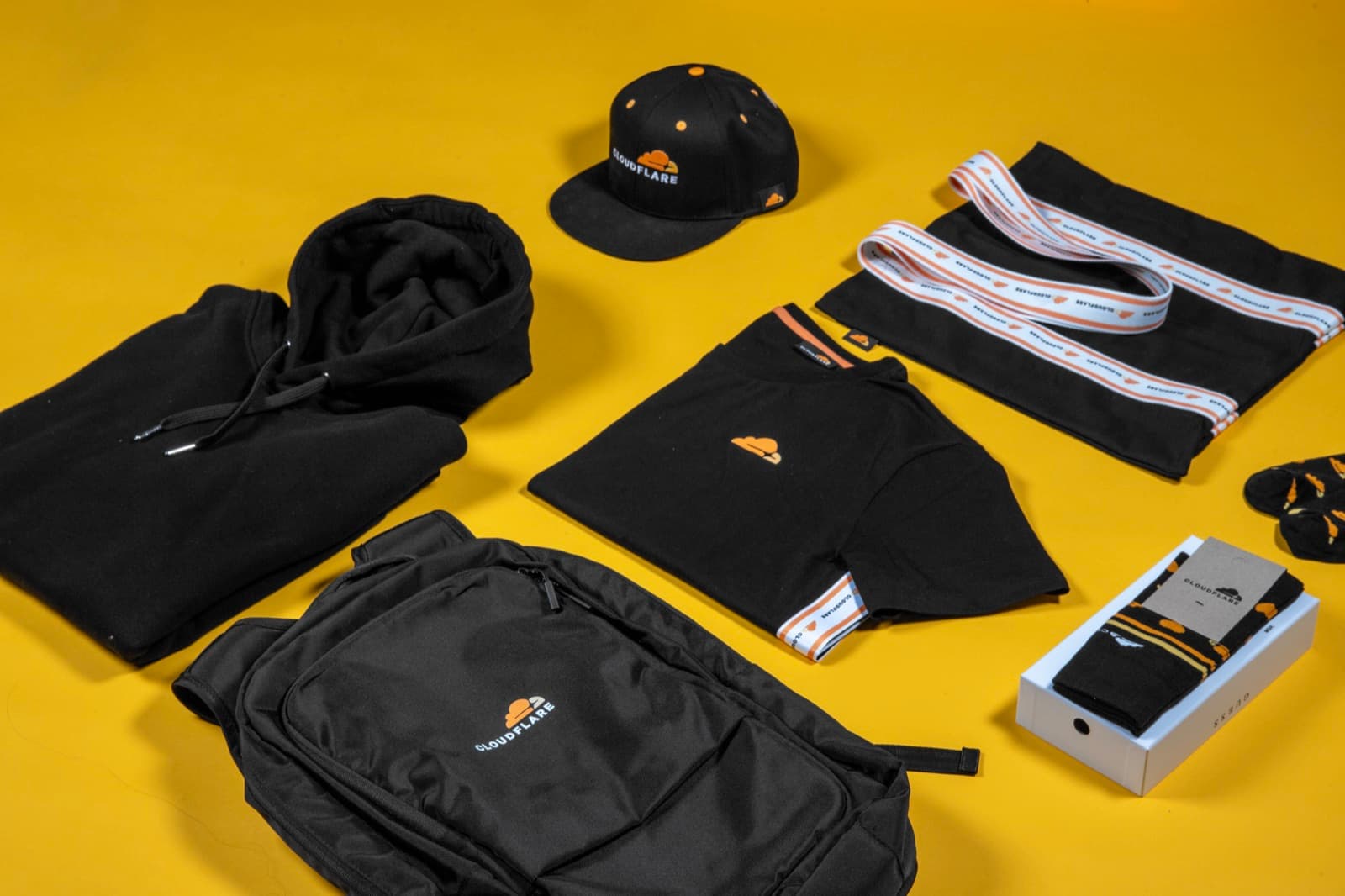
Cloudflare built collections tuned to the audience, including a gaming-event collection that matched gaming culture. It worked precisely because it was not generic. Merch that speaks the audience's language gets kept; merch that ignores it gets binned.
Deel: a global, collectible collection
Deel ran a global collection with collectible sock designs and products that created repeat engagement, and the bags were popular and highly visible. Collectibility turns a familiar item into something people seek out, which is the beautiful-familiar-product principle at scale.
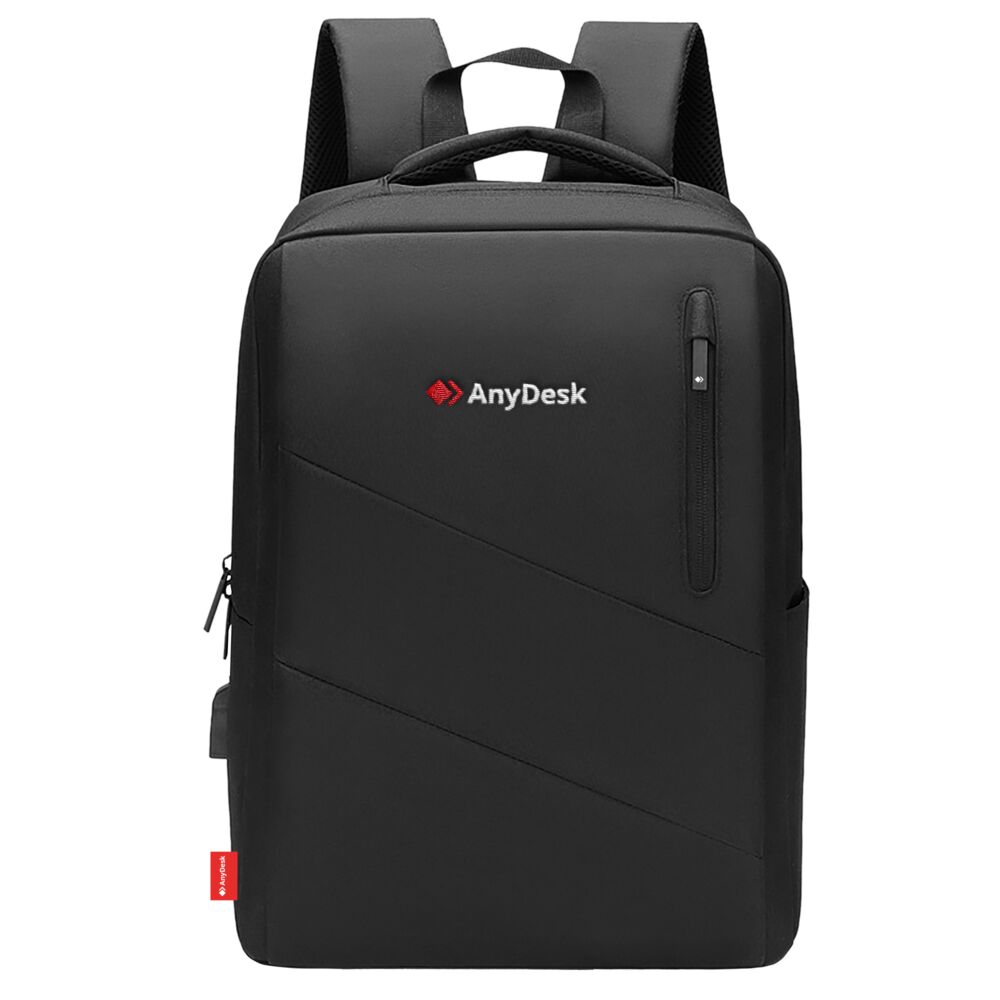
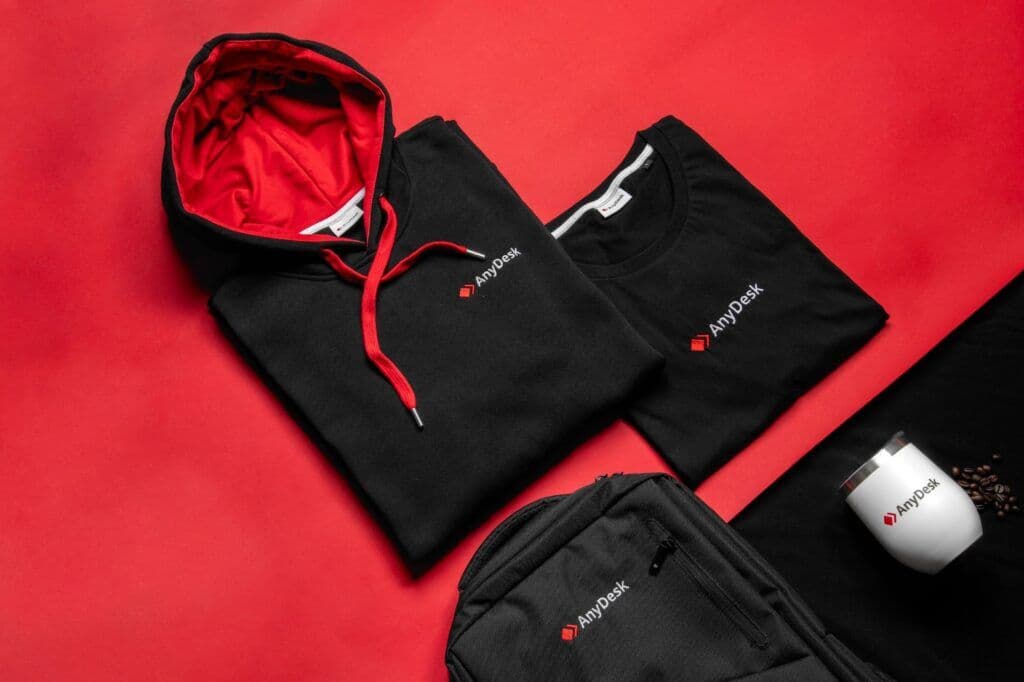
For partner events, AnyDesk went more premium, backpacks, tumblers and co-branded items, because partner audiences are highly relevant and commercially connected. Match the spend to the relationship.
AnyDesk: premium partner-event merch
For partner events, AnyDesk went more premium, with backpacks, tumblers and co-branded items, because partner audiences are highly relevant and commercially connected. When the audience is that valuable, the merch budget should reflect it. This is Tier 3 thinking applied to a whole event.
Sustainable event merch
Sustainable event merch works on two levels, and the first matters more than most people think.
First, give people products they will actually use. This is the single most important sustainability decision you make. A kept-and-used product beats a "technically sustainable" one that gets binned. Ask the honest questions: is it useful, is it well-designed, is it relevant to the audience, would they keep it, is the branding wearable and acceptable? If the answer is no, no certification saves it.
Second, control quality and materials. Material quality, production standards, durability, certifications, packaging, transport and sourcing all count. The right strategy is usually produce less, but better: fewer high-quality products that genuinely get used beat large volumes of cheap merch, on both brand impact and credible sustainability.
Event merchandise on a budget
The cheap-versus-premium split is audience-driven, not a fixed ratio. Let the event decide.
- High volume, no real ICPs at the event? Lean mainly to cheap giveaways and volume. There is no point spending premium budget on a room that will not buy.
- High-stakes event? Reduce the cheap stuff, or cut the very-low tier entirely, and shift the budget toward premium. Fewer, better items aimed at people who matter.
On a genuinely tight budget, the smartest move is often to spend a bit less overall, buy a smaller quantity of premium items, and run a raffle, rather than giving everyone something cheap that nobody values. One great prize beats a hundred forgettable ones.
The cringe list: what not to give
Some items quietly damage the brand. Skip them.
- Stress balls. Don't.
- Pens and notebooks, only if they are genuinely useful, and never as the main gift. A booklet to take home from a speaking event can work as a secondary item, but that is the ceiling.
- Flimsy, cheap tote bags, the bad card or paper-bag type people throw away. Skip them entirely.
The better move is the one from the budget section: spend a bit less overall, buy a smaller quantity of premium items and run a raffle, instead of handing everyone something cheap that nobody values. Quality over coverage.
Measuring ROI: capture the recipient
The key to measurable event merch is to lock the person when you hand an item out. Capture them with a landing page, a redeem page or a scan. Then you can check conversion rates later, and the platform can automatically follow up, did they like the item, do they like the brand, are they interested. As long as you track every item handed out, ROI is easy to measure, because you know exactly who received what. The untracked handouts are the only ones you cannot measure.
This is also why timing beats handing things out on the floor. A pre-event kit sent to booked meetings and VIPs pulls them to the booth. A post-event send rewards captured, qualified leads and lets you track every recipient. Sometimes it is better to ship the gift before or after the event than to hand it out on the floor at all.
How Sunday makes event merch executable
Executing event merch well needs exactly the infrastructure Sunday is built on, so the tie-in is practical rather than a hard sell. The flow is one line: forecast, then bulk, then store, then kit, then redeem, then ship, then track.
- Forecast the merch you will need for the next three to six months of events.
- Bulk order it in one run, for a single bulk discount and a lower price than rush-producing per event.
- Store it at Sunday, so nothing depends on a tight per-event deadline.
- Kit on demand and ship to each event in one to two days, which removes the deadline stress entirely.
- Redeem pages and lead capture turn Tier 2 and Tier 3 gifts into tracked follow-ups: captured at the booth and sent afterwards, or sent before the event as a pre-event kit to pull booked meetings and VIPs in.
- Global distribution and tracking make the three-tier model operable across every market, with every recipient measurable.
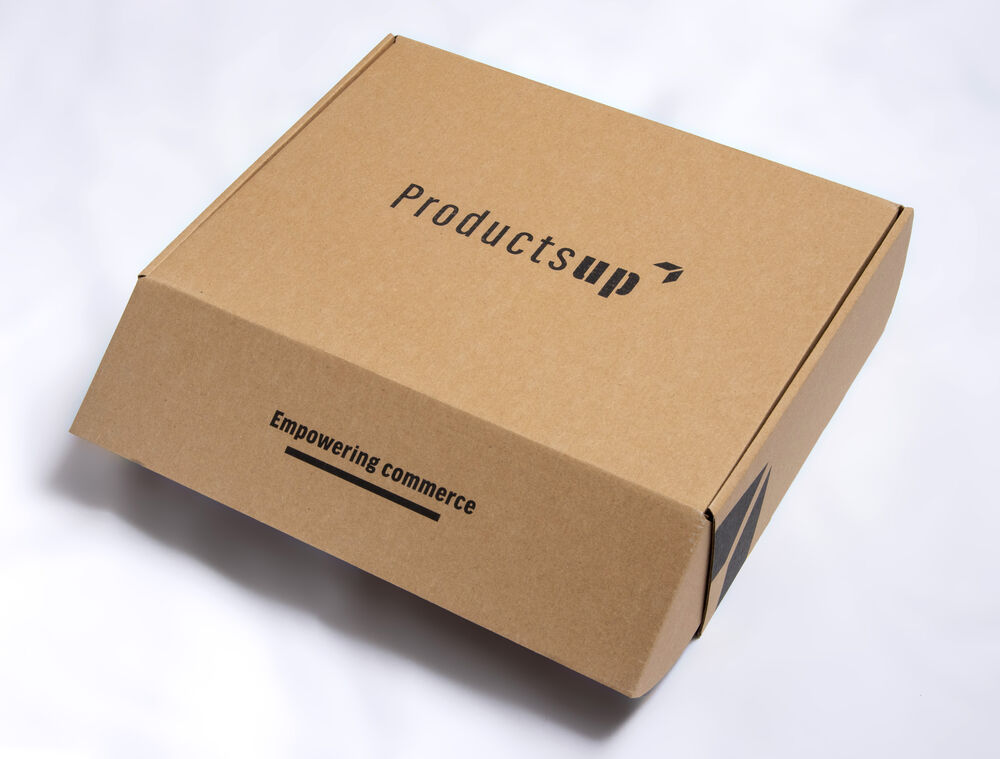
Forecast, bulk order, store, then kit on demand and ship to each event in one to two days. Bundling merch per quarter removes the deadline stress and lowers the per-unit price versus rush production.
That is the whole point. The three-tier strategy, the bag tactic, the capture-everyone ROI model, none of it works without the engine underneath. Sunday is that engine: forecast to bulk to store to kit to redeem to ship to track. Browse the catalog, see how it works, and look at distribution for the kitting, storage and shipping side. Running a food activation, tasting or festival as part of the event? The custom apron is event merch too, and you can preview branded bags and totes in your colours with the free tote bag mockup generator or an apron mockup.
Build your event merch programme with Sunday
Forecast, bulk order, store, kit, ship in 1 to 2 days and track every recipient. Create a free account and design your event merch with live pricing in 30 seconds.
Get free designsEvent merchandise: questions answered
What makes event merchandise actually work?
It has to give people a reason to keep, use or talk about it after the event. The merch that works is unique, high-quality or genuinely useful, with restrained branding that connects it to the company without feeling like disposable advertising. It fails when it is chosen only because it is cheap, easy to distribute or expected at a booth, because those are reasons for you, not for the recipient. Aim for at least one of the three keepers: a unique product, a beautiful well-made familiar product, or a genuinely useful one.
What is the three-tier event merch model?
It matches merch to who you are talking to. Tier 1 is affordable volume giveaways for general booth traffic, for basic awareness and later recall. Tier 2 is more distinctive, valuable gifts for visitors who match your ideal customer profile, handed at the booth or sent afterwards via a redeem page. Tier 3 is highly tailored gifts for pre-identified strategic accounts, known attendees and partners, tied to a clear commercial objective. The model means nobody is ignored, qualified leads get more value, strategic accounts feel recognised, and budget tracks commercial importance.
What are the best trade show booth giveaways?
Booth traffic is a mixed audience, students, suppliers, temp staff, general visitors, freebie collectors and qualified prospects, so booth giveaways should be affordable and widely distributable: AirTag covers, electrolytes, affordable socks, small tech accessories and unusual-but-cheap items. The key is to keep premium gifts off the open table and reserve them for visitors who qualify, so you do not burn high-value inventory on people who will never buy. Pair that with the biggest, most useful bag, which travels the floor carrying everyone else's merch and your brand.
How do I make event merch more sustainable?
The single most important decision is to give people products they will actually use, because a kept-and-used product beats a technically sustainable one that gets binned. Ask whether it is useful, well-designed, relevant to the audience, and whether the branding is wearable and acceptable. Then control quality and materials: production standards, durability, certifications, packaging, transport and sourcing. The right strategy is usually produce less but better, fewer high-quality products that genuinely get used beat large volumes of cheap merch on both brand impact and credible sustainability.
How do you measure event merch ROI?
Capture the recipient when you hand an item out, via a landing page, a redeem page or a scan. Once every item is tracked, you know exactly who received what, so you can check conversion rates later and the platform can automatically follow up on whether they liked the item, like the brand and are interested. Untracked handouts are the only ones you cannot measure. It also helps to ship before or after the event: a pre-event kit drives booth visits, and a post-event send rewards captured, qualified leads while keeping every recipient measurable.
What event merch should I avoid?
Skip stress balls entirely. Use pens and notebooks only if they are genuinely useful, and never as the main gift, though a booklet to take home from a speaking event can work as a secondary item. Avoid flimsy, cheap tote bags, the bad card or paper-bag type that people throw away. The better move on a tight budget is to spend a little less overall, buy a smaller quantity of premium items and run a raffle, rather than giving everyone something cheap that nobody values.
How should event merch differ by event type?
Trade shows reward volume plus a few attractive items so the brand pops and draws people to the booth. Conferences have a more qualified audience there to learn, so optimise for good conversations with premium gifts and items you can send afterwards. Corporate events are people you know or invited prospects, so go heavier on branding and experience, even a pre-event kit. Festivals reach a B2C crowd, so use festival-practical items like caps, hand fans and sunscreen for real-world reach. Attendee gifts should be more premium and practical for the long term.
How do I handle event merch on a tight timeline?
Plan ahead, because the special and custom items need runway. Sunday's standing advice is to bundle merch per quarter or half-year: forecast the merch you will need for events over the next three to six months, order it in bulk for one discount, and store it at Sunday. Then Sunday ships it to each event in one to two days. The net effect is far safer deadlines, much less stress, and a lower price than rush-producing per event, plus on-demand kitting and redeem pages for tracked follow-up.