Most companies treat trade show booths as a cost of doing business. You show up, you look professional, you hand out pens, you hope someone remembers your name in Q3.
We treated ours as a system to be engineered. Nine square metres, five months of prep, one very specific bet on what would make people stop walking.
Two weeks after Money20/20 Europe closed, here's what that bet returned:
- 753 leads
- 240 qualified
- 42 meetings booked
- 4 serious projects opened
- 1 signed new customer
- A €37,000 reorder from an existing client
And Money20/20's own booth-traffic data, measured independently via floor beacons, not our numbers, put us 32nd for exposure per unit area and 19th for engagement per unit area, out of more than 400 sponsors on the floor. For a 9m² stand against booths several times our size, that's not a rounding error. That's the strategy working.
This is the full teardown: what we built, why, and what any event manager can take from it regardless of budget.
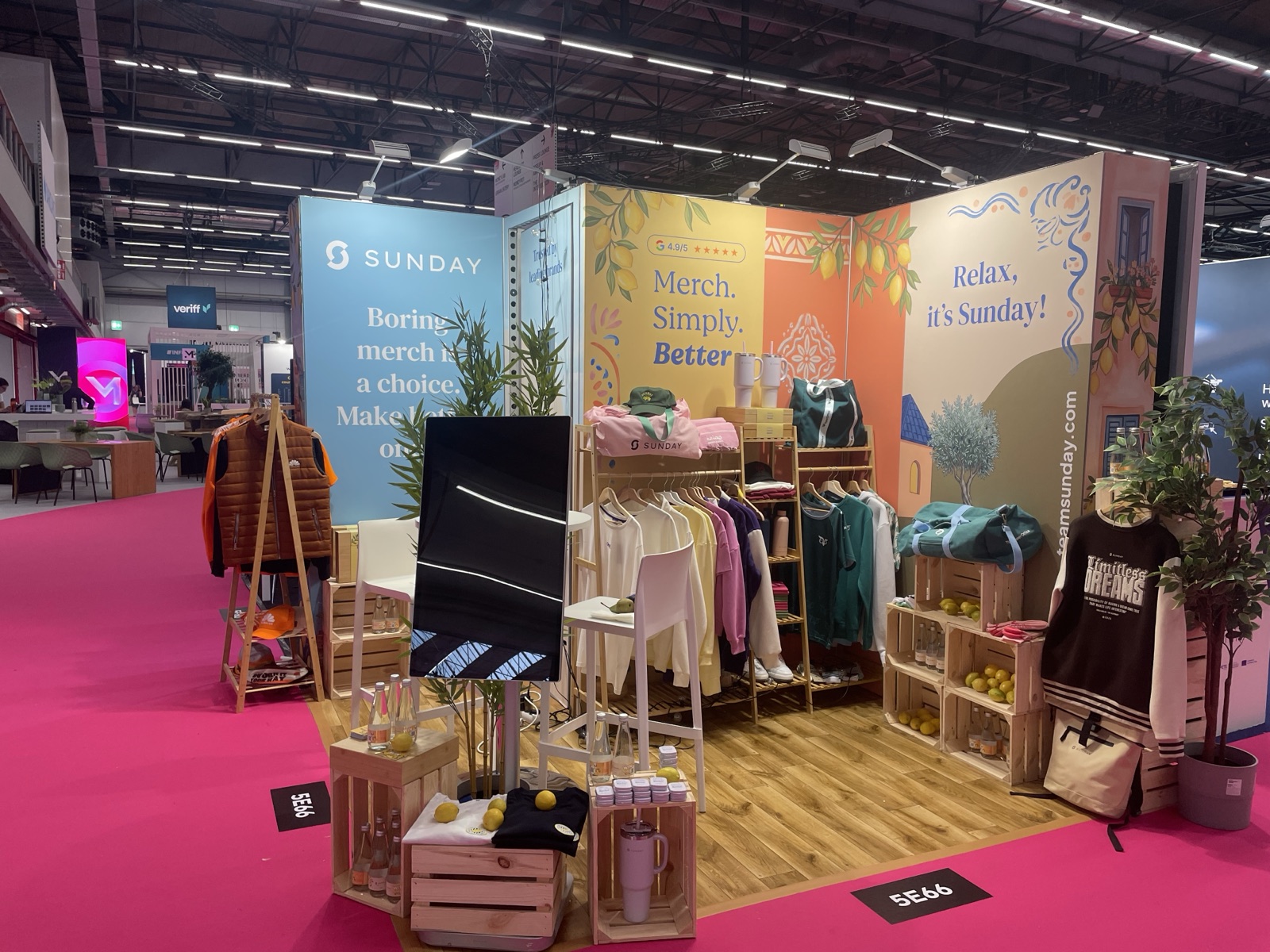
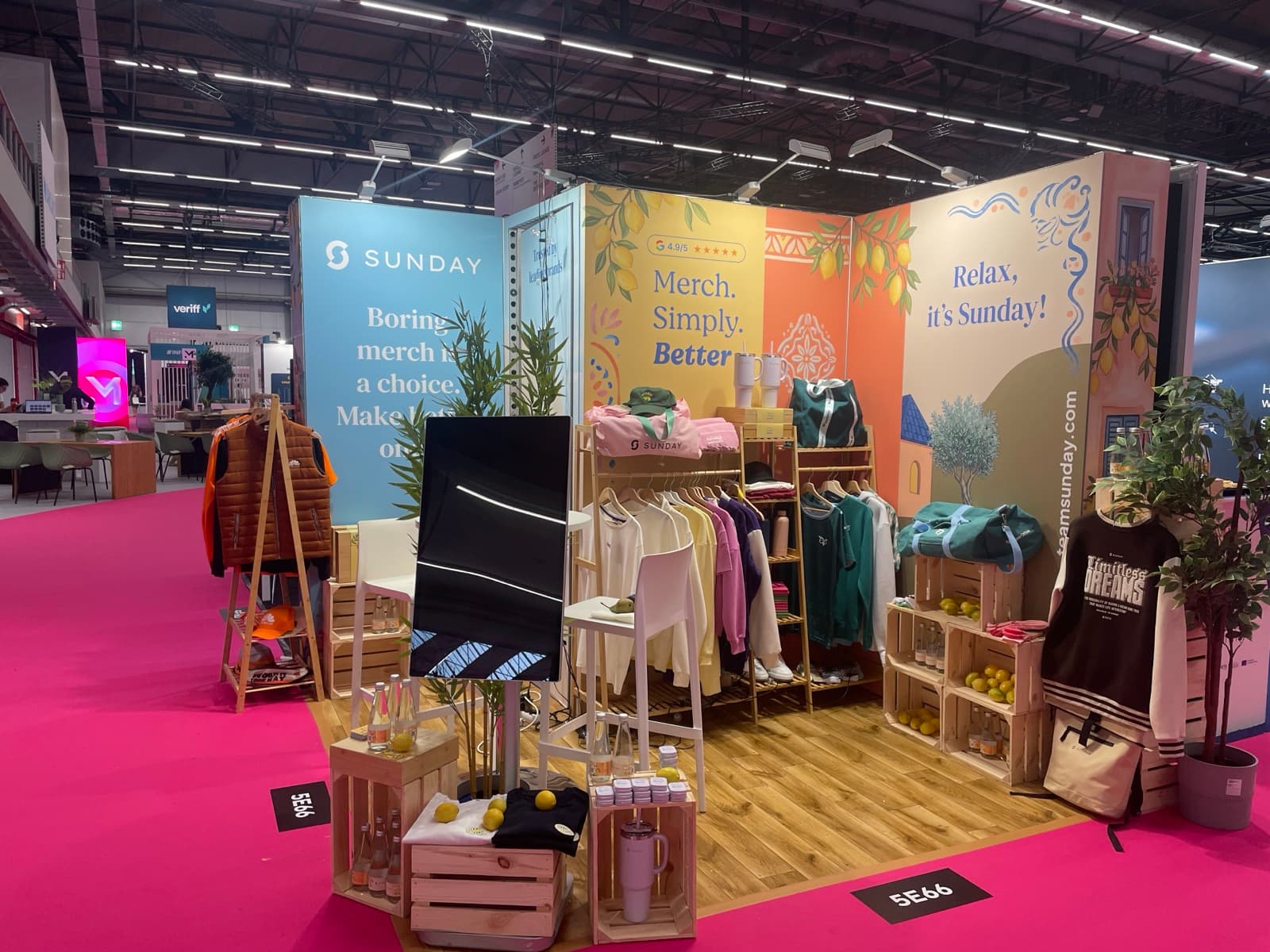
Nine square metres, built around an Italian summer.
The problem with most booths
Walk any fintech hall and you'll see the same booth three hundred times. Dark screens. Blue branding. Someone in a blazer standing next to a demo laptop, waiting.
It's not that this is wrong. It's that it's invisible. When every booth looks like a vendor stand, delegates stop seeing any of them. You're not competing against the ten booths near you anymore, you're competing against the visitor's own instinct to keep walking.
We had a 9m² footprint against sponsors with ten times the space and ten times the crew. Out-building them was never on the table. So we didn't try.
We competed on contrast, not size
Instead of matching the hall's aesthetic, we broke it. We built the booth around an Italian summer: lemons, bright colour blocking, beach bags, a spinning wheel. It looked like a holiday postcard dropped into a fintech conference.
That contrast did the one job a booth actually has to do before anything else can happen: it made people stop.
The opener we used was simple. "Can you guess what we do?" It's not a pitch, it's an invitation. It turns someone walking past into someone standing still and thinking. That's roughly 30 seconds of attention, and 30 seconds is all a booth needs to start a real conversation.
The lesson for other event managers: you don't need a bigger budget to be seen, you need a booth that doesn't look like everyone else's. Contrast beats size.
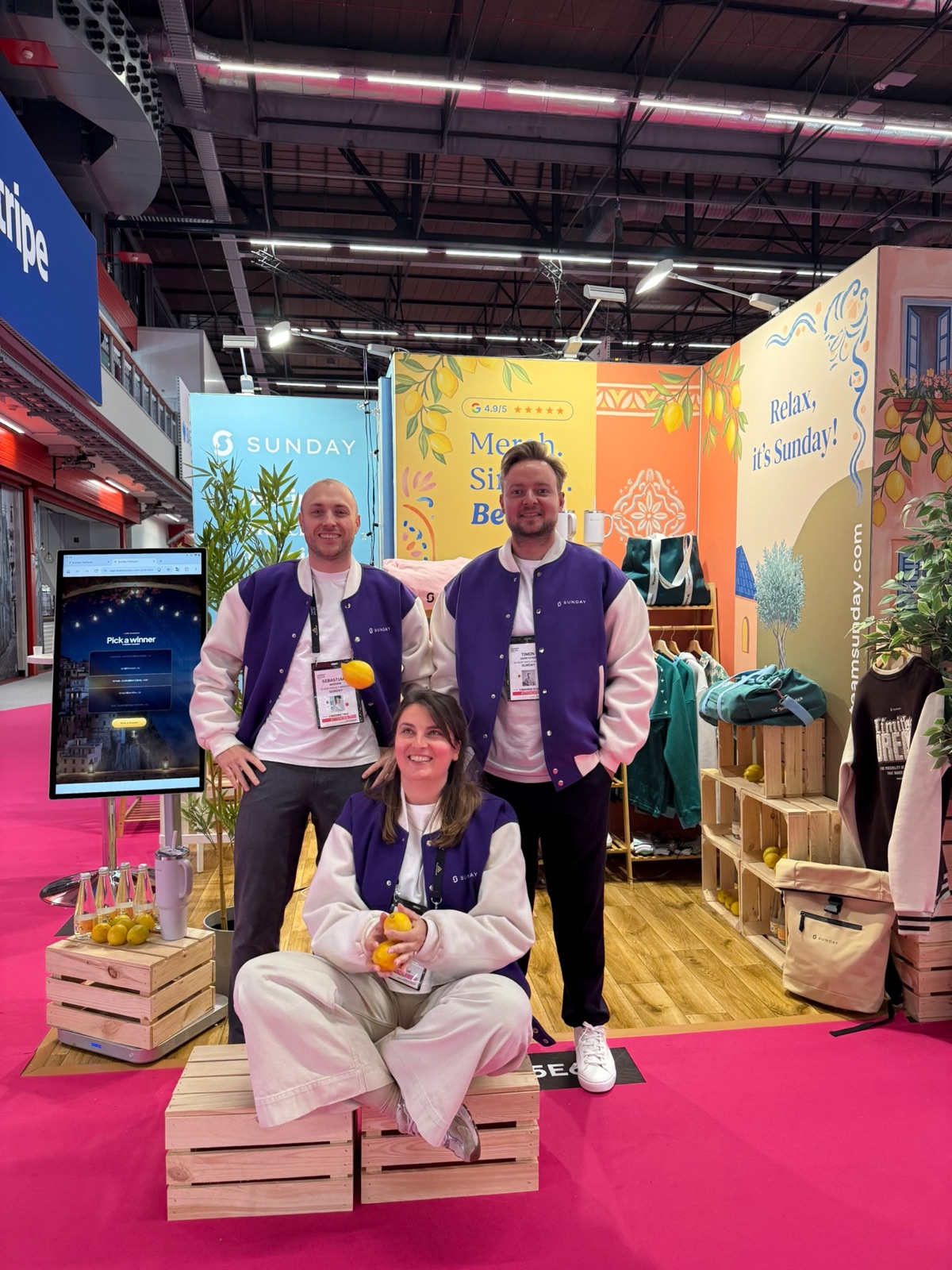
The team, the booth, the tagline that started every conversation.
We let people see their own future, not our platform
Most booth demos describe a product. Ours generated one, live, on the spot.
Our platform built a live merch store in the visitor's own branding in seconds, right there on the demo screen. Nobody had to imagine what working with Sunday would look like. They watched their own logo appear on real product, in a real store, before they'd finished their coffee.
That distinction matters more than it sounds. A slide deck asks for imagination. A live, personalised demo removes the need for it. The visitor isn't evaluating a hypothetical anymore, they're looking at something that already has their name on it.
The lesson: if your product can show the customer themselves in it, do that instead of describing it. Specificity beats explanation every time.
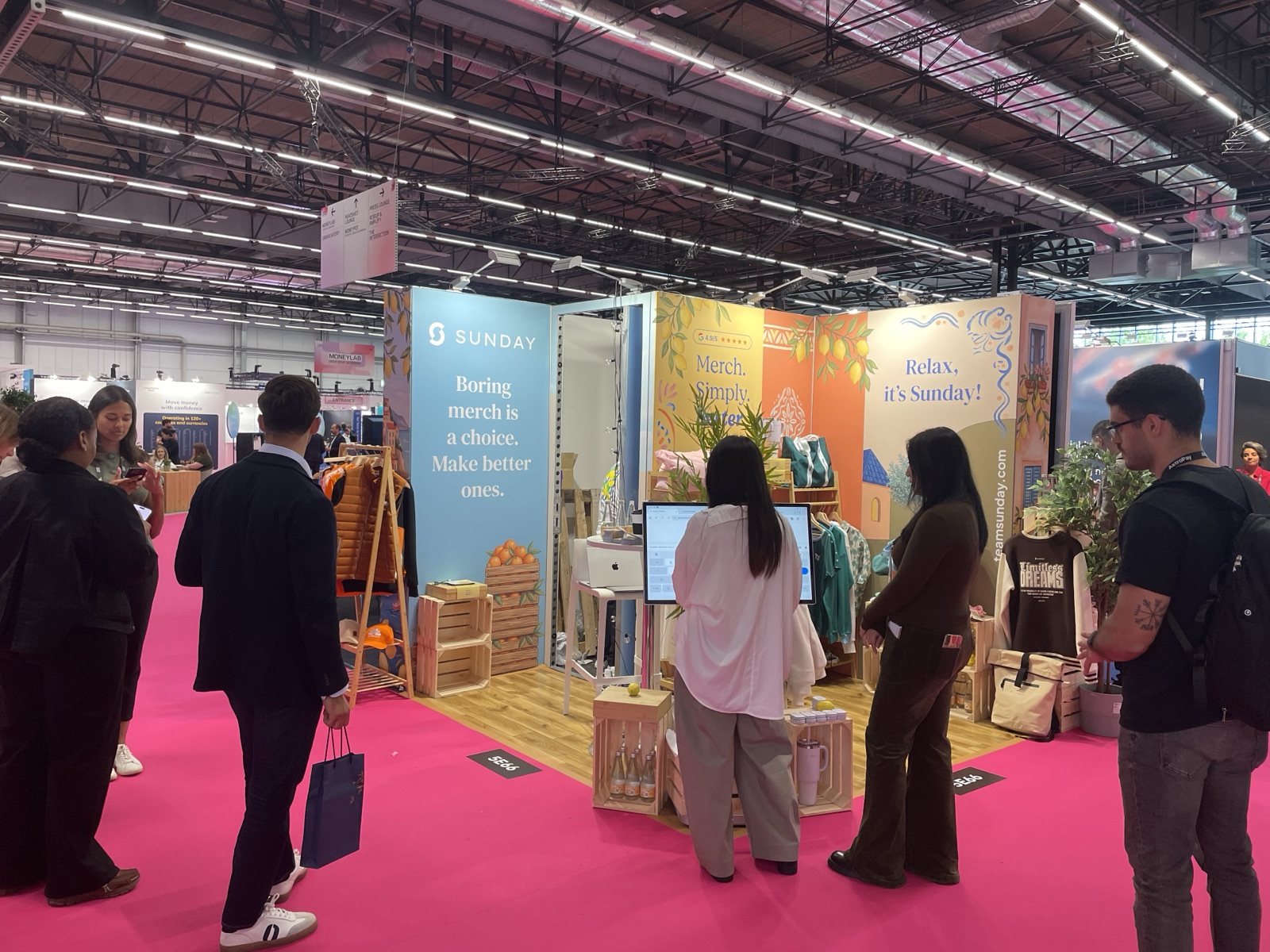
The merch wall: beach bags, crates of lemons, and the pieces people came back for.
A €15 bag outperformed every paid media channel we tested
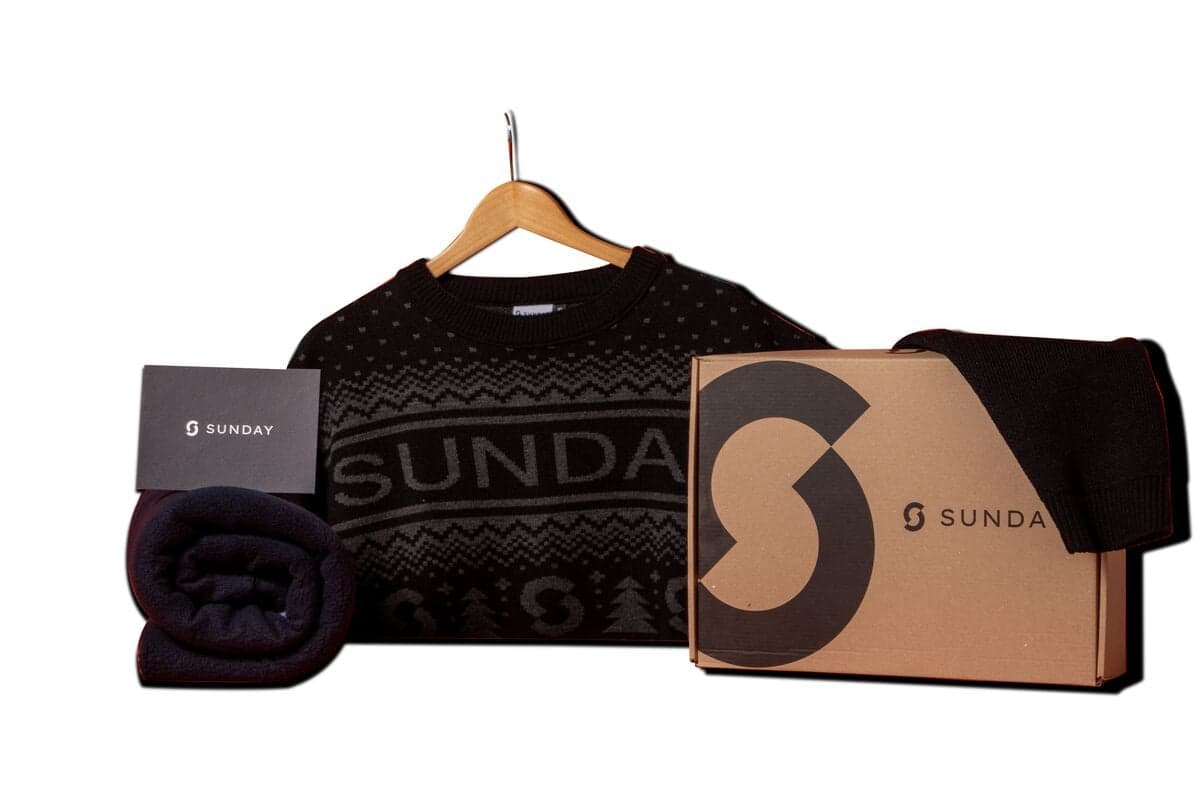
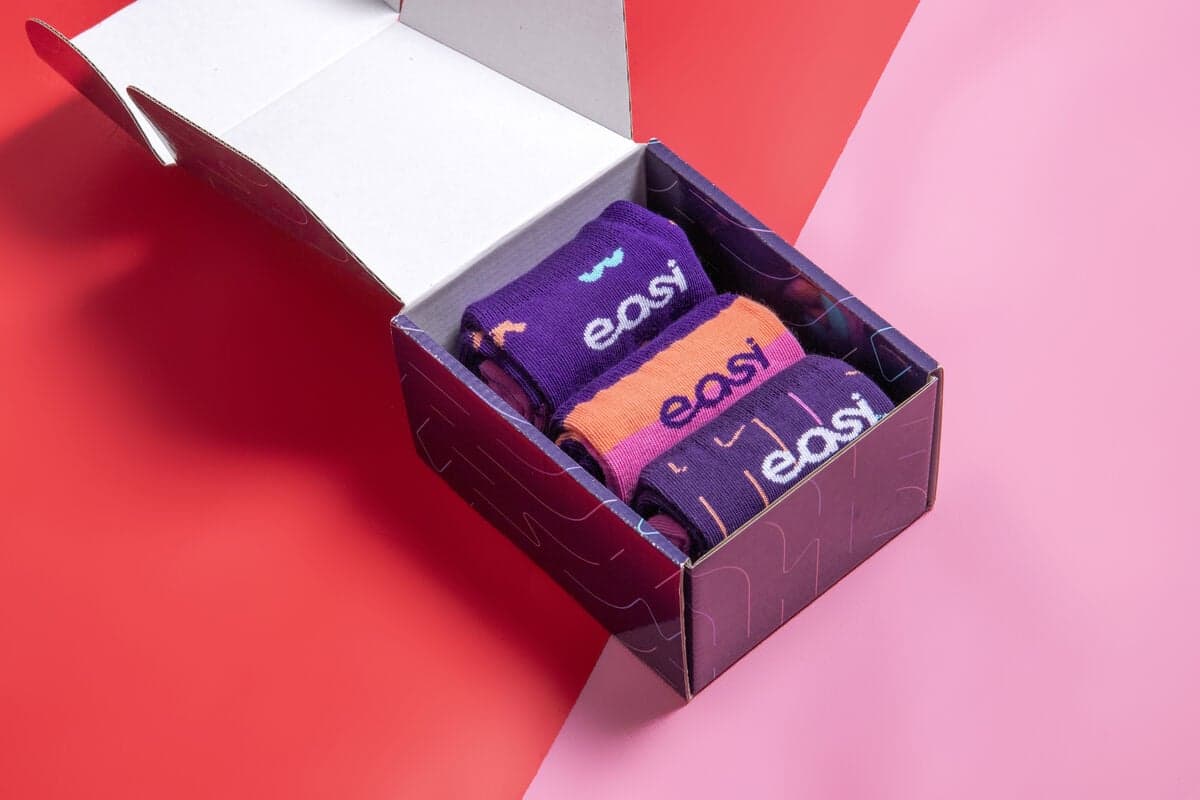
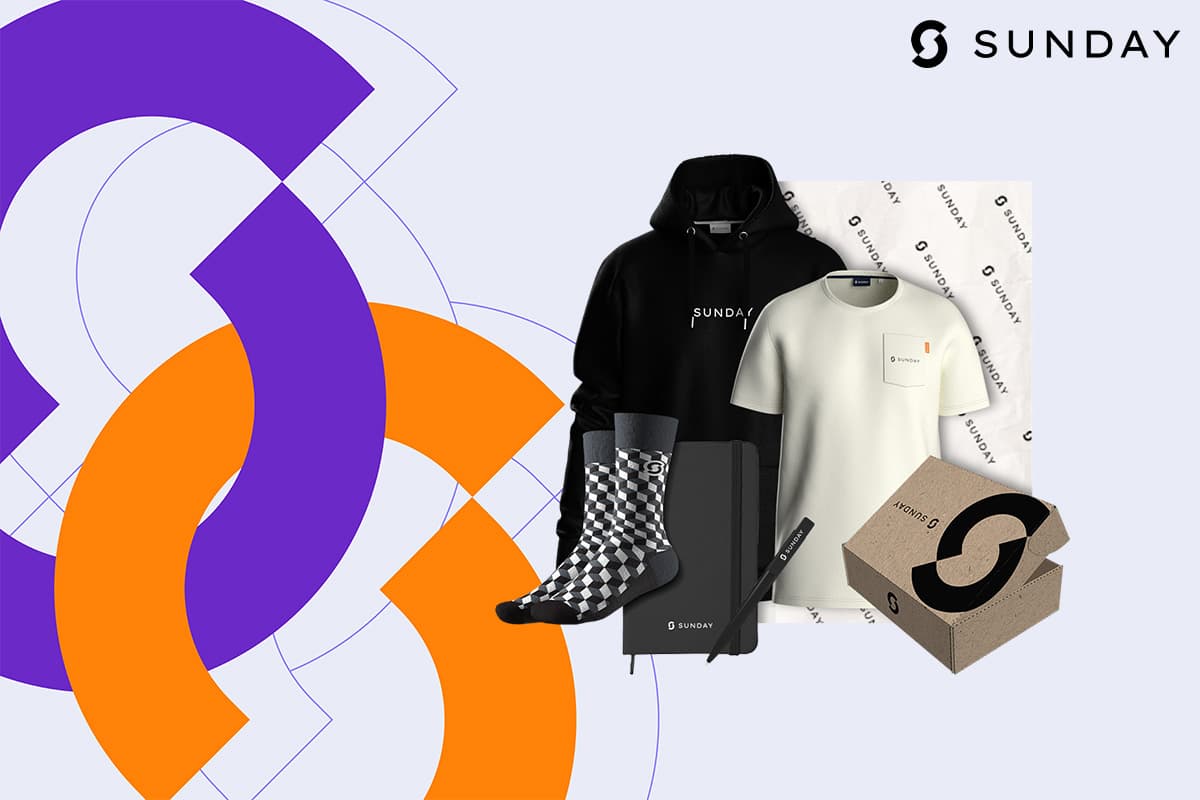
If you're still ordering the cheap pen with a logo on it, stop. Cheap swag gets binned in the hotel room before the flight home.
We spent about €15 per unit on beach bags instead, big enough to carry all the other swag attendees picked up around the floor, which meant our branding was the one still visible on day three.
Genuinely desirable merch gets carried, photographed, asked about, and talked about at dinner. Paid media can buy you an impression. It can't buy someone carrying your brand across a conference floor for three days and having strangers walk up to ask where they got it.
That's what happened. People carried the bags around the venue for the full show. Other attendees stopped them to ask. Some came back to our booth specifically to win one.
The lesson: spend more per item, on fewer, better things, and design for the moment someone else asks about it. That's the actual distribution channel, not the item itself.
The unglamorous part: what happens after the booth closes
None of the above numbers exist without what happened in the two weeks after Money20/20 ended. A booth that generates 753 leads and then dumps them into a spreadsheet nobody looks at until next month is a booth that generated 753 wasted conversations.
We ran a daily follow-up system starting the morning after the show: every lead tagged and scored the same day it was collected, qualified leads routed to a rep within 24 hours, and every "serious project" flagged to a named owner before the flight home. That's how 240 qualified leads became 42 booked meetings inside two weeks, not two months.
The lesson: the booth is the easy part. Build your follow-up system before the show starts, not after it ends.
What we'd tell any event manager working with a small footprint and a real budget limit
- Compete on contrast, not size. A 9m² booth that looks nothing like its neighbours gets remembered by people who walked past a 40m² booth that looked like every other 40m² booth.
- Show, don't describe. If there's any way to make your demo about the visitor specifically, in seconds, take it.
- Spend on fewer, better things. One item people want to be seen with beats a table of items people take out of politeness.
- Design the follow-up before the show, not after. The ROI isn't decided on the floor. It's decided in the two weeks after.
The numbers again, in full
Five months of prep. Nine square metres. €40,000 spent.
- 753 leads
- 240 qualified
- 42 meetings booked
- 4 serious projects opened
- 1 signed new customer
- €37,000 reorder from an existing client
- 32nd for exposure per unit area, 19th for engagement per unit area, out of 400+ sponsors on the floor
More to follow as those 4 projects and the rest of the pipeline close out. We'll update this post when they do.
If you're running events for your company and you're tired of blowing through budget to be ignored: this is exactly how we did the opposite.
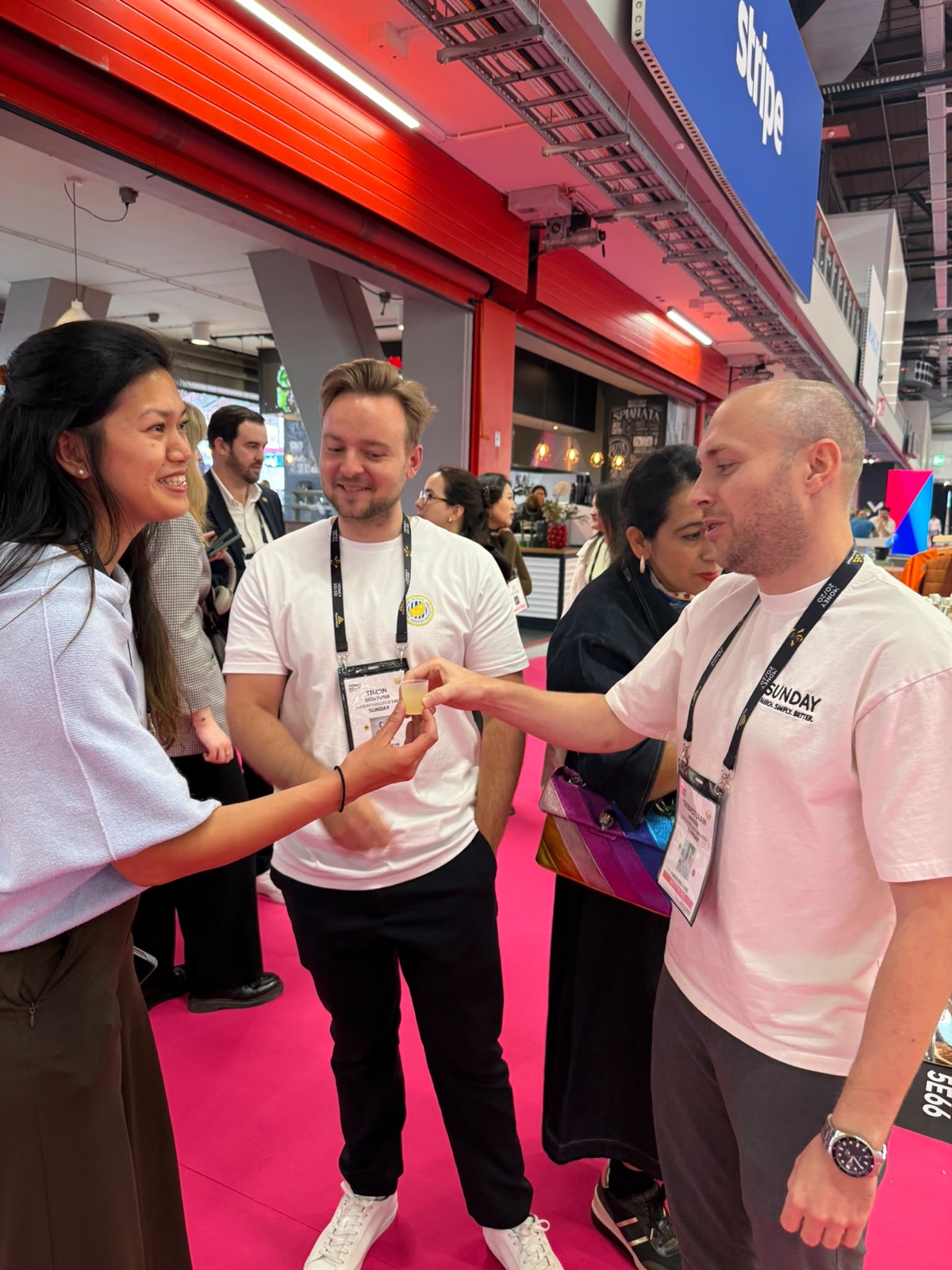
Cheers to that.