

Eco friendly corporate gifts are gifts chosen to minimise waste over their whole life, and the single biggest factor is usefulness. The most sustainable gift is the one people continue using. A recycled product nobody wants creates less value than a well-made product used for years. Materials, certifications and packaging are valuable additions, not substitutes for that.
This guide is part of our complete corporate gifts guide.
Start with the uncomfortable part. Most sustainable corporate gifts fail on the same day they arrive. Not because the material was wrong, but because nobody wanted the object. A recycled-plastic item that goes straight in a drawer has already wasted everything that went into making it, no matter what the label says. Usefulness is the first environmental decision you make. Everything else is a refinement on top of it.
What's in this guide
- What eco friendly corporate gifts actually are
- Durability beats claims
- What to actually look for
- Materials, honestly assessed
- Certifications worth asking about
- Packaging is where most of the waste is
- Production, quantities and overordering
- How to spot greenwashing
- The honest limits of eco claims
- Where to go next
What eco friendly corporate gifts actually are
An eco friendly corporate gift is one where the total environmental cost of making, shipping and disposing of it is justified by how long and how often it gets used. That is a deliberately unglamorous definition, and it is the only one that survives contact with reality. A gift is not sustainable because a supplier put a leaf icon on the product page. It is sustainable because it displaces something else the recipient would have bought, and stays in service long enough to earn its footprint back.
This matters because the corporate gifting industry has an over-production problem, not a materials problem. Companies order too much of something too forgettable, ship it around the world, and a large share of it is never used. Changing the material of an unwanted object does not fix that. Changing whether the object is wanted does.
Durability beats claims
Between two options at the same price, the one that lasts three years is almost always the better environmental choice than the one made from recycled content that lasts three months. This is not an argument against recycled materials. It is an argument about the order of operations. Quality first, material second.
Durability is also easy to inspect, which is exactly why it is a better buying signal than a claim you cannot verify. You can feel the weight of a knit. You can check whether a zip is a proper branded component or an unbranded part that will fail. You can look at how a seam is finished, whether a bag has a reinforced base, whether a bottle lid actually seals. None of that requires trusting anybody's marketing.
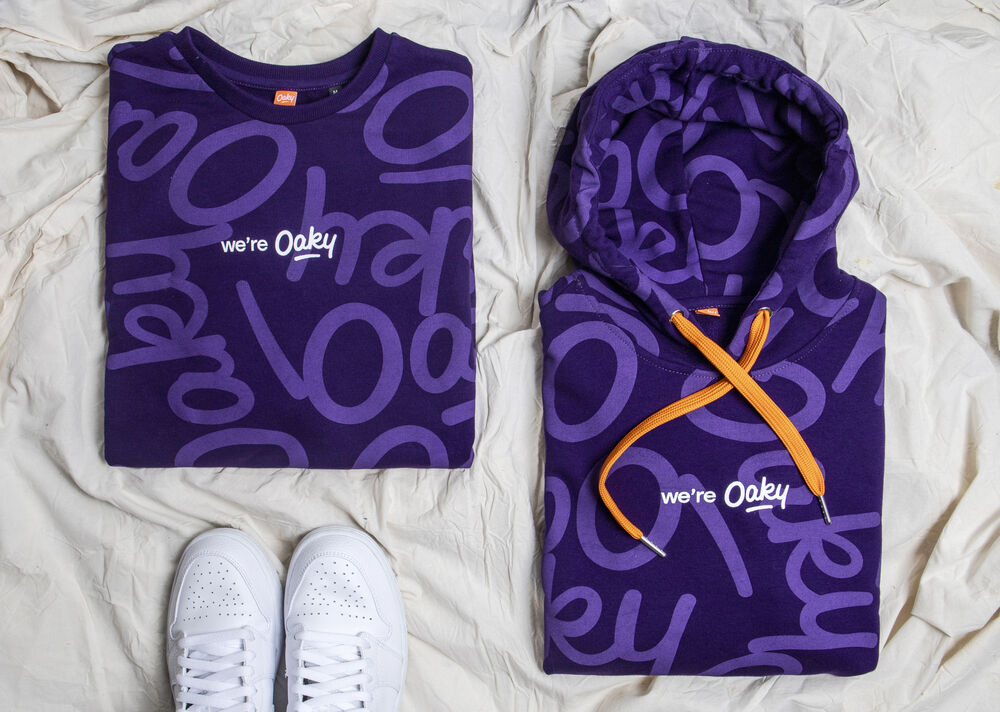
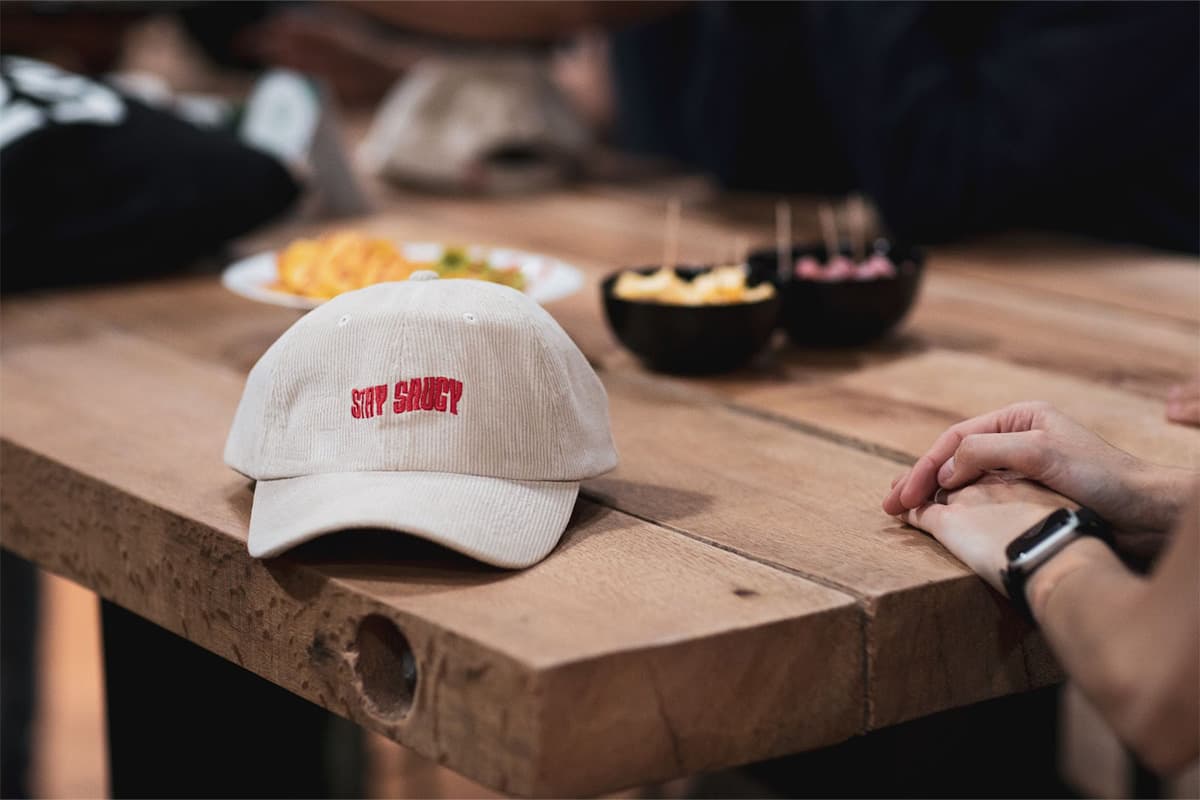
A heavier knit, a proper finish and a design people actually want to wear. That combination does more for a gift's footprint than any label.
There is a second, less obvious durability question: does the design date? A gift covered in an oversized logo or a campaign slogan has a short social shelf life even if the product is built to last. Subtle branding is a sustainability decision as much as an aesthetic one, because the bigger the logo, the less likely people are to use the product. We cover the placement mechanics in corporate gifts with logo.
What to actually look for
Here is the practical checklist, in the order that matters.
- Would you buy it yourself? If the honest answer is no, stop here. Nothing downstream fixes it.
- Build quality. Fabric weight, stitching, hardware, linings, closures. Ask for a sample and use it for a week.
- Repairability and replacement parts. Rare in merch, but a genuine differentiator when it exists.
- Materials. Organic, recycled, mono-material rather than blends that cannot be recycled.
- Certifications. Verifiable, third-party, with a licence number you can check.
- Packaging. Plastic-free, right-sized, and part of the gift rather than a wrapper to throw away.
- Production model. Made to order, or at least ordered in a quantity you will genuinely use.
- Shipping. Consolidated where possible, regional fulfilment rather than one origin serving the world.
Notice that only two of those eight items are the things eco marketing usually leads with. That is the whole point.
Materials, honestly assessed
Materials do matter. They just matter less than the industry implies, and each one has a real trade-off worth knowing before you commit a whole campaign to it.
| Material | Genuine benefit | The honest caveat |
|---|---|---|
| Organic cotton | Lower chemical load in farming, better for growers | Still water-intensive; only meaningful with a credible certification behind it |
| Recycled cotton | Diverts textile waste, big water saving | Shorter fibres, so it is usually blended and can feel less durable |
| Recycled polyester (rPET) | Uses existing plastic instead of virgin oil | Still sheds microplastics; recycling bottles into clothing is a one-way street, not a loop |
| Hemp and linen | Low input crops, extremely hard-wearing | Limited product range, higher unit price, stiffer hand feel |
| Stainless steel and glass drinkware | Very long life, no plastic taste, endlessly reusable | High energy to produce, so it only pays off if it is genuinely used daily |
| Bamboo | Fast growing, renewable | Bamboo viscose is chemically processed; solid bamboo is the honest version |
| Cork and recycled leather | Renewable, distinctive, ages well | Quality varies enormously between suppliers |
A general principle: single-material products are easier to recycle at end of life than blends. A 100% cotton tee, a stainless bottle, a solid wood item. Blended fabrics and multi-material accessories are effectively unrecyclable in most systems, whatever the individual components were.
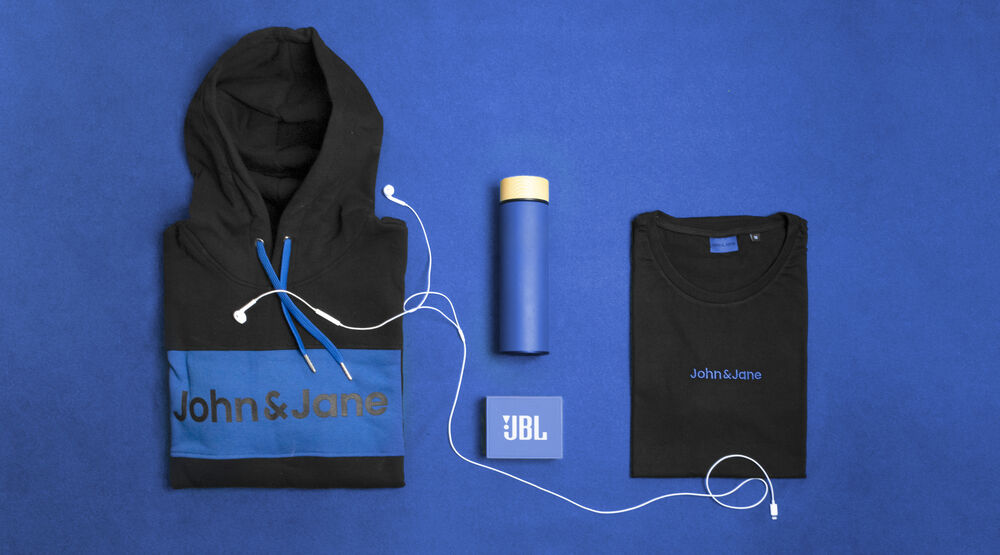
Material choices are real, but secondary. Pick products people want, then improve the materials those products are made from.
Certifications worth asking about
Certifications are useful for one specific job: they let you verify a claim you could not otherwise check. They are not a ranking of how green a product is, and a certified product that nobody uses is still a wasted product. Treat them as a floor, not a badge.
The ones worth asking a supplier about, and what each one actually covers:
- GOTS covers organic fibre content plus environmental and social criteria through processing. The strictest of the textile standards.
- OEKO-TEX Standard 100 covers harmful substances in the finished article. It is about safety, not about environmental impact.
- GRS (Global Recycled Standard) verifies recycled content and chain of custody, so "recycled" is not just a word.
- FSC covers paper and wood, which is mostly a packaging question.
- Fairtrade covers pay and conditions rather than environment. Worth having, but it answers a different question.
- B Corp certifies the company, not the product. Useful context, not a product claim.
Packaging is where most of the waste is
This is the section most sustainability pages skip, and it is where the biggest easy wins live. A gift arriving in a polybag inside a mailer inside an oversized carton generates more waste than the product itself, and it also feels worse to open.
Good packaging for corporate gifts does three things at once: it protects the product, it makes the gift feel intentional, and it does not create rubbish. Kraft board, paper tape, no plastic window, no polybag, sized to the contents so you are not shipping air. If you want the gift to feel premium, spend money on the box rather than on plastic inserts, because a well-made box is the part people keep.
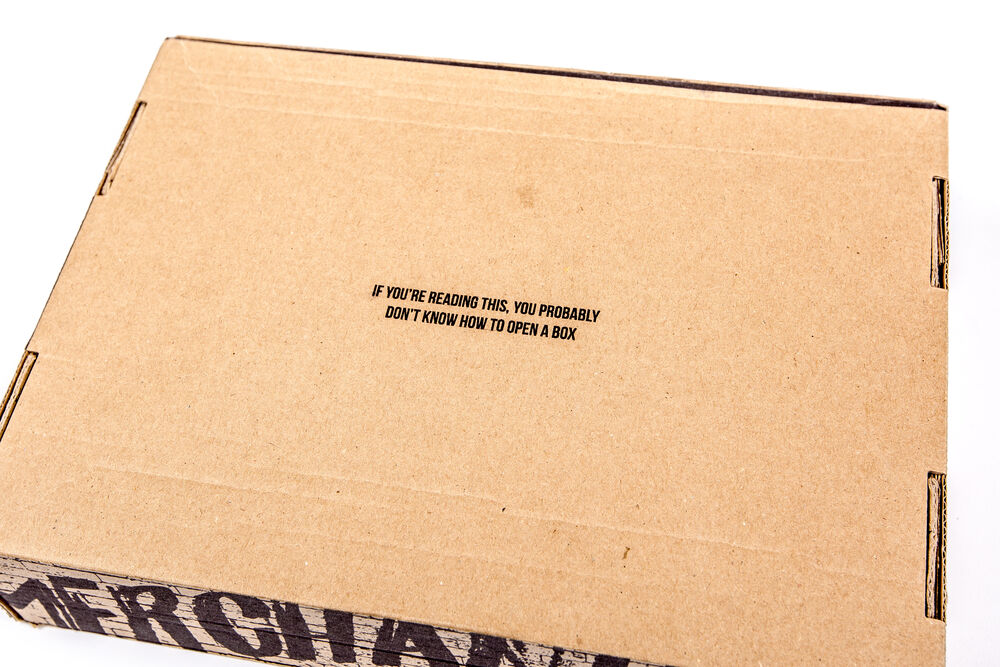
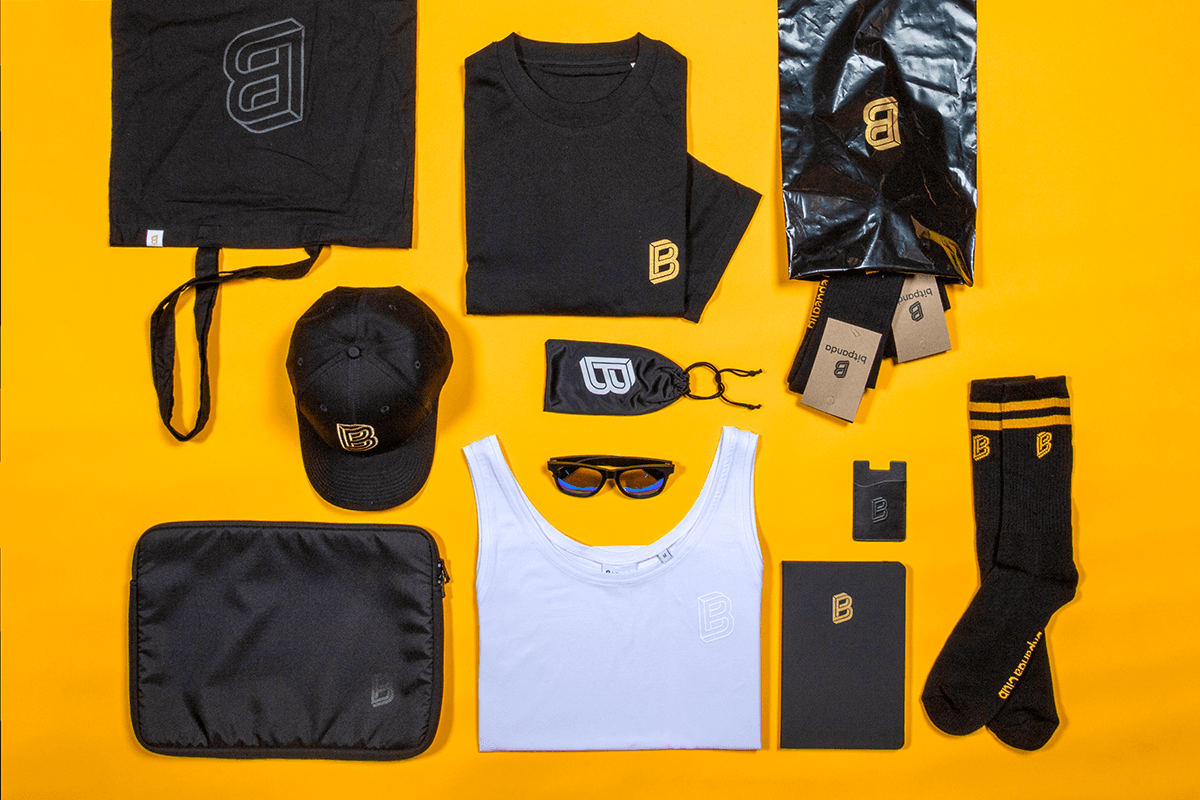
Plain board, paper tape, right-sized to the contents. Cheaper than plastic inserts, better to open, and it does not create rubbish.
Our broader position on packaging is that companies should spend more on it, not less. That sounds like it cuts against sustainability and it does not. Better packaging raises perceived value, which raises the chance the gift is kept and used, which is the whole objective. The trick is to spend on the material quality and the fit, not on layers.
Production, quantities and overordering
The most common environmental failure in corporate gifting is not the material. It is ordering 2,000 units for a campaign that needs 900, and then storing, moving and eventually binning the rest. Volume discounts make overordering feel rational. It rarely is.
- Order to a real list. Size the run against confirmed recipients, not against a price break.
- Avoid dated print. A year, an event name or a slogan turns leftovers into waste. Undated designs can be reused next quarter.
- Skip size-dependent products for unknown recipients. Apparel for a list you cannot size is how you generate dead stock. Socks, bags and drinkware do not have this problem.
- Fulfil regionally. Sending 300 gifts from one warehouse across three continents is worse than holding stock closer to the recipients.
- Let recipients choose. Giving people a choice of two or three gifts, or collecting their preference before you produce, cuts unwanted items sharply. It is also a better experience, which we cover in personalized corporate gifts.
If you are working to a tight per-head budget, the discipline is the same: buy fewer, better things. The practical version of that is in corporate gifts under $50 and in bulk.
How to spot greenwashing
Greenwashing in merchandise is usually not an outright lie. It is a true but irrelevant fact, placed where a meaningful one should be. Here is what to watch for.
| What you are told | What it usually means | What to ask instead |
|---|---|---|
| "Eco" or "green" with no qualifier | Nothing. These words have no definition. | Eco in what respect, measured how? |
| "Made from recycled materials" | Could be 5% recycled content | What percentage, and certified by whom? |
| "Sustainably sourced" | Usually unverified supplier self-declaration | Which standard, and can I see the certificate? |
| "Carbon neutral" | Emissions unchanged, offsets purchased | What did you reduce before offsetting? |
| "Biodegradable" plastic | Often needs industrial composting that does not exist locally | Biodegrades under what conditions, in what timeframe? |
| "Plants a tree with every order" | A separate donation, unrelated to the product's impact | Nice, but what is the product itself made of? |
A simple test: if a claim cannot be falsified, it is marketing. "Durable" can be tested. "Certified GOTS, licence number X" can be checked. "Eco-conscious" cannot be either, which is why it appears so often.
The honest limits of eco claims
We would rather be straight about this than overclaim, because overclaiming is the thing that has made buyers cynical about the whole category.
Physical gifts have a footprint. Making a bottle, a bag or a sweater consumes resources, and shipping it consumes more. No material choice makes that zero. The genuine lever is whether the object earns its existence through years of use, which is a design and selection question before it is a materials question. Anyone telling you their branded product is environmentally positive is selling you something.
Recycled content is a real improvement, not a solution. Recycling bottles into fleece is downcycling, and the resulting garment usually cannot be recycled again. Offsets are not reductions. And certifications verify a narrow claim on a narrow scope, not the whole life of the product.
What is left after you strip all that out is still worth doing, and it is not small: choose fewer, better, longer-lived products; brand them lightly so people use them in public for years; package them without plastic; produce close to the quantity you need; and ship them from the right region. That combination genuinely reduces waste, and it happens to produce better gifts too. Which is the part that makes it stick.
Frequently asked questions
What makes a corporate gift eco friendly?
Usefulness comes first. The most sustainable gift is the one people continue using, because years of use justify its footprint. After that, look at build quality, materials, verifiable certifications, plastic-free packaging, order quantities matched to a real list, and consolidated or regional shipping. A recycled product nobody wants is still waste.
Which certifications matter for sustainable corporate gifts?
GOTS covers organic fibre plus environmental and social criteria. OEKO-TEX Standard 100 covers harmful substances. GRS verifies recycled content and chain of custody. FSC covers paper and wood packaging. Fairtrade covers pay and conditions, and B Corp certifies the company. Ask for the licence number for the specific item.
How can you spot greenwashing in corporate gifts?
Watch for true but irrelevant facts. Eco or green without a qualifier means nothing, made from recycled materials can mean 5% recycled content, carbon neutral often means offsets, and tree planting is a separate donation. Ask for percentages, standards and certificates. If a claim cannot be tested or checked, treat it as marketing.
Are recycled materials always the most sustainable choice?
No. At the same price, a durable product that lasts three years usually beats a recycled one that lasts three months. Recycled polyester still sheds microplastics and usually cannot be recycled again, and recycled cotton is often blended. Single-material products are easier to recycle at end of life than blends.
Which eco friendly corporate gifts do people actually use?
Products with high daily use, long life and no sizing waste, such as socks and backpacks. Design matters too: in a 258-person study of a branded merchandise programme, plain socks were never worn by 31% of recipients, while bags were worn more than twice by 69% and sweaters by 67%.
Where to go next
If you want the products that score best on the "still in use in three years" test, start with the best corporate gifts and corporate gift ideas. For gifts where the quality is the whole point, luxury corporate gifts covers what premium actually means in construction terms rather than price terms. If you are looking for the categories that get used daily, unique corporate gifts makes the case for premium backpacks and weekend bags.
Two products are worth calling out specifically here because they solve the overordering problem. Custom socks have no sizing waste, everyone wears them, and a single good pair beats three cheap ones. Design matters here too: in a 258-person study of a branded merchandise programme, plain socks were never worn by 31% of recipients, while a distinctive seasonal pair was worn more than twice by 66%. See the custom socks guide, browse custom socks, or preview a design in the free sock mockup generator. Backpacks are the other one: high daily use, long life, no sizes. See custom backpacks and the free backpack mockup generator.
For seasonal programmes, the overordering risk is highest at Christmas, so read corporate Christmas gifts before you commit to a quantity. Client-facing gifting has its own restraint rules in corporate gifts for clients, and thanking customers is covered in customer appreciation gifts. If what you need is an always-on internal range rather than a one-off gift, that is company swag, and running it without dead stock is easier through a company swag store.
When you are ready to build something, the catalog shows what is possible and the platform handles production, packaging, warehousing and regional delivery, which is where most of the waste in a gifting programme actually hides. If you want the mechanics of how that runs, see how it works.
About this article
Fewer, better, longer-lived gifts
Custom production, plastic-free packaging, regional fulfilment and order quantities matched to your real list. Create a free account and design your gift in your brand.
Design a gift that lasts