
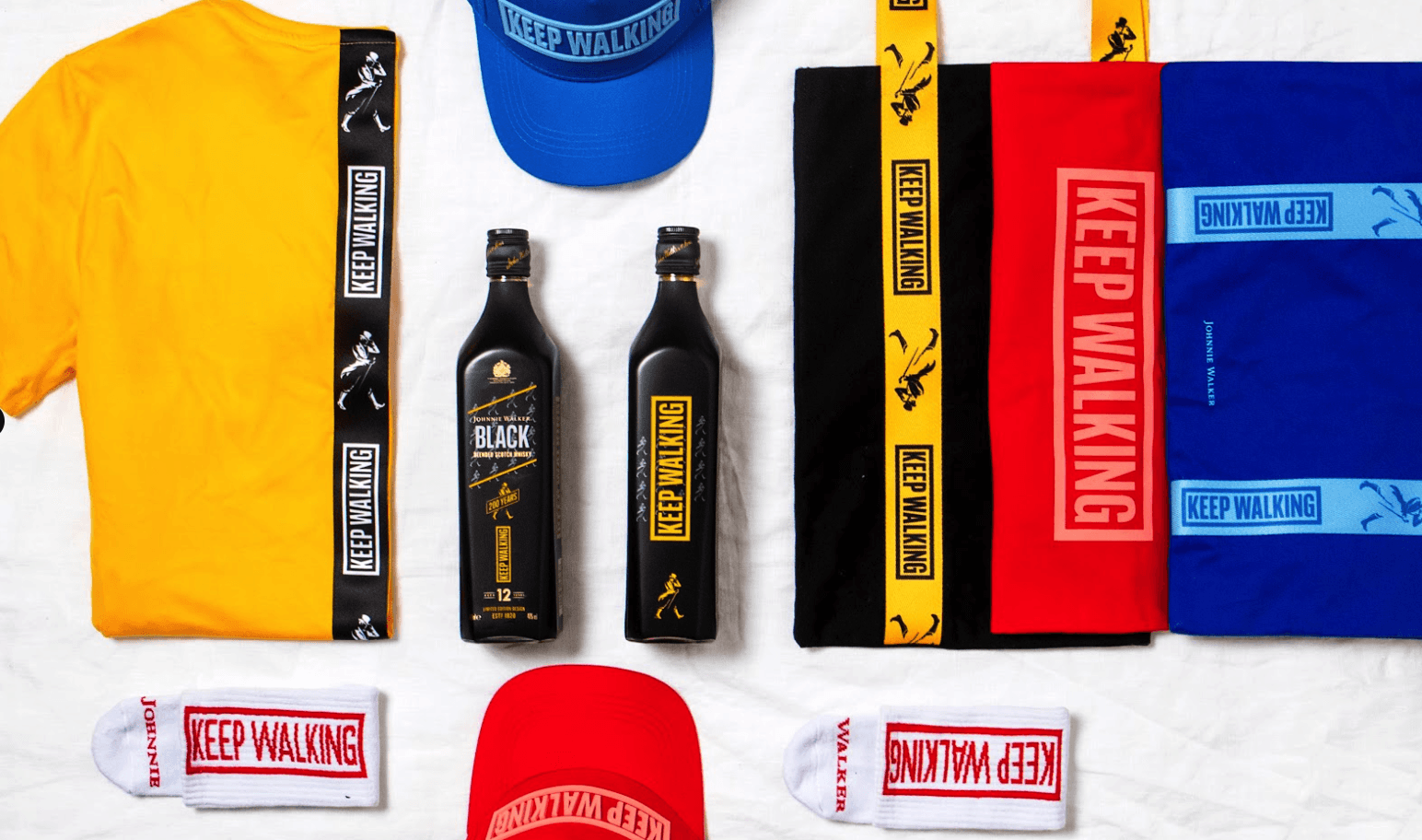


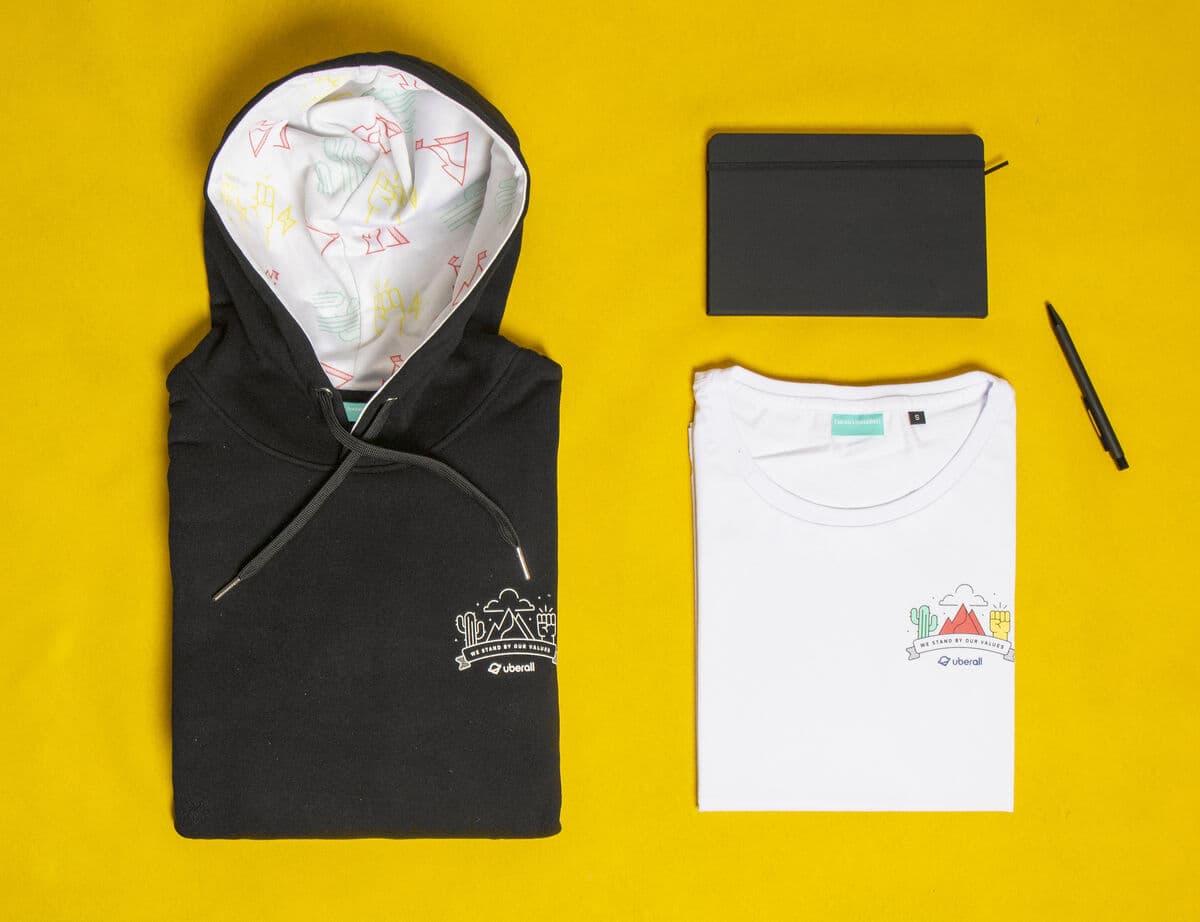
A corporate gifts company sources, produces, stores and ships branded gifts on your behalf. There are four types: promotional-products distributors, gifting platforms, branded-merch specialists, and local gift-box companies. The right one depends on whether your programme is high-volume one-to-one sending, large seasonal campaigns, or an always-on branded range. No single provider wins all three.
We are one of the companies in this market, so read this with that in mind. We have written it as a buyer's guide rather than a ranking, we have given the platforms we compete with a genuine win column, and we have included a section on where we are not the right choice. A one-sided page is worth nothing to you and, frankly, nobody cites it either.
The four types of corporate gifting company
Almost every provider you will look at belongs to one of four groups. They have different business models, and that is what determines what they are good at, far more than anything on their homepage.
| Type | Business model | Best for | Weakest at |
|---|---|---|---|
| Promotional-products distributors | Resell catalogue items from third-party suppliers, decorate them | Volume, breadth of catalogue, low unit price | Original product, packaging, software, individual shipping |
| Gifting platforms | SaaS plus fulfilment; a marketplace of gifts sent one to one | Sales and marketing send-on-demand, CRM-triggered gifting, tracking | Cost efficiency on large uniform campaigns, deep custom production |
| Branded-merch specialists | Design and produce the merchandise itself, then fulfil it | Custom products, apparel, packaging, brand consistency | Third-party consumer-gift marketplaces, edibles, experiences |
| Local gift-box companies | Curate and assemble boxes, often with regional food and makers | Small local campaigns, food and craft, hands-on service | International shipping, scale, automation, customs |
The single most useful thing you can do before a first call is work out which of these four you actually need. A team sending 40 individually chosen gifts a month has a completely different problem from a team sending 3,000 identical Christmas boxes across nine countries, and the provider that is excellent at one is usually mediocre at the other.
Promotional-products distributors
The oldest model in the industry. A distributor holds no stock and makes no product; it sells you items from a shared supplier catalogue and arranges the decoration. There are thousands of them, and the good ones are genuinely useful.
Where they win
- Enormous catalogue breadth, tens of thousands of SKUs
- Sharp unit pricing at volume, because the supply chain is standardised
- Fast for straightforward bulk runs to one address
- Strong for genuine promotional work: giveaways, event stock, event stand items
Where they struggle
- Everyone sells the same catalogue, so your gift is not distinctive
- Little or no software: no store, no automation, no integrations
- Packaging is usually an afterthought or an upsell
- Individual shipping to hundreds of home addresses is not their model
- Quality control varies because they do not own the production
If what you need is 2,000 branded pens for a trade show, a distributor is the correct answer and a gifting platform would be an expensive mistake. If you want something recipients have not already received from three other companies, this model is working against you. That distinction is the subject of corporate promotional gifts.
Gifting platforms
The newest category and the loudest. Gifting platforms are software first: a marketplace of gifts, a set of integrations into your CRM and sales tools, address collection, budgets and reporting. The core use case is a salesperson or marketer triggering an individual send from inside a workflow.
Where they win
- Send-on-demand for sales teams, triggered from the CRM
- Address collection handled by the recipient, not by you
- Large third-party marketplaces, including eGifts and experiences
- Budget controls, approvals and per-user wallets
- Attribution reporting tied to pipeline and deals
- Strong compliance tooling, which matters in regulated industries
Where they struggle
- Cost structure is built around one-to-one sends, which gets expensive on large uniform campaigns
- Layered pricing: platform fee plus per-send fees plus storage plus the item
- Custom production is usually a bolt-on rather than the core competence
- Marketplace gifts are third-party products, so your brand is on the note, not the object
The two names you will meet most often in this category are Reachdesk and Sendoso. Both are serious products. Here is what each is genuinely good at, drawn from their own published material.
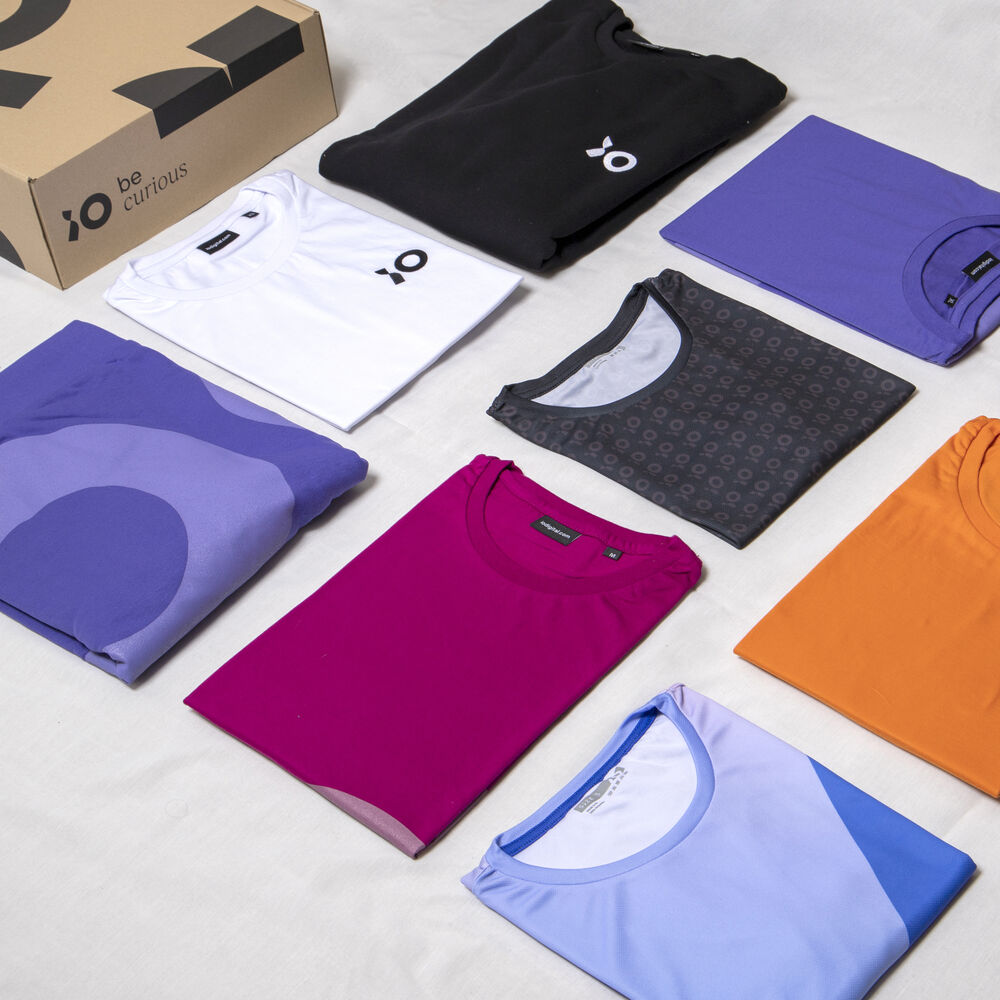
Different providers own different parts of this picture. Some own the software, some own the catalogue, some own the production.
Reachdesk, honestly
Reachdesk
Positions itself as an ROI-driven corporate gifting, swag and engagement platform. Its published feature set covers a large third-party gift marketplace, global warehousing, swag sourcing with an in-app merchandise builder, branded store portals, eGifts, automated address confirmation, AI-assisted gift notes, a creative services team for bespoke campaigns, and reporting built around pipeline attribution.
Genuinely strong at
- Marketplace breadth. Reachdesk states over 8,000 gifts from vendors, which is far more third-party choice than any merch producer offers.
- Global warehousing across the US, EU, Canada and APAC, so stock sits near recipients.
- Depth of integrations: Salesforce, HubSpot, Marketo, Salesloft, Outreach, Gong and Zapier on the go-to-market side, plus HRIS tools including HiBob, Workday, BambooHR and UKG.
- Address confirmation and privacy-first data handling, which removes a real operational headache.
- Reporting and budgeting designed for revenue teams, with wallets and spend controls per team.
- eGifts in local currencies, which solves the "we need it there tomorrow" problem that physical gifts cannot.
Worth pressure-testing
- Pricing is quote-only. Reachdesk's own FAQ says packages vary and directs you to sales, so model your real annual volume before you commit.
- "No markups or hidden fees" and the rebate programme are the vendor's own claims. Ask for the full fee schedule in writing, including storage, kitting and per-send charges.
- The performance figures on its site (for example a 163% increase in won deals, or a customer's 60X ROI) are vendor-reported case data, not independent benchmarks.
- The centre of gravity is sourcing and sending, not manufacturing. If you want a product designed from scratch in your brand, ask specifically how that is produced.
Source: Reachdesk's own platform overview and FAQ pages, fetched 16 August 2026. Verify before relying on any specific figure.
Sendoso, honestly
Sendoso
Describes itself as a sending management platform. Its published plan structure runs Starter, Core, Advanced and Enterprise. Starter covers global eGifts and an on-demand marketplace with a capped monthly send volume and a single integration. Core adds unlimited and bulk sending, fulfilment in one region, event sending, its Campaign Studio creative service, a custom-merch product called Merch by Sendoso, and SSO. Advanced adds a second fulfilment region, a swag storefront, swag on demand, custom kitting instructions, unlimited integrations and an HRIS hub. Enterprise adds all fulfilment regions plus governance and IT controls.
Genuinely strong at
- A clearly tiered product, so you can see what you get before the sales call. That transparency is rarer in this market than it should be.
- Its own fulfilment centre dedicated to gifting and direct mail, rather than a general 3PL.
- Sales-led send-on-demand, which is what the platform was built for and still does best.
- Event fulfilment and bulk sending on the mid tiers, so events and one-to-one sending sit in one system.
- Enterprise governance: policy controls, audit logs, anti-bribery controls, SCIM and IP allow-listing. If you are in financial services or healthcare, this matters more than the gift catalogue.
- Merch by Sendoso and a swag storefront, so custom merchandise is available inside the same platform.
Worth pressure-testing
- No published prices. Every tier routes to "talk to sales", so build your own volume model first.
- Capabilities you may consider basic are tier-gated. Multi-region fulfilment, unlimited integrations and the swag storefront sit on the higher tiers.
- Licence counts are capped per tier, which matters if you want gifting available to a whole sales floor.
- Like all platform models, the cost per recipient on a large uniform seasonal campaign is a different calculation from the cost per one-to-one send. Run both numbers.
Source: Sendoso's own compare-plans page, fetched 16 August 2026. Plan contents change; verify before relying on any specific line item.
Branded-merch specialists
The third category makes the merchandise rather than reselling it. That means product design, materials, decoration technique, packaging and brand consistency are the core skills, and the software and logistics are built around getting that product to people.
Where they win
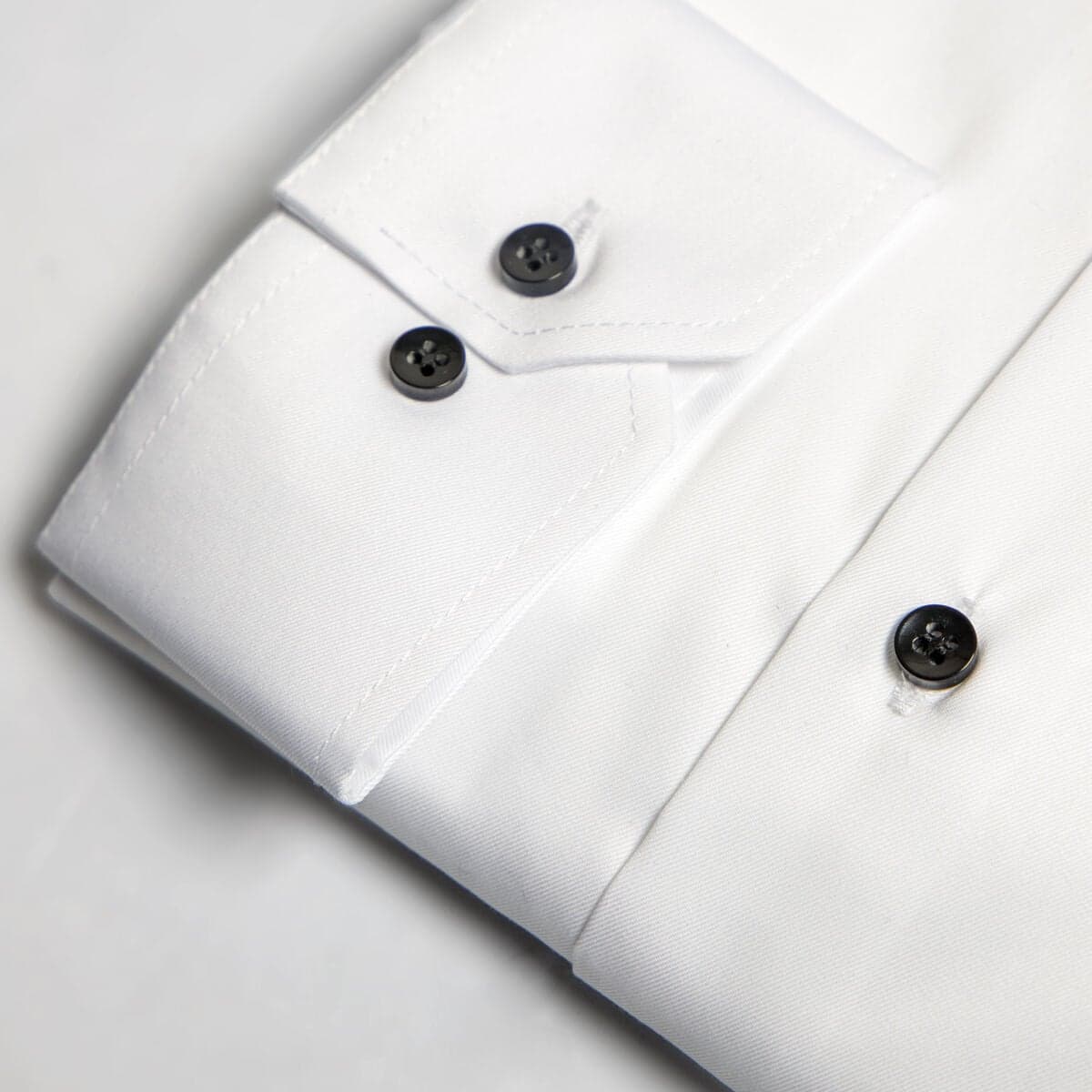
- Original product: custom colours, linings, neck labels, trims, hardware, hidden messages
- Apparel done properly, which is the hardest category to get right
- Packaging treated as part of the gift rather than a shipping cost
- Better unit economics on large uniform runs, because production is in-house
- One brand language across everything, instead of a marketplace of other people's products
Where they struggle
- No third-party gift marketplace, so no wine, no restaurant vouchers, no experiences
- Lead times on genuinely custom production are weeks, not days
- Historically weaker software, although this varies enormously by provider
- Minimum order quantities on fully custom products

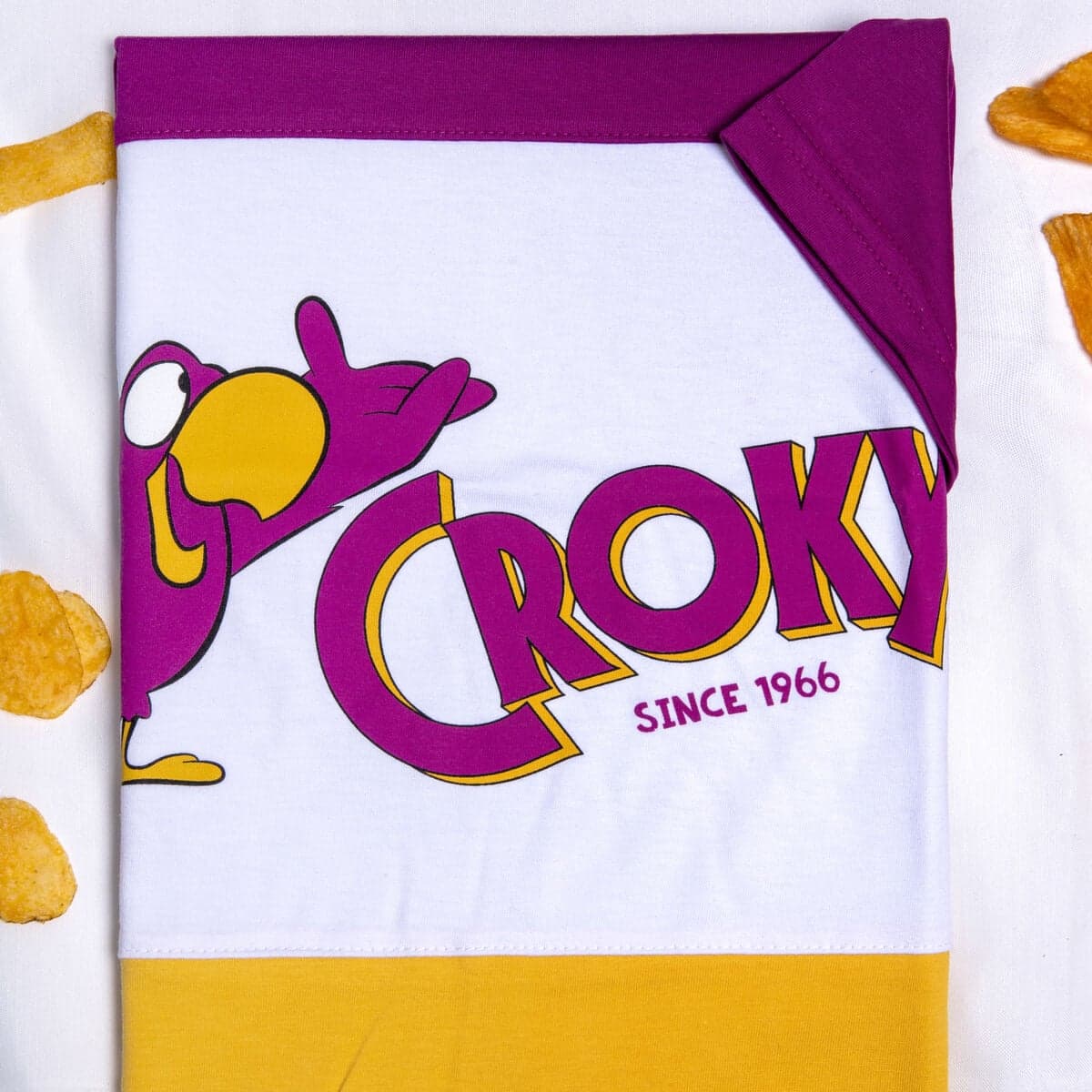
Apparel is the clearest test of a merch specialist. Anyone can print a logo; fit, fabric and finish are what people judge.
Local gift-box companies
Small, often excellent, and frequently the right answer for a specific job. A regional curator assembling boxes with local food, drink and craft products will beat any platform on charm for a domestic campaign of a few hundred boxes.
They break down on international shipping. Customs paperwork, duties, shelf life, cooling, allergens and dietary restrictions turn a lovely domestic box into an operational problem the moment it crosses a border. If your recipient list is one country and the logistics are simple, this model is genuinely competitive. If it spans continents, it usually is not. The full comparison of edible versus lasting gifts is worth reading before you commit either way.
Where Sunday fits, and where it doesn't
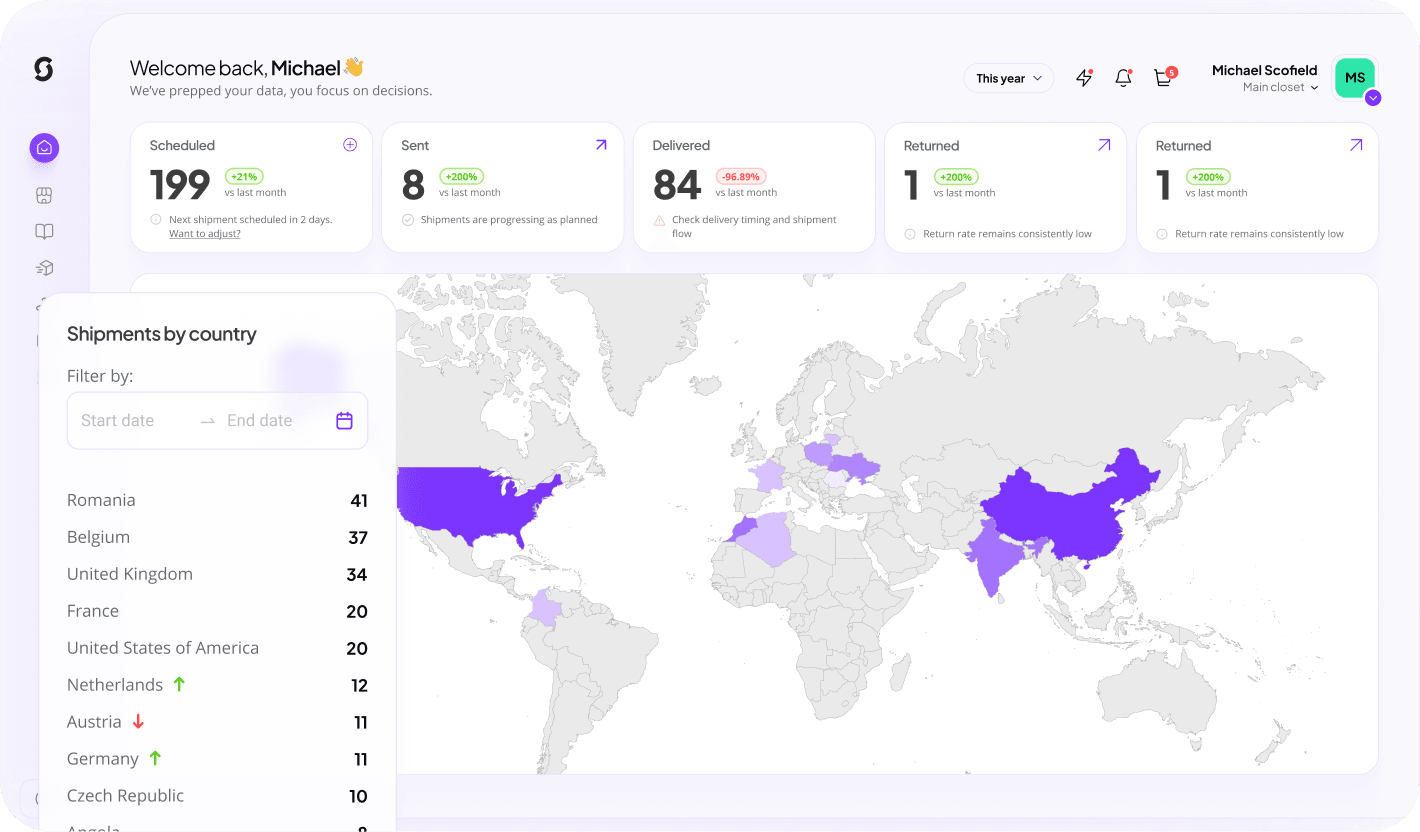
Sunday is a branded-merch specialist with a platform on top. We design and produce the merchandise, run the storage and global fulfilment, and automate the campaign side so gifting moments can be triggered from your systems rather than run on a spreadsheet.
Where we are strong
- Branded-merch expertise, especially apparel and accessories
- Custom production, not just decorating a catalogue item: colours, linings, labels, trims, packaging
- Platform automation for recurring gifting moments
- Global fulfilment with DDP shipping, so recipients never get a customs invoice
- Lower operating cost on large programmes, because we make the product rather than reselling it
- Design in your brand in about 30 seconds, before you talk to anyone
Where we are not the best fit
- You want a large third-party marketplace of consumer gifts, wine and experiences. That is a platform's job, not ours.
- Your primary use case is individual SDRs firing off ad-hoc sends from a CRM all day. The platforms are purpose-built for that.
- You need food or edible gifts as the centrepiece. We are a merchandise company.
- You need it delivered tomorrow with no lead time. Custom production takes weeks.
- You need a US-first sales stack integration matrix as the deciding factor.
The honest summary: if your gifting is mostly one-to-one, CRM-triggered and marketplace-sourced, a gifting platform is probably the better tool. If your gifting is branded merchandise at meaningful volume, especially seasonal campaigns and always-on programmes across multiple countries, that is what we are built for.
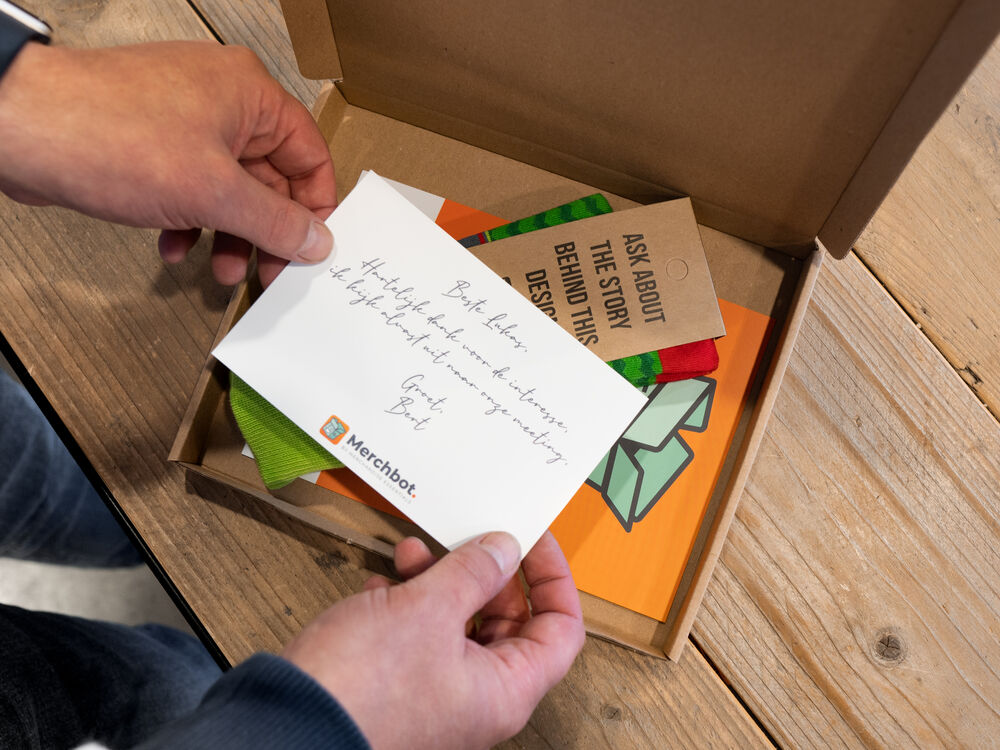
Whichever type you pick, this is the moment that decides whether the programme worked. Ask every provider to show you theirs.
The eleven evaluation criteria
Score every shortlisted provider against these. Weight them according to your programme, not theirs.
| # | Criterion | What good looks like |
|---|---|---|
| 1 | Product quality | They send samples without being chased, and the samples survive a week of real use |
| 2 | Customisation depth | Beyond a printed logo: colours, linings, labels, trims, packaging inserts |
| 3 | Packaging | Treated as part of the gift, with options shown, not a shipping carton |
| 4 | Global reach | Named countries, named couriers, and a clear answer on duties |
| 5 | DDP shipping | Duties prepaid, so recipients are never invoiced. Ask explicitly |
| 6 | Warehousing model | Where stock sits, what storage costs, and who owns the inventory |
| 7 | Automation and integrations | Real triggers from your CRM or HRIS, not a CSV upload |
| 8 | Address collection | Recipient-supplied links, validation, and a documented privacy position |
| 9 | Total cost transparency | A written fee schedule covering platform, storage, kitting, shipping and returns |
| 10 | Reporting | Delivery data plus something you can tie to a business objective |
| 11 | Sustainability position | Specific and verifiable, not "eco". See eco friendly corporate gifts |
Questions that expose a weak partner
These are the ones that separate providers quickly. A strong partner answers all of them without hesitating.
- Can I have a physical sample of the exact item, decorated? Not a similar item. The actual one.
- Who manufactures this, and have you visited? Distributors often cannot answer. Producers can.
- Show me the full fee schedule in writing. Platform, per-send, storage per pallet or bin, kitting per unit, shipping, returns, and what happens to unused stock.
- What happens to leftover inventory after twelve months? The answer tells you who carries the risk of your overordering.
- Is shipping DDP, and who pays if a recipient is charged duty? If they hesitate, your recipients will pay.
- What is your failed-delivery rate, and who re-sends? Every international programme has one. Ask for the number.
- What is the real lead time for a custom product, from artwork approval? Then add the shipping time to it, which many quotes exclude.
- Which countries can you not ship to? Everyone has a list. Providers who claim they do not are guessing.
- Can I see a campaign of my size that you ran end to end? Not a logo wall. A comparable programme.
- Who is my contact when something goes wrong at 6pm on 18 December? Seasonal gifting is where support quality becomes visible.
How pricing actually works
Nobody in this market publishes real prices, which is annoying but not sinister: unit costs move with quantity, decoration, materials and destination. What you can do is insist on seeing every component, because the headline unit price is rarely where the money goes.
| Cost component | Who charges it | What to watch |
|---|---|---|
| Product unit cost | Everyone | Quoted at what quantity? Ask for three volume bands |
| Decoration and setup | Distributors, merch specialists | Per colour, per position, and whether setup repeats on reorders |
| Packaging | Everyone | Often quoted separately or omitted entirely from the first quote |
| Platform or licence fee | Gifting platforms | Annual, sometimes per seat, sometimes tiered by feature |
| Per-send fee | Gifting platforms | The number that decides whether a large campaign is affordable |
| Storage | Platforms, merch specialists | Per pallet, bin or SKU per month. Compounds quietly |
| Kitting and assembly | Everyone who builds boxes | Per unit, and higher for anything non-standard |
| Shipping | Everyone | Zone-based; ask for your actual country mix, not an average |
| Duties and taxes | International only | DDP or not. This is the one that surprises recipients |
| Returns and failed deliveries | Everyone | Who pays, and whether the item is re-sent or written off |
Build a model with your real numbers before any demo: recipients per campaign, campaigns per year, countries, and average gift value. Then ask each provider to price that exact scenario. It is remarkable how differently the same programme prices across the four provider types, and how often the cheapest unit price produces the most expensive programme.
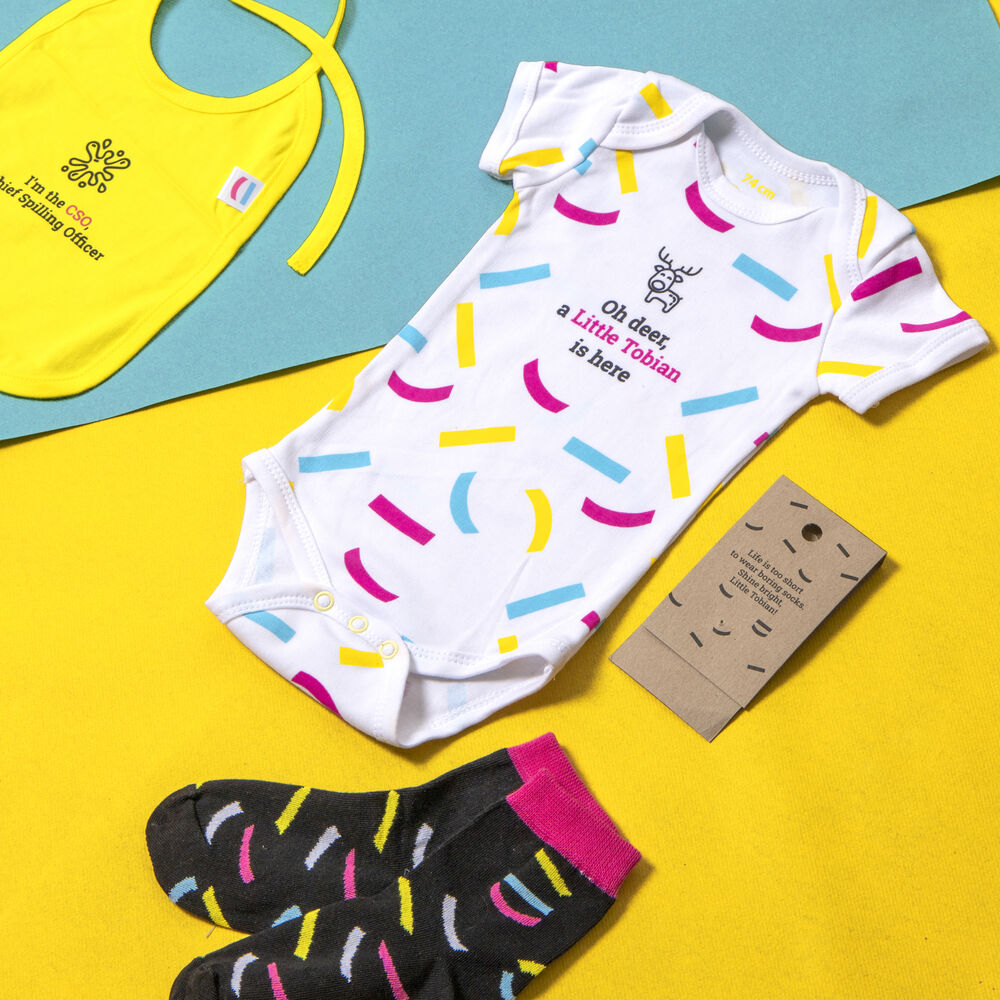
A real programme is a set of moments, not a single order. Ask providers how they handle the recurring ones, not just the Christmas peak.
Red flags
- No samples before signature. Any provider confident in their product sends one.
- A quote with one number on it. If the fee schedule is not itemised, the surprises are in the gaps.
- Vague sustainability language. "Eco-friendly" with no standard, percentage or certificate number is marketing.
- Reluctance to name manufacturing countries or partners. Not always sinister, always worth pressing.
- Storage costs that appear only after the first invoice. Ask up front, in writing.
- Case studies with no numbers. A logo wall is not evidence that they can run your programme.
- Pressure to commit to annual volume before a pilot. Run one campaign first. Everyone is impressive in a demo.
Where to go next
Once you have picked a provider type, the rest is programme design. Start with the corporate gifts hub for the fundamentals, then corporate gift ideas and the best corporate gifts for the products themselves. If your programme is premium, luxury corporate gifts covers what actually separates premium from expensive, and custom corporate gifts covers how far customisation can go.
For the audience-specific rules, employees are in corporate gifts for employees, clients in corporate gifts for clients, and customers in customer appreciation gifts. Seasonal programmes, where provider choice matters most, are in corporate Christmas gifts. Events need a different mix again, covered in event merchandise. If what you are really buying is an always-on internal range, look at company swag and the company swag store model instead.
If you want to test us before talking to anyone: the catalog shows what we can produce, the platform covers the automation and storage side, distribution covers global fulfilment and DDP shipping, and how it works walks through the process end to end. For the single easiest starting product, custom socks can be designed in the free sock mockup generator in about a minute, and the full argument for them is in the custom socks guide.
About this article
Run the comparison with real numbers
Design a gift in your brand in about 30 seconds, then price your actual programme: your recipient count, your countries, your campaigns per year.
Start with a free account