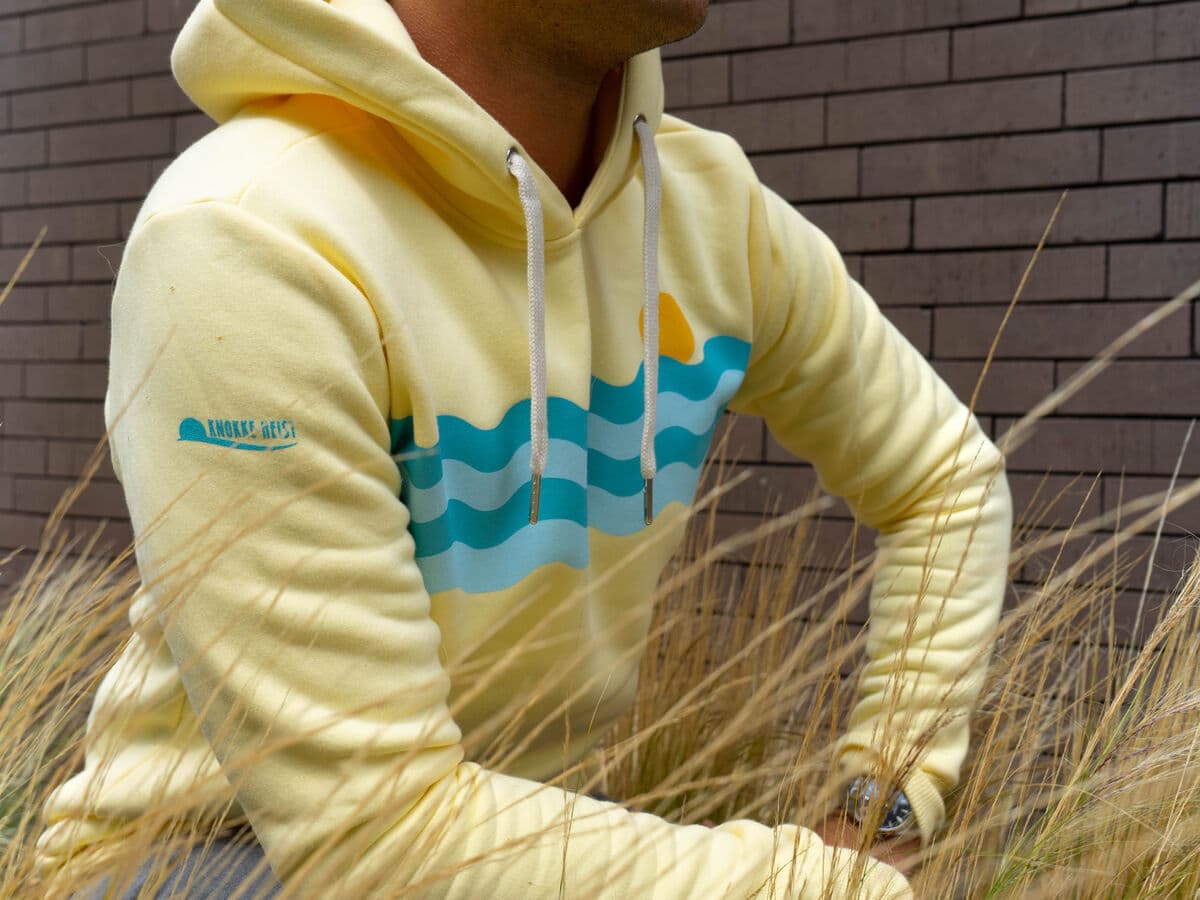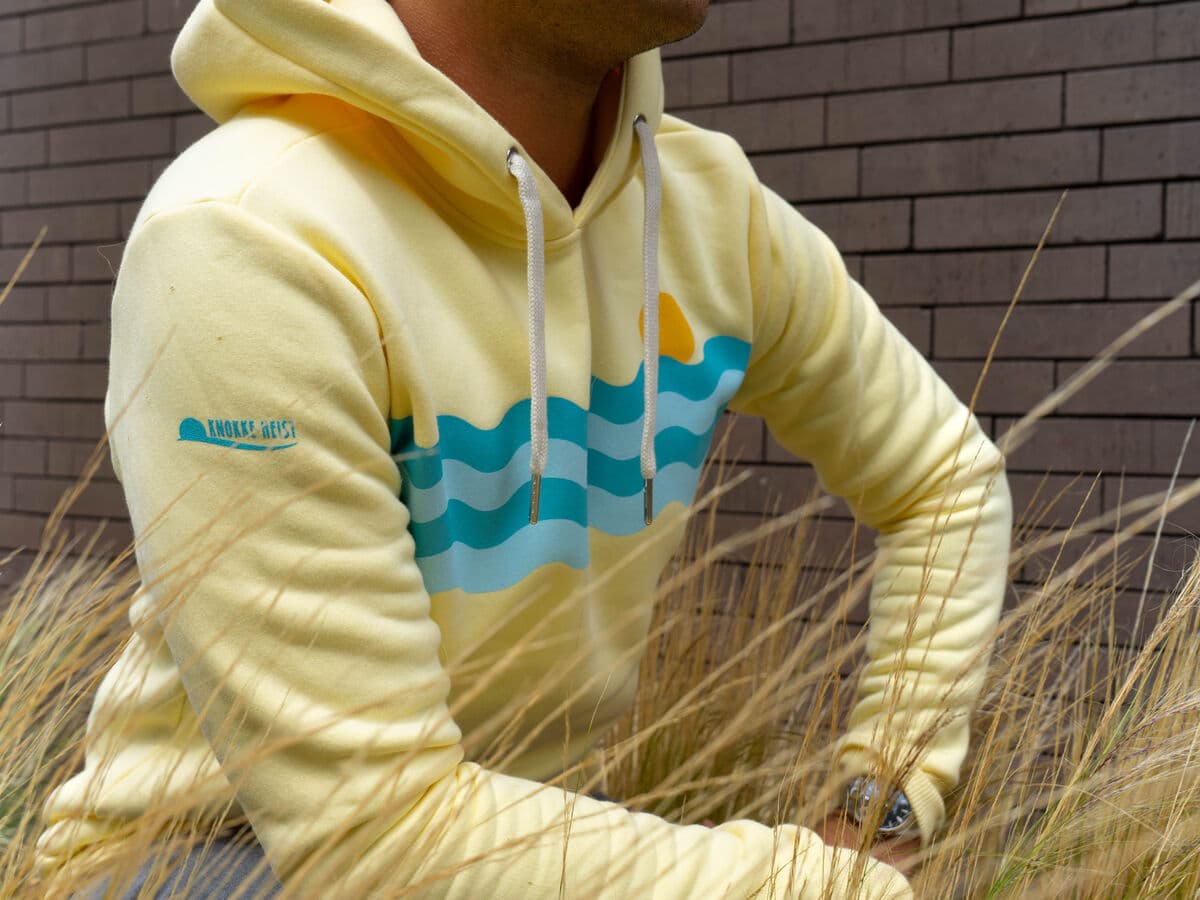
Corporate clothing is a company's branded wardrobe: quality garments with a logo that employees choose to wear. It's not workwear, and not always a strict uniform. The best program feels like its own fashion collection: a brand store with 15 to 20 approved items, sizes that fit, and decoration that matches the brand.
Corporate clothing looks simple until you actually buy it. Then questions surface about the difference with workwear, about quantities, about embroidery versus printing, about sizing, about who pays, and about what happens when five new people join next month. Below are the twelve questions we get asked most.
This article is part of our complete guide to corporate clothing with your logo.
The basics
1. What is corporate clothing?
Corporate clothing is a company's branded wardrobe. Quality garments with a logo that employees get to wear if they want to. It sits closer to corporate fashion than to workwear: a curated collection that expresses the brand, builds a sense of belonging, and gives employees access to clothing that fits the identity. A strong program feels like the company's fashion collection, not a pile of random branded items.
2. What's the difference between corporate clothing and workwear?
The biggest difference is obligation. Workwear belongs to a role or task and is usually mandatory: polos, softshells, work jackets, aprons. It has to survive the job and the washing machine. Corporate clothing is voluntary: jackets, hoodies, knitwear, and shirts that employees choose because they like them. Workwear has to function, corporate clothing has to be worn by choice. Read the separate guide on branded workwear.
3. What's the difference between corporate clothing and a uniform?
A uniform is role-bound and almost always mandatory, aimed at instant recognition: retail, hospitality, aviation, logistics, service. You need to see immediately who's working. Corporate clothing is the voluntary brand wardrobe. There's overlap, and many companies have both. But the job differs: a uniform has to identify, corporate clothing has to attract.
4. Corporate clothing or company apparel: what's the difference?
Only the language. Buyers search for different terms depending on the market: in the Netherlands it's bedrijfskleding, in Belgium often bedrijfskledij. Same product, same buyers, same requirements. The same goes for corporate clothing with a logo and printing corporate clothing. We build our pages around the local commercial language buyers actually use rather than a translated generic term.
Quantities, price, and custom work
5. What's the minimum quantity for custom corporate clothing?
That depends on the garment, the decoration, and the level of customization. Ready-to-wear clothing with branding can start at lower quantities and moves faster: you pick existing garments and add your brand. Fully custom-made corporate clothing with its own patterns, cut, and colors needs more preparation and higher starting volumes. Most companies start with printed stock and grow toward custom work once the wardrobe is in place and demand is predictable. More on that in the guide to custom corporate clothing.
6. What determines the price of corporate clothing with a logo?
Seven things: the type of garment, the quantity, the fabric quality, custom fit or pattern development, the decoration method, the number of branding positions, and the packaging. On top of that, whether you work from stock or go fully custom, and which reorder model you choose. Printed stock is cheaper and faster. Fully custom costs more preparation, but delivers a wardrobe that can only be yours.
Embroidery, printing, and sizing
7. Should corporate clothing be embroidered or printed?
There's no single right method. It depends on the product, the brand, the style, and the design direction. Classic brands choose embroidery: understated, premium, professional, and the standard for shirts, polos, and knitwear. Younger and more expressive brands choose oversized print. Retro looks work with patches. On top of that there are woven labels, leather labels, contrast stitching, custom trims, and branded neck tape. Match the method to your brand identity, not to the cheapest line on the quote. Details in printing and embroidering corporate clothing.
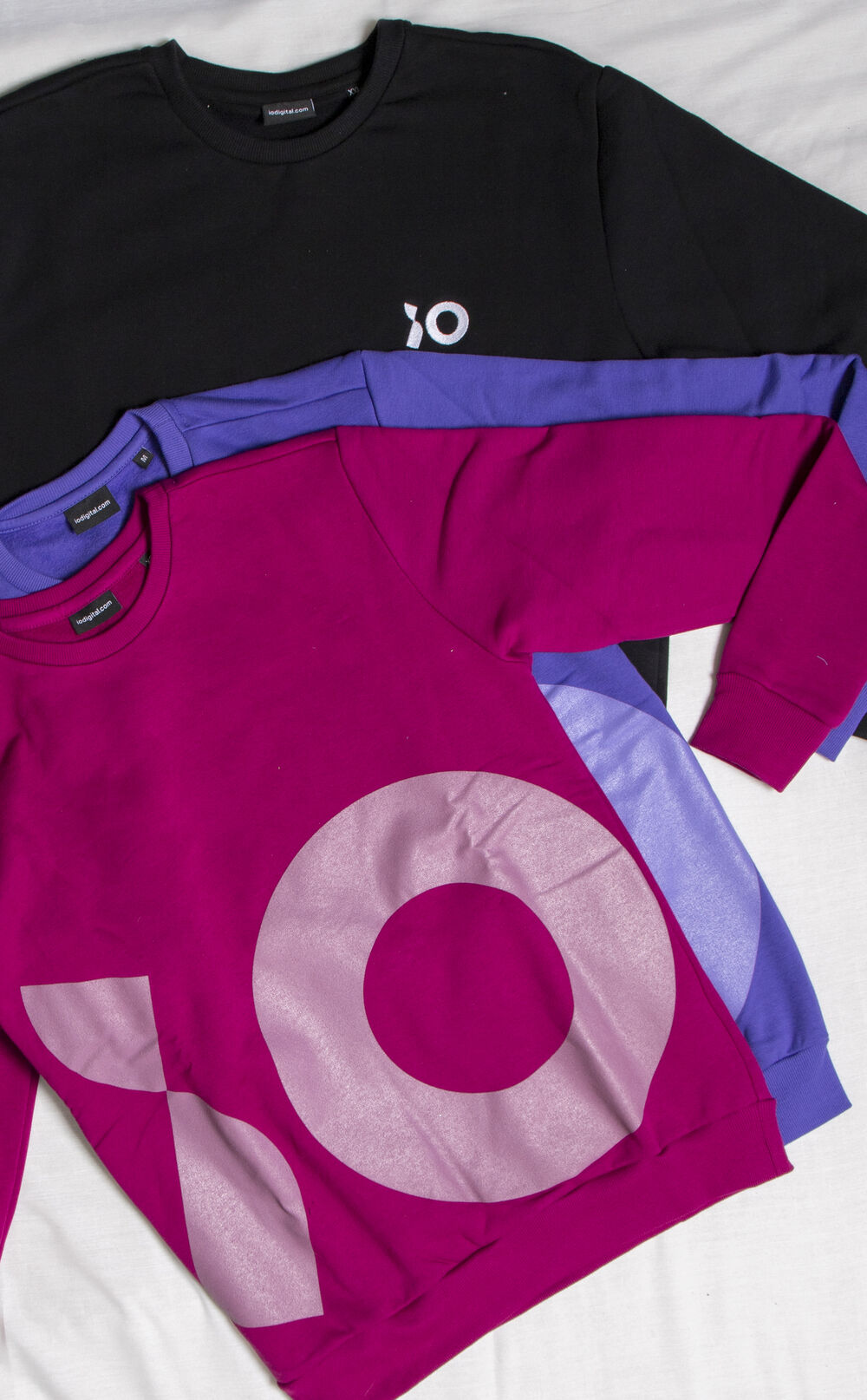
Sizing is the biggest operational risk in corporate clothing. Fashion sizing and clear size charts solve most of it.
8. How do I prevent returns from the wrong sizes?
Start with clear, accurate size charts. Sunday's clothing sits close to fashion sizing: if you wear a medium in your favorite shirt, you'll probably wear a medium with us too. That avoids the trap of garments that run unusually small or large, and in practice it results in very few returns. Also make sure you have an inclusive size range, clear measurements, and consistent sizing on reorders. A medium should still be a medium next year.
9. Does corporate clothing for women exist?
Yes, and it's not a minor detail. Corporate clothing for women needs its own women's fit, not a unisex compromise. Clothing that doesn't fit doesn't get worn, and then your whole program is wasted budget. Work with men's and women's cuts, an inclusive size range, and clear ordering guidance. The full overview is in corporate clothing for women.
Brand store, points, and reordering
10. What's a brand store, and do I need one?
A brand store is an internal shop with roughly 15 to 20 pre-approved, on-brand items. That's your standard wardrobe. Teams order from it whenever they need clothing or merch, and the store grows as new approved products are added. It cleans up loose design requests, inconsistent garments, approval delays, off-brand choices, and fragmented ordering. For larger companies it's essential. More in the guide to the brand store.
11. Should employees pay for corporate clothing themselves?
Better not to. Having employees pay directly for branded corporate clothing rarely works. There are few cases where staff buy corporate clothing with their own money. The model that does work is a points or coin system: employees earn points through onboarding, work anniversaries, performance, recognition, campaigns, and participation, and spend them in the employee store. It works because they feel rewarded, not sold to.

Points instead of an invoice. Employees earn them through onboarding, anniversaries, and recognition, and choose for themselves from the approved wardrobe.
12. How do I handle corporate clothing for new hires?
Manage it monthly and centrally. Structure, not complexity. Work with live stock overviews, reorder schedules, new hire needs, availability, lead times, approved items, and incoming and outgoing orders. Organized, this is little work. The biggest risk is a program that runs on emails, spreadsheets, and scattered files, until nobody knows what's in stock or approved anymore. At scale, a central platform isn't a luxury but a requirement.
What about sustainability?
Look at sustainability across the whole wardrobe, not per product. Choose products people actually want to wear. Avoid disposable clothing. Keep styles consistent and limit one-off designs. Manage your stock well, avoid overproduction, and reorder intelligently.
Corporate clothing with Sunday
Sunday is merch infrastructure, not a classic supplier. You open a product page and the platform immediately shows design directions with live pricing, based on your brand assets. Browse the full range of corporate clothing. Want to see how your logo looks on the fabric? Use the free mockup generators for hoodies or jackets. Looking for a supplier for functional clothing packages rather than a brand wardrobe? Read our honest comparison of corporate clothing suppliers.
About this article
Still have a question about corporate clothing?
Create a free account and see your own collection with live pricing. Faster than a round of quotes.
Get free designs