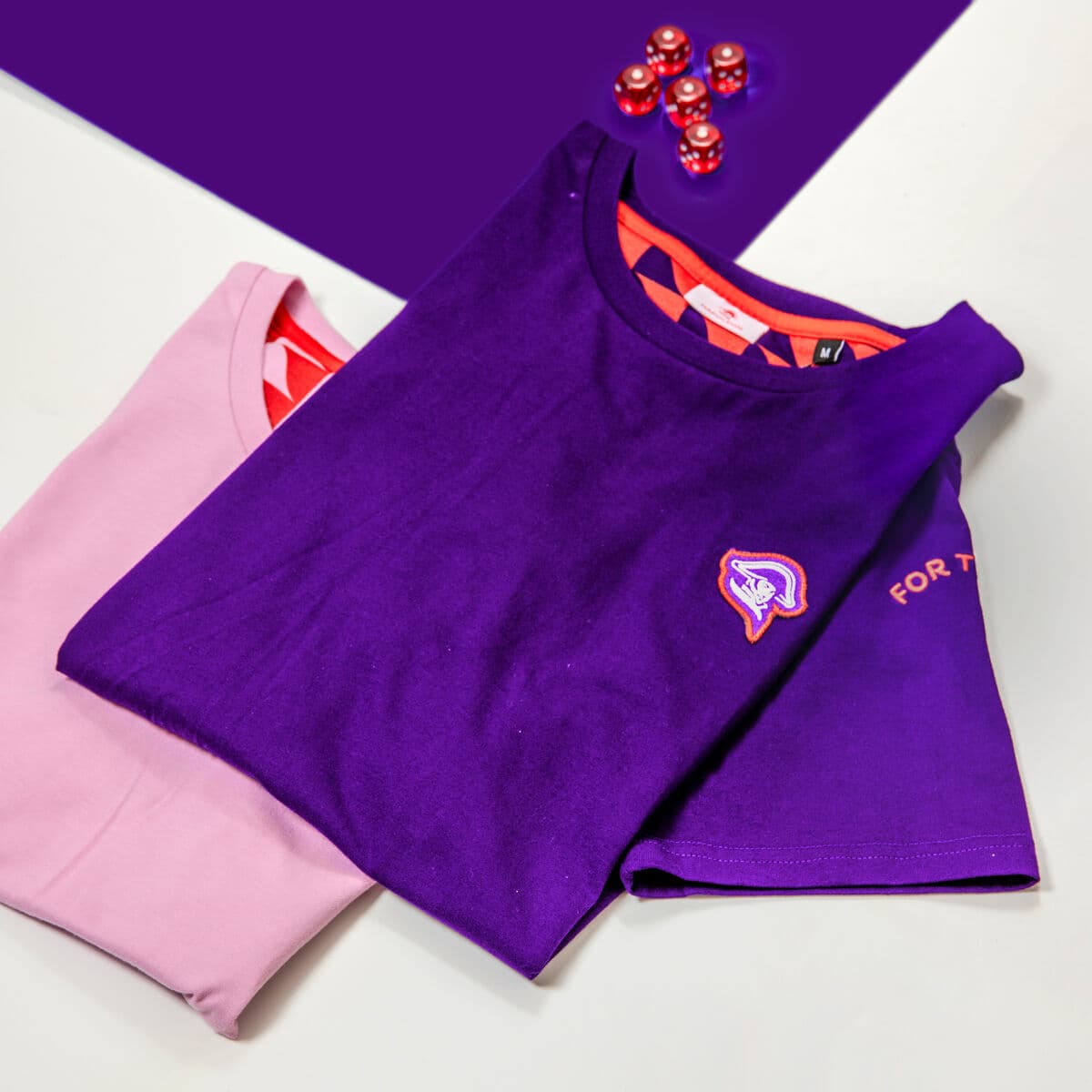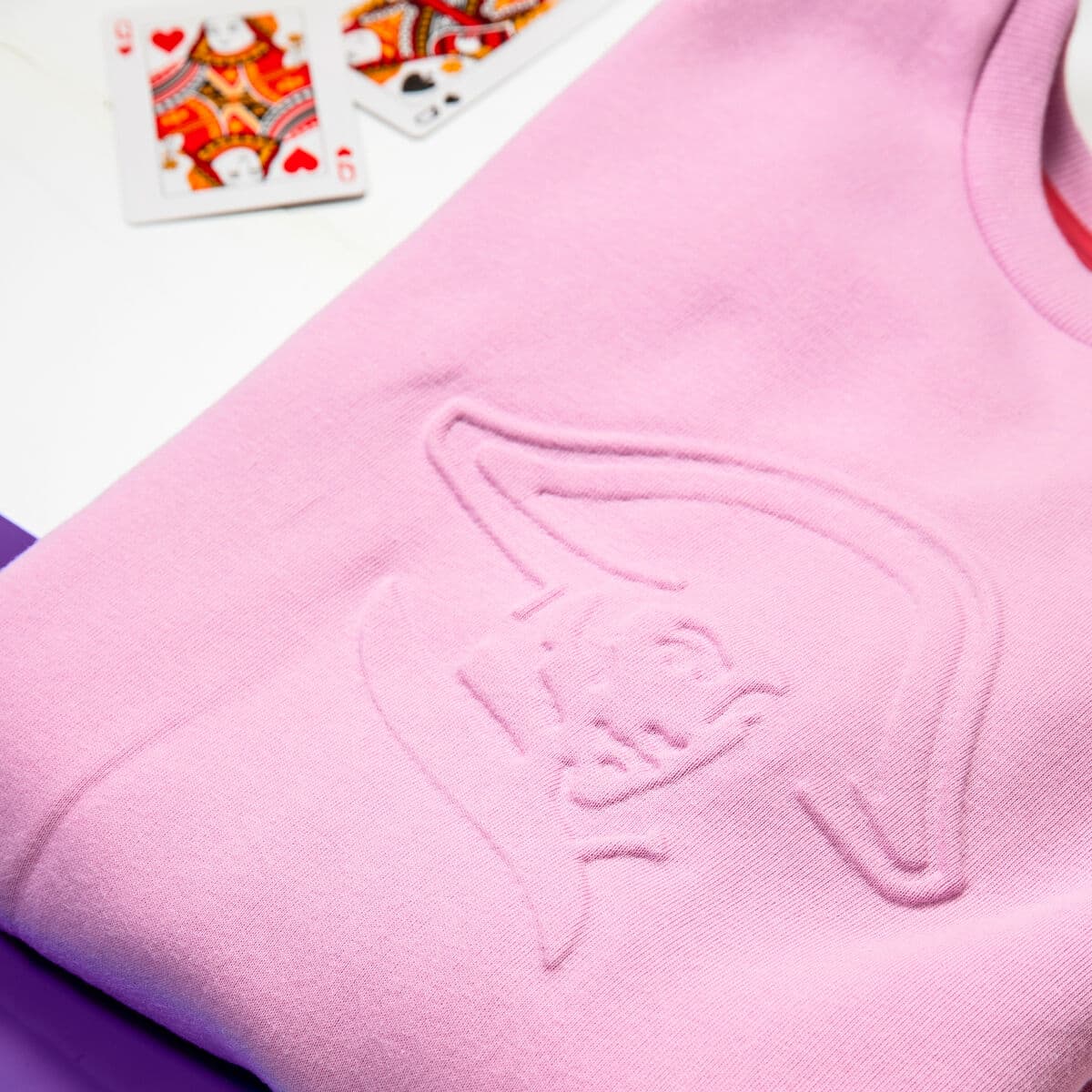
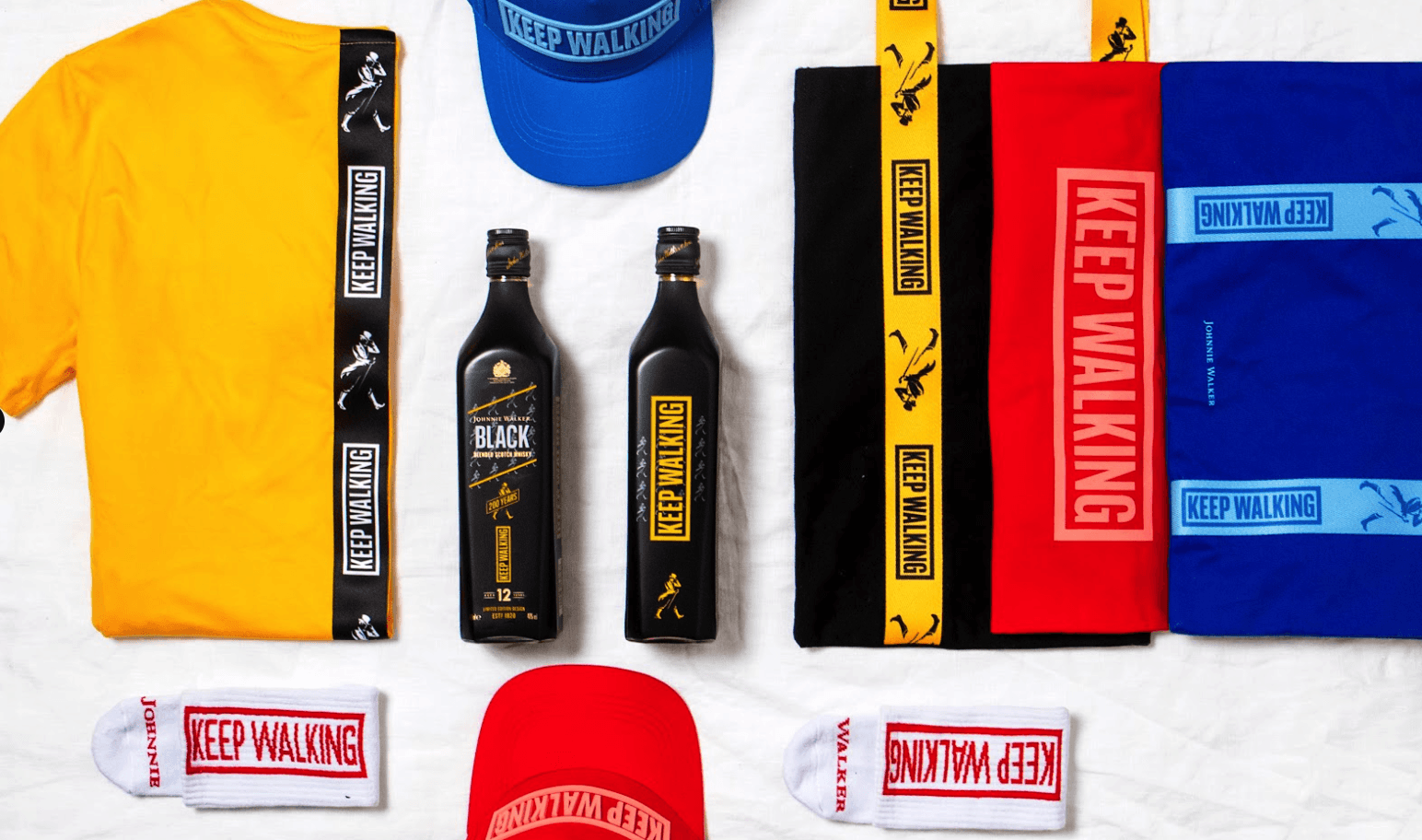
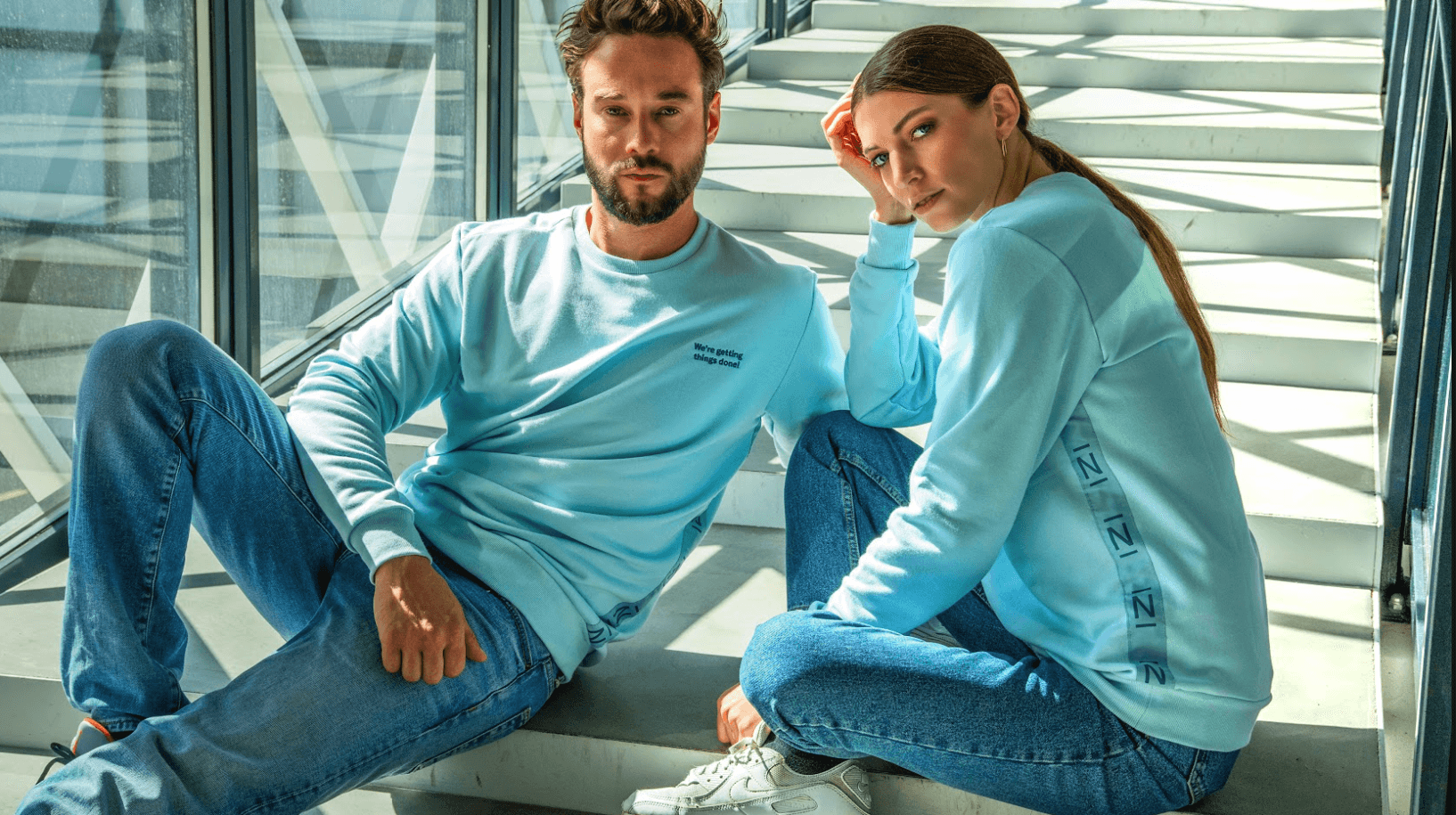

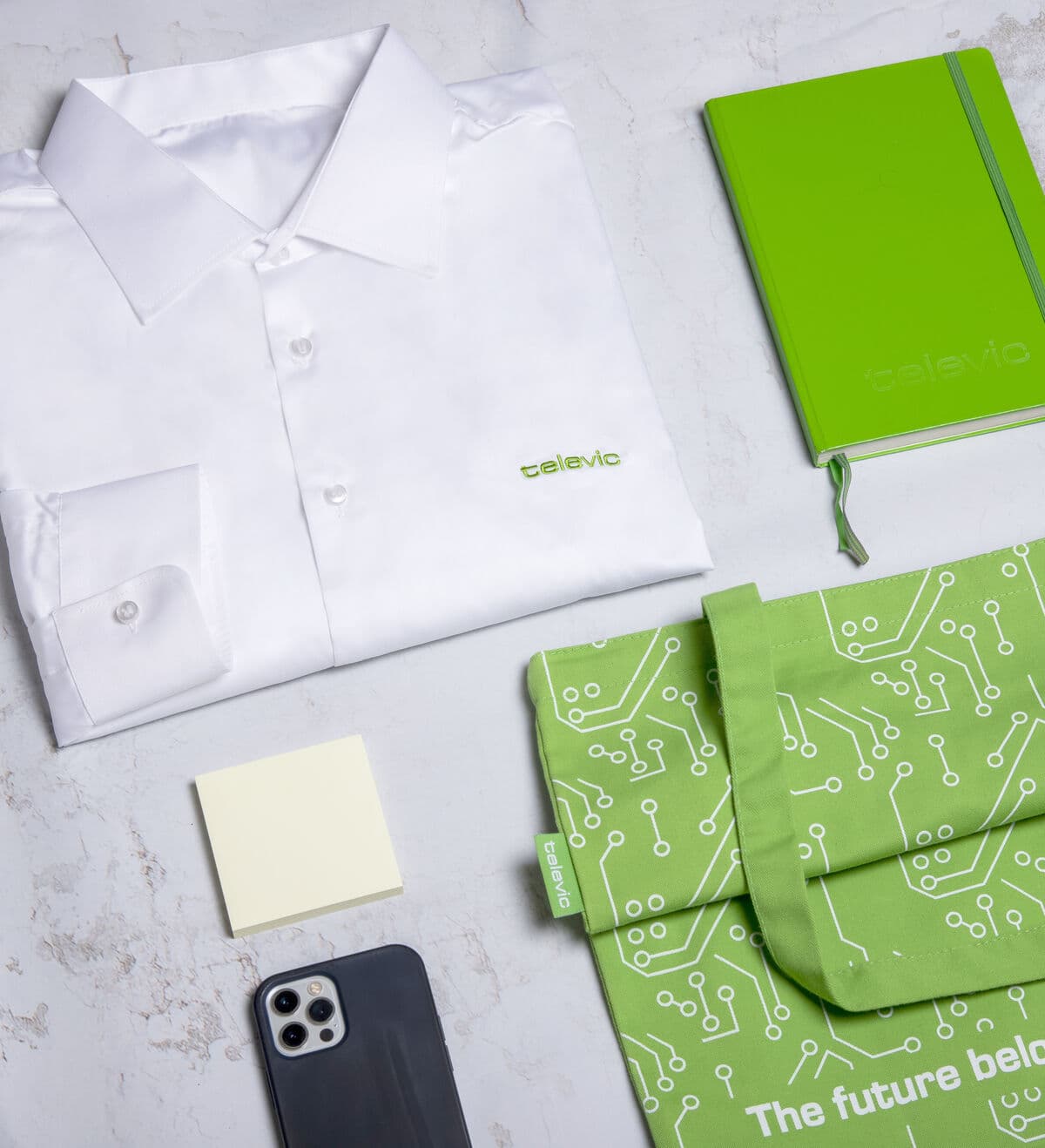
A brand store is an internal shop with roughly 15 to 20 pre-approved, on-brand items: your company's standard wardrobe. Teams order only from that selection. That puts an end to one-off design requests, inconsistent garments, and approval delays. Employees get access through a points or coin system, not an invoice.
The brand store is the operational heart of corporate clothing, and at the same time the part most companies skip. They order per campaign, per department, per moment. Then they're surprised their brand looks different everywhere.
This article is part of our complete guide to corporate clothing with your logo.
What's in this article
What a brand store is
A brand store is an internal shop with a fixed, approved selection of clothing and merch. Roughly 15 to 20 items. Not a catalog with a thousand products, not a free choice from everything that can be branded. A curated selection approved by the brand team that together forms the company's standard wardrobe.
Teams order from it whenever they need clothing or merch. New approved products get added. And that's how the store grows into a complete branded wardrobe instead of a collection of one-off orders.
What it prevents
The brand store isn't a nice-to-have extra. It's the fix for six concrete problems every growing company recognizes.
- One-offs. Every department designing its own hoodie because it "briefly needed something."
- Off-brand choices. Wrong colors, wrong logos, wrong garments.
- Approval delays. Every order that has to go back through the brand team.
- Inconsistent garments. Three hoodies from three suppliers, in three fits.
- Back-and-forth emails. Orders living in inboxes instead of a system.
- Fragmented ordering. Small batches, high prices, no volume advantage.
For larger companies this is essential. Departments can move fast and still stay on-brand, precisely because the choice was made in advance.
How to set it up with the brand team
Start with the brand team, not procurement. The entire logic of corporate clothing is that people wear it voluntarily, and that only works if the brand is right.
Step 1: define your brand style
Are you a traditional brand or a young, expressive one? That determines everything that follows. Traditional means business shirts, polos, knitwear, understated jackets, and embroidered logos. Young and creative means hoodies, oversized tees, custom patterns, caps, and oversized prints.
Step 2: choose your foundation
For almost every company, jackets are the strongest foundation. Puffers, bodywarmers, softshells, windbreakers. They're practical, visible, and work in many situations. Not sure where to start? Start with custom jackets.
Step 3: get the brand team to approve
Products, colors, decoration methods, placements, labels. Do it right once, and nobody has to ask again after that. That's exactly the payoff.
Step 4: lock in fits and sizes
Men's and women's cuts, an inclusive size range, clear size charts. Our clothing sits close to fashion sizing, which keeps returns low. More on that in the guide to corporate clothing for women. Apparel staples start from 10 pieces per item, so smaller teams can build a full store too.
Step 5: launch the store
Approved products, fixed prices or point values, access for your team. From then on, everyone orders from the same selection.
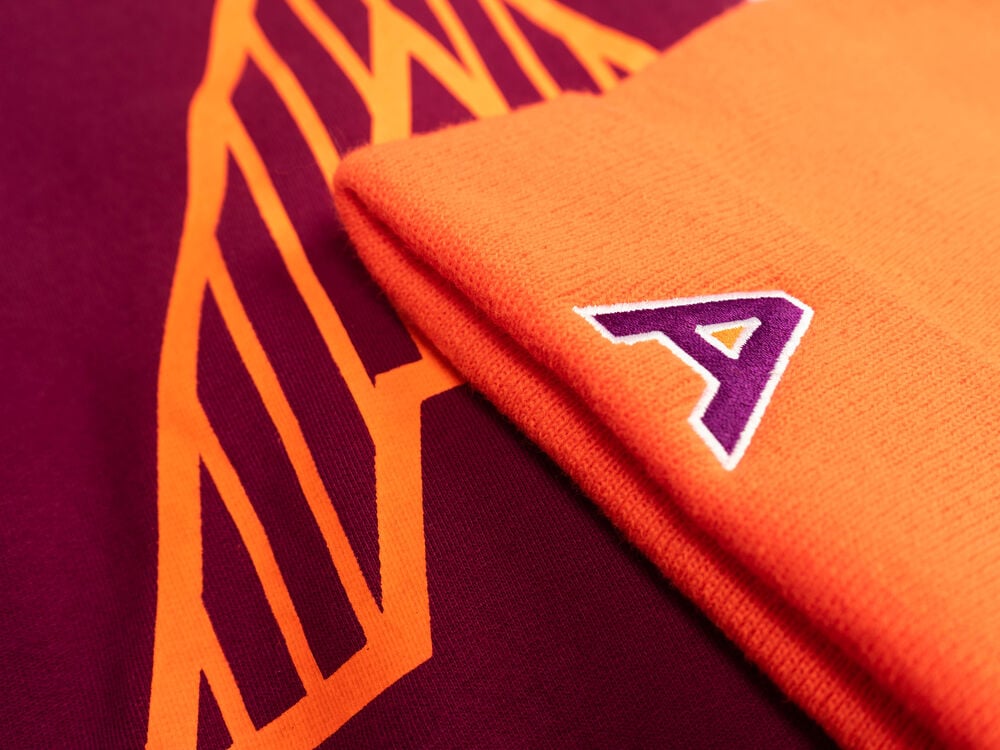
Approved items in fixed colors with fixed decoration. That's the whole trick: the choice gets made once, not every time.
Which 15 to 20 items
There's no universal list, because it depends on your brand style. But this is a workable starting point.
| Category | Number of items | Examples |
|---|---|---|
| Outerwear | 3 to 4 | Puffer, bodywarmer, softshell, windbreaker |
| Sweaters and hoodies | 3 to 4 | Hoodie, crewneck, merino sweater, knitwear |
| Tops | 3 to 5 | Polo, T-shirt, business shirt, longsleeve |
| Headwear | 2 | Cap, beanie |
| Accessories | 3 to 5 | Backpack, laptop sleeve, bag, bottle, socks |
Two rules of thumb. First: choose fewer, higher-quality items over a long list of mediocre ones. Second: include enough accessories, since they're size-free and lower the barrier for anyone who hasn't ordered yet.
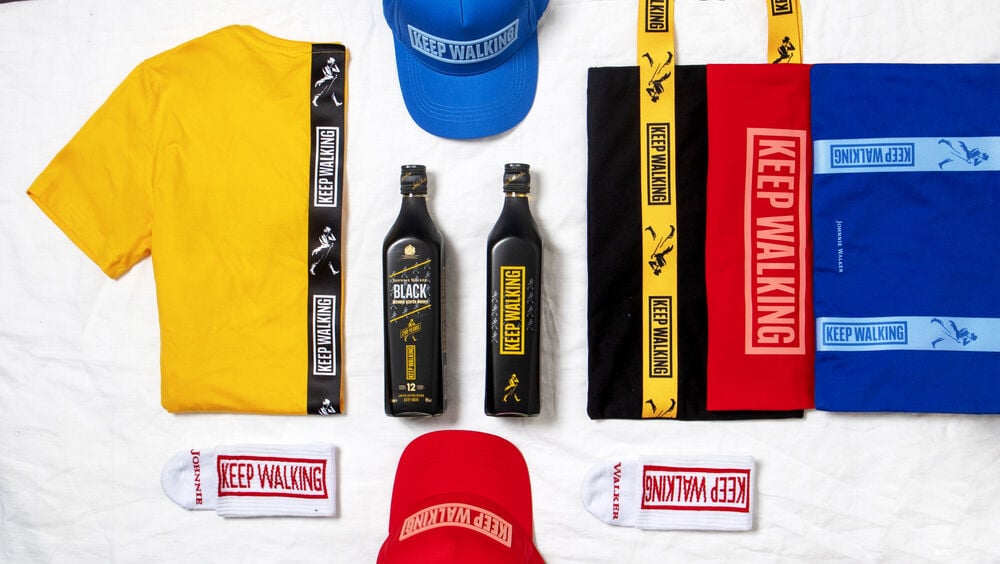
A complete store combines clothing with size-free accessories. That way everyone can join in, even people still unsure about sizes.
Access: points instead of paying
This is where it most often goes wrong. Companies build a nice employee webshop and then have employees pay out of pocket for branded corporate clothing. That rarely works. There are few cases where staff buy corporate clothing with their own money.
The difference is psychological, but the effect is very practical. An invoice turns your brand wardrobe into a purchase people can decline. Points turn it into a reward they want to claim.
| Employees pay themselves | Points or coins | |
|---|---|---|
| Feeling | I'm being sold something | I'm being rewarded |
| Participation | Low | High |
| Link to HR | None | Onboarding, anniversaries, recognition |
| Budget control | Unpredictable | You set the points pool |
What employees earn points for
The moments that work best in practice.
- Onboarding. New employees get a starting budget and choose their first pieces themselves.
- Work anniversaries. One year, three years, five years. A fixed points bonus per milestone.
- Recognition. Appreciation from colleagues or managers, converted into points.
- Performance. Goals reached, projects finished, results delivered.
- Campaigns. Participation in internal actions, events, or programs.
- Referrals and participation. People who contribute earn along the way.
The best part: the budget stays in your hands. You set the points pool, the value per item, and who gets points when. Employees experience freedom of choice, you keep control.
Monthly management and reordering
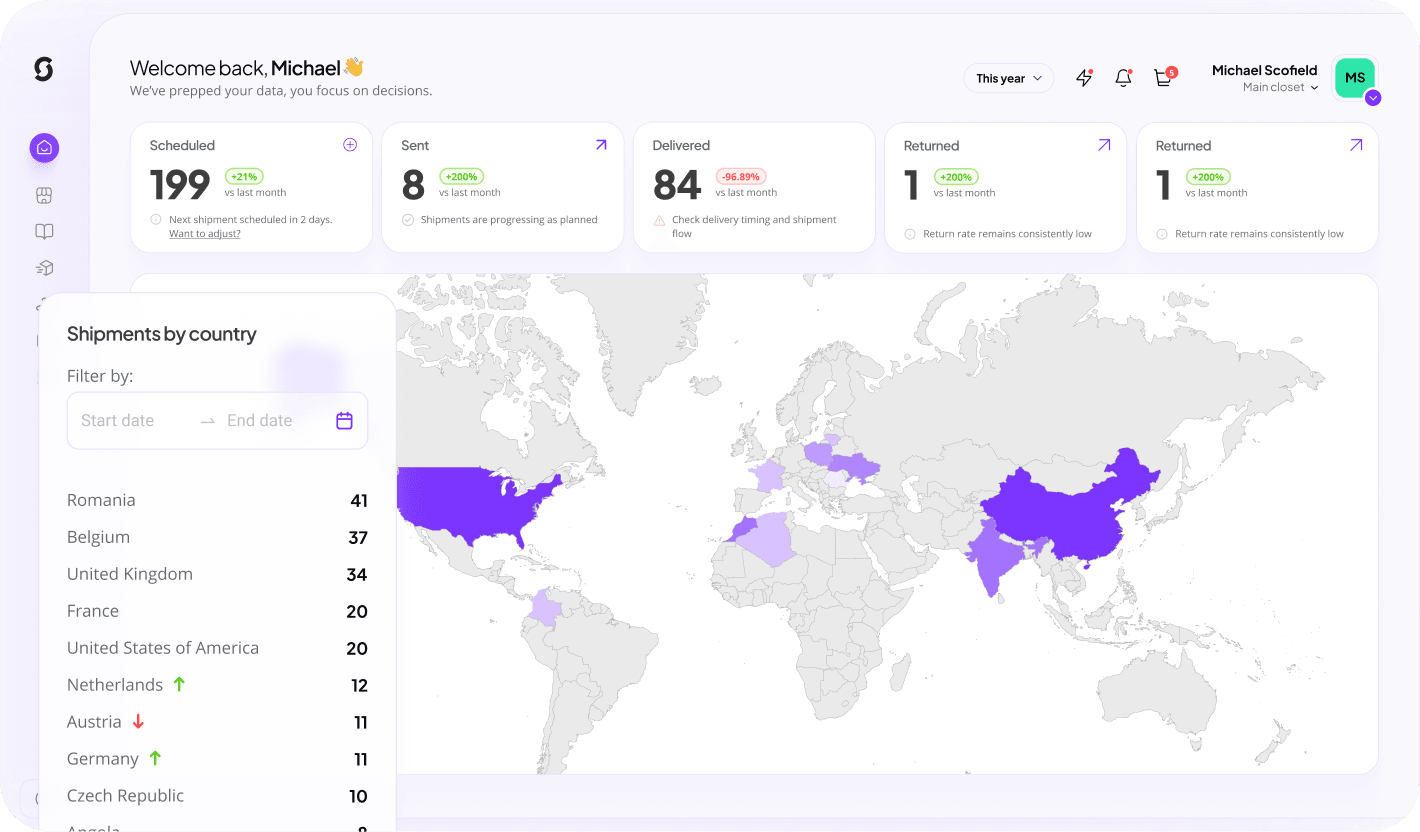
Manage your brand store monthly. Structure, not complexity. One fixed moment each month where you go through everything.
- Live stock overview: what's left, what's almost out.
- Reorder schedules: what needs to be replenished this month.
- New hire needs: who's starting, what do they need.
- Availability and lead times per item.
- Incoming and outgoing orders.
- Approved items and upcoming launches.
Organized, this is little work. Chaotic, it quickly becomes a mess. Which brings us to the biggest risk.
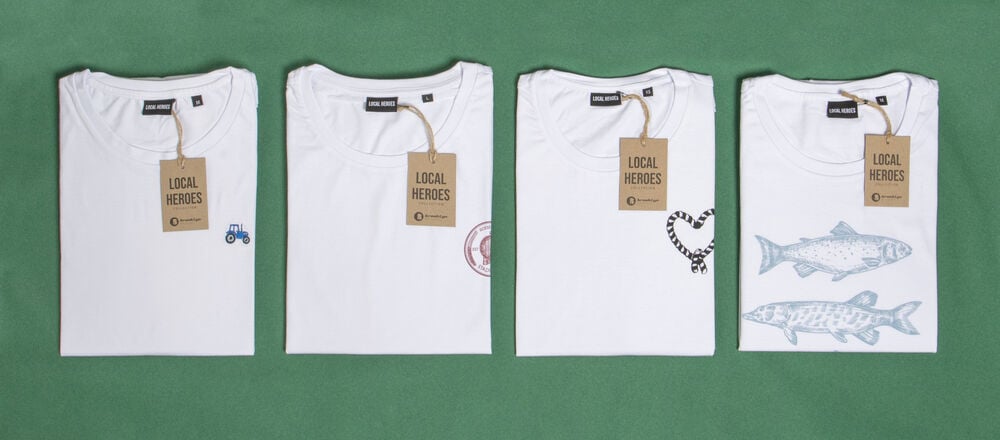
Reordering is a monthly rhythm, not a fire drill. Live stock, fixed reorder moments, and a clear list of approved items.
Why a central platform
The biggest risk to your corporate clothing program isn't the quality of the clothing. It's running the program through emails, spreadsheets, loose design files, and scattered folders.
That works fine for a while. Until someone leaves, until a file disappears, until nobody knows anymore what's in stock, what's approved, and what needs reordering. At scale, a central platform isn't a luxury, it's a requirement.
Build your brand store with Sunday
Sunday manages the brand store end to end: building the store, selecting products, branding, stock, the points and coin logic, fulfillment, inventory, and reporting. The store becomes the central home base for your company wardrobe, and also the place where new employees pick their first pieces.
You open a product page, the platform uses your brand assets, and immediately shows design directions with live pricing. You see what a jacket, hoodie, or knitwear piece looks like in your colors, and how each choice moves the price. Want to go beyond stocked, printed items? Custom corporate clothing is the next step.
Browse the corporate clothing range, discover the platform, browse the catalog, and check distribution if you're shipping to multiple offices or countries. Want to see what your design looks like first? Use the free mockup generators for hoodies or jackets.
Mostly managing functional clothing your team wears because the job requires it? Read our sister guide on branded workwear. Different rules apply there.
Frequently asked questions
What is a corporate clothing brand store?
A corporate clothing brand store is an internal shop with roughly 15 to 20 items approved by the brand team. Together they form the company's standard wardrobe. Teams order only from that selection, which ends one-off design requests, off-brand choices and approval delays, and keeps every garment consistent across departments.
How many items should a brand store have?
Aim for 15 to 20 items. A workable split is 3 to 4 outerwear pieces, 3 to 4 sweaters and hoodies, 3 to 5 tops, 2 headwear items and 3 to 5 accessories. Choose fewer, higher-quality items over a long list, and include size-free accessories so everyone can order.
Should employees pay for items in a company brand store?
Rarely. Few employees buy corporate clothing with their own money, so an invoice turns the wardrobe into a purchase people decline. A points or coin system works better: employees earn points for onboarding, anniversaries, recognition or performance and spend them in the store, while you set the points pool.
How do you set up an employee brand store?
Start with the brand team, not procurement. Define your brand style, choose a foundation such as jackets, and get products, colors, decoration and placements approved once. Then lock in fits and size ranges and launch the store with fixed prices or point values. From then on, everyone orders from the same selection.
What is the minimum order per item in a Sunday brand store?
Apparel staples start from 10 pieces per item, so smaller teams can build a full store too. Sunday runs the store, branding, stock, points logic, fulfillment and reporting on one platform, and ships to 200+ countries with customs and duties handled, so recipients never pay to receive.
About this article
Set up your brand store in 30 seconds
Approved products, reliable sizing, stock, reordering, and access for employees. All from a central platform.
Get free designs