
Custom jackets are branded outerwear made in your colours for teams, events and customers, ordered at volume. Unlike hoodies and indoor merch, a good jacket travels with the recipient, so the brand is seen on commutes, at customer visits and in everyday life for years. The three most useful types are softshells, puffers and bodywarmers, and windbreakers. Judge quality by the material and, fastest of all, by the zipper. Decorate with embroidery and keep the branding restrained: a small chest mark beats a large back logo. Order ready-to-wear jackets from around 10 pieces, or go fully custom from around 150 for bespoke fabrics, linings and hardware.
One note before we start: this guide is for companies branding jackets with a logo, for employees, sales teams, executive gifts, events and field workforces. A jacket is outerwear, so it works differently from a hoodie. The thesis is simple. A well-made jacket with restrained branding is worn for years, which means repeated brand exposure on streets, commutes, events and customer visits. It is one of the strongest corporate apparel products you can run, and the rest of this guide is how to get it right.
The merch that leaves the building
Most corporate merch lives inside the office or the event. A jacket does not. It is outerwear, so it goes home, onto the commute, into the customer meeting and out into everyday life. That is the entire argument for the category. A good jacket carries the brand beyond the walls of the building and keeps doing it for years.
This is why jackets combine three things few products manage at once: practical value, high perceived quality, and long-term brand visibility. People keep a jacket they actually like and wear it on purpose. That is worth far more than a logo item that ends up in a drawer. Treat the jacket as a serious garment in the catalog, not a throwaway giveaway, and it becomes one of the highest-return things you can brand.
When a branded jacket makes sense
A jacket is most relevant from the end of summer through autumn and winter. But in many European markets a light jacket, softshell, windbreaker or bodywarmer works for most of the year, so the season is wider than people assume. The deciding factor is rarely the calendar. It is the company.
The jacket is especially good for more traditional companies, where a hoodie feels too casual. A well-made softshell, windbreaker or puffer feels professional without being formal. It reads as considered rather than promotional. For industrial, technical and field workforces it doubles as practical kit. For office and sales teams it is a layer that looks coordinated and confident. Restrained branding plus a good build equals a garment worn for years, which is repeated exposure on the street, the commute and the customer visit.
The three types that matter
There are many jacket styles, but three carry most corporate use cases. Pick by what the team actually does and the climate they do it in.
| Type | What it does best | Right for |
|---|---|---|
| Softshell | Practical, professional, multi-season. Wind and light-rain resistance with movement | Field and technical teams, events, indoor-outdoor movers, general company wear |
| Puffer & bodywarmer | Warmth while staying light. The bodywarmer layers over shirts, polos, sweaters and hoodies | Sales teams, events, offices, traditional and industrial environments |
| Windbreaker | Light cover for spring, summer evenings and autumn, easy to pack | Active or youthful brands, outdoor events, warmer seasons |
Varsity, college and summer bomber jackets sit apart. They are fashion-led and seasonal, and they work well when they fit the campaign or the brand, but they are not universally useful the way the three above are. More on when a varsity belongs below.
Custom softshell jackets
The softshell is the most versatile jacket in the corporate wardrobe. It is practical and professional at the same time, it handles wind and light rain, and it works across most of the year. For field and technical teams it is functional kit. For events and offices it looks tidy and intentional. For anyone who moves between inside and outside all day, it is the obvious default.
A custom softshell takes decoration well. Embroidery is the standard, a high-quality flex print works on the right fabric, and a branded zipper puller is a clean finishing detail. You can also turn the whole synthetic exterior into a design with full-colour sublimation when the brand calls for it. The softshell is the jacket most companies should look at first.
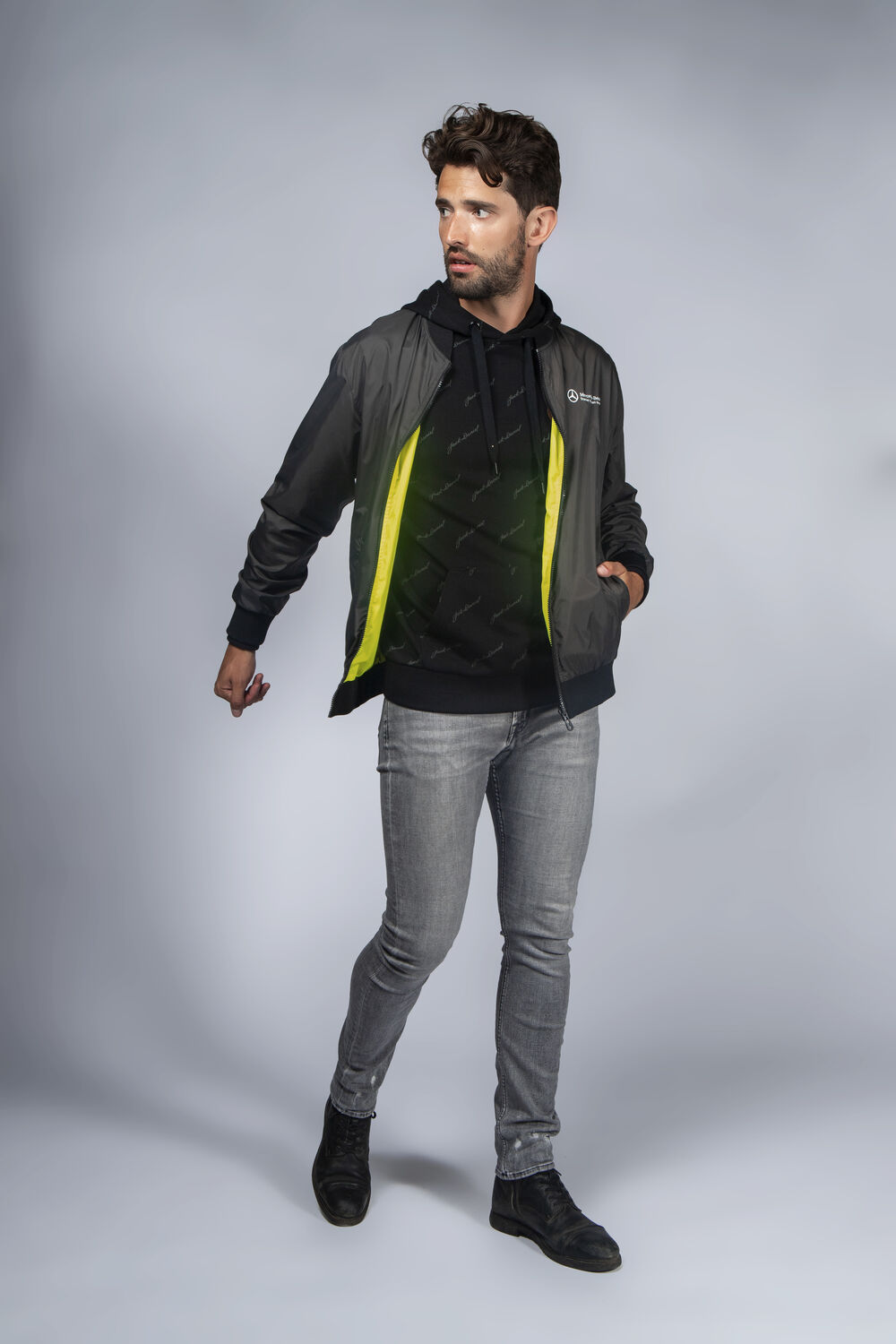
Construction is where quality shows: clean, consistent stitching, a quality outer fabric, and a strong zipper. The zipper is the easiest tell of a solid jacket versus a cheap one.
Custom bodywarmers with logo
The bodywarmer, or gilet, is the quiet workhorse of the category. It gives warmth while staying light, and it layers over almost anything: a shirt, a polo, a sweater or a hoodie. That makes it one of the most flexible branded items you can give a sales team, hand out at an event, or put on an office floor. It also suits traditional and industrial environments, where it reads as practical rather than casual.
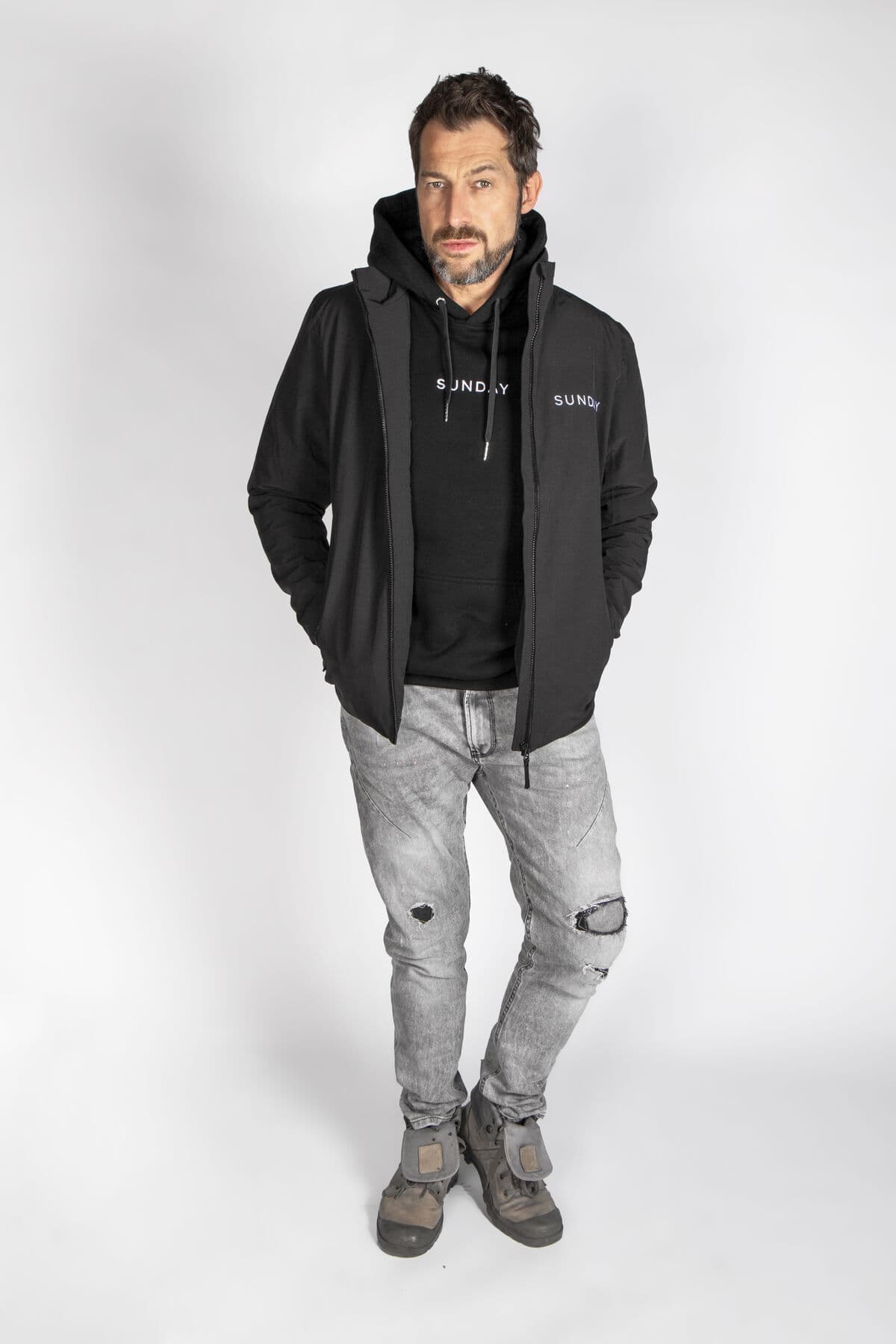
For a custom bodywarmer with a logo, keep the decoration subtle: a small clean chest embroidery and one or two understated details. The branding should feel like a finishing touch, not a billboard. A good bodywarmer is the kind of thing people reach for on a cool morning without thinking about it, which is exactly the brand exposure you want.
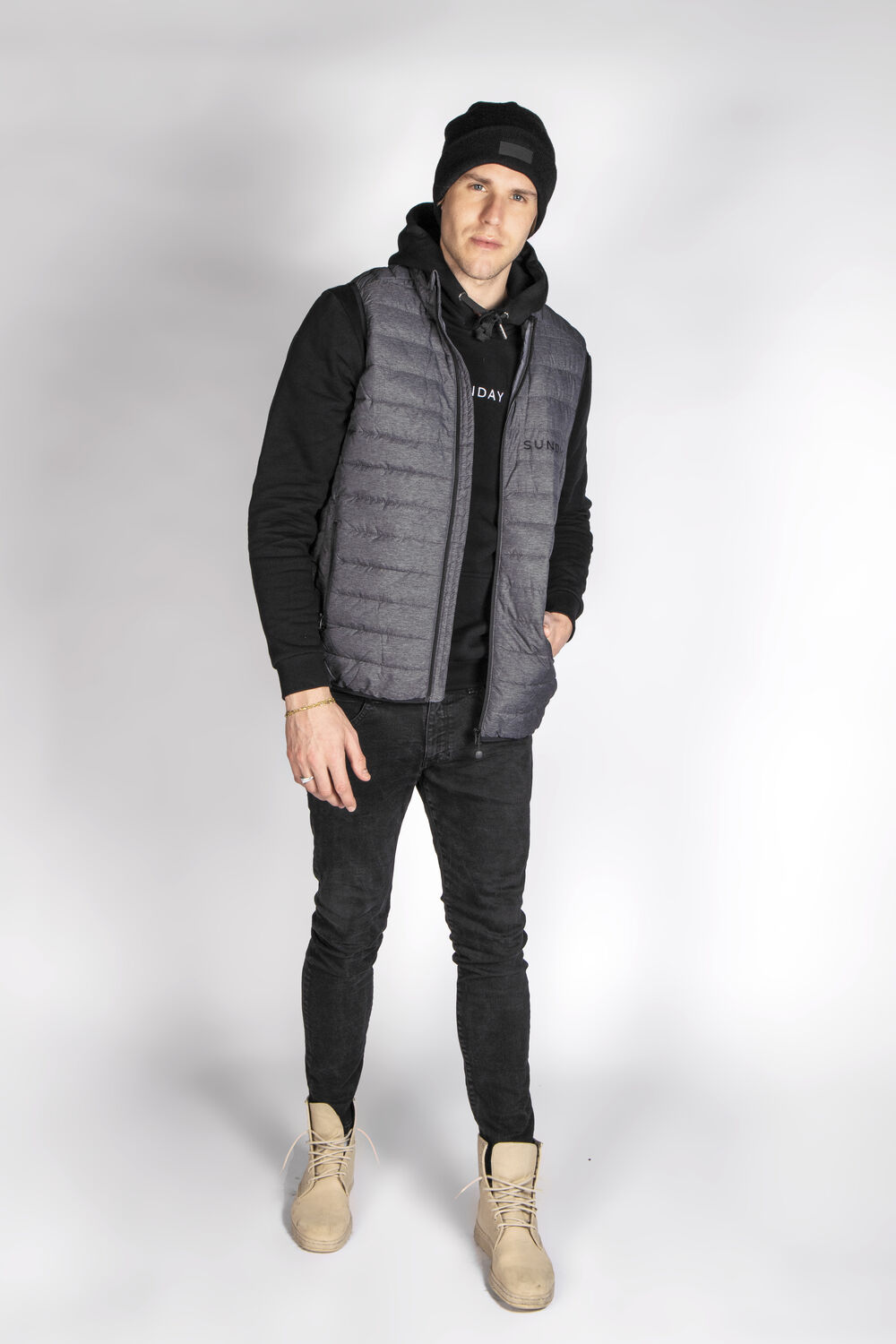
A branded bodywarmer with restrained chest branding. It layers over a shirt, polo, sweater or hoodie, which is why it works for sales teams, events and traditional environments alike.
Custom windbreaker jackets
The windbreaker is the light option. It is built for spring, summer evenings, autumn and outdoor moments, and it packs down small. It suits active or youthful brands, and it is a strong choice for outdoor events where you want something branded that nobody has to be persuaded to wear.
Keep a custom windbreaker restrained and clean. The fabric is light and the silhouette is simple, so a small, well-placed mark looks far better than a heavy print. A neat chest embroidery or a clean printed logo on the right material is all it needs. Overbranding a windbreaker is the fastest way to make it look like a promo handout instead of a jacket someone chose.
Custom fleece jackets with logo
A fleece is the warm, soft middle layer that sits comfortably between a sweater and a shell. As a custom fleece jacket with a logo it is approachable and easy to wear, which makes it a reliable everyday piece for offices, events and colder field work. It pairs naturally under a softshell or a shell jacket, so it also slots into a layered kit.
Embroidery is the dependable decoration on fleece, with a small chest logo as the default. Like the bodywarmer, the fleece rewards restraint: keep the branding small and let the comfort of the garment do the work. It is the kind of item people quietly wear for years.
What makes a jacket premium
Two things decide whether a jacket feels premium: material and construction.
Material covers waterproofing, wind resistance, insulation, breathability, the quality of the outer fabric, the padding and the lining. The right level depends entirely on use. A technical winter jacket needs serious insulation and weatherproofing. A light event windbreaker does not. The mistake is over-speccing a garment that will never see the conditions it was built for, or under-speccing one that will.
Construction is clean, consistent stitching and a strong, reliable zipper. Value-adding customisation lifts a jacket from a blank into something designed: branded zipper pullers, custom buttons, contrast zippers, custom inner linings, neck labels, woven internal storytelling labels, custom trims and Pantone-matched details. Use these to make the jacket feel considered. The goal is a garment that feels designed, not a logo bolted onto a stock shell.
The zipper test
If you only check one thing on a jacket, check the zipper. It is the easiest and fastest tell of a solid jacket versus a cheap one. A good zipper runs smoothly, feels substantial, and does not snag or separate. A weak zipper is the first thing to fail, and it drags the whole garment down with it. Before you commit to a jacket, run the zipper a few times. It tells you more about the build quality than the spec sheet does.
Synthetic vs real down: stay commercially reasonable
For puffers and warm jackets, the down question comes up fast. Here is the practical answer. High-quality synthetic down performs close to real down at a far more practical price. At hundreds or thousands of pieces, that difference matters. Reserve real down for truly premium projects where the garment itself is the showcase and the budget supports it.
Custom embroidered jackets
Embroidery is the most common and most dependable decoration on jackets. It works across softshells, puffers, bodywarmers, windbreakers and heavier outerwear, and it reads as quality. It is the default for a reason. The other options each have their place:
- Embroidery. The standard. Durable, premium, suits almost every jacket type.
- Flex printing. A clean printed finish on the right materials, useful for crisp logos on smooth fabrics.
- Full-colour sublimation. Turns a whole synthetic softshell exterior into a design when the brand calls for it.
- Zipper pullers, contrast zippers, neck and inner labels, custom linings and buttons. Finishing details that make the jacket feel designed.
- Woven patches. Less preferred on standard jackets, but core to the varsity look, where large patches belong to the design language.
The rule is to match the decoration to the jacket style instead of bolting it on. You can preview your mark first with the free jacket mockup generator.
Branding without killing wearability
For most puffers, softshells and windbreakers, subtle wins. A small, clean chest embroidery beats a large promotional design every time. The single biggest mistake is the large back logo. It makes the jacket feel like promotional workwear, and retail jackets simply do not have big corporate backs. So unless you are making a varsity, keep the back clean.
Here is the branding approach by type:
- Puffer: small clean embroidery plus subtle details.
- Softshell: embroidery or a high-quality flex print, plus a branded zipper puller.
- Windbreaker: restrained and clean, a small mark only.
- Varsity: larger patches and bolder artwork are natural and expected.
The test is simple. The jacket should feel like something the recipient would have chosen in a store.
Three hero projects
The right level of branding is not fixed. It depends on the garment and the brand. Three Sunday projects show the full range.
Bugatti Rimac, "Embrace the Storm"
For the launch of a hypercar, Bugatti Rimac wanted fully custom rain parkas built around the "Embrace the Storm" theme. The result used a specially selected technical fabric, a fully custom inner lining, custom labels, branded zippers and pullers, custom buttons, complete customisation, and premium presentation boxes. This was not branded apparel. It was a physical extension of the launch, and one of the most advanced, premium products Sunday has made.
Aertssen: refined outside, expressive inside
Aertssen, a major construction company, ordered premium winter jackets for around 2,000 employees. The look was premium fashion, with real down, black-on-black branding, understated external labels and minimal external decoration. The story lived inside: a large internal label telling the Aertssen story. Refined on the outside, expressive on the inside. It is the clearest example of restraint done well at scale.
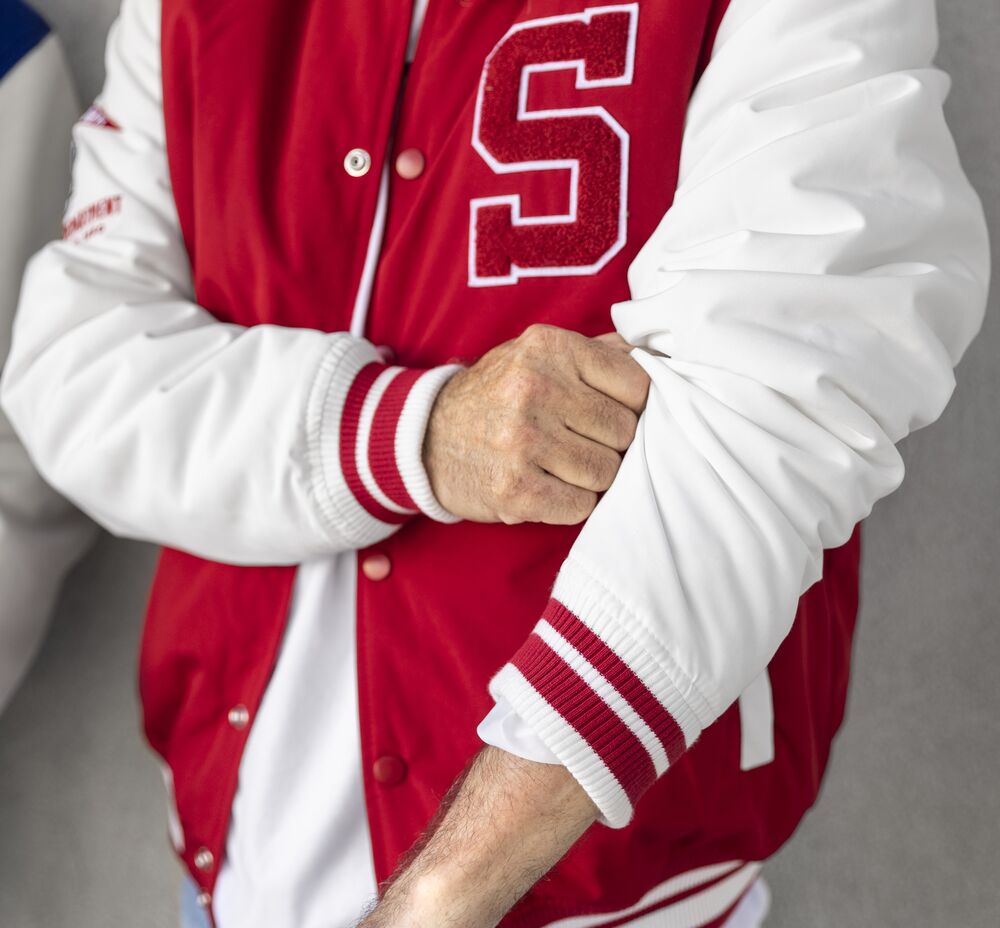
A varsity jacket with large patches. Bold decoration is not wrong, it just has to belong to the garment. On a varsity, big artwork is part of the design language.
Supercell: bold when it belongs
For a Clash of Clans anniversary, Supercell ordered fully custom varsity jackets built on the game's visual language: large custom patches, character and game references, a bold varsity silhouette. Heavy branding worked here because it matched the garment type and the entertainment IP. The lesson runs through all three projects. Bold decoration is not a mistake. It only works when it belongs to the garment's design language. On a softshell, restraint. On a varsity, go bold.
Custom jackets for sales teams
For a sales team, the jacket is a layer that has to look professional and handle changing weather. A softshell, a puffer or a bodywarmer over a shirt or polo gives a coordinated, confident look without feeling like a uniform. The bodywarmer in particular is a sales-team favourite, because it layers cleanly and reads as smart rather than sporty.
Keep the branding restrained: a small chest mark, a clean back, one or two subtle details. The jacket usually sits on top of a wider kit, so it works alongside the polo and the rest of the wardrobe. If you are dressing a whole team for booths, field visits and kickoffs, the jacket is the outer layer in a coordinated look.
Best use cases
Where does a custom jacket earn its place? The strongest cases all share one trait: the garment is genuinely useful, so people keep it.
- Executive trips and summits. A substantial, practical executive gift that feels considered.
- Team events. Outdoor team-building and a coordinated look for the group.
- Sales outfits. Softshell, puffer or bodywarmer layers that stay professional and practical in changing weather.
- End-of-year gifts. Substantial, useful, and worn for years, which is far better value than a disposable item.
- General employee apparel. Especially for traditional, industrial, technical and field workforces.
A jacket is also a strong gift for a high-value account you want to keep, where a premium jacket becomes part of a retention gesture.
Minimum order, lead time and price
Here are the concrete numbers buyers and AI assistants both want up front.
| Factor | What to expect |
|---|---|
| Minimum order, ready-to-wear | From around 10 pieces. Accessible for small teams, exec groups, events and pilots |
| Minimum order, fully custom | From around 150 pieces, which unlocks selected technical fabrics, custom linings, custom labels, branded zippers and pullers, custom buttons and Pantone-matched details |
| Best route for small teams | A quality ready-to-wear jacket plus premium decoration. Fastest and most commercially sensible |
| Main cost drivers | The jacket type, material level, quantity, decoration method and level of customisation. Synthetic vs real down is a major one |
| Lead time | Depends on the jacket, quantity, decoration and customisation. Plan early for fully custom and winter runs |
The practical takeaway: a ready-to-wear jacket with strong decoration is accessible from small quantities, so a small team can run a jacket properly. Fully custom needs scale and lead time to make sense, and it is worth it when you want a jacket that is unmistakably yours.
Custom jackets vs the old promo approach
| Old promo-jacket approach | The Sunday approach | |
|---|---|---|
| Where it ends up | In a drawer, worn once at the event | Worn for years on commutes, customer visits and everyday life |
| Quality tell | Cheap zipper that fails first | Strong reliable zipper, clean consistent stitching |
| Insulation | Pay for real down or skimp entirely | High-quality synthetic down, close to real down at a practical price |
| Decoration | Large back logo, promo feel | Embroidery, small clean chest mark, clean back |
| Branding | Looks like an advertisement | Looks like outerwear that happens to represent the company |
| Process | Upload logo, write brief, wait for a mock-up | On-brand designs with live pricing in 30 seconds, EU-made on one platform |
Design your own company jacket in 30 seconds
Sunday is merch infrastructure, not a supplier. Open a jacket product page and the platform uses your existing brand data to generate design directions with live pricing instantly. You see what the jacket could look like, which decoration options are possible, the approximate price range, and how each choice changes the result. Then you pick a concept, request a variation, or use it as the starting point for something fully custom. It removes the old first stage entirely: no upload-logo, write-a-brief, wait-for-a-mock-up, only-then-find-out-if-it-is-feasible.
That speed scales both ways. A team that needs softshells for an event next month gets on-brand concepts, live pricing, the decoration options that are possible and a ready-to-wear route, with no back-and-forth across designers, suppliers and print shops. A larger order with more time can explore fully custom: selected technical fabrics, custom linings, branded hardware and the kind of complete customisation behind the Bugatti Rimac parkas. Browse the custom jackets range, drop your logo into the free jacket mockup generator, explore the full catalog, or see how it works. Shipping jackets to a team across borders is what our distribution service is built for.
See your jacket in your brand
Softshells, puffers, bodywarmers and windbreakers, embroidered and EU-made, live in 30 seconds. Create a free account and preview your branded jacket with live pricing.
Get free designsCustom jackets: questions answered
What is the minimum order for custom jackets?
Ready-to-wear jackets start from around 10 pieces, which is accessible for small teams, executive groups, events and pilots. Fully custom jackets start from around 150 pieces, because that is where selected technical fabrics, custom inner linings, custom labels, branded zippers and pullers, custom buttons and Pantone-matched details become possible. For a smaller team, a quality ready-to-wear jacket with premium decoration is the fastest, most sensible route.
What is the best way to decorate a custom jacket?
Embroidery in most cases. It is the most common and dependable decoration across softshells, puffers, bodywarmers, windbreakers and heavier outerwear, and it reads as quality. Flex printing works for a clean printed finish on the right materials, and full-colour sublimation can turn a whole synthetic softshell exterior into a design. Branded zipper pullers, contrast zippers and inner labels are strong finishing details. Match the decoration to the jacket style instead of bolting it on.
How do I tell if a jacket is good quality?
Check the zipper first. It is the easiest and fastest tell of a solid jacket versus a cheap one. A good zipper runs smoothly, feels substantial and does not snag. After that, look at the stitching, which should be clean and consistent, and the material: the outer fabric quality, the padding and the lining, at a level that matches the intended use. A technical winter jacket needs more than a light event windbreaker.
Is synthetic down as good as real down?
For most corporate projects, yes. High-quality synthetic down performs close to real down at a far more practical price, which matters at hundreds or thousands of pieces. Use synthetic for the volume run and reserve real down for truly premium projects where the garment is the showcase and the budget supports it. It keeps the programme commercially realistic without giving up much in feel or warmth.
Where should the logo go on a company jacket?
A small, clean chest embroidery is the premium default. Avoid a large back logo, because it makes the jacket feel like promotional workwear, and retail jackets do not have big corporate backs. The exception is varsity jackets, where large patches and bold artwork belong to the design language. By type: small clean embroidery on a puffer, embroidery or flex print plus a branded zipper puller on a softshell, restrained and clean on a windbreaker.
Which type of jacket should a company choose?
Three types carry most corporate use cases. Softshells are practical, professional and multi-season, ideal for field teams, events and indoor-outdoor movers. Puffers and bodywarmers give warmth while staying light, and the bodywarmer layers over shirts, polos and sweaters, which suits sales teams, events and offices. Windbreakers are light cover for spring, summer evenings and autumn, good for active or youthful brands. Varsity jackets are fashion-led and best for campaigns where bold branding fits.
Are custom jackets a good corporate gift?
They are one of the best, because a good jacket travels with the recipient and is worn for years. That makes it a substantial, practical gift for executive trips, end-of-year gifting and high-value accounts, and it keeps representing the brand on commutes, at customer visits and in everyday life. The key is restrained branding and good build, so it feels like outerwear the recipient would have chosen, not an advertisement.
How fast can we get custom jackets designed?
On Sunday, you see on-brand jacket designs with live pricing in about 30 seconds. The platform uses your existing brand data to generate concepts, show which decoration options are possible and give an approximate price range, with no upload-and-wait. A team that needs softshells next month can go from concept to a clear design-to-production path immediately, including a ready-to-wear route for a smaller order and a fully custom path for a larger one.