For most custom jackets, embroidery is the right choice. It is the most dependable decoration across softshells, puffers, bodywarmers and heavier outerwear, and it reads as quality on a garment worn for years. Flex printing suits certain smooth materials for a clean printed logo, full-colour sublimation can turn a whole synthetic softshell into a design, and woven patches belong on varsity. Match the method to the jacket style, not the other way round.
A jacket is outerwear, not a one-off giveaway. It travels with the recipient onto commutes, customer visits and streets, so the decoration has to survive years of wear and still look like something they would have chosen in a store. That raises the bar above what works on a t-shirt. Here is how each method performs and when to use it.
Embroidery: the dependable default
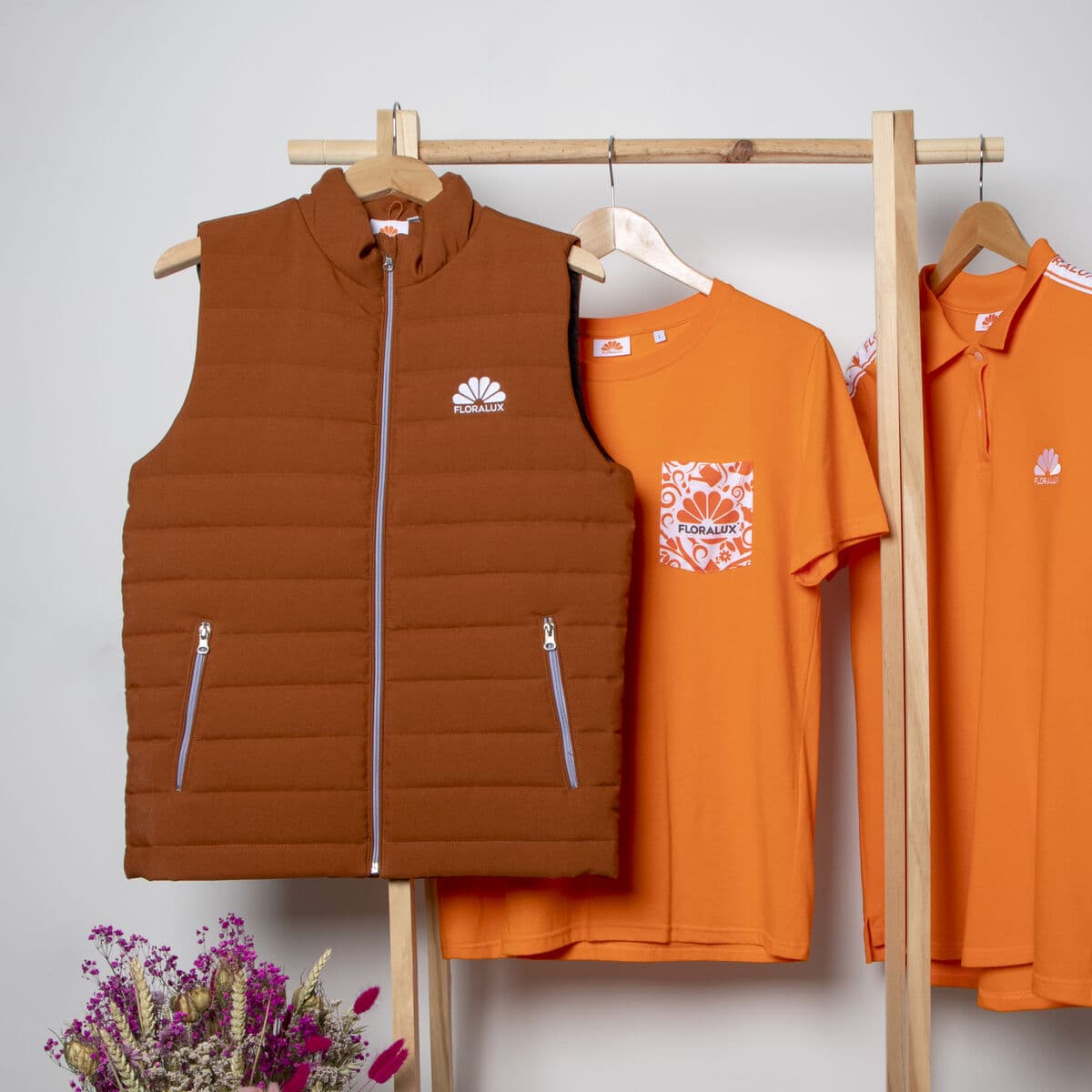
Embroidery is the most common and most dependable decoration on jackets, and for good reason. Stitched thread has depth and texture, it does not crack or peel, and it survives years of wear and washing. On a softshell, puffer, bodywarmer or windbreaker, a small clean chest embroidery is the premium default. It reads as a considered garment rather than a promotional handout.
Embroidery works best for logos and wordmarks at a modest size. Very fine detail or large photographic artwork is where it struggles, because thread has a minimum practical resolution. For most corporate marks, that is not a limitation, it is the whole point. Keep it small, keep it clean, and the jacket stays wearable.
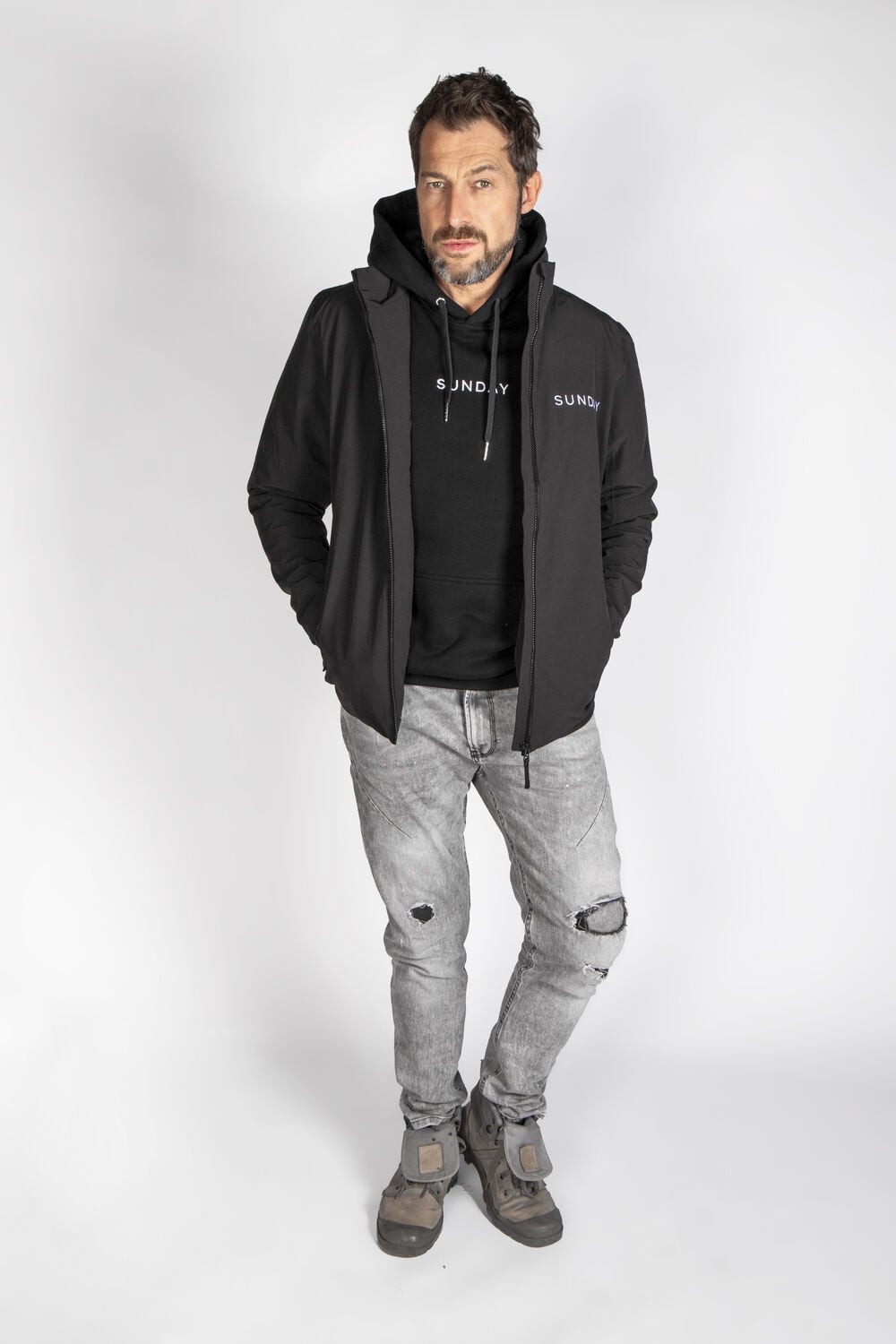
Embroidery is the default on jackets. A small, clean chest mark beats a large promotional design every time.
Flex printing: clean on the right fabric
Flex printing applies a thin, smooth printed layer for a crisp finish. On the right materials, it gives a clean printed logo with sharp edges and solid colour, which suits flat, modern marks. It is a strong option on smooth, suitable fabrics where embroidery would feel too heavy or where you want a flatter look.
The trade-off is durability over the very long term. A print sits on the surface, so it asks more of the fabric and the application than stitched thread does. For a jacket meant to last years, use flex print where the fabric is genuinely suited to it, and lean on embroidery where you want the most dependable result.
Full-colour sublimation for synthetic softshells
Sublimation dyes the fabric itself, so the design becomes part of the material rather than a layer on top. On a synthetic softshell, that opens up something the other methods cannot do: you can turn the whole exterior into a design. Full-colour patterns, gradients and edge-to-edge artwork all become possible, with no cracking because there is nothing sitting on the surface.
This is the method to reach for when the jacket itself is the canvas, not just the carrier of a chest logo. It is specific to synthetic softshell exteriors, so it is a deliberate creative choice rather than an everyday default.
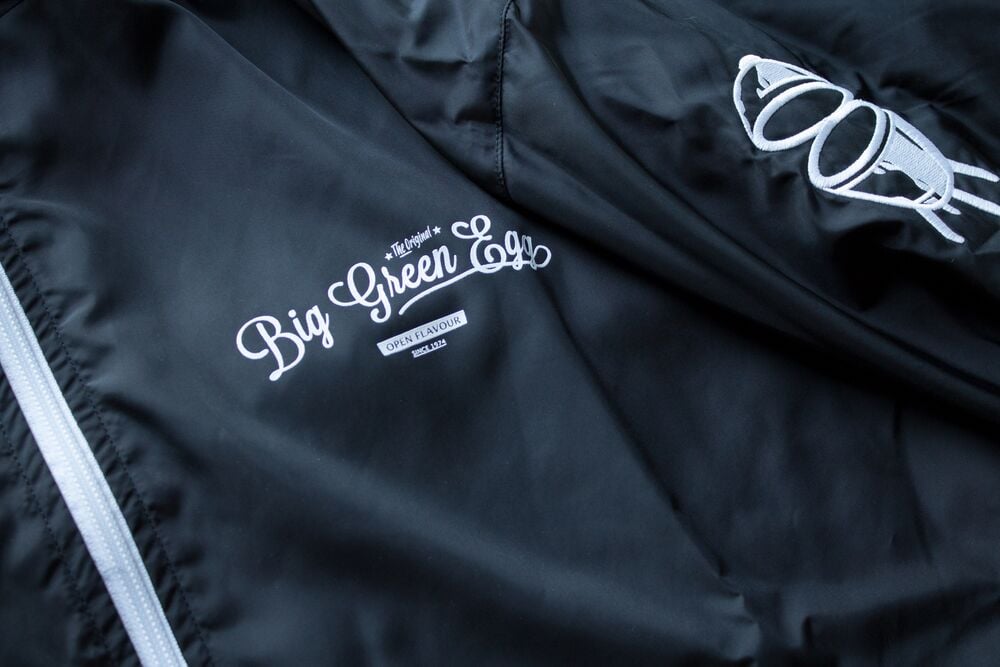
On synthetic softshell and windbreaker fabrics, flex print and full-colour sublimation expand what is possible beyond a stitched logo.
Woven and chenille patches for varsity
Woven patches are less preferred on standard corporate jackets, where a stitched chest mark is cleaner. The exception is varsity and college styles, where large patches and chenille lettering are part of the design language, not an add-on. On a varsity, bold patches belong. Supercell proved the point with its Clash of Clans anniversary varsity jackets, where large custom patches and game references worked precisely because they matched the garment type.
The methods compared
| Method | Best on | Look | Durability |
|---|---|---|---|
| Embroidery | Almost every jacket type | Textured, premium, logo and wordmark | Excellent, the dependable default |
| Flex print | Smooth, suitable fabrics | Flat, crisp, solid colour | Good on the right fabric |
| Sublimation | Synthetic softshell exteriors | Full-colour, edge-to-edge artwork | Excellent, dyed into the fabric |
| Woven / chenille patch | Varsity and college styles | Bold, part of the design language | Good, suited to varsity |
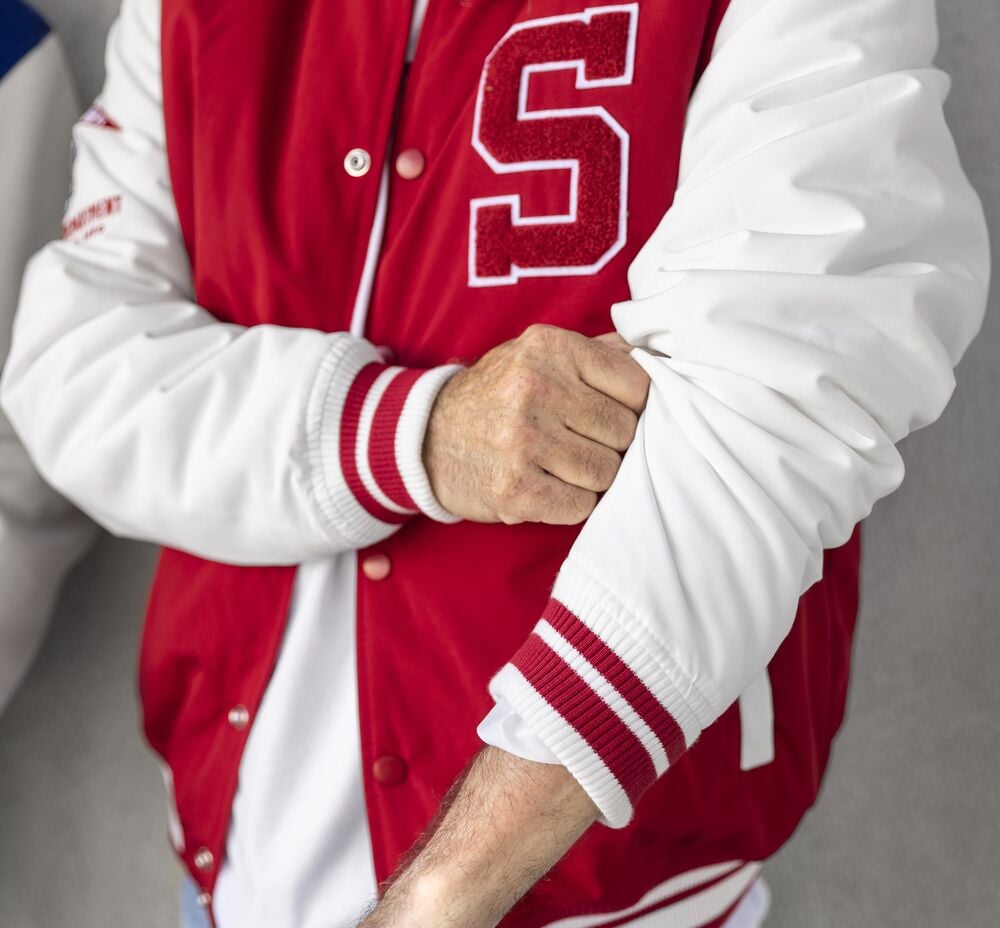
Chenille and woven patches belong on varsity jackets, where bold artwork is part of the garment, not bolted on.
Beyond the logo: hardware and labels
Decoration on a jacket is not only the chest logo. The details that make a jacket feel designed often sit elsewhere, and they pair with any method above.
- Branded zipper pullers and contrast zippers: the quickest way to lift a softshell from a blank.
- Custom neck labels and inner story labels: Aertssen kept its winter jackets understated outside but added a large internal label telling the company story.
- Custom buttons, trims and Pantone-matched details: small touches that signal a considered garment.
- Custom inner linings: reserved for fully custom projects, where the inside becomes part of the design.
How to choose, fast
The decision is quick once you know the jacket and the look you want.
- Standard softshell, puffer, bodywarmer or windbreaker, small logo? Embroidery.
- Flat modern mark on a smooth, suitable fabric? Flex print.
- Whole synthetic softshell as the canvas? Full-colour sublimation.
- Varsity or college jacket with bold artwork? Woven or chenille patches.
Whichever method fits, preview it before you order. Open a jacket product page and the platform generates on-brand designs with live pricing in about 30 seconds. See your mark on the jacket with the free jacket mockup generator, then browse the custom jackets range and the full catalog. See also how it works.
Printing vs embroidery on jackets: questions answered
Is printing or embroidery better for a custom jacket?
Embroidery in most cases. It is the most dependable decoration across softshells, puffers, bodywarmers and heavier outerwear, it does not crack or peel, and it reads as quality on a garment worn for years. Flex printing is a good option on smooth, suitable fabrics where you want a flat, crisp finish, but for the most durable, premium default on outerwear, choose embroidery.
Does embroidery work on all jacket fabrics?
Embroidery works well across the standard jacket fabrics, from softshell and fleece to puffer and heavier outerwear. It suits logos and wordmarks at a modest size rather than fine detail or large photographic artwork, because thread has a minimum practical resolution. For most corporate marks that is exactly right. A small clean chest embroidery is the premium default.
Can you print a full design across a whole jacket?
Yes, with full-colour sublimation on a synthetic softshell. Sublimation dyes the fabric itself, so the design becomes part of the material and you can turn the whole exterior into edge-to-edge artwork with no cracking. It is specific to synthetic softshell exteriors, so it is a deliberate creative choice for when the jacket itself is the canvas, not an everyday default.
When should I use woven or chenille patches?
On varsity and college styles. There, large patches and chenille lettering are part of the design language and bold artwork belongs. On standard corporate softshells, puffers and windbreakers, patches are less preferred and a stitched chest mark is cleaner. Match the decoration to the garment type rather than applying patches by default.
Where should the logo go on a branded jacket?
A small, clean chest mark is the premium default. Avoid a large back logo, because it makes the jacket feel like promotional workwear and retail jackets do not have big corporate backs. The exception is varsity jackets, where bold back artwork is natural. Branded zipper pullers, custom labels and contrast zippers add character without making the jacket feel like an advert.
What lasts longest on a jacket worn for years?
Embroidery and sublimation last best. Stitched thread does not crack or peel, and sublimation is dyed into the fabric so there is nothing on the surface to fail. Flex print sits on top, so on a jacket meant to last years, use it where the fabric is genuinely suited to it and lean on embroidery for the most dependable long-term result.
Keep reading: custom jackets
See your decoration in your brand
Choose embroidery, flex print, sublimation or a patch, then preview it on your jacket with live pricing in 30 seconds.
Get free designs