
Custom polo shirts work across more company settings than any other branded garment. The strongest use cases are sales and trade-show teams, field and service crews, retail and customer-facing staff, office wear, and golf or events. In each, a polo lands in the same useful middle ground: more professional than a T-shirt, less formal than a business shirt. The trick is matching the polo type and branding level to the setting, from subtle chest embroidery for an office to bold brand colour for a service uniform.
A polo is the easiest way to make a team look professional without making them feel overdressed. That is exactly why it fits so many situations. But the right polo for a trade-show booth is not the right polo for a golf day, and a service uniform asks for more brand colour than an office. Here are the six use cases that come up most, with what to choose for each. For the underlying decisions on fabric, fit and decoration, the polo buyer's guide goes deeper.
1. Sales and trade-show teams
This is the polo's home turf. At a booth or a meeting, a sales team in matching polos looks coordinated and credible without looking stiff. A standard piqué polo is the right call here. It looks and feels better all day than a performance polo, and it photographs well for the stand.
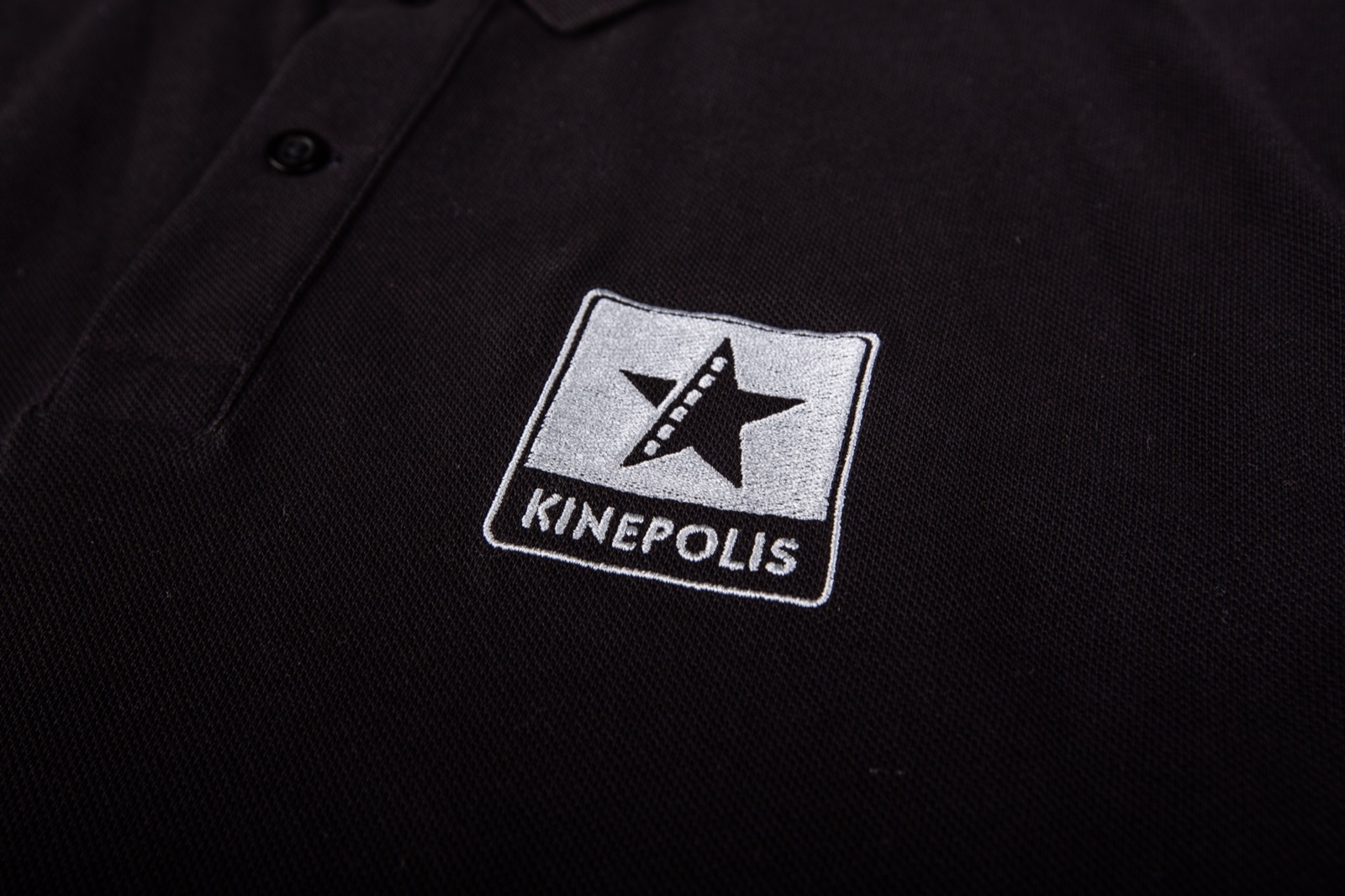
A Kinepolis-branded custom polo shirt, the kind of coordinated piqué polo that suits sales and trade-show teams.
Keep the branding subtle for sales: a small chest logo, maybe a sleeve mark, and a clean back. To build the full event kit around it, including layers for cold halls and evening receptions, plan the wider sales-team outfit.
2. Field and service teams
For technical, installation and service teams, a fully branded polo becomes a functional uniform. It makes people instantly recognisable on site, which builds trust because customers can see who can help. This is the one setting where you can turn the brand colour and customisation up, because recognition is the whole point.

A Vanderloo-branded custom polo shirt, a strongly branded polo that doubles as a recognisable field and service uniform.
A road-based team will also need layers for weather and different jobs, so the polo is usually the base of a wider kit you can layer with sweaters, bodywarmers and jackets.
3. Retail and customer-facing staff
In stores, showrooms and at events, a polo strikes the balance retail needs. It is professional and approachable at the same time, and it makes staff easy to spot and approach. Company colours work well here, since the goal is for a customer to identify a staff member at a glance.
- Use brand colour deliberately. A confident, on-brand colour helps customers find your people.
- Keep it comfortable. Staff wear it all shift, so fabric weight and fit matter.
- Make it durable. Retail polos get washed constantly, so the polo must hold shape and colour.
4. Office and everyday company wear
As workplaces relax, the polo is the natural everyday company garment. It sits comfortably below a business shirt and above a tee, so a whole office can wear it without anyone feeling overdressed or too casual. Here, lean understated: a neutral or classic colour and a small, restrained chest mark.
A Kinepolis-branded custom polo shirt with quiet branding, the kind of premium polo that works for everyday office wear.
Because this polo gets worn by everyone, a balanced regular fit and both men's and women's options matter most here. Get the design right once and study polo design examples for marks that age well.
5. Golf days and events
Golf days, sports events and active outings are the one use case that genuinely calls for a performance polo. A technical, moisture-managing fabric earns its place when people are moving and the weather is warm. This is the exception to the piqué default, so choose it on purpose, not because it sounds advanced.
A Vanderloo-branded custom polo shirt in company colours, the kind of polo you would reach for at a golf day or active event.
Matching the polo to the setting
The pattern across all six is simple. Pick piqué for almost everything and reserve technical fabric for active days. Keep branding subtle for sales and office, and turn it up for field, service and retail where recognition is the job. Here is the quick reference.
| Setting | Polo type | Branding level |
|---|---|---|
| Sales / trade show | Classic piqué | Subtle |
| Field / service | Durable piqué | Strong, brand colour |
| Retail / customer-facing | Comfortable piqué | Brand colour, recognisable |
| Office / everyday | Premium piqué | Subtle, neutral |
| Golf / active events | Performance / technical | Subtle to medium |
Custom polo shirt use cases: questions answered
What are custom polo shirts used for in companies?
Most often for sales and trade-show teams, field and service crews, retail and customer-facing staff, everyday office wear, and golf or active events. In each case the polo lands in a useful middle ground, more professional than a T-shirt and less formal than a business shirt. The right polo type and branding level changes with the setting.
What polo should a sales team wear at a trade show?
A classic piqué polo with a restrained chest embroidery. It looks coordinated and credible, feels comfortable across a long day on the stand, and photographs well. Keep the back clean and the branding subtle. For a multi-day event you will want layers around it, so build the polo into a wider kit.
When should I choose a performance polo over a classic one?
For genuinely active settings: golf days, sports events and outdoor or physically active teams, where a technical, moisture-managing fabric earns its place. For everything else, including a trade-show booth, a standard piqué polo looks and feels better. Choose performance fabric on purpose, not just because it sounds advanced.
How much branding should a company polo have?
It depends on the setting. For sales and office wear, keep it subtle: a small chest logo and maybe a sleeve mark, with a clean back. For field, service and retail teams, you can turn brand colour and customisation up, because being recognisable is the function. One strong mark plus one or two subtle details beats branding in every position.
Can the same polo work for a whole company?
A balanced regular fit in a classic colour comes close, especially with both men's and women's options. But the ideal polo shifts by use case: subtle and neutral for the office, bolder for service teams, technical for golf days. Many companies run one core company polo plus variations for specific teams and events.
How fast can I see a polo for a specific use case?
About 30 seconds on Sunday. Opening a polo product page generates on-brand concepts from your brand data, with live pricing and the decoration options that suit each polo. You can preview a sales, retail or office look before briefing anyone, then request a variation or use it as a custom starting point.
Keep reading: custom polo shirts
Find the right polo for your team
Create a free account and preview an on-brand polo for sales, field, retail or office, with live pricing.
Get free designs