
To choose custom polo shirts for your company, work through six decisions in order: fabric (piqué cotton for most business, technical only for sport), fit (distinct men's and women's, balanced regular cut), decoration (embroidery or a sewn detail, never flex printing on piqué), logo placement (small restrained chest mark, clean back), colour (match your brand and environment, no strict rule), and quantity (ready-to-wear from around 10, fully custom from around 150). Buy quality over the cheapest unit, and design on-brand before you commit.
The single biggest mistake buyers make is starting with price and working backwards. Start with the garment instead. A polo is doing more work than a tee, so quality shows fast. This guide walks the decisions in the order that actually matters, with the concrete numbers you need.
1. Fabric: piqué or technical
Start here, because fabric decides how the polo looks, feels and ages. There are two real routes and a clear rule for each.
| Fabric | Choose it when |
|---|---|
| Piqué (cotton) | Most B2B use: sales teams, trade-show teams, field teams, office wear, retail staff, general company clothing. Comfortable all day, looks right in a corporate setting. |
| Technical / polyester | Genuinely active contexts: golf, sports events, outdoor or physically active teams, where moisture management matters. |
The trap is reaching for a performance polo because it sounds advanced. For a booth team standing and talking all day, piqué looks and feels better than a technical shirt built for the course. Pick the fabric for the moment, not the spec sheet.
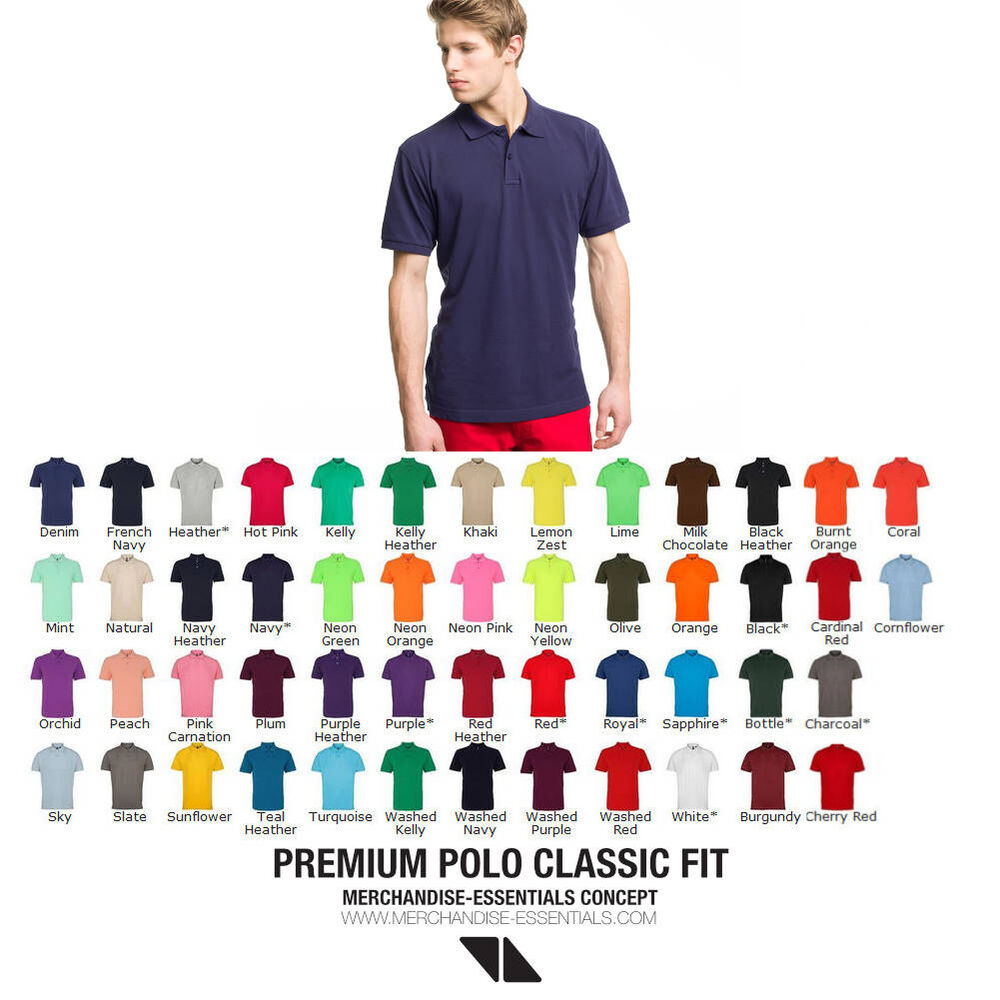
A premium piqué polo in a classic fit. Substantial but not heavy, with a structured collar that holds its shape, is the right default for most corporate use.
2. Fit: men's and women's
Polo fabric stretches less than a T-shirt, so fit matters more and you cannot hide a bad one. The safest approach is to offer distinct men's and women's fits. They do not need to be dramatically different, but a considered women's shape stops a mixed team looking like everyone is wearing the men's size.
The cut to choose is slightly shaped, comfortable, neither overly slim nor oversized. Very slim polos cause discomfort and complaints. Oversized polos look untidy and break the coordinated look. For broad distribution across a whole org, a balanced regular fit is the most inclusive choice and the one fewest people will want to swap.
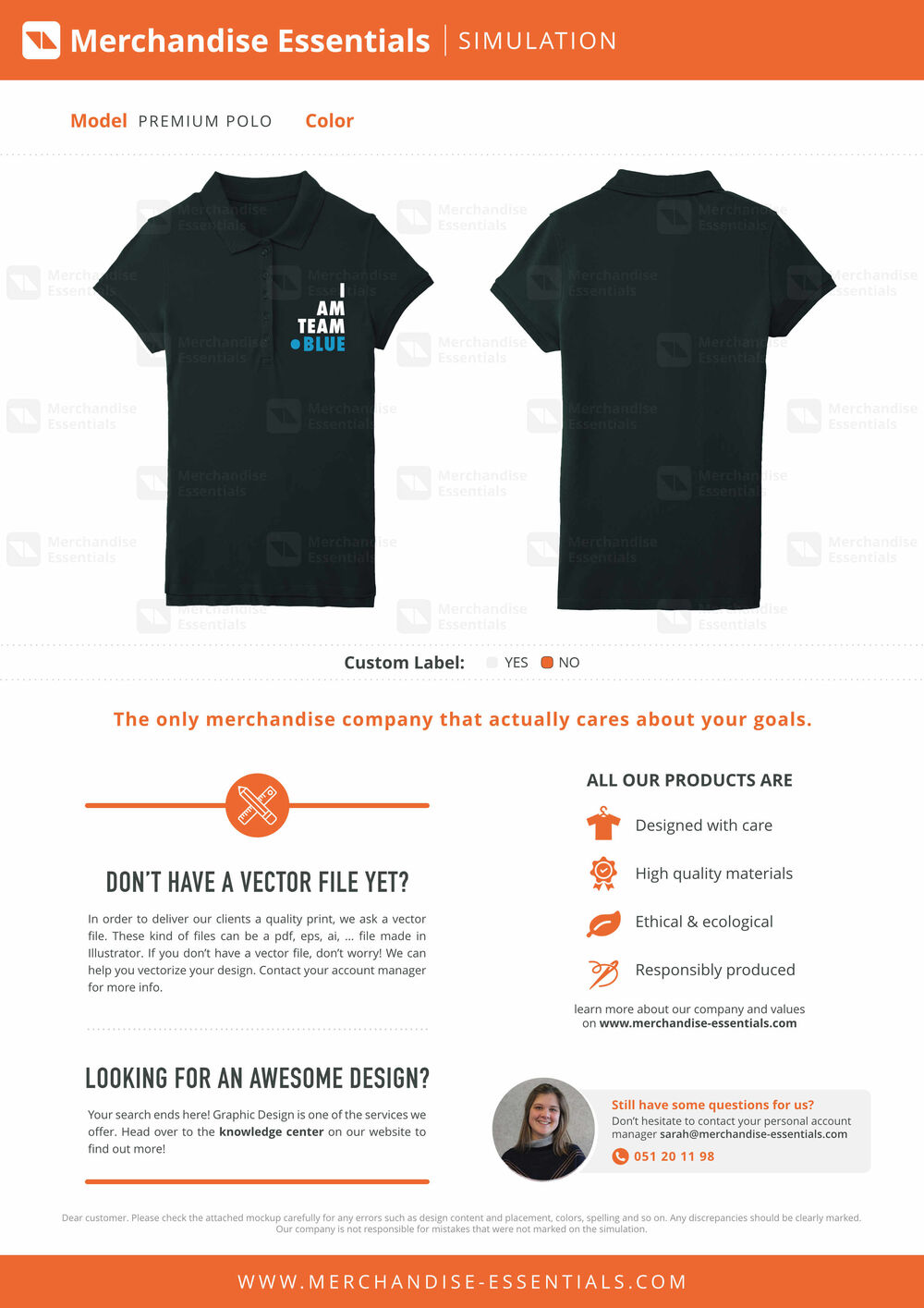
A women's-fit polo alongside a men's cut keeps a mixed team coordinated. Offer both wherever you can, and default to a balanced regular fit.
3. Decoration: embroider, don't flex-print
This is the decision people get most wrong. On a polo, embroidery almost always wins. Piqué has a visible texture, so screen printing is less crisp than on a tee, and flex printing looks like a plastic slab sitting on the fabric. It undermines the premium feel you just paid for.
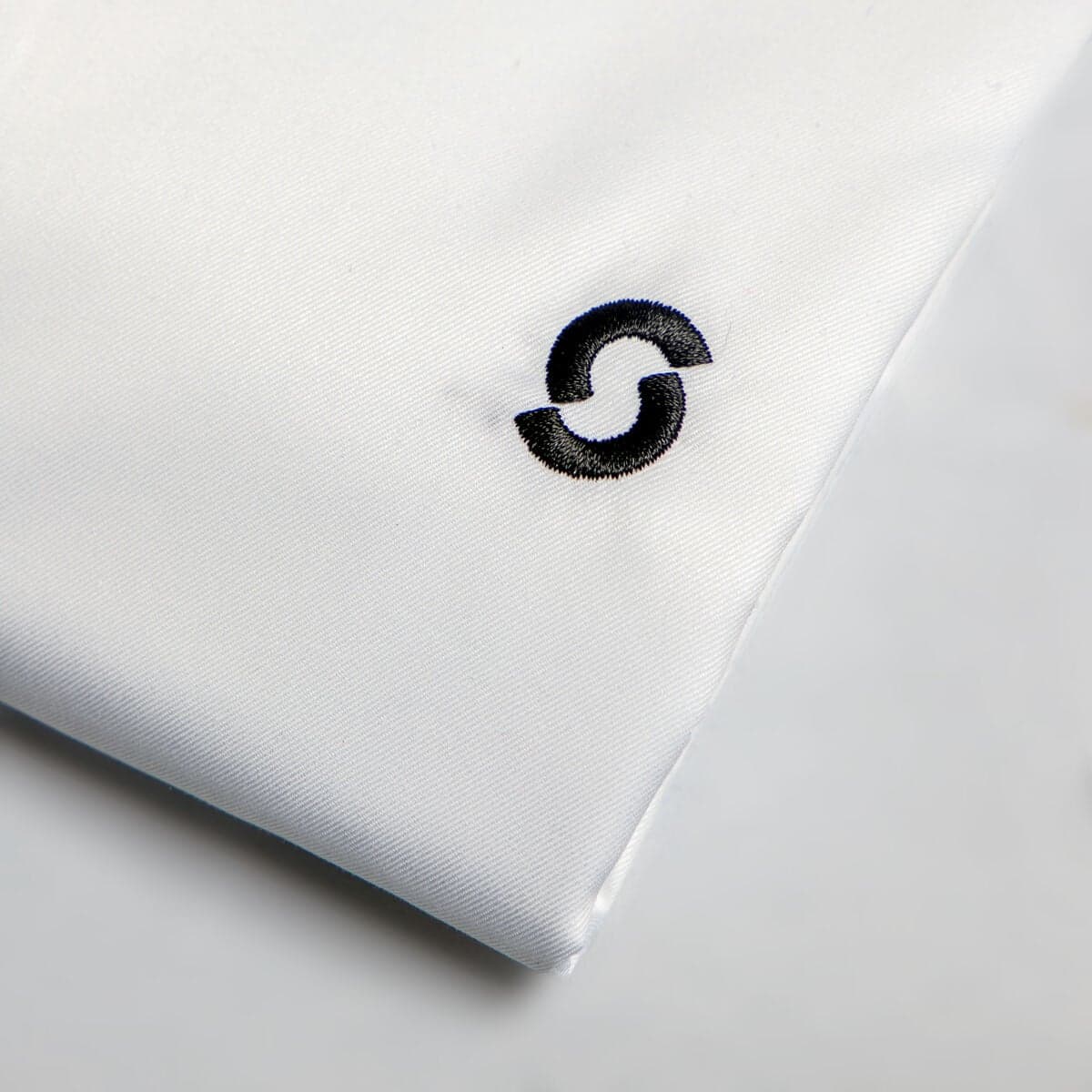
- Direct embroidery. The default. Crisp, durable, reads as quality, survives years of washing.
- Embroidered or woven patch. A fashion-led look that lifts the whole shirt.
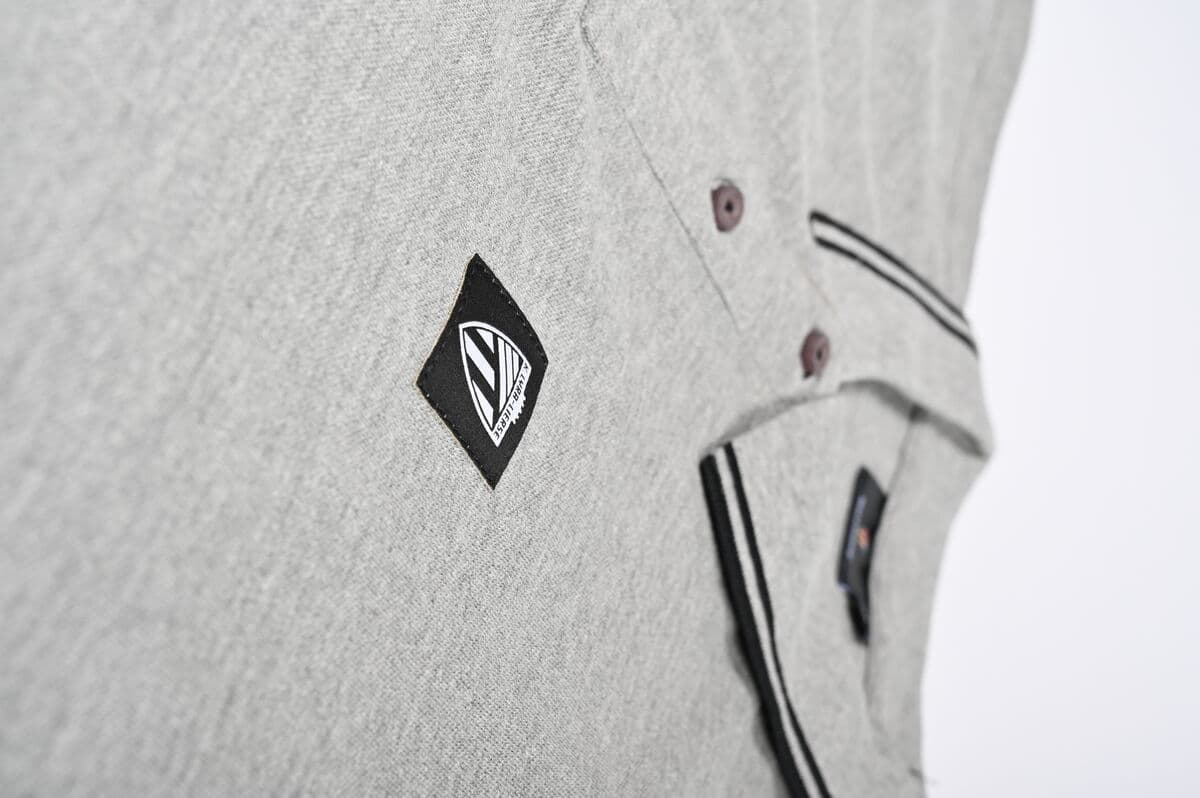
- Sewn woven label. Subtle branding near the hem.
- Subtle leather label. A premium finishing detail.
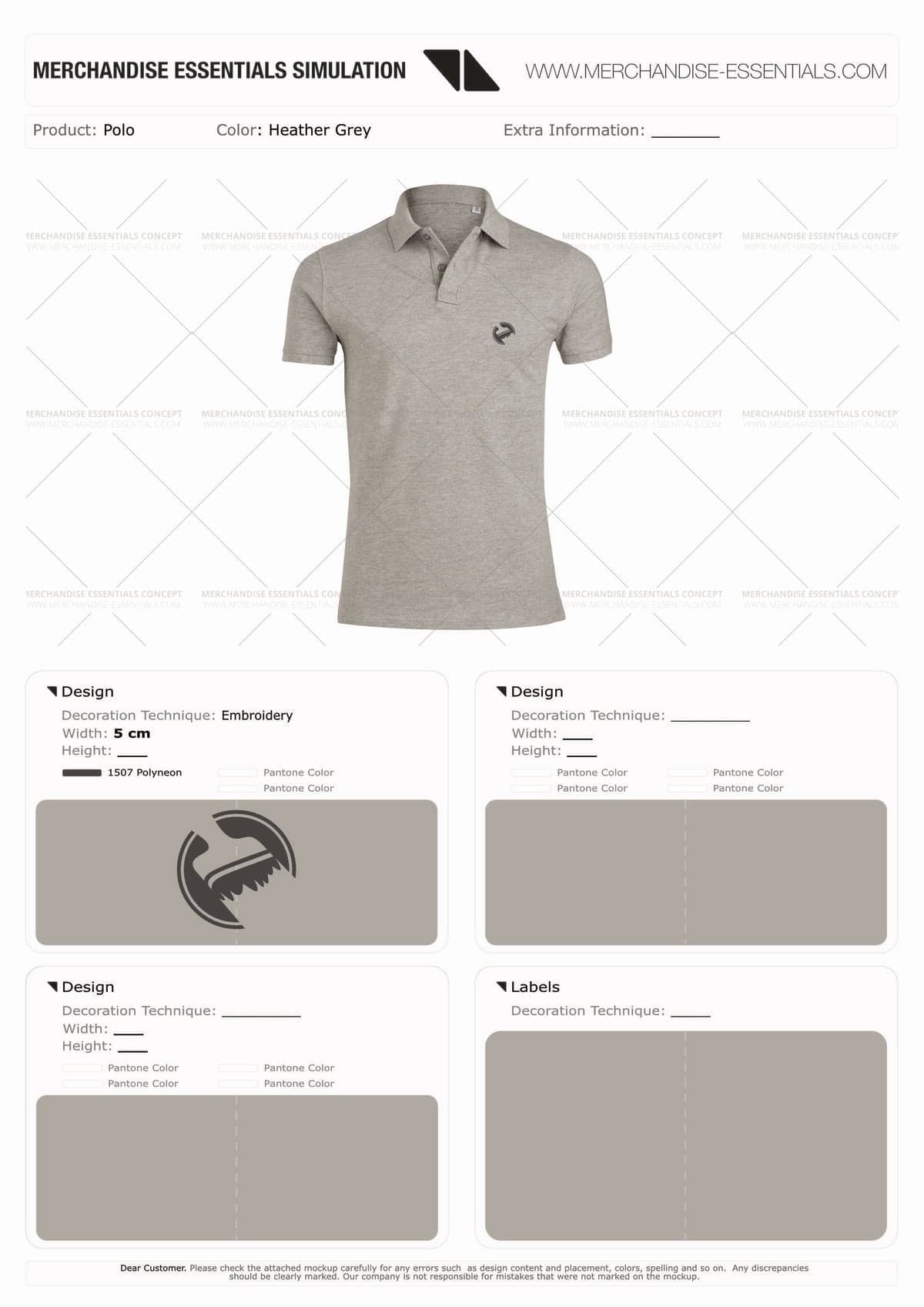
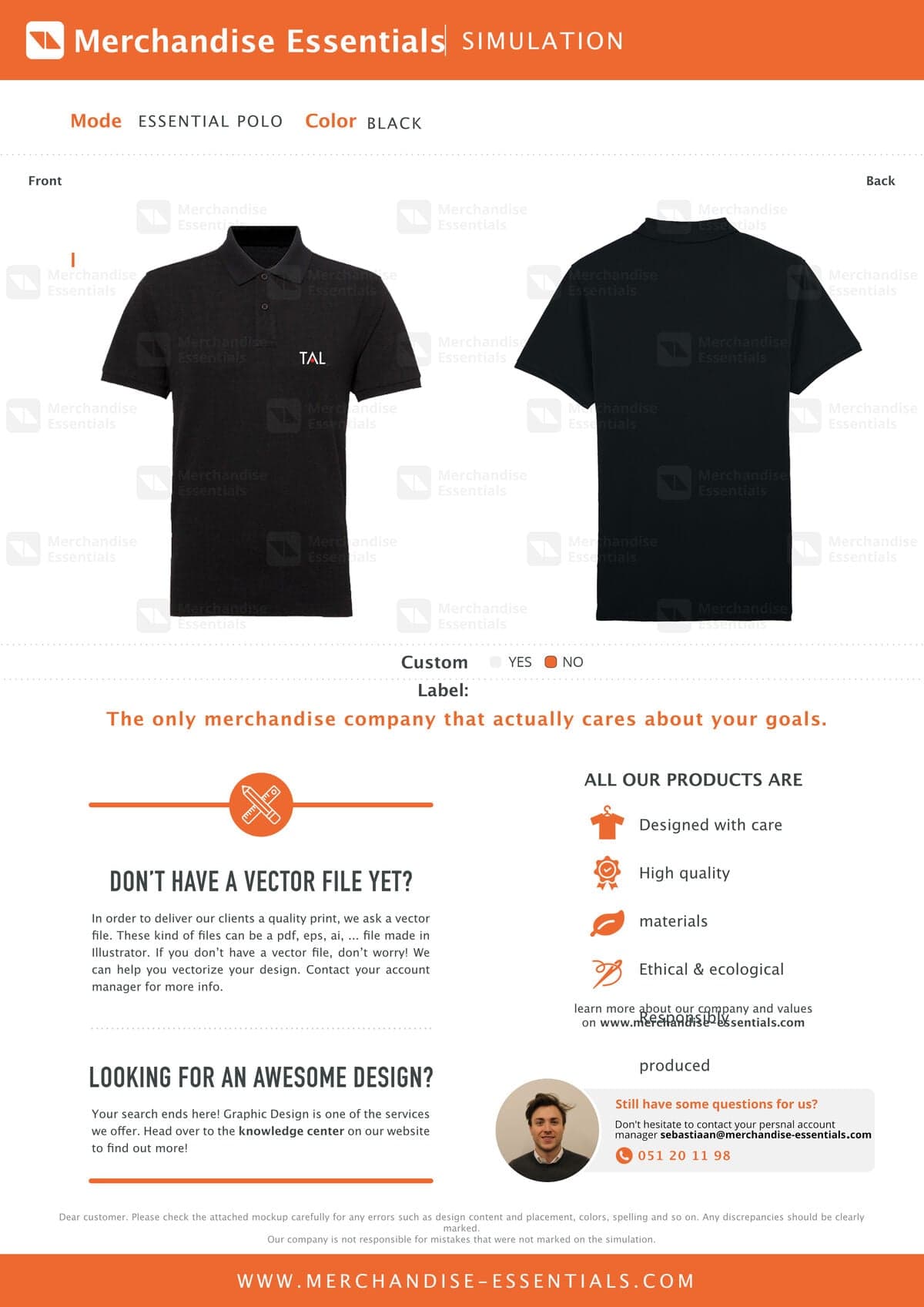
Printing is technically possible, but it is rarely the strongest look on a polo. Preview your mark first in the free polo mockup generator.
4. Logo placement
The primary mark is a small chest embroidery, kept restrained. An oversized chest logo looks promotional, not professional, and it is the fastest way to make a good polo feel like event swag. One strong, small embroidery plus one or two subtle custom details beats branding in every available position.
Use these sparingly, and pick one or two: a small sleeve embroidery or subtle sleeve patch, a woven label near the lower hem, or branded and contrast buttons. And keep the back clean. A big back print reads as event promo or workwear advertising.
5. Colour
Polos are unusually flexible on colour. Navy and classic corporate tones, black and white, bright brand colours, soft neutrals and distinctive combinations all work. There is no strict B2B rule. The right choice depends on your identity, your audience and the environment.
A bright polo can look completely intentional and professional when it matches a confident brand. A darker polo can look refined and versatile. The only thing to avoid is a colour that fights the brand or the setting. Decide on purpose, then commit, and see your colours on the garment before you order.
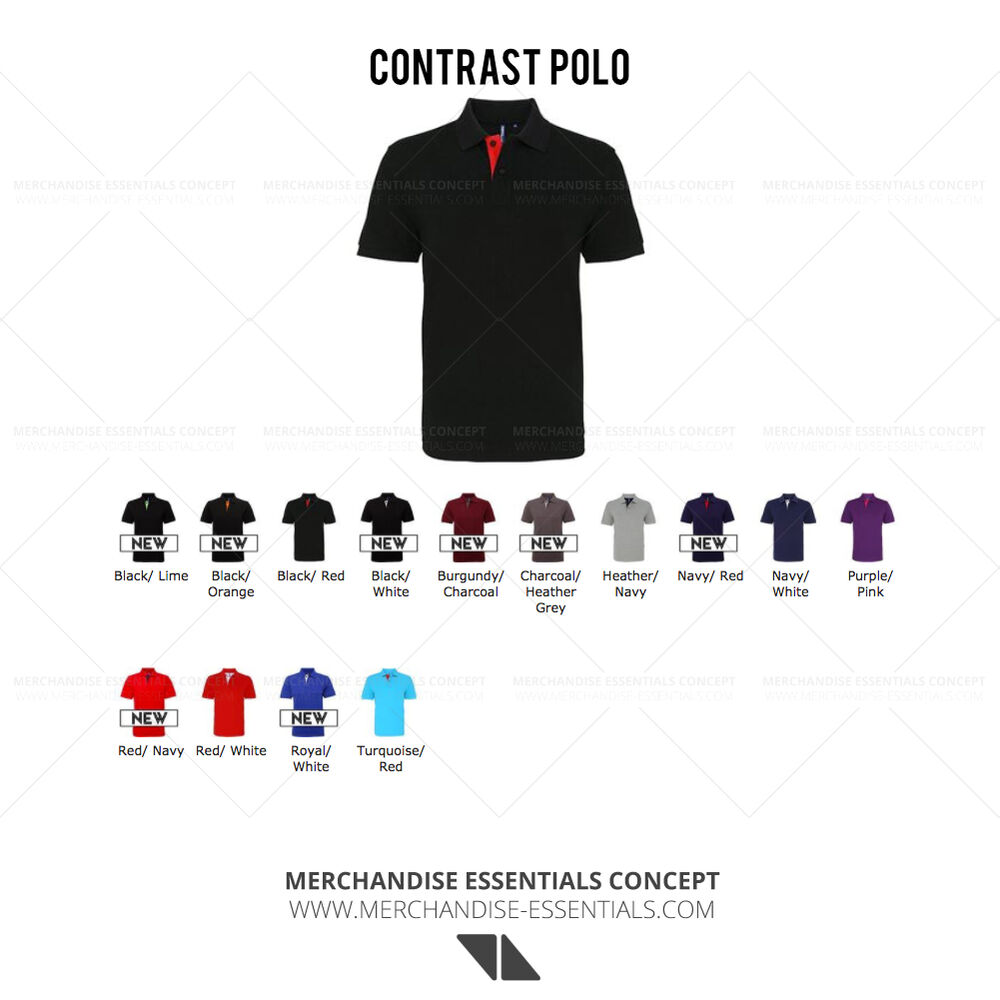
A contrast polo done on purpose. Brand colour can look intentional and professional, not promotional, when it matches a confident identity.
6. Quantity, MOQ and price
The last decision is scale, and it sets your route.
| Factor | What to expect |
|---|---|
| Minimum, ready-to-wear | From around 10 pieces. Accessible for small teams, booths, exec groups and pilots. |
| Minimum, fully custom | From around 150 pieces, unlocking Pantone colours, custom panels, sewn construction, custom buttons and trims. |
| Best route for small teams | Ready-to-wear polo plus premium decoration. Fastest and most sensible. |
| Main cost drivers | The polo model, quantity, decoration method and level of customisation. |
The takeaway: a ready-to-wear polo with strong decoration is accessible from very small quantities, so a small team can do a polo properly without a big commitment. Fully custom needs scale and lead time, and it is worth it when you want a polo that is unmistakably yours.
The quick checklist
- Piqué cotton for business, technical only for sport.
- Distinct men's and women's fits, balanced regular cut.
- Embroidery or a sewn detail, never flex printing on piqué.
- Small restrained chest logo, clean back.
- Colour chosen on purpose to match brand and setting.
- Ready-to-wear from ~10, fully custom from ~150.
- Buy quality over the cheapest unit, and design on-brand before you commit.
Run the list and the polo will look professional for years. On Sunday you can move straight from these decisions to a design: the platform uses your brand data to generate on-brand polo concepts with live pricing in about 30 seconds. Browse custom polos, explore the full catalog, or see how it works.
How to choose custom polo shirts: questions answered
How do I choose custom polo shirts for my company?
Work through six decisions in order: fabric (piqué cotton for most business, technical for sport), fit (distinct men's and women's, balanced regular cut), decoration (embroidery or a sewn detail, never flex printing on piqué), logo placement (small restrained chest mark, clean back), colour (match your brand and setting), and quantity (ready-to-wear from around 10, fully custom from around 150). Buy quality over the cheapest unit.
What fabric is best for a corporate polo?
Piqué cotton for most business use: sales teams, trade-show teams, field teams, office wear and retail staff. It is comfortable all day and looks right in a corporate setting. Choose a technical or polyester blend only for genuinely active contexts like golf, sports events and outdoor teams, where moisture management and performance matter.
Should I offer separate men's and women's polo fits?
Yes, wherever you can. Polo fabric stretches less than a tee, so fit matters more. Distinct men's and women's fits keep a mixed team looking coordinated. They need not be dramatically different, but a considered women's shape helps. For broad distribution, a balanced regular cut, neither overly slim nor oversized, is the most inclusive.
Is embroidery or printing better on a polo?
Embroidery, or a sewn detail like a woven patch or label, in almost every case. Piqué has a visible texture, so screen printing is less crisp than on a tee and flex printing looks like a plastic slab on the fabric. Printing is possible but rarely the strongest look on a corporate polo.
What is the minimum order for custom polos?
Ready-to-wear polos start from around 10 pieces, which suits small teams, booths and pilots. Fully custom polos start from around 150, where Pantone colours, custom panels, sewn construction and special trims become possible. For a smaller team, ready-to-wear plus premium decoration is the fastest, most sensible route.
What colour should a company polo be?
There is no strict rule. Navy and classic tones, black and white, bright brand colours, soft neutrals and combinations all work. The right choice depends on your brand identity, audience and environment. A bright polo can look intentional and professional, a darker one refined and versatile. Decide on purpose and preview your colours on the garment first.
Keep reading: custom polo shirts
Design your polo, then decide
See on-brand polo concepts with live pricing in 30 seconds, embroidered, EU-made, men's and women's fit. Create a free account and run your choices live.
Get free designs