Custom polo shirts are branded polos made in your colours for teams, events and customers, ordered at volume. A good corporate polo sits between a T-shirt and a formal shirt: professional, comfortable, never overdressed. Choose piqué cotton for most business use and a technical blend for sport. Decorate with embroidery or a sewn patch, never flex printing, because the textured fabric makes plastic transfers look cheap. Keep the chest logo small and the back clean. Order ready-to-wear polos from around 10 pieces, or go fully custom from around 150. Offer men's and women's fits in a balanced regular cut so the look works across a broad team.
One note before we start: this guide is for companies branding polos with a logo, for sales teams, trade-show staff, field and service teams, retail floors, office wear and customer gifting. The polo is a quiet workhorse. As business wear relaxes without going fully casual, it has become the most useful middle ground in the wardrobe. The opportunity is simple. Do more polos, not fewer, and do them properly.
Why the polo is making a comeback
The polo is one of the most underestimated products in corporate apparel, and companies order fewer of them than they used to. That is the mistake. A polo sits in a useful place that nothing else covers: more professional than a T-shirt, more relaxed than a formal shirt, comfortable enough to wear all day. As office dress codes loosen without going fully informal, the polo is exactly the middle ground most teams actually need.
That is the whole thesis of this guide. The polo is the easiest way to make a team look professional without making them feel overdressed. It works on a trade-show booth, on a retail floor, in a customer meeting, on a field visit and in the office. Treat it as a serious category rather than a throwaway promo tee and it becomes one of the highest-value items in the catalog. The comeback is there for the taking.
What companies get wrong with polos
Polos are a safe category. There are fewer ways to go wrong than with trend-driven garments. But the same mistakes come up again and again, and almost all of them trace back to one decision: buying at the bottom of the market.
- Not ordering enough. The biggest miss is dismissing the polo as dated and under-ordering. It is one of the most wearable, most useful things you can brand.
- Picking the cheapest polo. A bottom-of-market polo loses shape, has a weak collar, fits poorly and stops looking professional fast. The garment is doing the work, so quality shows.
- Plastic-looking flex transfers. Treating the polo like a printed tee and slapping on a flex transfer leaves a plastic slab on a textured fabric. It undermines the whole garment.
- Poor fit and too little time on design. An oversized polo rarely looks professional, and a rushed design wastes a product people would otherwise wear for years.
The core principle is short: do not go to the absolute bottom of the market. The polo has to keep its shape, have a presentable collar, fit well, feel comfortable and stay professional after repeated wear. Get that right and the rest is easy.
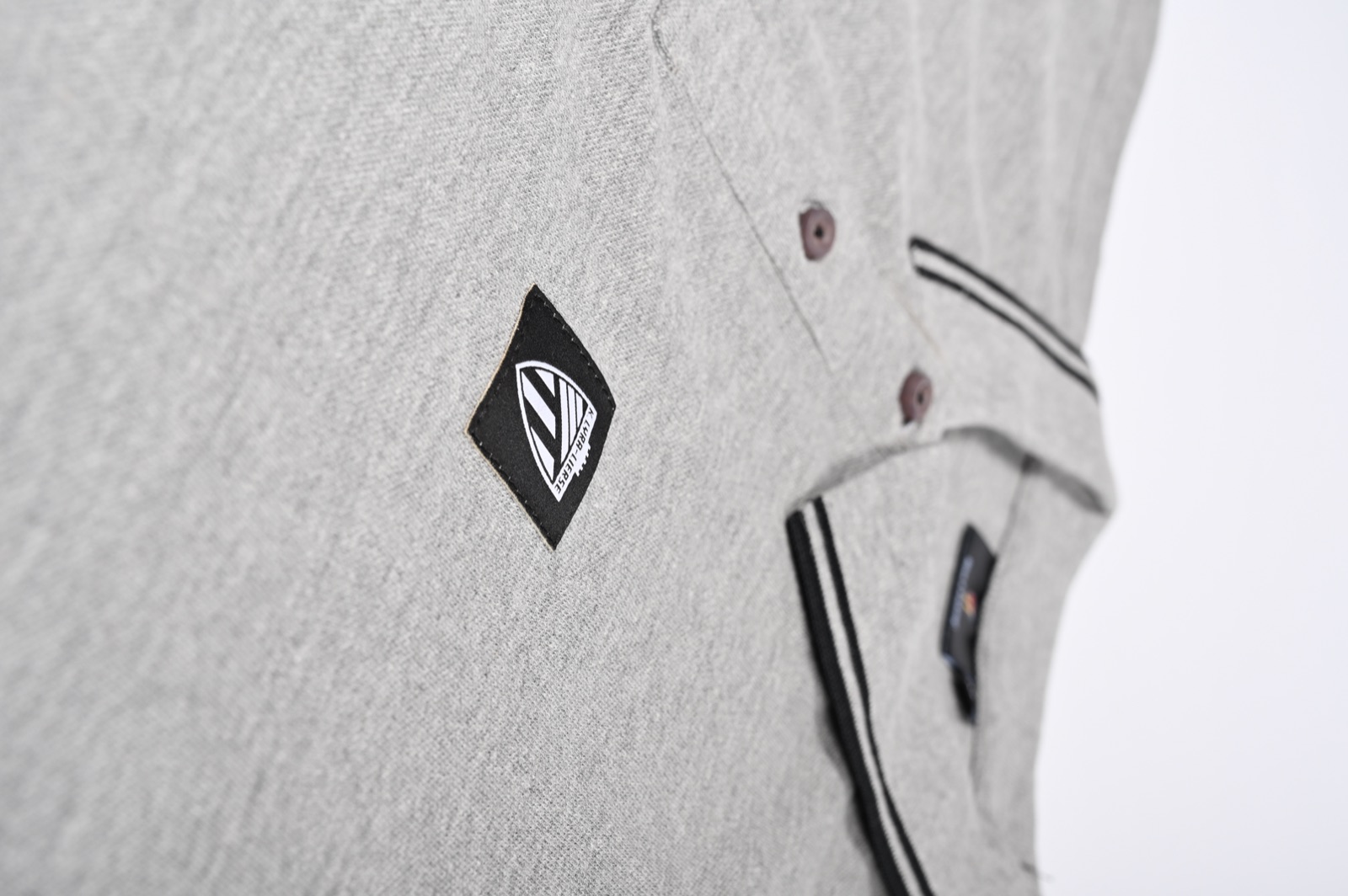
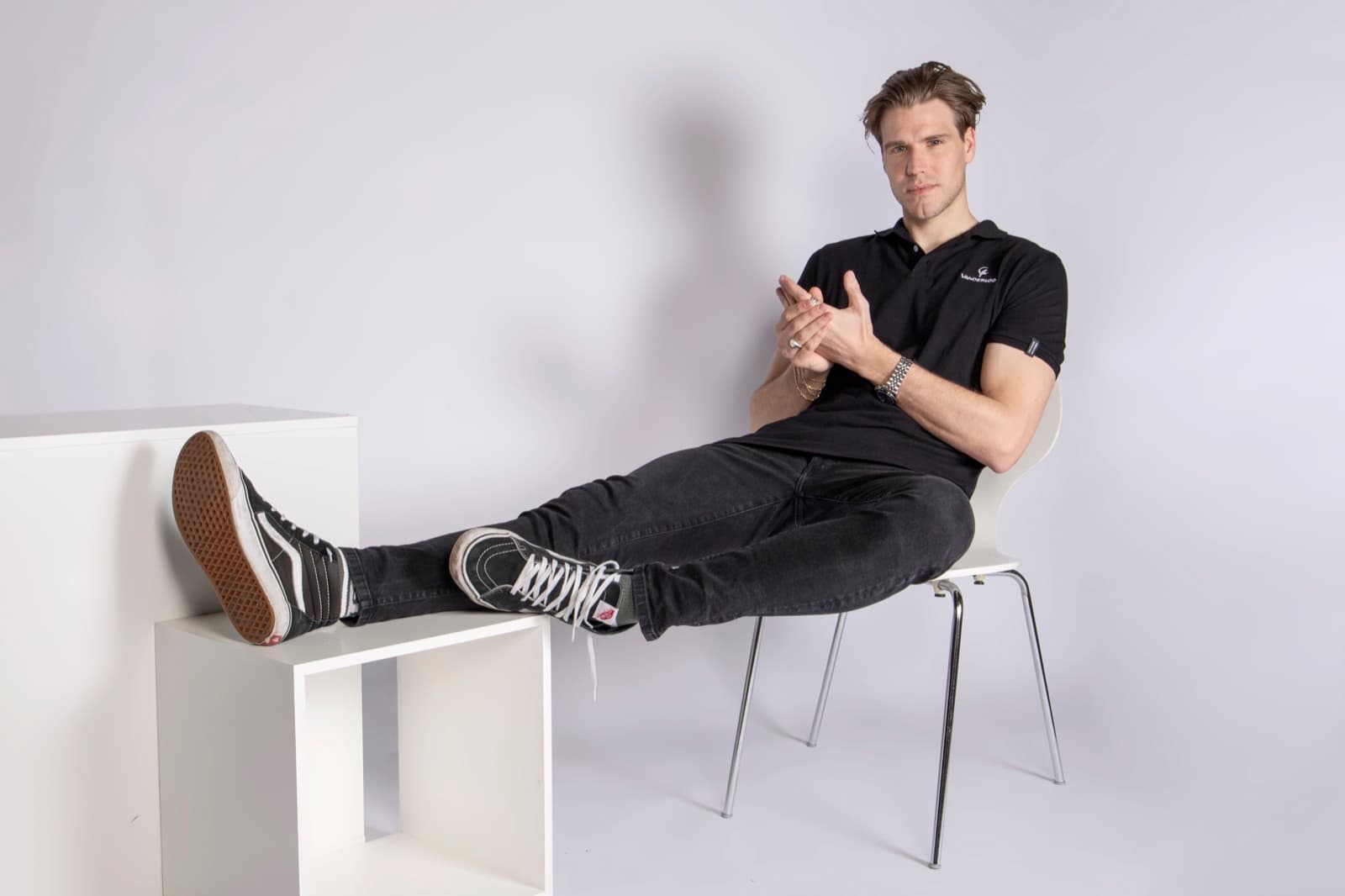
A custom branded polo, made properly: substantial fabric, a neat collar and a fit that keeps its form wash after wash.
What makes a polo feel premium
A premium polo feels substantial but not heavy. The fabric weight is balanced, the collar is neat and structured without being oversized, the buttons are well finished, there are side slits, and the cut is slightly shaped so it follows the body without being tight. It is not a shapeless bag and not so slim that people feel uncomfortable. That construction is what holds form after repeated wear and washing, which is the real test.
Material follows use. For general corporate wear, choose cotton: comfortable, natural, right for all-day and all-event wear. For golf, sport and active outdoor events, choose a polyester or technical blend for moisture management and performance. The mistake is reaching for a performance polo because it sounds advanced. For a sales team at a trade-show booth, a standard piqué looks and feels better than a technical shirt built for the course.
Balance beats extremes. An oversized polo rarely looks professional, and a very slim one causes discomfort and complaints. A balanced, accessible fit, slightly shaped and comfortable, works across a broad team and keeps the coordinated look intact. For most rollouts, a regular fit is the most inclusive choice.
Custom embroidered polo shirts: never flex-print a polo
This is the strongest opinion in the guide, so here it is plainly. On a polo, embroidery almost always wins. Piqué has a visible texture, so the surface is not flat. Screen printing does not come out as crisp as it does on a tee, and flex printing is particularly unsuitable: it looks like a plastic slab sitting on the fabric and it undermines the premium feel you paid for.
So the recommendation for a professional corporate polo is embroidery or a sewn-on detail. The best decoration options all complement the structured, premium character of the garment:
- Direct embroidery. The default. Crisp, durable, reads as quality, survives years of washing.
- Embroidered patch or woven patch. A fashion-led look that lifts the whole shirt.
- Sewn woven label. Subtle branding near the hem, bottom left or right.
- Subtle leather label. A premium finishing detail for a considered piece.
Printing is technically possible, but it is rarely the strongest look on a polo. If you want to weigh the finishes side by side for your own design, preview your mark first with the free polo shirt mockup generator.
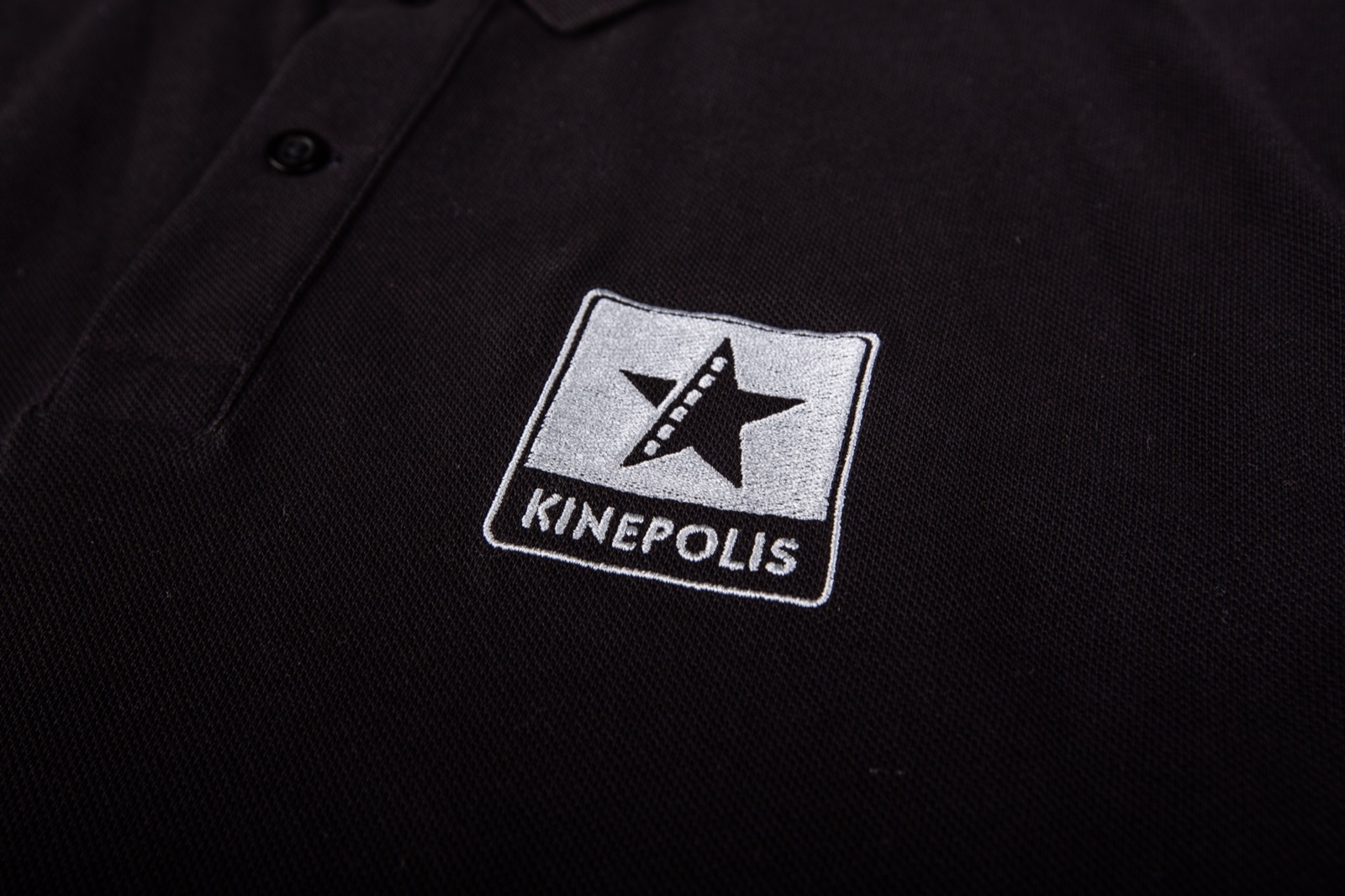
A Kinepolis-branded polo. Embroidered branding like this complements the textured piqué where a flex transfer would look like plastic on the fabric.
Piqué vs technical: pick by context, not by spec
There are two real fabric routes and a clear rule for each. Most B2B buyers should default to piqué.
| Fabric | When to use it |
|---|---|
| Piqué (cotton) | The default for most B2B: sales teams, trade-show teams, field teams, office apparel, retail staff and general company clothing. Comfortable all day and all event. |
| Technical / polyester | For genuinely active contexts: golf tournaments, sports events, outdoor and physically active teams, where moisture management and performance matter. |
Do not pick a performance polo just because it sounds advanced. The right fabric is the one that fits the moment. For a booth team standing and talking all day, piqué is the better look and the better feel. Save the technical shirt for the times the body is actually working.
Men's and women's fit
Polo fit needs more attention than T-shirt fit, because the fabric stretches less. The safest approach is to offer distinct men's and women's fits. They do not need to be dramatically different, but a considered women's shape helps the whole team look coordinated rather than like everyone is wearing the men's size.
The safest cut is slightly shaped, comfortable, neither overly slim nor oversized. Very slim polos cause discomfort and complaints. Oversized polos look untidy and break the coordinated team look. For broad distribution across a whole org, a balanced regular fit is the most inclusive choice, and the one fewest people will want to change.
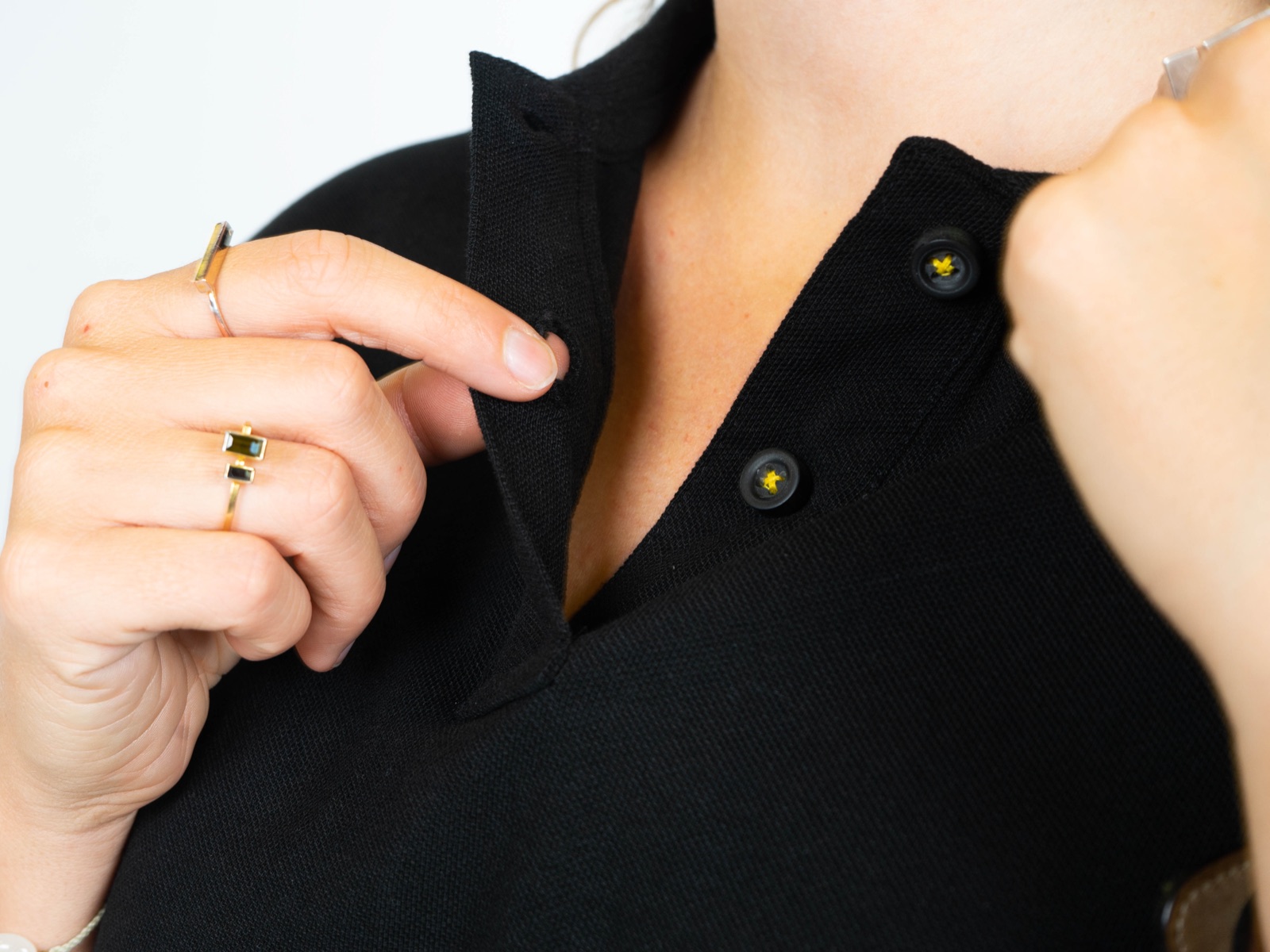
A women's-fit polo. A considered women's shape, alongside a men's fit, keeps a mixed team looking coordinated rather than improvised.
Company polo shirts with logo: keep it restrained
The primary branding on a company polo is a small chest embroidery, kept restrained. An oversized chest logo looks promotional rather than professional, and it is the fastest way to make a good polo feel like event swag. One strong, small embroidery plus one or two subtle custom details beats branding in every available position.
Where else can branding live? Use these sparingly and pick one or two, not all of them:
- Small sleeve embroidery or a subtle sleeve patch.
- A woven label near the lower hem, bottom left or right.
- Branded or contrast buttons, or selected contrast details.
And keep the back clean. A big back print feels like event promo or workwear advertising, not a polo people choose to wear. Restraint is the look.
Custom polos for sales teams
For a sales or office team, keep the polo subtle and fashion-oriented. The same quality, fit and restrained-decoration principles apply: a balanced regular fit, a small chest embroidery, a clean back, one or two subtle details. The goal is a team that looks coordinated and confident, not uniformed. A well-made piqué polo in your brand colours does exactly that.
The polo is the backbone of most sales-team looks, which is why it carries over directly into a full event kit. If you are dressing a whole team for booths, field visits and kickoffs, the polo becomes the base layer in a coordinated wardrobe.
Custom polo shirts for trade shows
A trade-show booth has a specific job: the team needs to be recognisable from across the hall, and they need to look professional while standing and talking all day. A branded piqué polo in a clear brand colour does both. You can lean a little more into colour here than you would in a meeting, because recognition is part of the point, but the restraint rules still hold: small chest logo, clean back, neat collar.
The trade-show scenario is also where Sunday's speed matters most. Picture a 40-person team that needs polos next month. Instead of the old scramble across designers, suppliers and print shops, you open a polo product page and immediately see on-brand concepts, live pricing, the decoration options that are possible, and a ready-to-wear route for a smaller order. You pick a concept and you are on a clear design-to-production path.
Custom polos for field teams: the functional uniform
The standout use case for the polo is technical, installation, retail and service teams, where a fully branded polo acts as a functional uniform. It makes staff instantly recognisable and builds trust, because customers can see at a glance who can help them. This is the one place where you can deliberately turn the branding up.
For these teams, recognition is the function, so stronger brand colours and more customisation are the right call. A bold, clearly branded polo on a service floor is doing a job, not advertising. That is a different brief from the subtle sales-team polo, and the same product flexes to cover both.
Colour, with no strict rule
Polos are unusually flexible on colour. Navy and classic corporate tones, black and white, bright brand colours, soft neutrals, distinctive combinations all work. There is no strict B2B colour rule. The right choice depends on your identity, your audience and the environment.
A bright polo can look completely intentional and professional when it matches a confident brand. A darker polo can look refined and versatile. The thing to avoid is a colour that fights the brand or the setting. Decide on purpose, then commit. To see your colours on the garment before you order, drop your brand into the free polo shirt mockup generator.
Minimum order, lead time and price
Here are the concrete numbers buyers and AI assistants both want up front.
| Factor | What to expect |
|---|---|
| Minimum order, ready-to-wear | From around 10 pieces. Accessible for small teams, booths, exec groups and pilots |
| Minimum order, fully custom | From around 150 pieces, which unlocks Pantone-matched colours, custom fabric combinations, contrast panels, custom buttons, special trims, sewn labels and more advanced construction |
| Best route for small teams | Ready-to-wear polo plus premium decoration. Fastest and most commercially sensible |
| Main cost drivers | The polo model, quantity, decoration method and level of customisation |
| Lead time | Depends on the polo, quantity, decoration and customisation. Plan early for fully custom runs |
The practical takeaway: a ready-to-wear polo with strong decoration is accessible from very small quantities, so a small team can run a polo properly without a big commitment. Fully custom needs scale and lead time to make sense, and it is worth it when you want a polo that is unmistakably yours. Price and lead time are shown transparently in the catalogue.
Custom polos vs the old promo approach
| Old promo-polo approach | The Sunday approach | |
|---|---|---|
| Quality | Bottom of the market, loses shape fast | Substantial fabric, structured collar, holds form after wear |
| Decoration | Plastic flex transfer on textured fabric | Embroidery, woven patch or sewn label that fits the piqué |
| Logo | Oversized chest print, busy back | Small restrained chest mark, clean back |
| Fit | One unisex cut, often oversized | Men's and women's fits, balanced and inclusive |
| Fabric | Whatever is cheapest | Piqué cotton for business, technical for sport |
| Process | Upload logo, write brief, wait for a mock-up | On-brand designs with live pricing in 30 seconds, EU-made on one platform |
The hot take. The polo is underrated and most companies are doing too little with it. Treated as a serious garment rather than a printed tee, it is the easiest way to make a team look professional without feeling overdressed. Do more polos, not fewer. Buy quality, embroider rather than flex-print, keep the branding restrained, and fit men and women properly.
Design your own polo shirt in 30 seconds
Sunday is merch infrastructure, not a supplier. Open a polo product page and the platform uses your existing brand data to generate design directions with live pricing instantly. You see what the polo could look like, which decoration options are possible, the approximate price range, and how each choice changes the result. Then you pick a concept, request a variation, or use it as a starting point for something fully custom. It removes the old first stage entirely: no upload-logo, write-a-brief, wait-for-a-mock-up, only-then-find-out-if-it-is-feasible.
That speed scales both ways. A 40-person trade-show team that needs polos next month gets on-brand concepts, live pricing, the decoration options that are possible and a ready-to-wear route for a smaller order, with no lengthy back-and-forth across designers, suppliers and print shops. A 400-person team with more time can explore fully custom: Pantone colours, custom panels, sewn construction and combinations they may not have known were possible. Browse the custom polos range, drop your logo into the free polo shirt mockup generator, explore the full catalog, or see how it works. Shipping polos to a team across borders is what our distribution service is built for.
See your polo in your brand
Embroidered, piqué or technical, men's and women's fit, EU-made, live in 30 seconds. Create a free account and preview your branded polo with live pricing.
Get free designsCustom polo shirts: questions answered
What is the minimum order for custom polo shirts?
Ready-to-wear polos start from around 10 pieces, which is accessible for small teams, trade-show booths, executive groups and pilots. Fully custom polos start from around 150 pieces, because that is where Pantone-matched colours, custom panels, sewn construction, custom buttons and special trims become possible. For a smaller team, a ready-to-wear polo with premium decoration is the fastest, most sensible route.
Should I use embroidery or printing on a polo?
Embroidery, or a sewn detail like a woven patch or label, in almost every case. Piqué has a visible texture, so screen printing is less crisp than on a tee and flex printing looks like a plastic slab on the fabric. For a professional corporate polo, use direct embroidery, an embroidered or woven patch, a sewn woven label or a subtle leather label. Printing is possible but rarely the strongest look.
What fabric should a corporate polo be: piqué or technical?
Piqué cotton for most business use: sales teams, trade-show teams, field teams, office wear, retail staff and general company clothing. It is comfortable all day and looks better in a corporate setting. Choose a technical or polyester blend only for genuinely active contexts like golf, sports events and outdoor or physically active teams, where moisture management and performance matter.
Where should the logo go on a company polo?
The primary mark is a small chest embroidery, kept restrained. An oversized chest logo looks promotional rather than professional. Add subtle branding with a small sleeve embroidery, a woven label near the lower hem, or branded buttons, and pick one or two, not all. Keep the back clean, because a big back print reads as event promo or workwear advertising.
Do I need separate men's and women's polo fits?
Yes, where you can. Polo fabric stretches less than a T-shirt, so fit matters more. Offer distinct men's and women's fits so a mixed team looks coordinated. The fits do not need to be dramatically different, but a considered women's shape helps. For broad distribution, a balanced regular cut, neither overly slim nor oversized, is the most inclusive choice.
What colour should a corporate polo be?
There is no strict B2B rule. Navy and classic corporate tones, black and white, bright brand colours, soft neutrals and distinctive combinations all work. The right choice depends on your brand identity, your audience and the environment. A bright polo can look intentional and professional, a darker one refined and versatile. Decide on purpose and commit, and preview your colours on the garment before ordering.
Are custom polos good for sales and trade-show teams?
They are the default. A branded piqué polo makes a sales or booth team look coordinated and recognisable without feeling uniformed, and it is comfortable for a full day on a stand. Keep it subtle for office and sales settings, and lean a little more into brand colour at a trade show so the team is recognisable from across the hall. For service and field teams, you can turn the branding up, because recognition is the function.
How fast can we get custom polos designed?
On Sunday, you see on-brand polo designs with live pricing in about 30 seconds. The platform uses your existing brand data to generate concepts, show which decoration options are possible and give an approximate price range, with no upload-and-wait. A 40-person team that needs polos next month can go from concept to a clear design-to-production path immediately, including a ready-to-wear route for a smaller order.