
Cheap promotional merchandise actively damages your brand. That thin, scratchy sock with a pixelated logo and a plasticky feel? Every time someone opens a drawer and sees it (before choosing a different pair), it reinforces the message: this company cuts corners. The cost per negative impression is infinite because you're paying to make people think less of you.
Premium custom socks cost 30-50% more than bottom-shelf promotional socks. At 100 pairs, that's the difference between €400 and €600. For that extra €200, you get socks that people actually wear, a brand impression that builds equity instead of eroding it, and recipients who associate your company with quality instead of swag-bin leftovers.
This guide covers every lever that separates a premium branded merchandise sock from a cheap one: material, design, packaging, color accuracy, manufacturing quality, and finishing details. The goal is to make your branded socks feel like something someone would buy. Because if it doesn't feel buyable, it doesn't get worn.
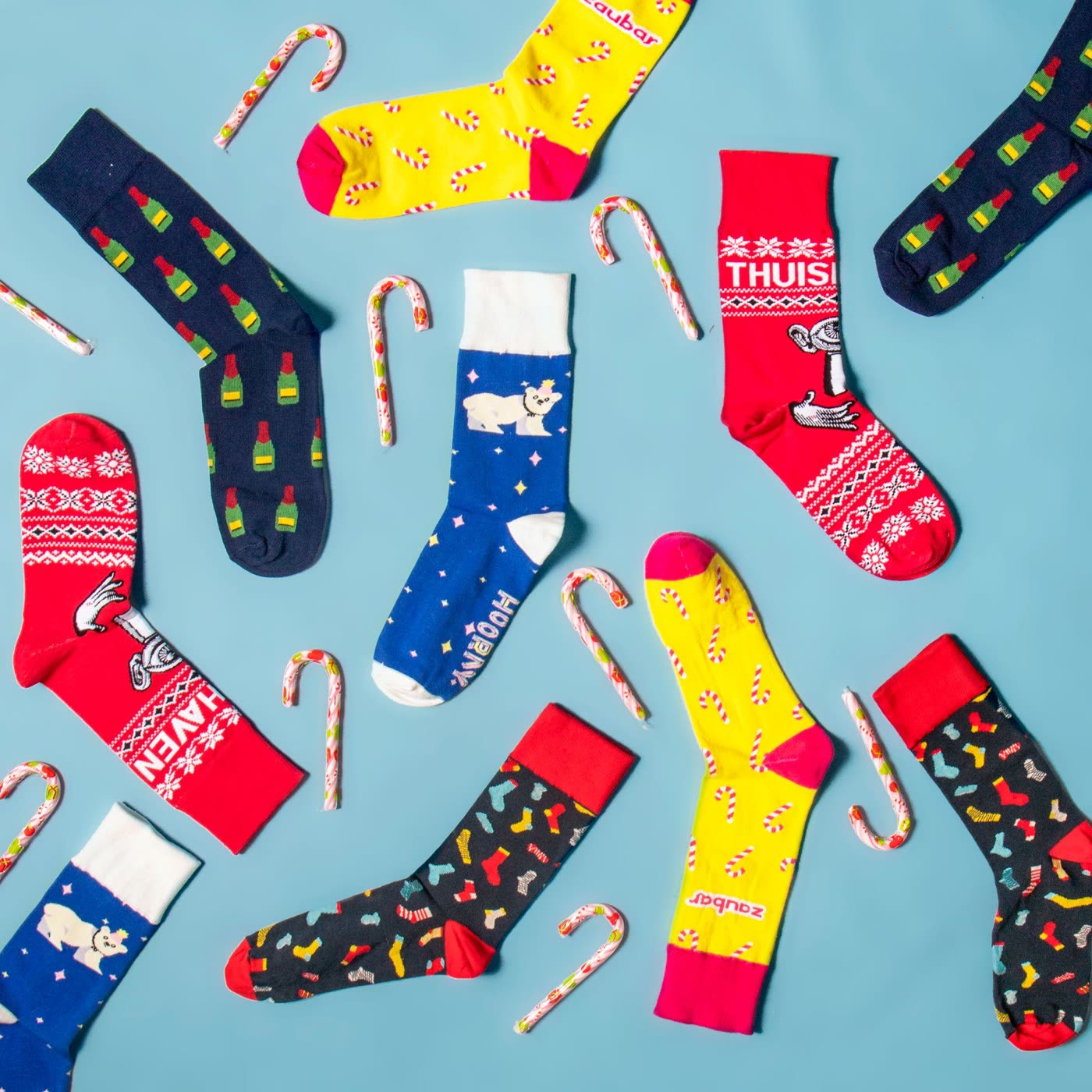
- 73%: of people judge brand quality by merchandise quality.
- 30-50%: cost premium for retail-grade vs cheap promotional socks.
- 6x: longer wear life for premium vs cheap branded socks.
The cheap merch problem
The gap between a premium branded sock and a cheap one shows up at every touchpoint, from the first time someone handles it to how it looks after three washes.
| Cheap promotional sock | Premium branded sock | |
| First touch | Thin, scratchy, stiff | Soft, dense, comfortable |
| Logo appearance | Pixelated, wrong color, printed | Crisp, Pantone-matched, knitted in |
| After 3 washes | Pilling, faded, shape lost | Like new, colors intact, shape held |
| Packaging | Plastic bag, no branding | Custom belly band or box, branded |
| Perceived value | "Free conference junk" | "These are actually really nice" |
| Brand impact | Negative (cheap association) | Positive (quality association) |
Material quality: the foundation
Everything starts here. A premium branded sock uses combed cotton (ring-spun for smoothness), bamboo viscose (naturally soft and antibacterial), or merino wool (thermoregulating, odor resistant). A cheap one uses generic cotton or pure polyester.
The yarn composition should include 3-5% elastane for stretch retention. Without elastane, socks lose their shape after a few wears. Your logo is now displayed on a saggy tube. Not the brand statement you intended.
For a deeper look at how to specify and brief the right blend, see our guide on how to brief and design custom socks.
Design restraint over logo size
The instinct to maximize logo size is the single biggest design mistake in branded socks. A giant logo signals promotional merchandise. A thoughtfully integrated brand mark signals retail quality. Show restraint. Use your brand as an accent within a good design, not as the entire design.
Premium sock brands (the ones people pay €15-20 per pair for) use small marks, subtle patterns, and color as their primary brand signals. Apply the same philosophy to your branded socks and the quality perception jumps immediately.
Custom packaging that signals quality
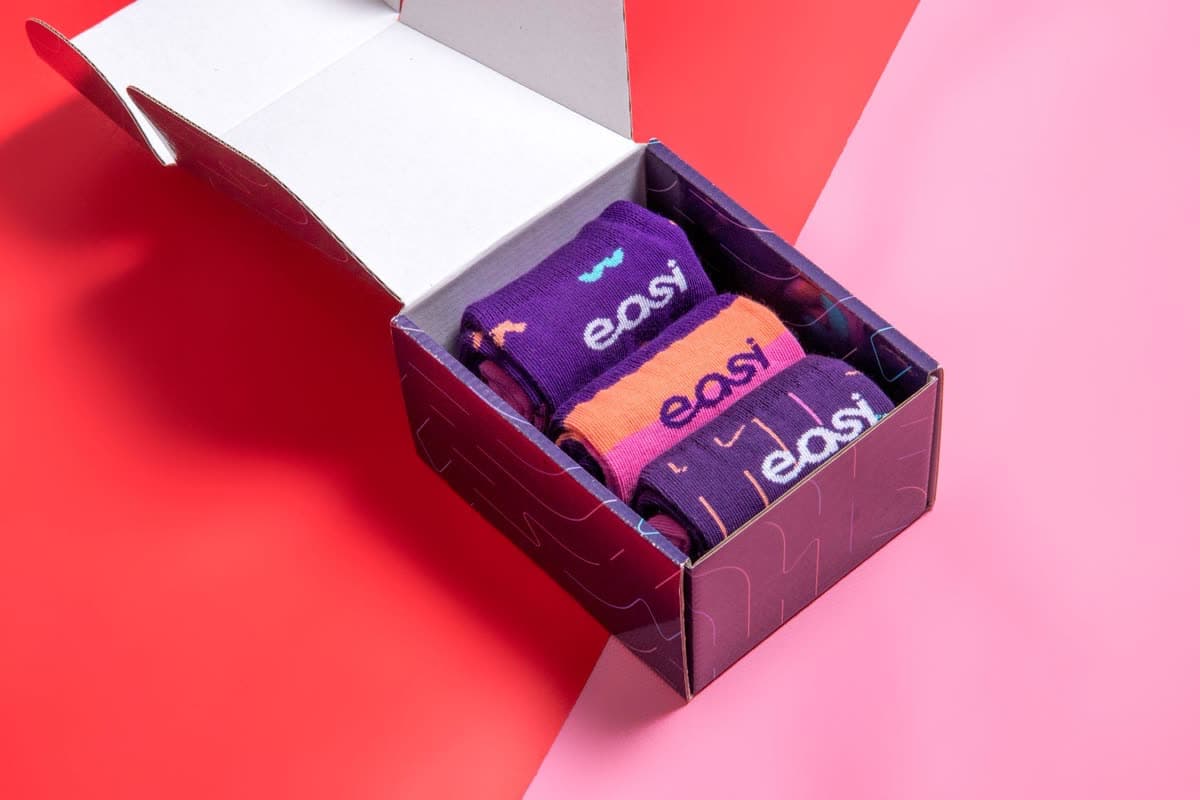
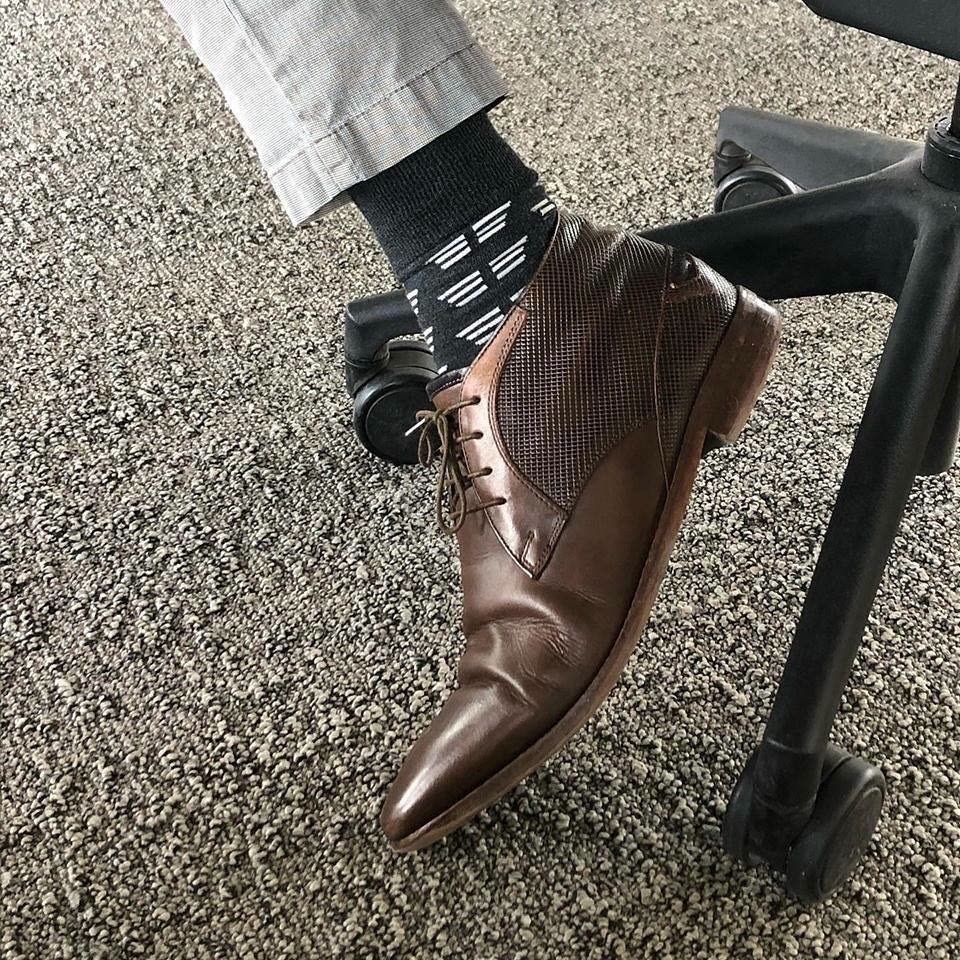
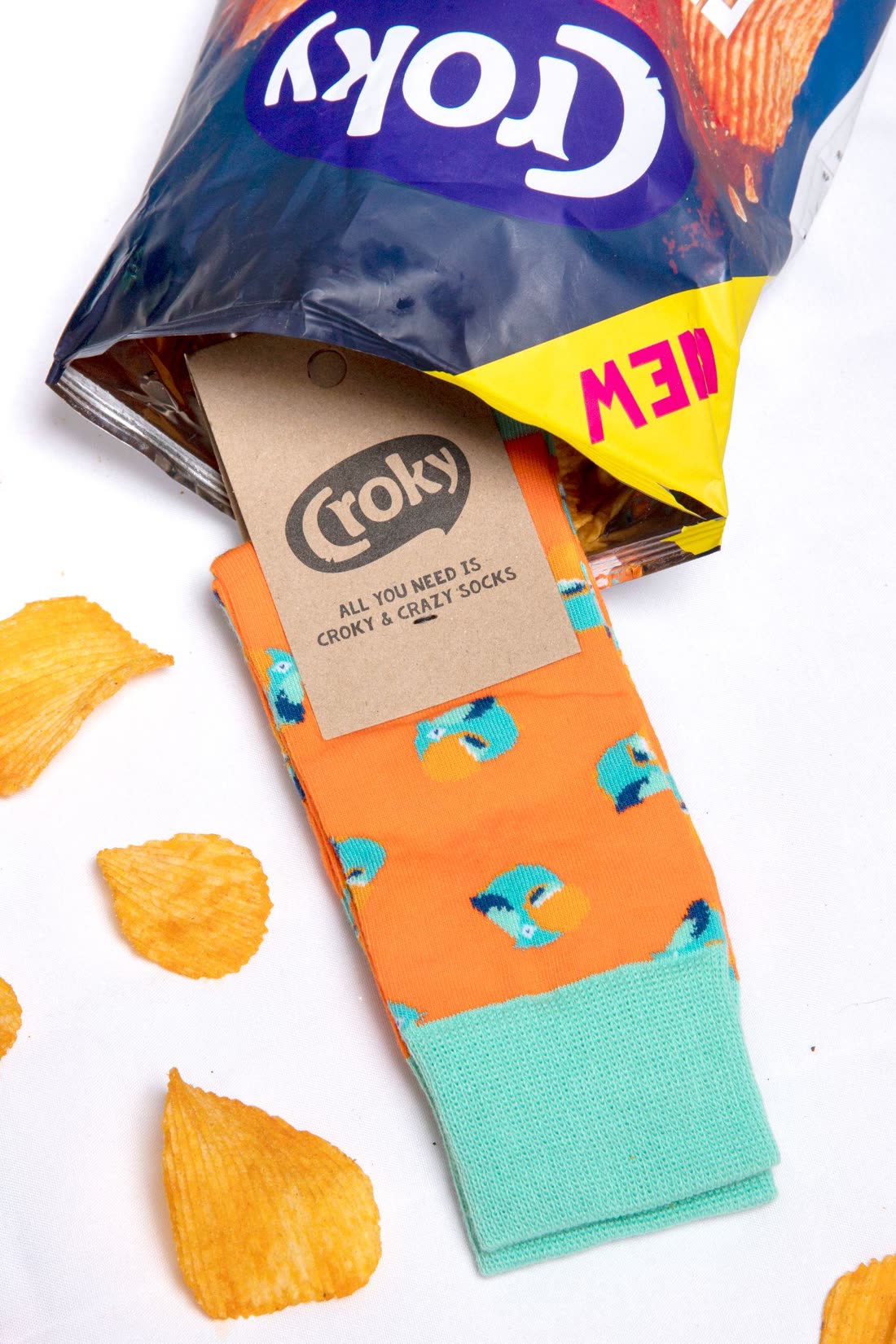
Packaging is the first physical touchpoint. It sets expectations before anyone touches the sock. A poly bag says "bulk freebie." A kraft belly band with embossed branding says "we thought about this." A custom box with tissue paper says "this is a gift."
Match the packaging to the use case: belly bands for event distribution (€0.30-0.80/pair), individual boxes for direct mail and gifting (€2-4/pair), premium boxes for executive gifts (€5-10/pair). The marginal cost is small. The perception shift is massive.
Color matching and finishing
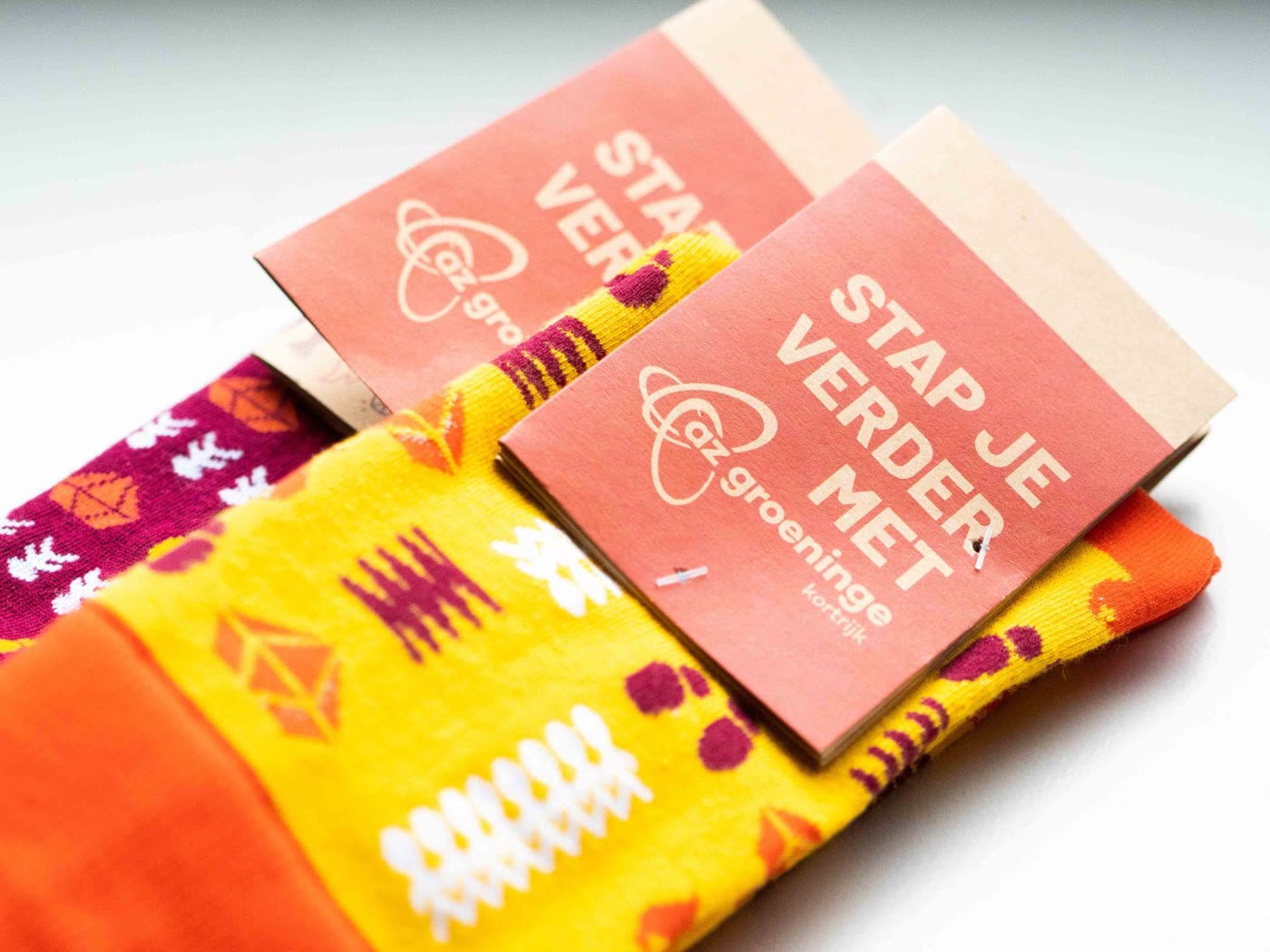
Pantone matching is the minimum standard for premium branded socks. If your brand blue is PMS 286, the sock should be PMS 286. Not "kind of blue." A pre-production sample verified against a physical Pantone swatch should be standard practice.
Finishing details that separate premium from cheap: clean toe closure (no rough seams), consistent sizing (both socks in a pair identical), no loose threads, clean interior (no floating yarns on the inside of the sock). These details aren't visible in a mockup. They're felt on the foot.
Premium vs cheap: side-by-side
| Cheap | Premium | Cost difference | |
| Yarn | Generic cotton, no specification | Combed cotton, ring-spun, certified | +€0.50-1.00/pair |
| Needle count | 96-108 (coarse) | 144-168 (fine detail) | +€0.30-0.50/pair |
| Logo method | Print (cracks, fades) | Knitted in (permanent) | Minimal difference |
| Toe closure | Rough machine seam | Flat-linked seam | +€0.20-0.40/pair |
| Packaging | Plastic bag | Custom belly band or box | +€0.30-4.00/pair |
| QC | Sample-based | 100% pair inspection | Included by reputable manufacturers |
Quality checklist
Run a sample against this premium sock quality checklist before you approve production.
- Yarn composition specified (combed cotton, bamboo, or merino)
- Elastane content 3-5% for shape retention
- Needle count 144+ for crisp logo reproduction
- Logo knitted in (not printed) for permanence
- Pantone colors verified with pre-production sample
- Flat or clean toe closure (no rough seams)
- 100% visual QC on every pair
- Custom packaging (minimum belly band)
- Consistent sizing across all pairs
- Clean interior: no floating yarns or loose threads
- OEKO-TEX or equivalent safety certification
- Wear test: try the sample for a full day before production
How to brief a premium sock order
Get retail-grade results from your manufacturer by being explicit at every step.
Specify material explicitly
Don't accept "cotton blend." Request exact yarn composition with percentages: "80% combed cotton (ring-spun), 15% polyamide, 5% elastane." If the manufacturer can't provide this, find one who can.
Provide Pantone codes, not hex
Hex and RGB colors don't translate directly to yarn dyes. Pantone is the textile industry standard. Provide your exact Pantone codes and request a physical sample for verification.
Request a wear sample
Don't judge a sock from a mockup. Wear the physical sample for a full day. Wash it twice. Check comfort, shape retention, logo clarity, and color fastness. Then approve production.
Invest in packaging
Budget €0.50-4.00 per pair for custom packaging. A belly band minimum. A box if it's a gift. The packaging is the first thing people see and sets the quality expectation before they touch the sock.
Quality materials, expert design, 100% QC. Sunday produces retail-grade branded socks from 100 pairs, using the same materials and manufacturing processes as larger orders.