The best corporate clothing examples start with an idea, not a brief. They start from brand identity and let the decoration follow from that: embroidery for classic brands, oversized print for young brands, patches for retro. A collection works when people wear it out of pride, not when it's handed to them.
The common thread between the three examples below isn't budget and it isn't the supplier. It's that every collection started with an idea. Not "we need clothing," but "this is who we are, in clothing."
This article is part of our complete guide to corporate clothing with your logo.
What's in this article
Custom patterns and heavyweight hoodies
Zalando. Custom corporate clothing, with custom patterns, heavyweight hoodies, and special cuts. Not catalog products with a logo slapped on, but a fully developed corporate-wear approach with its own fit and its own identity.
What makes this example interesting is where it stops being merch. A custom pattern on the hood. A heavier sweat fabric that drapes differently than standard. A cut that belongs to the brand instead of the catalog. That's the level corporate clothing reaches when you genuinely invest in it.
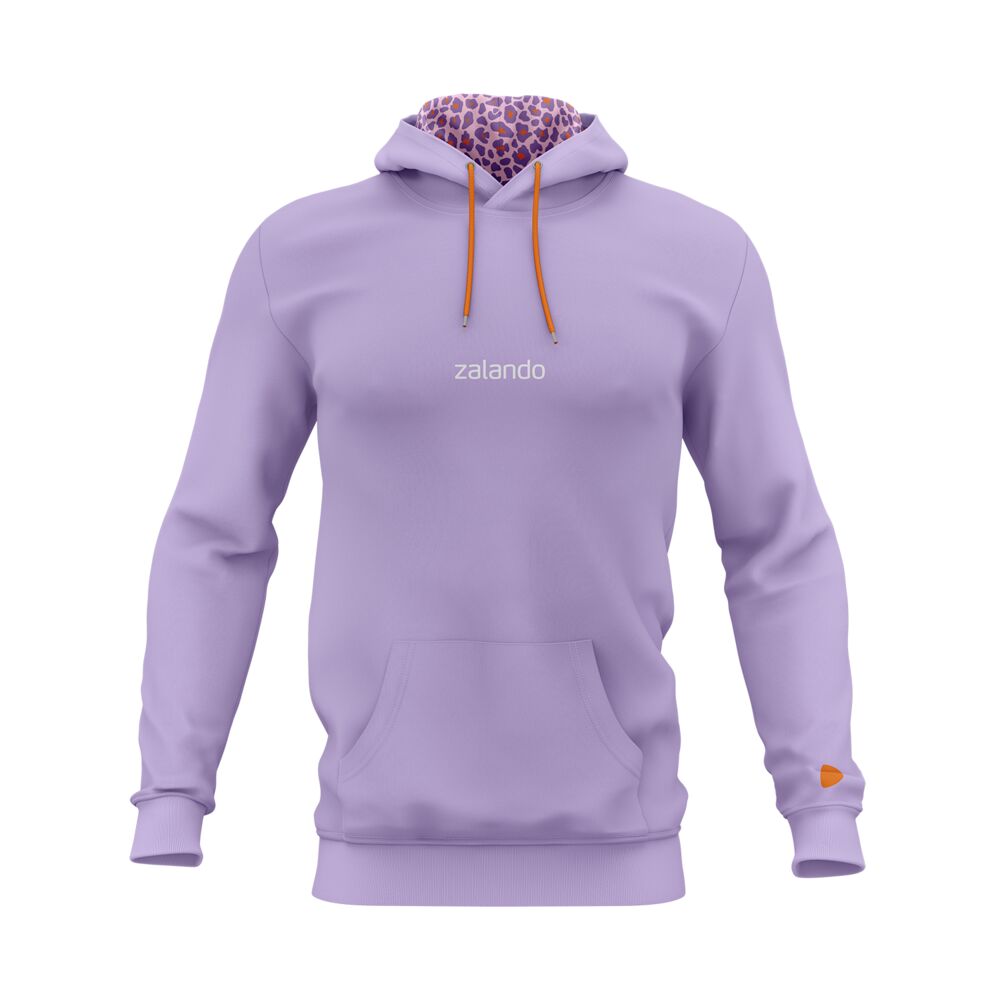
A custom pattern on the hood, a drawstring in the accent color, an understated logo on the chest. The details make the difference between merch and a collection.
A collection built around a launch
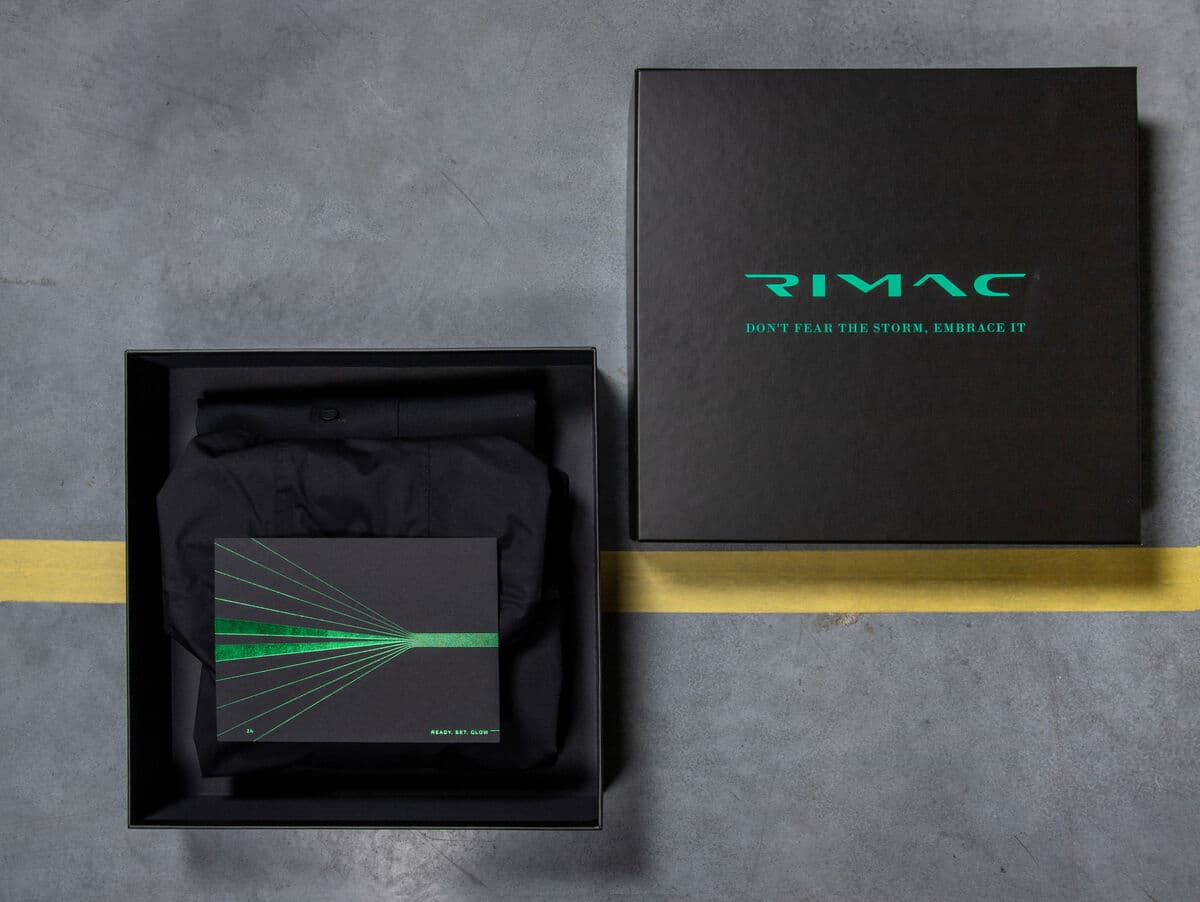
Bugatti Rimac. A complete corporate clothing collection built around the launch of a new hypercar model: racing-inspired hoodies, caps, and branded pieces tied to the launch.
This worked for two reasons. There was a clear story, and the product itself supplied the inspiration. The colors, the lines, the typography: everything came from somewhere. That's the difference with a collection that starts from a catalog and ends with a logo.
A launch collection has another advantage. It has a moment. People want to belong when something is happening, and clothing is the easiest way to make that visible. A hoodie tied to a launch gets worn. A generic company hoodie stays in the closet.
- There was a story. The collection was about something.
- The product supplied the inspiration. Colors and shapes came from the real work.
- There was a moment. The launch gave the collection urgency.
- The pieces belonged together. Hoodies and caps in a recognizable line.
Heritage as a design direction
IJsboerke. A well-known Belgian ice cream brand with a branded collection with a retro touch, tied to the brand's visual heritage instead of generic corporate clothing.
This might be the smartest of the three, because it didn't cost the most money. The brand already had an archive: colors, logos, typography, a visual history. Instead of inventing something new, that archive was used as the design direction. The result feels personal instead of corporate, and that's exactly why people wanted to wear it.
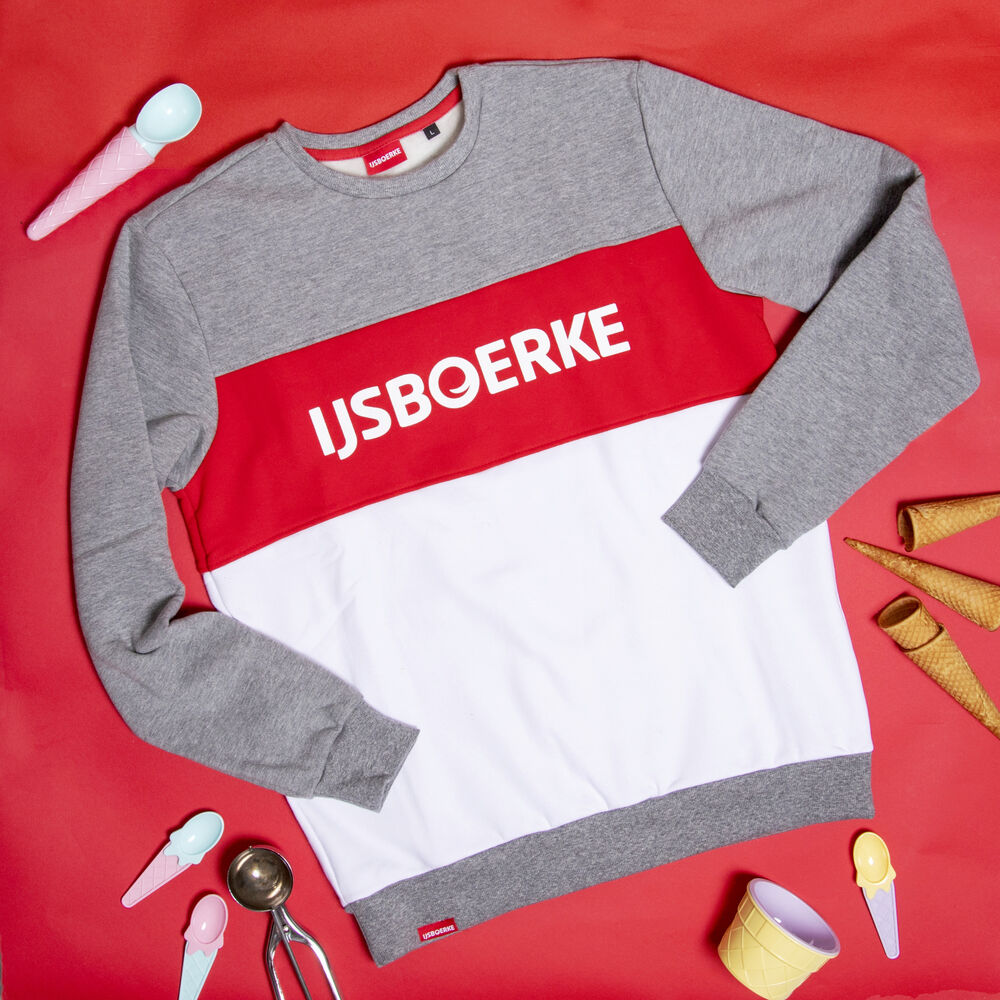
Color blocks and typography from the brand archive. Heritage as a design direction works because the collection comes from somewhere instead of being invented.
The principle: decoration follows identity
There's no single correct decoration method for corporate clothing. There is a correct method per brand. The three examples above each chose differently, and all three chose right.
| Brand style | Decoration | Why it fits |
|---|---|---|
| Classic and traditional | Embroidery | Understated, premium, professional. The logo is stitched into the fabric and doesn't go away. |
| Young, creative, startup | Oversized print | Big, visible, fashion-driven. The garment itself becomes the brand statement. |
| Retro and '80s | Patches | Tactile and nostalgic. Works strongly on jackets and sweaters. |
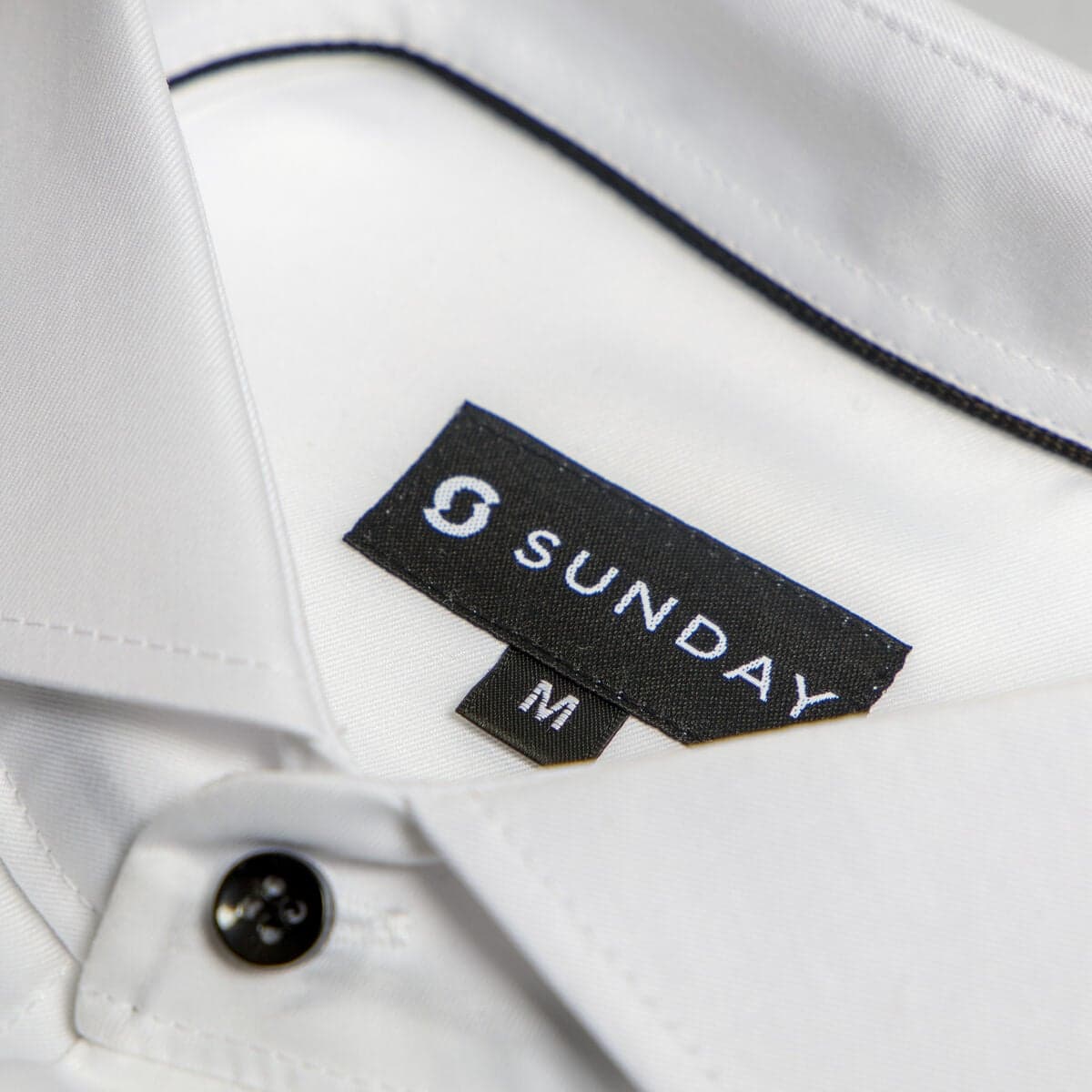
| Premium and detail-driven | Labels and trims | Woven labels, leather labels, contrast stitching, custom neck tape. |
| Volume and colorfastness | Screen printing | The workhorse method for larger runs. |
The mistake made most often: choosing the decoration method based on the quote instead of the brand. Want the full breakdown? Read the guide to printing corporate clothing.

Decoration is more than a logo on the chest. Contrast tape on the sleeve, a label at the neck, stitching in the accent color: all ways to wear the brand without shouting.
How to apply it to your own brand
You don't need a hypercar or an ice cream archive. You need a starting point.
- Find your story. A launch, an anniversary, a move, a milestone, your founding year, your origin.
- Look in your archive. Old logos, old colors, old visual language. Often the design is already there.
- Choose your decoration based on your brand. Not based on the cheapest line item in the quote.
- Start with jackets. The most visible and most-worn piece of almost every collection.
- Think in a line, not loose pieces. Pieces that belong together form a collection.
- Lock it in with a brand store. 15 to 20 pre-approved items as the standard wardrobe. See the guide to the brand store.
And don't forget fit. The most beautiful collection fails if half your team can't wear it. More on that in the guide to corporate clothing for women. Looking for functional clothing for teams that wear it because the job demands it? You're better off with branded workwear.
Build your own collection with Sunday
Sunday is merch infrastructure, not a classic supplier. You open a product page, the platform uses your brand assets and immediately shows design directions with live pricing. You see what a hoodie, jacket, or sweater looks like in your colors, which decoration fits your brand, and how each choice moves the price.
Browse the corporate clothing range, discover how it works, or browse the catalog. Want to see your idea first? Use the free mockup generators for hoodies, jackets, or polos and see your collection in your own colors right away.
About this article
What would your collection say
Custom patterns, custom colors, decoration that fits your brand. Made in the EU, with live pricing in 30 seconds.
Get free designs