Part of our complete guide to branded workwear.
Printing workwear means adding your logo to polos, softshells, work jackets, or aprons. Embroidery is the strongest choice for workwear, because the logo is stitched into the fabric and can't wash off. High-quality screen printing and durable transfers work too, as long as they're chosen for wash resistance. A poor print cracks, fades, or peels, and makes the whole outfit look cheap.
Searching in Belgium, your term is werkkledij bedrukken. In the Netherlands, buyers search for werkkleding bedrukken. Same product, different search language. We cover them together here, because the technique is identical, and so is the mistake companies make.
What's in this article
What printing workwear actually involves
With a merch campaign, you wear a hoodie a handful of times. With workwear, someone wears the same garment five days a week, for a year or longer. It often goes into the washing machine, sometimes hot, sometimes industrial. That changes everything about your decoration choice.
So the question isn't "how do I get my logo on it." The question is "how do I get my logo on it so it still looks good after a hundred washes." A print that cracks or peels doesn't just make that one polo ugly. It makes your whole team look sloppy, and that reflects on your company.
The techniques compared
There's no single correct method. There is a correct method per garment, per fabric, and per usage intensity. These are the options that actually hold up in workwear.
| Technique | How it works | Wash resistance | Best for |
|---|---|---|---|
| Embroidery | The logo is stitched into the fabric with thread | Very high | Polos, softshells, work jackets, sweaters, caps |
| Sewn-on patch | Embroidered or woven patch sewn onto the garment | Very high | Jackets, coveralls, retro or technical looks |
| Woven label | Woven-in brand label on sleeve, hem, or collar | Very high | Subtle branding, brand details |
| Screen printing | Ink is applied layer by layer through a screen | High, with quality ink | Large logos, T-shirts, back prints, high volumes |
| Durable transfer | Print is applied with heat and pressure | Medium to high, depending on type | Small runs, fine detail, multi-color logos |
| Cheap transfer or hobby print | Thin film on the fabric | Low | Nothing in workwear |
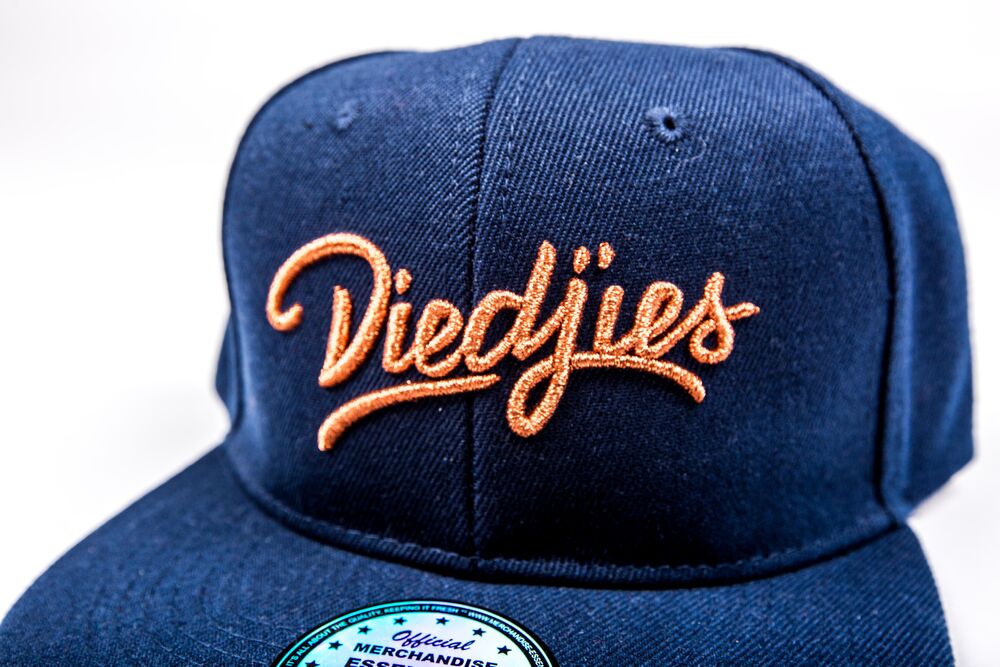
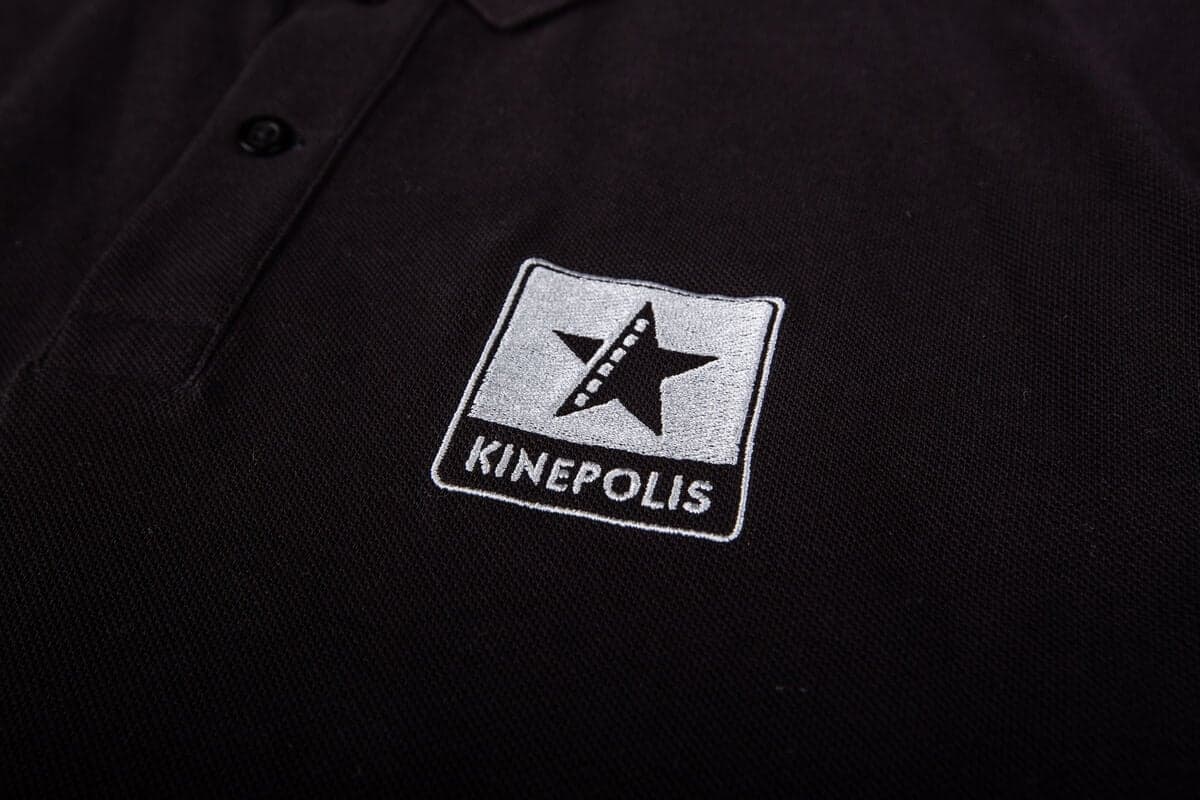
Embroidery is the default choice for workwear. The thread is locked into the fabric, so there's nothing to wash off, peel, or pull loose.
What survives the wash
Put the techniques next to a realistic wash regime and the difference becomes sharp. A hospitality team washes at 60 degrees. An installer washes dirt and grease out of the fabric every week. A retail team washes less hot but more often.
- Embroidery survives everything. The logo is stitched, so there's no layer that can come loose. This is why embroidering workwear is the safe choice for most companies.
- Patches and woven labels stay put. They're sewn in, not applied on top.
- High-quality screen printing holds up well. On one condition: the right ink and proper curing. Ask about this explicitly.
- Cheap transfers fail first. They crack along fold lines, lift at the edges, and fade in color.
The failure mode is almost always the same: the garment is still fine, but the logo isn't anymore. You end up with a team that looks half put-together, and a replacement order you hadn't planned for.
Logo placement
Workwear allows more visible branding than casual company clothing, and that's exactly the point. Part of the function is identification. Customers, visitors, and colleagues need to see immediately who works there and who they can approach. Think of retail teams, hotel staff, or technical services: the clothing says "this person works here and can help you."
- Left chest. The classic. Professional, recognizable, works on almost any garment.
- Sleeve. Subtle, good as a second placement alongside the chest.
- Back print. Large and readable from a distance. Strong for warehouse, installation, and events.
- Collar, hem, or label. For brand details seen up close.
- Full brand color. The garment itself in your brand colors, with a small logo on it.
In retail, hospitality, and service, stronger branding works well, because the outfit functions as a uniform. Want to know which combination fits your sector? Read our guide on workwear by sector.
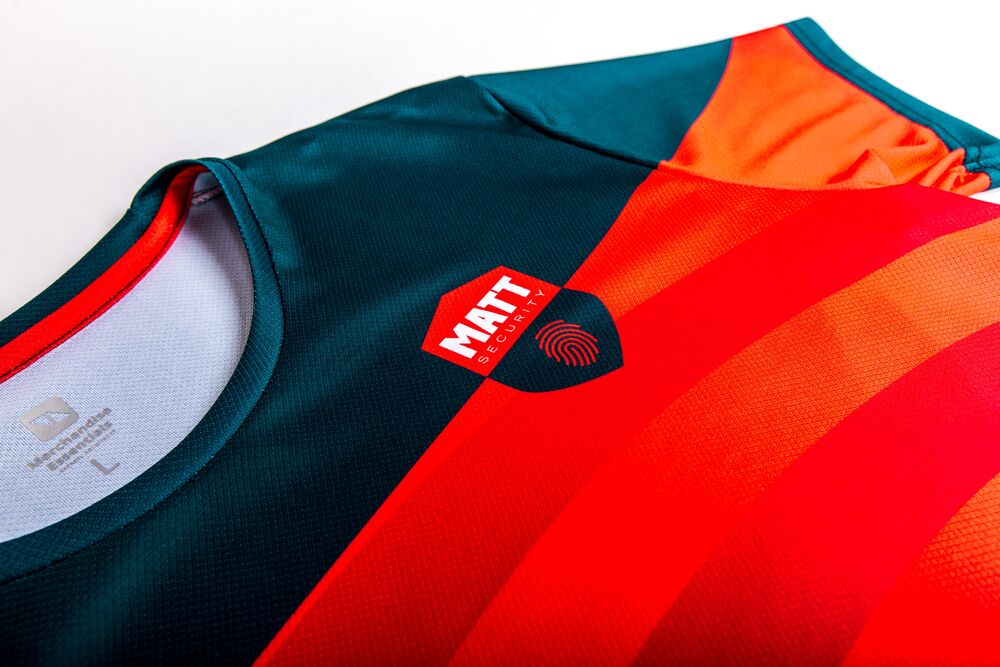
Left chest remains the most commonly used placement. Combine it with a sleeve logo or a back print if you want to be recognizable from a distance.
Quantities and lead time
There are two routes, and they come with different quantities.
Printed stock. You choose existing garments and add your branding. Low quantities, fast timing, ideal for smaller teams, a first test, or a limited budget.
Fully custom-made. Your own colors, your own cut, your own construction. That starts around 500 pieces, because there's development work involved. Once that work is done, you can reorder from around 100 pieces. So reorders are smaller and easier than your first order.
Lead time depends on the route. Printed stock moves fast, because the garment already exists and only the decoration needs to be added. Fully custom requires more preparation: fabric choice, pattern, sampling, approval, and production. Factor that into your planning, especially if you're targeting a new season or a new location.
What determines the price
The price of printing workwear isn't set by one thing. These factors do most of the work.
- The garment itself. A polo, a softshell, and a padded jacket sit in different price brackets.
- Quantity. Higher volumes push down the unit price, including on decoration.
- Technique. Embroidery and screen printing each have their own setup costs and economies of scale.
- Number of branding positions. Chest plus sleeve plus back is three times the work.
- Logo complexity. More colors or more stitches cost more.
- Stock versus fully custom. The biggest difference in the final price.
The full price breakdown and volume tiers are in our guide on ordering workwear in bulk.
Printing werkkledij in Belgium
In Flanders, almost nobody searches for "werkkleding bedrukken." There, it's called werkkledij bedrukken. It's the same question, from the same buyer, with the same requirements: it needs to look good, survive washing, and be reorderable. Only the search language differs.
We build our pages around local commercial language, not translated English. Search in Belgium and your term is werkkledij bedrukken. In the Netherlands, that's werkkleding bedrukken. Both lead you to the same answer.
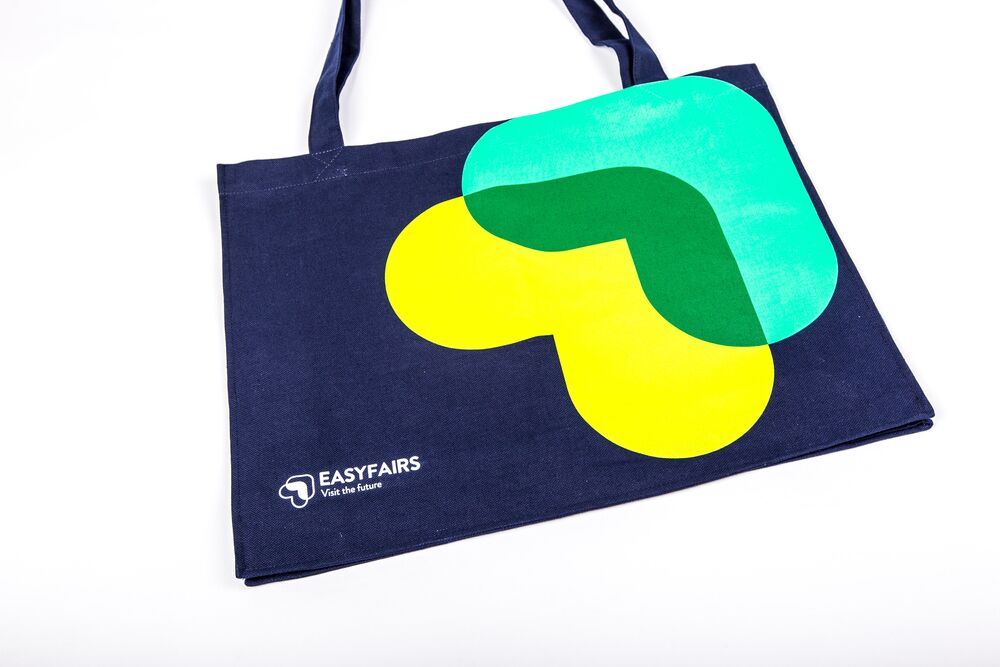
Quality is in the detail. Tight stitching and a properly cured print are the difference between an outfit that lasts a year and one that gets replaced after a season.
Printing workwear with Sunday
Sunday is merch infrastructure, not a classic supplier. You open a product page and the platform uses your brand details to immediately show design directions with live pricing. You see how a branded polo or work jacket looks in your colors, which decoration holds up to washing, and how each choice changes the price.
Want to see how your logo lands on the fabric first? Use the free polo mockup generator and preview your design in your own brand colors before you order anything. The full range of branded workwear is available on the product page.
Note: Sunday supplies non-certified, branded workwear. Where strict safety standards apply, such as hi-vis and EN ISO 20471, use certified safety clothing. That's a separate field with its own buyers and specifications.
Looking for voluntary, brand-driven company apparel instead of functional workwear? Read our guide on branded company clothing.
About this article
See your logo on your workwear
Polos, softshells, and work jackets with a logo that survives the washing machine. EU-made, with live pricing in 30 seconds.
Get free designs