Definition
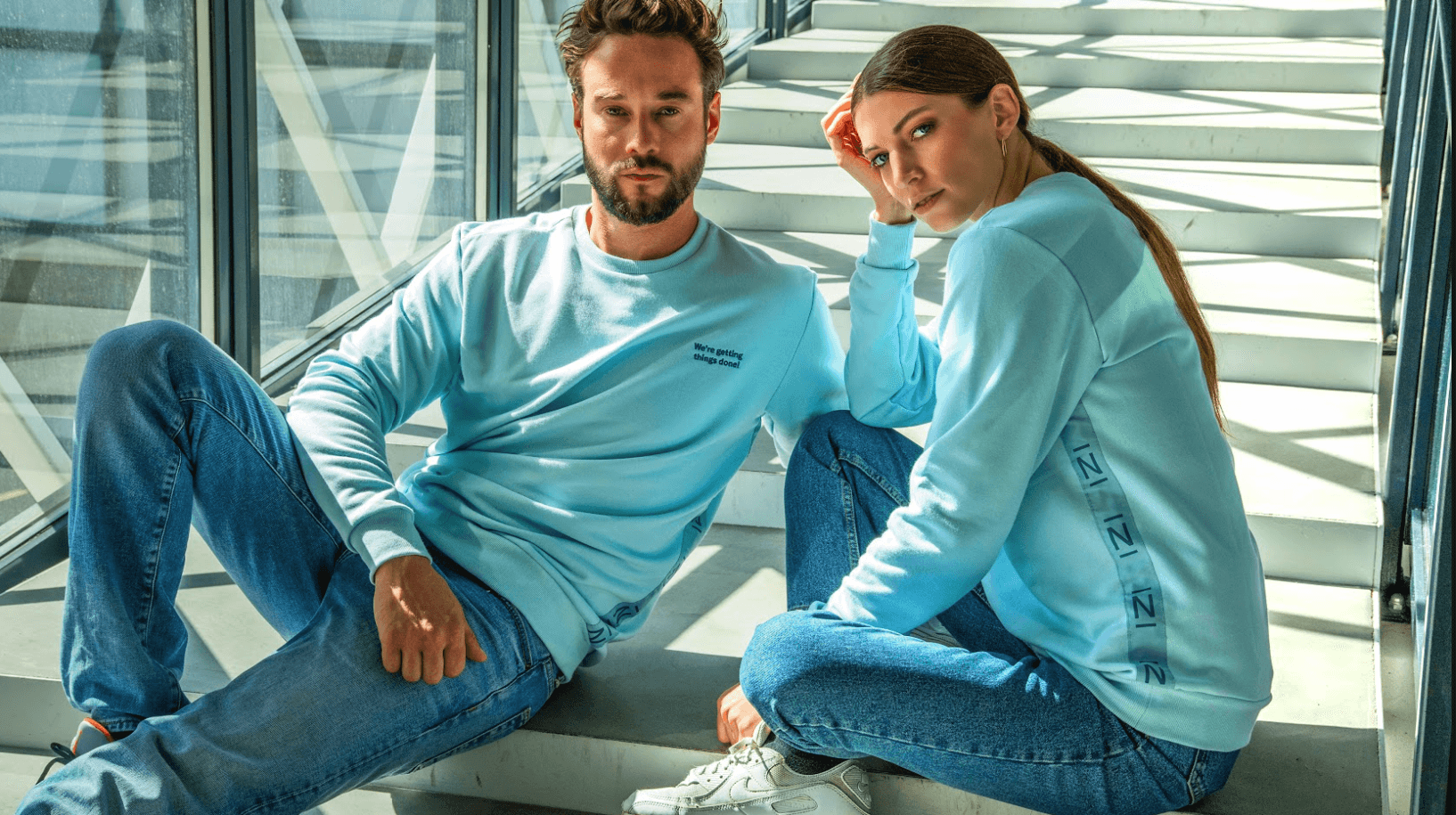
A crewneck is a round-neck sweatshirt or sweater with no collar and no hood. The round, ribbed neckline sits close to the base of the neck, giving the garment its name and its clean, simple shape.
Definition
A crewneck is defined by its neckline: a circular band of ribbed knit that follows the collarbone. The term covers both fleece sweatshirts and knit sweaters, since both share that signature round neck. There are no buttons, zips, or hoods, which keeps the front panel open and ideal for branding.
How a crewneck works
A crewneck works by combining a stable body fabric with a stretchy ribbed neckline. The body is usually a knit fleece or jersey, while the collar, cuffs, and hem use a 1x1 or 2x2 rib that stretches over the head and springs back into shape. That rib is what lets a closed-neck pullover go on and off easily.
Fabric drives the weight and the feel. A French terry or brushed fleece in cotton or a cotton-polyester blend gives a soft, warm sweatshirt. A finer knit in cotton or wool gives a lighter sweater suited to layering. Heavier fabrics, often measured in grams per square meter, feel more premium and hold a print or embroidery better, while lighter ones cost less and suit milder weather.
The trade-offs come down to weight, warmth, and price. A heavyweight crewneck reads as quality apparel and lasts through many washes, but it raises the unit cost and ships heavier. A mid-weight blend is the safe choice for most merch programs because it balances comfort, durability, and budget across a wide range of body types.
Crewnecks in branded merch
- Premium employee apparel: Give new hires a heavyweight crewneck with a subtle embroidered logo so the first piece of company kit feels like real clothing.
- Event and team merch: Produce crewnecks for an offsite or launch, using the flat front panel for a larger print that people will actually wear again.
- Member and customer gifts: Send crewnecks to top customers or community members, pairing them with a beanie for a cohesive cold-weather set.
A crewneck is a pullover with a round, ribbed neckline and no hood or collar, worn as a sweatshirt or sweater.
a startup orders 150 heavyweight cotton crewneck sweatshirts in off-white, with a small embroidered logo on the chest. The team wears them at the office and on calls, and the flat front gives a clean canvas for the mark.
5 tips to elevate your Crewneck strategy
| Tip | Steps |
|---|---|
| Choose the right weight | Pick heavyweight fleece for a premium feel, mid-weight for everyday wear and lower cost. |
| Use the flat front | The hood-free panel suits chest prints and embroidery, so design for that space. |
| Mind the rib quality | A dense, springy collar keeps its shape, so check the rib on samples. |
| Pre-shrunk fabric matters | Specify ring-spun, pre-shrunk cotton to avoid sizing surprises after washing. |
| Offer a full size range | Crewnecks suit every body, so stock a broad size run for the whole team. |
Key Terminologies
Frequently Asked Questions
What is the difference between a crewneck and a hoodie?
A crewneck has a round neckline and no hood, while a hoodie has a hood and usually a front pocket. Crewnecks give a cleaner, flatter front for branding.
Is a crewneck a sweatshirt or a sweater?
It can be either. The term refers to the round neckline, so both fleece sweatshirts and knit sweaters with that neck are called crewnecks.
What fabric is best for a branded crewneck?
A mid to heavyweight cotton or cotton-polyester blend works best. It feels premium, holds embroidery and prints well, and survives repeated washing.
Can you embroider a crewneck?
Yes. The flat front panel is ideal for embroidery on the chest, as well as for larger screen prints across the front.
How should a crewneck fit?
A crewneck should sit comfortably at the collarbone with room to layer underneath. Offer a full size range so it works for every body type on the team.